Sun, 22 Nov 2026 13:01:37 +0000 InsideEVs InsideEVs | Electric Vehicle News, Reviews, and Reports https://insideevs.com/ https://insideevs.com/reviews/815779/amflow-ue-carbon-pro-review/ Tue, 17 Nov 2026 16:16:11 +0000 Amflow Made A Commuter E-Bike. I Tested It, And It's Really, Really Good Amflow already disrupted the e-MTB market. Now it's bringing the excellent Avinox powertrain to the commuter segment.
Amflow is getting into the commuter e-bike game. The DJI-incubated brand already disrupted the e-mountain bike market with its PL line, but it's now bringing the same motor tech to a line of urban bikes. After a month riding the Amflow UE Carbon Pro, I’m convinced the brand be just as competitive in the premium commuter segment.
(Full Disclosure: Amflow sent me a UE Carbon Pro for this review.)
What Is It?
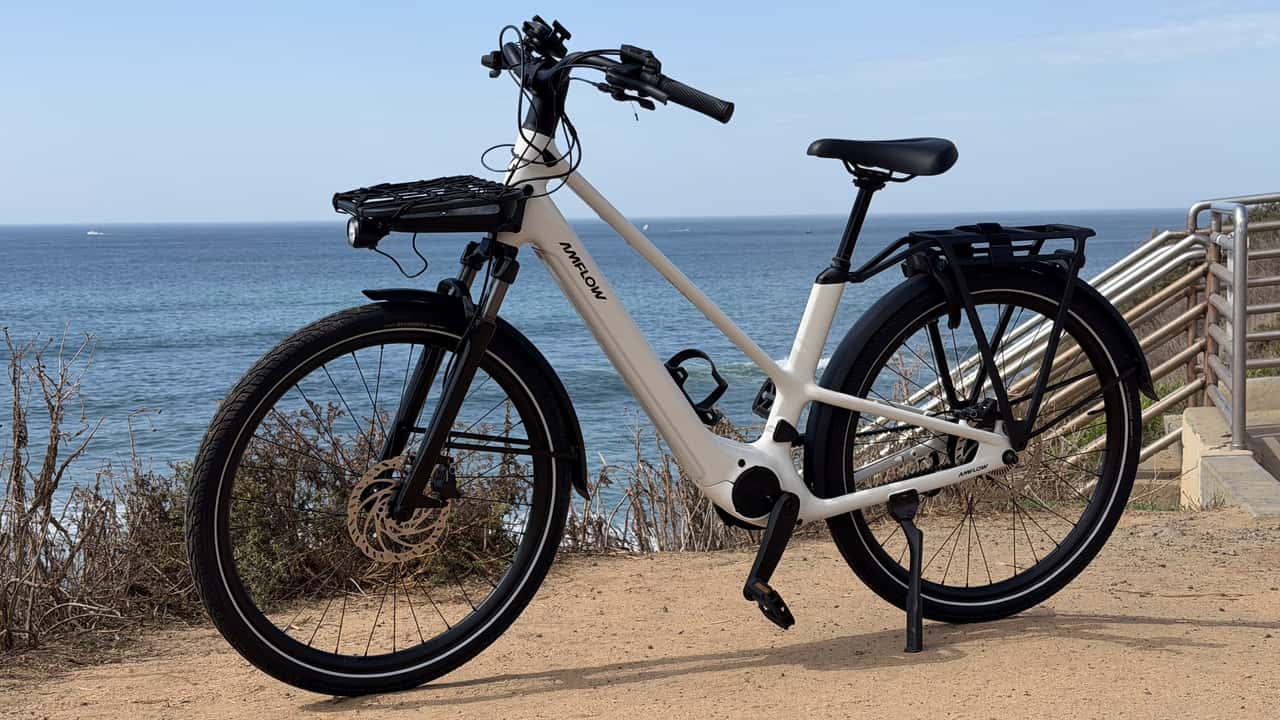 Photo by: Mack Hogan/InsideEVs
Amflow is the demonstration brand for Avinox, the brand of e-bike parts and motors that was incubated by drone giant DJI. (The companies are separate and a spokesperson clarified that DJI has no involvement in the current series of motors.) The centerpiece of the empire is the Avinox Drive System, a series of mid-drive e-bike motors. The company has already disrupted the e-mountain bike space with its powerful, quiet, and smooth powertrains; now it is doing the same in the commuter market with the new UE line.
The UE Carbon and UE Carbon Pro do not come with high-travel shocks for leaping over rocks; that’s the Amflow PL’s game. Instead, the UE comes with 65 and 35 mm of front and rear suspension travel, respectively, and an upright seating position for relaxed urban commuting. There’s a cargo rack on the rear and a nice basket up front, complete with tie-down netting and an underslung light.
Taken altogether, the UE presents as more bicycle than motorbike, more unassuming than bold. That’s all the better; no one expects it when I unleash all 1,100 Watts of peak power and zip right by. Its 125 Newton-meters of torque eclipses some hatchbacks from earlier this century in a package that itself weighs just 46 pounds. It is, in a word, brisk. And light. It’s a full 20 pounds lighter than something like an Aventon Level 4 Rec, and you feel that everywhere.
It is not cheap, however. Pricing starts at $3,499 for the UE Carbon and $3,899 for the UE Carbon Pro. The Pro model is mostly distinguished by its Gates carbon belt-drive powertrain and three-speed internal hub. The standard model comes with a more conventional ten-speed rear derailleur.
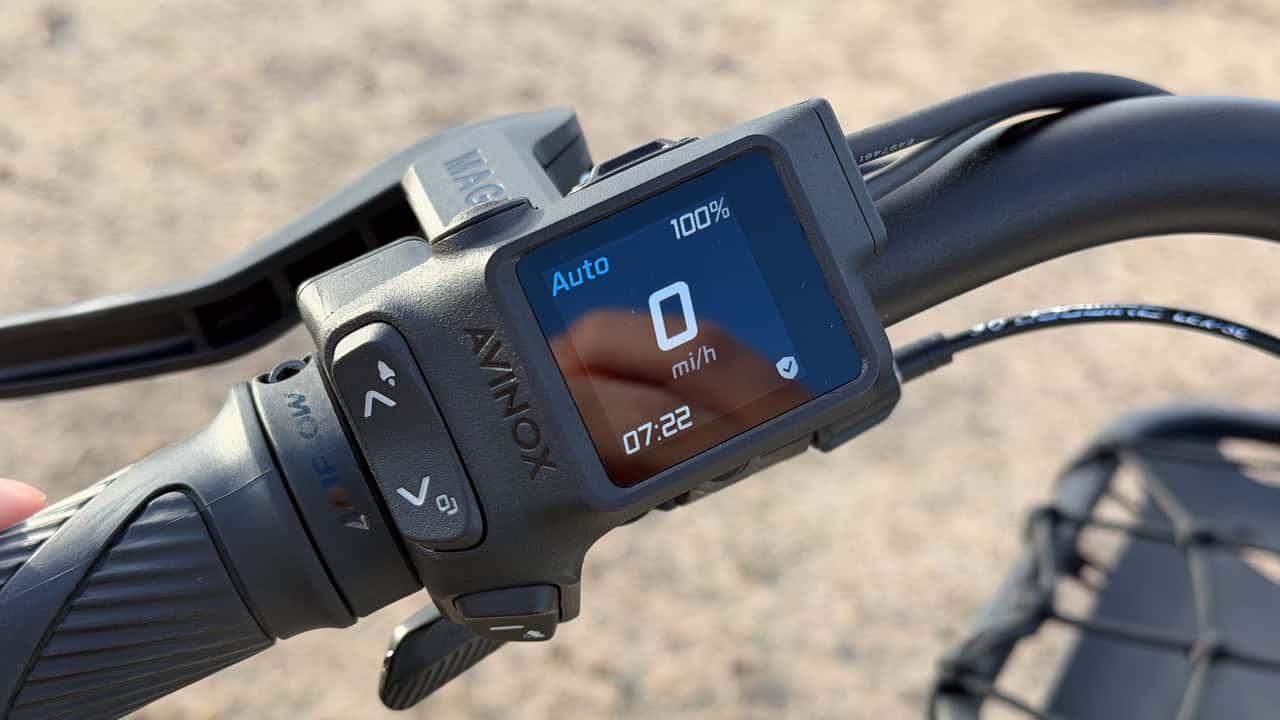
One quirk on the UE: You shift modes with the clicker on the left, but gear selection is handled by the rocker below that, which is mounted out of your eyesight. It's a bit confusing, and I would prefer a separate shifter on the other side of the bike.
Photo by: Mack Hogan/InsideEVs
Both the UE Carbon and UE Carbon Pro come with all of the gadgetry you’d expect from a modern e-bike, and more on top. There’s a traction control system to keep your tires in check. Apple Find My integration helps you locate it if it gets nicked. A built-in wheel lock and motion alarm help prevent that from happening in the first place, as does a keycode on power-up. If that’s too fussy, you can also use the passive entry system to unlock it as your phone approaches (though this was spotty in my testing). It’s got automatically activated lights with a high and a low beam, too, and a wireless charging pad that clamps your phone onto the head tube.
Finally, the Pro model’s belt-drive setup is a nice premium add-on. The three-speed hub is a sealed internal component, and the belt is carbon fiber, meaning there’s no lubrication or degreasing required and no chain or exposed gears. The belt is supposed to last 10,000-20,000 miles and just occasionally needs to be rinsed with a hose to wash off any caked on debris. The bike’s frame is carbon, too, and most of the rest is plastic, so there’s nothing really to rust.
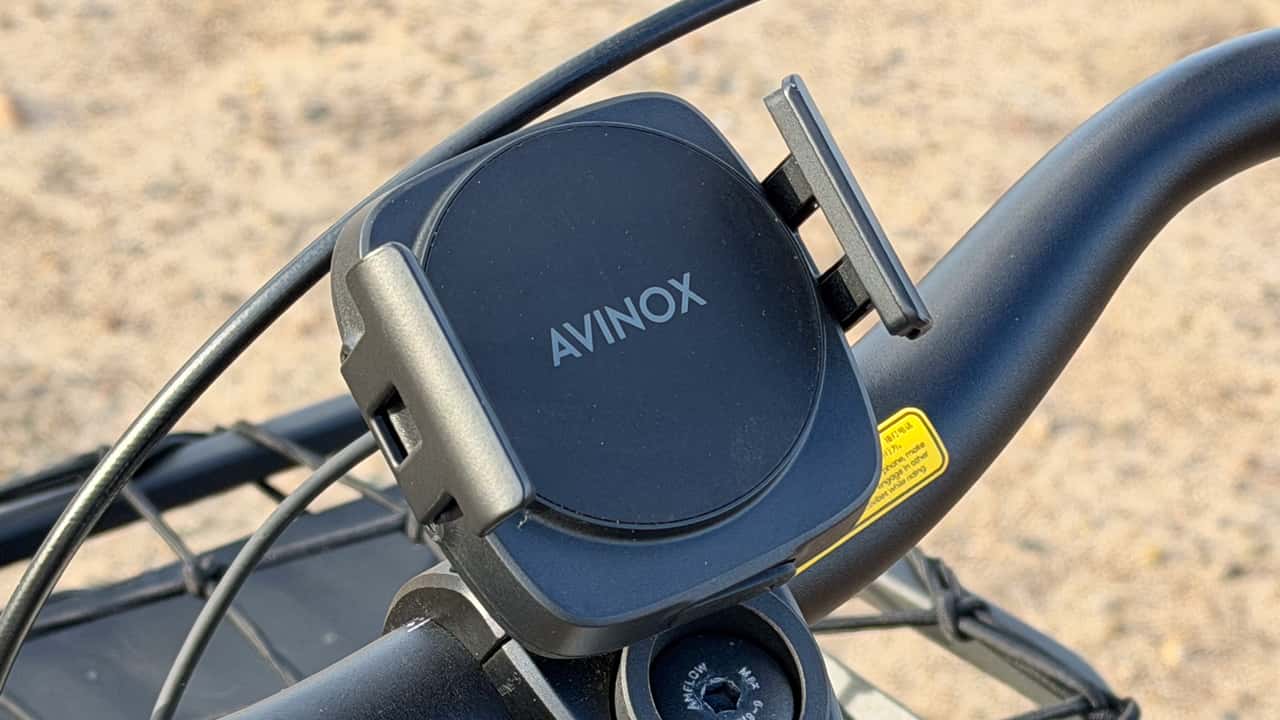
The UE has a wireless phone charger that clamps your phone to the head tube. It works very well.
Photo by: Mack Hogan/InsideEVs
For my situation—my bikes live outside in an area with salty sea spray—it’s the ideal low-maintenance vehicle. Eventually the Maxxis 26×2.0” tires and the pads for the Magura 180mm disc brakes will need to be replaced, but these are cheap and easy to access.
Until then, all there is to do is pump up the tires and charge the battery. The 600 Wh lithium-ion battery is easy to remove and can be charged inside or outside of the frame. Charging from 0-100% takes a claimed 2 hours and 23 minutes, and Amflow says this will be good for up to 82 miles (132 km) of range.
As usual with e-bike range figures, hitting this number is unlikely in regular human usage. So let’s get into the real-world experience.
What’s It Like In The Real World?
I sampled the Pro model for a month in the lead-up to its reveal. I came away impressed.
I’m a noted skeptic of e-moto style bikes. I think the value of an e-bike is amplifying your movement, not just serving as a workaround to sell electric motorcycles to teenagers. And if you agree with me, the Amflow UE is about as good as urban bikes get for the price.
It has no throttle and no free power. If you want to move, you pedal. But it provides the most natural blend of human and mechanical input I’ve felt. In Auto mode, the UE feeds power in to match your effort. Pedal hard and it pushes hard. Slow down and it unwinds. In its top mode, the UE amplifies rider input by up to 8x, giving me enough power to rocket up ultra-steep San Diego hills with barely any effort.
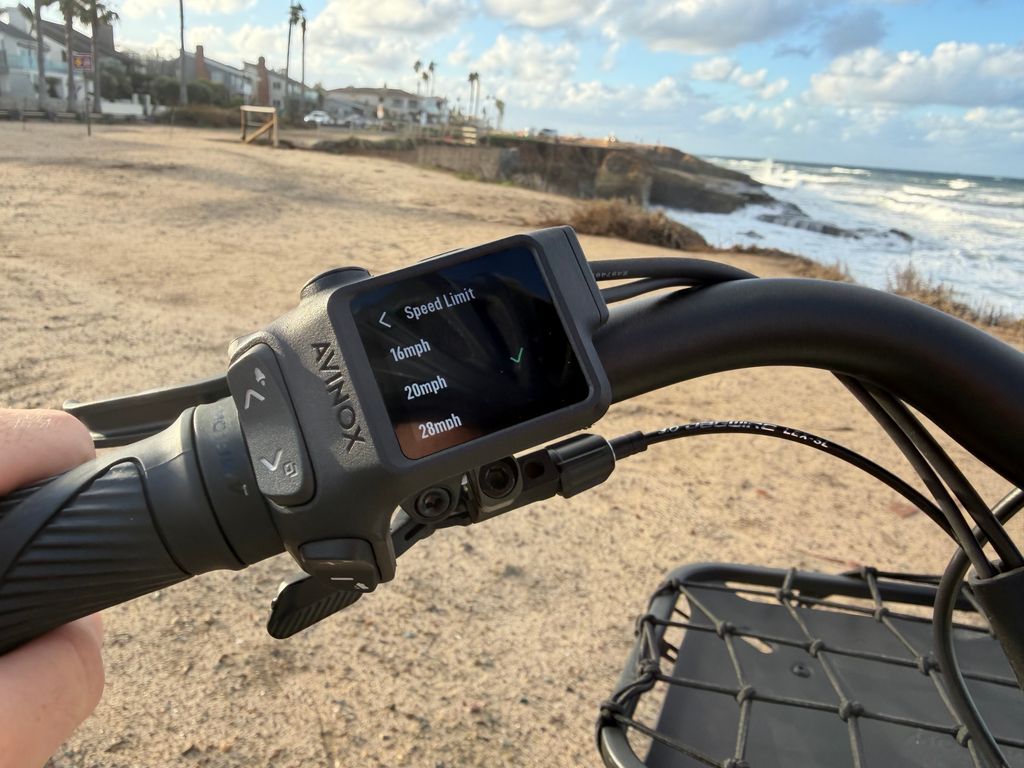 The UE defaults to being a Class 2 pedal assist bike with a top speed of 20 mph. You can bump the speed limiter up to 28 mph, but it resets every time you turn the bike off. Photo by: Mack Hogan/InsideEVs
The three-speed internal hub also switches gears quickly and without issue, though I did hear some unhappy noises if I shifted under hard load. It can also shift while the bike is stationary, which is nice for when a stop sign catches you out. And if you’re ever overwhelmed by the power, you can adjust it on the fly. I added a custom “Tour” mode to my bike as a middleground between the power-sucking Auto mode and the thigh-burning Eco setting, helping me strike a better balance than the factory settings allow.
That Eco mode is my one big complaint about the bike. Many e-bike manufacturers offer an Eco setting for endurance, but they typically feel a bit more sprightly than this, at least in my experience. The ultra-low power output combined with only three selectable speeds made Eco essentially unusable in my hilly neighborhood. (It may be more usable on the derailleur-having model.) And since it’s certainly required for that 80-plus-mile claimed range, I wouldn’t count on that in the real world.
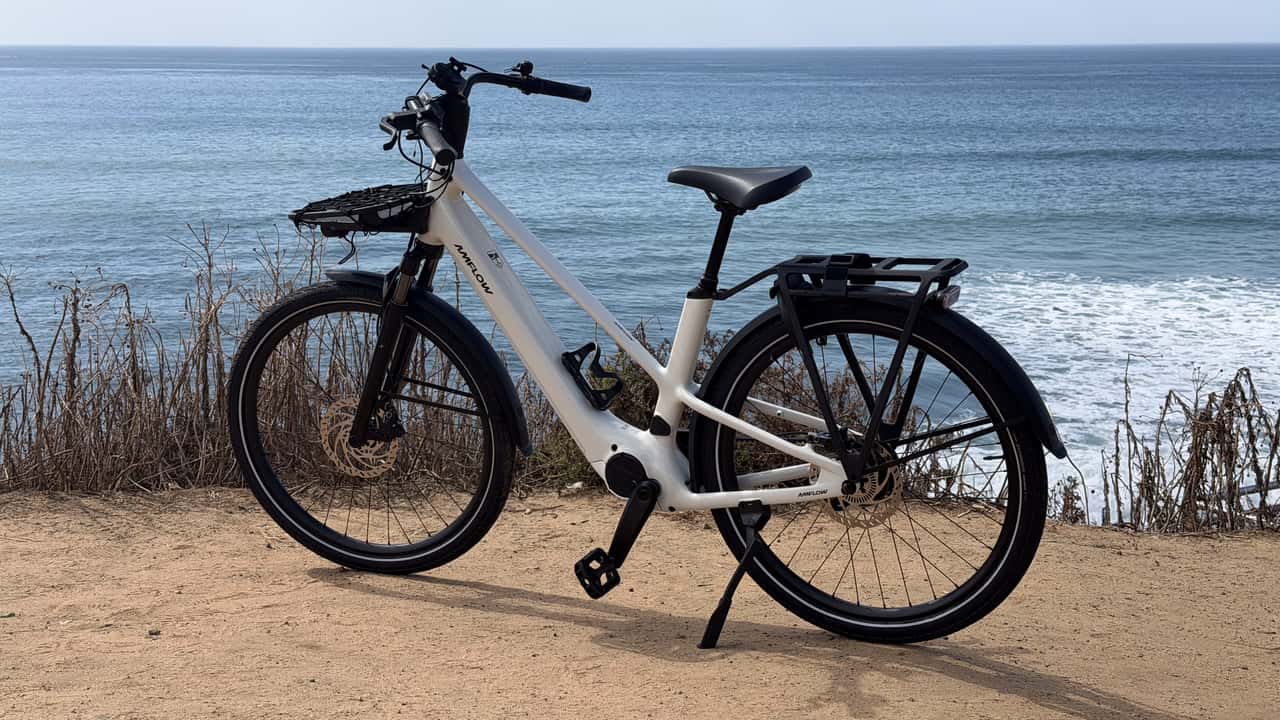 Photo by: Mack Hogan/InsideEVs
In fact, over 120 miles of real-world testing, I typically managed between 30 and 50 miles in riding that covered a lot of hilly ground. I used 74% of the battery on a 23.17 mile test ride with 990 ft of climbing. That involved a mix of primarily Auto and Tour modes, with occasional dips into Eco for cruising and Turbo for climbing. Considering that route included a steep climb up the 823-foot-tall Mount Soledad in La Jolla, I think it’s a fairly solid showing.
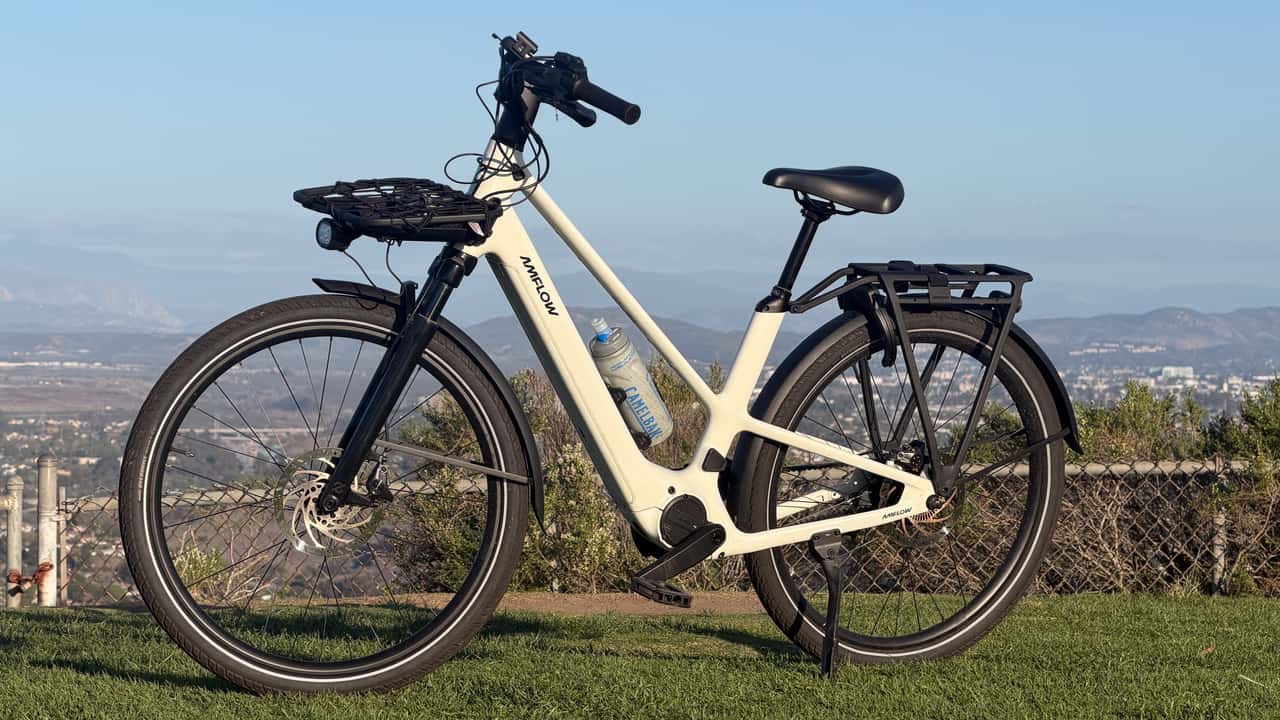
The Amflow on top of Mount Soledad.
Photo by: Mack Hogan/InsideEVs
I also got off the bike feeling great. I adjusted the pre-load on the front fork for the softest possible ride, a decision which has paid off well. The bike is cushy over potholes and still sharp on tough corners.
That being said, if you’re a speed demon, be warned. A lot of my riding involves a chained-together series of alleyways and backroads with quick elevation changes. On this route, most e-bikes are a blast. The UE, with its extra power and lighter weight, should shine.
But it doesn’t. Unfortunately, that’s due to the traction-control system. When you’re riding hard and come to a point where the road rises steeply while you’re turning, the bike tends to assume you’re heading into an uncontrolled wheelie and cuts power. I can’t count how many times I went through a divot at a moderate pace and found myself forcing my legs against a suddenly resistive crank. This was accompanied with a beep and an “Attitude Error” warning on the display explaining that the motor was locked. You cannot disable this system. And because it locked up mid corner, a few times it threw my off balance.
That was frustrating. So too is the weird wheel lock at the back. It has a built-in key that can only be removed when the lock is engaged. That would be fine, except it’s the same key shape that’s used to unlock the battery. If I want to use my U-lock rather than the wheel lock, then, I am leaving a key attached that can also remove my expensive battery. I’m forced to use the wheel lock every time.
These minor issues fade away whenever the bike starts moving. It is so seamlessly in step with my every move and so absurdly quiet that I occasionally forget it is an e-bike. Top-end mid-drive models from the big name brands can be nearly as quiet and as smooth, but they cost more. And while I do occasionally miss having a throttle, the graceful way this thing leaves a stoplight in Auto mode is more than worth the tradeoff. It doesn’t feel like a machine I’m commanding, it feels like an Iron Man suit, amplifying my moves and fading into the background.
Photo by: Mack Hogan/InsideEVs
Conclusion
The UE isn’t perfect. The passive entry is hit-or-miss, the wheel-lock design is confounding, the Eco mode is useless, and a middle-power mode should come standard, rather than me having to create my own setting. Many of these features feel thrown at the wall, and I’m still waiting to see what sticks. Those who mainly commute on high-speed roads should know, too, that the Class 3 mode with a 28 mph speed limit must be enabled from the touchscreen on every trip where you plan to use it; it cannot be the default.
But that’s ok. This is not trying to be a motorcycle for urban highways. It’s a bicycle, but more powerful. It looks, feels, and handles like a normal bike, but with all of the power of an e-moto. For me, that makes it the most satisfying e-bike I’ve ever ridden.
(Correction 11/17/26, 3:06 PM ET: An earlier version of this story mistakenly called this a DJI product. While Avinox was incubated by DJI, the drone and camera brand, the companies are now separate. A spokesperson clarified that DJI has no involvement in the current-generation motors. We regret the error.)
]]> contact@insideevs.com (Mack Hogan) https://insideevs.com/reviews/815779/amflow-ue-carbon-pro-review/ https://insideevs.com/reviews/815599/audi-a2-e-tron-2027-review-first-drive/ Mon, 16 Nov 2026 14:41:17 +0000 Audi A2 e-tron First Drive: Does The Iconic Nameplate Live Up To The Hype? I have a go in the 188 hp and 322 hp versions. Both have great regen braking and good towing capacity, but they are expensive.
Audi has never made a Volkswagen ID.3 equivalent until now. That changed with the debut of the A2 e-tron, which boasts high efficiency, a quirky design, and a premium badge front and center.
The first A2 debuted in 1999 as a modern, aluminum-bodied, highly efficient urban car. It was supposed to be the next best thing in Europe's car market, but it didn't quite shine as Audi originally intended. That being said, is the new A2 e-tron going to experience the same fate?
I drove the newcomer in both the 188- and 322-horsepower versions to find out.
One of the standout features of the Audi A2 e-tron is its remarkably low energy consumption of only 12.8 kWh/100 km, achieved in the 188 hp (140 kW) version. Since Audi didn't have a model with this package, we settled for the standard 188 hp variant. The second test vehicle was the top model with 322 hp (240 kW), which comes with adaptive dampers.
Pros
Very economical with the optional efficiency pack Good brake regen settings One-pedal driving
Cons
Poor rear visibility Fiddly trunk floor You have a choice between long range and low energy consumption High prices
Exterior
The Audi A2 e-tron measures 169.9 inches in length, making it about 2.4 inches longer than the VW ID.3 Neo. The wheelbase is approximately the same at 109 inches for both models, similar to the Audi Q4 e-tron or VW ID. Tiguan. It's important to emphasize that the A2 e-tron is a compact car in Europe, not subcompact. The name could mislead customers.
The design of the Audi A2 e-tron is polarizing: personally, the body style isn't to my taste, as I found the first A2 unattractive. However, younger colleagues liked the new Audi. Upon seeing the new images, the car no longer appears as bulky as it did in the initial press photos, which showed the A2 e-tron in an unflattering Pistachio Green. The Arrow Gray color, which appears more like a light blue in our images, is quite pleasing.
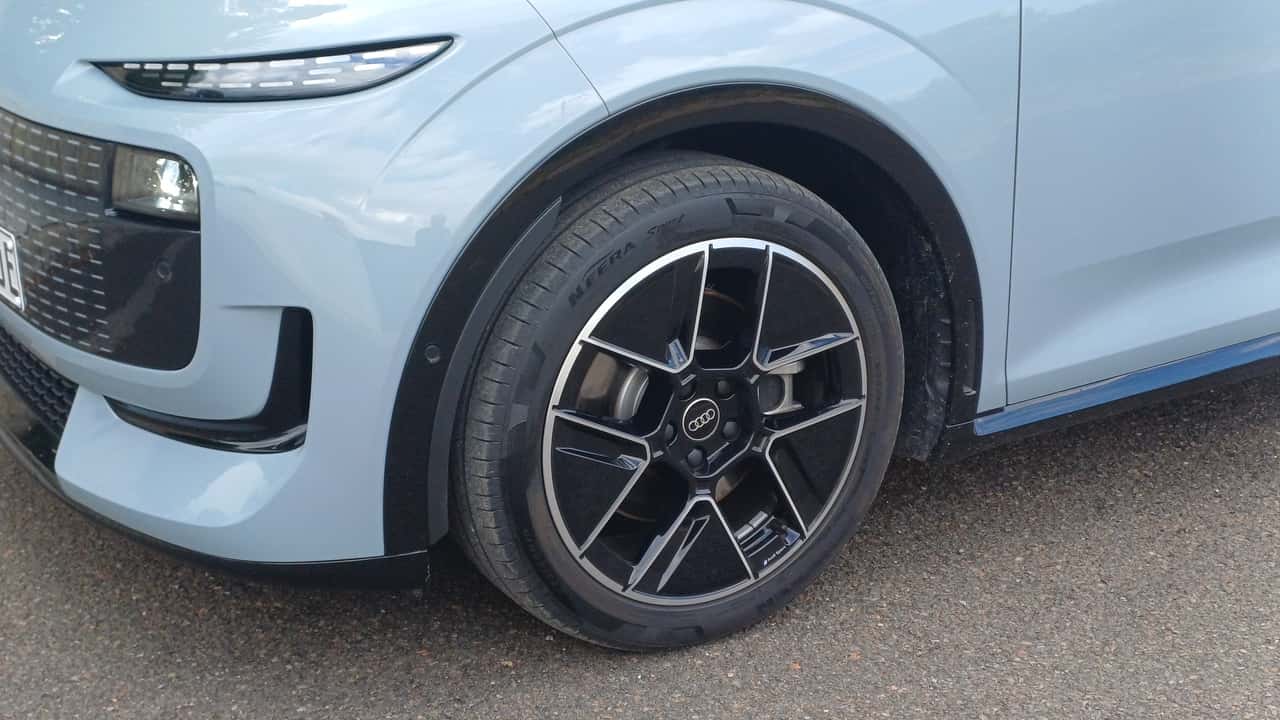
Air Curtain openings, Gap Reducer, and Gap Breather
Photo by: InsideEVs
The bodywork is optimized for minimal air resistance. Air curtains at the front allow airflow, which exits through gap breathers behind the front wheels. Gap reducers minimize the gap between the wheel arch and tire, preventing airflow from entering and swirling inside the wheel arch. The rear spoiler also improves aerodynamics, although it reduces rear visibility, but more on that later.
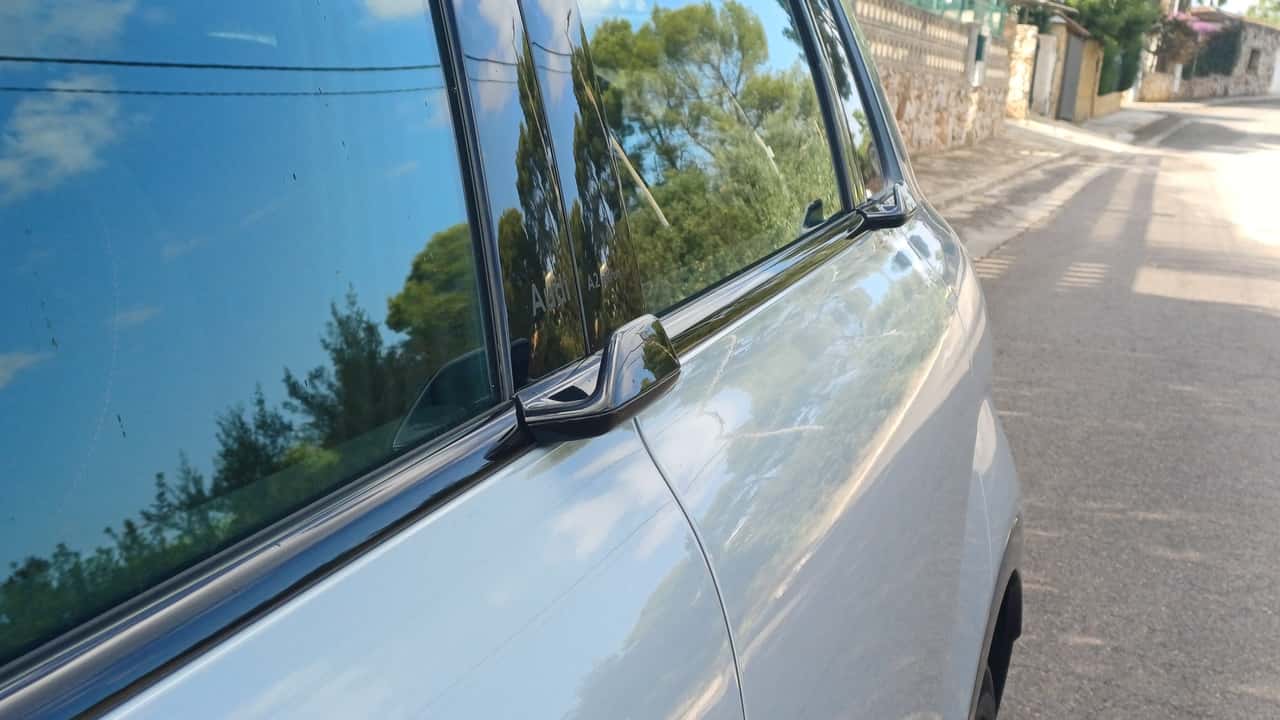
The tiny door handles ensure a "clean" look on the sides
Photo by: InsideEVs
The tiny winglet handles of the A2 e-tron serve more of an aesthetic purpose than an aerodynamic one. They are easy to operate, subtly bending outward. In the event of a power failure during an accident, ultracapacitors (a type of capacitor) in the doors provide power. However, if bystanders need to open a jammed door after an accident, it's questionable whether they can exert as much force on these tiny handles as on conventional handles.
Charging is done at the rear on the passenger side—convenient for curbside charging but less so in tight garages, where cars are often parked far right to leave room to exit on the left.
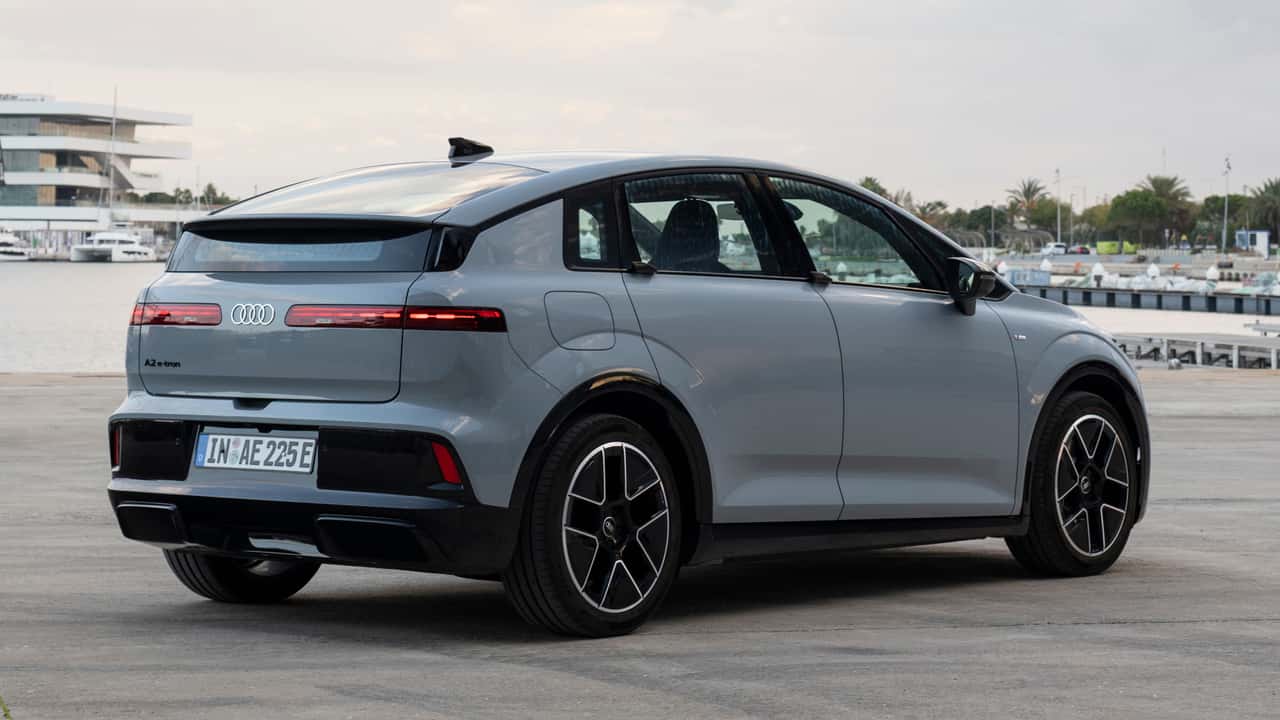 Photo by: Audi
Interior and Controls
Inside, the A2 e-tron features curved dual displays with 11.9-inch and 12.8-inch diameters, respectively. The instrument display focuses on the lower part, likely because the content would otherwise be obscured by the steering wheel. The touchscreen can display a beautiful satellite view of the map upon request.
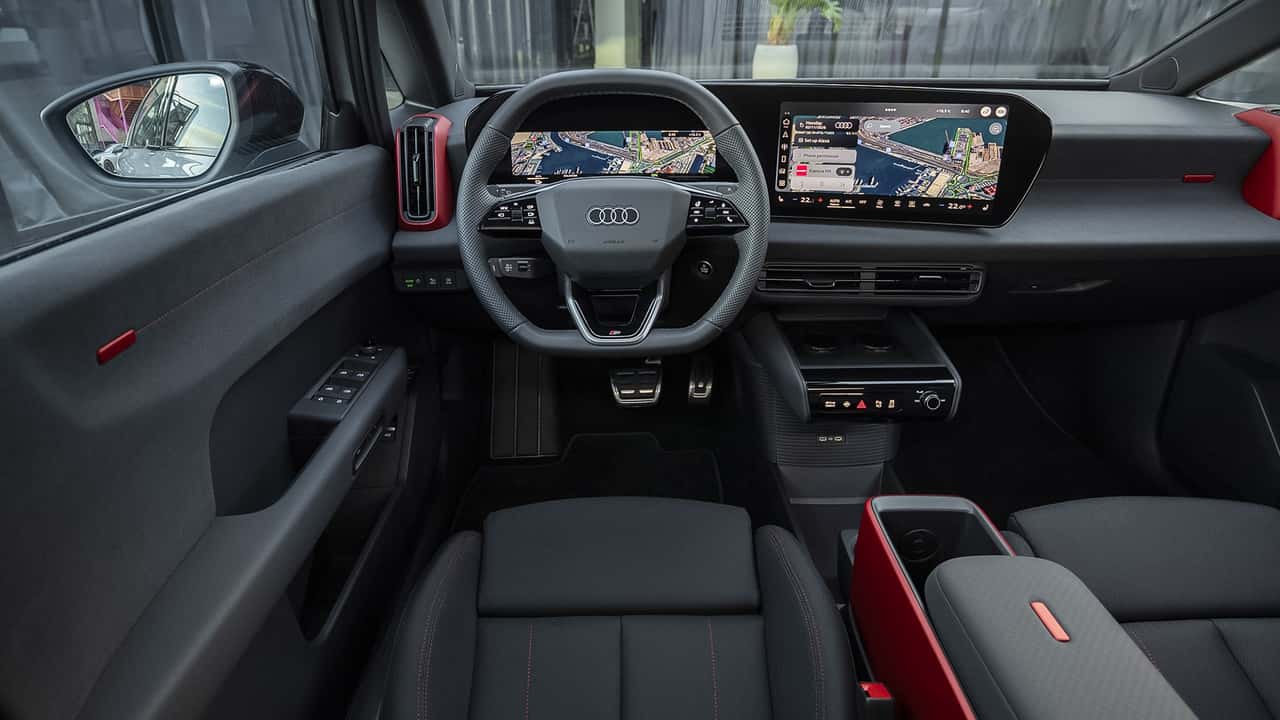 Photo by: Audi
Instead of regular steering column stalks, the A2 e-tron has an unusual component behind the steering wheel for adjusting lights and wipers on the left, and activating drive modes P, R, N, D, and B on the right. The setup feels like a modern gadget, but adjusting to it requires little re-learning.
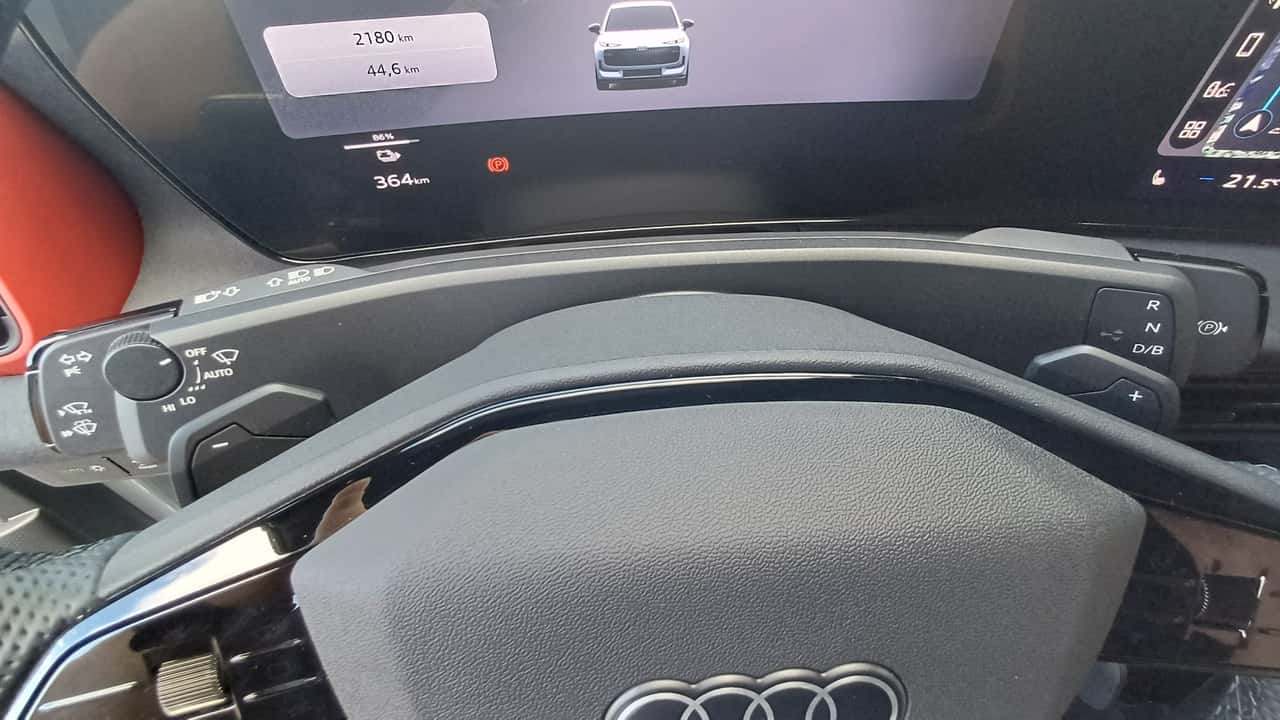
The unusual "control bar" behind the steering wheel
Photo by: InsideEVs
The version I drove featured the "Interior S" package with black integral seats and matte red details, which I could have done without—they don't quite fit. The central storage cubby with two smartphone charging trays isn't very appealing either. However, I had no complaints about the soft wrap. In my vehicle, it consisted of black felt on the dashboard extending into the doors, where there's the typical joystick for mirror adjustment and four buttons for the window controls on the driver's side.
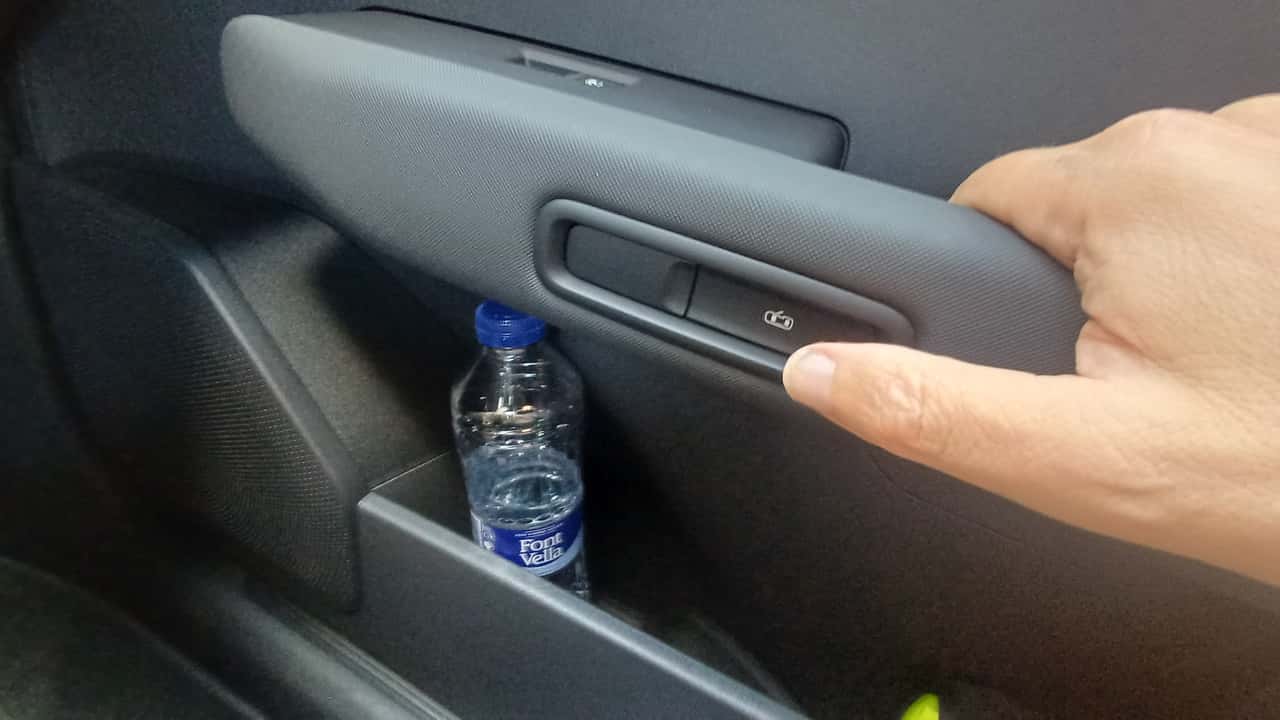
The button to open the doors is optimally positioned
Photo by: InsideEVs
The doors always open electrically, with a button ergonomically positioned under the armrests.
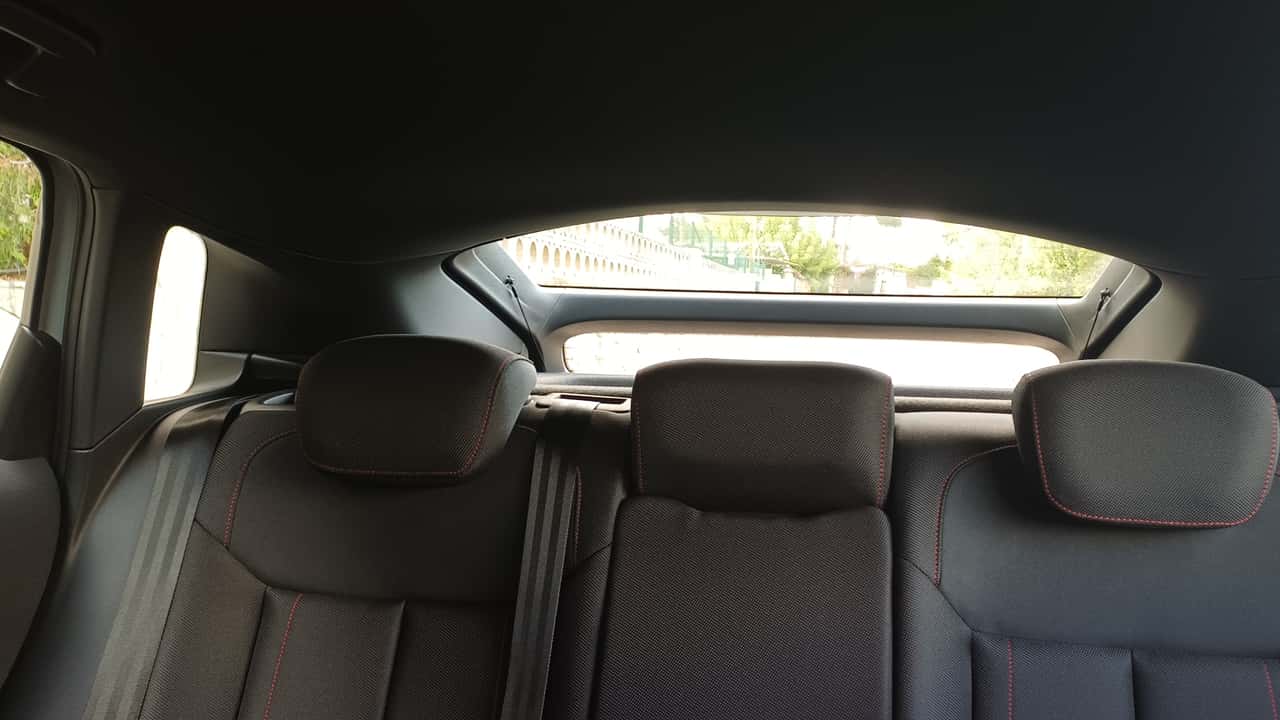 Photo by: InsideEVs
Visibility to the rear sides is okay, but the rear spoiler, which divides the rear window into an upper and lower part, spoils rear visibility. Audi's positioning of the spoiler is a trade-off between downforce and aerodynamic resistance.

A fist's width of space above the head of the 5'9" tall author
Photo by: InsideEVs 
The legroom in the back is also more than sufficient
Photo by: InsideEVs Photos by: InsideEVs
The tailgate opens wide. The trunk itself has a capacity of 396–1,336 liters (13.9-47.1 cubic feet). On the 228 hp (170 kW) version, there's also a 13-liter (0.3 cu ft) frunk available; otherwise, it's part of the storage package (priced at 320 euros). This package includes a luggage compartment insert. In its upper position, it levels the loading threshold, while in the lower position, it optimizes loading volume.
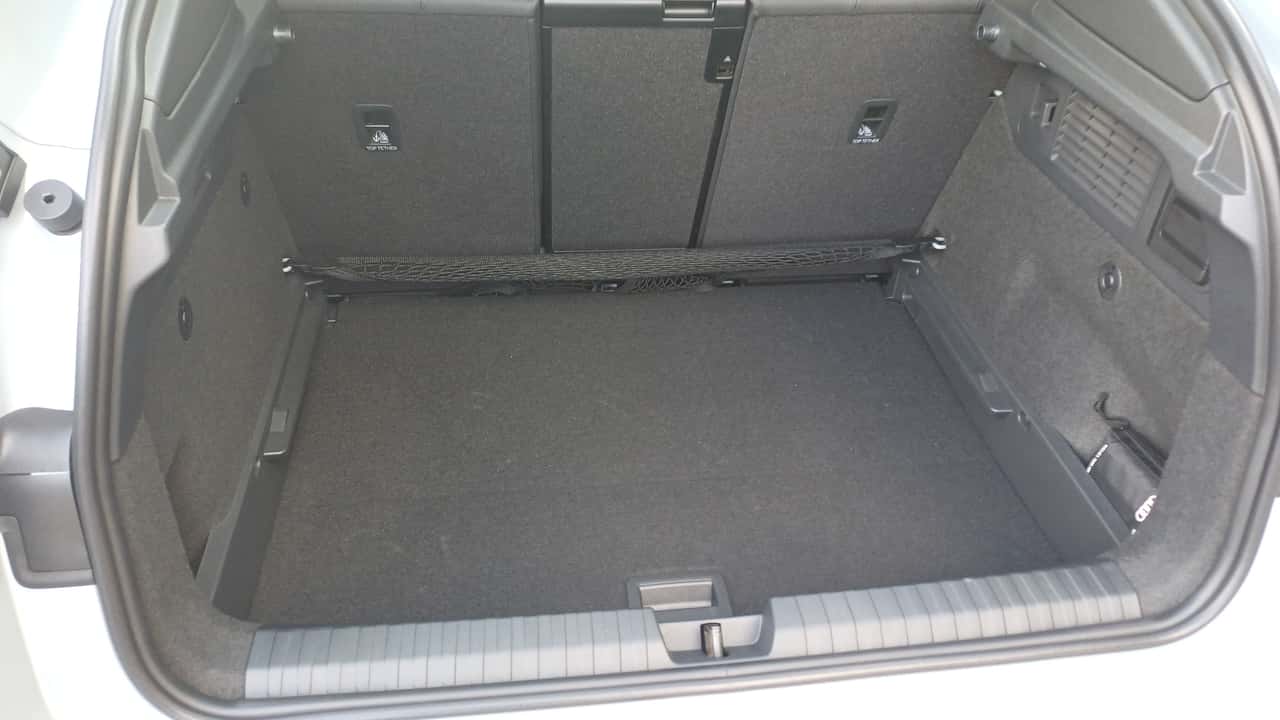
Shelf in the lower position
Photo by: InsideEVs 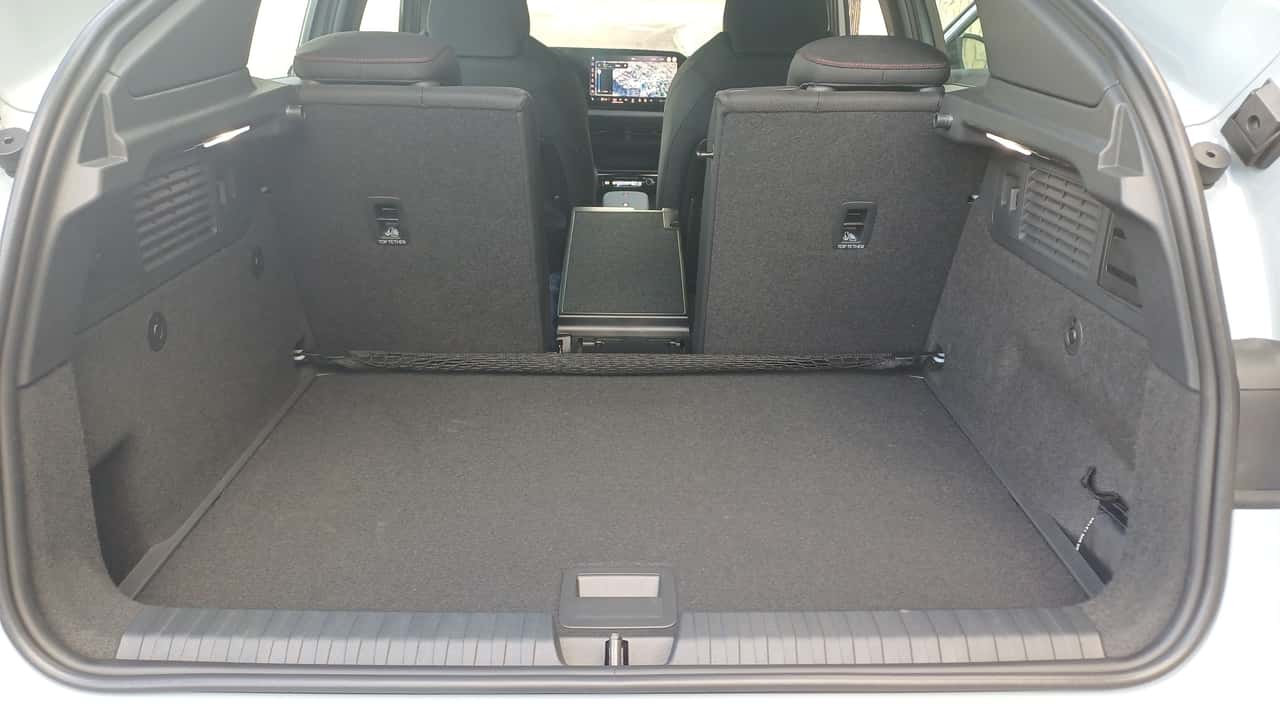
Shelf in the upper position with folded middle section of the backseat
Photo by: InsideEVs Images by: InsideEVs
However, converting it is quite fiddly: unlike in the ID. Polo, where you can flip the insert from the upper to lower position with one hand, it tends to get stuck in the A2 e-tron. After some trial and error, I found the solution: folding the part allows it to be maneuvered from top to bottom. The test car also featured a 40:20:40 split-folding rear seat, a rare perk in this class that is part of various interior packages for the A2 e-tron.
The voice control, supported by ChatGPT, as an Audi spokesperson told me, works well. It could tell me the correct age of Chancellor Friedrich Merz and also named two local dinosaur-themed museums.
Driving Impressions
Now, onto the driving impressions. A colleague and I first drove the 188 hp version, which, along with the 228 hp variant, is expected to make up the bulk of sales. The car accelerates well but noticeably loses power at higher speeds. Therefore, this version might not be ideal for those who frequently overtake on country roads. The 322 hp drivetrain of the top version, which we drove next, is much more enjoyable in such scenarios. It also offers significantly higher torque at 545 Nm (402 pound-feet) compared to the 350 Nm (258 lb ft) of the APP350 motor variants.
The optional progressive steering was noticeable in the few uphill hairpin turns. The steering became suddenly more direct with strong steering input, which surprised me. Remember, progressive steering adjusts the steering ratio (not the power assistance) to become more direct at strong steering inputs and low speeds. This technology is supposed to make maneuvering easier, as less steering input is needed. Progressive steering is standard on the 322 hp model and part of the optional Tech Plus and Tech Pro packages for other variants.
And the suspension? Both cars experienced rear-end slip during dynamic driving and sharp steering maneuvers. Despite the higher power, this was much less noticeable in the 322 hp version. It's unclear whether this was due to the controlled dampers or different tires (19-inch Nexen tires for the 188 hp version, 20-inch Goodyear tires for the top version). However, this shouldn't be overemphasized: it's unlikely that anyone drives as aggressively daily as we did during testing. Nor is it necessary. In terms of ride comfort, I found nothing to complain about during the two short drives.
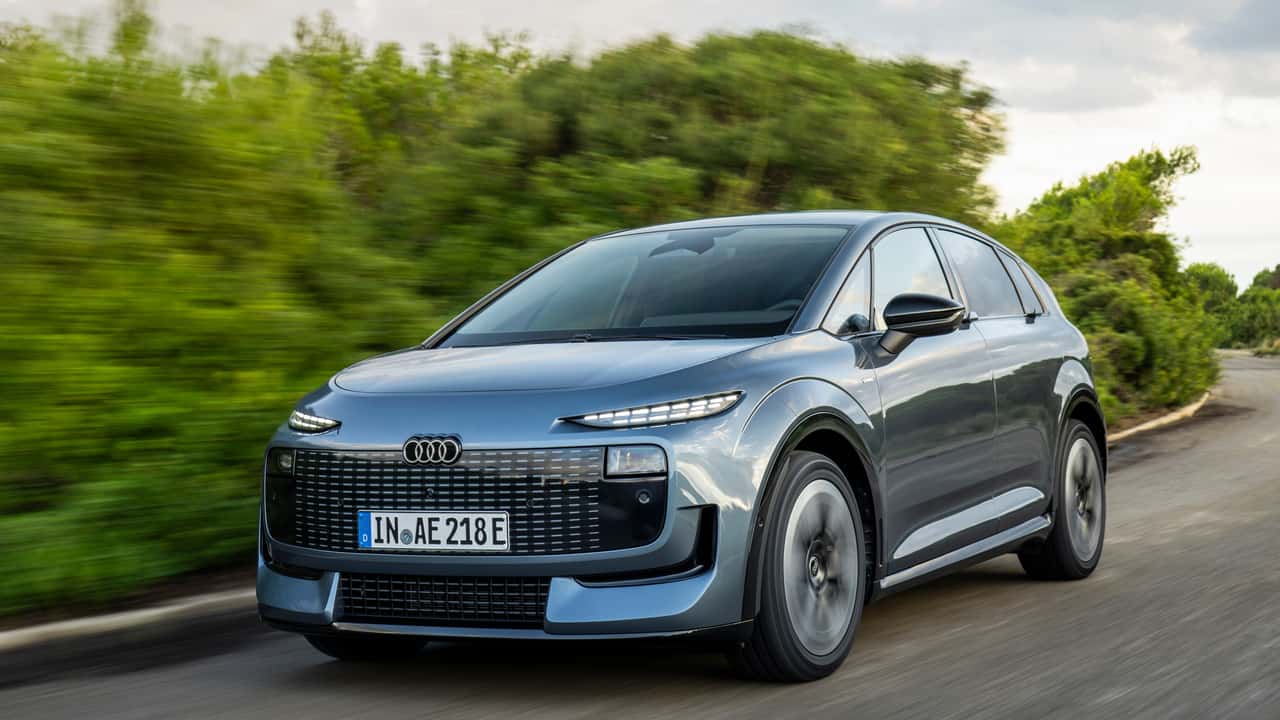 Photo by: Audi
I liked the regeneration settings. Using the steering wheel paddles, you can choose between D1, D2, and D3, with the B-mode selected on the right of the steering wheel. Regeneration strength increases in that order. In B-mode, the creep function is also deactivated, allowing for one-pedal driving. Additionally, there's an automatic mode where regeneration adapts to the driving situation.
The new adaptive cruise assist plus automatically stops the vehicle at red lights. However, it doesn't automatically start moving again, as assistance system specialist Patrick Werner confirmed. After an in-depth discussion with the expert, I still don't understand why. After all, the car automatically starts moving again when stopping behind another vehicle, and the interior camera detects that you're looking forward attentively. Audi seems cautious with new functions. If the light turns green before coming to a stop, the car continues automatically.
I didn't record the energy consumption due to the short test drive. According to WLTP figures, the 228 hp model with the efficiency package (which mainly includes a lowered suspension and low rolling resistance tires) uses 12.8 kWh/100 km, making it one of the ten most efficient electric cars. With the 58-kWh battery, this results in a WLTP range of up to 515 km (320 miles). However, for the 228 hp version I drove, with 19-inch wheels and numerous extras, the consumption goes up to 14.5 kWh/100 km, reducing the range to 463 km (287 miles). In the worst case, it's 15.6 kWh/100 km and 445 km.
For the version with a large 79-kWh battery and 322 hp, powered by the APP550 motor, consumption ranges from 14.2 to 15.1 kWh/100 km, with a range of 593 to 630 km (368-391 miles). Therefore, it's not possible to say that one of the two drivetrains is more efficient overall—it depends on the other equipment. The 228 hp version comes standard with 18-inch wheels, while the top version has 19-inch wheels. The test cars had wheels one size larger, 19 and 20 inches, respectively. It's also worth noting that all APP350 versions (all A2 e-tron except the top version) feature energy-saving silicon carbide inverters, while the APP550 of the strongest variant uses conventional silicon chips.
Additionally, Audi emphasizes that all versions of the A2 e-tron can tow 1,600 kilograms (3,527 pounds). This is indeed remarkable for a compact-class electric vehicle, and it's especially notable because the closely related VW ID.3 Neo and Cupra Born are not allowed to tow trailers—the trailer hitch can only be used for a bike rack.
Audi A2 e-tron test vehicle specs:
Audi A2 e-tron 140 kW Audi A2 e-tron 240 kW Drivetrain RWD 140 kW (APP350) RWD 240 kW (APP550) 0–100 km/h / Top Speed 7.9 sec. / 160 km/h 5.7 sec. / 200 km/h Net battery capacity 58 kWh 79 kWh WLTP range up to 515 km up to 630 km Charging power / DC charging time 105 kW / 26 min (10–80%) 183 kW / 29 min (10–80%) Length / Height 4.32 m / 1.58 m 4.32 m / 1.58 m Base price 41,900 euros 51,200 euros
Prices and Rivals
The 228 hp A2 e-tron starts at 41,900 euros. The corresponding VW ID.3 Neo costs only 36,195 euros with the "ID. purchase premium," which shaves about 5,700 euros off the German list price. The Audi's equipment isn’t necessarily better. Audi charges extra for seat and steering wheel heating (450 euros), while it's standard at VW. Additionally, VW mirrors are not only electrically heated and adjustable but also foldable. A heat pump costs around 1,000 euros extra for both models.
Both vehicles come standard with 18-inch alloy wheels, LED lights with high-beam assist, dual-zone climate control, wireless smartphone charging, navigation system, adaptive cruise control, a basic lane-keeping assist without lane centering, front and rear parking sensors, a rearview camera, and bidirectional charging. However, the Audi has standard steering wheel paddles, a slightly larger instrument display (11.9 vs. 10.2 inches), tinted windows, and a sound system with more speakers (seven vs. five).
The top 322-hp powertrain costs 51,200 euros. There is no VW equivalent yet; one would have to wait for the ID.3 Neo GTI or purchase the Cupra Born VZ, which starts at 50,990 euros.
More premium appeal is offered by Volvo's electric SUVs, with the EX30 being slightly smaller and the EX40 slightly larger. The EX30 P5 Long Range with 268 hp is available from 43,490 euros in Germany, but it offers a maximum range of 475 km (295 miles). For the EX40 P5 Long Range with 248 hp and up to 576 km (358 miles) of range, you'll need to spend at least 53,090 euros.
Conclusion
Essentially, the Audi A2 e-tron is a VW ID.3 Neo or Cupra Born with a different body. Yes, Audi stands out with its shape, colors, equipment, towing capacity, and regeneration settings. But it can't deny its technical foundation, and it's not more economical than its VW Group cousins per se—it all depends on the equipment. All in all, if it were my money on the line, I would rather buy an ID.3 Neo.
Audi A4 EV Delayed Amid VW Group Financial Troubles: Report
Audi Recalls 9,048 Q4 E-Trons Because The Battery Could Catch On Fire
Here's What's Good (And Bad) About Owning An Audi E-Tron GT
This Audi EV Set A Guinness World Record By Driving 831 Miles Without Recharging
]]> contact@insideevs.com (Iulian Dnistran) https://insideevs.com/reviews/815599/audi-a2-e-tron-2027-review-first-drive/ https://insideevs.com/reviews/815471/mercedes-drive-assist-pro-review/ Mon, 16 Nov 2026 14:00:00 +0000 I Tried Mercedes' Answer To Tesla FSD. Here's How It Went The point-to-point assistant can handle traffic lights, pedestrians, cyclists, and navigation duties. But it's not technically self-driving.
After years of having a market to itself, Tesla’s Full Self-Driving (FSD) is about to have a real challenger. Mercedes is introducing MB. Drive Assist Pro, a similar point-to-point driver assistant that can manuever the vehicle through crowded city streets, negotiating stoplights, pedestrian traffic, and construction zones along the way. Like with Tesla FSD, you’re still legally driving, with attention required. But after sampling this technology in a 25-minute loop through downtown San Francisco, I came away impressed.
Let’s get into it.
(Full disclosure: Mercedes flew me to San Fransisco for the launch of MB.Drive Assist Pro. The company covered airfare, lodging, and meals, plus it provided test cars and demonstrations.)
Who Can Get It?
MB. Drive Assist Pro will be available this spring in cars with the MB.OS operating system and required hardware. That means it’s coming to the new CLA EV and hybrid, the GLC EV, the S-Class sedan, and the recently refreshed GLE and GLS SUVs. If you own one of those vehicles, you’ll be able to purchase it in the Mercedes digital store on the vehicle, though pricing has not been announced. (GLC EV owners also need certain hardware that isn’t standard, so it won’t come to everyone.)
Beta testing is beginning shortly in California, so if you own one of those cars in the Golden State, keep an eye on your inbox. After the initial rollout next year, Mercedes plans to quickly deploy the tech to more gas, electric, and hybrid models.
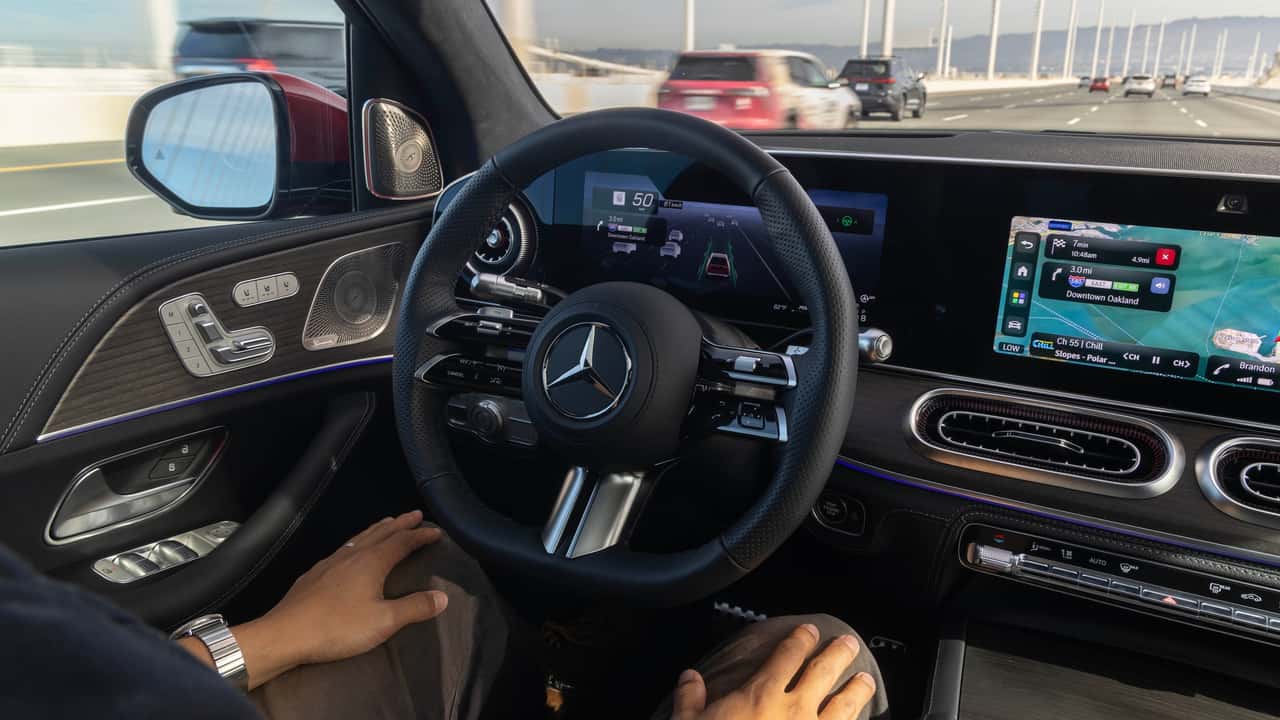
Mercedes will also launch Hands-Free Highway Assist next year, enabling hands-off cruising on divided highways. But intra-city runs require hands on the wheel, at least nominally.
Photo by: Mercedes-Benz
Hands On The Wheel
There’s one major distinction between MB. Drive Assist Pro and FSD: Drive Assist Pro requires a hand on the wheel in the city. Tesla will let you go hands-free anywhere, relying on a relatively easy-to-fool driver monitoring camera to keep you in the loop. (This does not always work.) Mercedes allows hands-free motoring with its highway-only Hands-Free Highway Assist, but if you’re negotiating stop lights you’ll need a hand on the tiller.
In theory, anyway. In reality the car often let me go five minutes or so without an intervention, as its nag reminders are contextual. If the driver monitoring camera sees that you’re clearly paying attention and the car is in a relatively manageable situation, it’s pretty laissez faire about your hands. Even when it does remind you, it doesn’t take much to satisfy it.
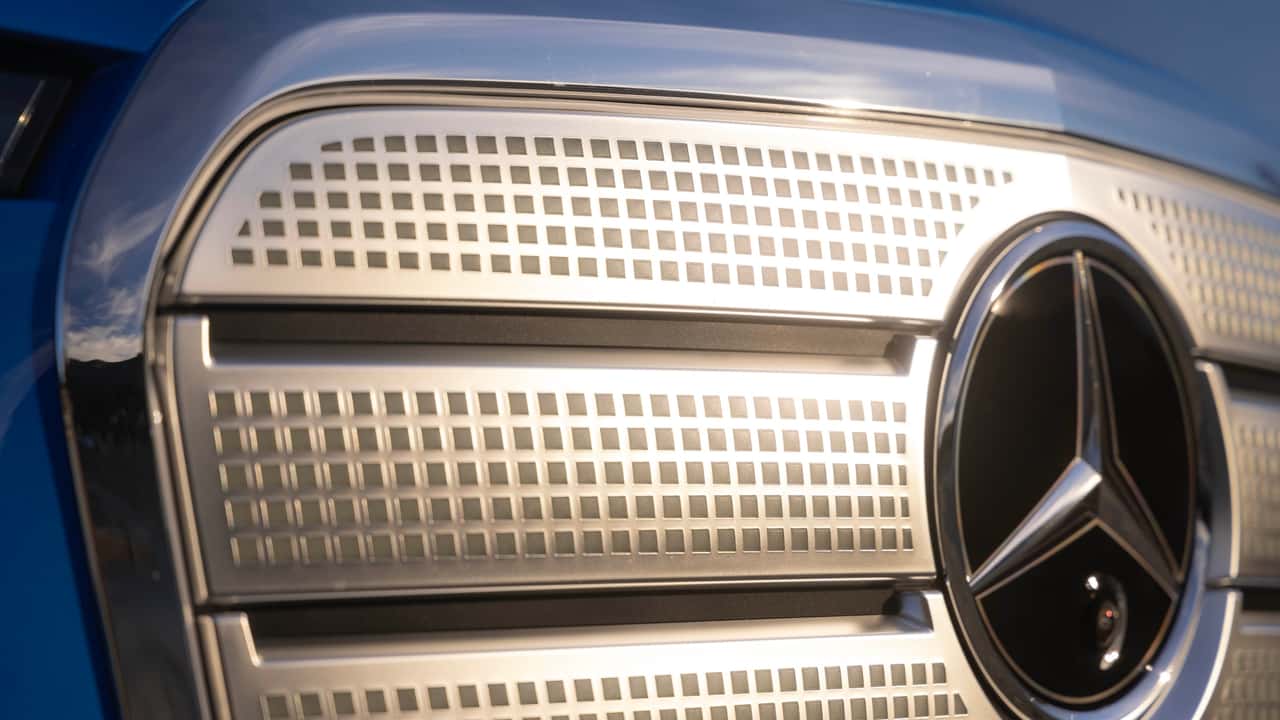
The system has 10 cameras, five radars, and 12 ultrasonic sensors.
Photo by: Mercedes-Benz
Under The Skin: It’s Not End-To-End AI
MB. Drive Assist Pro is as much an Nvidia product as a Mercedes one. The system uses Nvidia’s Drive AV stack for its fundamental approach to driving, with a system-on-chip that delivers up to 254 tera operations per second (TOPS). It uses that supercomputer to crunch the data from 10 cameras, five radars, and 12 ultrasonic sensors, giving it extra modalities beyond Tesla’s camera-only approach. Mercedes says the radars should help with perception in heavy fog and at night.
But that’s not the only way this system diverges from Tesla’s approach. Tesla uses an end-to-end neural network, which means that data goes in, driving comes out, and everything in between is handled by varying the weights in the neural network. There are no deterministic, hard rules, rather just the collective “knowledge” of billions of miles of training data.

Tesla's FSD is an end-to-end AI system.
Photo by: Mack Hogan/InsideEVs
Mercedes and Nvidia are more risk averse than that. The system’s fundamental driving character is handled by Nvidia’s Alpamayo stack, which is a pure AI layer that navigates the uncertain and contextual driving world. But that system has a guardrail around it: a deterministic layer called Halos, with hard-coded, immutable rules. That means “stop at a stop sign” is not a highly weighted node in the system’s black-box brain, it’s a fact of life that the AI system works within.
Tesla used to use this sort of blended model, and I must say that FSD has improved rapidly in the years since it has become an end-to-end AI system. Still, as automakers feel out the safest way to do this, this is firmly the right way to start. Whether it can keep up with end-to-end AI systems is a different question, one we won’t be able to answer for years.
How Does It Drive?
My experience with Drive Assist Pro was brief. Mercedes gave us a 25-minute demo drive, during which I was “driving,” albeit only in the legal sense. The car took us on an urban loop through San Francisco, starting in the dense Financial District and towards the Embarcadero.
Immediately, I was pleasantly surprised. Despite FSD’s multi-year head start, the Mercedes system felt similarly confident to the FSD version I tested in late 2025. The car confidently and predictably navigated traffic from the beginning, with no obvious indecision or perception issues. I kept an eye on the car’s perception the whole time through the built-in visualisation, which looked great and kept me feeling secure.
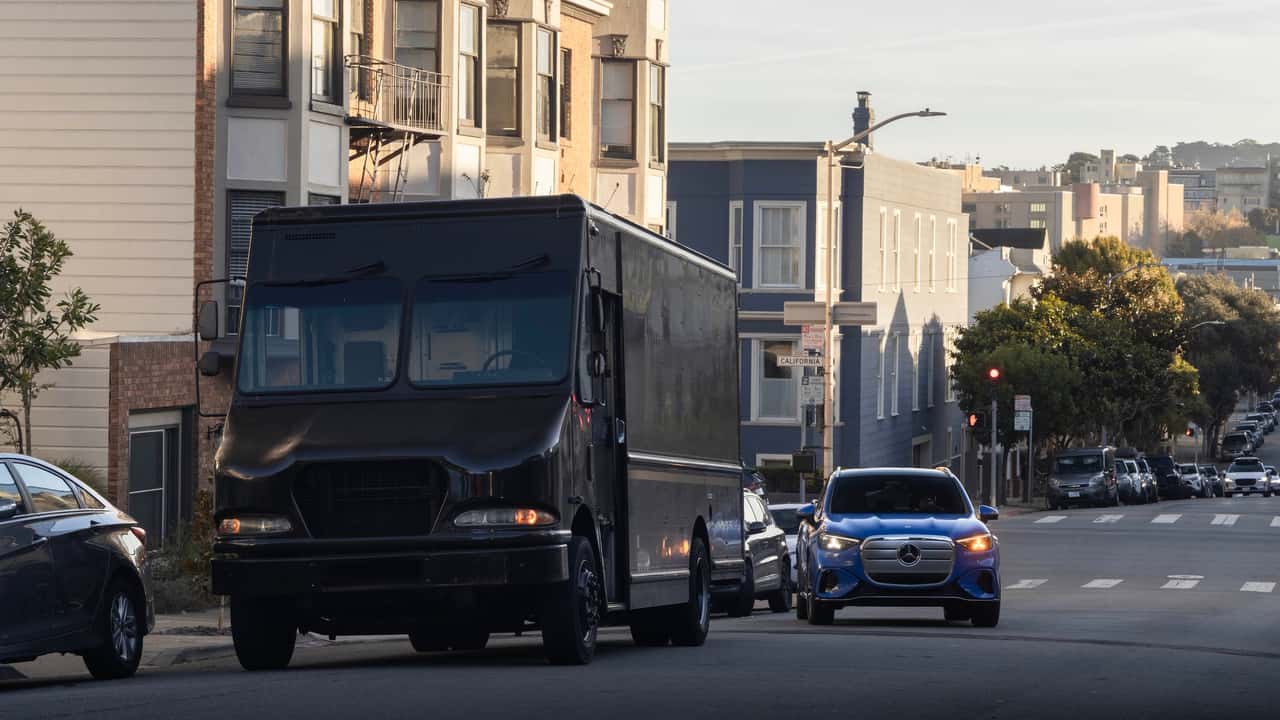
The Mercedes did a great job of dealing with double-parked trucks.
Photo by: Mercedes-Benz
Still, the experience of a car making its own driving decisions is still unsettling on its own. Early on, the car was going left at an intersection with two left turn lanes. We were in the leftmost one and—anticipating a turn a few blocks ahead—the car started maneuvering into the second-to-left lane before the turn.
This was legal (to my knowledge), executed relatively safely, and properly signalled, but still a more risky maneuver than turning first before changing lanes. It confused both me and the car I was jumping ahead of, and made me nervous for a second.
That was really the only snag in the loop, though. I encountered double-parked cars, lights that turned red as I waited for a pedestrian to clear, and temporary construction zones. The Mercedes GLC EV test car handled them without drama. It seemed properly cautious, and the requirement to have a hand on the wheel definitely kept my focus sharp.
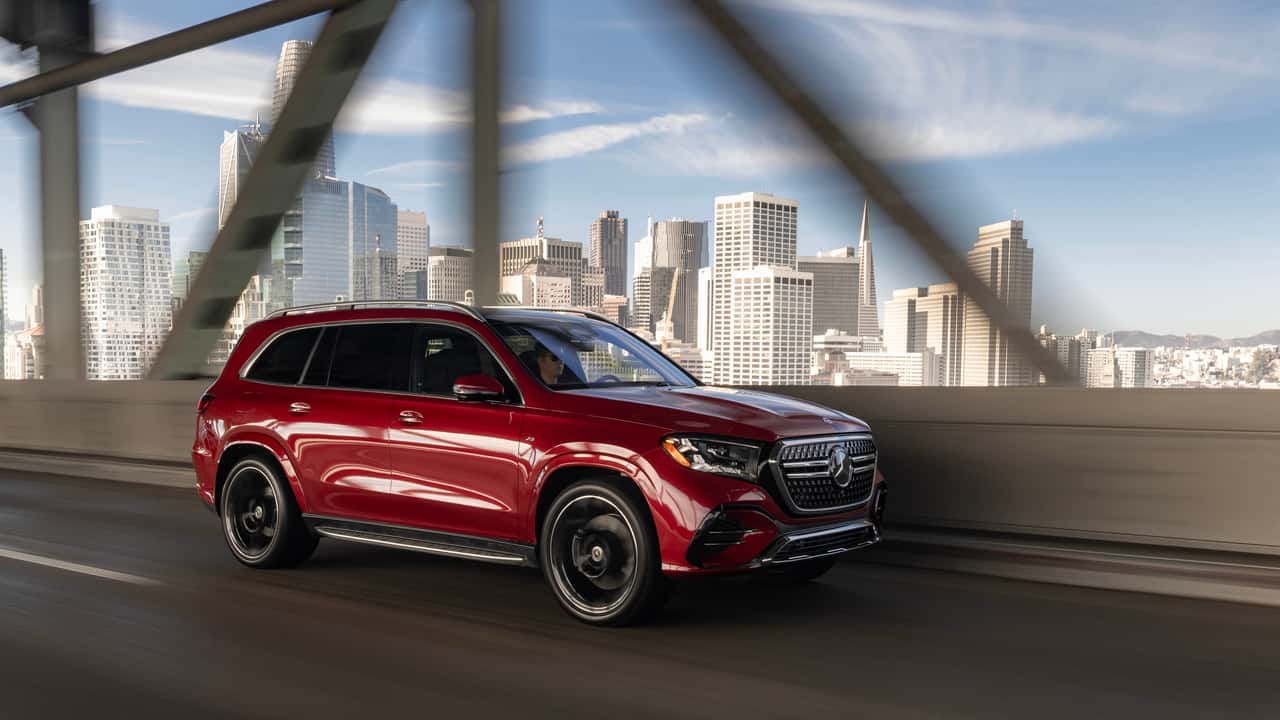
One major distinction of Mercedes' system: It'll available on gas-powered models with MB.OS as well, like this GLS SUV.
Photo by: Mercedes-Benz
Does It Feel Safe?
Here’s the main thing I’m surprised by: I didn’t expect Mercedes to pursue this path at all. Two years ago, my baseline assumption was that automakers would offer things like hands-free highway cruising for a while, but that a point-to-point system wouldn’t launch on any legacy system before it was ready to be eyes-off level 4 autonomy.
A limited level 2 system like Super Cruise has obvious and clear delineations of responsibility and capability. Tesla FSD, meanwhile, is literally called “full self driving,” and in my experience many buyers treat that as a fact, not a marketing slogan. When the car handles every aspect of driving, it’s hard to remember that you are still legally in charge and responsible. I never expected a legacy automaker to open that can of worms.
Mercedes, ever afraid of being behind the curve, is making the leap. It has pulled its Drive Pilot level 3 eyes-off highway assistant for the market for the time being, betting big on the Nvidia-powered, hands-on Drive Assist Pro function.
Its approach certainly feels more cautious than Tesla’s. In my brief experience, Drive Assist Pro felt far more refined than the first beta versions of Tesla FSD, and far more aware of the driver’s attention. Through minutes of direct concentration I would never get nagged, but five seconds of daydreaming led to a warning.
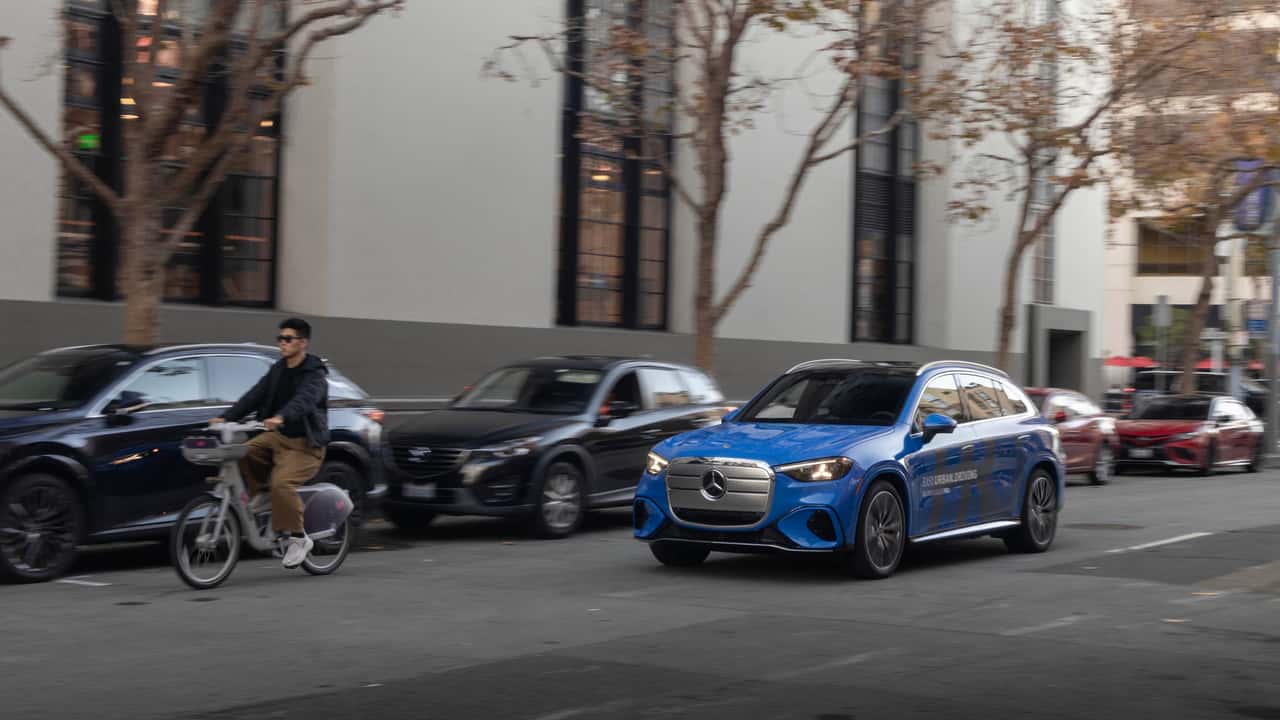 Photo by: Mercedes-Benz
It helps, too, that it’s not labeled as “Self Driving,” and that it is “collaborative.” That means if you want to push the car wider around a cyclist, or cross the double yellow line to give parked cars some berth, you can do so without disabling the system. Grab the wheel and the car lets you steer however you’d like, seamlessly resuming control when you let go again. Ditto if you want the car to speed up; press the accelerator and you zoom ahead. Plus, if you want to break the speed limit, the system will let you set whatever speed you like, and climb to it if conditions permit. You’re driving. It doesn’t want you to forget that.
Mercedes' Answer To Tesla FSD Requires Hands On The Wheel. Does That Make It Better Or Worse?
BMW's Tesla FSD Rival Hits City Streets In 2027
Toyota’s Tesla-FSD Like System Arrives In 2028, But With Key Differences
I Got A Sneak Peek At Rivian's Answer To Tesla Full Self-Driving
Those little choices made me feel safe. I felt like the expectations were clear, and that I could settle into the supervisory role I was assigned.
Will it work for normal buyers? That’s a trickier question. Like FSD, Drive Assist Pro is so good that I could see it lulling less educated customers into false security. Mercedes seems intent on avoiding that, with a plan to question owners directly throughout the beta period. We’ll have to wait to see if the company can explain it to customers, get it to market, and drive subscriptions. But as a first impression, I’d say Driver Assist Pro is a great start.
]]> contact@insideevs.com (Mack Hogan) https://insideevs.com/reviews/815471/mercedes-drive-assist-pro-review/ https://insideevs.com/reviews/815036/2026-chevy-silverado-ev-trail-boss-review/ Thu, 12 Nov 2026 20:18:16 +0000 The 2026 Chevy Silverado EV Trail Boss Makes No Sense. I Loved It Anyway It's expensive, enormous, and weighs as much as a building. But it made me smile regardless.
My neighbors looked terrified when I pulled up in the Chevy Silverado EV Trail Boss and reversed into two street parking spots outside my Brooklyn apartment. The 5.9-meter-long, 8,500-pound electric pickup isn’t something they see on the block every day.
Like most large electric pickups, the Silverado EV has been something of a commercial flop. The Ford F-150 Lightning was discontinued last year, and production of the Tesla Cybertruck ends next year. Both suffered from poor sales and higher prices than their makers promised. General Motors hasn’t canceled the Silverado EV, but it was initially expected to be far more popular than it turned out to be. The company sold just 11,275 of them last year, compared to over half a million gas and diesel Silverados.
The Trail Boss joined the lineup this past summer as a lifted, off-road-focused trim. On paper, it makes little sense. Trail Boss trims start at $72,595 with destination, and despite its name, it’s not quite an off-road champ. By any rational measure, it’s unconvincing.
But even though the Trail Boss doesn’t appeal to your wallet, it appeals to your heart. It turned heads and received compliments everywhere I went. It has a commanding road presence, towering over Cybertrucks, Toyota Land Cruisers, and Mercedes-Benz G-Wagens. And it’s one of the longest range EVs, with enough battery to power an average home for days with its bidirectional charging system.
More importantly, it’s brimming with charm and personality that few other electric trucks can match. It’s admirably nonsensical, and I hate that I liked it so much.
[Full Disclosure: Chevrolet loaned me the Silverado EV Trail Boss for a week. It arrived with 503 miles of indicated range.]
2026 Chevy Silverado EV Trail Boss: What Is It?
The Trail Boss gets cosmetic and chassis upgrades to make it the more adventure focused trim of the Silverado EV lineup, similar to the gas-guzzling Silverado Trail Boss trims.
A two-inch lift over the standard model takes its ground clearance to 10.0 inches. Rugged, 35-inch Goodyear Wrangler all-terrain tires wrapped around 18-inch rims make it look tough and brawny. I didn’t have to worry about curb rashes—the sidewall on these tires was more than double the height of the curbs where I street parked it. Dual red colored tow-hooks up front add character, and can help you recover the truck or others from sticky situations.
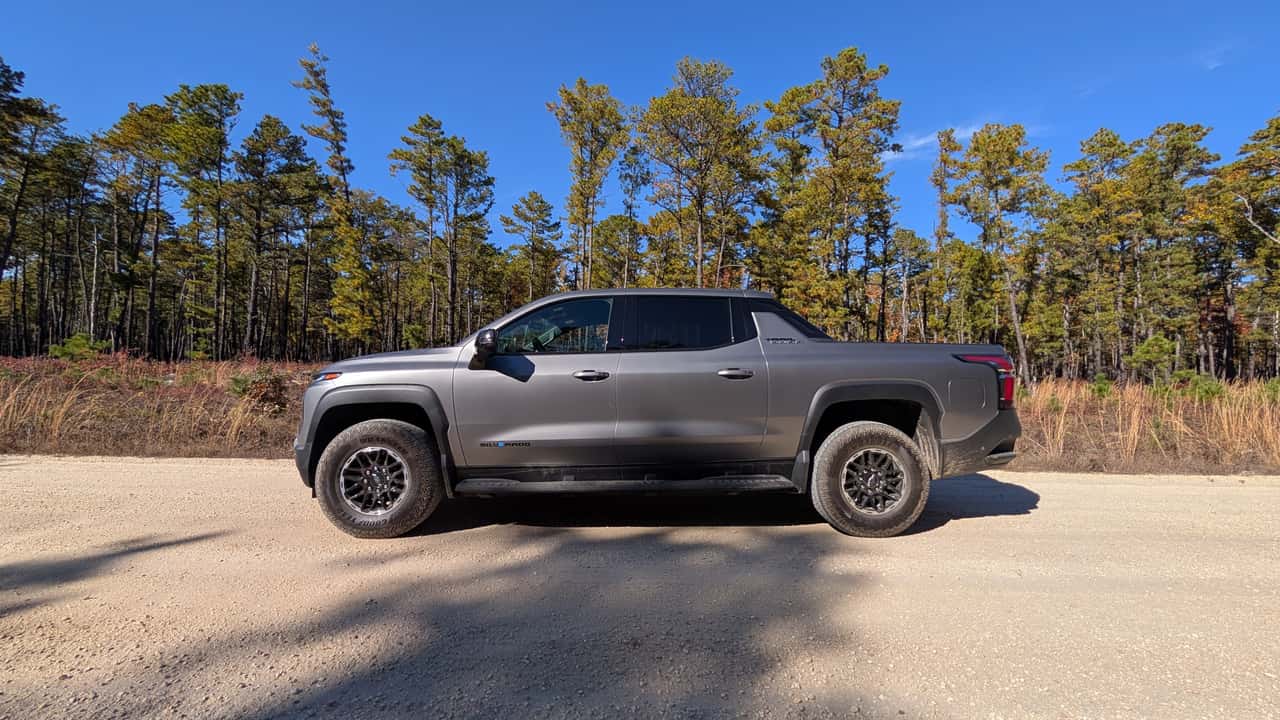 Photo by: Suvrat Kothari
The changes go beyond just looks. Terrain mode is exclusive to this trim and allows sharper four-wheel steering to help maneuver it around tighter trails. Off-Road mode optimizes traction, distributing torque to the wheels that need it the most. Sidewinder mode turns all four wheels in the same direction, similar to Crab Walk on the Hummer EV. The suspension also has unique rebound calibration more suited for off-road driving.
That’s an impressive off-road resume, but as I found out on a trail, the Silverado EV still has some limiting factors.
2026 Chevy Silverado EV Trail Boss: Battery, Range, And Charging
Three battery sizes are available on the Chevy: Standard, Extended, and Max. The base Work Truck with the Standard pack is good for 286 miles of EPA range. The LT gets 410 miles with the Extended Range pack and 478 miles with the Max Pack. The Trail Boss with the Max Pack—the one I drove—also goes 478 miles on a charge.
The Extended and Max batteries basically eliminate range anxiety with sheer, brute energy capacity. The Max battery has a whopping 205 kilowatt-hours of gross capacity, formed by essentially stacking two large EV battery packs on top of each other. This approach has its pros and cons. While it makes range a non-issue, the weight shows up negatively in how the Silverado EV drives off-road (more on that below).
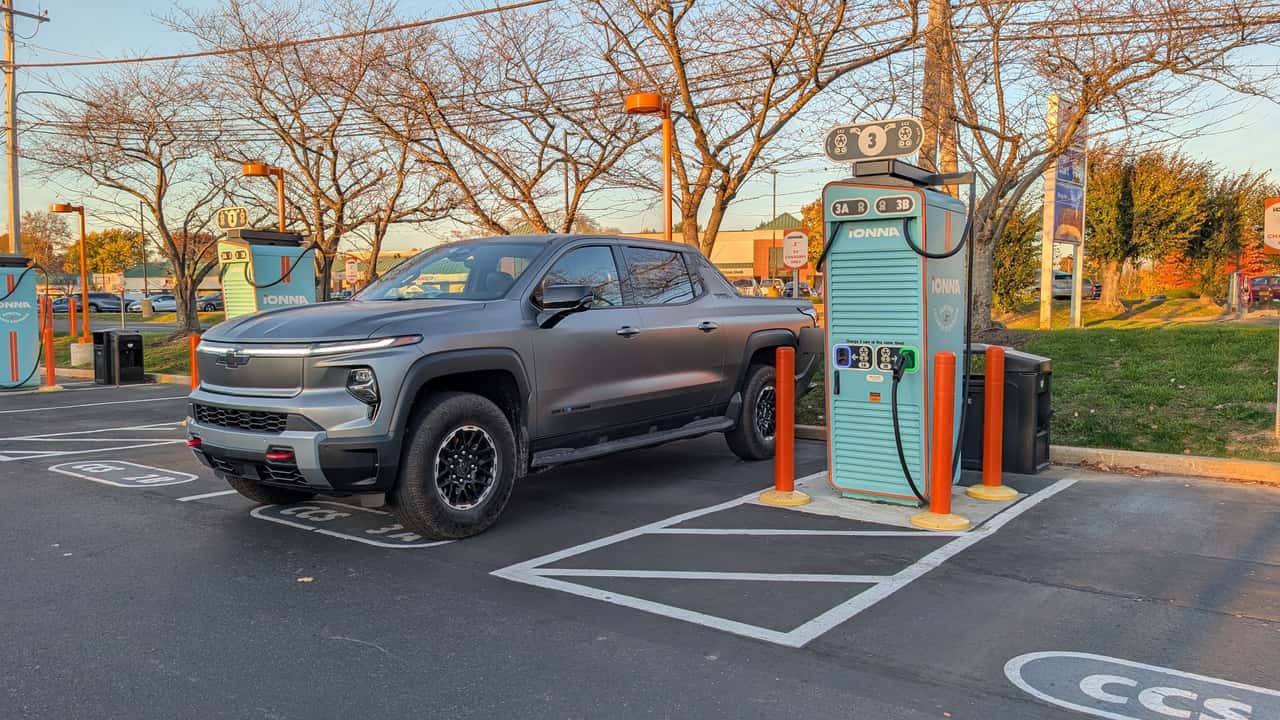 Photo by: Suvrat Kothari
My press car arrived fully charged with an indicated range of 503 miles—five times my weekly mileage needs. In my limited time with it, I could only run the battery down to a 23% state of charge, and it still had 112 miles of indicated range left. At a 400-kilowatt Ionna station, it charged from 23-80% in 38 minutes peaking at a rate of 363 kilowatts, more than the 350 kW figure claimed by Chevy.
Pumping in so much energy in a relatively short time is remarkable considering the gigantic battery, and it made me rethink how I’d charge it. If I were daily driving this truck, I’d only add about 30% to 40% at a time, which would make charging stops even quicker.
Not all Silverado EV trims charge at the same rate. The Max pack supports 800-volt charging and 350 kW of peak speeds. The Extended range pack is rated for 670 volts and 300 kW, and the base battery is rated for 475 volts and 220 kW. You’d want one of the bigger packs if you tow or haul often. Moving so much mass also gulps electrons—I observed 2.3 miles per kilowatt-hour of maximum efficiency with mostly highway driving.
Pros
Built-in Google infotainment Range and charging king Flex midgate
Cons
Too expensive Many blind spots Limited off-road capability
2026 Silverado EV Trail Boss: Driving Impressions
The Silverado felt intimidating from behind the wheel, but I got used to it rather quickly.
My initial discomfort came from blind spots. Due to its high ride height, I could only see the roofs of low-to-the-ground sedans like the Tesla Model 3, for example, when they were passing from the right. Its thick C-pillar also creates a massive blind spot when you look over your right shoulder. The 360-degree camera, blind spot warnings, and all the ultrasonic sensors helped while parking and off-roading, but being vigilant and spatially aware is really important on a truck this big.
On the plus side, it makes you feel like the king of the road. It makes crossovers look like toys and most cars get out of your way when you’re overtaking, unless you’re clashing egos with other trucks the same size, like Ram 2500s or Ford F-150 Raptors.
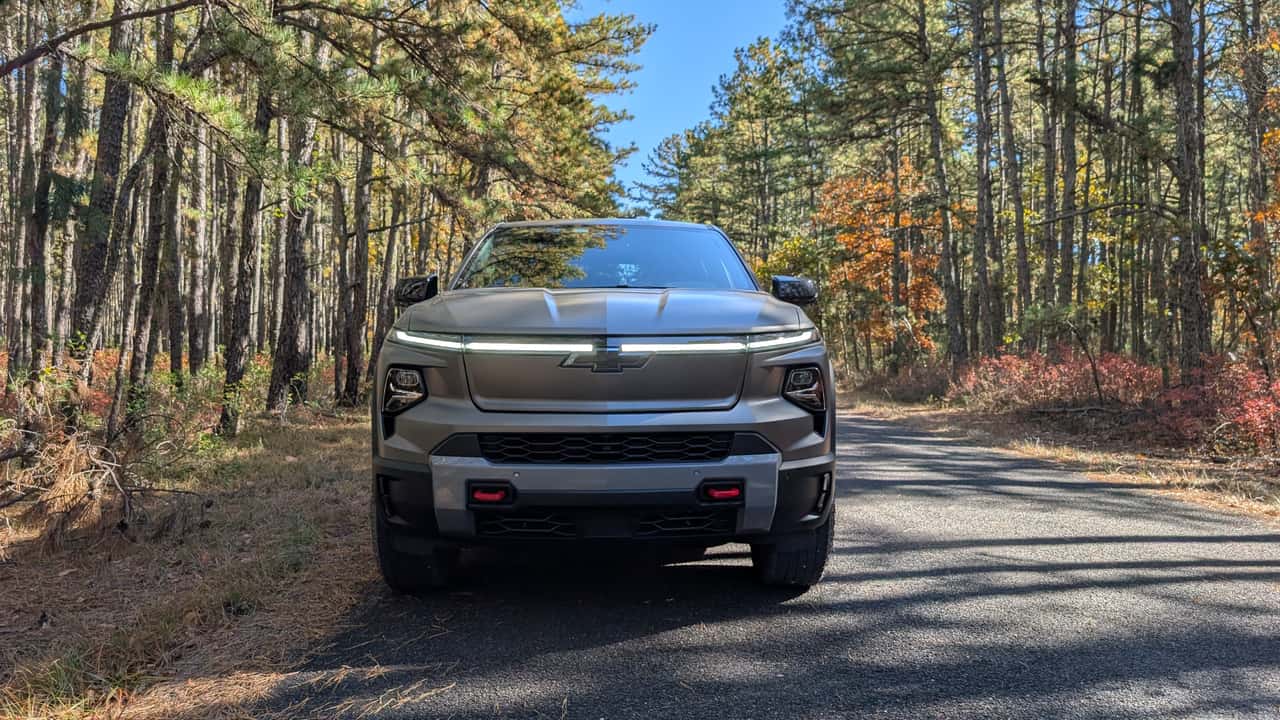 Photo by: Suvrat Kothari
In Normal driving mode, the acceleration isn’t as violent as it is in lighter EVs but it’s sufficient. Wide Open Watts (Wow) mode unleashes all the 725 horsepower and 775 pound feet of torque, making it sprint from a standstill to 60 miles per hour in less than 4.5 seconds. Flooring the throttle lifts its nose and makes it squat heavily on its rear axle unlike any other car I’ve driven.
With its massive 35-inch tires, independent suspension on all four corners, and a 10.05-inch ground clearance, the Trail Boss just effortlessly glides over bad roads. On highways, however, the steering needed constant correction to stay in lane. I suspect that’s partly due to the thick tread on the all-terrain tires, which are designed for all-round use rather than straight line stability.
2026 Chevy Silverado EV Trail Boss: Off-Road Capability
On mild off-road trails in New Jersey’s Wharton State Forest, the Silverado EV felt like it was in its natural habitat, at least for the most part. Driving an EV through a remote forest felt serene, thanks to its nearly silent powertrain and lack of tailpipe emissions. But its limited wheel articulation and large, stiff battery pack suspended between the four wheels hold it back.
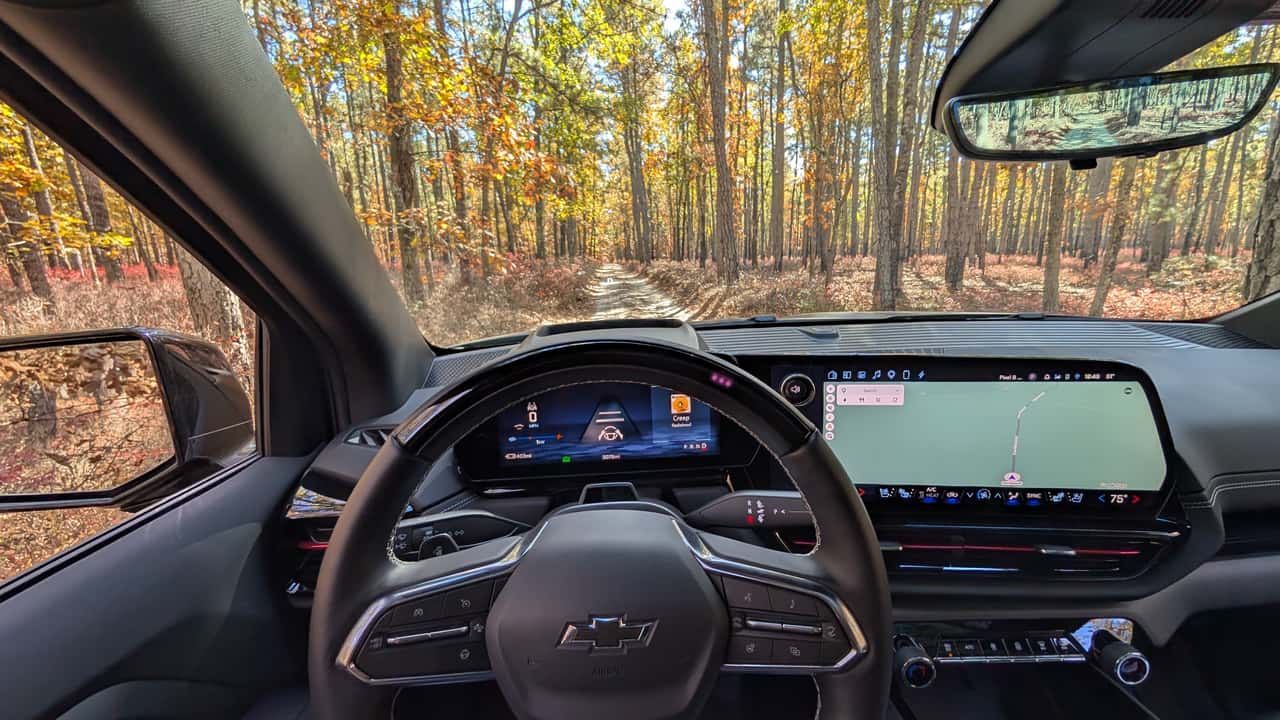 Photo by: Suvrat Kothari
The truck breezed over sand-filled sections and unpaved trails, feeling hefty and sure-footed. But even at speeds as low as 15 mph, the side-to-side heaving over wavy surfaces was uncomfortable. It caught me off guard many times on terrain that a Jeep Wrangler would speed past.
The Silverado EV is also no match for a rig with mechanical lockers, a ladder-frame chassis, and solid axles over truly treacherous terrain. Its gas-powered siblings will likely do better when crawling over rocks or negotiating intense ruts.
2026 Silverado EV Trail Boss: Is It A Good Truck?
The Silverado EV rules when it comes to truck-specific features. It’s one of only two trucks currently on sale with a pass-through midgate, the other being the mechanically identical but more luxurious GMC Sierra EV. The flex midgate extends the 5-foot-11-inch bed to accommodate items up to 10 feet 10 inches long. That’s enough room for a kayak, a motorcycle, or a conference table.
It’s a neatly engineered setup. You fold the rear seats flat, remove the rear window, and secure it on a shelf on the midgate itself. Then two latches help you drop the whole thing down. Here’s a video of how that works.
You also get a neat flex tailgate with a load stopper and a step. Payload capacity is rated at 2,100 pounds, along with a maximum of 12,500 pounds of towing capability. For context, the newly launched model year 2027 gas-powered Silverado 1500 can carry 2,340 pounds of cargo in its bed and tow up to 13,700 pounds on the top V8 trims. I wasn’t able to tow anything during my test—I live in a crowded Brooklyn neighborhood, so the joke’s on you if you expect me to.
Plenty of owners do tow, though, and they will appreciate the truck’s effortless power delivery. Towing or hauling will reduce efficiency depending on the load, but the 400-plus miles of range on the Extended and Max packs leaves plenty of buffer.
Ultra long-distance towing will be a challenge, but it’s limited more by charging infrastructure than by the truck itself, especially in rural areas in winter. Thanks to their massive batteries, the Silverado EV and Sierra EV remain among the most usable and practical electric trucks for heavy-duty work, and should only get better as America's charging infrastructure rapidly improves.
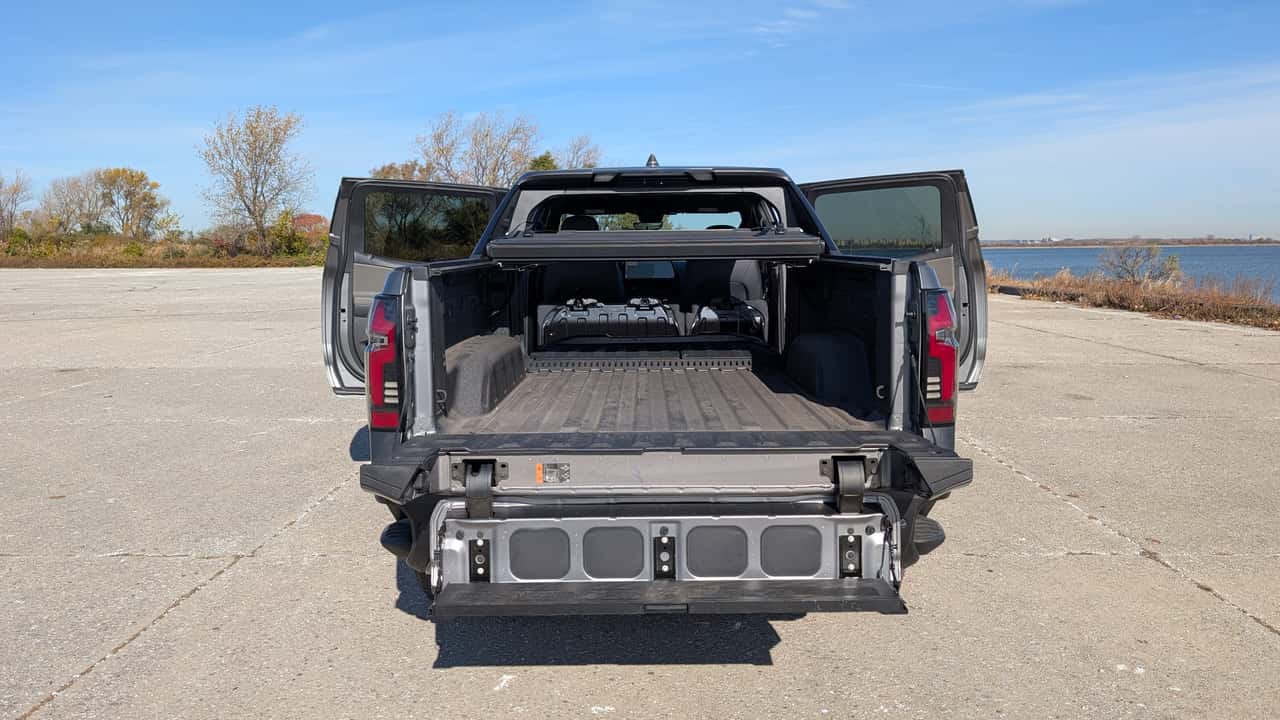 Photo by: Suvrat Kothari
Perhaps the most underrated feature on GM trucks is the ability to export battery power. You can get up to 11 total power outlets on the Silverado EV in the cabin, frunk, and the bed. The bed itself has 120- and 240-volt outlets to power your tools.
You can also power your home with GM's Powershift Charger and V2H Enablement kit, which can send power from the truck's battery to your home during outages. That kit isn’t cheap, though, priced $7,648 as of writing.
Efforts are underway in the industry to make V2H systems cheaper and less complex. On the 2027 Ford Fathom, the inverter will be built into the vehicle’s e-box, rather than being an expensive external component like it is on current V2H systems. The entire system is expected to cost in the $2,000 range.
2026 Chevy Silverado EV: Interior And Technology
The cabin is part of what makes the Silverado EV so easy to drive. You just press the brake, shift to drive, and you're good to go. There’s no start/stop button because there’s no engine to crank, even though many automakers keep one to maintain a sense of familiarity for new EV buyers.
GM EVs are also generally pretty good with one-pedal driving calibration, and the Silverado EV is no exception, which takes another point of friction out of the experience.
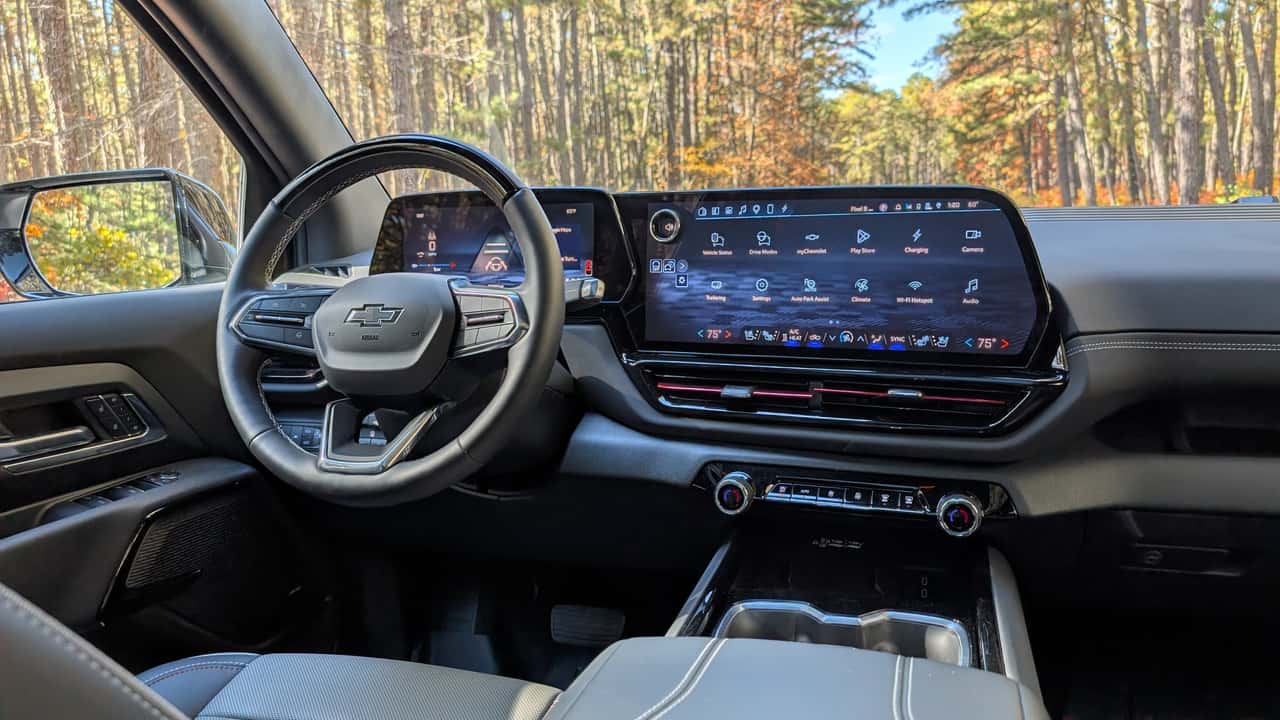 Photo by: Suvrat Kothari
I’ll skip indulging in the tech wars over GM's decision to steer clear from Apple CarPlay and Android Auto, because I genuinely didn’t miss those things. The 11-inch digital gauge cluster and 17-inch central touchscreen run the Google Built-In app suite natively, and it worked flawlessly. Apple Music is available natively and Spotify can be easily downloaded via Play Store, along with dozens of other compatible apps.
The system supports Google's Gemini AI assistant, which is great at conversational commands and answering general questions well, like where to find vegetarian restaurants along the route. You never have to hunt for charging stations or manually precondition the battery either, since the system takes care of both, removing yet another point of friction.
My experience with Super Cruise was mixed. The system couldn’t detect lane lines when bunched up in traffic, which I suspect is because the ADAS camera sits high on the windshield of a truck that’s already super tall. When you’re too close to other cars, the truck’s sheer size keeps the camera from seeing the lanes. I didn’t run into this in other GM crossovers like the Chevy Blazer EV. Super Cruise also shut off in harsh sunlight.
On the plus side, the automatic lane changes were confidence-inspiring, and the system accurately detected surrounding traffic before moving over on its own.
2026 Silverado EV Trail Boss: Yay Or Nay?
I’m glad the Silverado EV exists. It’s stylish, practical, and excels at the EV-specific things with a massive frunk, one-pedal driving, and virtually no concerns about range or charging. The software is great, too. The Trail Boss isn't an off-road champion like its name suggests, but instead a really good all-rounder.
However, none of that makes its price make sense. The entry-level Custom starts at $58,490 including destination, roughly $15,000 more than a gas-powered 2026 Silverado 1500 crew cab with a short bed. The electric Trail Boss costs about $12,000 more than the gas-powered LT Trail Boss. The Max battery on my press car drove up the MSRP to nearly $90,000 before options. With a price difference so big, I’m not sure if lower home charging and lower maintenance costs can close the difference.
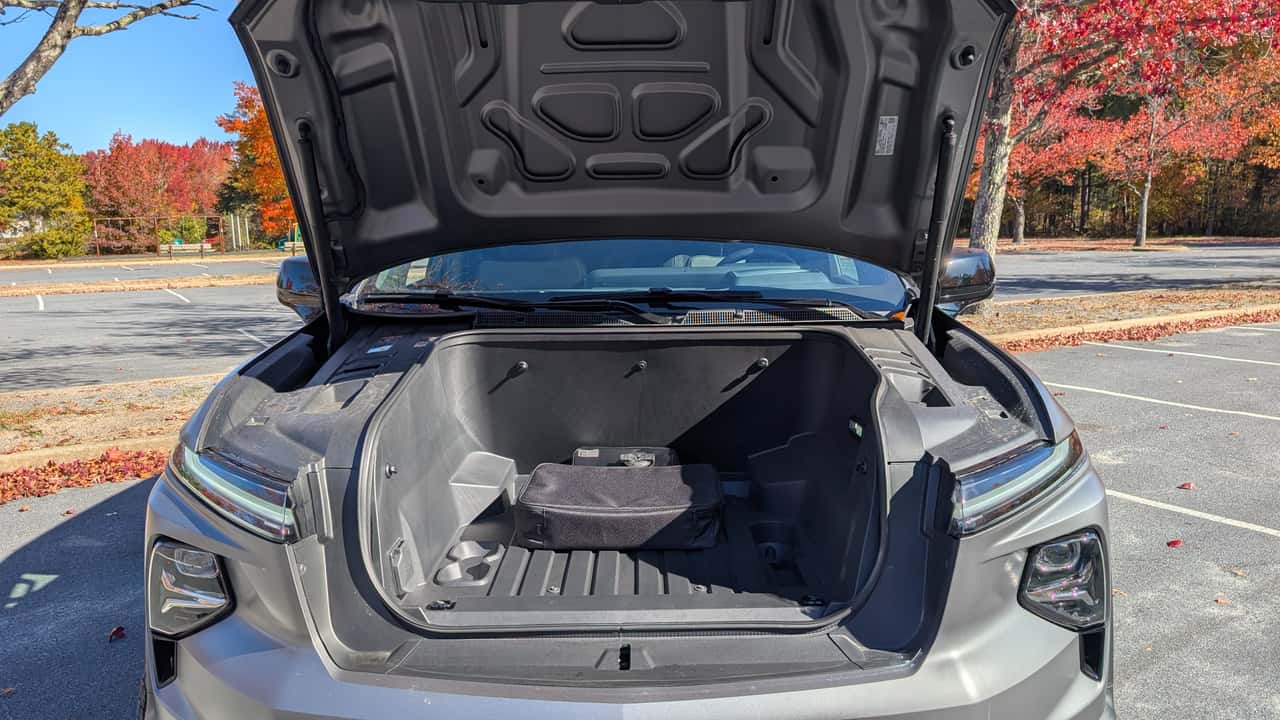 Photo by: Suvrat Kothari
GM knows this. It’s developing cheaper lithium-manganese-rich (LMR) batteries that it believes will cut thousands of dollars from its large trucks and SUVs. GM has said LMR cells are headed for full-size trucks and SUVs starting in 2028, and the Silverado EV is a prime candidate. Meanwhile, the market is shifting toward smaller, cheaper trucks like the Ford Fathom and the Slate truck, while large electric trucks are either dead or on their way out.
That leaves GM with a unique opportunity. If it can make big electric trucks make financial sense again, it could own a segment its rivals are abandoning and maybe even convince more traditional truck buyers to go electric. Until that happens, the Silverado EV will continue to be something that’s easy to love and hard to justify.
Contact the author: suvrat.kothari@insideevs.com
The 2027 Chevy Silverado EV Gets A Power Bump And A NACS Port
General Motors' EV Sales Are Way Down. But It's Not As Bleak As It Seems
The Chevy Silverado EV Is A Great Truck. Here's Why This YouTuber Is Selling His
I Wanted To Like The 2026 Chevy Silverado EV Trail Boss. Here's Why I Didn't
2026 Chevrolet Silverado EV Trail Boss As-Tested Price$97,180, with destination, Max battery and options. Base Price$72,595 (Extended range battery) Battery205 kilowatt-hours gross EV Range478 miles Efficiency2.3 miles per kilowatt hour (Observed) Charge Time23-80% in 38 minutes (As tested) Charge TypeCCS Output725 horsepower Maximum torque775 pound feet Speed 0-60 MPHUnder 4.5 seconds Ground clearance10.05 inches Payload2,100 pounds Towing12,500 pounds
]]> contact@insideevs.com (Suvrat Kothari) https://insideevs.com/reviews/815036/2026-chevy-silverado-ev-trail-boss-review/ https://insideevs.com/reviews/815287/rivian-r2-adventure-review/ Thu, 12 Nov 2026 17:25:26 +0000 I Took A Rivian R2 On A Camping Trip To The Middle Of The Desert The Rivian R2 is supposedly built for adventure. I put that claim to the test.
Cars are for adventures. That's how I've always seen it. Since I was a kid, my dream machines have always been high-riding, fast four-doors, able to see the country and see it quickly, with enough clearance to explore the most interesting bits.
So the Rivian R2 Launch Package—with its 650-horsepower drivetrain and 9.6 inches of ground clearance—pretty much had my number.
(Full disclosure: Rivian loaned me an R2 with an iKamper rooftop tent for this review.)
By the time the tester arrived, crowned as it was with an Rivian x iKamper rooftop tent, I was already weak. The media launch for the R2 had already converted me into a die-hard fan. Over twisty mountain roads and wilderness tracks in Utah, the R2 proved to be the go-anywhere multi-tool I've always wanted.
But it's easy to make a car shine on a press launch. The car company runs those shows, choosing the route specifically to make the vehicle look good. Many, many cars lose their charm when I get them on my home turf. So the moment of arrival was one of anxiety.
I had ambitious plans for the R2. The agenda involved a day trip into the mountains for some high-speed canyon roads and a nice work-from-anywhere session in the rooftop tent; a week's worth of errands and around town schlepping; and, most importantly, a 500-mile trek into the Mojave desert for an off-road camping adventure. The R2, with its knobby all-terrains and onboard accommodations, certainly looked the part.
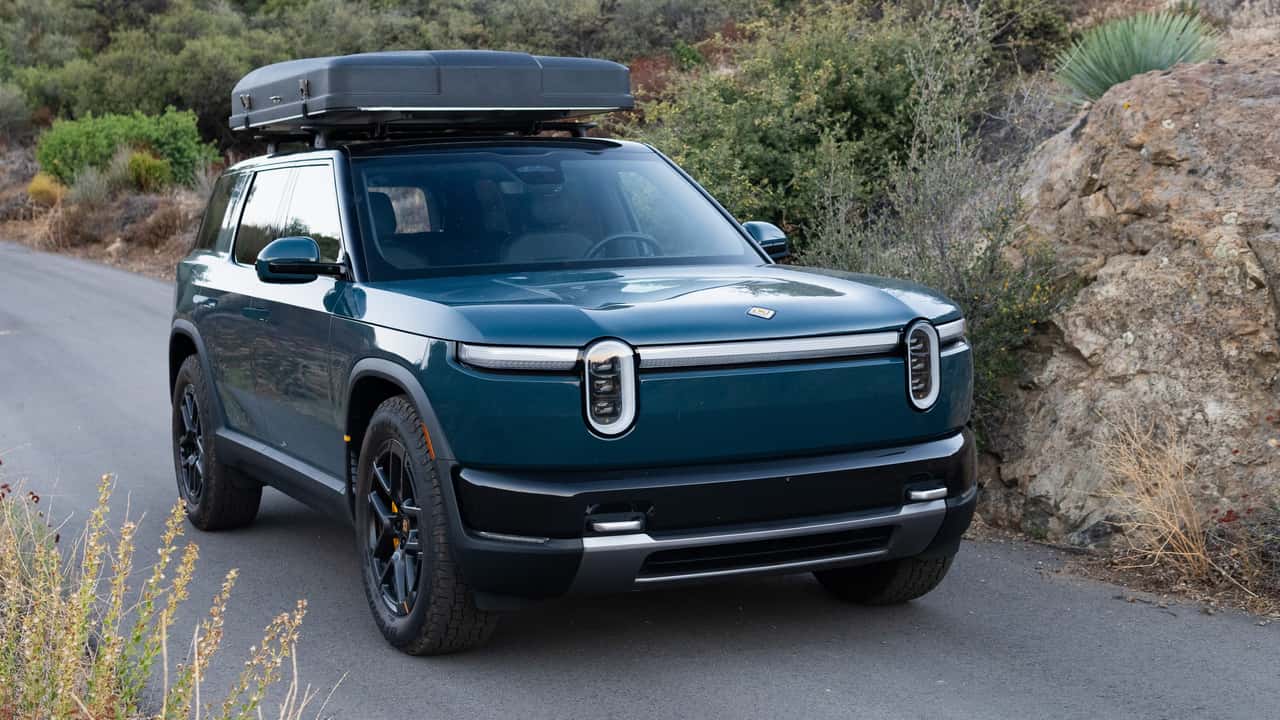 Photo by: Mack Hogan/InsideEVs
I set off on my trip cautiously optimistic. EV off-roading is obviously elite. But it's a more complicated game these days than the old-school method. Charge planning is an essential skill, and the Rivian does its best to assist, with on-board route-planning functionality that's among the best in the business.
Even the best software is based on assumptions, though, and my roof tent guaranteed they would be wrong. The car hadn't had the roof tent on for long, and was likely making calculations without accounting for the extra drag on top. I set conservative stop intervals and leapt into the unknown, charging into the desert at 75 mph and hoping I didn't nuke the range entirely.
Quickly, though, I settled into wide-eyed optimism. The R2 was a quiet and refined long-hauler, making short work of the highway stint thanks in part to its Universal Hands-Free driver assistant. Great seats and a spacious cabin certainly helped.
Efficiency, as expected, wasn't great. I was stuck in the 2.3 miles per kWh range, giving me a real-world range of just 200 miles. But given my 75 mph cruising speed, the big parasail on my roof, and 100-degree heat causing me to blast the A/C, that all seemed acceptable.
I Had High Expectations For The Rivian R2. It Still Blew Me Away
Rivian's R2 Is Already Its Best-Selling EV. Now The Company Expects Even Bigger Sales
Rivian R2's Ventilated Seats Just Got Downgraded. Buyers Are Outraged
Rivian R2 Range Tested Until It Died: Here's How Far It Went At 70 MPH
Once I hit dirt, though, things were a lot better than acceptable. The R2 effortlessly blasted through sandy washes, scrambled up rocks, and drifted around corners. Its capabilities may not exceed traditional off-roaders—a Toyota 4Runner or Jeep Wrangler still has more articulation, which is helpful on the gnarliest terrain—but it was far more comfortable on the trail than any traditional truck, and carried far more speed. One section was so bumpy that it snapped the coolant line to my friend's Chevy Suburban's heater core; in the R2, I barely noticed the bumps.
Through all of this open-desert high-speed running, over the treacherous climbs up steep terrain speckled with loose shale, and on the long interstate slogs, the Rivian was comfortable, charming, and fast. It scrambled up everything I put in front of it, leveraging its gobs of torque and favorable geometry to make quick work of challenging trails. In situations where a Subaru Outback would cry uncle, the R2 didn't make a peep.
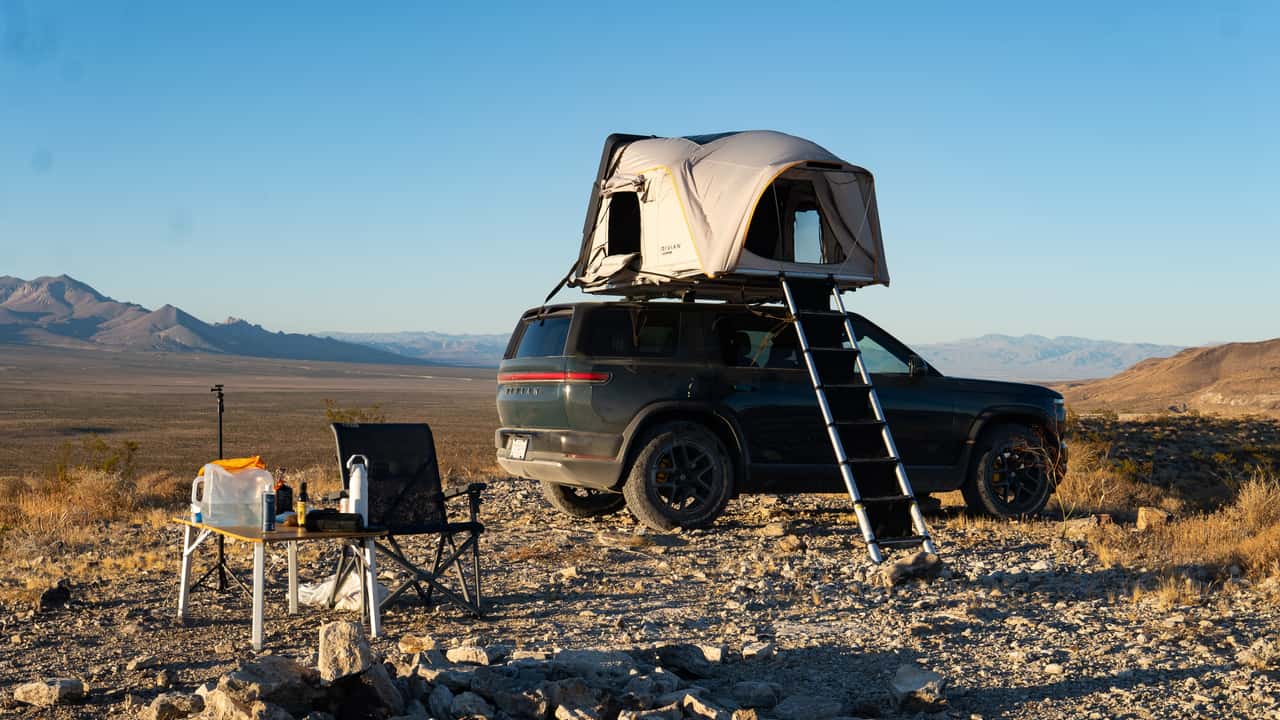
I loved sleeping in the Rivian x iKamper tent, but if you're worried about range, I would skip it. The extra drag really cuts into highway efficiency.
Photo by: Mack Hogan/InsideEVs
It drifted through the sand like a rally car and settled onto the highway like a Mercedes. It was quiet, easy to use, and refined in every moment. And it swallowed up camping gear, filming equipment, a few passengers, and all of my provisions without a concern.
As an all-around multi-tool, the Rivian was unflappable. I threw everything I could at the R2 and it never blinked, cementing what I already suspected. For $59,485 as-tested, there isn't a finer adventure vehicle in the world. Some are more luxurious, others can handle rougher terrain. But as an all-rounder, the R2 is in a class of one.
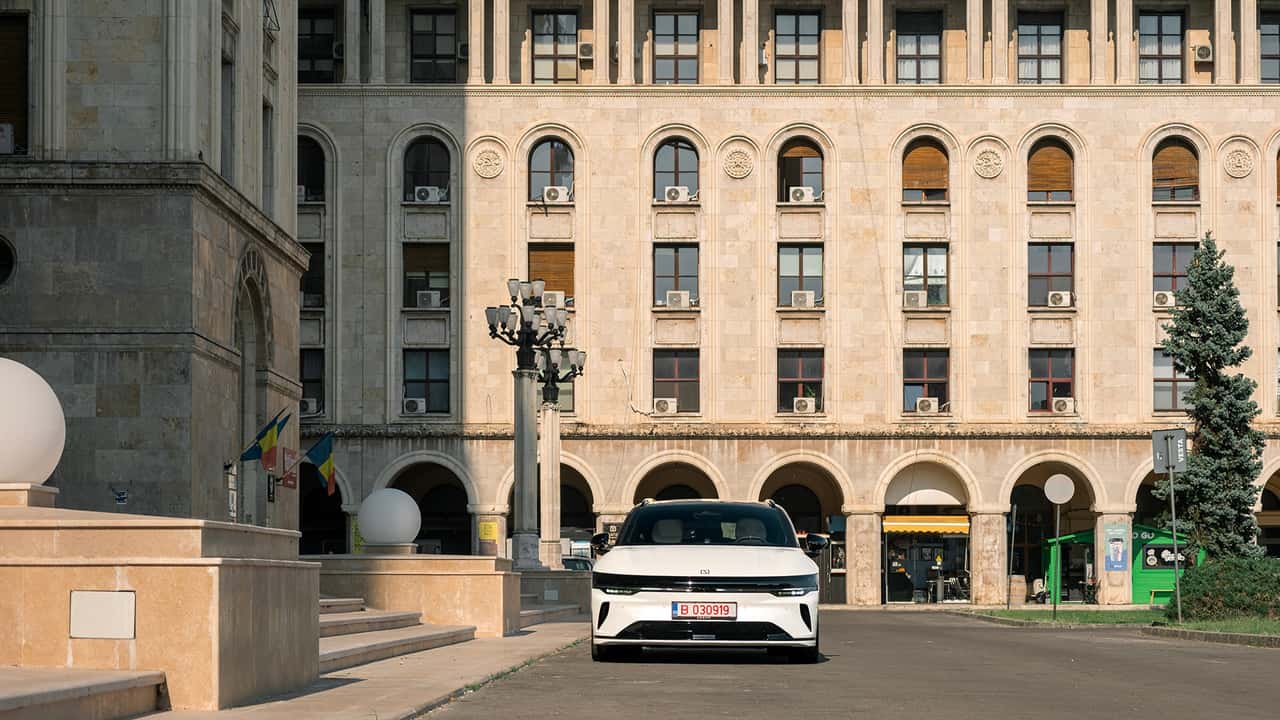
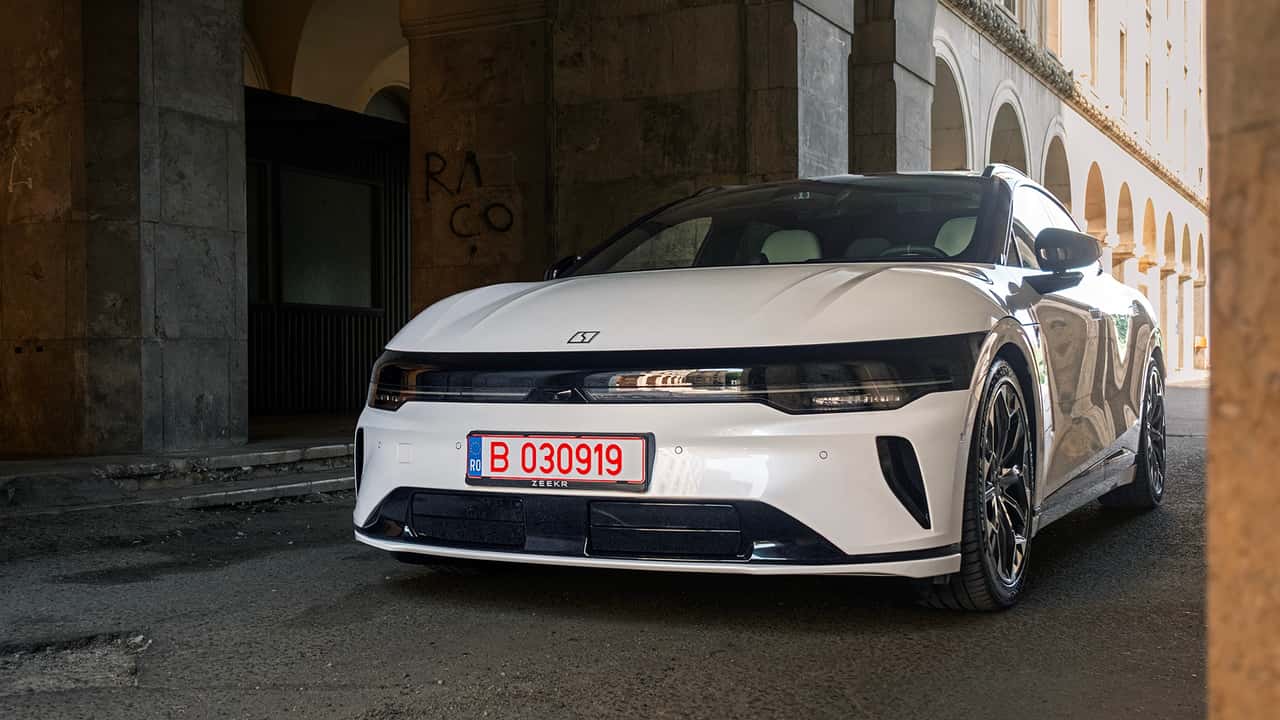
]]> contact@insideevs.com (Mack Hogan) https://insideevs.com/reviews/815287/rivian-r2-adventure-review/ https://insideevs.com/reviews/812960/zeekr-7gt-privilege-review/ Sat, 07 Nov 2026 13:30:00 +0000 The Zeekr 7GT Made Me Question Every Other Luxury EV The Zeekr 7GT feels lavish, rides beautifully, and goes like hell. But it also feels unfinished.
I’ve gotten used to making excuses for expensive cars. That plastic? Weight saving, probably. The missing equipment? Driver focus. The price? Well, that badge has a lot of heritage, and it needs feeding.
But then something like the Zeekr 7GT comes along and makes me reconsider what you should be getting when you buy a luxury car. It’s not just about screen size or how much organ-rearranging power it has. It’s more about a consistently good interior experience, a feeling of quality and solidity, a good ride, and toys.
The 7GT is a relatively compact electric wagon that behaves like a limousine muscle car. After a few days with the top-spec Privilege AWD, I started wondering why so many established luxury carmakers ask you to settle for less and demand more money.
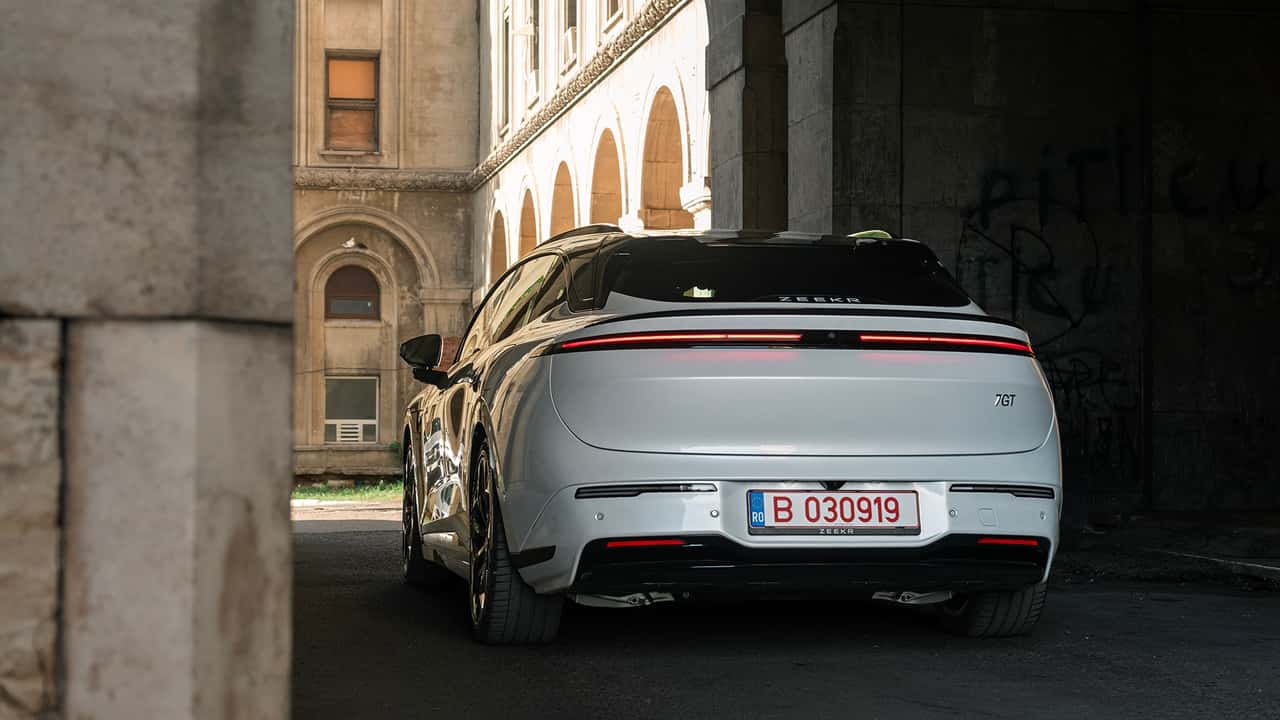 Photo by: Andrei Nedelea
But just as I was about to give the 7GT a 10/10 verdict, I started noticing some rough edges. I don’t mean the materials—those are fantastic—but the software and driver assistance feel about 80% done.
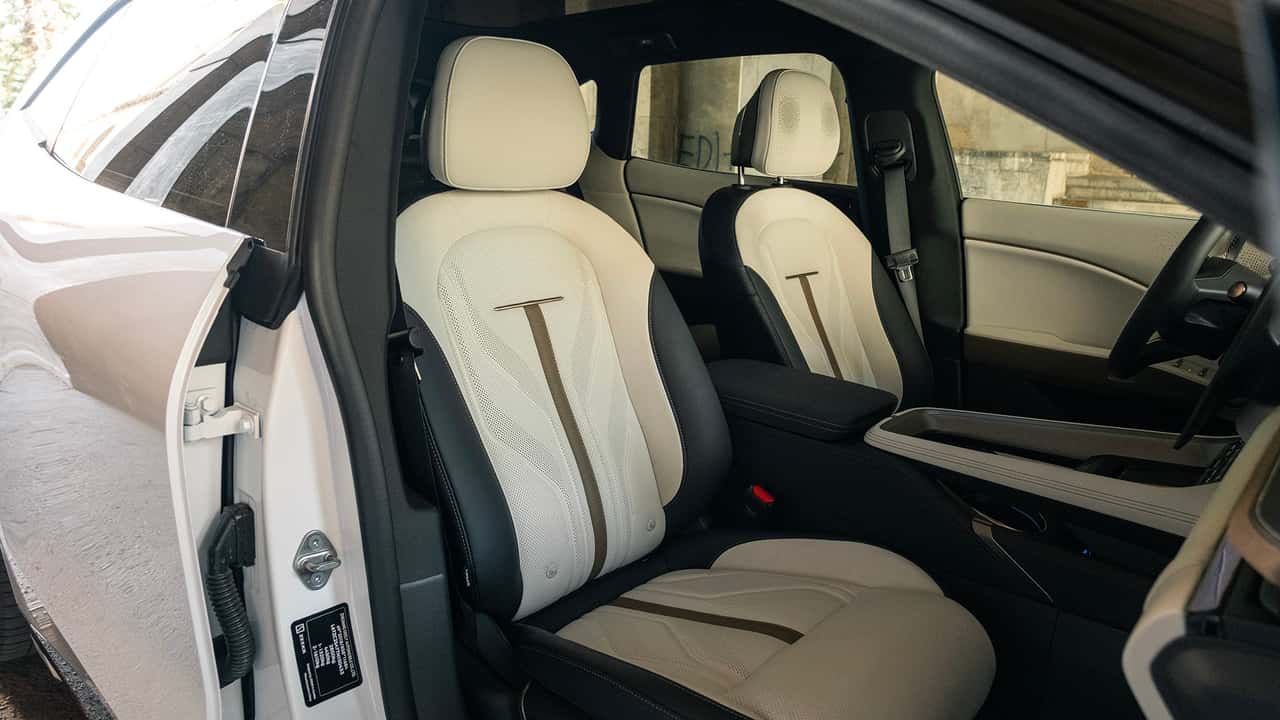
That aside, here is a Chinese-built, Swedish-designed electric wagon with powered and heated rear seats, a lavish cabin where you can’t tell where the Nappa leather ends and the fake stuff begins, with adaptive air suspension and 637 horsepower, all for far less money than any German competitor.
Someone Forgot This Isn’t A Limousine
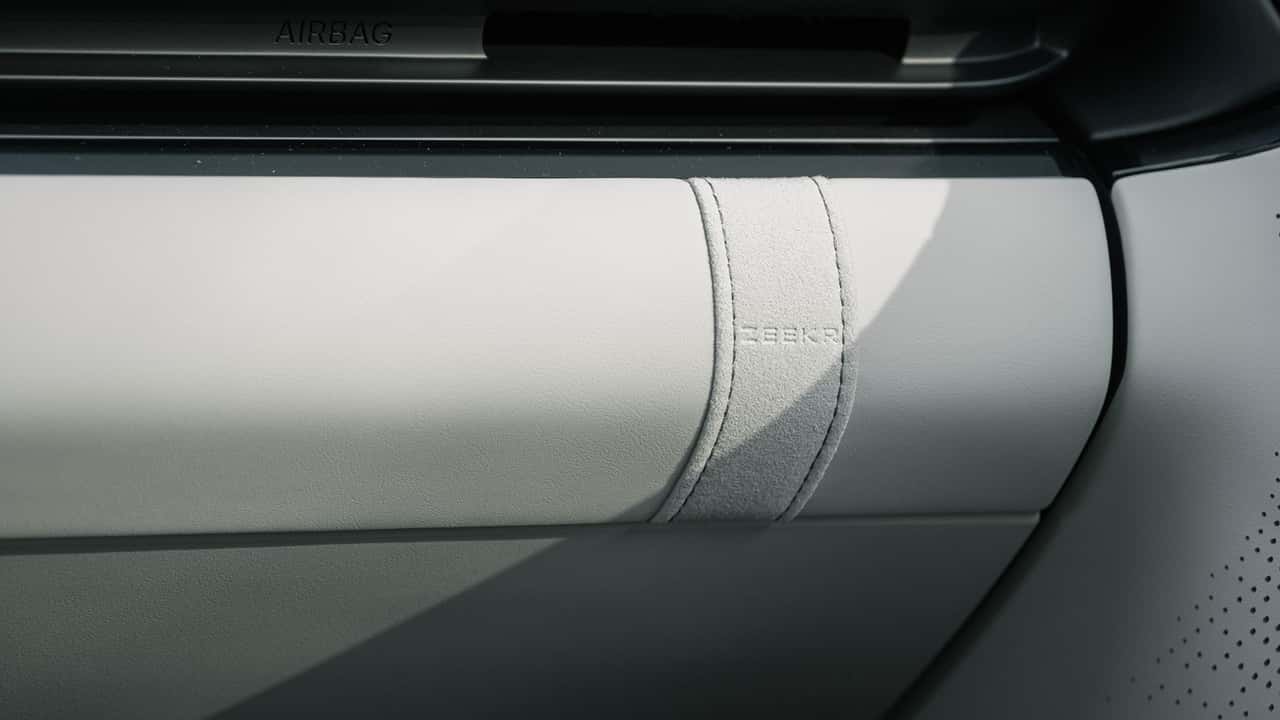 Photo by: Andrei Nedelea
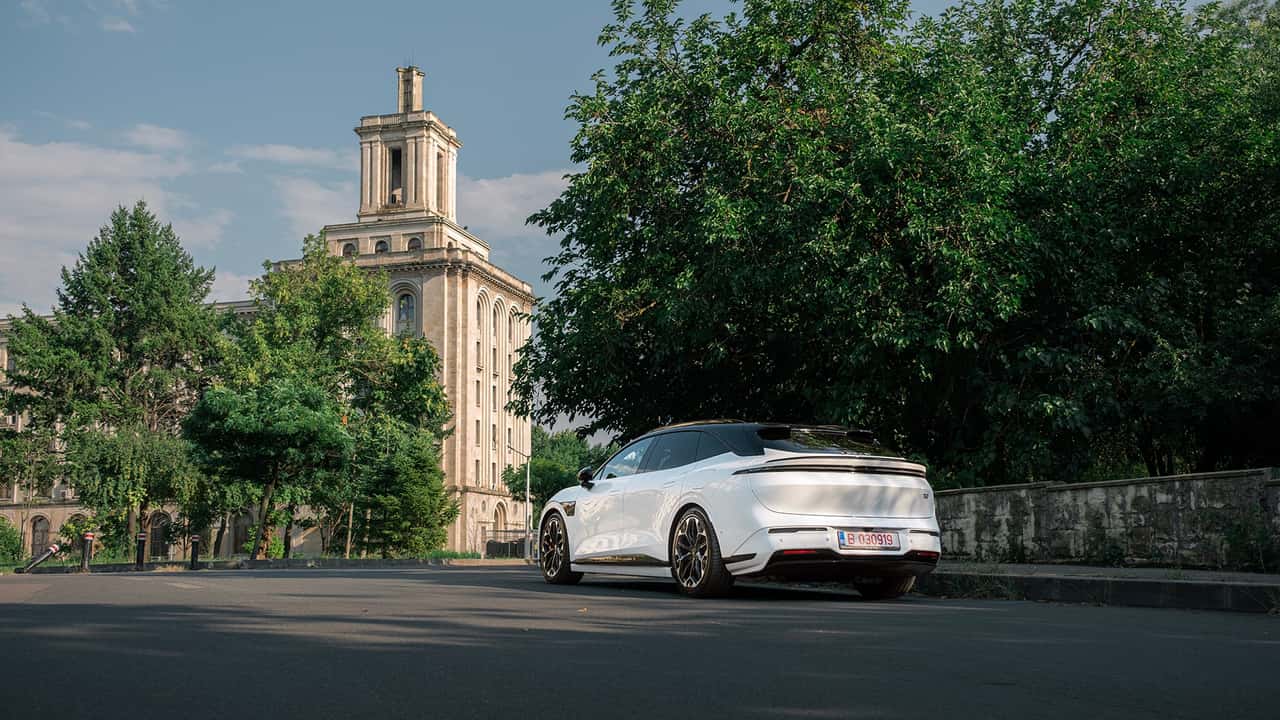 Photo by: Andrei Nedelea
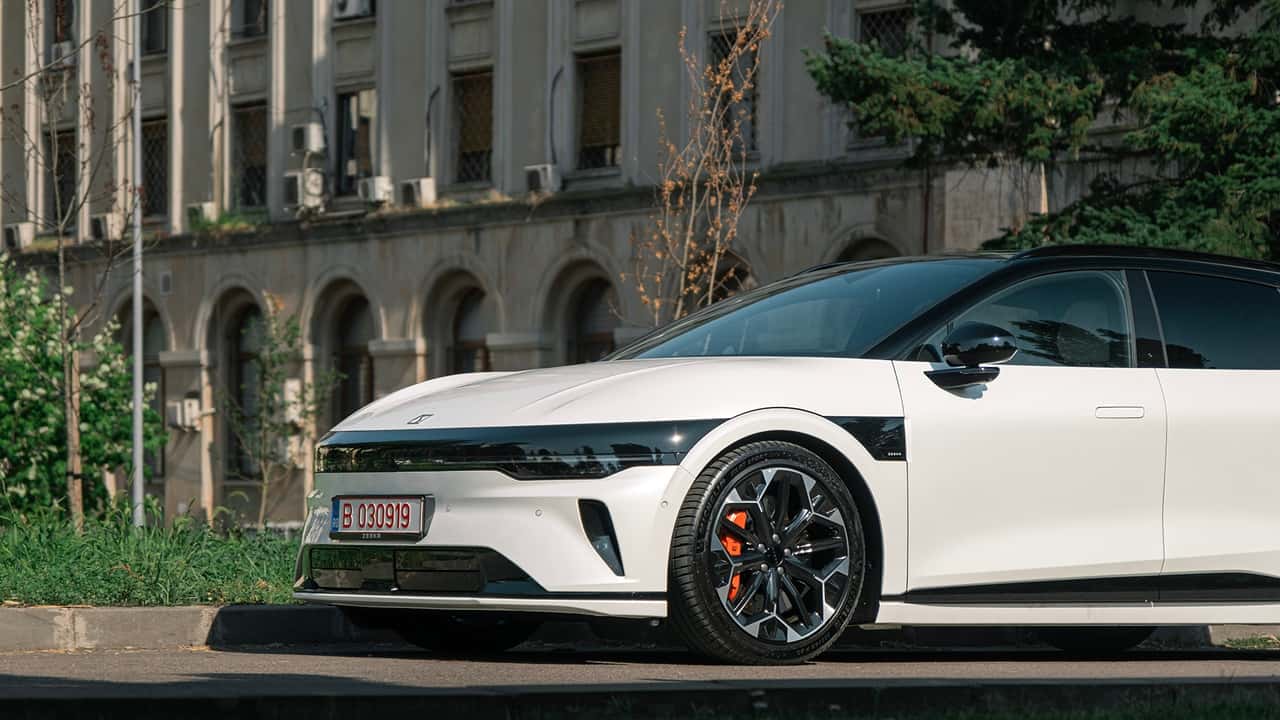 Photo by: Andrei Nedelea Photos by: Andrei Nedelea
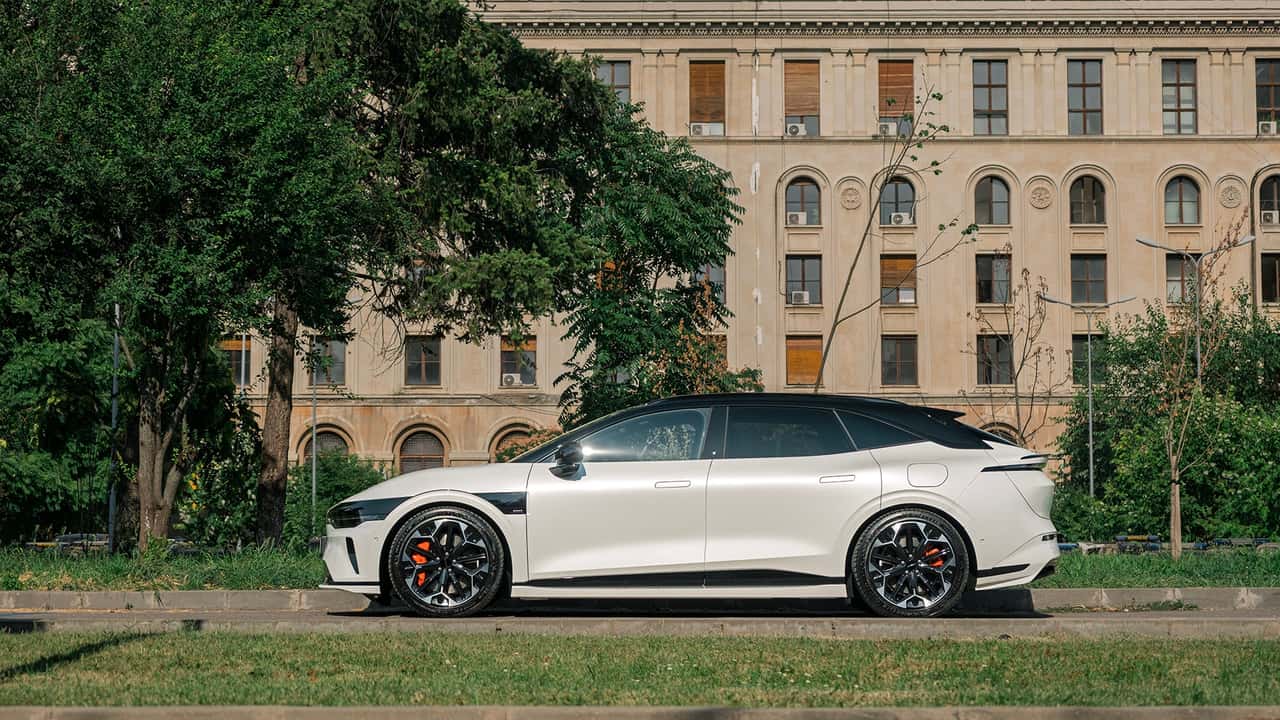
The 7GT measures 189.6 inches (4,817 millimeters), putting it around BMW 3 Series Touring territory. The forthcoming i3 Touring will be an obvious comparison, but we need the final specs list to compare them accurately.
Until that arrives, look at the larger Volkswagen ID.7 Tourer, Audi A6 Avant e-tron, and BMW i5 Touring. Between them, they have most of the features you can get on the 7GT, but specced to the same level as my €65,000 tester, they become six-figure cars.
None offer powered doors that open on their own, which sound like a gimmick but work well enough not to be annoying. Climb into the driver’s seat, and to close the door, just press the brake, as you would in a Rolls-Royce. Another use case is dropping off your child at school: They can quickly exit the vehicle so you don’t hold up traffic.
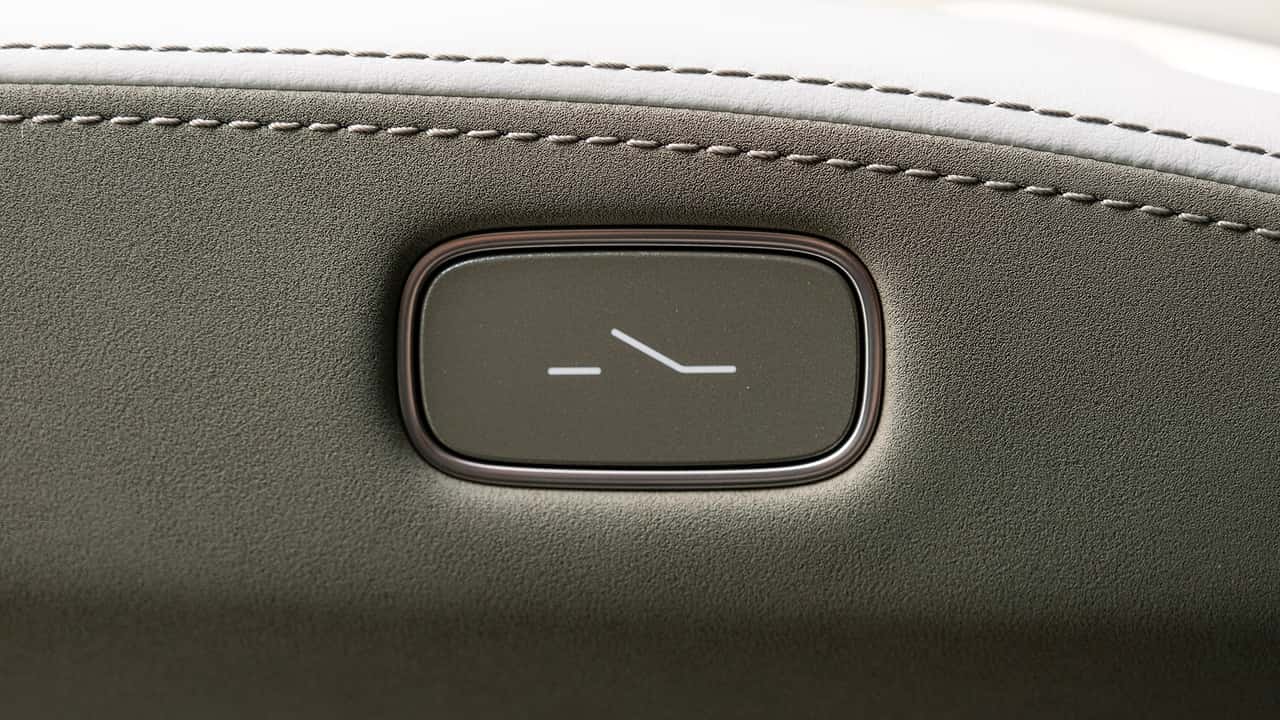 Photo by: Andrei Nedelea
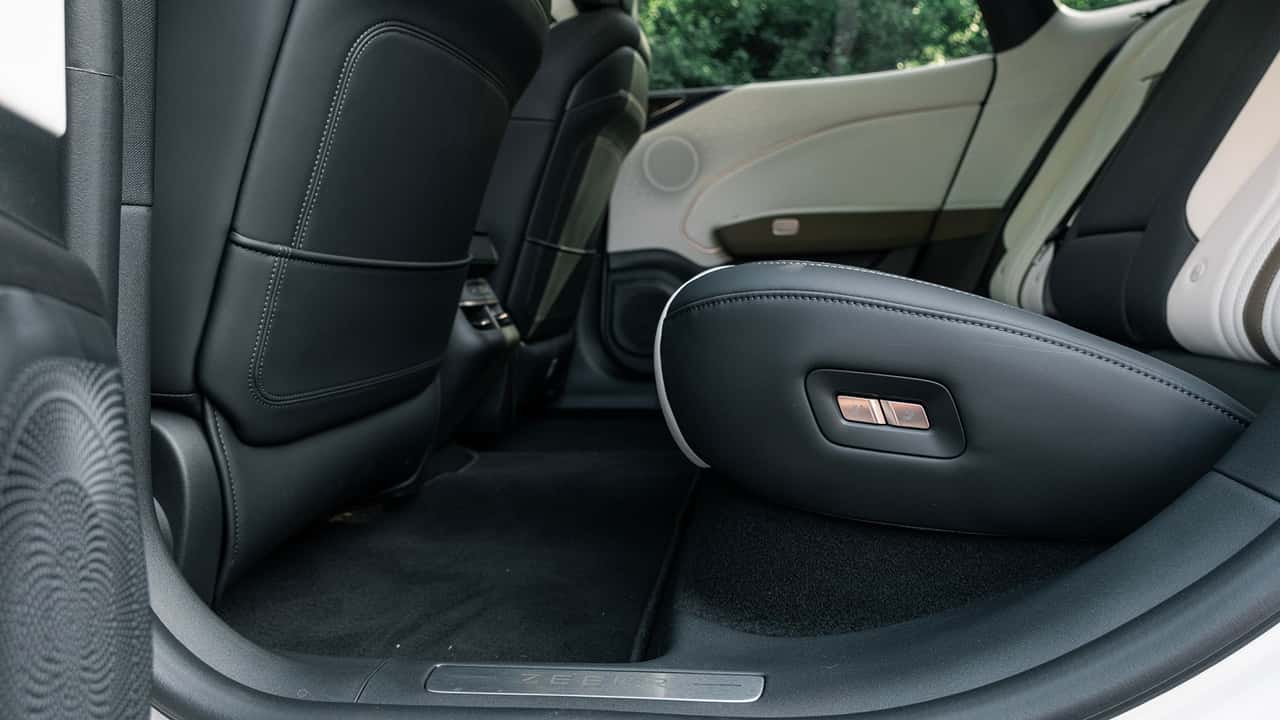
The powered doors cost an extra €2,200 even on the top Privilege model, which starts at €59,690, but frankly I’d take them. My Privilege tester also included front-seat ventilation and massage, heated rear seats, a heated steering wheel and a large augmented-reality head-up display.
Zeekr feels more generous in pampering occupants than its German rivals. I came to the same conclusion after driving the 7X crossover at its launch in Portugal, when it made me say it would completely change the face of the luxury car industry. Its powered doors worked more consistently than those I’d tried on a BMW 7 Series (and the ones in the 7GT are even better), and its cabin and reclining rear seats were good enough to challenge established hierarchy.
The 7GT brings the same approach to people who prefer their cars closer to the ground, although it isn’t quite as plush.
Oddly, both the older 001 and the 7X have a rear touchscreen for climate and media controls, along with electrically adjustable backrests. The 7GT has no rear screen, so you'll need friends in the front seats to turn on the rear seat heater for you.
A Lovely Place To Get Lost
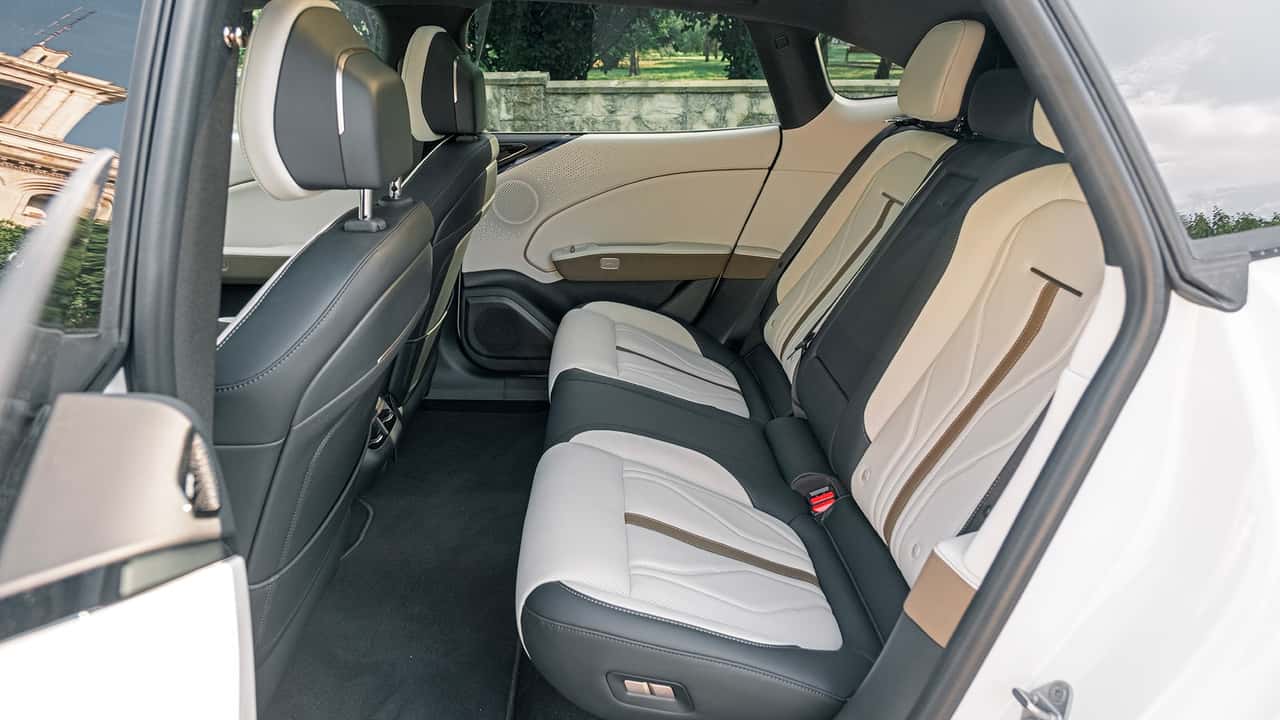 Photo by: Andrei Nedelea
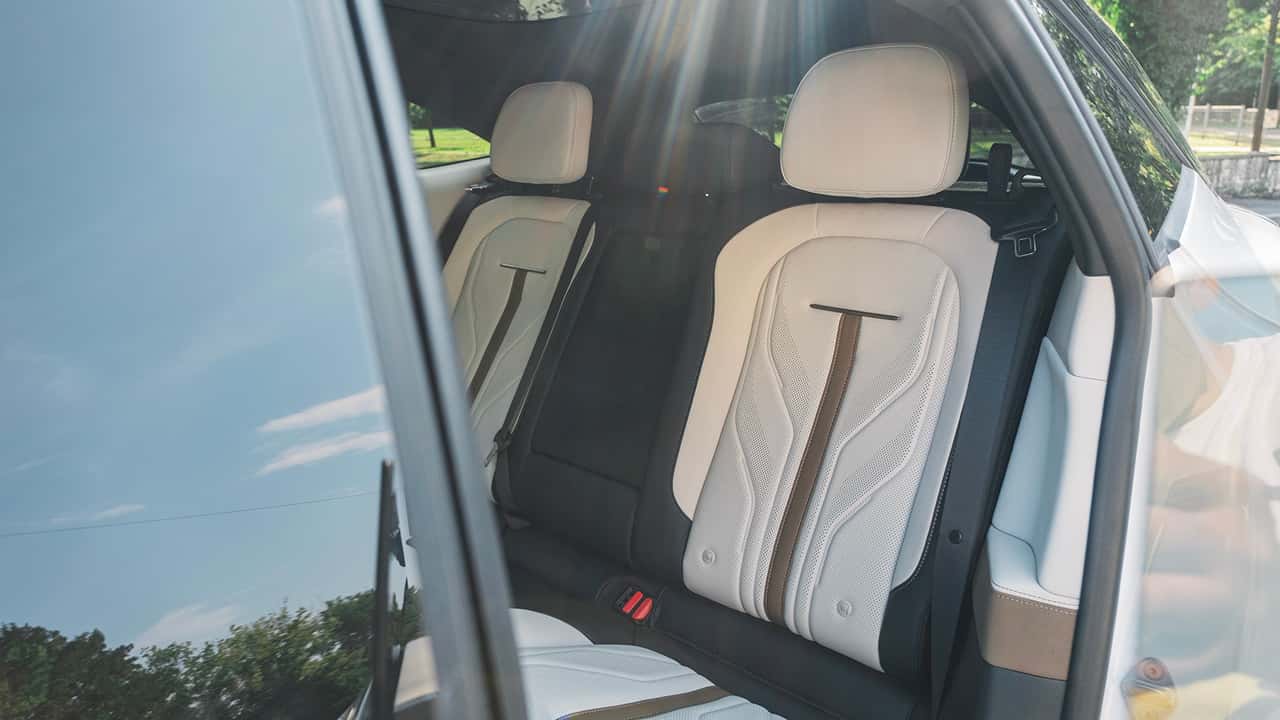
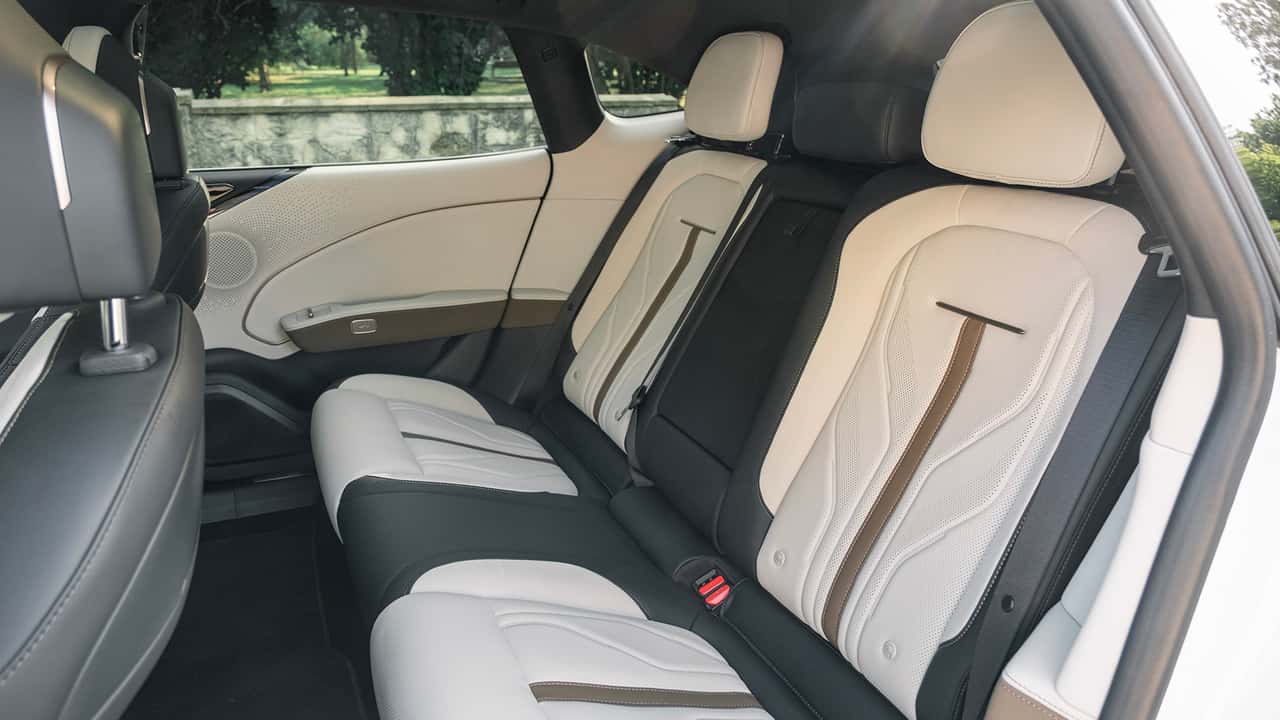
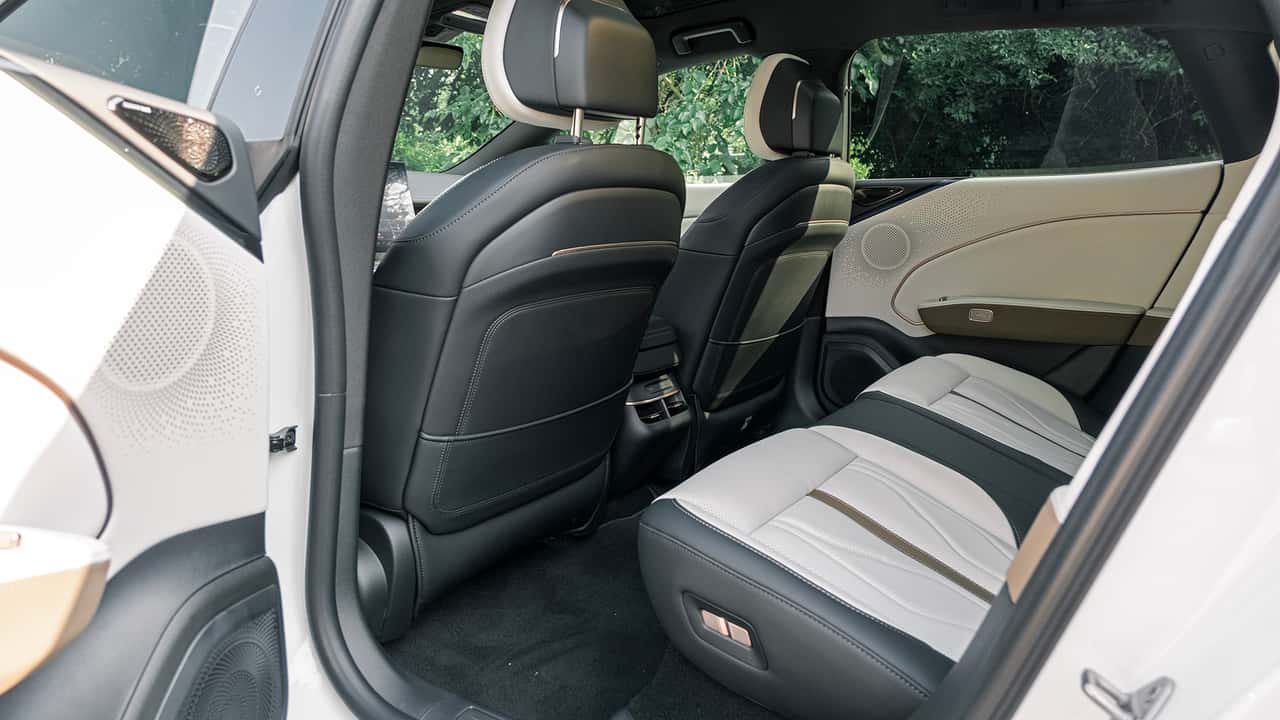
Its 114.2-inch (2,900-mm) wheelbase creates generous rear legroom. At six feet tall, I could stretch out, tuck my feet beneath the front seat, and recline the backrest. The pleasant materials continue into the rear, too. German manufacturers seem to think passengers behind the B-pillar can make do with lesser materials, but not Zeekr.
Headroom is less generous, and the battery beneath the floor raises your knees slightly. The middle seat is usable, despite a small floor hump, but it wouldn’t be my first choice for crossing a continent.
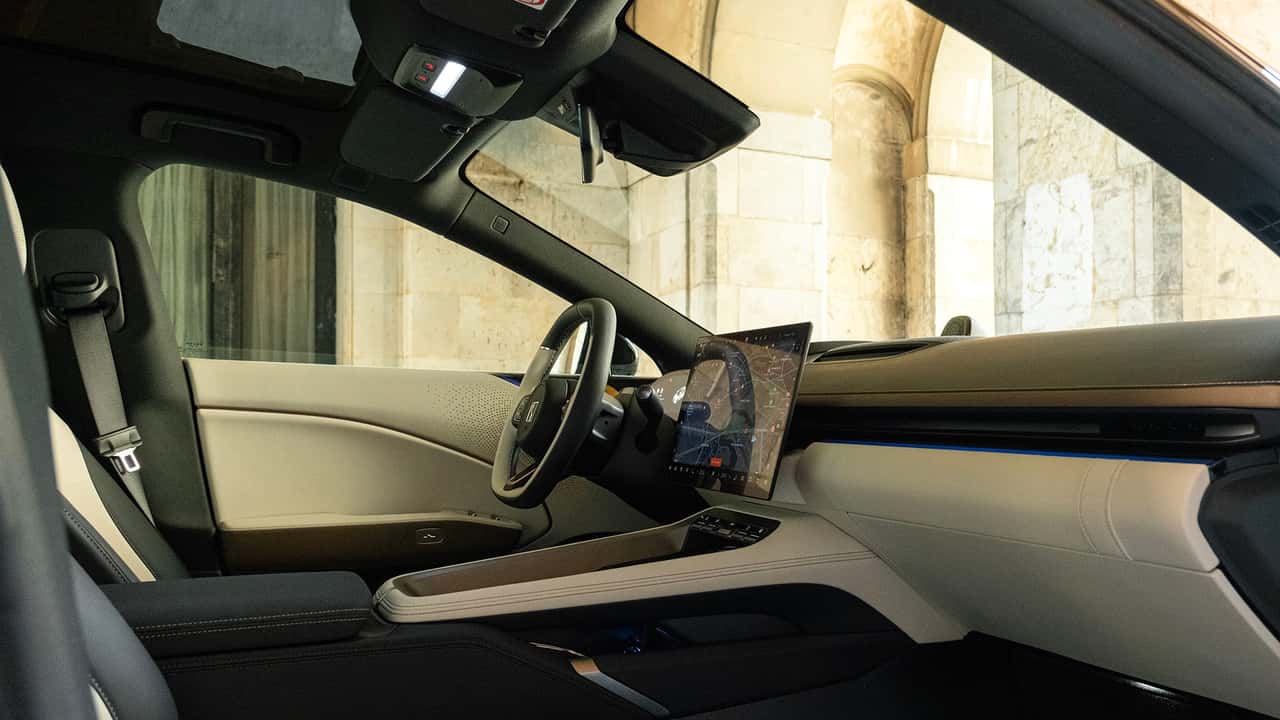
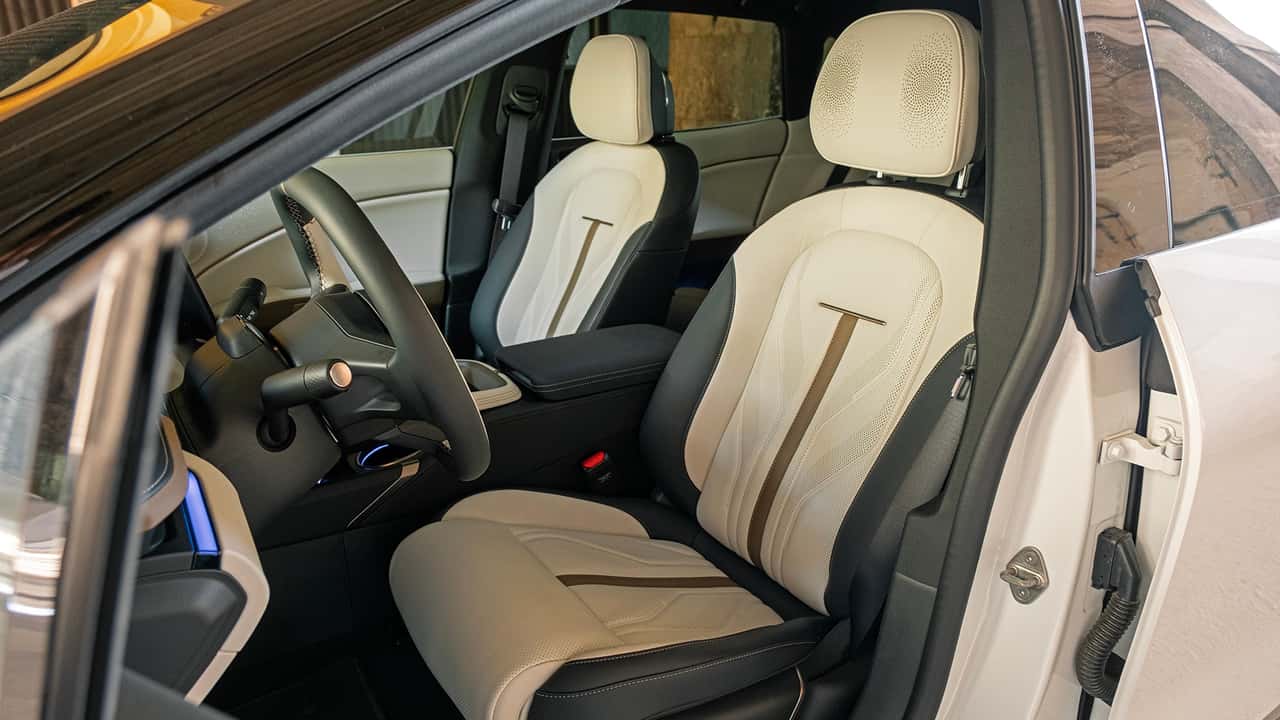
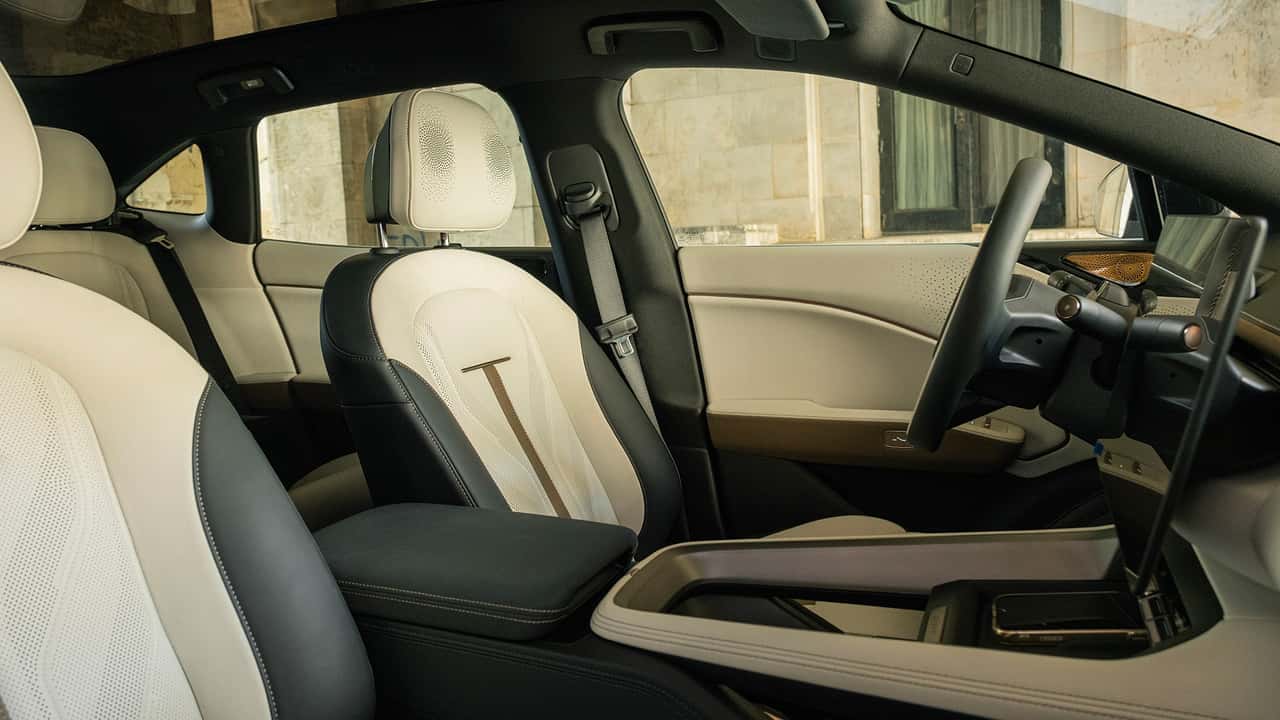
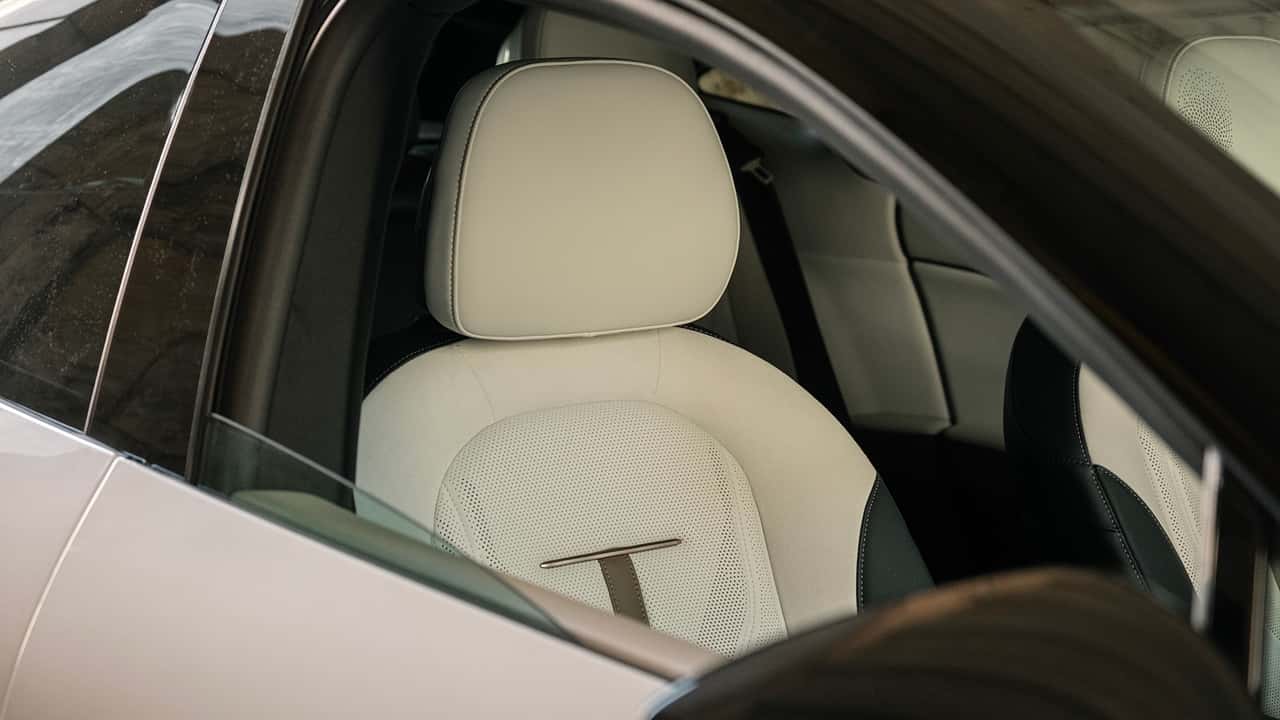
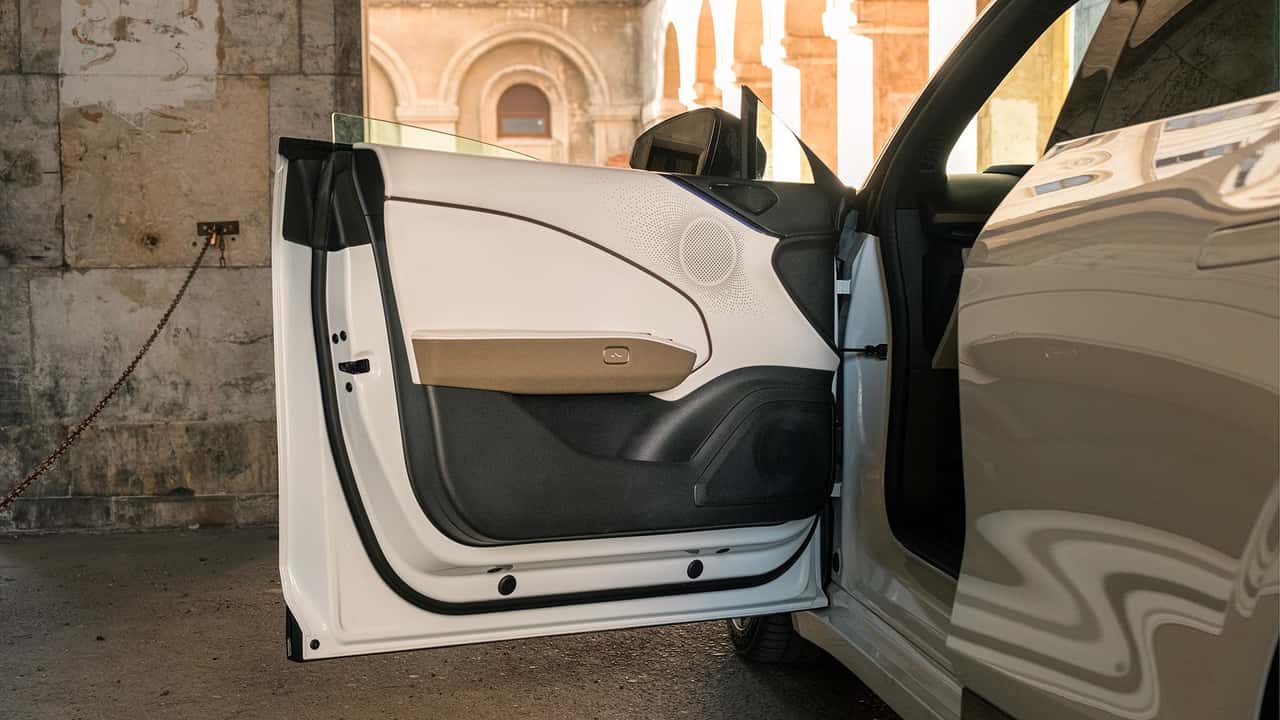
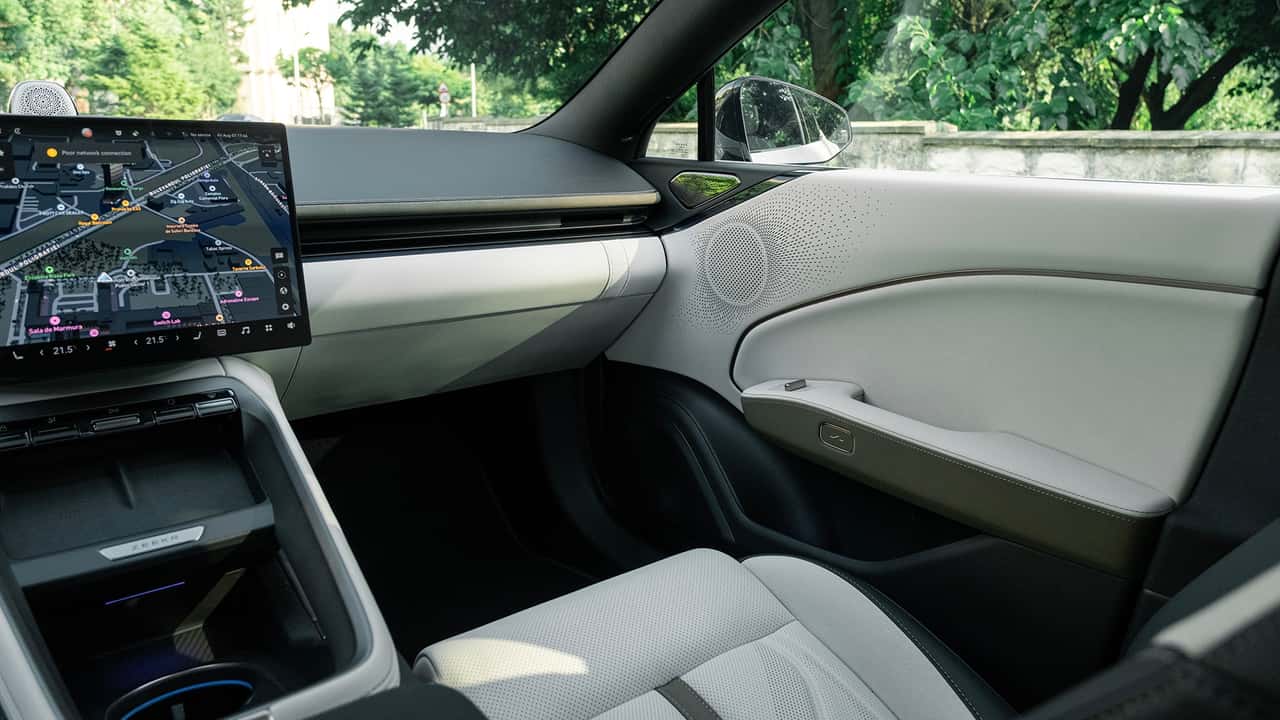
The interior feels properly expensive. Nappa and synthetic leather sit neatly stitched together, and laser-cut patterns in the door trim leather double as speaker grilles. Even the head-up display’s dashboard surround is upholstered in leather, though you’ll probably never touch it—excess of the kind the Germans just don’t do anymore.
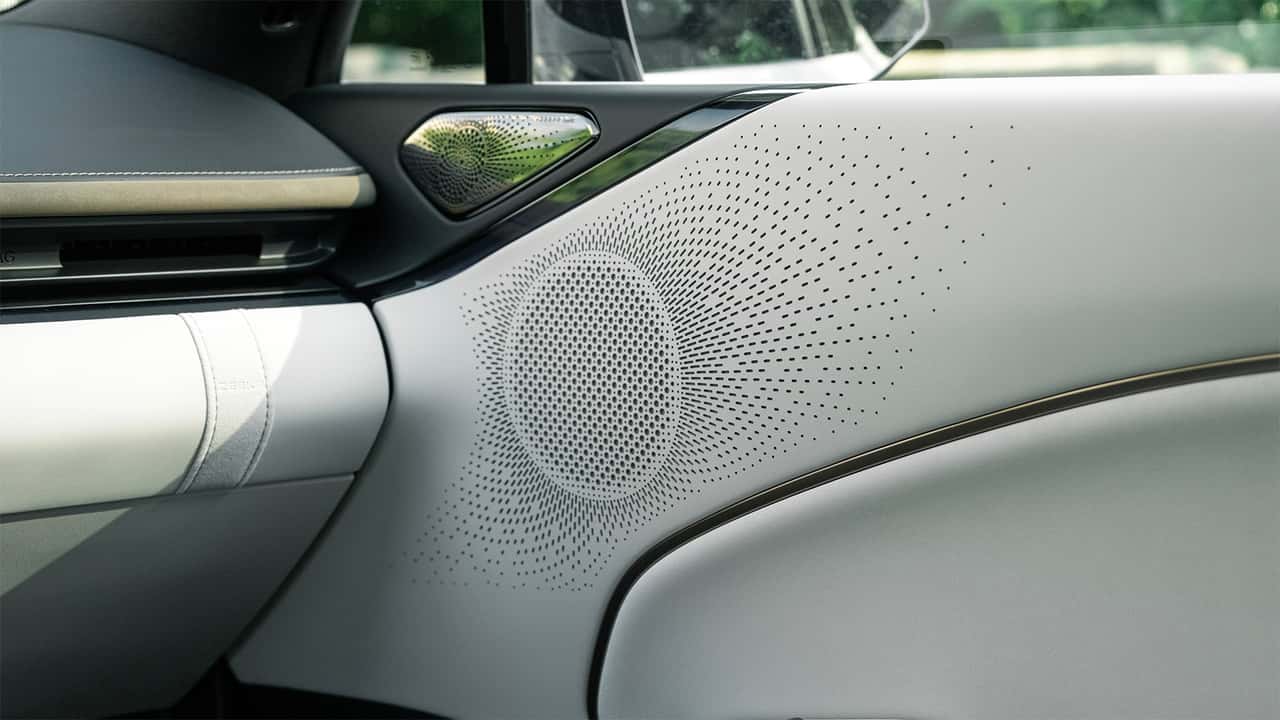 Photo by: Andrei Nedelea
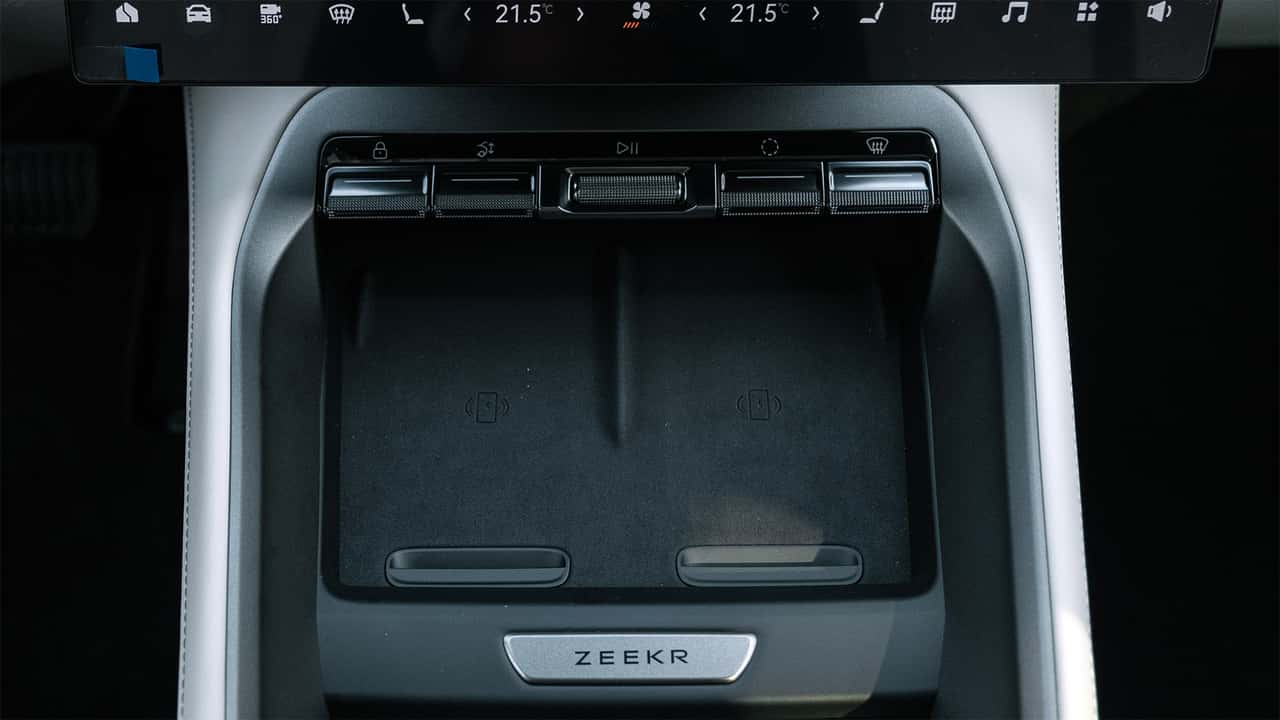
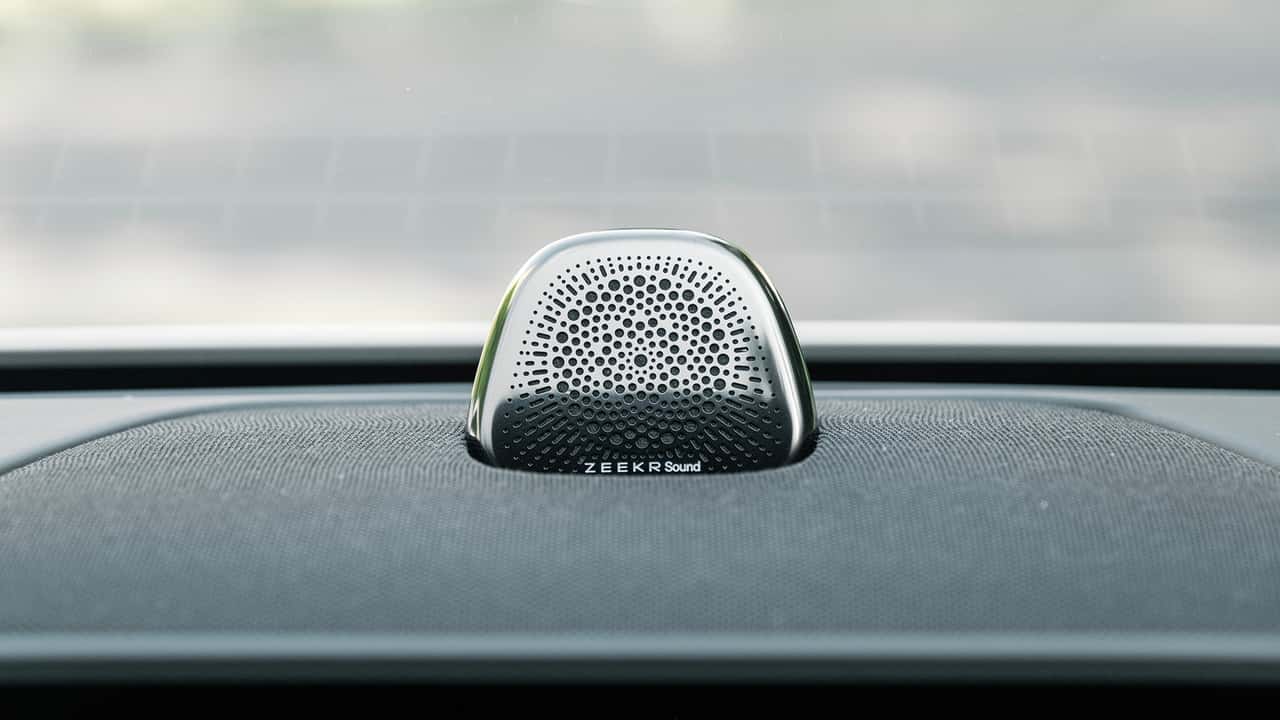
The Privilege trim’s 23-speaker stereo includes driver-headrest speakers for navigation instructions and calls. There are two cooled wireless charging pads, a cavernous center console storage area, and a 60-watt USB-C outlet.
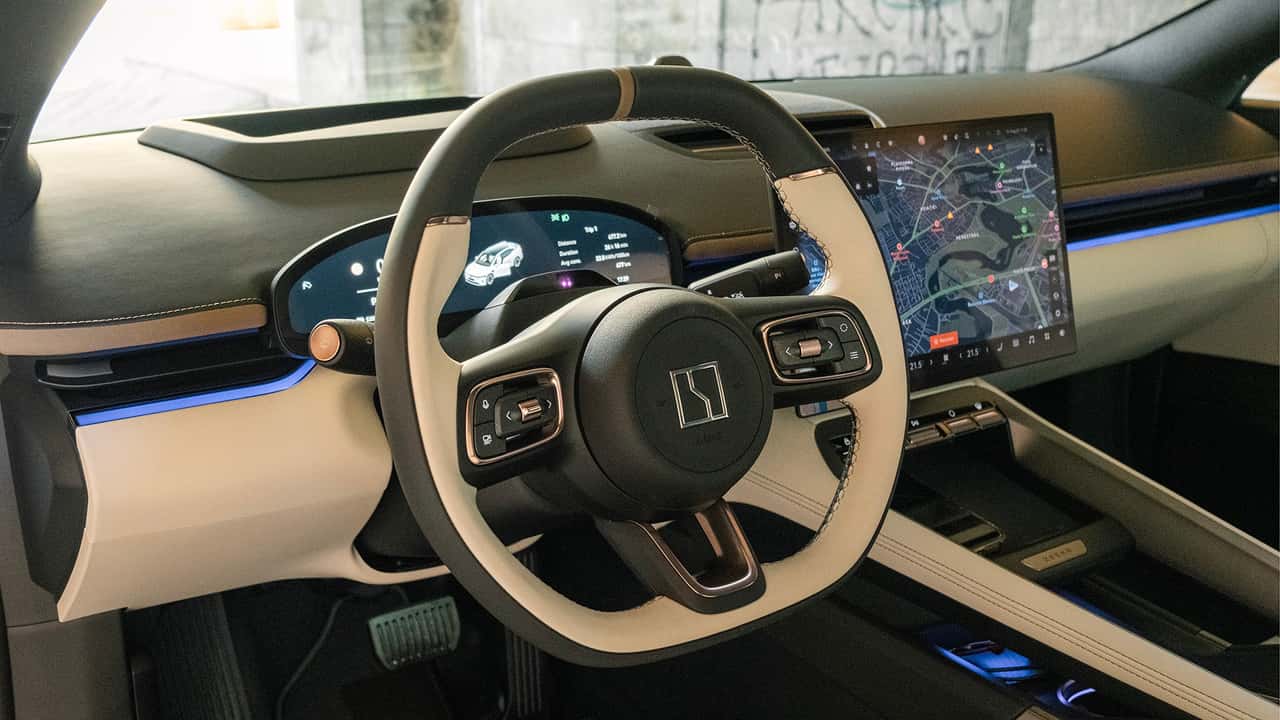
The front seats have physical adjustment switches and extending thigh supports. They made it easier to get comfortable than in the larger 001, where I wanted more steering-column reach and thigh support. The 7GT also has proper steering-wheel buttons instead of that car’s touchpads, and they work much better.
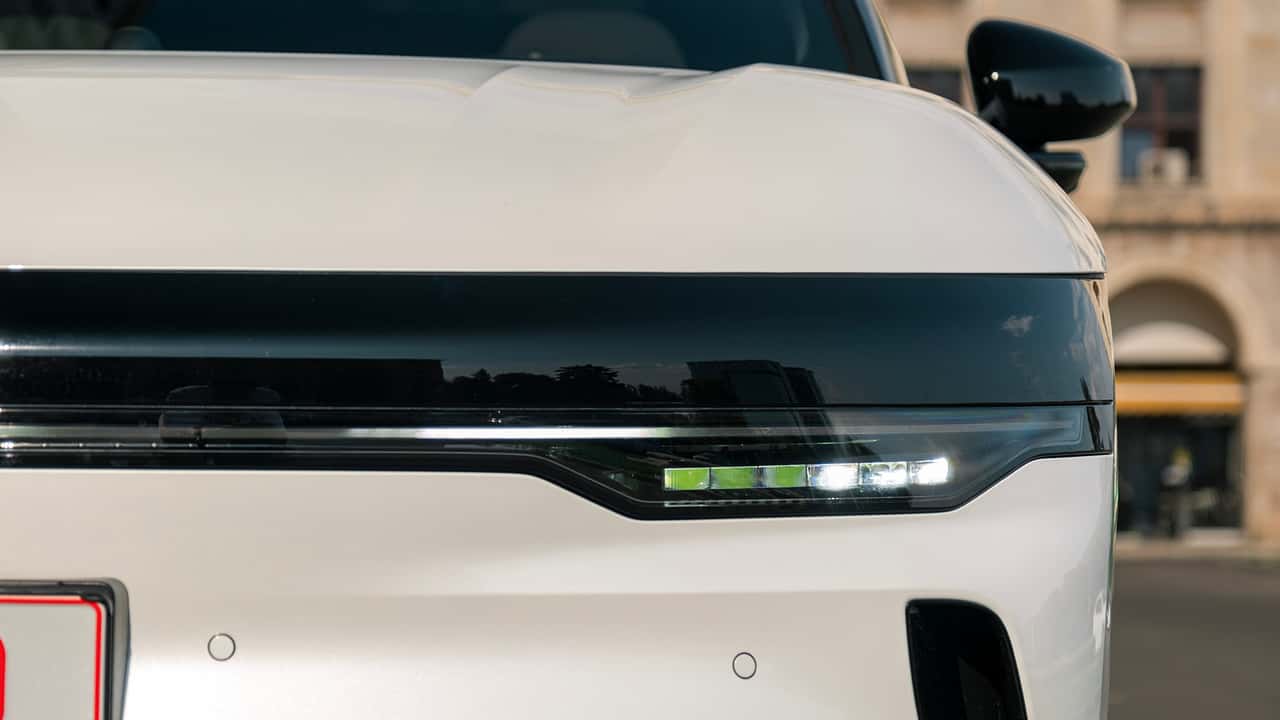
It has a 15-inch OLED touchscreen, a 13-inch driver display, and an augmented reality head-up display, plus Apple CarPlay and Android Auto. Plenty of ways to receive information, then.
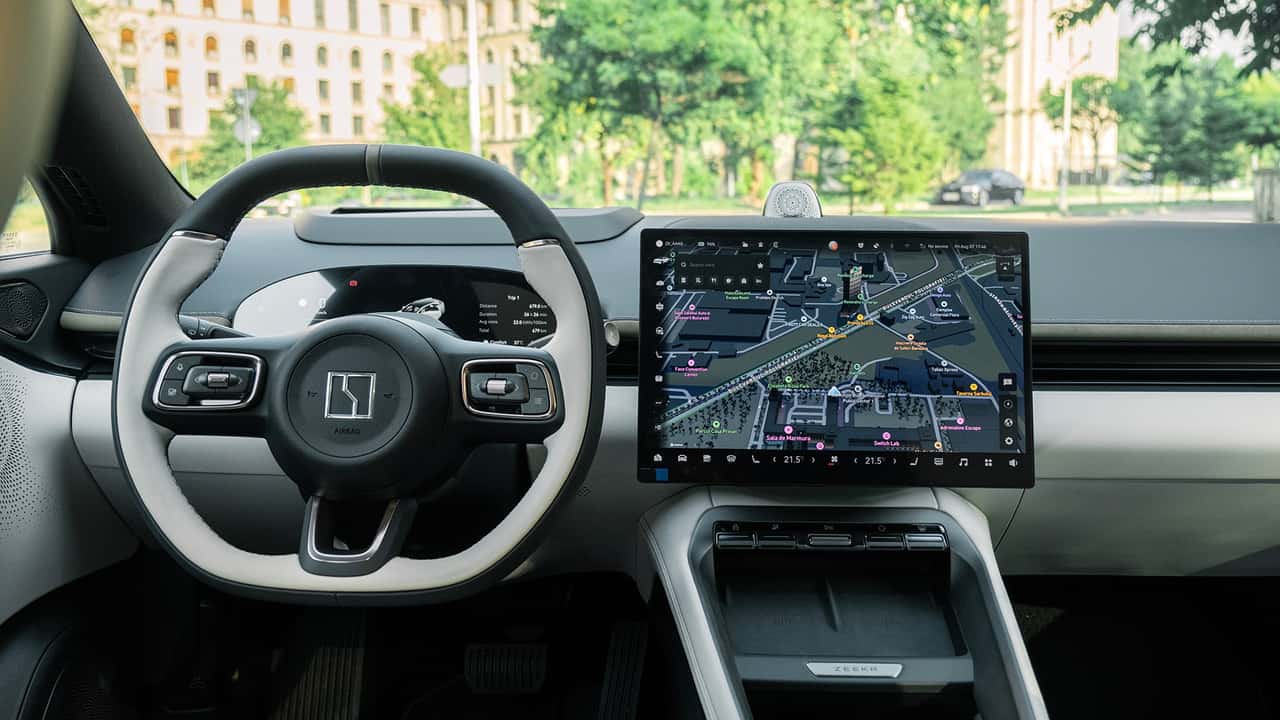 Photo by: Andrei Nedelea
But that doesn’t mean it’s all good news. Adjusting the mirrors and powered steering column still requires a trip through the touchscreen, though, as does most everything else.
Even the window switches require some learning: how long you press determines whether you’re adjusting the opening or lowering the glass all the way.
The navigation became choppy when I routed to a charger using its built-in app, which tells the car to precondition the battery. I also noticed the same thing while using Waze through Apple CarPlay. I’m pretty sure it’s not the hardware, since it has a very powerful chip running the show, so it’s likely a software issue that an over-the-air update should fix.
Charging Beast
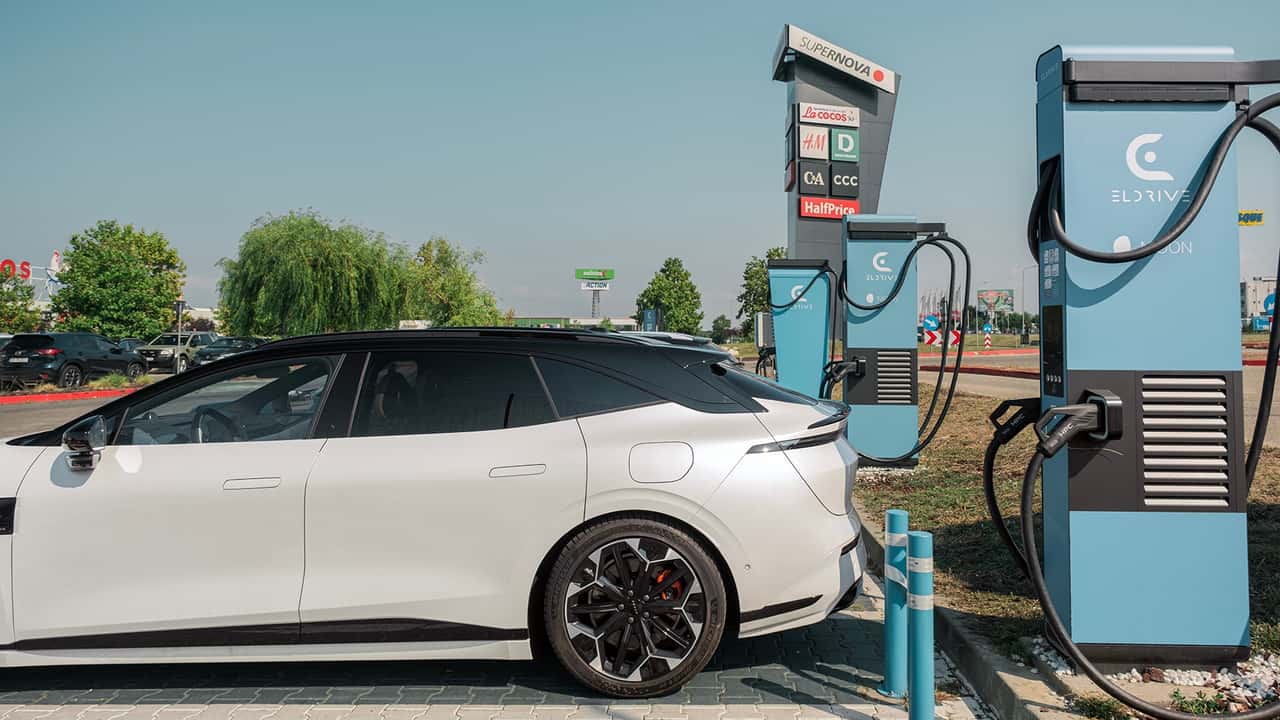 Photo by: Andrei Nedelea
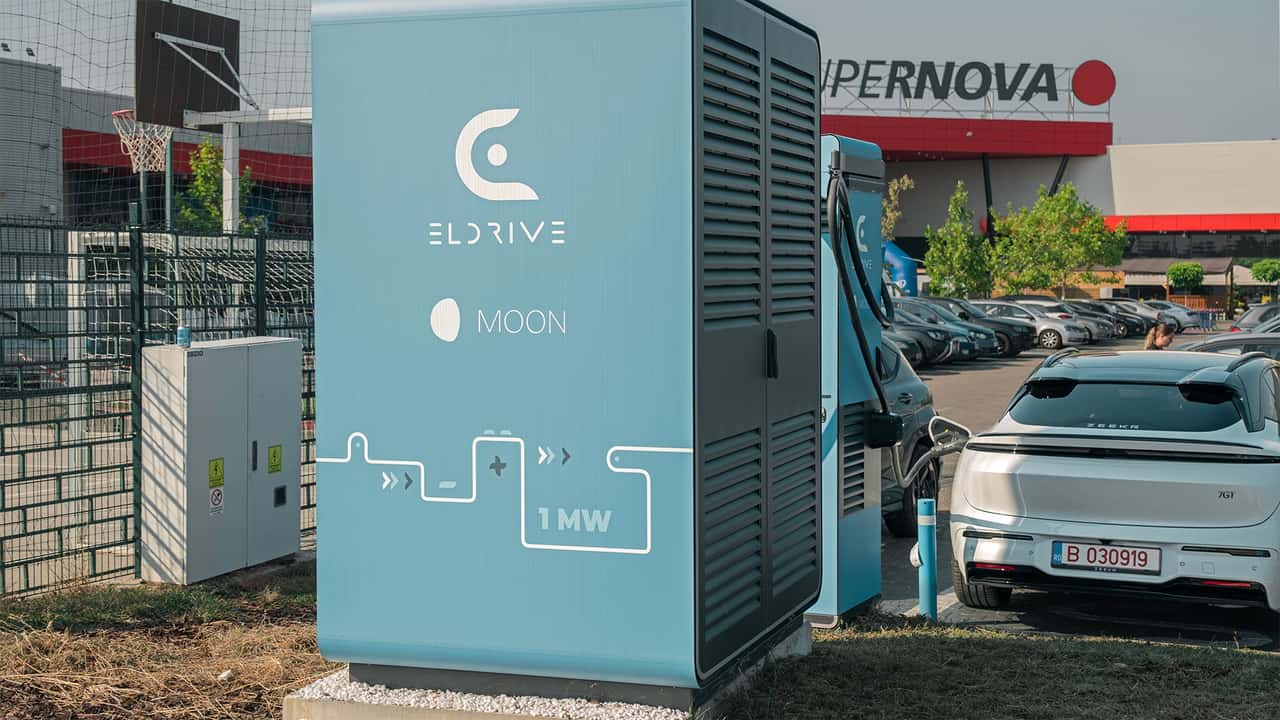 Photo by: Andrei Nedelea
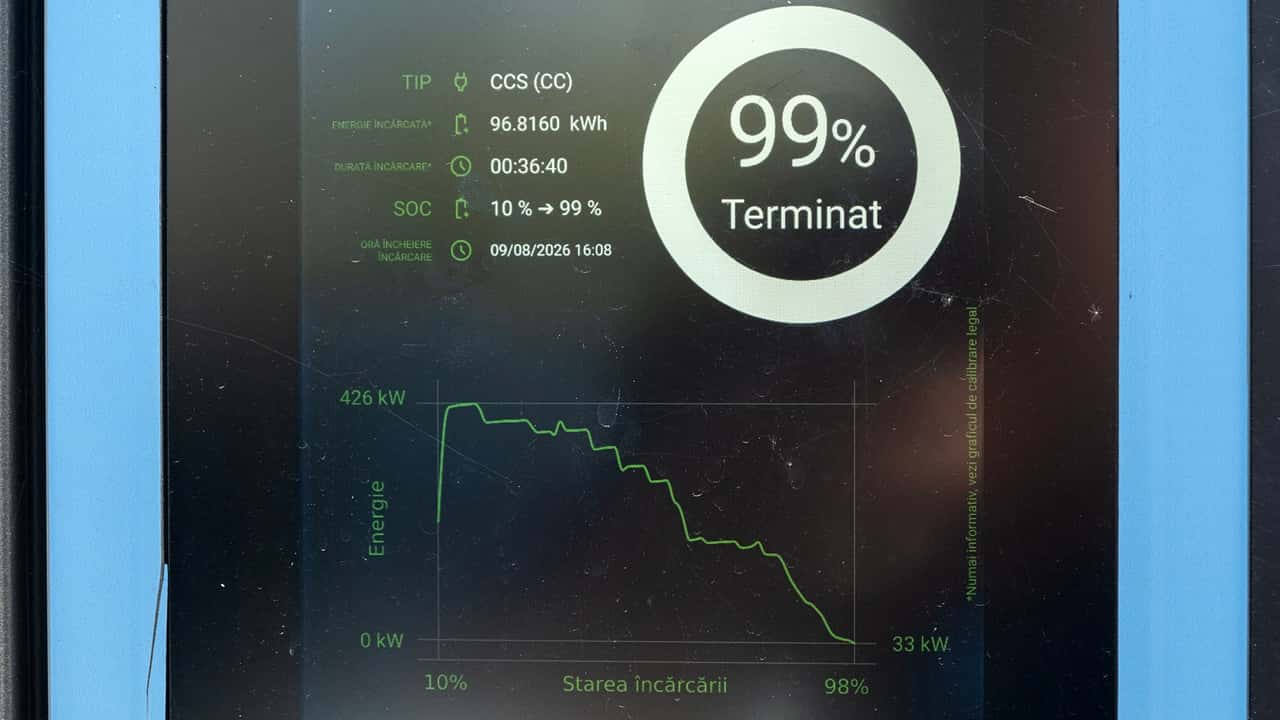 Photo by: Andrei Nedelea Photos by: Andrei Nedelea
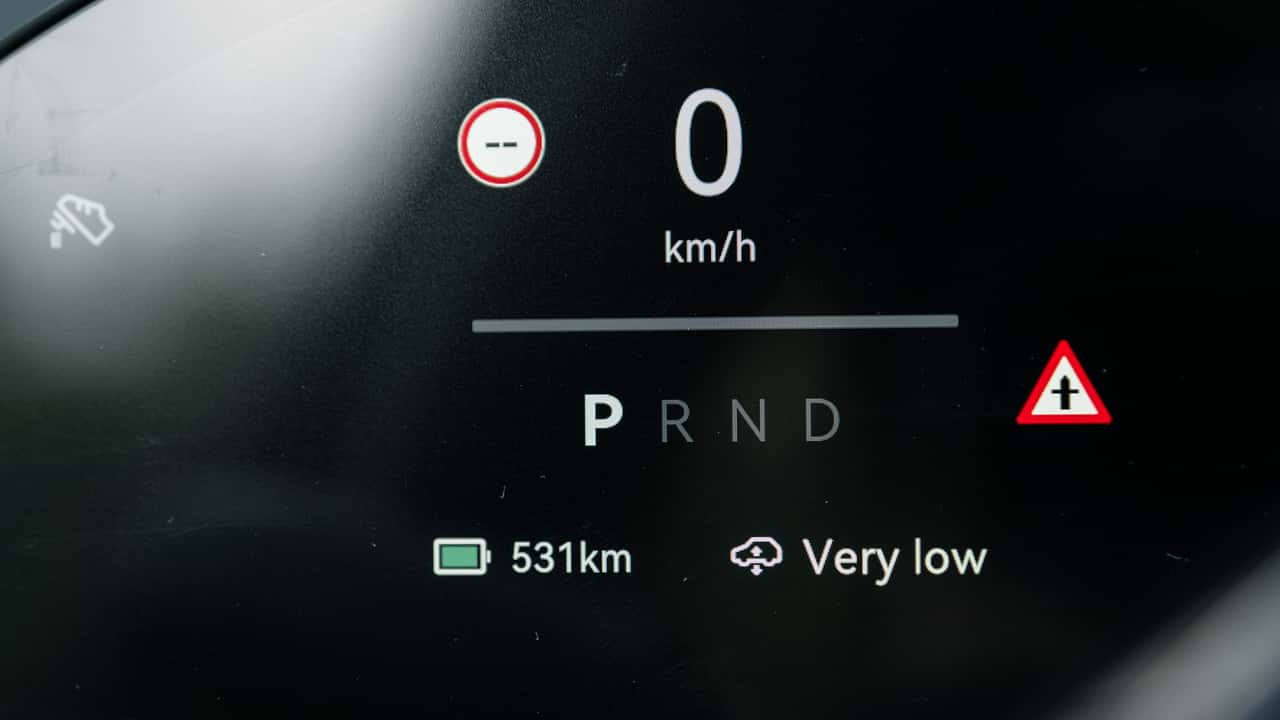
Zeekr offers two batteries for the 7GT. The standard car gets a 75-kilowatt-hour lithium-iron-phosphate (LFP) pack, which delivers 322 miles (519 km) of WLTP range. The larger 100 kWh pack switches to nickel-manganese-cobalt (NMC) chemistry and bumps the range to 407 miles (655 km) in rear-wheel drive trim or 347 miles (558 km) in dual-motor trim.
LFP-equipped 7GTs are rated for up to 480 kilowatts of peak charging power, requiring as little as 11 minutes to go from 10% to 80%. With the NMC pack, maximum charging power drops to around 420 kW, so charging from 10% to 80% takes 13 to 16 minutes.
I drove my NMC-equipped 7GT tester to the only Megawatt charger in my area, which can supply up to 600 kW per cable, more than enough to max out the car. I arrived at the charger with 10%. The 7GT charged to 80% in around 14 minutes, taking just over 36 minutes to reach 99%. It hit its claimed 420-kW peak, with a session average over 158 kW; the fastest I’ve ever seen an EV replenish range.
Power Corrupts
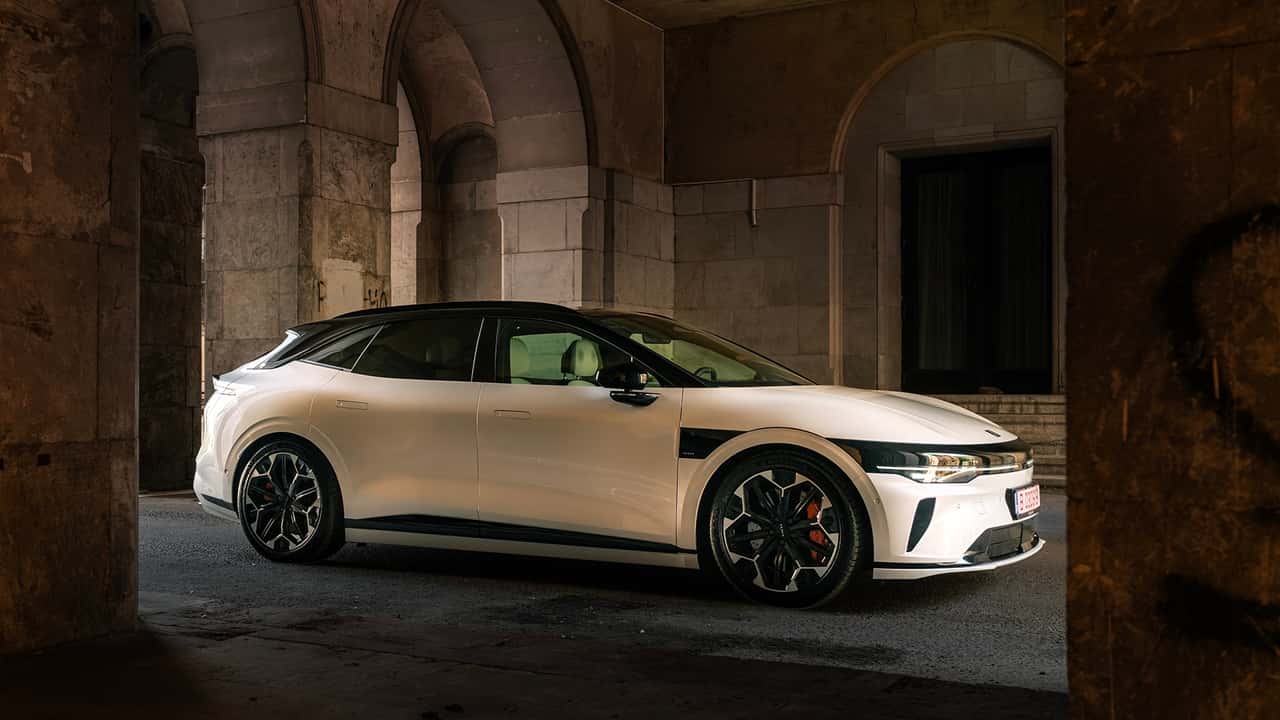 Photo by: Andrei Nedelea
The dual-motor 7GT combines a 310-kW rear motor and a 165-kW front motor, producing a combined 475 kW (around 637 bhp). Add 524 pound-feet (710 Nm) of torque and a claimed 3.3-second sprint to 62 mph (100 km/h), and the wagon’s school-run credentials begin to look suspicious at best.
This thing will scare your passengers with its brutal and relentless power delivery. The motors make light work of the 7GT’s 5,300 lbs (2,405 kg) mass. You need a bit of space to unleash this thing too, since it feels a bit wayward when you launch it, especially if you pair the most aggressive power delivery with the softer suspension setting.
Launching will see you correcting the car’s trajectory quite a lot to get it to keep pointing in the right direction. The front goes light, and you can’t really tell what the front tires are doing or where they’re going. It’s a bit disconcerting, especially since the rear feels less than settled. It feels less like conducting an orchestra and more like you’re holding on to the stand. The car easily overwhelmed its 255-section Michelin Pilot Sport EV tires.
What’s odd about how the 7GT feels to launch is that it has sophisticated front suspension, something you won’t really find in its class. Whereas BMW and most others use strut-based front suspension, Zeekr chose a double-wishbone setup for the 7GT, of the kind you will see in racing cars. It should keep the tire’s contact patch more consistent as the suspension works, but it wasn’t that confidence-inspiring here.
Keep It Comfy
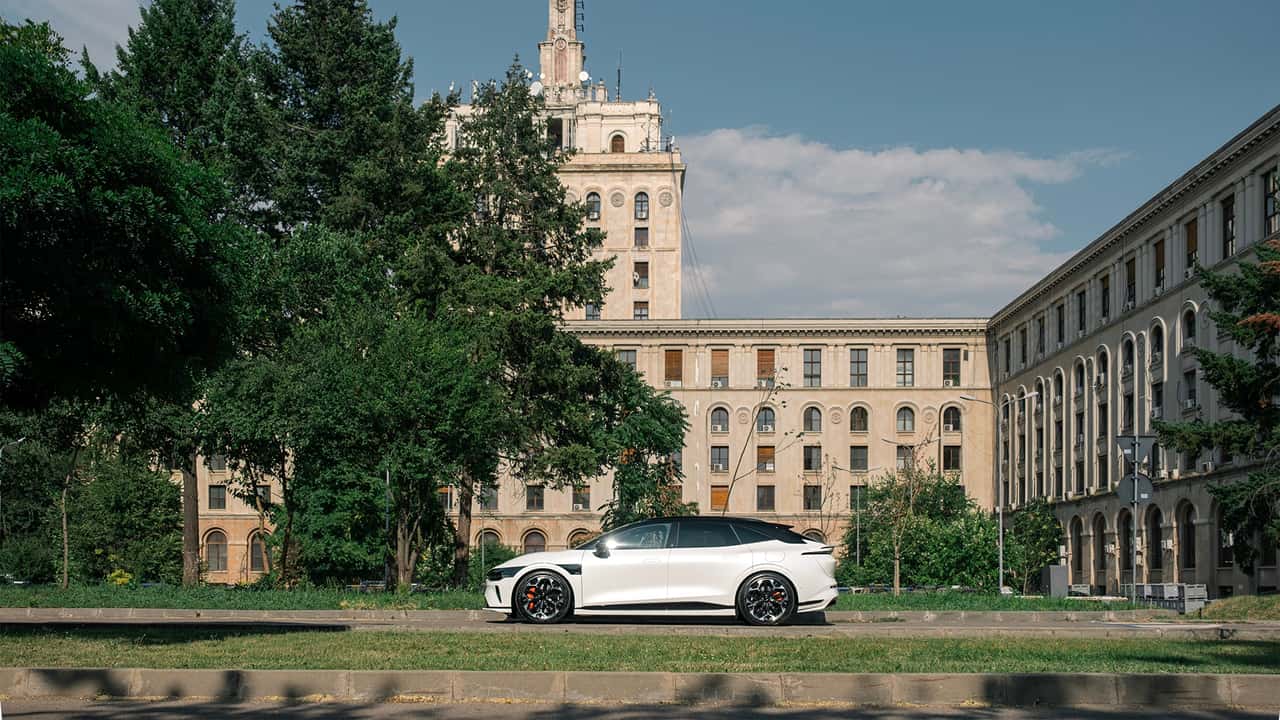 Photo by: Andrei Nedelea
The air-sprung Privilege rides beautifully, especially for a car on 20-inch wheels. Comfort mode gives it a gentle, floating quality, while Sport lowers and firms the suspension without making it uncomfortable.
Unfortunately, air suspension is reserved for the Privilege and can’t be added to the rear-drive cars. That complicates the sensible purchase. The Long Range costs less and goes farther on paper, but the lower power and lack of air suspension will make it feel less special than my tester.
Designed For Style, Not Practicality
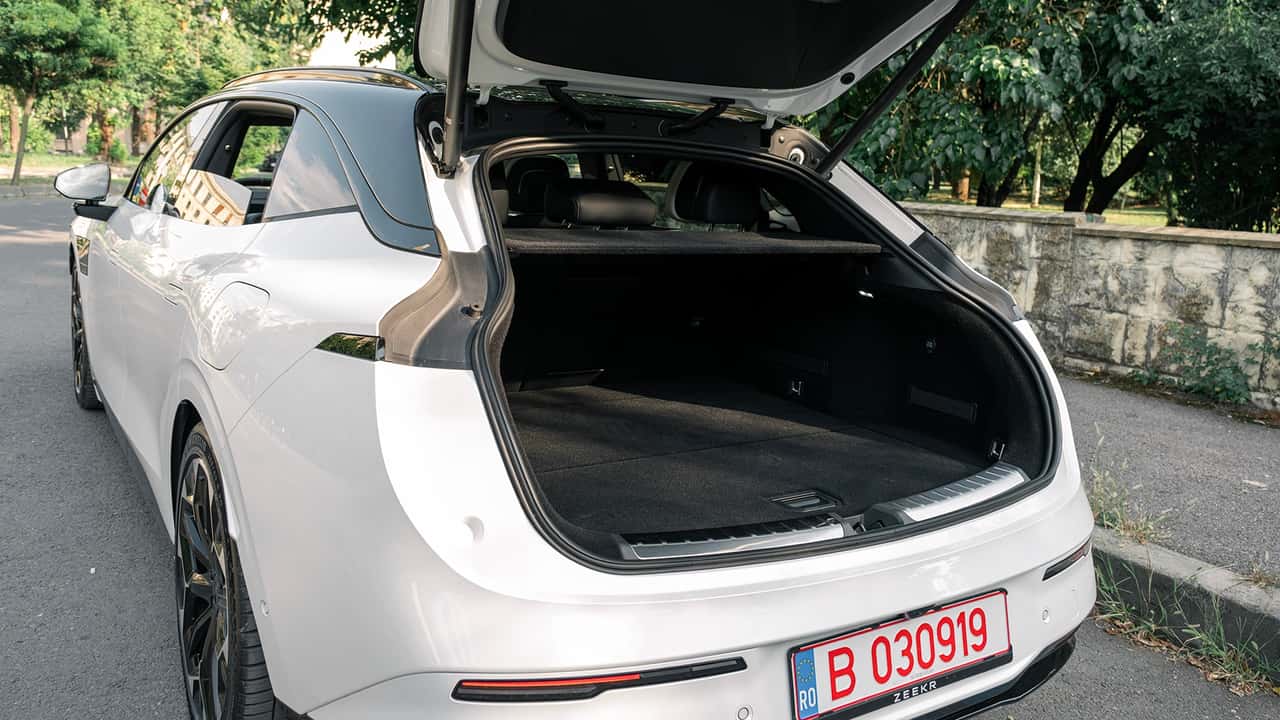 Photo by: Andrei Nedelea
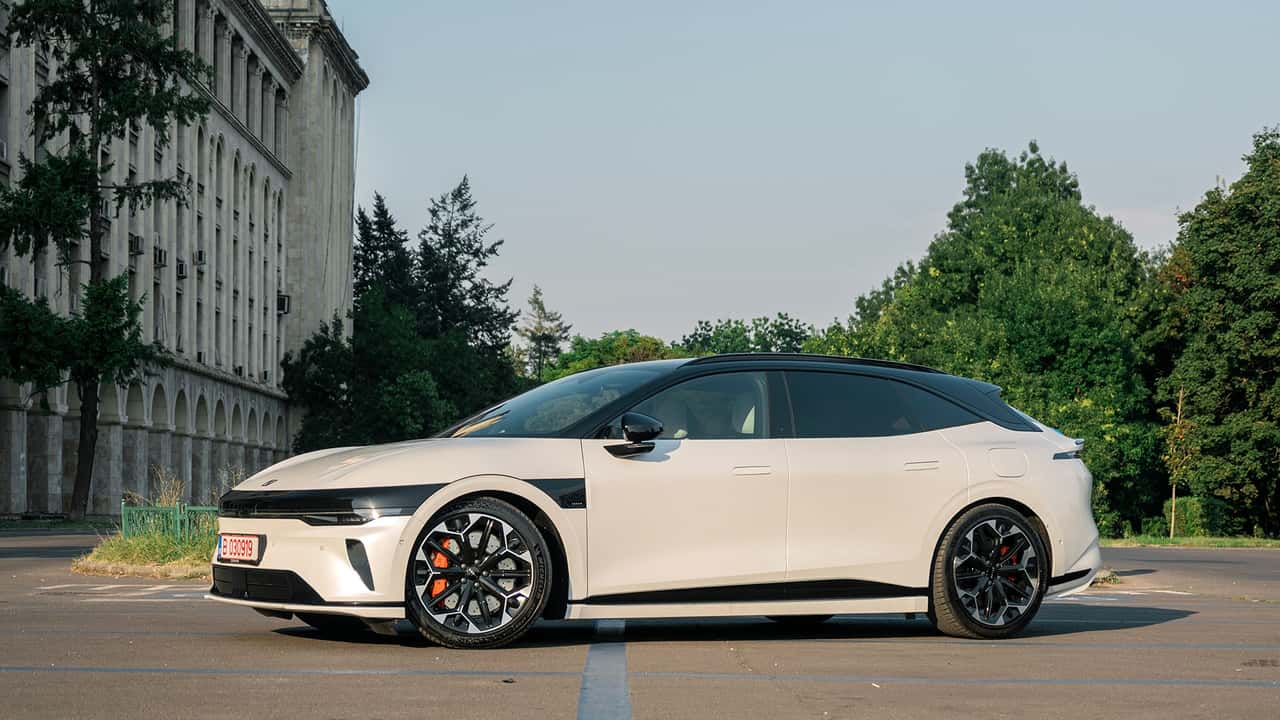
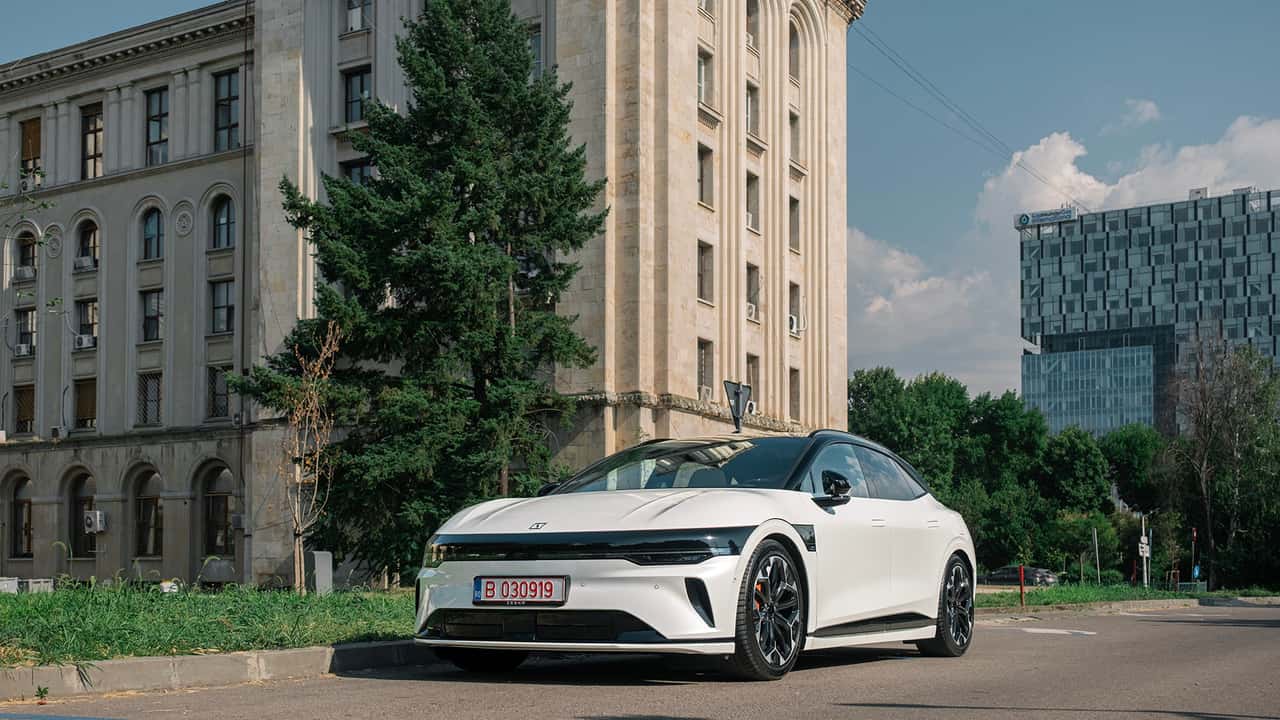
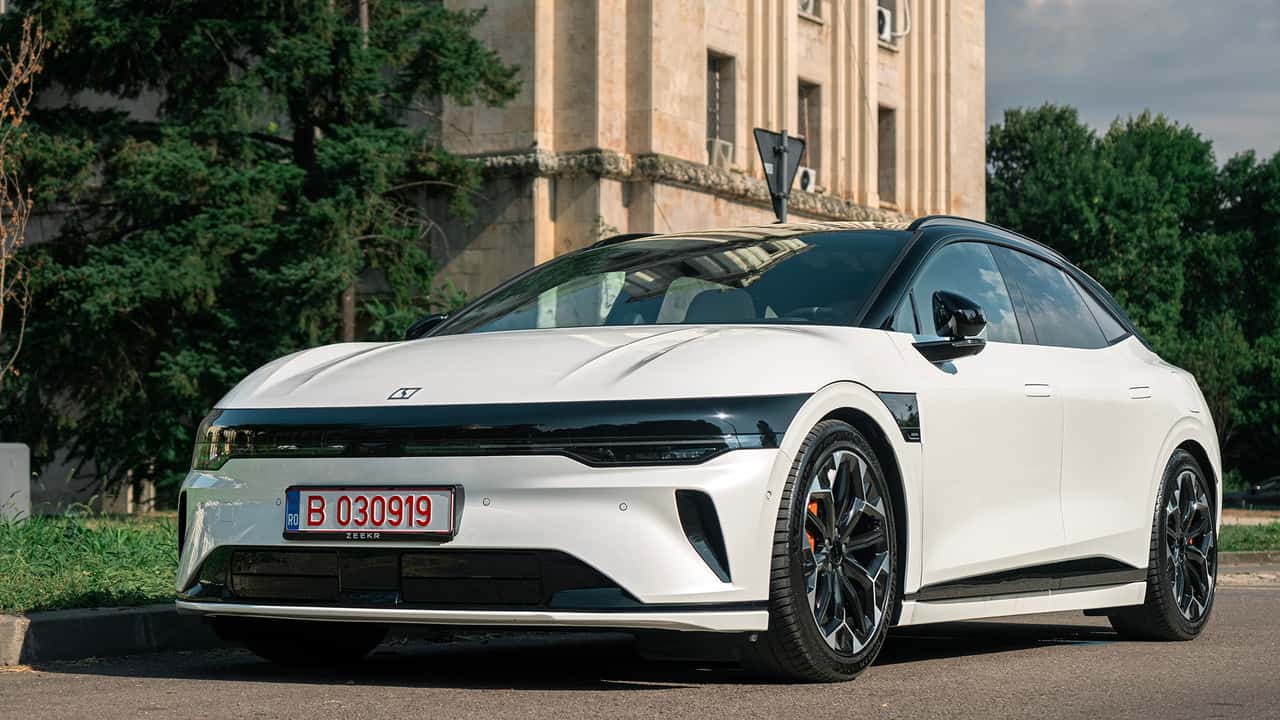
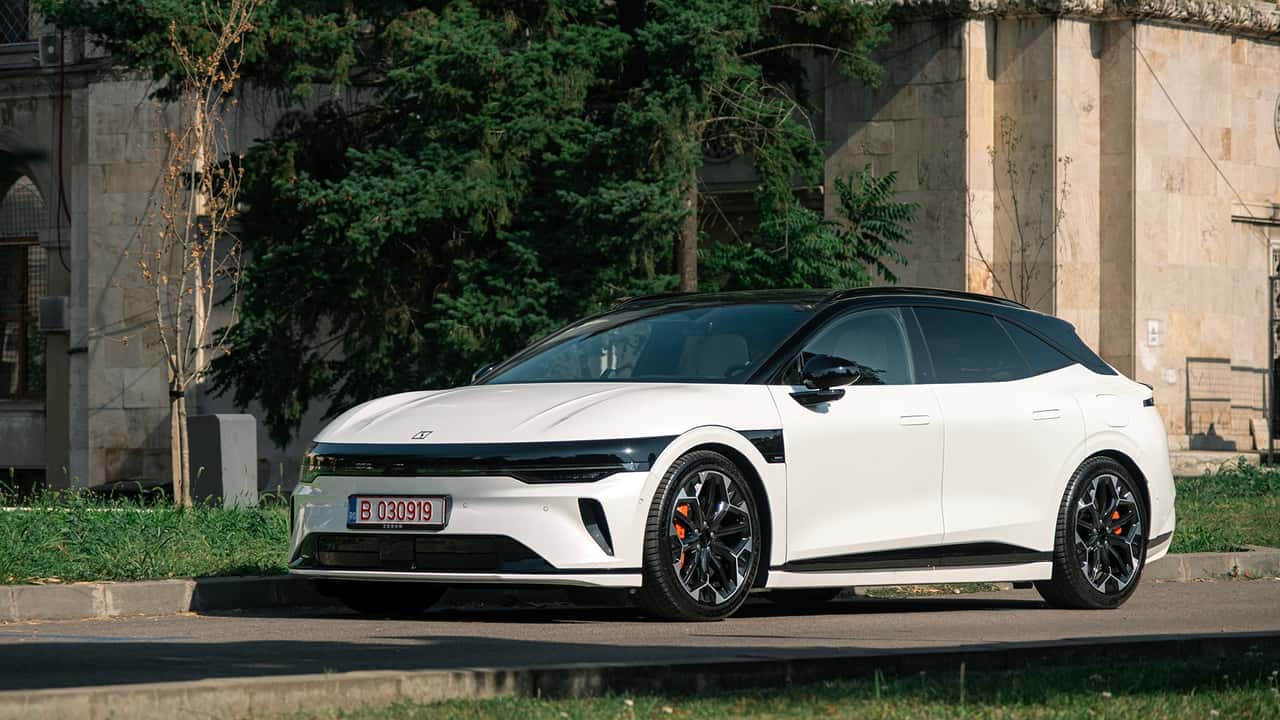
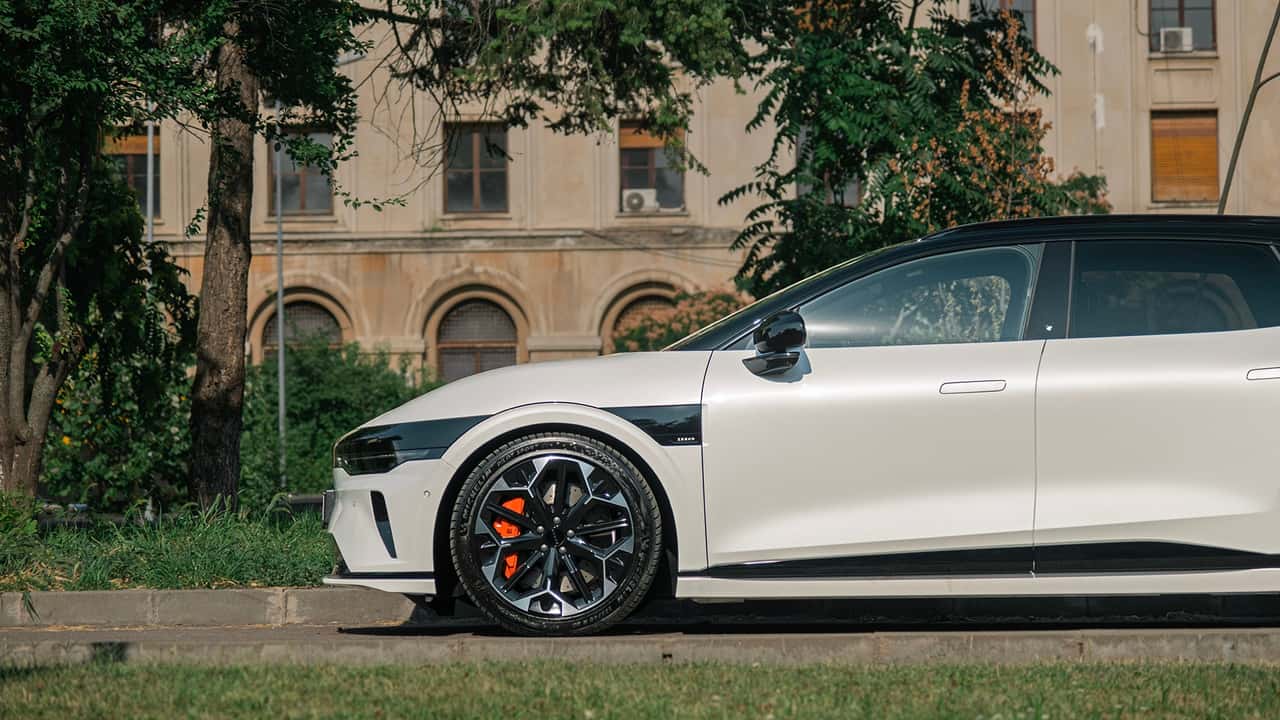
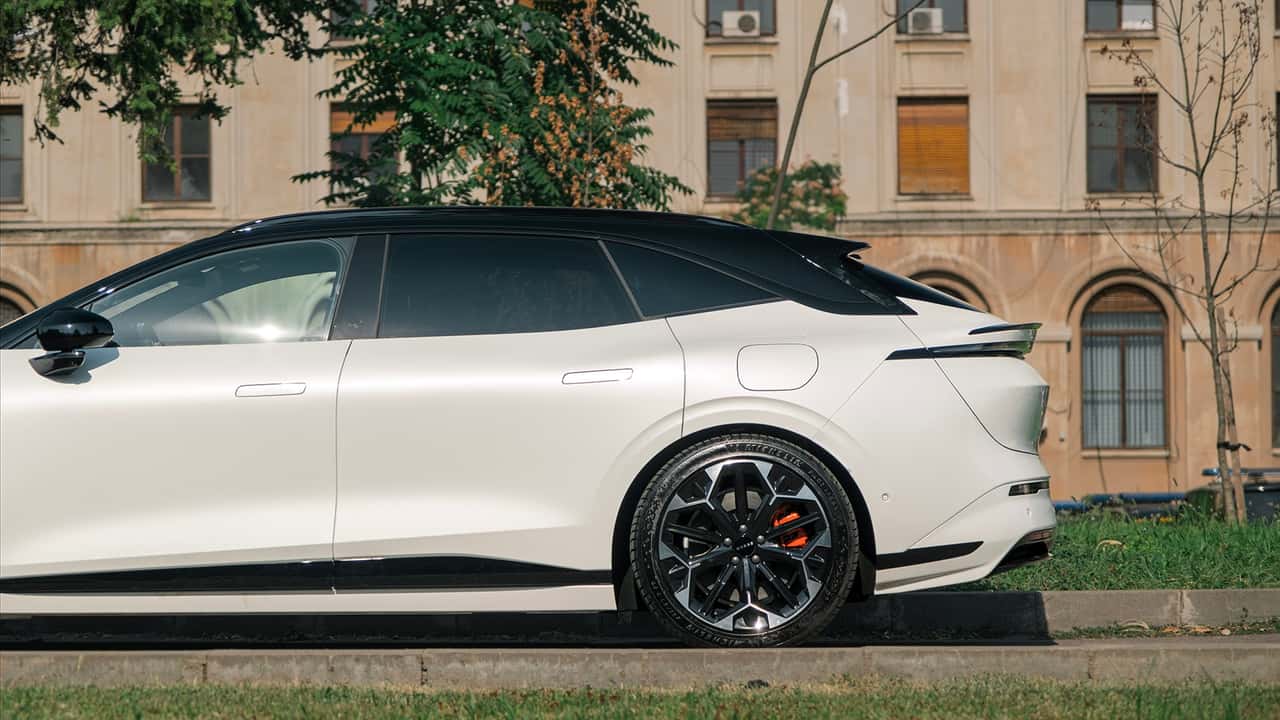
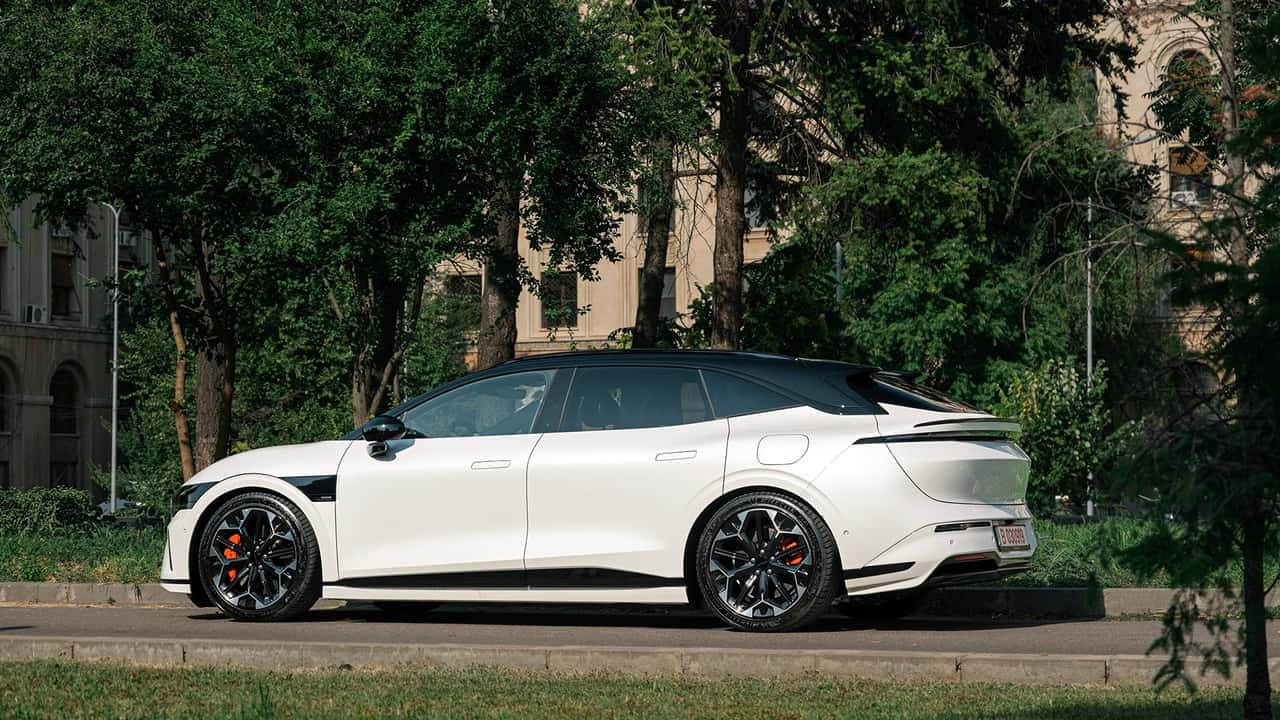
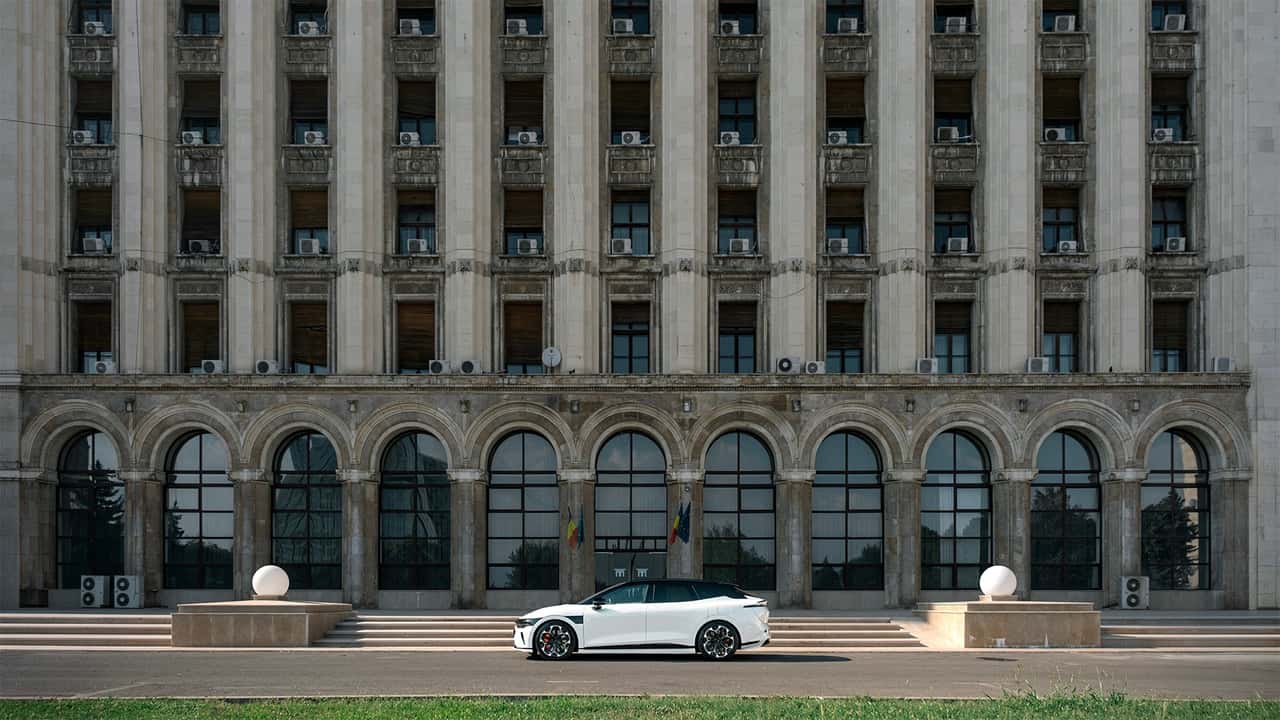
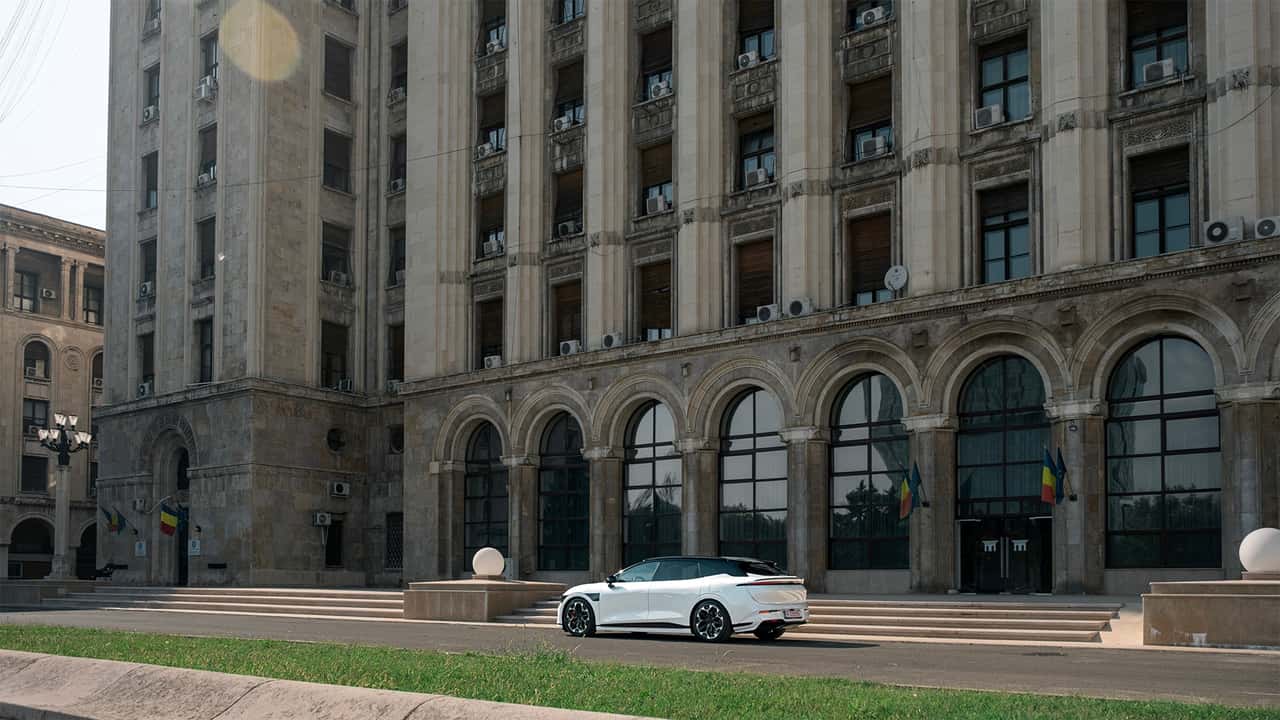
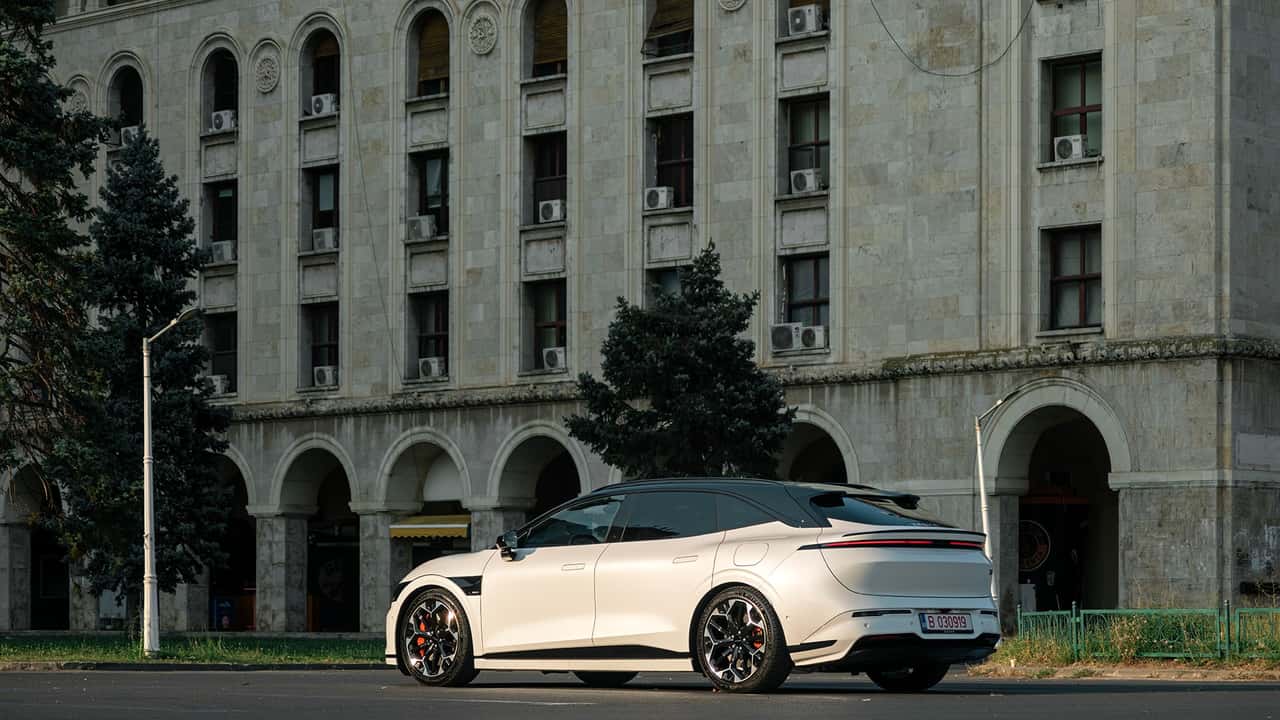
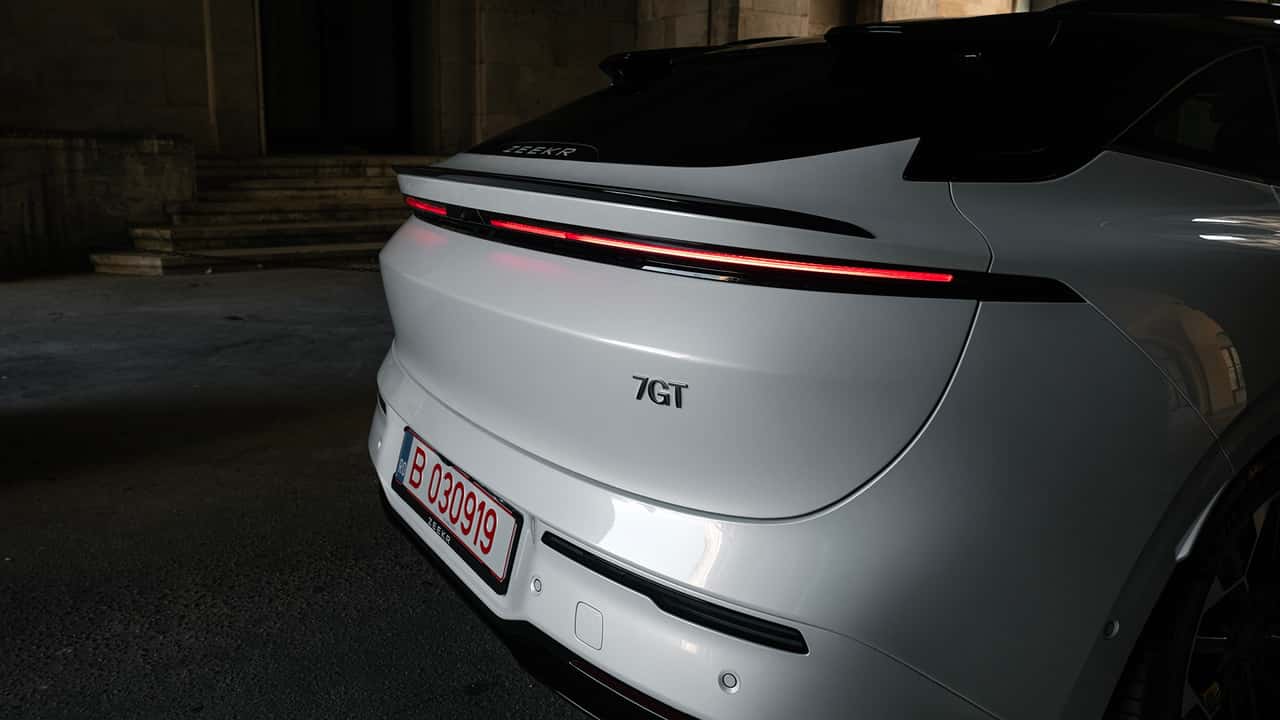
The low nose, black front mask, and muscular rear shoulders work well together, and this car turns heads. There’s a tapering, contrasting roof, a split roof spoiler, and another lip at the rear. The Privilege’s unique wheels and orange calipers finish the job.
The trunk is less spectacular: 16.1 cubic feet (456 liters) against 20.1 cu-ft (570 liters) for the larger i5 Touring. A 60/40 folding backrest, ski hatch, and underfloor storage help, but this wagon has other priorities beyond swallowing boxes of flat-pack furniture.
Rear-drive versions also have a 2.3 cu-ft (65-liter) frunk, which shrinks to 1.1 cu-ft (32) liters on the dual-motor.
The Assistance Needs Assistance
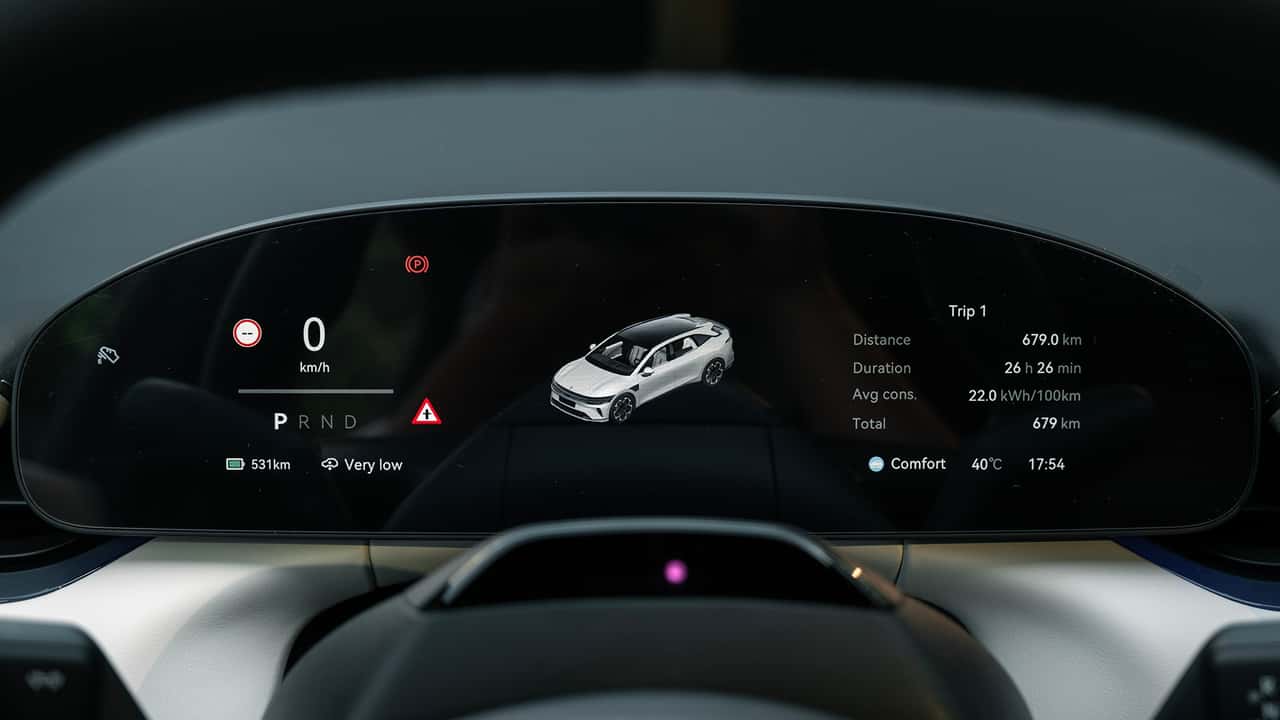 Photo by: Andrei Nedelea
The car says it has one-pedal driving, but it’s not really true. You can choose between normal and strong brake recuperation settings. I selected the latter and was waiting for the familiar regen tug as I lifted off. However, it wasn’t slowing down nearly as quickly as I expected.
There’s nothing wrong with letting an EV coast, especially since it feels more like a traditional combustion car. But the point of offering different settings is to accommodate different preferences. The gap between standard and strong felt too small, and neither gave me the control over speed I wanted through the accelerator alone.
The adaptive cruise control sometimes found reasons to slow down that completely escaped me. It behaved reasonably on an empty stretch of highway, but another car passing could prompt it to reduce speed without an obvious need.
Lane centering added its own interruptions. Assistance would sometimes drop out, then resume with a tug at the wheel that felt too abrupt. These systems always require supervision, but their interventions should be more predictable and gentle. Here, I found myself watching for what the car might do next rather than enjoying the workload reduction they should be bringing.
A Lot Of Car. A Little Work To Do
The 7GT makes you wonder how much of a traditional luxury car’s price goes toward the car, and how much pays for the privilege of getting a badge that your neighbors recognize. The cabin is exceptional, the Privilege rides beautifully, and the rear passengers aren’t forgotten.
Then there’s the acceleration, which can abruptly end any conversation. The expensive bits are already here, though, and much of the experience is excellent. This is, all in all, a pretty special car.
I Drove Mercedes’ New EV With A Silicon Anode Battery. The Future Is Here
VW’s Electric Polo Is Expensive. But After Driving It, It's Not Hard To See Why
2027 Mercedes GLC 400 Electric Review: The Best Mercedes EV Ever, And It’s Not Close
2027 Chevy Bolt Review: Do Americans Really Want Cheap EVs?
Zeekr 7GT Base Price€46,490 As-Tested Price€61,890 Battery100 kWh (gross) / 97 kWh (net) EV Range347 miles WLTP Drive TypeAll-Wheel Drive Output637 bhp (646 PS) Maximum torque524 lb-ft Speed 0-62 MPH3.3 seconds Maximum speed130 mph
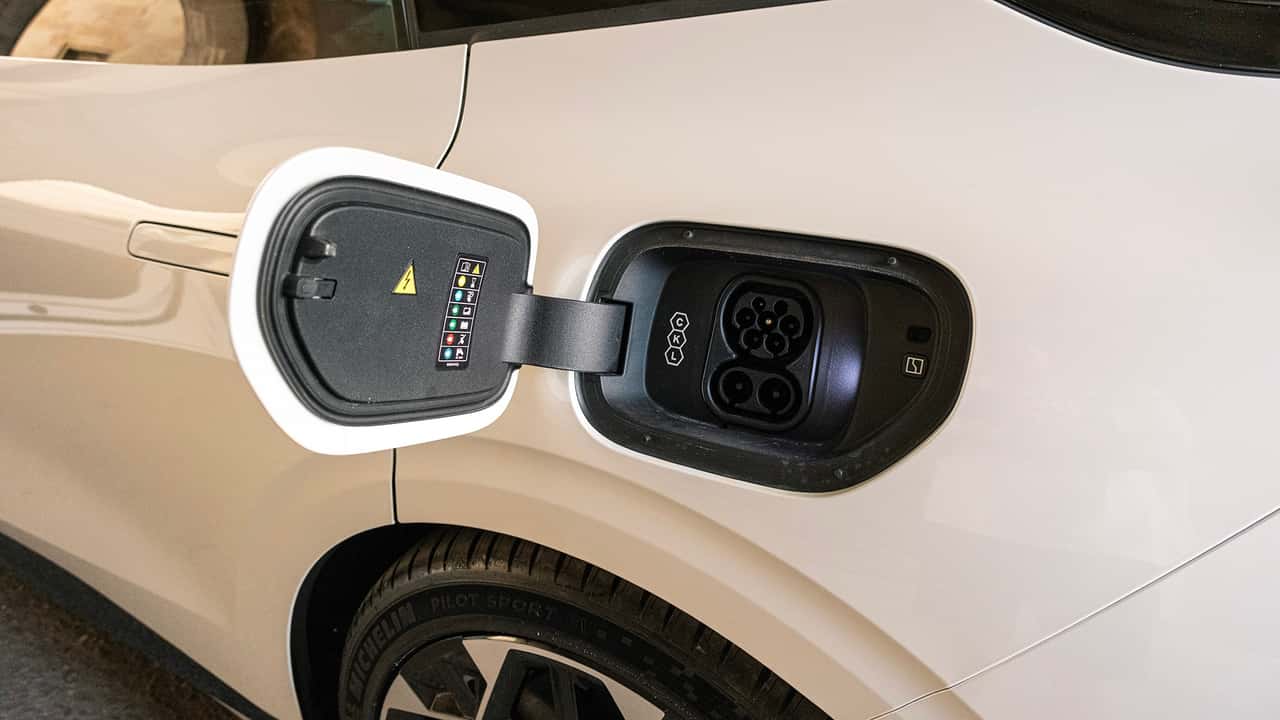
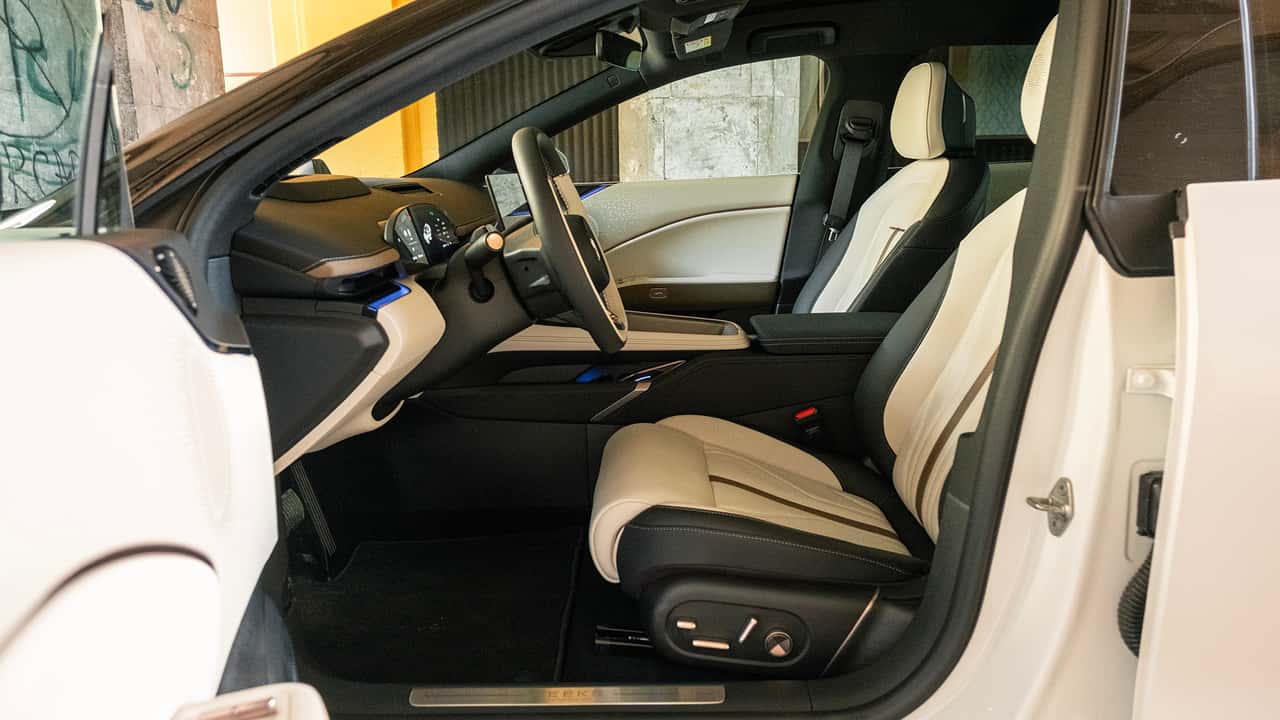
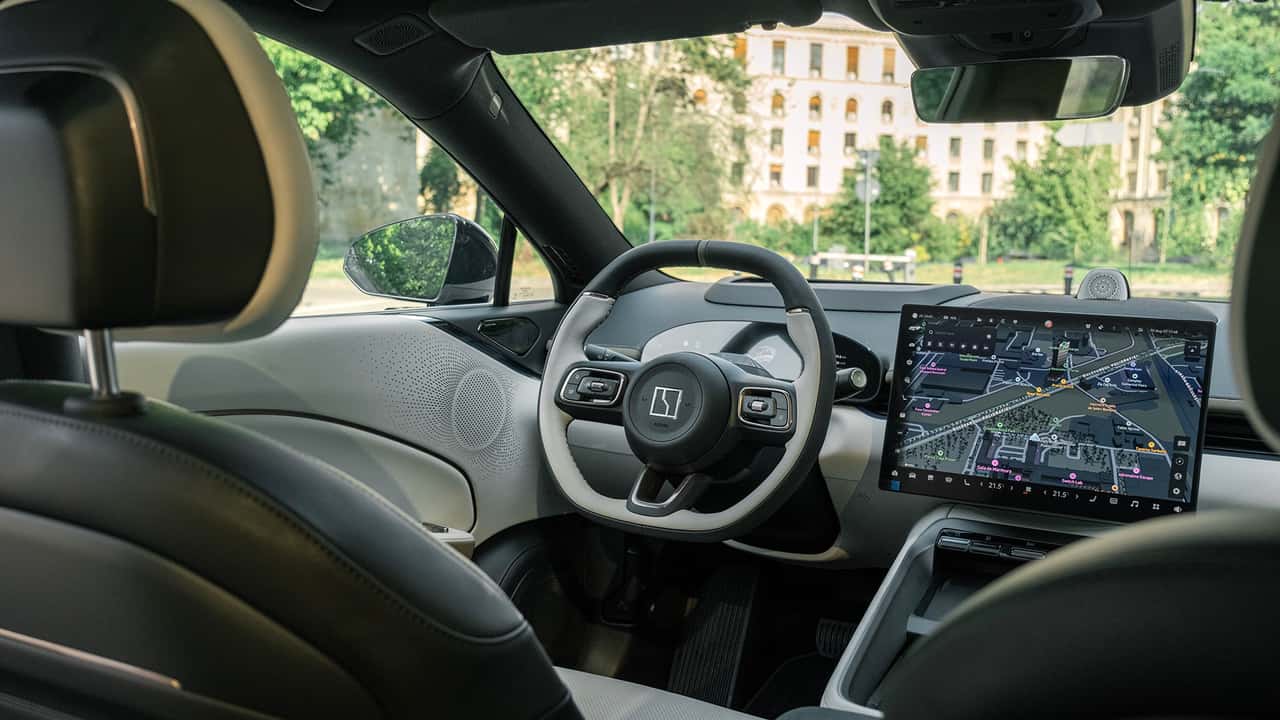
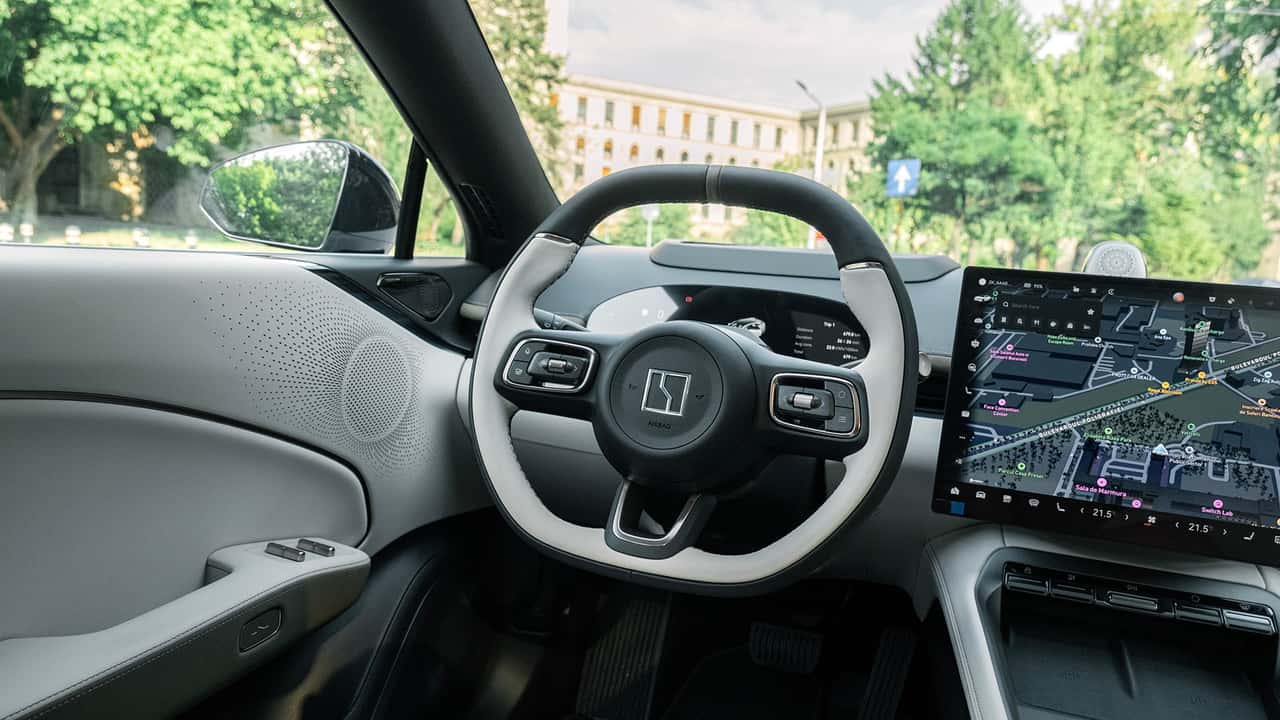
]]> contact@insideevs.com (Andrei Nedelea) https://insideevs.com/reviews/812960/zeekr-7gt-privilege-review/ https://insideevs.com/reviews/814584/karma-gyesera-review/ Thu, 05 Nov 2026 19:04:34 +0000 The Gyesera Is Karma’s First New Model In A Decade. But It Doesn’t Feel New The Gyesera may have a new face, but it’s still based on the original Fisker Karma. That makes it compromised.
Let’s get one thing straight off the rip: This is not a Fisker.
Karma bought the assets of the original Fisker Automotive, which built the series-hybrid Fisker Karma and went bust back in 2014. The brand bears no relation to the recently deceased Fisker Inc., builders of the Ocean. Instead, it’s been carrying on the hybrid’s legacy, with an updated version of called the Karma Revero. And now, 12 years into its life, it has a new product: The Gyesera.
But “new” is perhaps an ambitious term. Mask off the front and rear fascias and the gorgeous silhouette of the original Fisker Karma shines through. Climb aboard and you notice the same terrible packaging constraints, with its tunnel-mounted battery and low roof squeezing rear passengers into awkward shapes. Take a look around the interior and you’ll see the bubbly steering wheel, which looks like something out of 2010, because it is.
(Full Disclosure: Karma flew me to Vegas and put me up in the Wynn for the first drive event. The company provided meals and test cars.)
These choices are the natural results of Karma’s position. Cash-light and still attempting to break into mainstream consciousness, the brand couldn’t afford to wholly rework the crash structure of the vehicle, or alter safety-critical parts like the airbag in the steering wheel. Given the resources available to the company, it’s made remarkable strides in making the Gysera even prettier than its predecessors, a better hybrid, and a more luxurious car.
But does that mean I’d recommend forking over $139,995 for one? No. If Karma wants to win a seat at the table, it’s going to need something new. Executives at the company seem to know this, and are quick to point to the upcoming Amaris and (long-delayed) Keveya EV as lynchpins of their new era. Twelve years into its history, though, the company is running out of time to prove it can do more than just tweak a platform developed by someone else.
What Is It?
The Gyesera is the descendant of the second plug-in hybrid (PHEV) ever sold in America, or arguably the first extended-range electric vehicle (EREV) offered here, depending on how you look at it. Unlike the first PHEV, the Volt, the Fisker Karma had no ability to connect its engine to the wheels, with it functioning solely as a generator.
Fifteen years later, the Gyesera uses the same formula. But almost every input into that equation is different. While the Fisker used a General Motors-sourced 2.0 liter four-cylinder, the Revero and now Gyesera use a BMW-sourced 1.5-liter three-cylinder. The Fisker took over 6 seconds to hit 60 and went only 32 miles on electricity alone. The Gyesera hits 60 in 3.7 seconds and can travel 80 miles before the engine kicks on.
That’s thanks to a 28 kWh nickel-manganese-cobalt (NMC) battery pack squeezed into that tunnel that cuts through the car. The pack now supports fast charging at 50 kW, too, so you can top it off in 30 minutes.
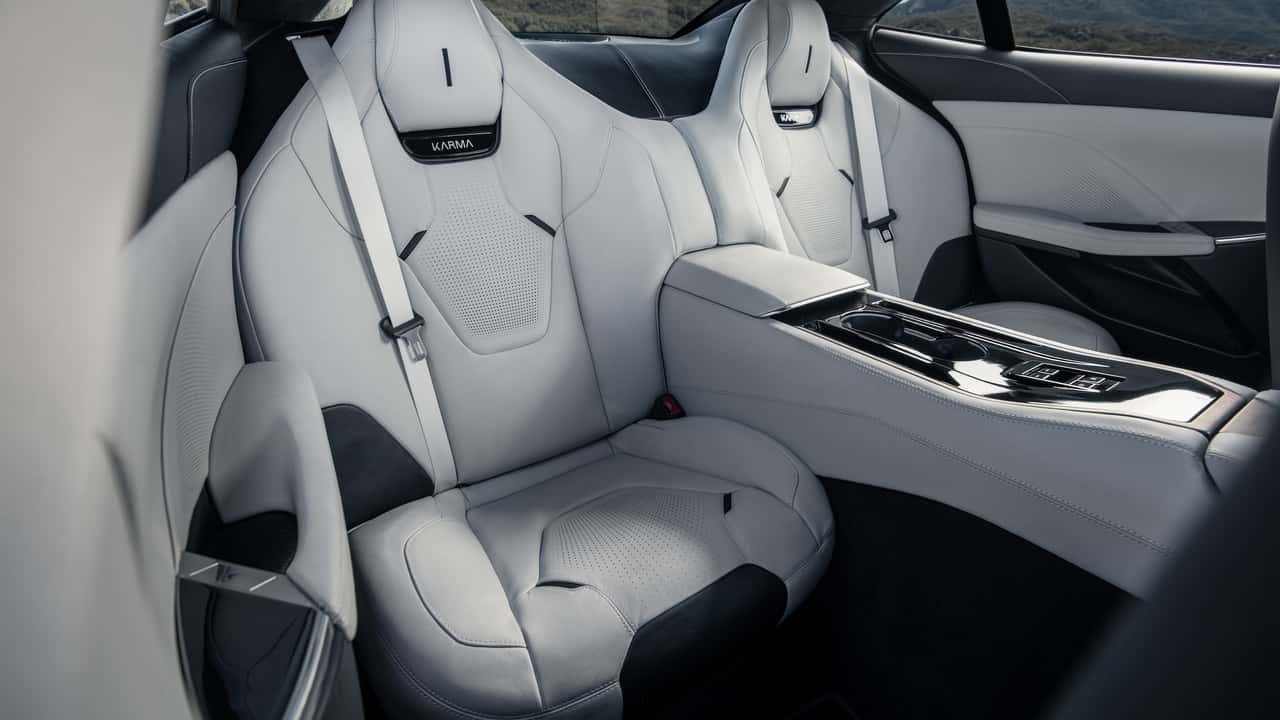
Like the original Karma, the Gyesera squeezes its battery into a tunnel that runs through the spine of the car. That makes the rear seat comfort—which already suffers from the low roof and lack of legroom—even less practical.
Photo by: Karma Automotive
To manage the car’s powertrain, drivers can toggle between three modes using the paddles behind the wheel. In Stealth mode, it’s a pure EV. In Sustain, it runs the engine to keep the battery topped off. In Sport, it uses both for a maximum attack mode, unleashing 566 hp and making quite a racket doing so.
That’s representative of Karma’s new approach, which seems to emphasize the engagement of the internal combustion engine. While the Fisker Karma arrived to a world in which electric power was the novel and exciting thing, the Gyesera is trying to make space in a high-end market that seems skeptical of pure EVs. So that three-banger dumps its exhaust right next to the driver, making it sound extra rowdy.
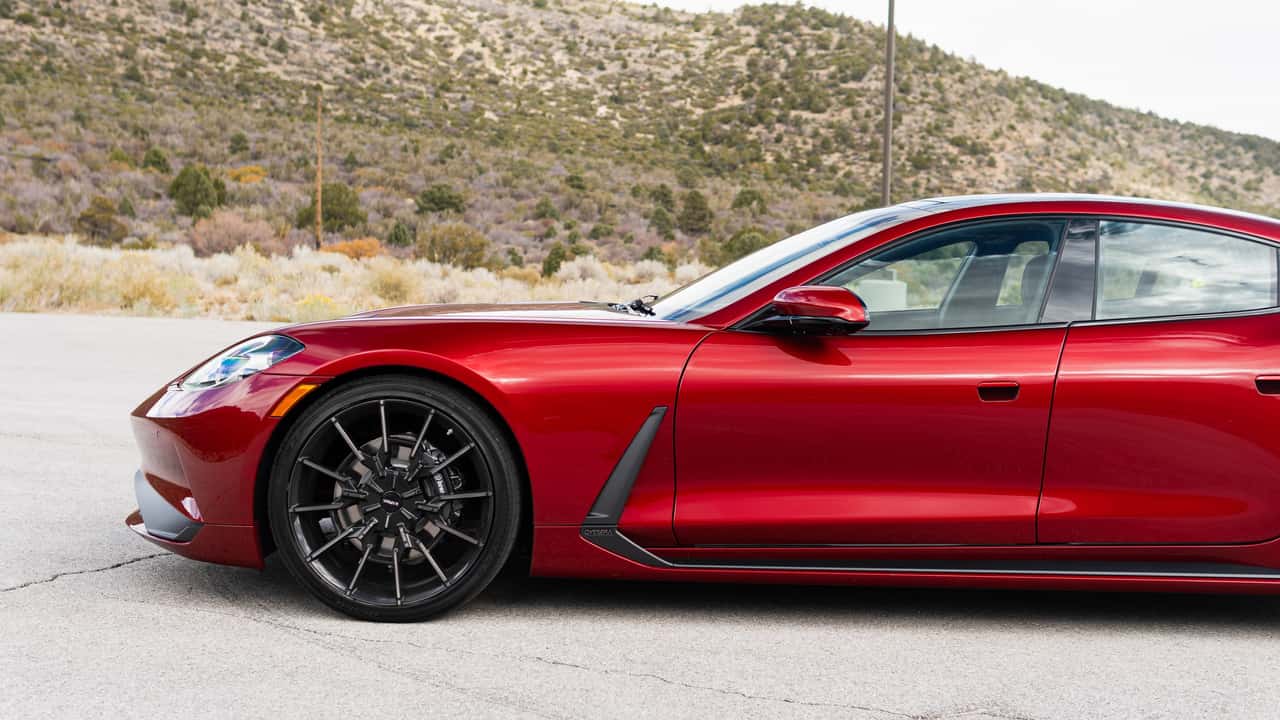 Photo by: Mack Hogan/InsideEVs
How Is It To Drive?
To test out the Gyesera, Karma led us on a 200-mile tour of the areas outside of Las Vegas. We stormed through Red Rock Canyon and climbed deep into the mountains, focusing much more on high-speed gas-burning shenanigans than on silent electric motoring.
There was really nothing silent about the day. My most prominent memory is of the raspy three-cylinder singing away, always a beat or two behind what was actually happening on the road. Stomp the accelerator and the Gyesera surges forward at idle, only for the revs to quickly climb a half-second later. Let off and the engine keeps singing for another measure or two.
I’m not sure if it’s because I find three-cylinder engine-notes to be the worst of any engine configuration, or because it exits the car so close to the driver’s eardrum, but it was a deeply irritating racket by the end of the day. I’m no hater of exhaust notes, either: I love the sound of a straight-six, a V-8, or any naturally aspirated sports car. But this has a charmless sound and, because it isn’t actually operating in time with your acceleration, doesn’t really add to the engagement.
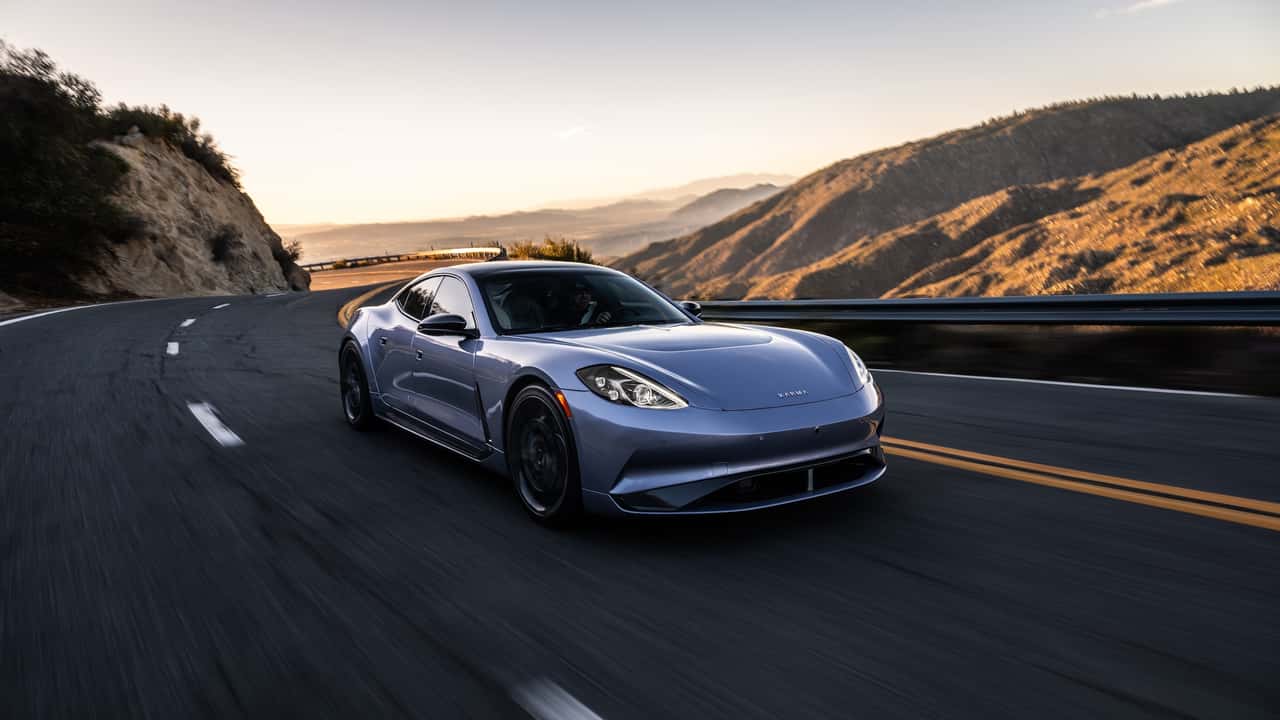 Photo by: Karma Automotive
It was even irritating standing still. When I left the car running in Sport mode, it desperately tried to recoup the energy it had lost on our high-altitude climb, buzzing away. This is a purportedly electric car that idles louder than my 20-year-old V-8 Chevy Tahoe did.
I can’t say its performance won me over in the corners, either, with twitchy manners that made it hard to trust. The car was often unsettled under braking, shimmying left and right as I slowed. Get on the power and you notice the unique two-motor setup. Both motors are on the rear axle, designed to enable quicker corner exits thanks to torque-vectoring software. But in the real world it often felt as if the wheels weren’t working in perfect harmony.
So as a sports car, it’s hard to argue in the Gyesera’s favor. It’s slower than just about any gas or electric competitor, less charming than any gas or hybrid option with a proper engine that drives its wheels, and far too unrefined for any EV fan. The fact that it costs more than cars like the BMW M5, Porsche Taycan, Lucid Air, or forthcoming Jaguar Type 01 dooms the case.
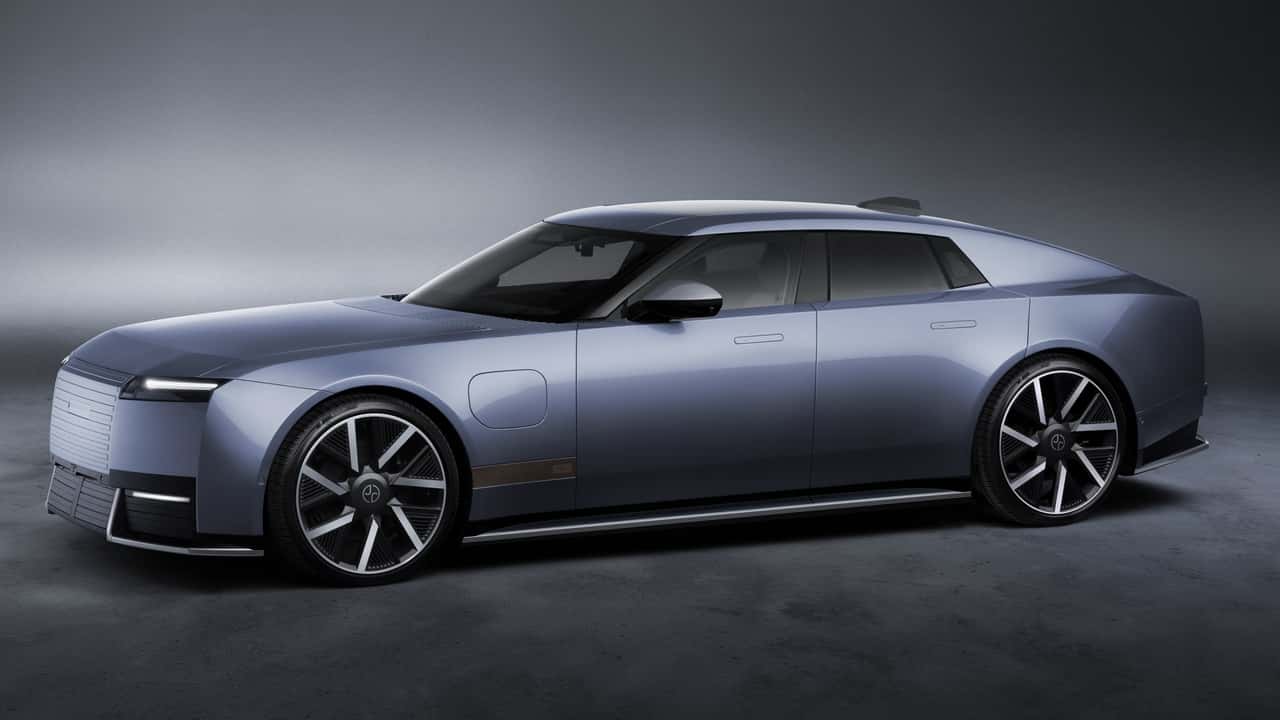
If you want to drop $140,000 on an electrified sedan, there are a lot of options. The Gyesera may look great, but it doesn't really beat any of its competitors in other metrics.
Photo by: Jaguar
But there’s another benefit to a four-door EREV: Grand touring. Here the Gyesera performs better, but not exactly well. The suspension tuning finds a good balance between athleticism and comfort, especially given that it’s a fixed spring setup with no adjustability. (Manually adjustable Öhlins dampers are available, but stiffer and not available for testing.) But an ok ride is negated by the seats, which are not nearly as supportive or nice as any competitor. My butt was sore after only an hour.
Still, at cruising speeds the Gyesera is nice enough to not be frustrating. It settles down nicely at freeway speeds, although poor sealing on the driver’s door—potentially a prototype issue, as these were pre-production cars—made it noisier than I would like.
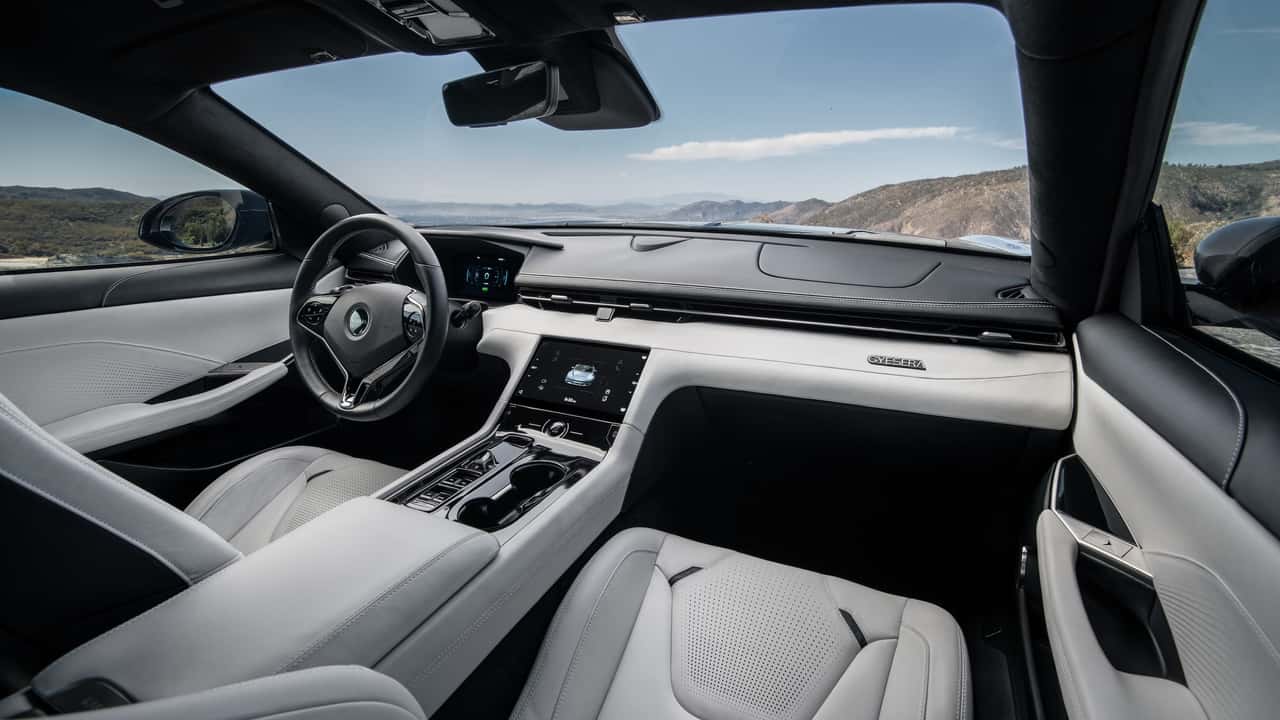
I found the interior much less luxurious than it appears in these polished press photos.
Photo by: Karma Automotive
How Is It To Live With?
The longer highway stretches gave me time to take in the trimmings and tech. Here, once again, the ancient roots shine through. Despite Karma proudly boasting of using top-dollar materials—great leather, real metal, carbon fiber, and more—they live inside a cabin that’s clearly two generations behind par. Nice leather covers uncomfortable seats. Metal accents adorn panels that look cheap and rudimentary.
And most of what you touch—the gear selector, the entire center stack, the steering wheel controls—it’s all black plastic. Dive deeper and you find that, despite Karma’s insistence that this is a software-defined vehicle, the screen isn’t very quick to respond, the software feature set is barren, and everything is too dark and monochrome to be easily digestible. Karma representatives had us all lean on CarPlay for mapping and music, which is what I imagine most owners will do.
Finally, I must note that the rear seat is more coupe than sedan. I’m only 5’ 6”, and still there wasn’t enough room behind my seating position for my 5’ 11” drive partner to feel comfortable. Headroom is also an issue. Cargo space, too, is tiny, though Karma doesn’t share an exact figure. Either way, the opening itself is tiny, and often looks open even when shut, thanks to massive panel gaps.
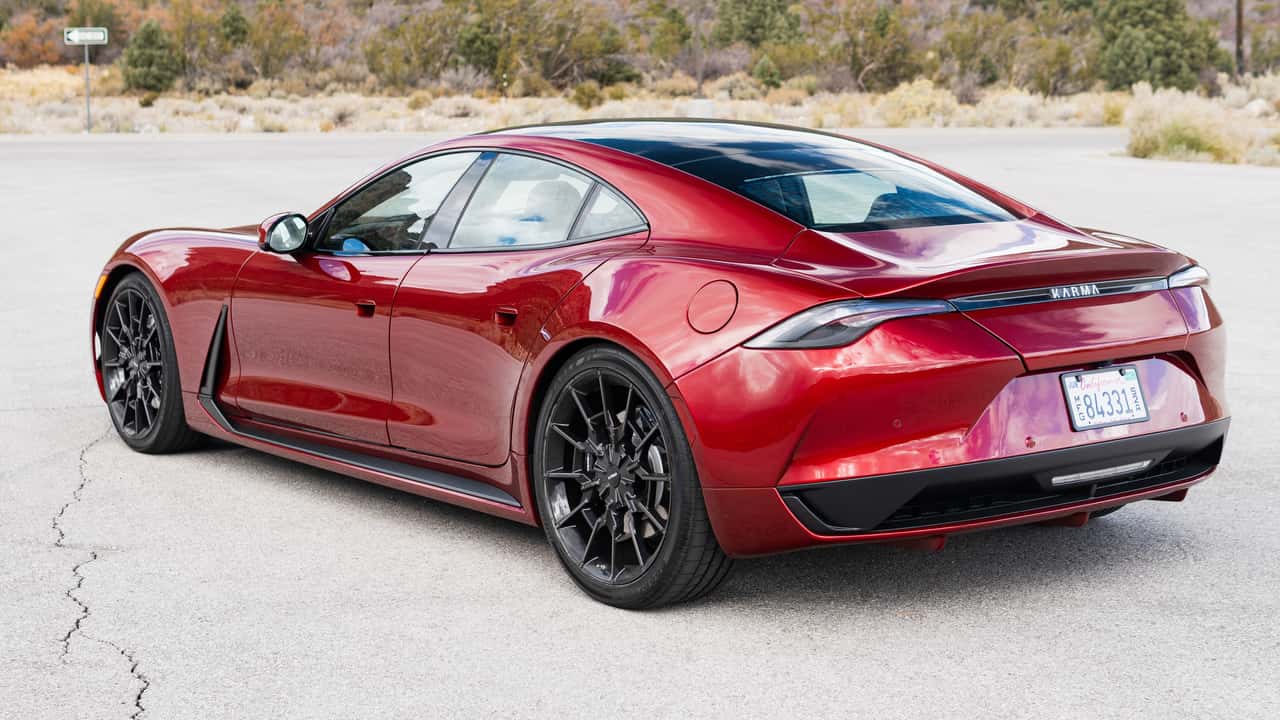 Photo by: Mack Hogan/InsideEVs
Conclusion
Designing a competitive car is extremely challenging and even more expensive. Armed with a limited amount of time and cash, I understand why Karma is leaning on the only platform it has.
But the result is too rough to recommend. The Gyesera looks fantastic and has plenty of EV range. In almost every other metric, subjective or objective, it’s a clear laggard in its class. The company is attempting to market it as an ultra-luxury product, yet it feels cheaper inside than a mid-spec BMW 5 Series. It is supposed be a performance car, too, but is slower, less refined to drive, and less charming than any of its conventional competitors.
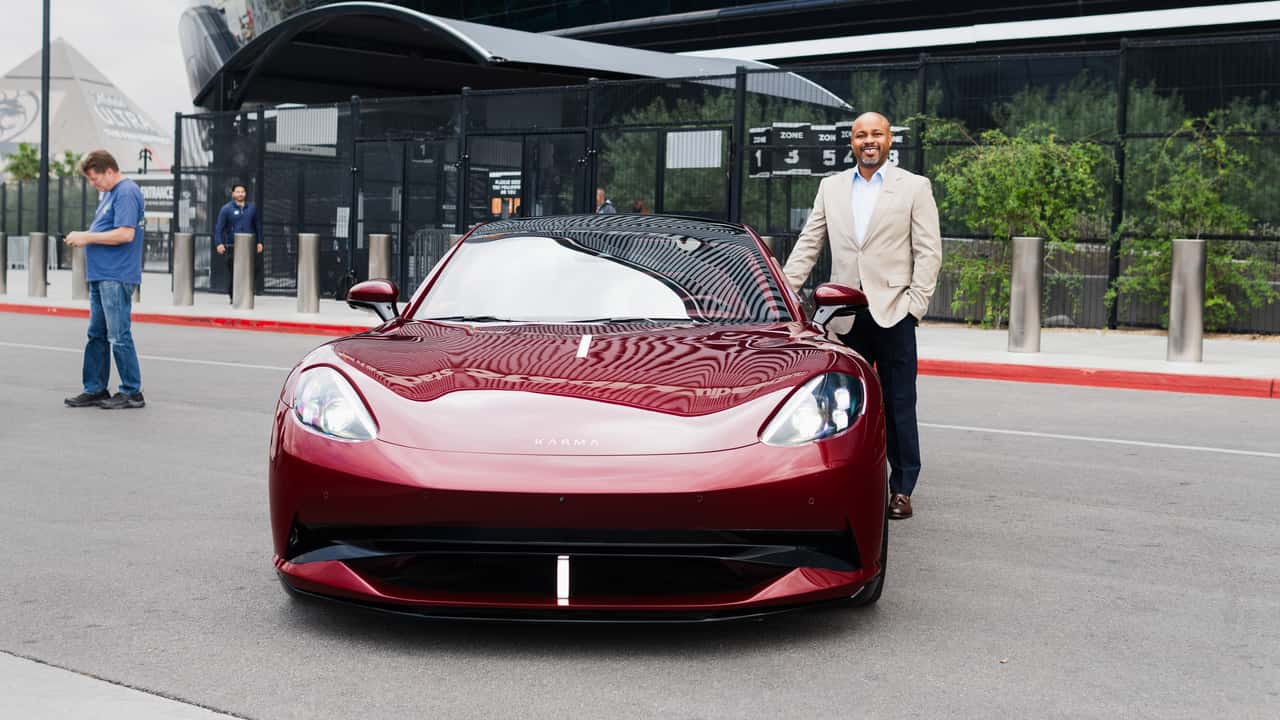
Karma President Marques McCammon with the Amaris prototype. The two-door coupe is still essentially a Gyesera/Revero/Karma underneath, but it's at least a new take on it.
Photo by: Mack Hogan/InsideEVs
So why buy one? The only argument Karma executives made that really holds water is its exclusivity. It’s no accident that the first drive event was linked the Concours at Wynn Las Vegas, which was stuffed to the brim with Bugattis, Paganis, and McLaren F1s. The audience for a car like this isn’t supposed to be cross-shopping it with Porsches; they already have Porsches, and Rolls-Royces, and everything else. Why not add another to the pile?
Among that audience, a hand-built car with a great design may be enough on its own. Those people aren’t likely to read many reviews before pulling the trigger. If you’re here, you’re likely wondering if Karma is truly entering a new era, and moving beyond re-hashes of the same old tune.
It may be. Once the Amaris coupe and all-electric Kaveya launch, they could herald the dawn of something new. The Gysera, though, does not. It’s just as compromised as the original Karma of 15 years ago, now competing in a market that has moved on.
The 2027 Karma Gyesera Is $35,000 Cheaper Than The Revero It Replaces
The Karma Revero Is Dead
Karma’s $200,000 Amaris Luxury Coupe Is Real, And It Looks Stunning
Can The Reborn Karma Automotive Pull It Off This Time?
]]> contact@insideevs.com (Mack Hogan) https://insideevs.com/reviews/814584/karma-gyesera-review/ https://insideevs.com/reviews/814182/electric-versus-combustion-hot-hatches/ Tue, 03 Nov 2026 08:30:00 +0000 They Wanted The Fiesta ST To Beat These EV Hot Hatches. It Came Last The electric contenders beat both gas cars on track and won over the driver who was rooting against them. The Alpine A290 won the track test despite having considerably less power than the Cupra Born VZ. Both electric hot hatches beat the lighter Volkswagen Polo GTI and Ford Fiesta ST. The driver wanted the Fiesta to win but ultimately picked the winning Alpine as his favorite.
Hot hatch fans love a snappy manual gearbox, an eager engine and a car light enough to chuck into corners. But there’s an increasing influx of electric hatches that are coming out now that are quicker on paper, but extra weight and the loss of that mechanical interaction can make them a harder sell.
The Ford Fiesta ST is one of the most appreciated subcompact hot hatches mainly thanks to its legendary handling. It’s the car the two hosts of this Driven+ video wanted to win the four-way track battle that they set up, pitching electric against combustion.
In the lineup, the Cupra Born VZ had the obvious acceleration advantage. Its single rear motor produces 322 hp and 402 lb-ft of torque, giving it a 5.7-second sprint to 62 mph, though it is also the heaviest in the test at 4,407 lbs (1,999 kg), with a larger footprint and a 79-kWh battery.
The Renault 5-based Alpine A290 GTS counters with 217 hp, 221 lb-ft, a 52-kWh battery, and front-wheel drive. It reaches 62 mph in 6.4 seconds and, at the video’s quoted 1,555 kg, weighs considerably less. Both EVs use single-speed reduction gear transmissions, so there’s nothing to shift; not even fake gears like in some other sporty EVs.
The 2,998 lbs (1,360 kg) Polo GTI pairs a turbocharged 2.0-liter four-cylinder with a seven-speed dual-clutch transmission, producing 204 hp and 236 lb-ft. The 2,767 lbs (1,255 kg) Fiesta’s turbocharged 1.5-liter three-pot sends 197 hp and 214 lb-ft through a six-speed manual to the front wheels. Both manufacturers quote 6.5 seconds to 62 mph.
Around the track, that acceleration hierarchy wasn’t maintained. The Alpine won comfortably with a lap time of about 52.9 seconds, followed by the Cupra at 53.65, the Polo at 53.76, and the Fiesta at 54.63.
Even though it won, driver Sam repeatedly complained that the Alpine felt slow. He then awarded a handling rating of 10/10, so it’s clear its cornering ability impressed him far more than its straight-line punch. The Cupra’s weight and persistent electronic intervention drew criticism, but its willingness to slide its tail had him laughing, and he awarded it 11/10 for fun. The Polo’s electronics and refusal to deliver requested downshifts were considerably less entertaining, though.
Sam wanted the Fiesta to win but wasn’t impressed with its launch control, so he launched it himself. Otherwise, he had little to fault beyond a lap time that didn’t match his enthusiasm. It still delighted him as it lifted its inside rear wheel through corners, earning 10/10 for fun.
The Alpine ended up being the car Sam liked the most. The Fiesta still delivered the fun he expected, but the Alpine delivered more than he’d given it credit for.
This Wild Electric Hot Hatch Concept Is Hiding Peugeot’s Next Small Car
VW Wants Its First Electric GTI To Feel Old-School
VW’s Electric Polo GTI Just Got Faster. Thank The Customers
New Volkswagen ID.3 GTI: The First RWD GTI Is Here With More Power Than Ever
]]> contact@insideevs.com (Andrei Nedelea) https://insideevs.com/reviews/814182/electric-versus-combustion-hot-hatches/ https://insideevs.com/reviews/814044/rivian-r1t-uk-europe-review/ Mon, 02 Nov 2026 11:20:23 +0000 The Rivian R1T Is An Awkward Fit For Britain. This Reviewer Loved It Anyway Its 835 horsepower and clever features impressed Rory Reid, but getting a cheeseburger proved difficult. AutoTrader takes an imported Rivian R1T through British villages, parking spots, and a drive-through. Its size makes it tricky to maneuver around some tighter roads, while its left-hand driving position makes it harder to see past traffic when overtaking. Despite its awkward fit for Britain, the truck earns an enthusiastic verdict.
Giving a pickup 835 horsepower is one way to get a car reviewer’s attention. Making it comfortable and packing it with clever features helps keep it interesting. The Rivian R1T scored on both fronts with AutoTrader’s Rory Reid, who drove an imported example in the United Kingdom, although it didn’t take long to see why this particular American export might need a little more room to settle in.
At roughly 18 feet long, the R1T is big by European standards and demands careful planning when maneuvering in tight spots, though Reid still manages to squeeze it into a normal-sized roadside space. Through villages and small towns, he finds the R1T’s size hard to ignore, likening its length to driving a stretch limo.
Even though the R1T is known to handle corners well for a pickup, Reid notes you can never escape its weight. He says he can hear the tires struggling through faster bends, but he still praises the very well-controlled body roll.
This isn’t the newer Gen 2 R1T. It’s a first-generation example whose quad-motor setup peaks at 835 horsepower. Reid performs an acceleration run from 0 to 60 mph, which the car dispatches in just 3.31 seconds. Reid’s laughter suggests that it’s more than enough acceleration for something with a big cargo bed in the back.
He also highlights the comfortable seats, smooth power delivery, and light steering, and praises the responsive accelerator and strong regenerative braking. The latter brings the truck to a complete stop smoothly simply by lifting off the accelerator pedal.
The practical details also impress Reid. There’s a lockable storage tunnel behind the cab (the ‘Gear Tunnel’), a built-in air compressor, a powered bed cover and extensive camera coverage. He also welcomes the separate driver’s display. Less impressive are the missing glovebox and rear-seat space, which don’t quite match the space expectations set when you see how big it looks from the outside.
The R1T is officially only sold in the United States and Canada. Rivian plans to enter Europe, but only with the smaller R2, whose size makes it far better suited to the continent’s narrower roads. Its U.K. launch has not been confirmed, though, and Rivian’s British website currently gives no arrival date.
Still, even if it feels a bit out of place in the U.K., Reid acknowledges that the R1T doesn’t really fit British roads or lifestyles; he still calls it ‘amazing’ and wants to see more electric pickups like it.
Rivian Has Invested Millions In 3D Printing. Its Biggest Plans Are Still Ahead
Rivian’s ‘Boring’ Commercial Van Is Turning Into A Secret Weapon
Rivian's Charging Network Grew 39% In A Year
Rivian's R2 Is Already Its Best-Selling EV. Now The Company Expects Even Bigger Sales
]]> contact@insideevs.com (Andrei Nedelea) https://insideevs.com/reviews/814044/rivian-r1t-uk-europe-review/ https://insideevs.com/reviews/813726/2027-nissan-rogue-hybrid-review-toyota-rav4-rival/ Fri, 30 Oct 2026 12:00:00 +0000 I Drove A New Kind Of Hybrid From Nissan. Here's How It Beats The Toyota RAV4 Nissan's 2027 Rogue e-Power hybrid drives like an electric car. I tested it back-to-back with the RAV4 to see which hybrid wins.
As drivers get squeezed at the pump due to high gas prices, they’re increasingly seeking cars that can go farther on a tank of gas, leading to record sales of hybrids for Toyota, Honda, Hyundai, and Kia this year.
Nissan, however, has been notably absent from this party, with no plug-less hybrid in its U.S. lineup. The 2027 Rogue Hybrid finally changes that, and it will lock horns with rivals such as the Toyota RAV4, Honda CR-V Hybrid, and Hyundai Tucson Hybrid. But does it have what it takes to challenge these more established names in this segment?
I drove the new Rogue last week and came away impressed. Its unique powertrain makes the gas engine work solely as a generator to charge the battery. The engine has no mechanical connection to the wheels, which are driven by electric motors the whole time.
As a result, the Rogue drives like an EV with impeccable refinement and smoothness. I drove it back to back with the RAV4, and the Rogue felt superior with its EV-like traits. The RAV4 outperforms in some other areas, but the Rogue is particularly strong when it comes to driving characteristics. Let’s dive right in.
[Full Disclosure: Nissan invited me to drive the 2027 Rogue Hybrid in Santa Barbara, California. It paid for travel, accommodation, and food.]
Nissan’s Third Generation e-Power System Explained
Don’t let anyone fool you into thinking that hybrids are new. They’re older than the iPhone. The Toyota Prius made its U.S. debut in 2000, and while hybrid technology has incrementally improved since with efficiency and performance gains, the basic formula is unchanged: pair a gas engine with one or more electric motors and a small battery for better fuel economy.
Nissan’s e-Power hybrid system isn’t new, either. The automaker has sold nearly 2 million vehicles equipped with the technology worldwide since 2016, but it’s bringing it to the U.S. only now.
So why the wait? Nissan executives said the first two generations of e-Power were designed for markets such as Japan and Europe, where smaller, front-wheel-drive vehicles are more common. The Rogue Hybrid’s third-generation e-Power system, with a more powerful, dual-motor all-wheel-drive setup, is tailored to North American driving conditions. It was developed for higher speeds and American drivers’ performance needs, Nissan said.
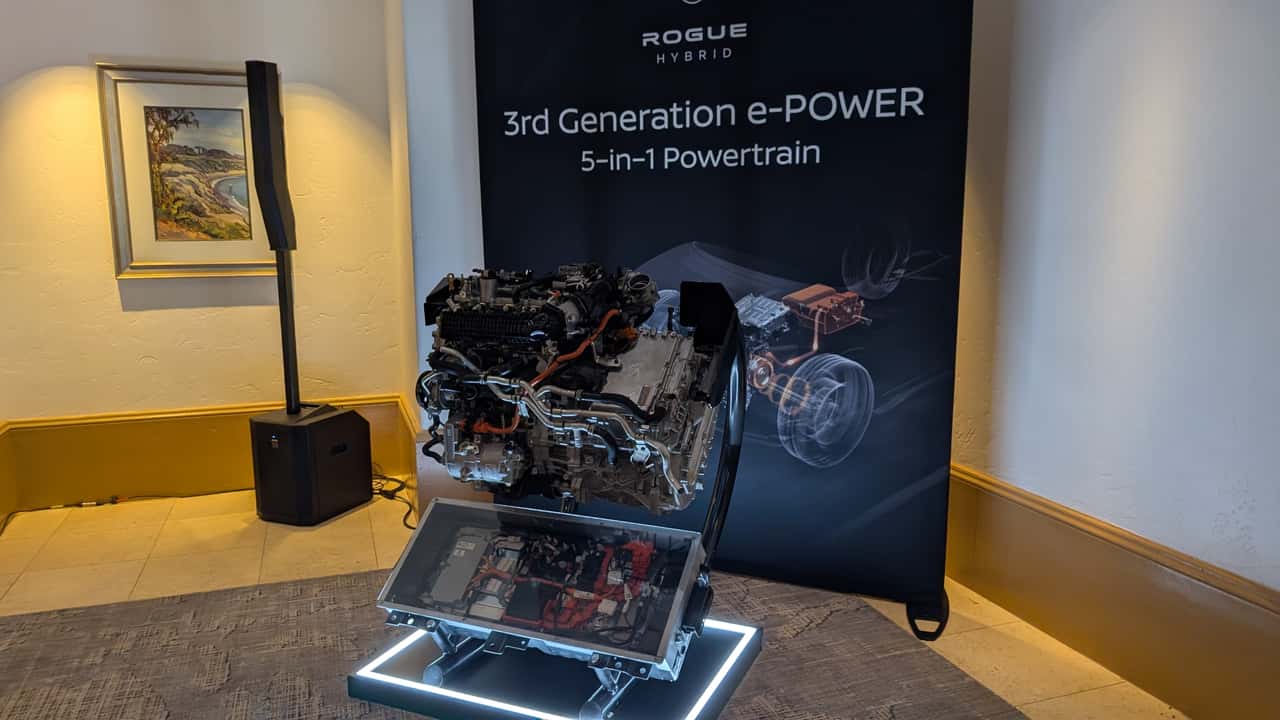
The 5-in-1 electric drive unit combines the reducer, inverter, increaser, motor, and generator. It's showcased here within the broader 1.5 liter engine assembly.
Photo by: Suvrat Kothari
The Rogue, however, feels refreshingly different from rivals. It is powered by a 1.5 liter, three-cylinder turbocharged gasoline engine which shares no components with the power plant on the current Rogue, according to the company. The engine is paired to a 1.67 kilowatt-hour lithium ion battery, which powers two permanent magnet motors, one on each axle.
It is designed to run in its most efficient power band around 2,000 rpm for regular driving but it can rev up to 5,500 rpm under extra load. The generator converts the engine’s mechanical rotation into electricity, whereas the inverter handles alternating current (AC) to direct current (DC) conversion for the high-voltage battery and back to AC for the e-motors. With no direct mechanical linkage between the engine and the wheels, or between the front and rear axles, the electric motors do all of the driving.
That’s the primary distinction between this system and the ones that power Toyota and Honda hybrids. Engines in those hybrid systems are also connected to the wheels, and they use an electronic-continuously variable transmission (e-CVT). There’s no traditional transmission on the Rogue hybrid, just direct drive to the electric motors via the battery.
2027 Nissan Rogue Hybrid: Driving Impressions
Pulling out of the parking lot, I could barely tell the Rogue’s engine was running. Around town, the SUV is quiet and smooth, with the combustion engine largely imperceptible. It was only once I hit the freeway that I began to hear a faint, distant rumble. There’s no instant torque like an EV, no turbo lag like a combustion engine, nor any flat acceleration like a traditional hybrid—just a smooth, consistent, and progressive power delivery.
Hopping into the RAV4 back to back made the Rogue Hybrid’s strengths even more clear. Under acceleration, the RAV4 produces that coarse and unpleasant rubber band effect from its e-CVT. With no transmission, the Rogue makes no such noises. It’s plenty quick, too, hitting 60 miles per hour in 6.4 seconds, which Nissan said makes it the fastest accelerating SUV in the segment. However, the build up of speed is more effortless than jarring—you’re not going to scare your passengers away when you floor the throttle.
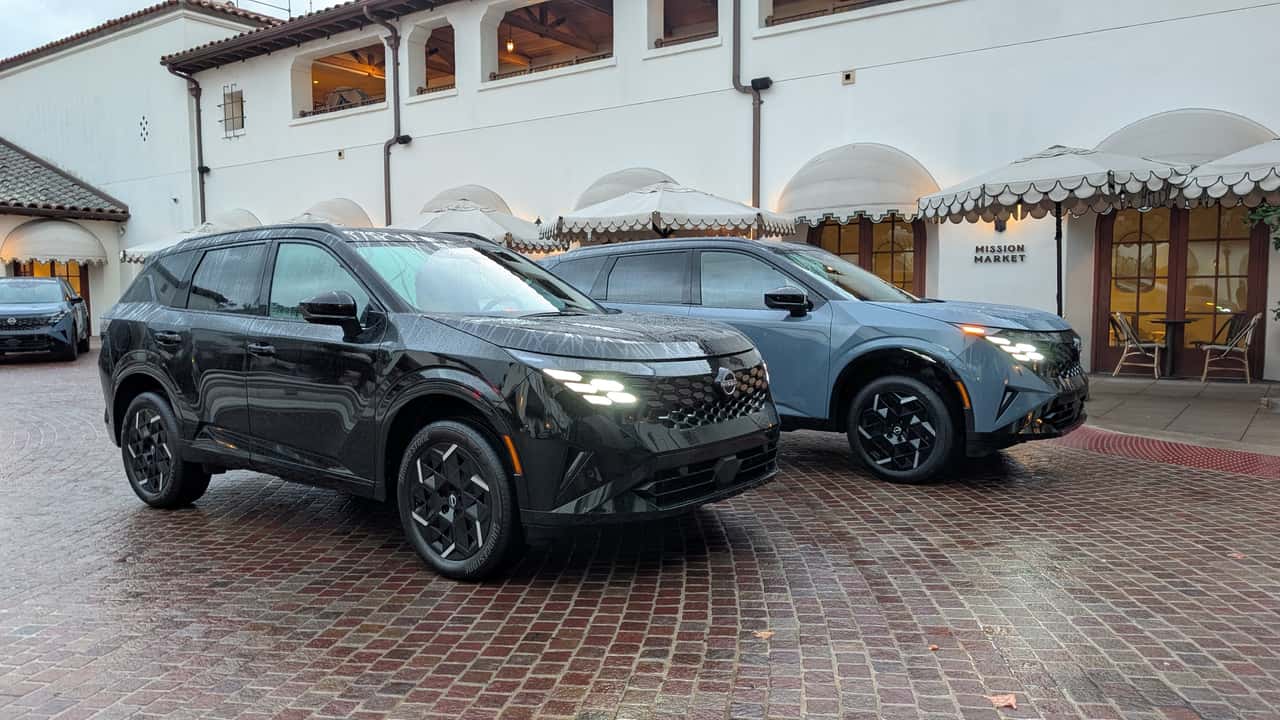 Photo by: Suvrat Kothari
It also gets one-pedal driving and recovers energy from braking for better efficiency. One pedal driving worked as advertised, although it didn’t slow down the vehicle as quickly as an EV. I found myself having to lift off the accelerator earlier than I would have liked to give it enough room to stop before a crosswalk or a stop sign. Until you learn to anticipate its braking behavior, you’ll find yourself reaching for the brake pedal more often than you would in an EV with stronger regenerative braking.
The Rogue also gets what Nissan calls “Smooth Stop.” It basically avoids head toss when the SUV fully stops, something we’ve also experienced in the BMW iX3. It does this by precisely controlling the brake force moments before the vehicle stops, factoring in things like gradient and speed, to avoid your head from bobbing forward and back. It will also sense your foot’s pressure on the pedal. If you’re feathering the brake or pressing hard, head toss is controlled regardless. It’s a small feature, but can make stop-and-go traffic feel less tiring.
The Rogue Hybrid delivers an EPA-rated city/highway/combined fuel economy of 41/36/38 miles per gallon. All of that is better than the non-hybrid third-generation Rogue currently on sale, which is rated for just 30 mpg combined and less than that on most trims. The RAV4 is more efficient, with an EPA rated city/highway/combined fuel economy of 46/39/42 mpg. In my testing earlier this year, I observed 47 mpg combined and up to 56 mpg in the city with the Toyota. So the RAV4 is both more efficient in the city and on the highway, but the Rogue Hybrid doesn't appear to be far behind. (The fuel economy varies slightly depending on trims.)
The suspension also felt sophisticated on the new Rogue. The ride around town was supple, with the springs absorbing the bumps really well and minimal jolts filtering into the cabin. The SUV doesn’t thud or crash over large expansion joints and feels planted at highway speeds. The excellent ride, plus the EV-like refinement and smooth acceleration makes it feel like a premium SUV belonging to a segment above.
Pros
Incredibly smooth One pedal driving No head toss on braking
Cons
Plasticky buttons Interior design isn't cohesive
2027 Nissan Rogue Hybrid Interior And Technology
While Nissan seems to have gone all-in on making the driving experience great, the same effort doesn’t quite extend to the cabin.
The seats are soft and comfortable, but the interior lacks a cohesive design language. The center console, in particular, feels like an afterthought, with square, plasticky gear selector buttons and climate controls that look out of place. At least they work well, and I’m glad Nissan hasn’t succumbed to the trend of burying basic functions in touchscreen menus.
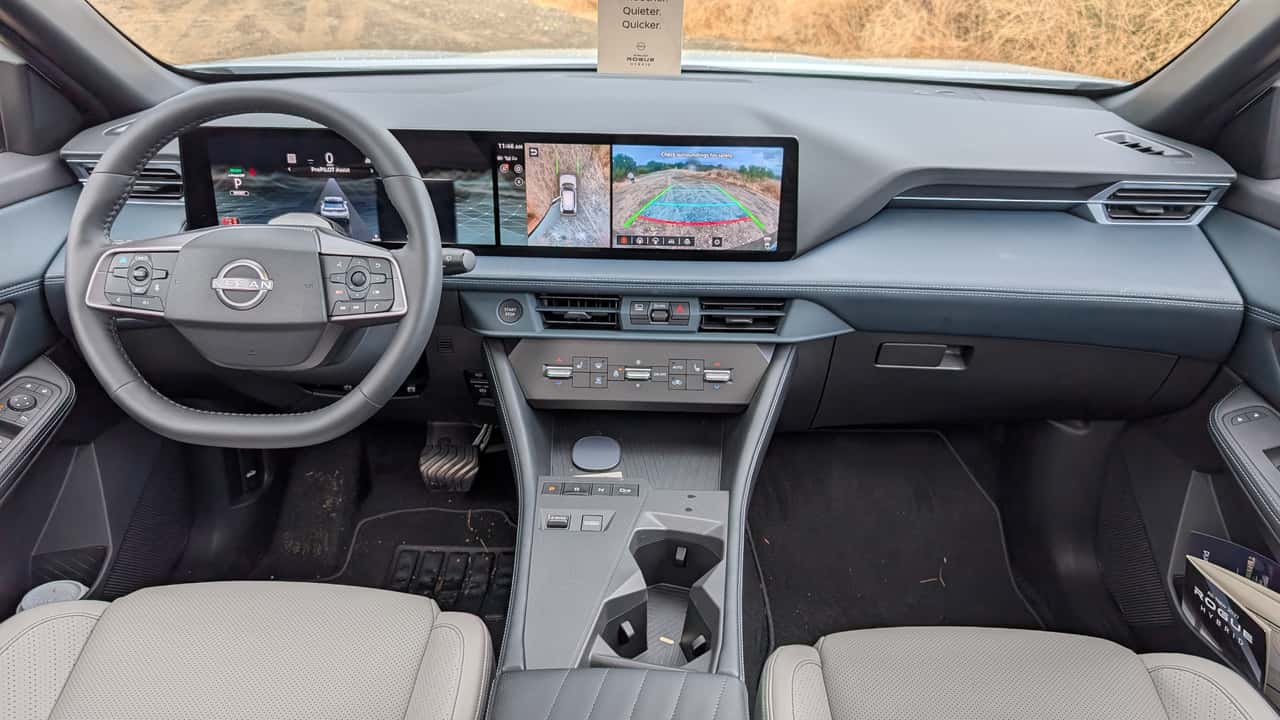 Photo by: Suvrat Kothari
The dual 14.3-inch displays looked crisp, and the central touchscreen felt slick and responsive, although my limited time with the vehicle didn’t allow for a more comprehensive review of the infotainment. Wireless Apple CarPlay and Android Auto come standard, while the top-spec Platinum trim adds Google built-in with Gemini and a 10-speaker Bose audio system.
There are some thoughtful touches, too. The wireless phone charger is MagSafe-compatible, so your iPhone won’t rattle. The rear doors open to nearly 90 degrees, so you have more room while installing child seats and easier ingress and egress.
While the Rogue Hybrid’s cabin is very practical, I like the RAV4’s interior better. It feels more upscale with generous use of soft touch materials on the dashboard, gun metal finish to physical controls, and a more cohesive overall cabin design.
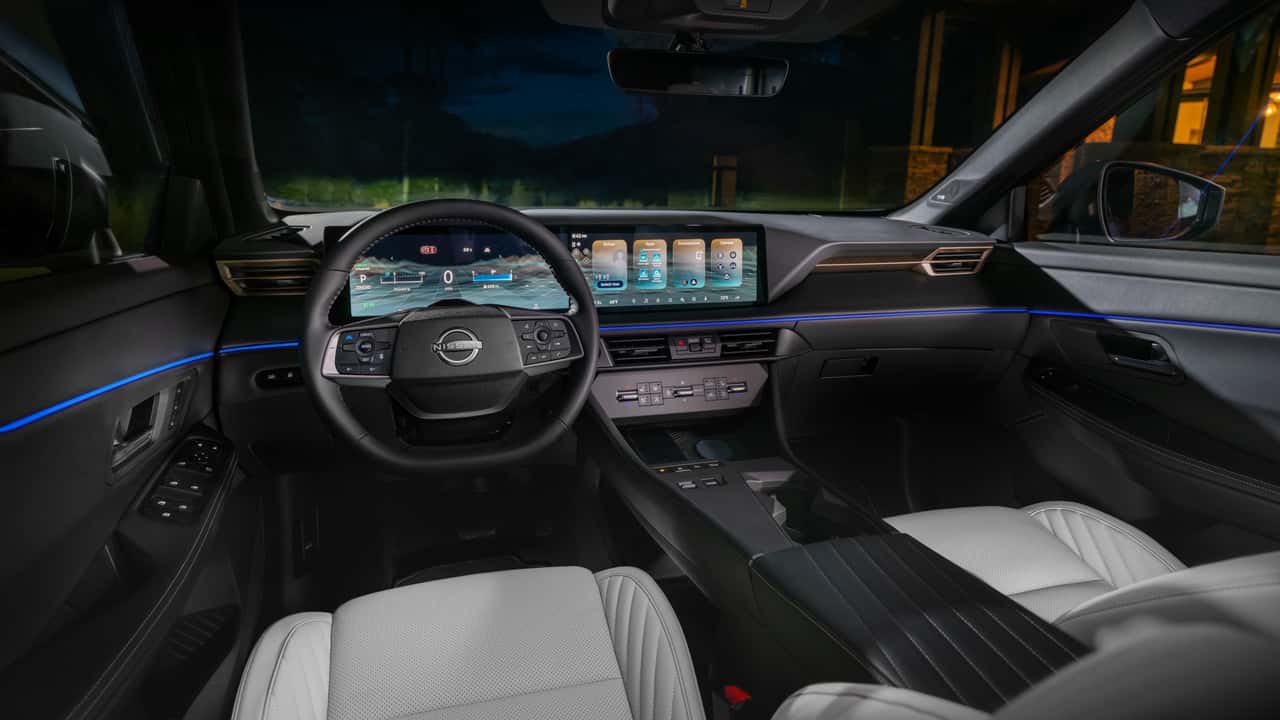
2027 Nissan Rogue Hybrid
Photo by: Nissan 
2026 Toyota RAV4 Limited Interior
Photo by: Toyota
2027 Nissan Rogue Hybrid: Early Verdict
The new Rogue Hybrid comes with a premium for its unique powertrain. At $37,065 including destination, it costs about $3,500 more than the entry-level RAV4, which is priced $33,495. The Tucson Hybrid is also cheaper at $32,950, although the CR-V Hybrid starts at nearly the same price as the Rogue.
For that premium, you get a more refined, EV-like driving experience, with smooth acceleration, and none of the coarse engine noises associated with conventional hybrids. I also loved the one-pedal driving and remarkably smooth stops that minimize head toss. It all makes the Rogue feel upscale, almost Lexus-like from behind the wheel. The cabin, however, falls short of delivering that same premium experience, with materials that feel cheap.
It’s still a gas car at the end of the day, so you don’t have to worry about plugging in at all. Its EPA-rated 38 mpg combined trails the RAV4 Hybrid’s 42 mpg, although it edges out the CR-V Hybrid’s 37 mpg and the Kia Sportage Hybrid’s 35 mpg.
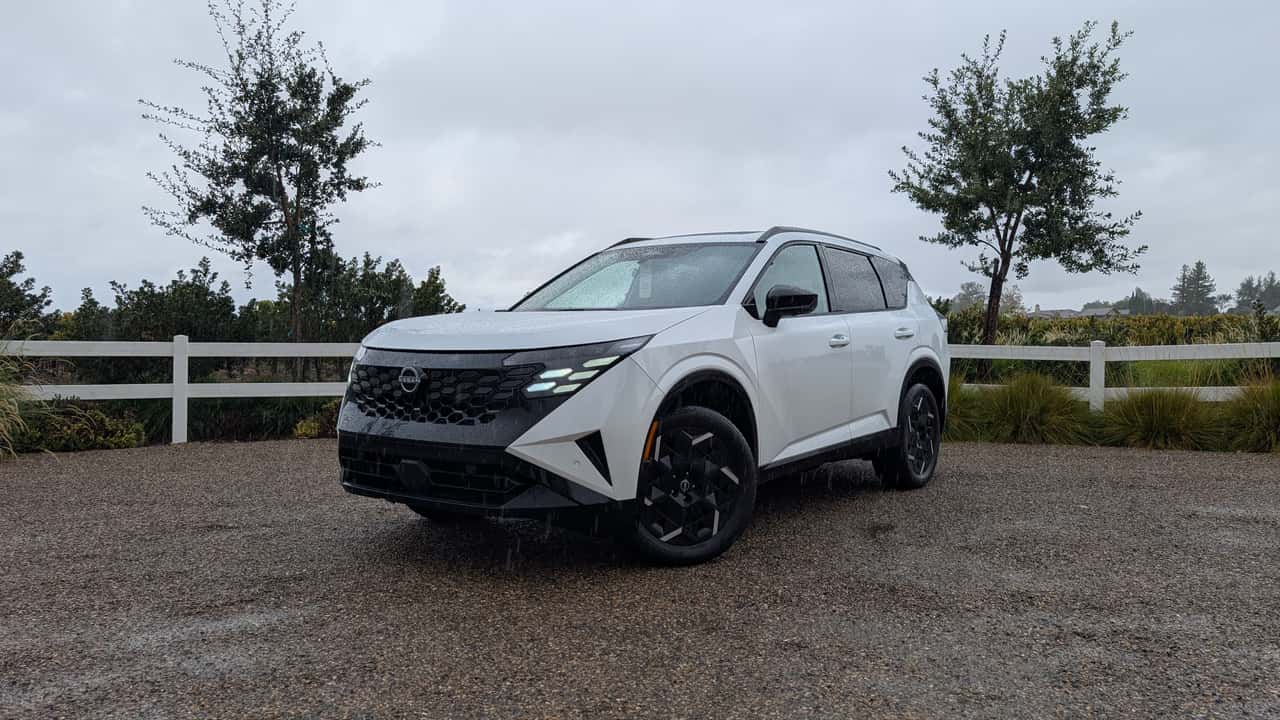 Photo by: Suvrat Kothari
I'd pick the Rogue Hybrid over the RAV4 for its driving experience alone. Its electric motors deliver a level of refinement that makes everyday driving feel far more polished. The RAV4, however, is the more compelling all-rounder, with better fuel economy and a lower starting price. Which one makes more sense ultimately depends on whether you prioritize driving experience over outright efficiency and value.
Contact the author: suvrat.kothari@insideevs.com
Nissan's New Plug-In Hybrid Pickup Is Part Of A Much Bigger China Trend
Nissan Wants Hybrids To Be Its Primary Powertrain By 2030
Nissan's Newest EV Isn't Actually A Nissan
Nissan's New Rogue Is A Different Kind Of Hybrid. Here's How Much It Costs.
2027 Nissan Rogue Hybrid Specifications As-Tested Price$39,065, including destination Base Price$37,065 Engine1.5 liter, 3-cyl, turbocharged Battery1.67 kilowatt-hours MotorPermanent magnet Drive TypeDual motor all-wheel drive Efficiency38 miles per gallon combined (EPA) Output225 total system horsepower Ground clearance8.4 inches (SV), 8.5 inches (SR, Platinum) Speed 0-60 MPH6.4 seconds claimed Cargo Volume34.4 cubic feat Weight4,065-4,167 pounds
]]> contact@insideevs.com (Suvrat Kothari) https://insideevs.com/reviews/813726/2027-nissan-rogue-hybrid-review-toyota-rav4-rival/ https://insideevs.com/reviews/813410/tesla-model-s-used-emunds/ Tue, 27 Oct 2026 13:49:15 +0000 This Cheap Tesla Model S With 135,000 Miles Has A Surprising Amount Of Range Left After 135,000 miles, Edmunds’ cheap used Model S still has useful range and enough performance to make it look tempting. Edmunds’ sub-$13,000 Model S covered 221 miles on a charge despite having 135,000 miles on the odometer. It still hit 60 mph in five seconds, but motor whine and aging electronics hint at potential repair bills. Other high-mileage Model S tests still show useful range, though they can't match new EVs' charging speed.
Buying an old Tesla Model S for less than $13,000 sounds tempting until you consider what a replacement battery might cost or the potential problems of a complicated, aging luxury barge. But a low price and a six-figure odometer don’t automatically mean an EV is on its last legs.
Edmunds bought one to see how much car you actually get for the money, and its first round of testing makes a pretty good case for taking the gamble. Its Model S has covered 135,000 miles, yet it still managed 221 miles in the Edmunds EV range test. That’s not great compared to a new electric sedan, but it’s still very good given the price.
It’s still pretty quick, too. In the video documenting its first series of tests, the single-motor, rear-wheel-drive Tesla hits 60 mph in five seconds and completes the quarter-mile in 13.3 seconds. That’s on old, mismatched tires that struggle to put down all the power.
Edmunds quotes an original MSRP of $69,900, which matches the base Model S 60. But its five-second sprint to 60 mph and 221-mile range suggest the price may be misleading; this is likely the larger-battery Model S 85, which started at $79,900. The 60 originally claimed a 5.9-second sprint and a 208-mile EPA rating from its 60-kilowatt-hour battery.
If this really is an 85, that means its battery originally had an 85 kWh capacity and a single rear motor producing 362 horsepower and 325 pound-feet of torque. Tesla claimed 0-60 mph in 5.4 seconds and a 125-mph top speed, with an official EPA range of 265 miles when new. Supercharging was standard on the 85 and optional on the cheaper 60.
Presenter Alistair Weaver seems pleasantly surprised by the car and its overall state. The air suspension works, the cabin is quiet, and there are no obvious creaks or rattles. It still feels luxurious and remains enjoyable through corners, even on questionable tires.
There are reminders of its age, though. The rear motor whines, the driver’s display has damage, and the powered tailgate is tired. But they don’t prevent it from being usable or detract much from the experience; they just sound like issues that will need addressing at some point.
Much of this felt familiar after my drive in a 2015 Tesla Model S P85D. That car had covered around 160,000 miles on its original battery, which the Tessie app estimated retained about 86% of its capacity. It could deliver around 200 miles of real-world range, and its acceleration still felt properly fast.
Other examples have remained useful even with considerably more miles. Last year, Out of Spec tested a 250,000-mile Model S bought for $9,000 including incentives. The 2019 car, believed to still have its original battery, covered 206 miles in a test conducted at roughly 70 mph, although it couldn’t maintain that speed toward the end.
The Tesla Model S And Model X Are Officially Dead
Tesla Is Killing The Model S. But Its Legacy Is Everywhere
This 470,000-Mile Tesla Model S Is Better Than New Thanks To An Upgraded Battery
Tesla Updated The Model S And Model X, And The Internet Is Mad
The same car’s charging test exposed one area where it really did show its age. It took about 47 minutes to go from 10% to 80%. A full charge from empty took two hours and 41 minutes, though battery management recalibration and cell balancing lengthened the final stretch.
Different cars and conditions make a direct comparison with Edmunds’ result difficult. Still, dismissing a used EV based on mileage alone could mean overlooking a usable car. High mileage can mean a degraded battery and reduced range, but these older EVs retain capacity better than you might expect.
Edmunds plans to test charging and keep driving its Model S to see how it handles regular use. They know what can go wrong: its original 2013 example needed three drive-unit replacements and a battery replacement, with warranty coverage softening the blow. This time, though, there’s no such safety net, and they will have to foot the whole bill.
]]> contact@insideevs.com (Andrei Nedelea) https://insideevs.com/reviews/813410/tesla-model-s-used-emunds/ https://insideevs.com/reviews/813164/slate-ev-truck-review-tedward/ Sun, 25 Oct 2026 11:13:51 +0000 Slate’s Bare-Bones Electric Truck Surprised This Early Reviewer An early drive reveals surprising comfort and punch, though this unfinished prototype still has some rough edges. An early reviewer found the Slate surprisingly comfortable, stable, and punchy despite its bare-bones approach. The prototype still needs polish, with inconsistent steering effort, abrupt pedal response, and controls that feel flimsy. The Slate starts at $26,400 including destination, with a projected 205-mile range that awaits EPA confirmation.
The Slate truck has manual windows, steel wheels, and, in this prototype, an interior with placeholder panels still awaiting parts of its actual interior. Expectations for luxury were suitably low. When one YouTuber took it for a drive around Massachusetts, they found rather less to complain about than they’d anticipated.
Acceleration surprised Tedward first. Despite an estimated 8-second sprint to 60 mph, the truck feels quick and responsive around town and has enough muscle to pass at around 40 mph. “It’s got plenty. It’s got what it needs,” he says.
Comfort made an even stronger impression. The Slate handles broken pavement and tram tracks well, and a reviewer recovering from a back injury praises its seating position. By the end, he says he has largely forgotten about the pain. One-pedal driving is generally well calibrated, too, though the accelerator can feel abrupt at first.
At highway speeds, Tedward finds the truck stable and planted, without the wind whistle he expected from the mirrors. It has little body roll in corners, feels surefooted, and its rear-wheel-drive layout and apparent agility have him picturing taking it to autocross and winter driving events.
This remains an unfinished truck, however. He notices steering effort changing through a turn and wants more substantial-feeling switchgear. The placeholder panels around the cabin also rattle over bumps, and you really can’t evaluate the truck’s interior in this unfinished state.
The Slate truck’s specs are pretty straightforward. It has a single 181-horsepower electric motor powering the rear wheels. It draws power from a 65-kilowatt-hour lithium-iron-phosphate (LFP) battery pack, with a claimed range of 205 miles, though that's still a manufacturer estimate rather than the official EPA rating.
Slate quotes around 30 minutes for a 20–80% DC charge. Its base price is $24,950, or $26,400 including destination, before taxes, customization, and accessories.
Tedward sees the appeal in a useful little runabout with physical controls and room for personalization. That DIY philosophy extends to accessories, such as the $99.99 hitch receiver, which attaches with four bolts and takes as little as 30 minutes to install.
Potential buyers can now try a truck at Slate’s first Chicago showroom, while some preorder customers have reportedly been offered December delivery windows. The Jeff Bezos-backed automaker is asking buyers to accept fewer features, and the experience behind the wheel needs to make that bargain not feel like too much of a compromise.
I Drove Slate’s $25,000 Electric Truck. It Could Be A Real Game-Changer
Slate Has No Plans To Sell Its Cheap EV Pickup In Canada
Is The $25K Slate Truck Just Too Basic? I Rode In One To Find Out.
PODCAST: The $25K Slate Truck Is Here. What's Next?
]]> contact@insideevs.com (Andrei Nedelea) https://insideevs.com/reviews/813164/slate-ev-truck-review-tedward/ https://insideevs.com/reviews/812812/2026-lexus-es-350e-electric-review/ Fri, 23 Oct 2026 14:49:53 +0000 2026 Lexus ES 350e Review: Why This Is Toyota’s Best EV Yet The plug-in ES is refined, comfortable, and takes the stress out of long roadtrips.
With the flagship Lexus LS no longer available in the U.S., the midsize ES is stepping into a bigger role in the brand’s lineup. The sedan is larger and more luxurious than ever, with every version now electrified. You can choose between a hybrid and—for the first time in the ES’s 37-year history—a fully electric variant.
The eighth-generation ES is also the most advanced EV yet from Toyota umbrella, featuring the next-generation Arene software platform. While the system is still a generation or two behind what Tesla and Rivian offer, it leaves behind the buggy and limited software experience on current Toyota and Lexus EVs.
Two trims are available on the ES: the front-wheel-drive 350e and the all-wheel-drive 500e. No single feature or driving attribute really blew my mind, but it’s good enough in many different aspects. I was impressed by the 350e Luxury’s comfortable ride, cavernous interior, and upscale cabin. The business-class rear seat was particularly welcoming.
It may not be the most exciting car on the market, but it gets a lot of the basics right.
[Full Disclosure: Lexus loaned me the ES for a week in New York for this test. It arrived fully charged. I returned it likewise.]
2026 Lexus ES 350e: Has The Software Improved?
The ES is only the second model after the RAV4 to feature Toyota’s next-generation software. It’s not a fully software-defined vehicle, but moves a step in that direction. Its infotainment and advanced driver assistance system (ADAS) can receive over-the-air updates, but the vehicle’s body and driving dynamics can’t, at least not yet.
A more capable version of Arene with a fully centralized architecture is planned for the future. Toyota is aiming to bring the platform to 50 models spanning 10 million vehicles globally by 2030.
So what does it feel like in its current form? It’s… fine.
The 12.3-inch digital gauge cluster and the 14.0-inch central infotainment now work more cohesively and share a common user interface. The central display is sharper and more responsive than the older system still found in the RZ, with smartphone-like widgets. Driving information on the gauge cluster is also cleanly laid out with neat graphics and easy to read text.
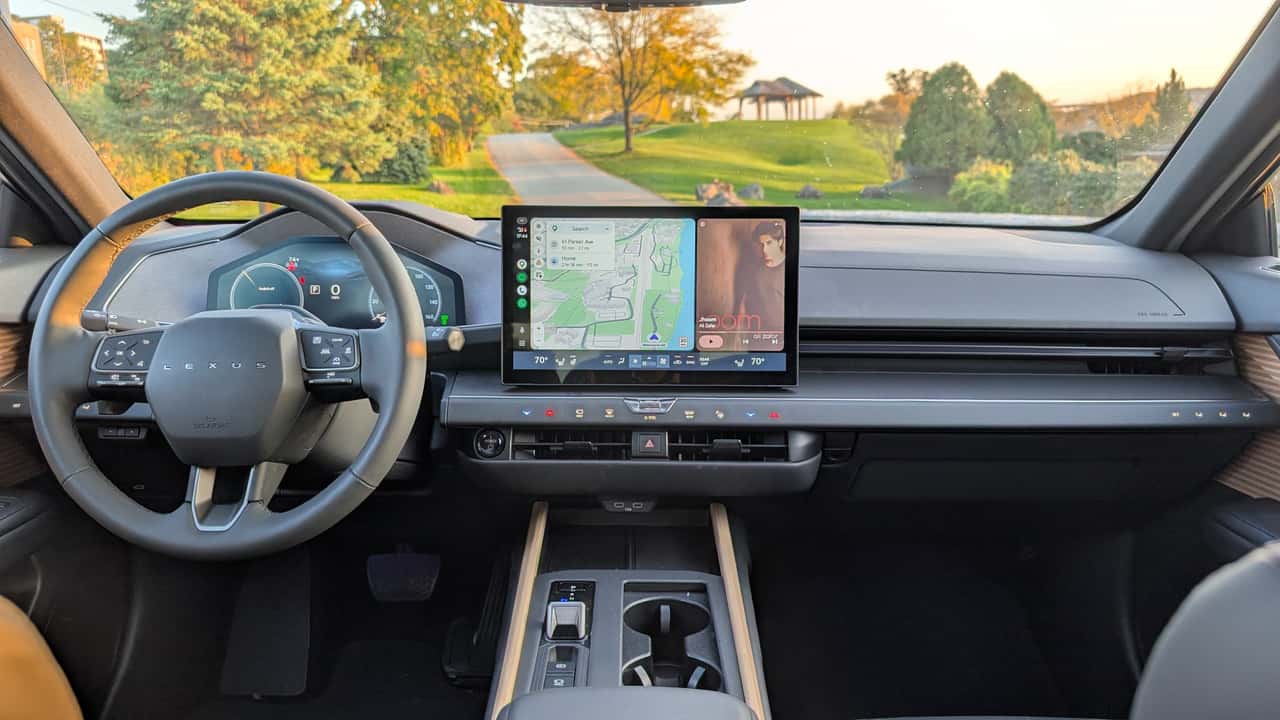 Photo by: Suvrat Kothari
More importantly, the system is more capable than before. The native navigation now automatically adds charging stops to longer journeys so you don’t have to figure out the logistics yourself. Android Auto offers similar functionality through Google Maps as well, which is a game-changer for long EV road trips. I’ve covered that in more detail in a separate story.
Another nice touch is the built-in dashcam that continuously records footage in a loop, automatically saves clips when it detects an incident, and lets you download footage via USB, eliminating the need to install an aftermarket dashcam.
Physical controls, thankfully, haven’t vanished. Climate functions are accessible through a bar at the bottom of the display, while manual controls below the screen handle temperature and volume. Even the air vents remain manual. Incredible! There are smaller conveniences, too, like the ability to adjust the co-driver’s seat through the touchscreen without having to awkwardly reach across the cabin.
But this isn’t a full blown modern software experience like you'd find on a BMW iX3, for example. You can’t stream videos while the car is charging. The voice assistant can’t handle conversational commands just yet. Changing drive modes requires four taps on the screen when using phone mirroring and three when navigating through the native system, which was frustrating. (Drive modes should have a dedicated physical button and not remain buried in the menu.) So the software works, but it's not particularly impressive.
Pros
Business-class rear seat Quiet and refined Comfortable ride
Cons
Laidback acceleration Not fun to drive Software needs more work
2026 Lexus ES 350e Range, Efficiency, And Charging
While the entry-level ES 350e Premium with 19-inch wheels is rated for 307 miles of EPA range, my press tester was a Luxury trim with 21 inchers and 292 miles of EPA range. I found that adequate, with the ES 350e averaging about 3.8 miles per kilowatt-hour in highway driving in Sport mode. The standard battery has a gross capacity of 74.7 kWh.
The range is well below other premium electric sedans. The similarly priced Mercedes-Benz CLA will deliver over 370 miles on a single charge. The cheaper Tesla Model 3 is rated for 363 miles. Neither are as large or roomy as the ES, and not quite fit for an the apples-to-apples comparison. The BMW i5 and Audi A6 E-Tron have a more comparable EPA range but cost roughly $20,000 more. So the ES is uniquely positioned and ends up being a remarkable value (more on that below).
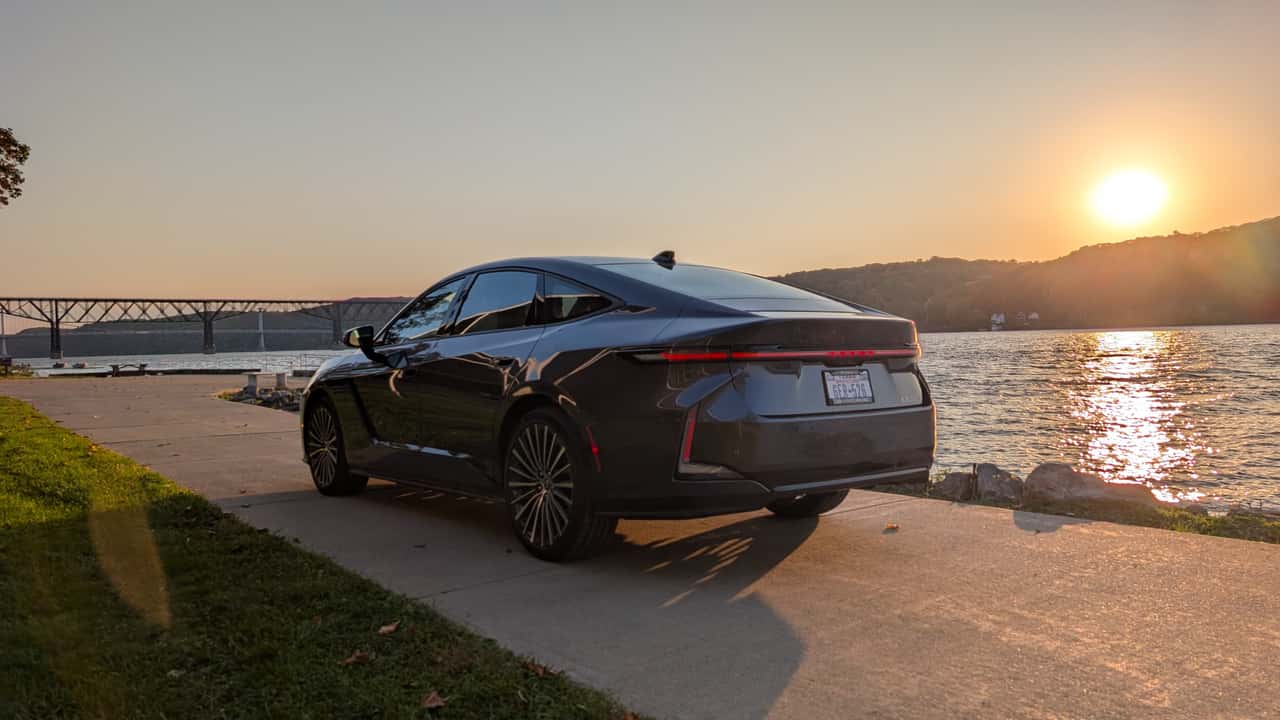 Photo by: Suvrat Kothari
There’s nothing to brag about on the charging front, either. At a V4 Tesla Supercharger, the NACS-equipped ES 350e went from 10-80% in exactly 28 minutes, adding 188 miles of indicated range in that time. It’s also great that all model year 2026 Lexus EVs get a complimentary CCS adapter for backward compatibility at charging stations that don’t yet have NACS cables.
While charging was mostly seamless, I did encounter one hiccup. The ES features a powered charging-port door that retracts downward, with a button at the top right to open it. Even with the car unlocked, the door would sometimes refuse to open or require multiple attempts, with several seconds of waiting in between. Switching the car off completely largely resolved the issue. A Lexus spokesperson told InsideEVs that the press vehicle was a prototype and that production models might not experience the same problem.
2026 Lexus ES Design And Interior
At 202.3 inches long, it’s 6.5 inches longer than its predecessor, making it longer than both the Mercedes-Benz EQE and BMW i5. Its wheelbase has also grown by 3.0 inches to 116.1 inches. The floor-mounted battery pack makes the ES look jacked up as well. At 61.4 inches tall, the ES is 0.4 inches taller than the Volvo EX30 and just an inch shorter than the Hyundai Kona, both of which are advertised as small SUVs. It’s not ugly by any measure but the proportions may take some getting used to, especially if you like old-school sedan designs.
The payoff is a cavernous cabin, particularly in the back. The rear seats are the ES’s party trick, and the long rear windows offer an excellent view of the exterior. On the Luxury trims, a $3,635 Executive Package takes the experience to another level with power-reclining rear seats, a passenger side footrest, massage, heating and ventilation, a center armrest with climate and seat controls, a powered rear sunshade, and a hands-free powered trunk.
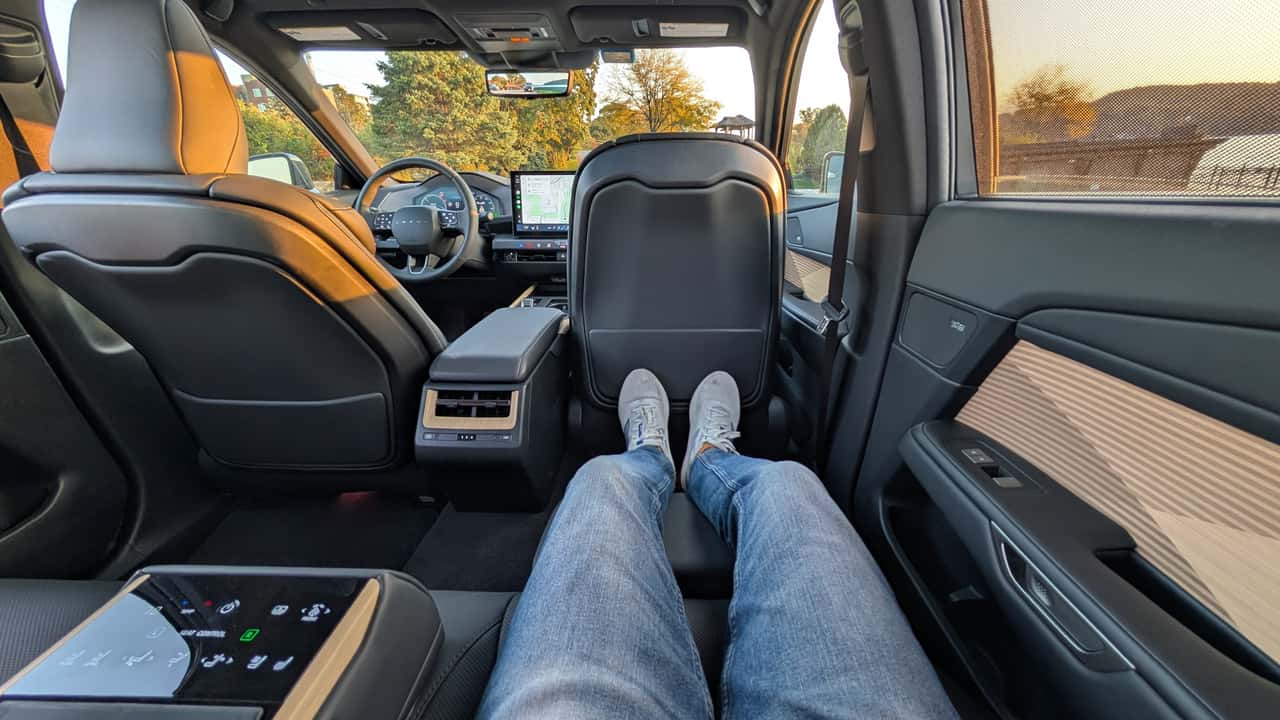 Photo by: Suvrat Kothari
With the touch of a button, the front passenger seat slides forward and folds out of the way, letting you recline in the back, extend the footrest, and stretch out properly. It’s about as close as you’ll get to a budget Mercedes-Benz S-Class experience without spending a fortune.
The 17-speaker Mark Levinson audio feels premium, although its clarity and refinement doesn’t match some other premium audio systems I’ve heard in this price range. The bamboo trim on the doors is another nice touch in daylight, but feels excessive at night. The trim doubles as an ambient lighting strip, with LEDs illuminating a huge chunk of the door panel.
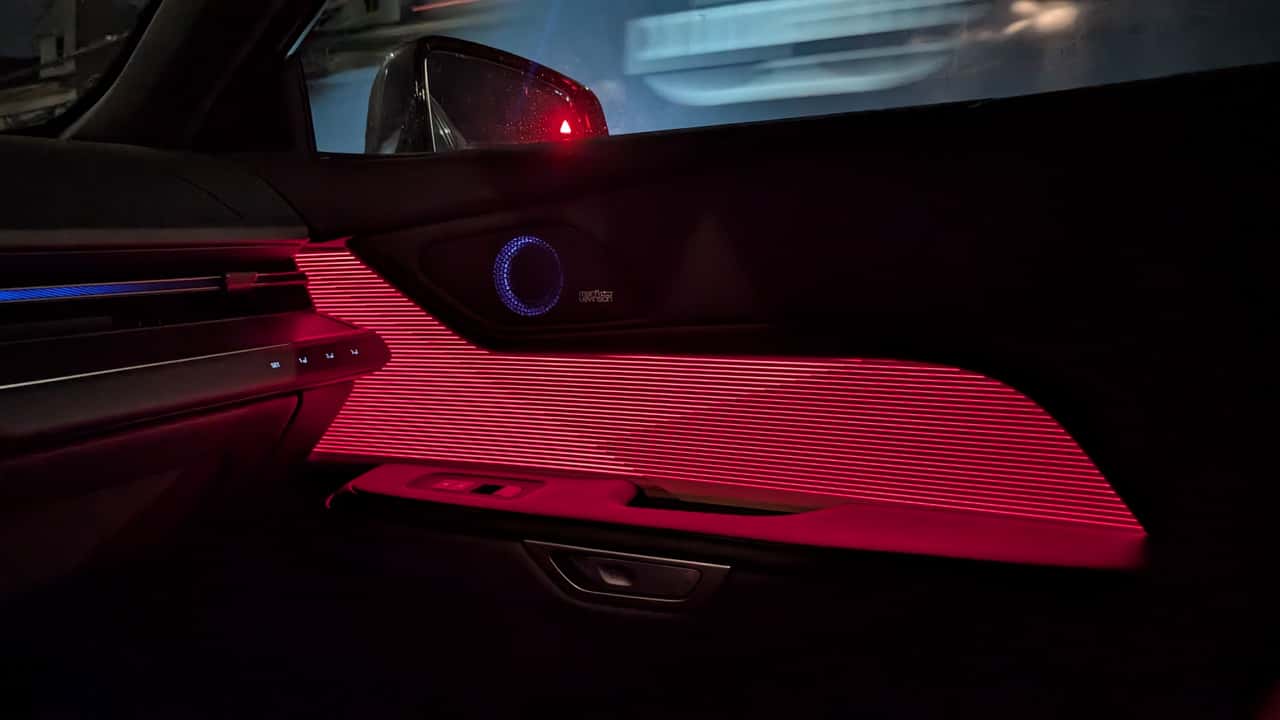 Photo by: Suvrat Kothari
To put it mildly, it’s like a blingy light show you never asked for. The lighting, however, flashes red to warn of approaching vehicles and cyclists, so it’s a useful safety feature. Other automakers do the same but in a far less gaudy manner.
2026 Lexus ES 350e Performance, Ride, And Handling
With 221 horsepower and 198 pound-feet of torque, the front-wheel-drive ES 350e isn’t exactly quick off the line. Remember it weighs 4,690 pounds, so off-the-line performance isn’t a strength with its current state of tune. Instead, acceleration is smooth and linear. Lexus claims a 0-60 miles per hour time of 7.4 seconds. The more powerful, 338 hp ES 500e AWD cuts that to 5.1 seconds.
Still the FWD delivers ample grunt for overtakes and highway merges. If you need a quick burst of speed, there’s always enough torque available on tap—at least at legal highway speeds—thanks to the beauty of electric motors and instant torque.
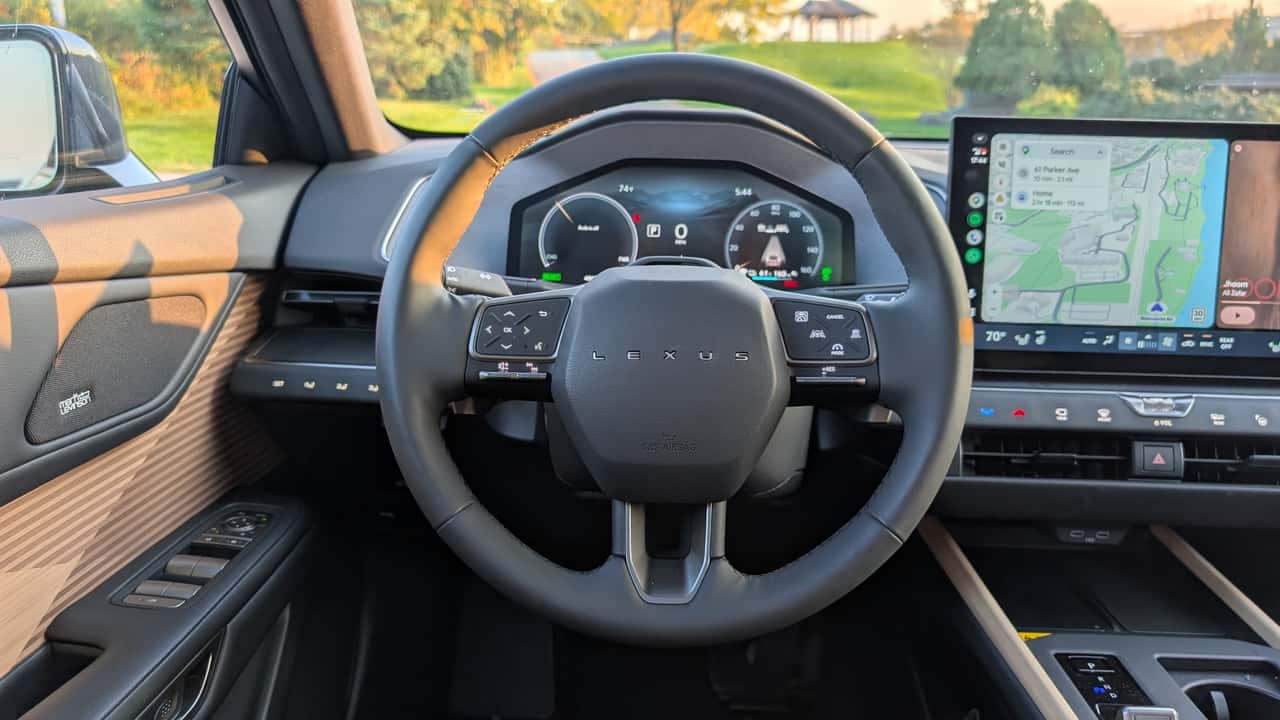 Photo by: Suvrat Kothari
The ride felt bouncy, but comfortable for most part. The ES absorbs both sharp potholes and larger road imperfections well. On the highway, it settles into what feels like an effortless glide. It feels planted enough through corners, but the weight becomes impossible to ignore, even on everyday ramps and exits.
The ES is at its best when driven in a relaxed manner. Better yet, let someone else take the wheel. Recline in the back, extend the footrest, and enjoy the scenery through the large windows.
2026 Lexus ES 350e Verdict
The ES is also available as a hybrid, and there are some valid reasons to choose one. If you lack access to home charging or regularly travel somewhere with limited infrastructure, the hybrid may be the more practical choice. But Lexus has reserved some of the ES's most compelling features, like the excellent rear-seat Executive Package, exclusively for the EV.
That makes the EV far more compelling if charging is a non-issue for you. Otherwise, getting the hybrid over the EV is like paying for first class and choosing to sit in economy. The entry-level EV trim undercuts the hybrid by about $1,100, but the range-topping EV trim costs nearly $3,000 more.
That said, it’s still a remarkable value at its price. Starting at $48,895, including destination, the ES 350e costs only around $4,000 more than a Tesla Model 3 which is smaller, gets a spartan interior, and nowhere as luxurious. The ES also undercuts the BMW i5 and Audi A6 e-tron by roughly $20,000. With improved software, a well-appointed cabin, and an overall priority to comfort over thrills, the ES is easy to recommend for buyers in this price range.
More importantly, though, it’s an encouraging sign of what to expect from future Lexus and Toyota EVs. The automaker is slowly coming around on that front, proving the future is increasingly electric and better than ever.
Contact the author: suvrat.kothari@insideevs.com
2027 Lexus ES Review: Which Is Better, The Hybrid Or The EV?
I Let Android Auto Plan My EV Roadtrip. Here’s How It Worked
The Electric Lexus ES Is Officially On Sale, With 307 Miles Of Range
Lexus Just Solved One Of Its Biggest EV Headaches
2026 Lexus ES 350e Specifications As-Tested Price$63,670 including destination Base Price$48,895 Battery74.7 kilowatt-hours (gross) EV Range276-307 miles Charge Time10-80% in 28 minutes as tested Charge TypeNACS Output221-338 horsepower Cargo Volume18.3 cu.ft. Weight4,640-4,895 lbs Drive TypeFWD/AWD Efficiency3.8 miles per kWh (Observed)
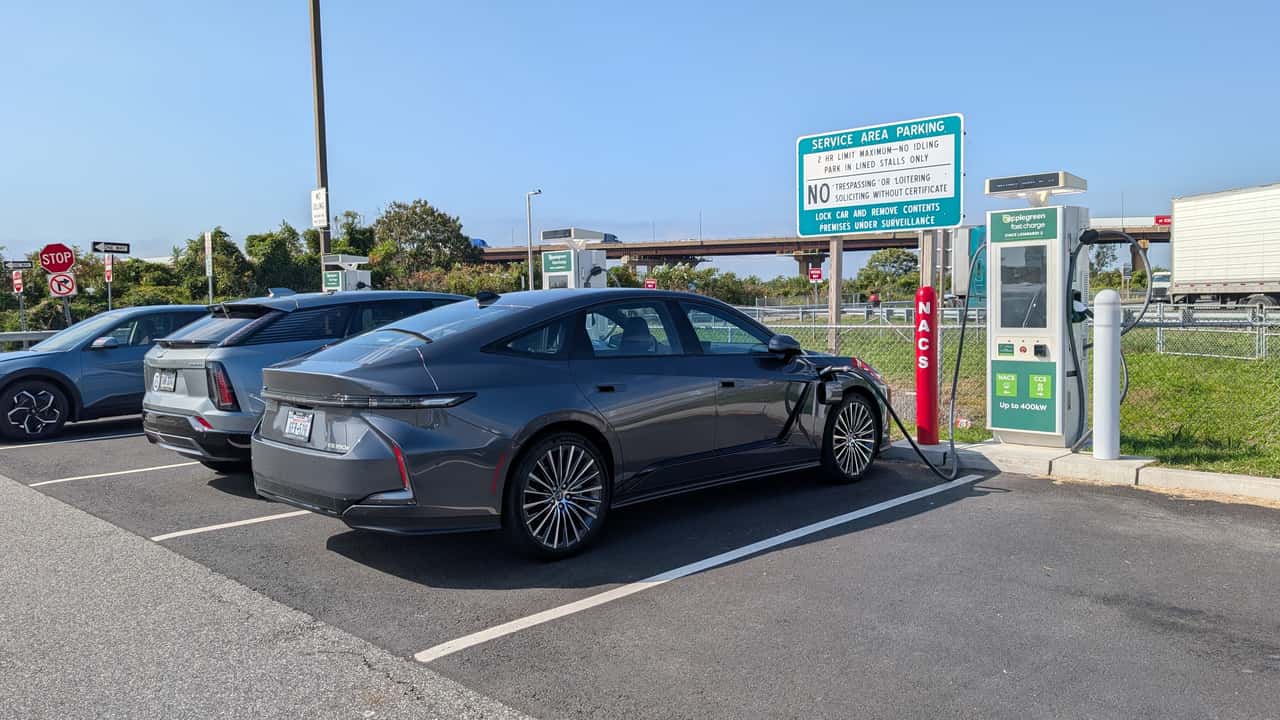
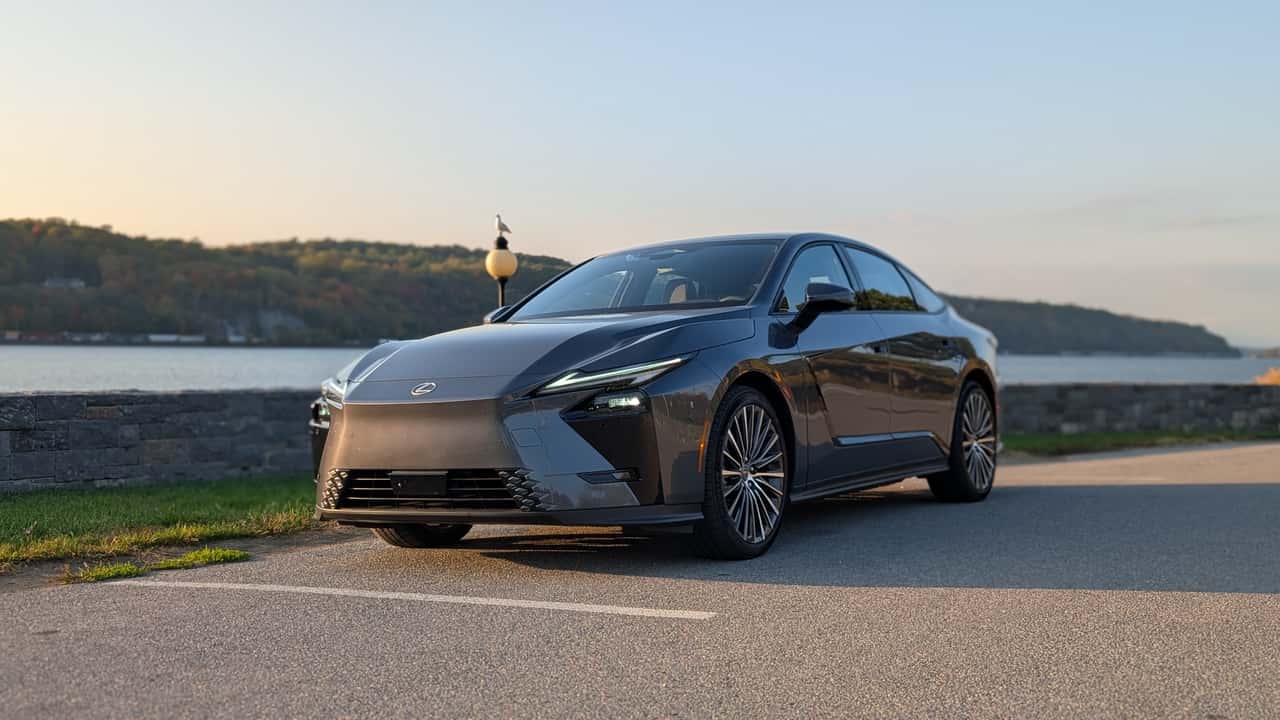
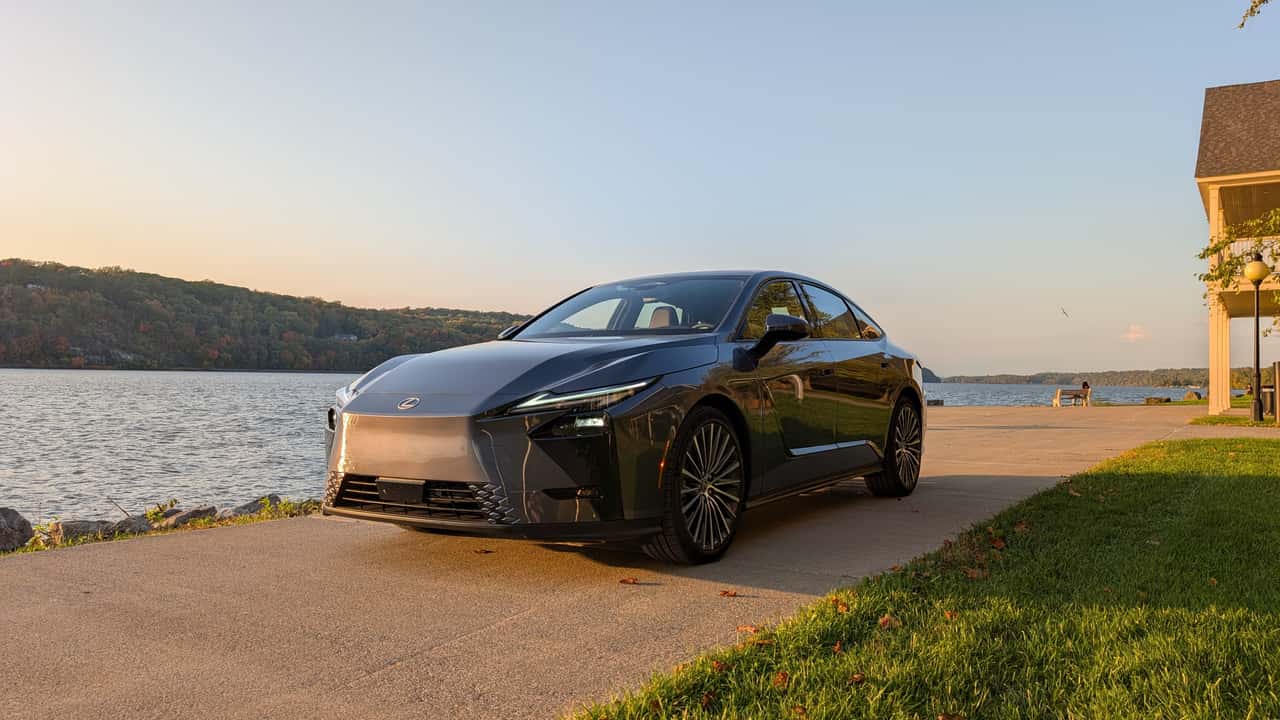
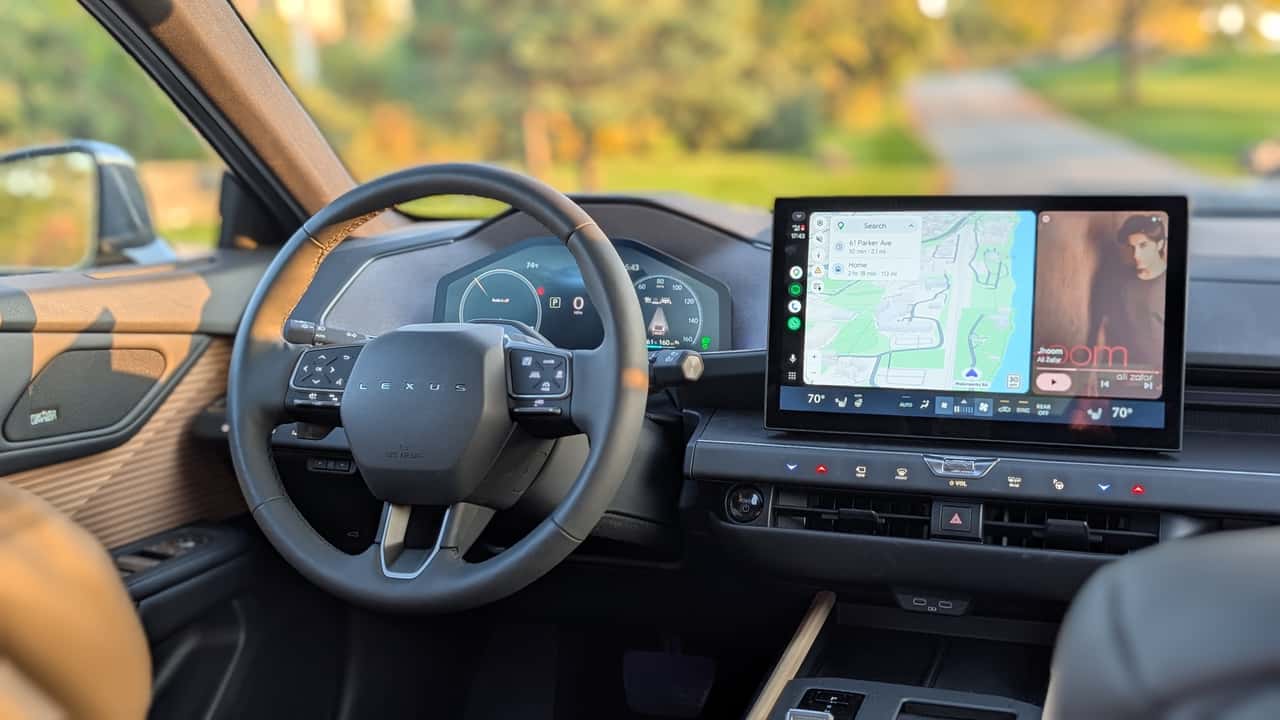
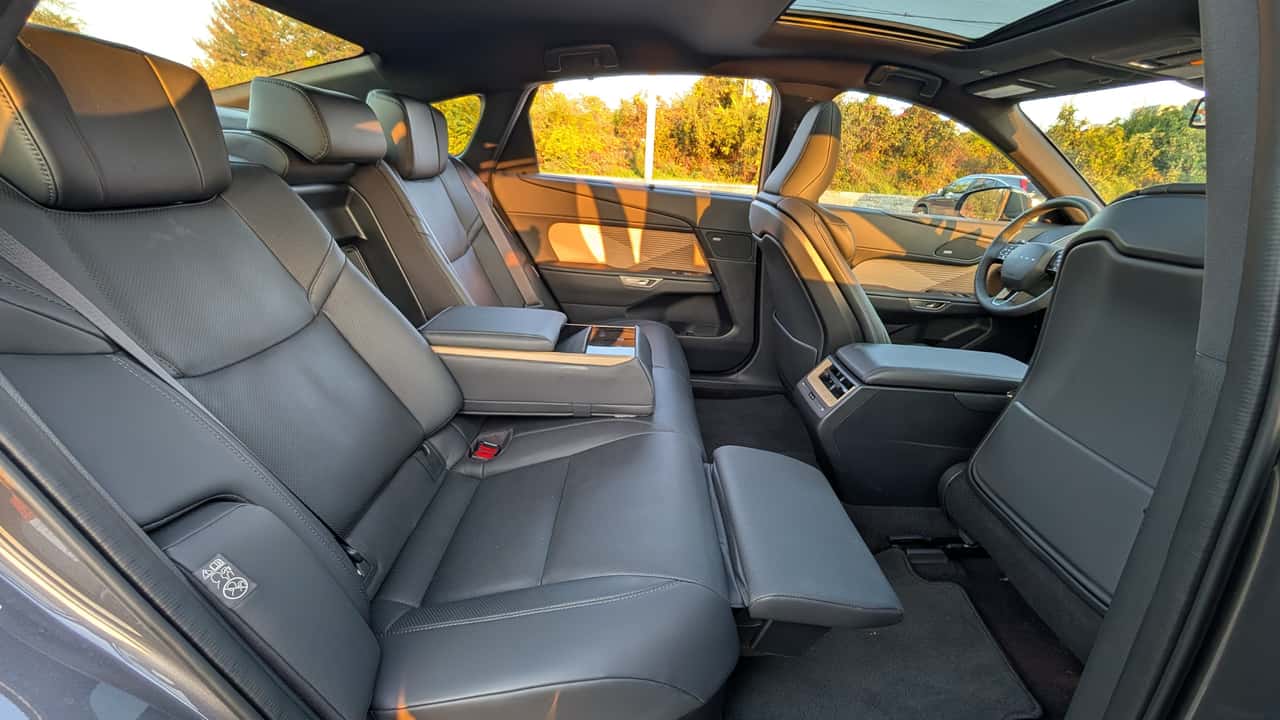
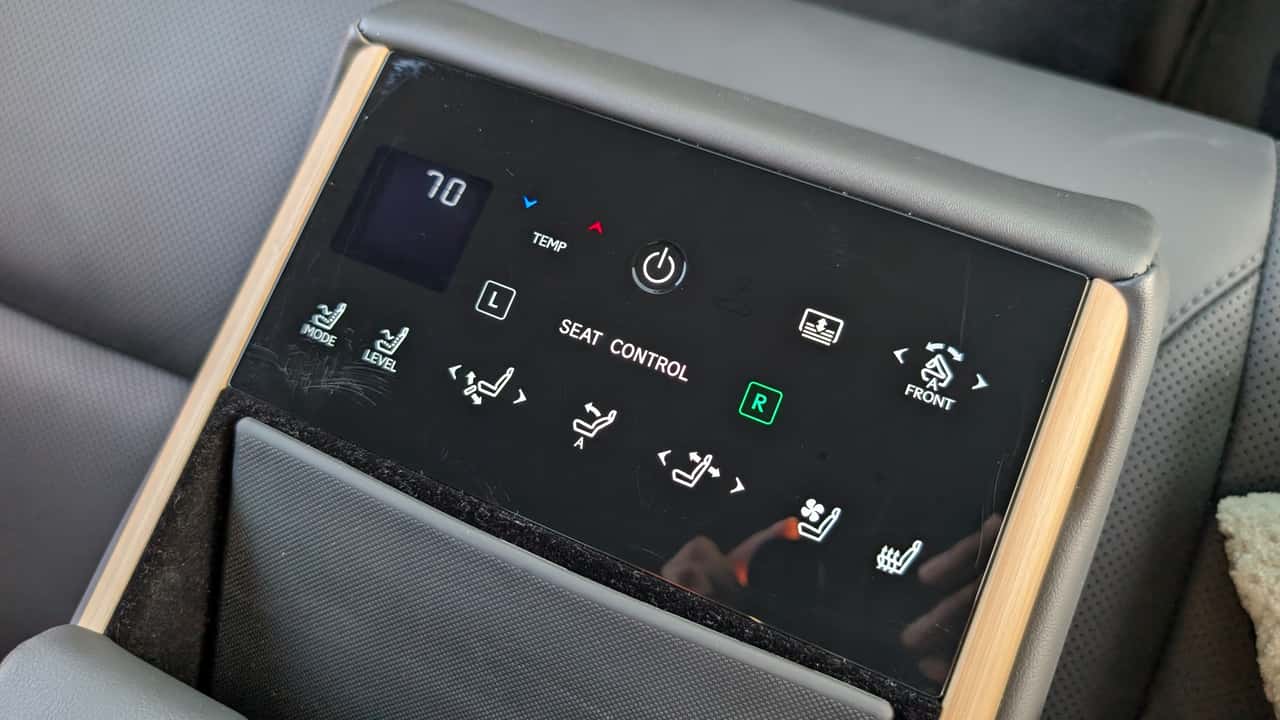
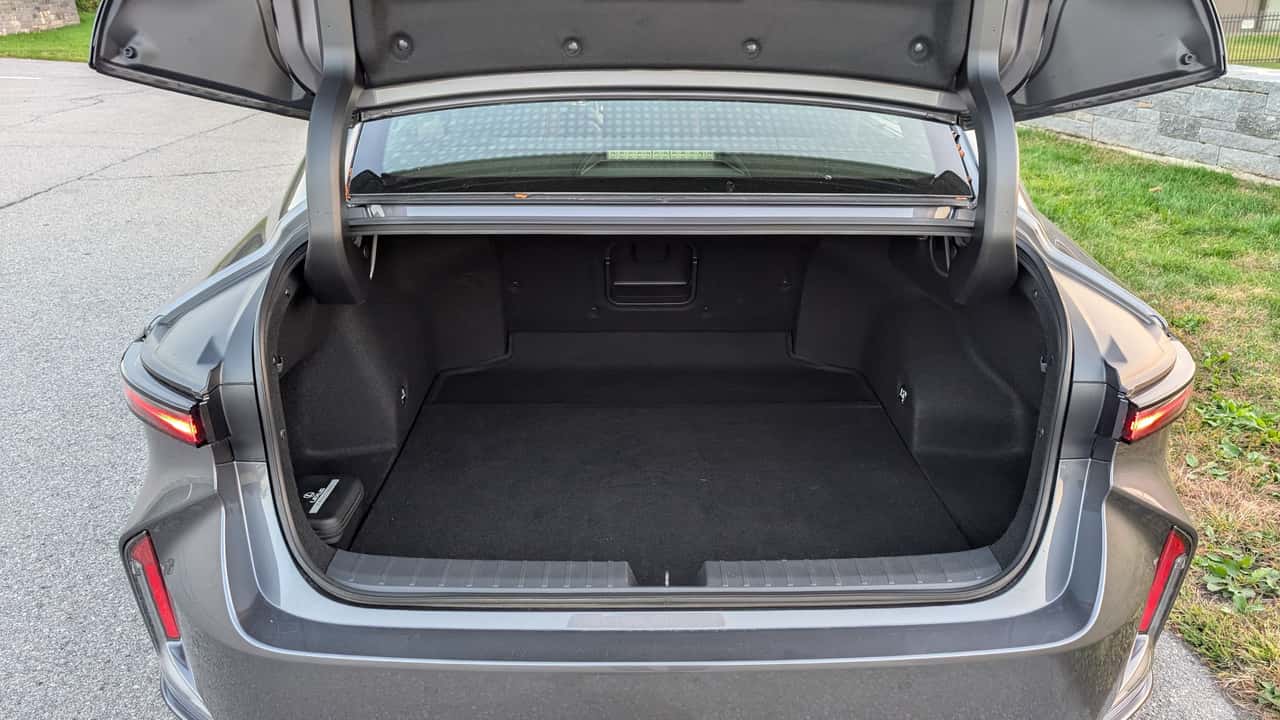
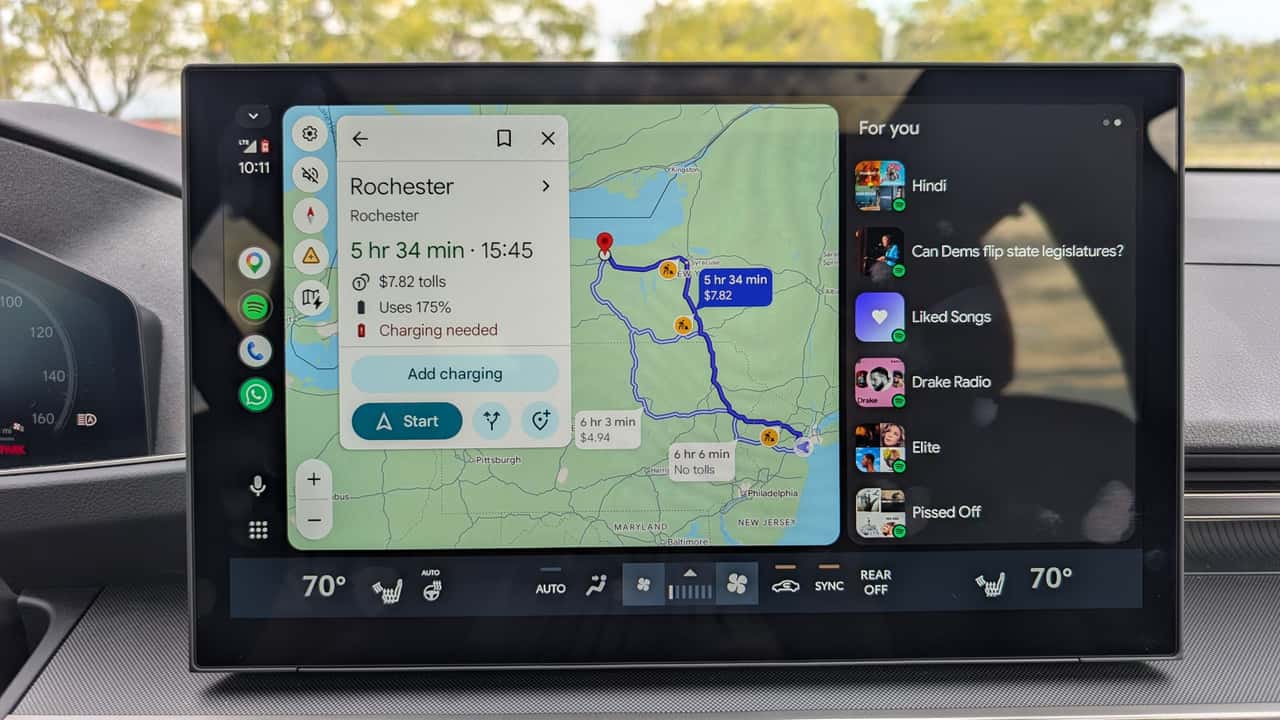
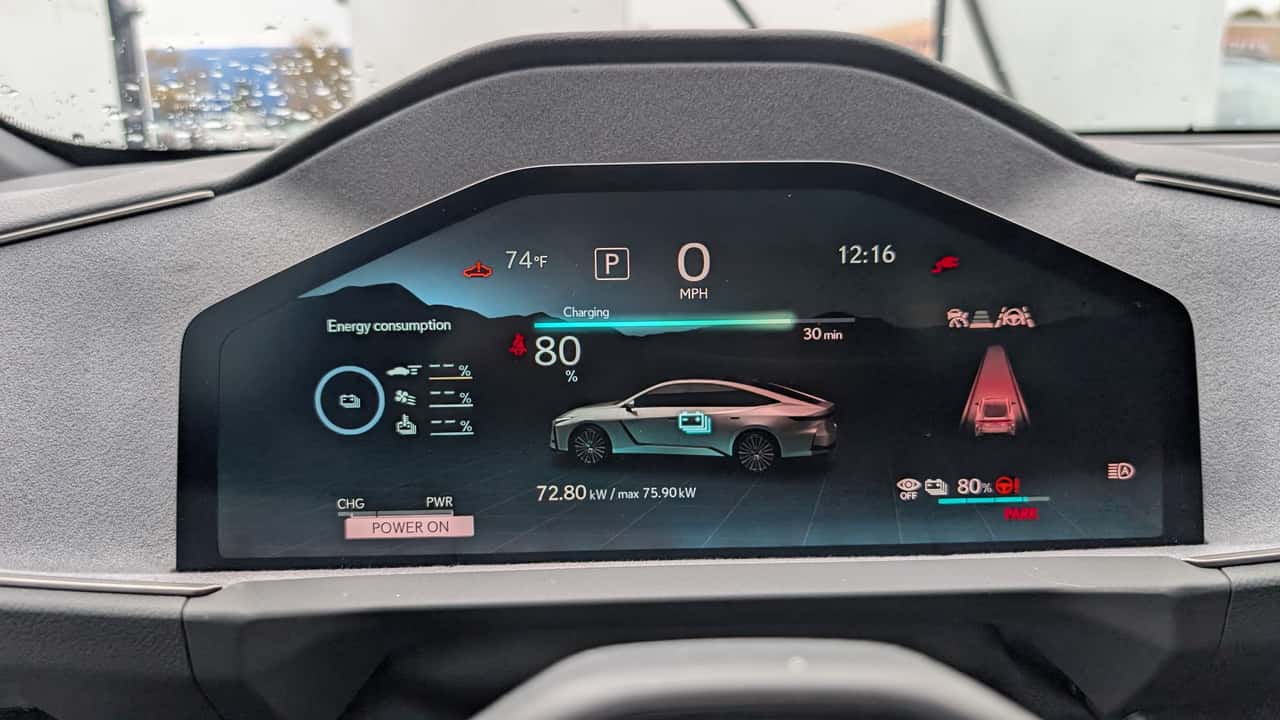
]]> contact@insideevs.com (Suvrat Kothari) https://insideevs.com/reviews/812812/2026-lexus-es-350e-electric-review/ https://insideevs.com/reviews/812974/range-rover-electric-first-drive/ Thu, 22 Oct 2026 19:08:45 +0000 Want The Best Range Rover? Get The Electric One: First Drive The electric model is powerful, elegant, and capable. And it doesn't even cost more than the gas model.
After descending the long muddy ruts toward the frigid Loch, plodding along the seaweed- and lichen-strewn beach, crossing between rows of stacked quartzite and limestone cairns, and plowing through a loose graveyard of ancient coastal rocks, I came to the stream crossing. It was a perfect Scottish autumn afternoon, which meant it was 47 degrees and pissing rain. The buttery soft faux-leather of the seat, steering wheel, and armrests were heated enough to scotch an egg. The same couldn’t be said for the spotter on the near side of the shore, who had clearly been standing in the squall for some time, awaiting our arrival.
“Is it quite toasty in there?” he brogued when I opened the window. I felt terrible about the prospect of responding honestly, so I just shrugged, but the heat exhaling through the open double-pained glass provided a clear answer.
 Photo by: Land Rover
“Just stay on the path and stay steady on the throttle,” he said. And I was off. The cold water was deep enough to swamp the front “off-road” camera, and I briefly glimpsed a sub-aquatic view of the tannic river on the center console display, as if through a scuba mask.
This all occurred not only in a Range Rover—among the contemporary vehicle brands considered most prone to voltaic glitching—it was the all-new $140,000 Range Rover Electric. Shockingly, even with its 800-volt 118.5kWh battery fully submerged, nothing fritzed out. With my foot pressed on the accelerator, it crept along the seabed, wading through three feet of pure Caledonian brackishness, and led me out onto the other shore. Even more shockingly, unlike in other Range Rovers I’ve off-roaded or forded, it accomplished all of this with just a simple twirl of the modal control dial to Wade. No need to shift into neutral, switch into low, lock the diffs, or any of that mechanical nonsense.
 Photo by: Land Rover
This is because Land Rover’s first-ever battery-powered ultra-luxury SUV obviates translations between power source and drivetrain. The software controlling the inverter in the electric drive unit (EDU), which processes electron delivery to the twin 260 kw front and rear permanent magnet motors, does it all single-handedly, allowing the truck’s integrated traction management system to operate a startling 100-times more quickly than in the internal combustion version of the world’s most venerable luxury sport ute. At every step of my off-road journey, it knew exactly what to do, and did it, before I knew exactly what was happening, and often well before I cared.
This is, of course, the promise of a Range Rover, and has been since 1970, when it invented the category of high-class all-wheel-drive truckster it continues to dominate: the capacity, whether utilized or not by its well-heeled owners, for elegant, effortless, all-terrain, all-weather dominance. It delights me, as the masochistic owner of a less-than-stellar 1990 iteration of the model, and regular chronicler of the brand, that the RREV might just be the best Range Rover, ever. Because it does everything a Range Rover should do, but better.
 Photo by: Land Rover
There is no special badging that distinguishes the Electric from its gas- or hybrid-powered brethren, just some covert aerodynamic add-ons—a “grille” up front and diffuser out back—and a lack of tailpipes. But if you get inside and start it up, you can immediately sense the core differentiator. Or, not sense it. A Range Rover is, by definition, a cocoon, meant to insulate its occupants from incursions of things like undesirable meteorology, challenging roadway surfaces, lesser vehicles, and the generally noisome workings of the outside world and its occupants.
Petroleum-sipping Ranges allow anywhere from “some” to “raucous amounts” of engine noise to intrude on this isolation, depending upon the trim, if only to remind the people inside of their ability to outrun any meddlesome disturbances. The Electric ups the ante on this swaddling. Land Rover claims a 7-decibel reduction in noise under hard acceleration—and remember that the decibel scale is logarithmic, meaning every 10 db equates to a doubling in loudness. The difference is even more noticeable from outside, where its powertrain has fallen silent. All this whilst its 542 hp and 627 lb-ft of torque dispatches 0-60 runs in the same 4.3 seconds as its basic V8-endowed sibling.
 Photo by: Land Rover
This silence was most appreciated, and golden, when sloshing through the remote, brooding, and muddy Scottish wilderness. Pheasants and grouse barely fluttered from our path, offering exquisite opportunities to examine their complex plumage. Flocks of sheep grazing on roadside heather, used to the dieseling of local vintage Defenders and Discoveries, acted dumbfounded by our tranquil whir, drawing close enough to risk becoming sweaters or mutton. I could practically hear the rustling autumn leaves shedding from the birch branches overhead.
This quietude meant that, despite the vehicle’s three-plus-ton mass—about 300 lbs more than the heaviest gasser Range—I felt as though I was treading lighter on the earth. Even more thankfully, the Electric did not emit, through its internal speakers, any of that gargly sci-fi soundtrack endemic to many upscale EVs, except under hard acceleration in Dynamic mode. Instead, active noise cancellation works to mitigate against irksome sound, making the interior even more hushed. Other brands please take note: If one of the core benefits of an electric vehicle is to allow its occupants to cherish the silence, please allow us to cherish that silence, in silence.
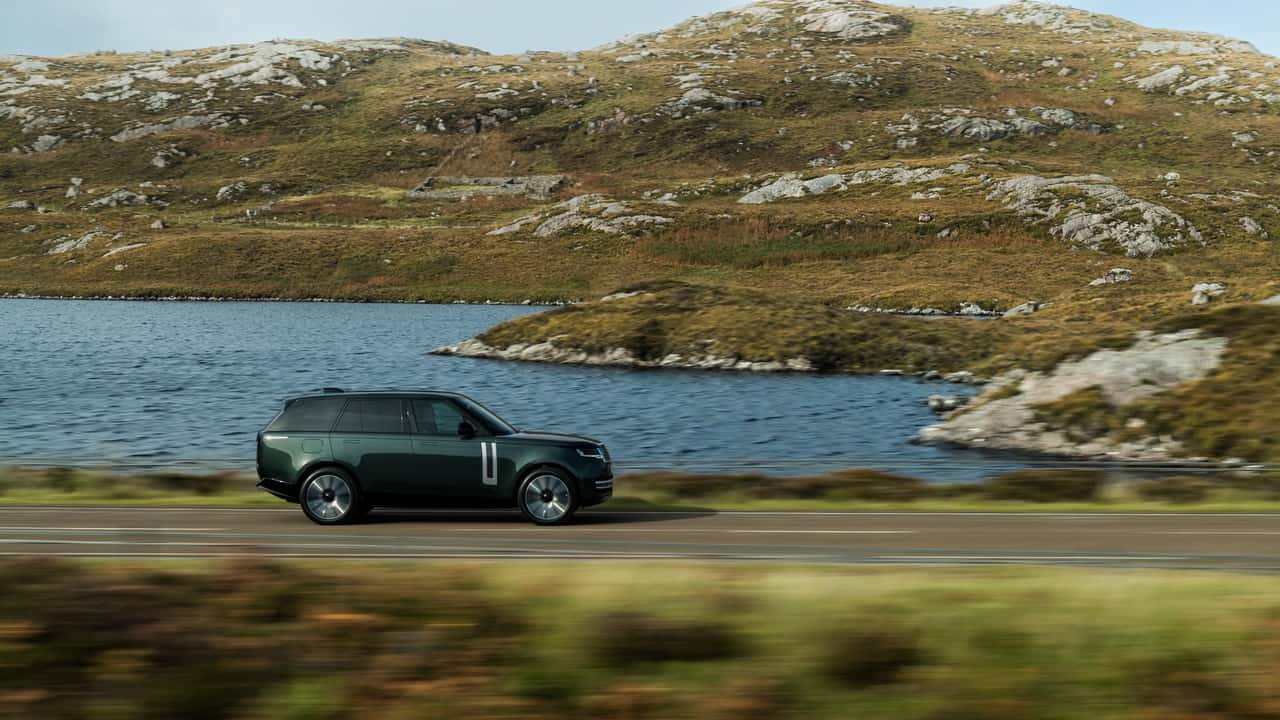 Photo by: Land Rover
This Range can also be credited with a superiorly wafting “magic carpet” ride compared to its peers in the Land Rover lineup. Hat tip to its twin-chamber air suspension. Though these magical dampers share billing with the big battery pack in the floor, and the additional torsional rigidity and lowered center of gravity it provides. The brand claims that these boosted struts respond 60% more quickly to inputs than those in the ICE version, working hard to absorb road imperfections. Still, there is no masking mass, and on Northern Scotland’s undulating and often broken one-lane tracks, I found the Comfort setting too pillowy for my taste. Spinning the response controller to Dynamic helped firm up the rebound to a less excitable level.
Also notable, when this Rangey ventures off-road, its powertrain provides a layer of automatic support that must be requested of other iterations. Clicking the shifter down once from D still activates an S mode, as it does in gas versions, but here, S stands for “Single Pedal.” This regenerative braking feature provided very useful mediating downhill speed when I was slipping along a steep hillside in the the Scottish slop. In fact, if given enough leeway, it will even bring the car to a surprisingly gentle “chauffeur” stop. It’s far less nauseating than the regen on some other EVs, and sports three additional levels of adjustment, including “off.”
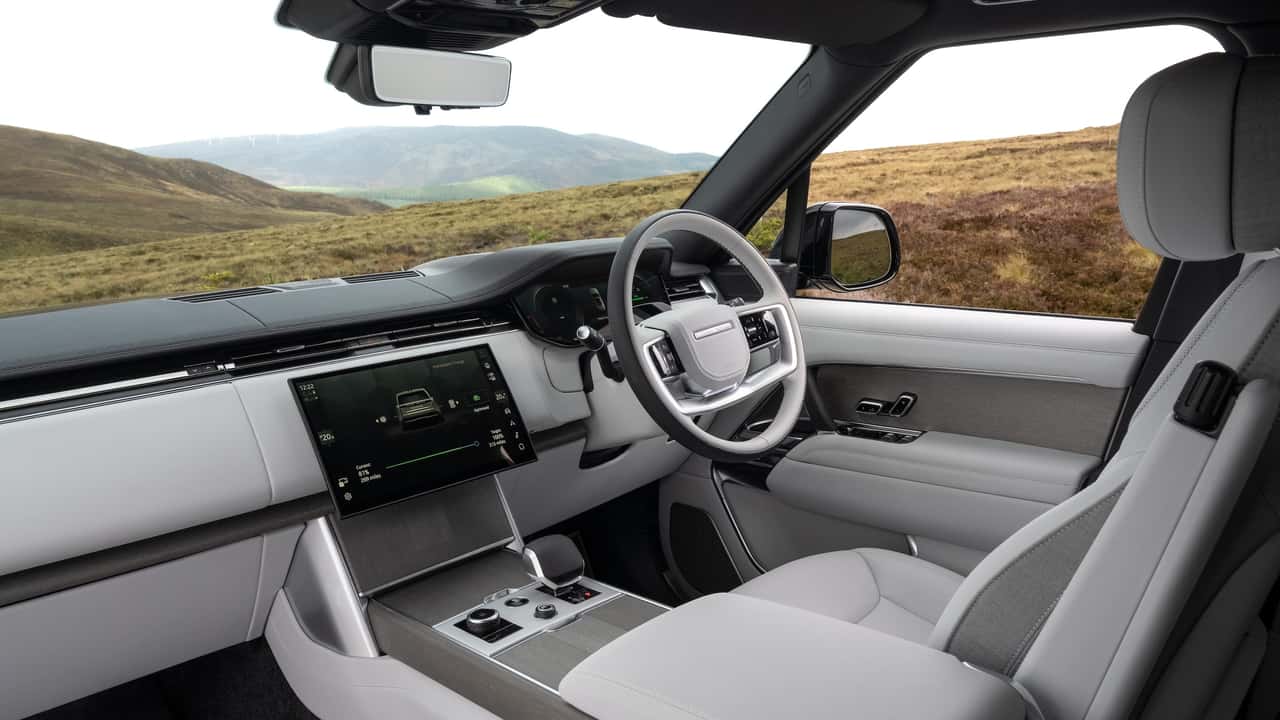 Photo by: Land Rover
Of course, being an electric vehicle, this Range has a limited range—though its expected 333-mile certification from the EPA seems like a pretty solid number. Still, this means that it can’t carry extra jerry cans of potential energy like a gas version, so if you’re a dictator fleeing an unruly mob in Toyota Hiluxes, you may run out of juice before they do. Land Rover does claim that its 800-volt architecture means that the electric model is capable of charging its battery from 10‑80% in 22 minutes, or adding up to 125 miles in 10 minutes. So, if you’re in that situation, maybe get a good head start, and plan your route accordingly.
I ended my time in Scotland having covered around 450 miles in the RREV, on- and off-road. That was a lot of driving in a 36-hour window. But despite my exhaustion, I formed a powerful and almost exclusively positive opinion of the vehicle. There will be those who say that the lack of a gas-powered V8—a Range Rover tradition since its inception—and the inclusion of so much electronic gimcrackery make this Range less “engaging.” These traditionalists might decry this especially when off-roading, when they want to feel their own hand shaking, or slapping, the hand of their god in triumphing over the natural world.
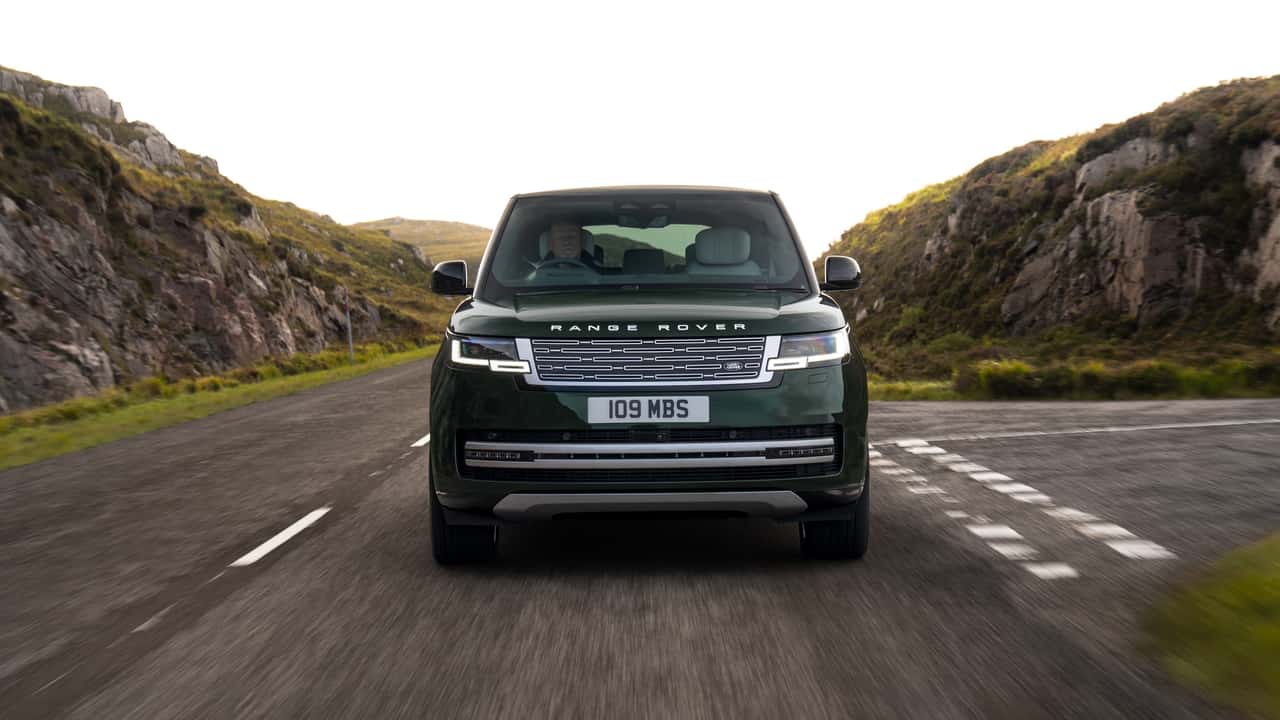 Photo by: Land Rover
To this, I would say two things. First, only .05% of Range Rover owners will ever do .05% of the off-roading we managed to accomplish seamlessly in the EV. Second, the current gas-powered Range Rovers are also laden with technological gewgaws to support their triumphant bouldering and mudding and swimming chops, and have an order of magnitude more moving mechanical parts to wear and break down. Moreover, there’s not even a price penalty for selecting the electric version.
As a Range Rover Classic die-hard, this opinion might label me as a heretic. But after putting this vehicle to the test, I feel confident in stating that if you want the range-topping Range, the EV is the obvious choice.
Brett Berk is a freelance automotive writer based in New York. He has driven and reviewed thousands of cars for Car and Driver and Road & Track, where he is a contributing editor. He has also written for Architectural Digest, Billboard, ELLE Decor, Esquire, GQ, Travel + Leisure and Vanity Fair.


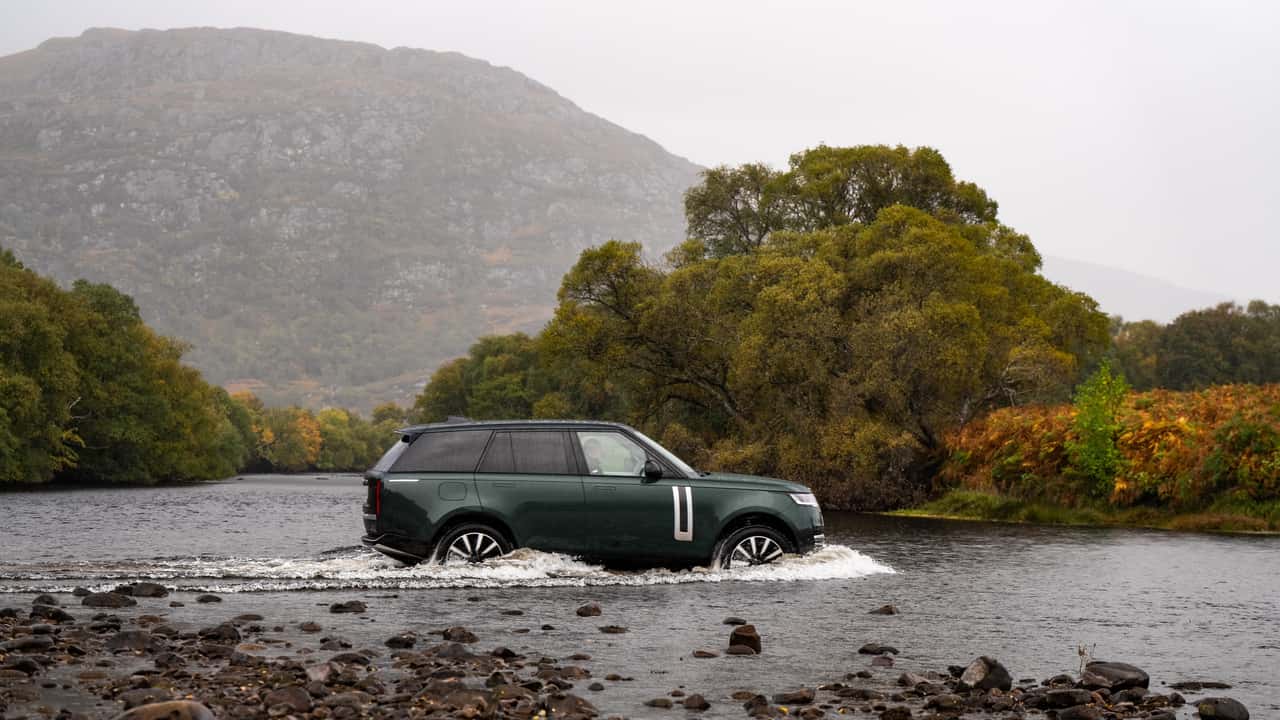
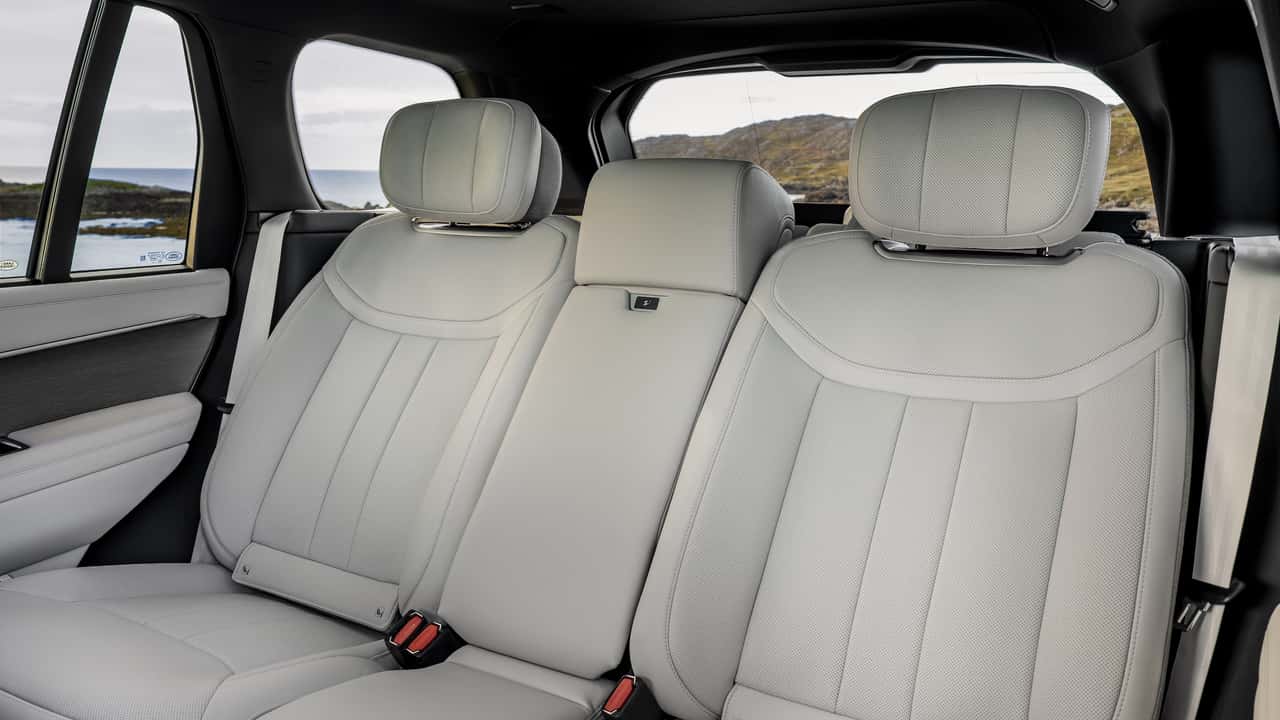
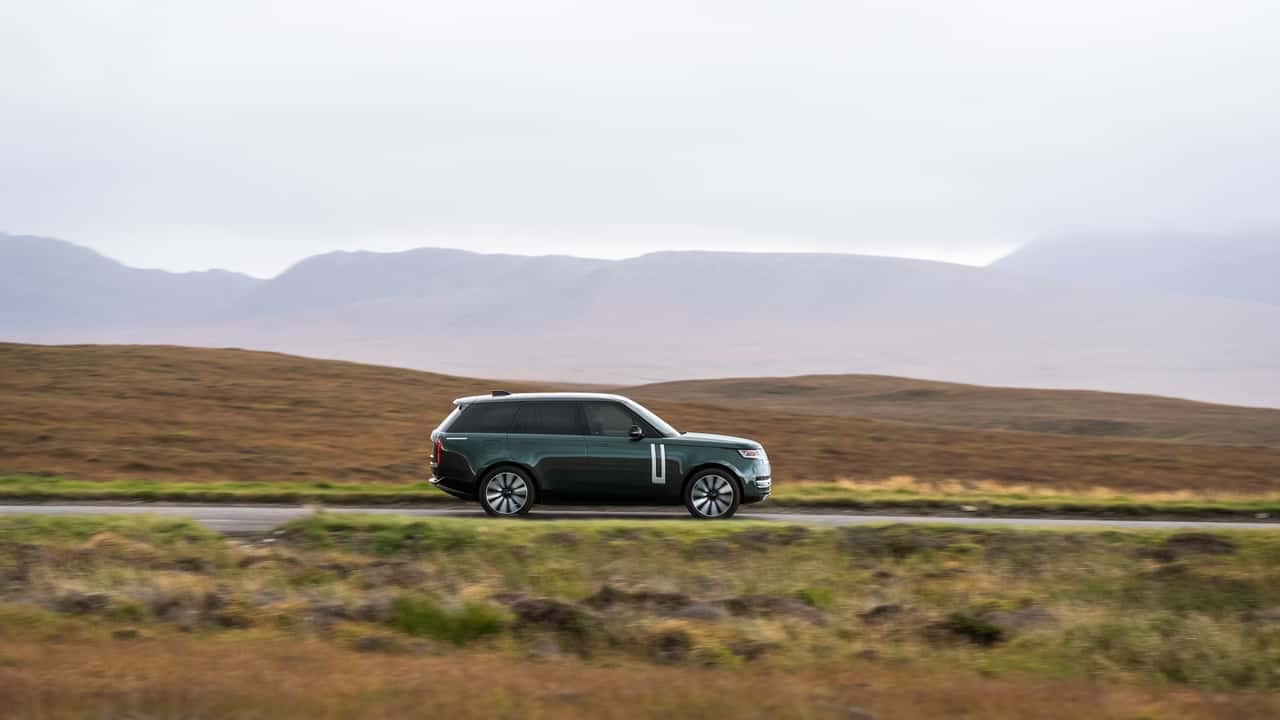
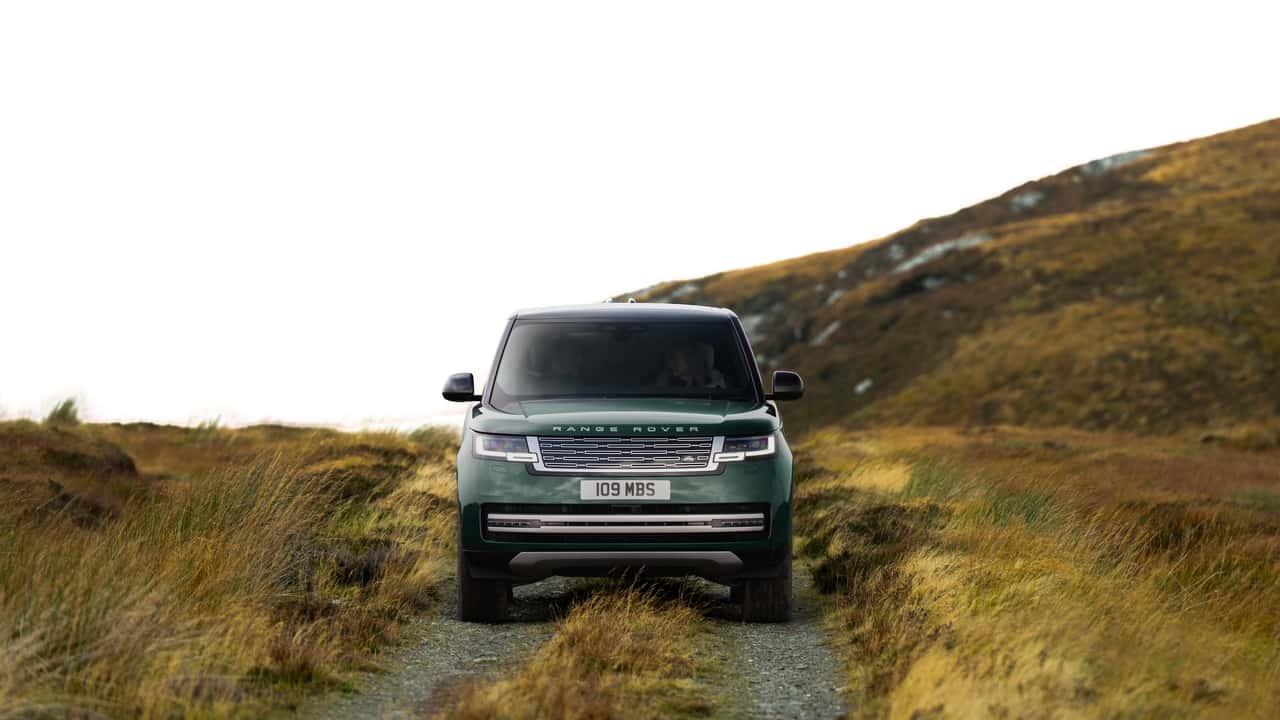
]]> contact@insideevs.com (Brett Berk) https://insideevs.com/reviews/812974/range-rover-electric-first-drive/ https://insideevs.com/reviews/812963/bmw-ix5-electric-x5-first-drive-review-2027/ Thu, 22 Oct 2026 19:01:00 +0000 I Drove The Electric BMW X5. It Makes The Gas Version A Tough Sell. For the first time ever, the X5 is going electric. I drove the iX5 to see if it's compelling enough to get BMW buyers into an EV.
The fifth-generation BMW X5 is here, and for the first time ever it comes in a dizzying array of powertrain options: gas, diesel, plug-in hybrid, hydrogen (yes, seriously), and, the subject of today’s review: electric.
All the X5s are identical inside and out: same clean look, same distinctive X-shaped headlights, same screens, same high-class cabin. So why pick one over the other? After driving both the combustion X5 and the electric iX5 for a day in Southern California, I think BMW has made an exceptional case for its buyers to go electric. The iX5 provides gobs of range, super-fast charging, dazzling tech, and a more pleasant driving experience than the gas version.
Perhaps more than ever, the decision comes down to one simple question: Can you live without the theater of a combustion engine? If so, the iX5 deserves your attention.
[Full disclosure: BMW covered my travel and lodging in Newport Beach, California, so I could drive the new iX5.]
BMW iX5: What Is It?
The iX5 is the latest of BMW’s Neue Klasse vehicles, joining the new iX3 crossover and i3 sedan. It’s one of the most important too; while BMW made its name as a sports-sedan company, the X5 and X3 are its bread and butter in the U.S. So the X5 going all-electric (at least as an option) is a big deal both for BMW and for America’s EV options.
The iX5 uses BMW’s sixth-generation EV motors and batteries, and has the biggest battery pack ever fitted to a BMW production car, at 144 kWh. While the iX3 and i3 use 4695 cells—that is, ones that are 46 millimeters wide and 95 mm tall—the iX5 uses 46120s, giving it extra energy capacity and a huge amount of range. The battery uses a cell-to-pack format without bulky modules. (It’s not a cell-to-body design like the other Neue Klasse cars, BMW told me, since the X5’s chassis also has to accommodate other powertrains.)
When BMW first announced the iX5’s specs earlier this year, it targeted an EPA range of 435 miles, but that figure has since grown. At last week’s drive event, BMW reps said they’re now estimating an EPA range of 450 miles, which would put the iX5 in a very small club. Michael Ahlers, the head of the X5 project, told me BMW realized that 400 miles of range was the sweet spot where potential buyers stop complaining about not having enough.
Pair with that an 800-volt architecture and some of the highest-powered charging in a U.S. production car, and you get—on paper, at least—an EV with far fewer compromises than those that came before it. BMW says the iX5 can charge at up to 460 kilowatts (you’d be hard-pressed to even find a station that can dispense that) and recharge from 10%-80% in 22 minutes. That equates to over 300 miles of estimated EPA range added in not very much time.
Rounding out the EV specs, every iX5 will come with bidirectional charging capability that can be routed through various attachments: a vehicle-to-load adapter with three 110-volt outlets and a vehicle-to-home adapter that turns the SUV into a home-backup battery.
The iX5 60 xDrive will start at $79,800, plus a $1,450 destination charge. That’s $7,700 more than the gas-powered X5 40 xDrive. But for the added outlay you get a more powerful, quicker car with home-backup capability and, I’d argue, a more enjoyable driving experience. The X5 rolls out starting this month, while the iX5 hits U.S. dealerships in early 2027.
I Drove Mercedes’ New EV With A Silicon Anode Battery. The Future Is Here
2027 Chevy Bolt Review: Do Americans Really Want Cheap EVs?
I Drove the $30,000 Kia EV3—And It Might Be the Best Value EV Yet
I Drove The 2026 Porsche Taycan 4. It Proves EVs Don't Need 1,000 Horsepower To Be A Blast
How Does It Drive?
When I drove the iX3 last year, I came impressed with how agile, smooth, and quiet it was. With the iX5, it’s largely the same story, just in a noticeably bigger and heavier package. The SUV’s 570 horsepower and 593 pound-feet of torque give it more than enough zip, helping mask its weight.
Even at highway speeds, the iX5 feels like it has plenty more to give—and unlike in the combustion version, power comes on immediately. Driving the two powertrains back to back gave me that much more appreciation for the effortless, punchy performance you get in the EV at virtually any speed. (On paper, the iX5 is rated to hit 60 in 4.4 seconds, while the xDrive 40 is rated at 4.8 seconds.)
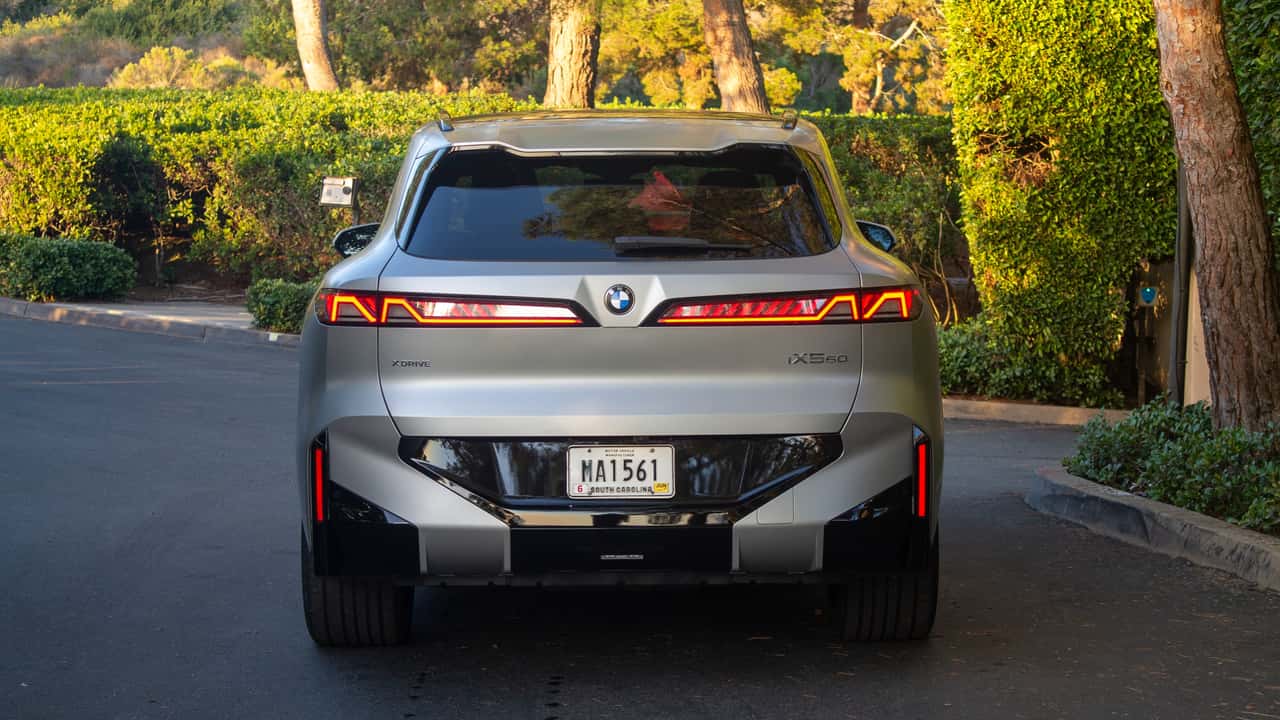
2027 BMW iX5
Photo by: Tim Levin/InsideEVs
Sure, the X5 40 xDrive brings the drama and raucous experience of a gas engine, but you also have to deal with gear changes and turbo lag. Clearly, I’m no gas-car enthusiast and I’m preaching to the choir here, but I’ve come to prefer the electric way—just put your foot down, and you’re off at full beans.
Put someone else who’s EV-curious in the driver’s seat of both options, and I think many would come to the same conclusion. It’s why survey after survey show that once someone buys an EV, they’re pretty much hooked.
On twisty mountain roads, I found the iX5 settled around corners and decently engaging to drive. The giant battery in the floor, while making the SUV feel heavier than the gas one, also provides a lower center of gravity. An X5’s real daily duty, though, is puttering around town or cruising casually on the highway, and the iX5 gets high marks for its performance in either environment. On long stints, it was quiet, comfortable, and overall a pleasant place to pass the time.
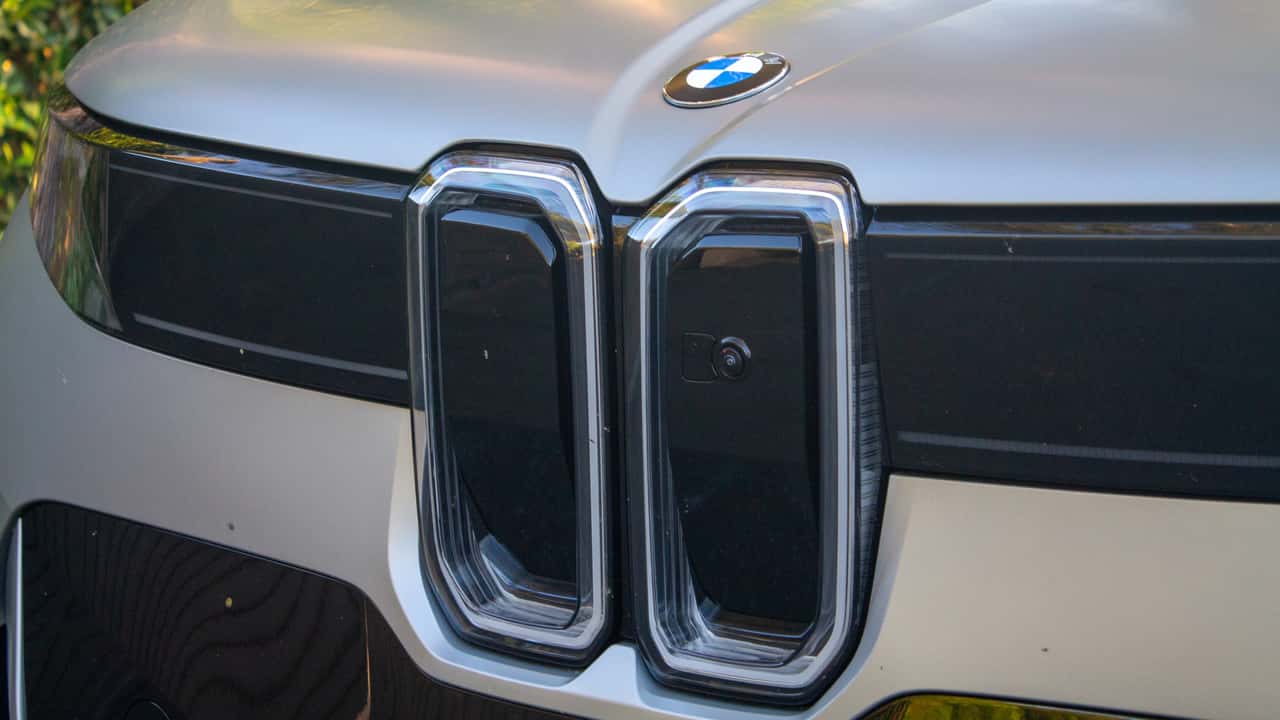
2027 BMW iX5
Photo by: Tim Levin/InsideEVs
I also got to try out BMW’s latest hands-free driver-assistance tech on this trip, both in the X5 and the new 7 Series. It works great. The system holds a lane confidently, doesn’t nag you unnecessarily, and asks you to confirm automatic lane changes by glancing at the driver-side mirror to double check for traffic. It also features collaborative steering, so you can reposition the car within its lane quite freely without fully taking over.
Let’s Talk About Those Screens
I’ll start with the good. BMW’s Panoramic Vision display, that slim bit of screen running across the entire car just below the windshield, is one of the best new car features I’ve seen lately in an auto industry whose mantra has become “more screen.” We should all be glad it’s not limited to EVs, but rather will land in gas BMWs as well. (And a hydrogen one, if that floats your boat.)
The display is remarkably high-contrast, making it legible even when the sun is streaming into the cabin or when viewed through sunglasses. It puts basic driving info like your gear, drive mode, range, and speed above the steering wheel and right in your line of sight to the road. The iX5 offers a crisp head-up display too, but I’d argue you really don’t need it. The leftmost gauge-cluster bit of the Panoramic Vision display includes turn-by-turn directions, making the most useful part of a HUD redundant.
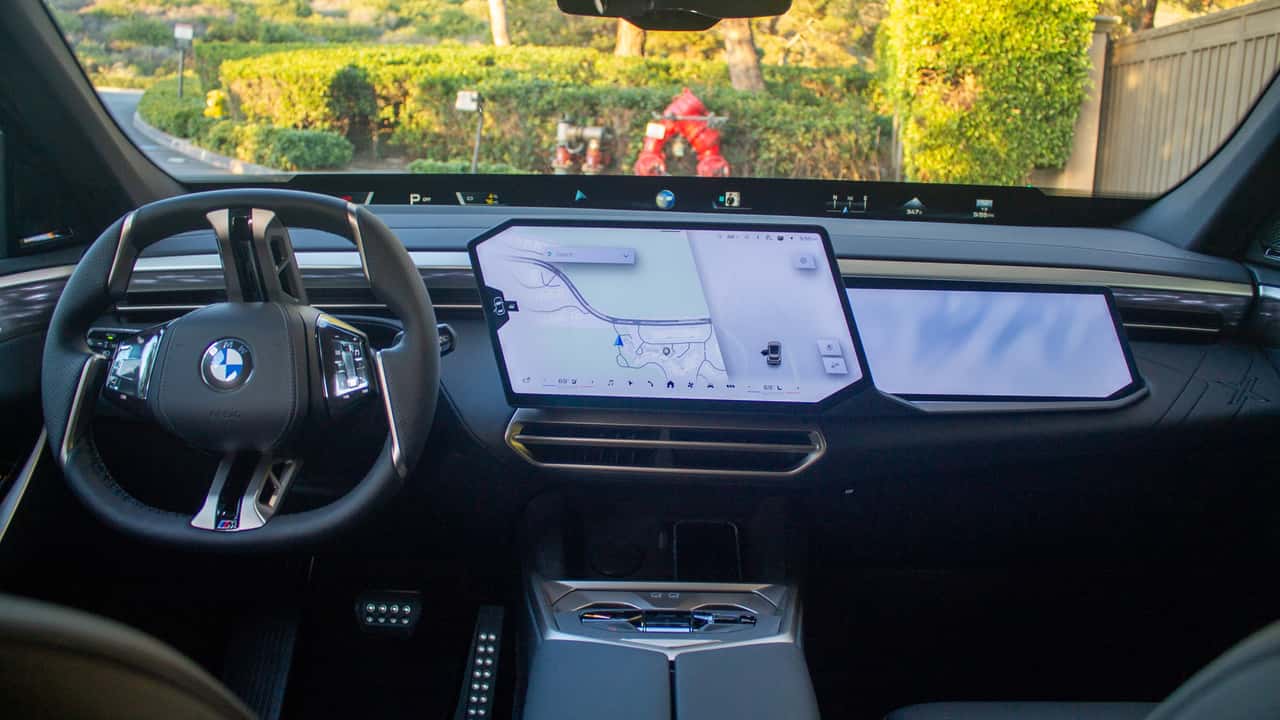
2027 BMW iX5
Photo by: Tim Levin/InsideEVs
The rest of the screen can be configured to include just about anything else you might want to check at a glance. Those include the date and time, current weather conditions, and power output. Plus, BMW threw in some stuff that’s just for fun. The screen now includes the option of several “art cars,” BMWs from years past with funky designs. So you can have an E30 M3 or a Z1 keep you company from the dash.
The main display is nice enough to use, too, and its off-kilter look lends the cabin a fresher feel than pure rectangular designs do. It’s quick to respond to taps and swipes, and the design is crisp and easy to read. There’s a quick-access menu accessible from the portion closest to your right hand for things like door locks and opening the trunk. The home screen features the map, plus a vertical carousel of key functions lining the left-hand side of the screen. In all, it has a far more modern and Silicon-Valley feel than BMW’s previous iDrive system.
But the UI could use some fine-tuning. For example, the home button at the bottom of the display only appears when you’re not on the home screen. Otherwise, it transforms into the button for the apps menu. The thinking is that you only need a home button when you’re not on the home screen, but the result is frustrating. If you want to jump from one app to another, you need to hit the home button, then the resulting apps button, rather than accessing the app menu in one tap. It’s a pain. Also, while you can adjust the temperature up and down without going into menus, there’s no one-tap method for switching on the heated seats or cranking up the fan speed. With so much digital real estate, you’d think BMW could make room for a dedicated home button and some more seamless climate controls.
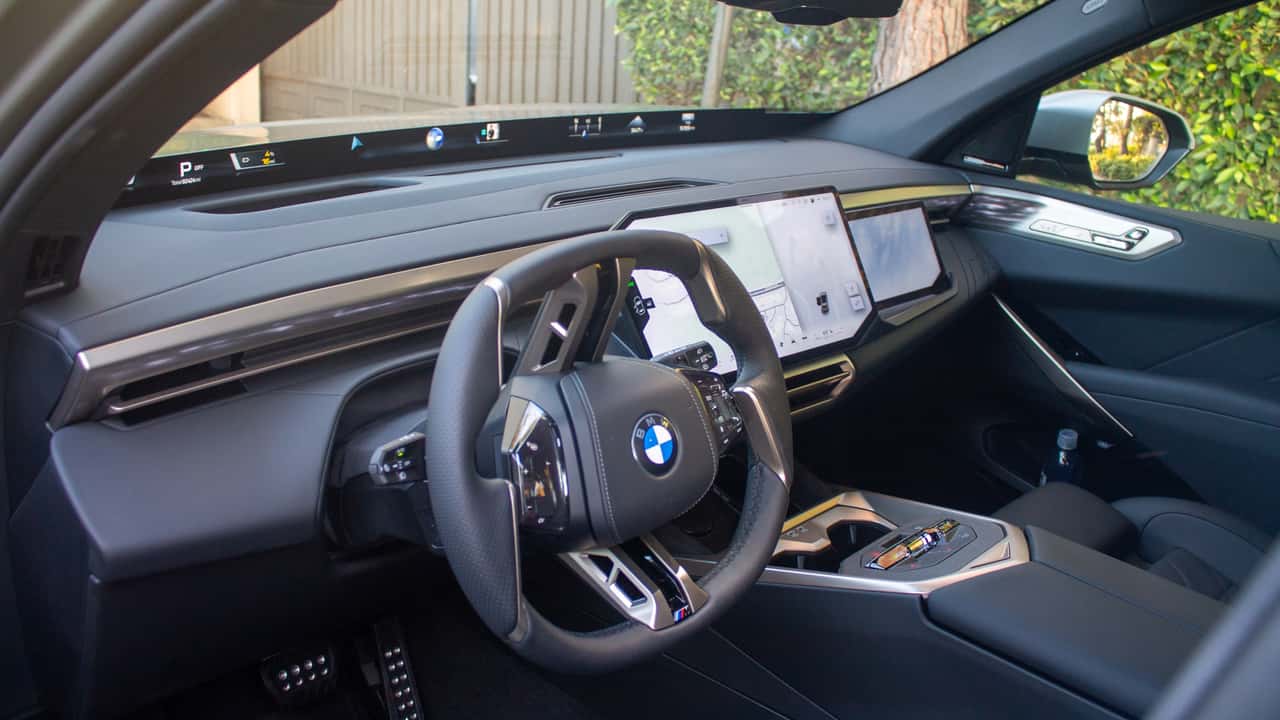
2027 BMW iX5
Photo by: Tim Levin/InsideEVs
As for the passenger screen, I could take it or leave it. BMW is keeping up with the times here and with similar offerings from competitors like Mercedes and Audi. But I don’t see much use in a passenger screen and think the trend will—and should—die a slow death.
BMW’s new Alexa Plus-powered AI assistant was also hit or miss in my experience. Unlike most previous in-car voice features, it can actually answer general knowledge questions and handle vague queries, like “tell me some fun things to do around here” or “what’s going on with diesel prices.” But it also was clunky at times and failed at the basic command of “turn off driving sounds,” no matter how I rephrased it. It seems like a step in the right direction, but could use some work.
Early Verdict
When BMW first announced the vast range of powertrain options for the new X5, I thought the plan was surely a recipe for buyers to default to what they know best, leaving the EV for the true believers. After spending some more time with it, I think that was the wrong assumption.
With enough flashy tech to reel in some would-be Tesla buyers, range and charging speeds to silence the skeptics, and some of the best benefits of EVs, like bidirectional charging, the iX5 is a leader in a new class of more fully fleshed-out EVs from luxury brands. I think BMW has done a very good job of making this a real, tough decision for anyone walking into a BMW dealership—even those who maybe didn’t think an EV was right for them before. I know which one I’d pick.
Contact the author: Tim.Levin@InsideEVs.com
2027 BMW iX5 Base Price$79,800 Battery144 kWh Charge Time10%-80% in 22 min Drive TypeDual-motor AWD EV Range450 miles (est. EPA) Output570 hp Maximum torque594 lb-ft Speed 0-60 MPH4.4 seconds (BMW est.)
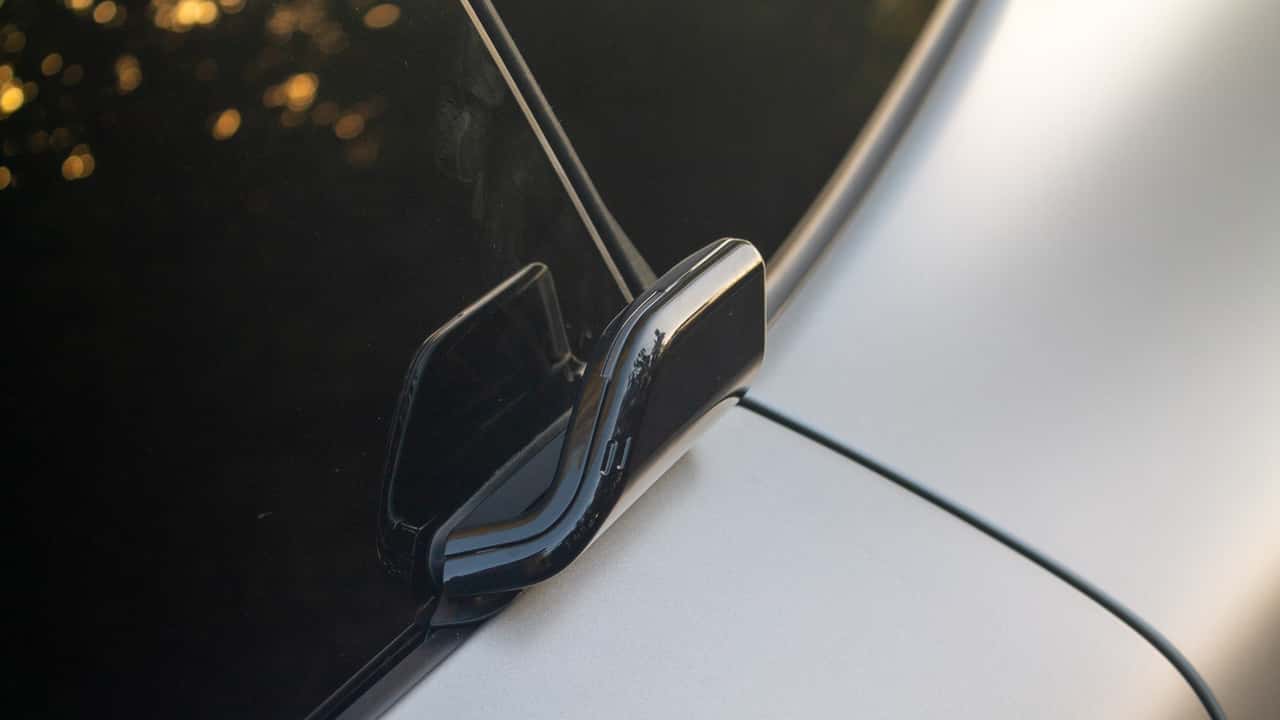
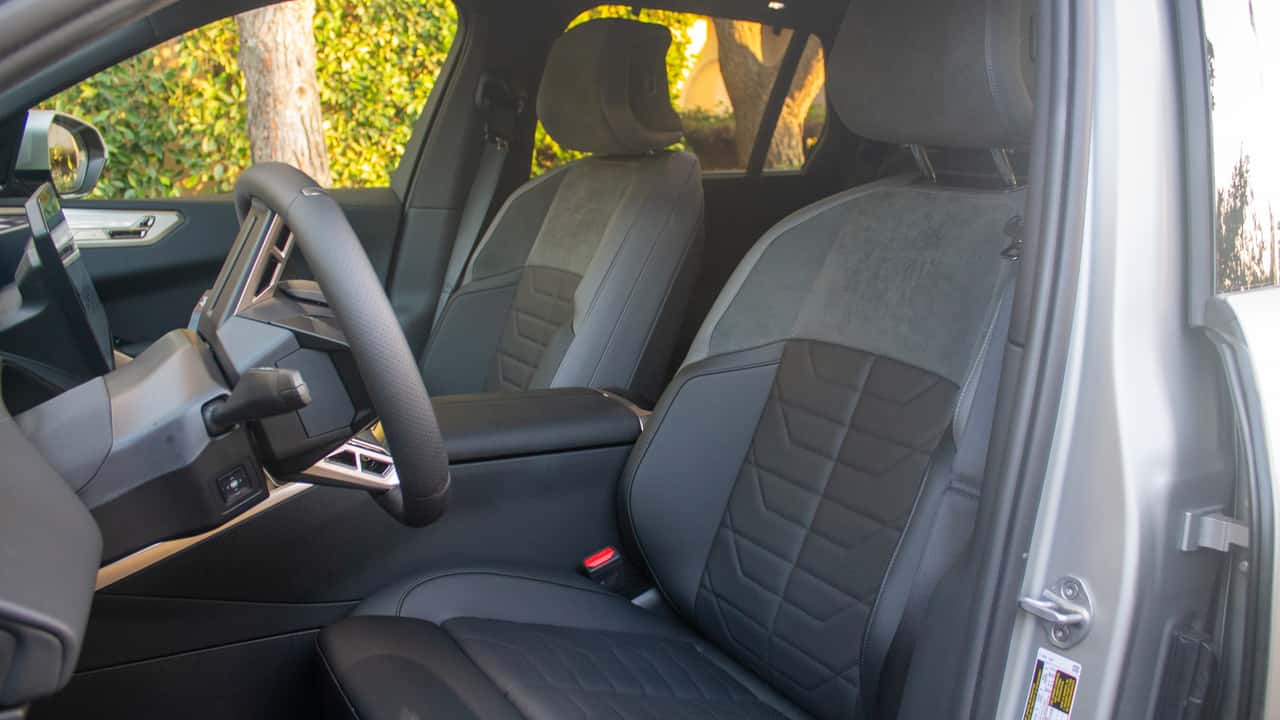
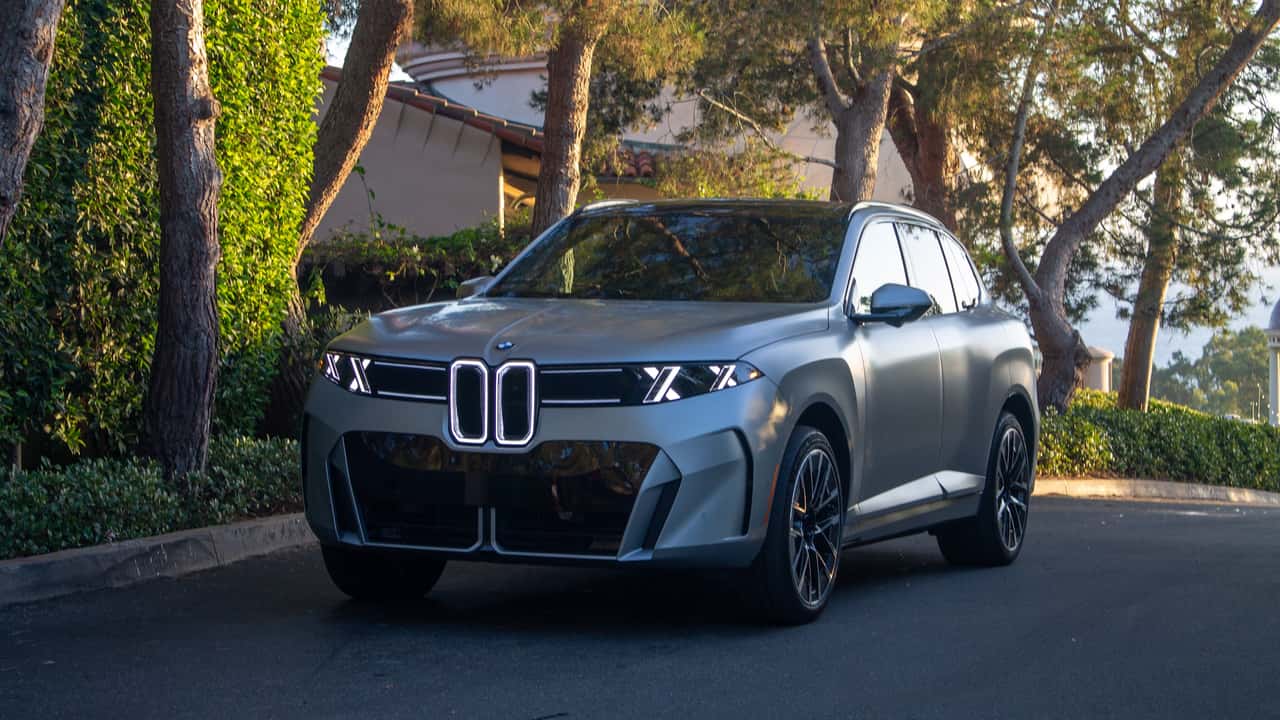
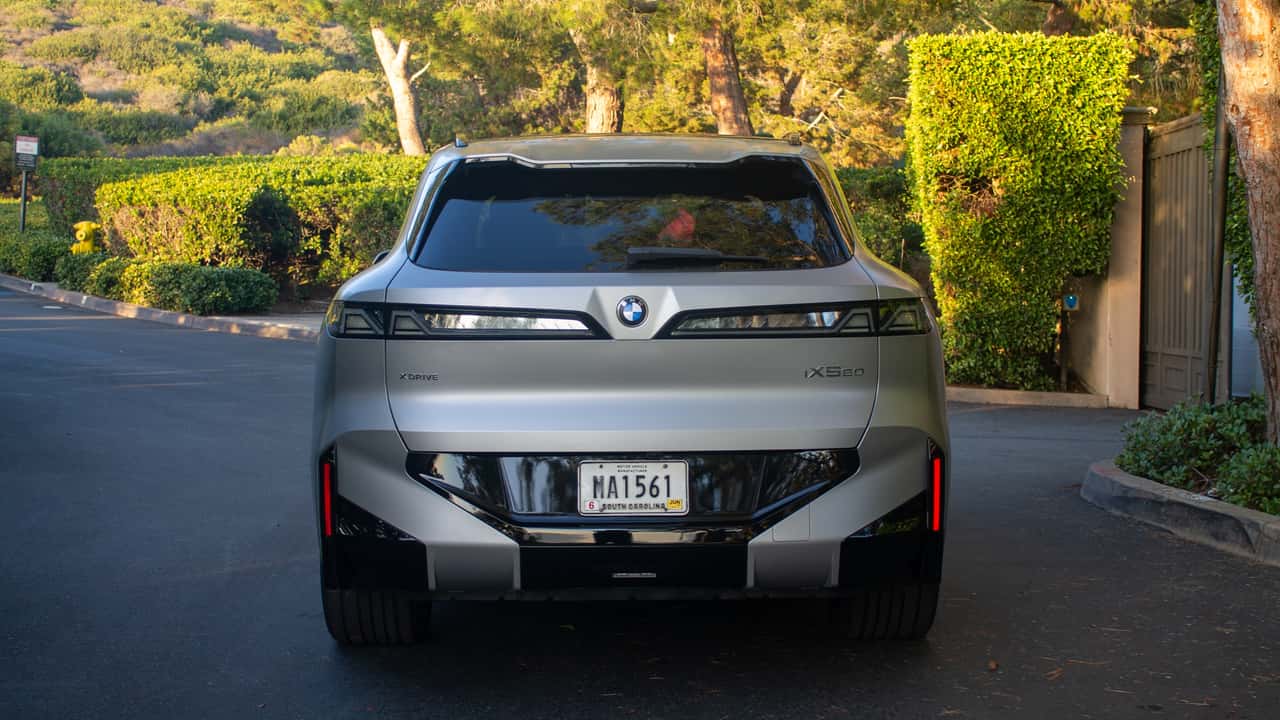
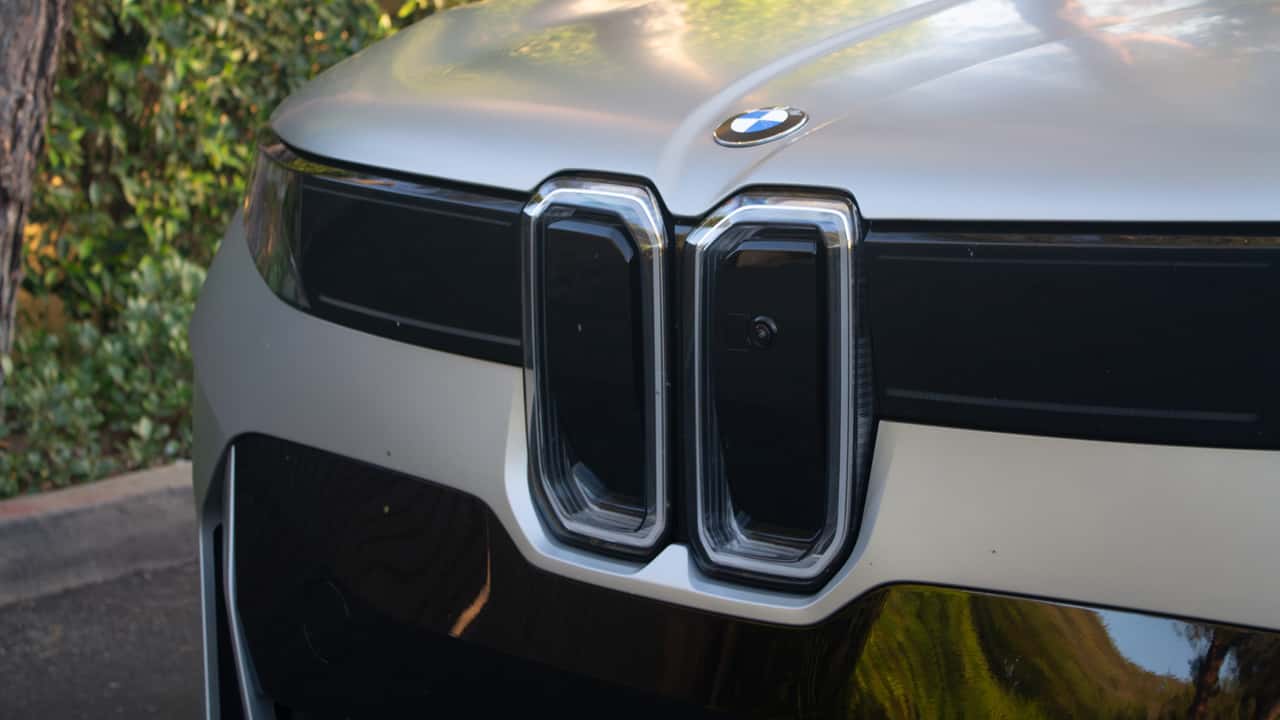
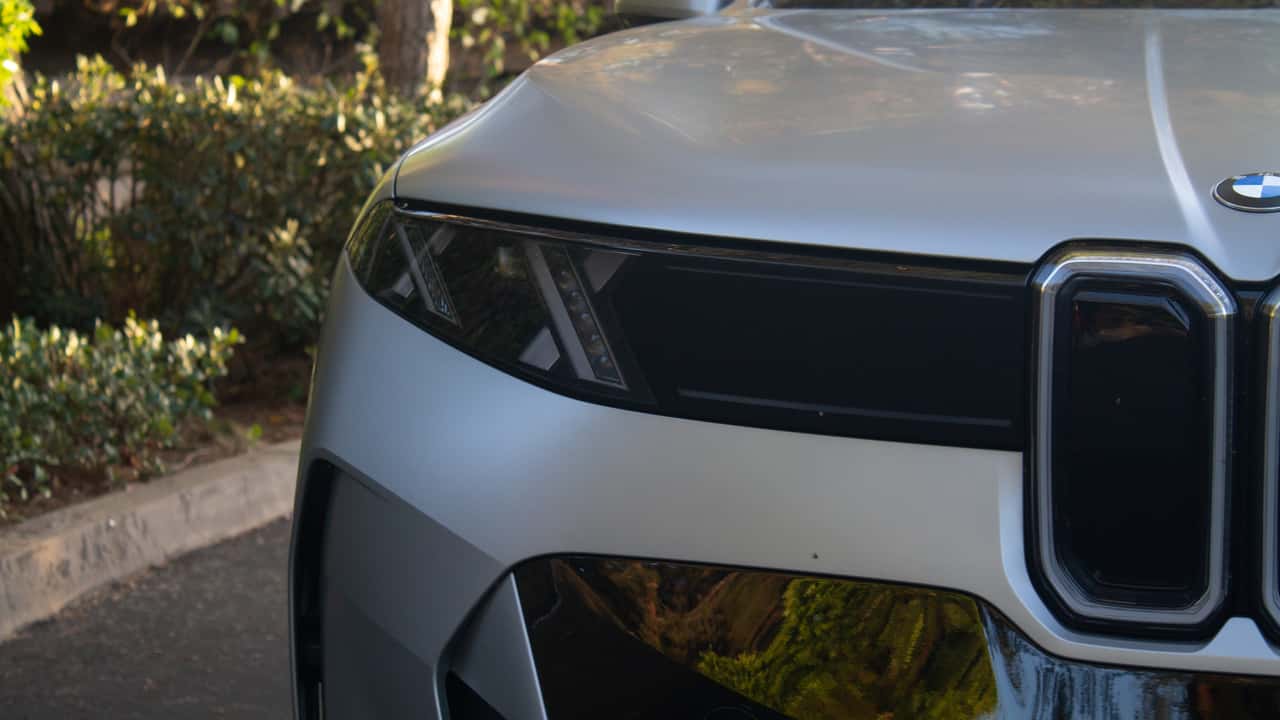
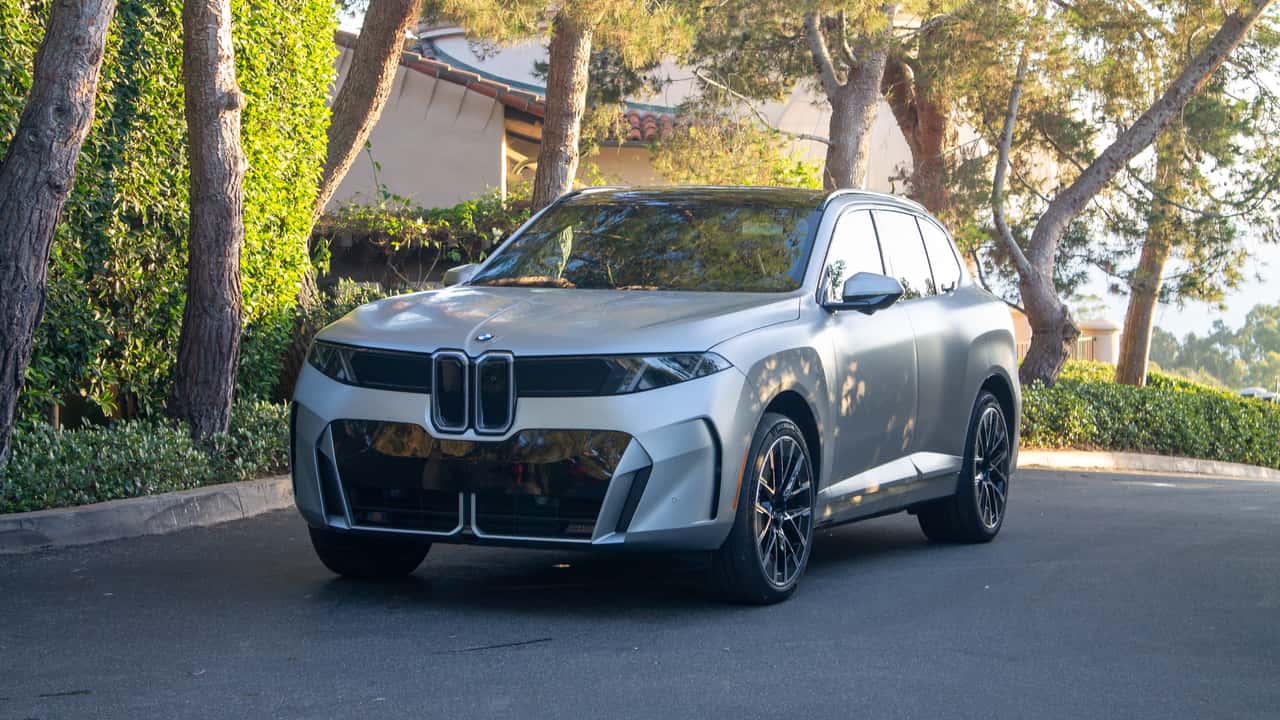
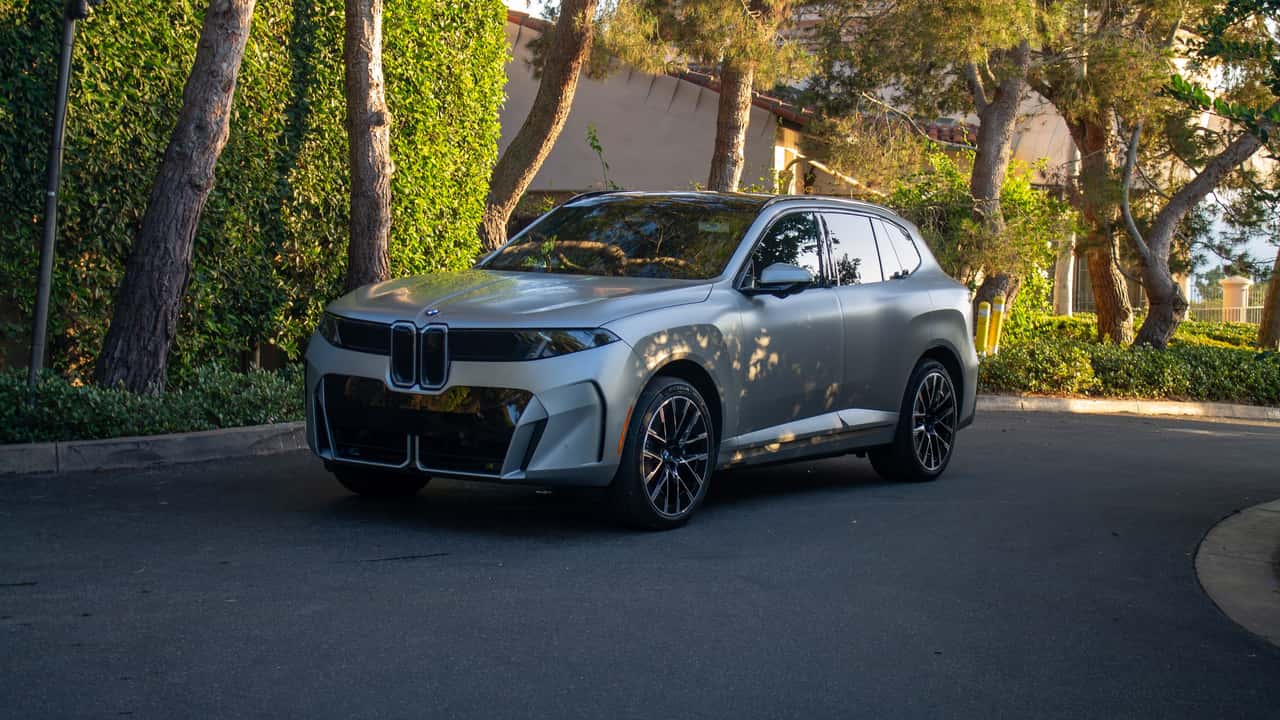
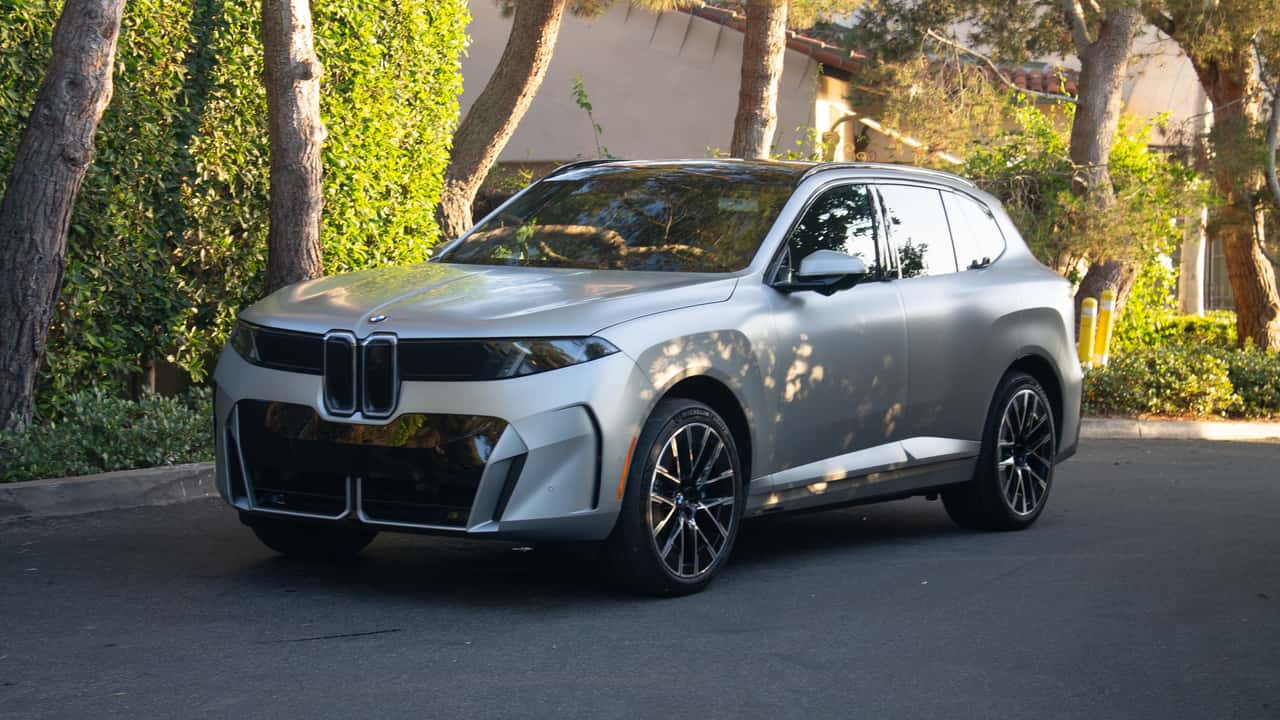
]]> contact@insideevs.com (Tim Levin) https://insideevs.com/reviews/812963/bmw-ix5-electric-x5-first-drive-review-2027/ https://insideevs.com/reviews/811706/2026-porsche-taycan-4-review/ Sat, 17 Oct 2026 12:00:00 +0000 I Drove The 2026 Porsche Taycan 4. It Proves EVs Don't Need 1,000 Horsepower To Be A Blast The least powerful all-wheel-drive Taycan proves that Porsche’s electric sedan is defined by its chassis, not its acceleration.
I’ve waited for years to drive a Porsche Taycan, and now that I have sampled one, I can confidently say it was worth the wait. This electric sedan blew me away. Not because it’s the quickest electric car, or the most expensive, or the most luxurious. But because it is by far the best to drive.
The funny thing is, my tester was one of the least powerful Taycans you can buy—not some rip-your-face-off Turbo GT version with a four-digit horsepower rating. But over a 200-mile trip that included highway cruising, stormy weather, and bombing down my favorite twisty mountain road, I never once found myself asking for more power.
The relatively sensible Taycan 4 I drove blended sportiness, comfort, luxury, and excellent EV specs like no other car I’ve ever driven. Now that I have tried it, I want one. Badly.
The Sensible Taycan
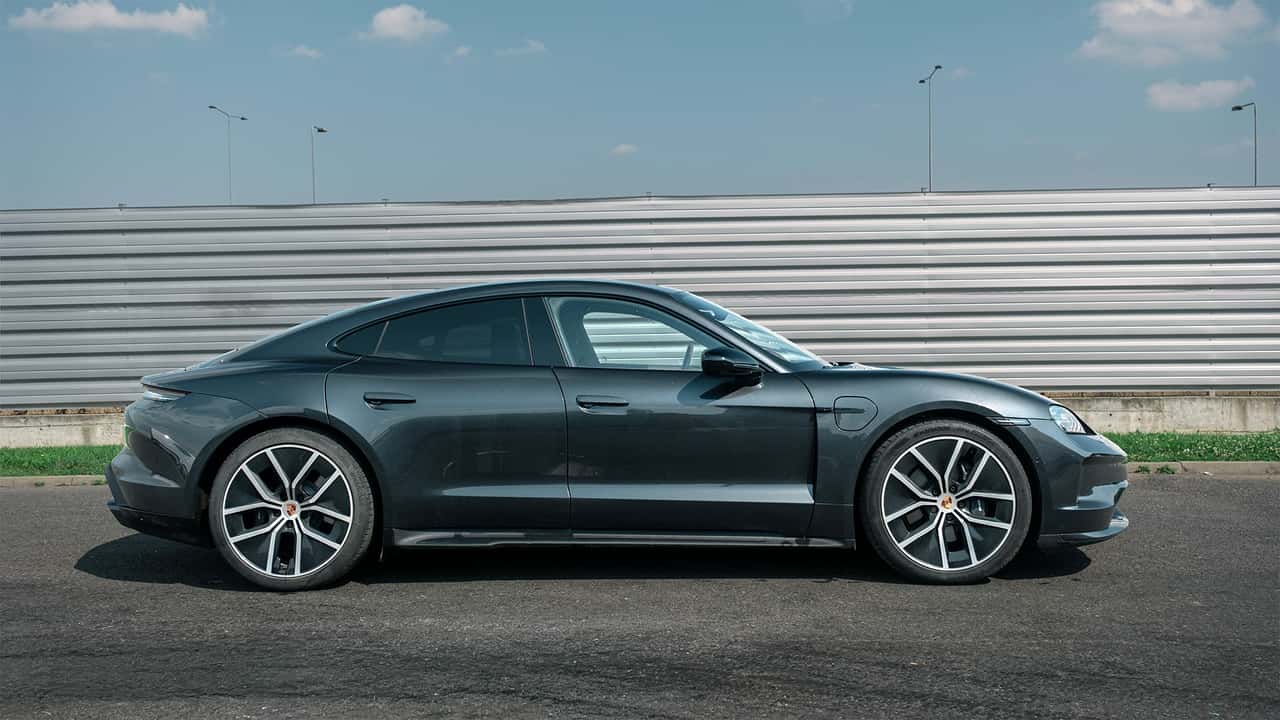 Photo by: Andrei Nedelea
My tester was a Taycan 4, the lowest-powered all-wheel-drive variant. It has a dual-motor setup with a combined output of 429 horsepower and 449 lb-ft (610 Nm) of torque. With launch control, it can go from 0 to 60 mph (96 km/h) in 4.4 seconds, then reach a top speed of 143 mph (230 km/h). That all sounds rather quaint compared to top-end Taycans, which can hit 60 in under 3 seconds.
My Black Edition tester gets the Taycan’s larger 105-kilowatt-hour battery pack as standard, making it a great long-distance cruiser. Porsche quotes a maximum WLTP range of 395 miles (635 kilometers), compared with the standard pack’s 347 miles (559 kilometers). I didn’t verify that while charging up a mountain in dreadful weather. My right foot had other priorities.
The Taycan also has something unusual under the hood: a two-speed gearbox for the rear motor. First gear helps launch the car, while second suits higher speeds and efficient cruising. You may notice the change under hard acceleration, but it mostly works in the background.
Someone At Porsche Still Likes Driving
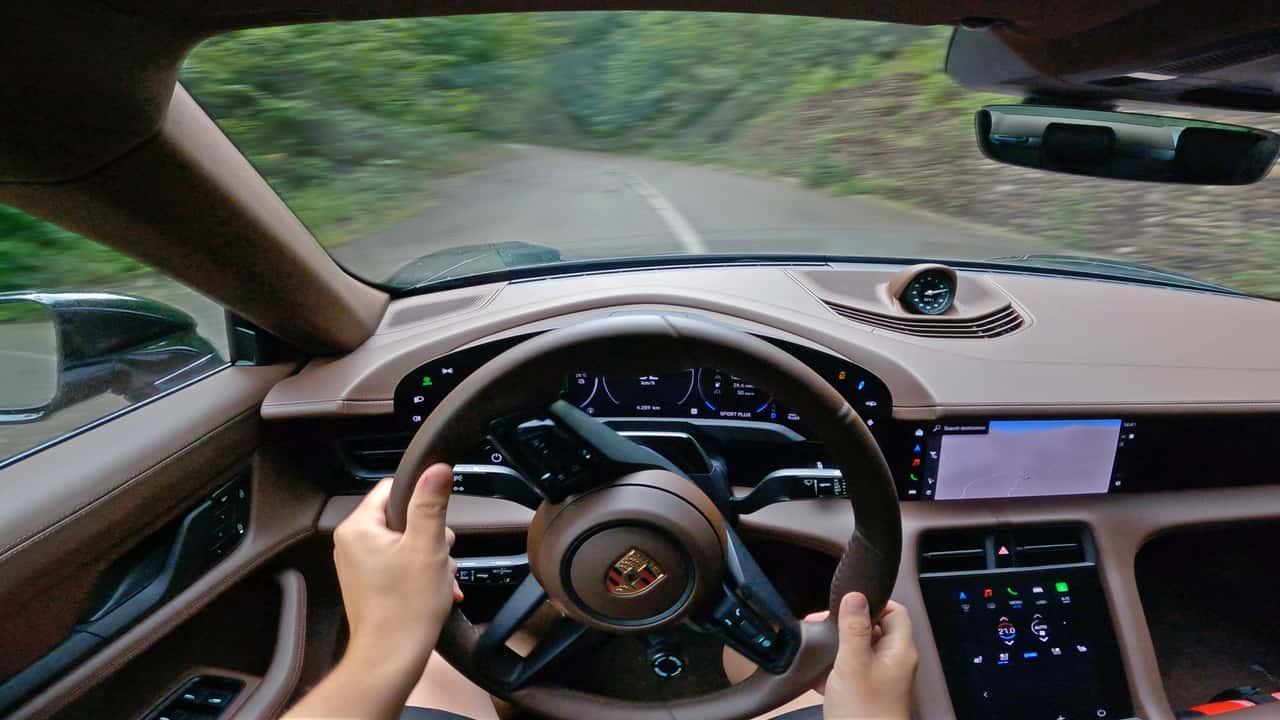 Photo by: Andrei Nedelea
You don’t even have to move the car to notice it. The steering wheel is round, sensibly sized, and relatively thin-rimmed. Compared to some BMW M and Mercedes-AMG steering wheels that feel as though someone upholstered a tractor tire, it’s refreshing. You sit really low for an EV, legs stretched ahead, and the steering column's adjustment range is truly excellent.
Arrive at a corner, and you quickly realize what the wheel is attached to is equally good. The Taycan turns precisely without the exaggerated off-center steering response that can make a heavy car feel artificially darty. Each input produces exactly the change of direction you expect, and you don’t have to make constant corrections to adjust your line like you do in other cars.
On my favorite mountain road where I’ve taken dozens of cars, that translated into enormous confidence, even in the rain. The Taycan stayed remarkably flat and let me adjust its cornering balance with the accelerator. Adding power felt like part of the cornering process, rather than something to save until the wheels were straight.
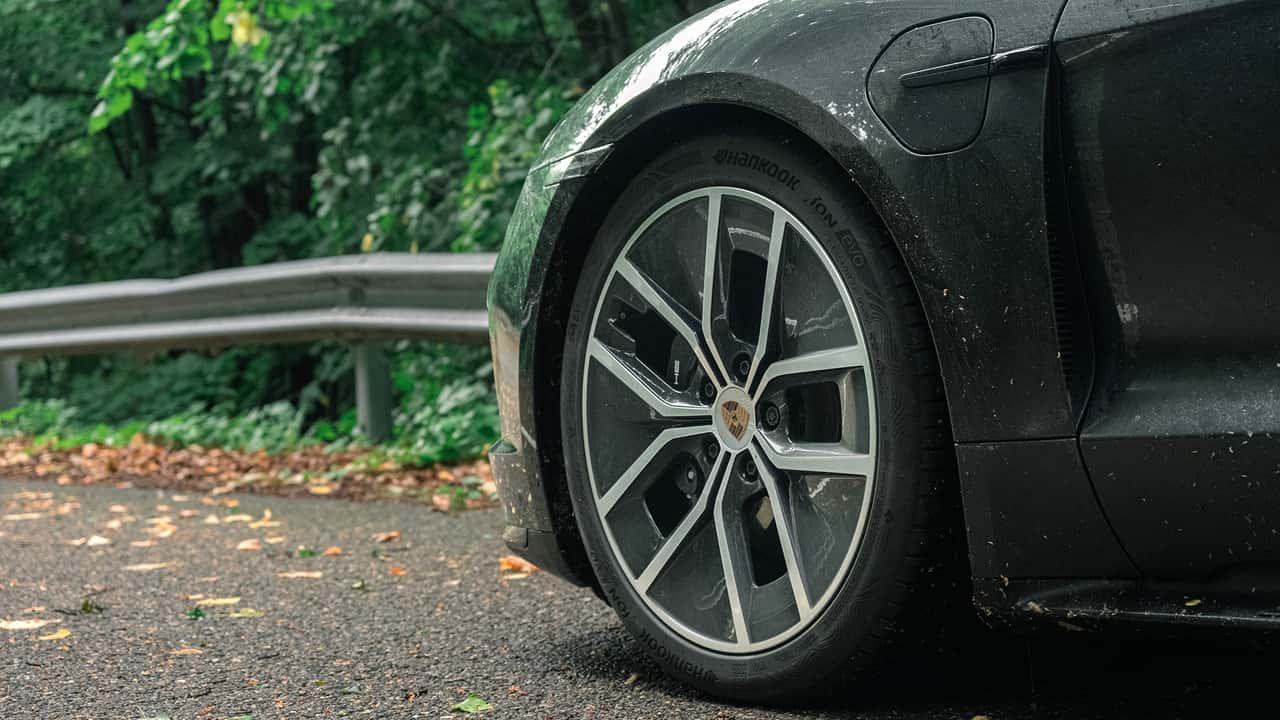 Photo by: Andrei Nedelea
The Taycan weighs well over two tons, but its weight rarely dominated the experience. As I increased the pace, it remained composed and responsive, even approaching and sometimes exceeding the grip limit.
One thing that surprised me was how much the Taycan's automatic regen system favors coasting over strong one-pedal driving. You rely on the brake pedal for much of its regeneration. Pressing it doesn’t automatically waste energy through the friction brakes; the motors can slow you down first. The best part was that the blending between regen and physical brakes was completely seamless, and you couldn’t tell where the handoff point was.
Before I tried the Taycan 4, my favorite sporty EV was the Tesla Model 3 Performance. The Porsche, though, brings a precision and cohesion that made me feel like I was discovering familiar asphalt for the first time.
My tester didn’t have the new simulated gearshifts. Between choosing a line, feeling the front end respond, and adjusting the car’s attitude with my right foot, I never missed them. The chassis provides the entertainment, and the acceleration sound it came with was more than enough to help me keep track of how fast I was going.
I never thought I’d have more fun if the Taycan 4 had more power either. Sure, it is among the slower fast EVs that I’ve driven. But it’s more than quick enough to be exciting and make any overtaking maneuver feel super easy. You can keep your 1,000-horsepower spaceship. In an EV that’s this sublime to drive, I’d take “only” 429 horsepower any day of the week.
Sport Plus, Spine Intact
 Photo by: Andrei Nedelea
You don’t have to suffer through a punishing ride to get the Taycan’s handling benefits either. The same car that was so engaging through the bends was also an excellent companion on the journey there.
Putting a sports sedan on 21-inch wheels and setting its suspension to its firmest setting is usually a recipe for a trip to the chiropractor. So I expected that switching on the Taycan’s Sport Plus mode would quickly turn unpleasant.
But that never happened. Even on imperfect mountain-road asphalt, the Taycan remained comfortable, absorbing bumps while almost completely eliminating body roll. So I left the suspension in Sport or Sport Plus for many stretches of road where only the plushest setting is bearable in other cars.
The exquisite cabin also helped make the Taycan super comfortable and pleasant to travel in. Truffle-brown leather covered the dashboard, doors, and steering wheel, and I loved how the plastics were carefully both color- and texture-matched to blend in with the leather too. It gives the cabin a cohesive look, and it just feels lush.
Fast Charger
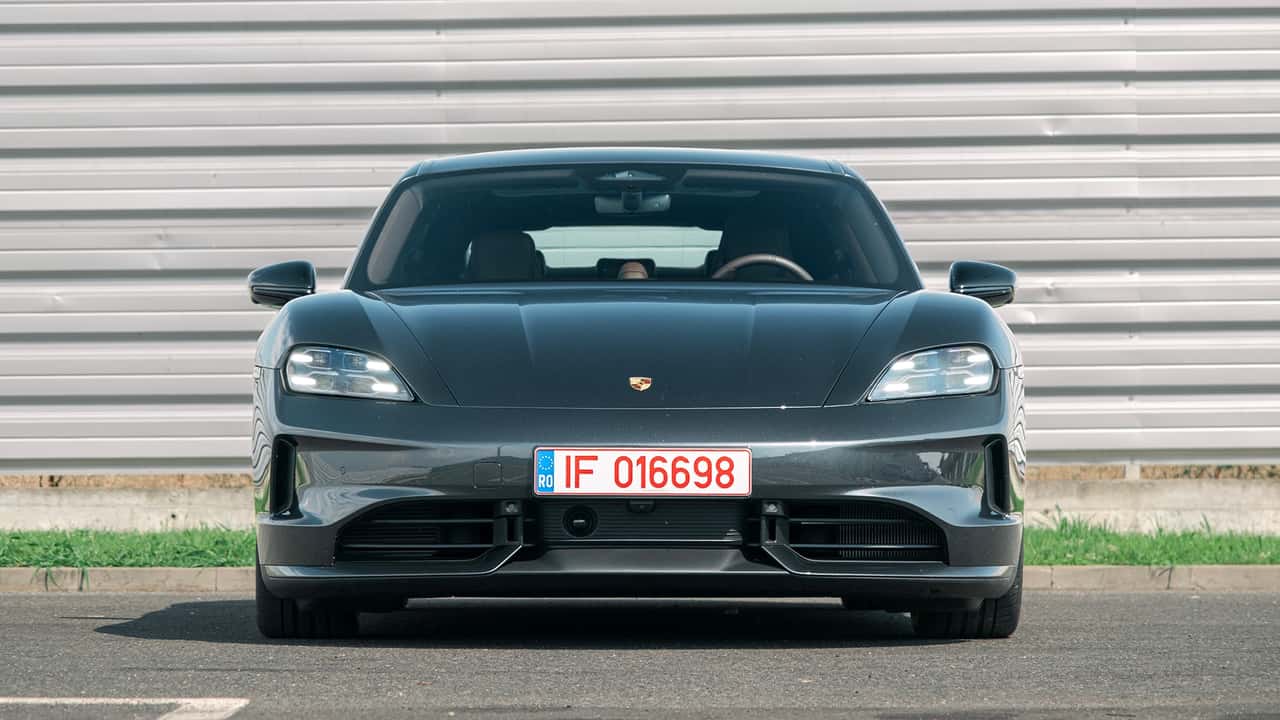 Photo by: Andrei Nedelea
The Taycan is one of the original 800-volt EVs, and the larger battery supports up to 320 kW of DC charging. That is good for 10–80% in as little as 18 minutes, provided the charger is powerful enough and the battery is at the right temperature.
I only charged the car once—to top it up before the mountain road drive—using a 200 kW charger. It went from 54% to 90% with an average power of 138 kW. That session put back 44.75 kWh into the battery in just under 19 minutes.
After the mountain road blast, the average electricity consumption for the day was still a very reasonable 2.45 miles/kWh (25.4 kWh/100 km), and it still had a 48% state of charge. That was more than enough to tackle the 70-mile (110-km) highway drive back without worrying about range. By the time I reached home, efficiency had dropped to 2.73 miles/kWh (22.8 kWh/100 km).
Even The Sensible Taycan Costs A Fortune
The Black Edition Taycan 4 I tested in Romania cost nearly €150,000 as equipped. Sure, it’s the most sensible Taycan you can buy, but it’s still in dream car territory for most people.
After driving it, I understood what that buys you. The steering, suspension, brakes, and power delivery work together to make a heavy electric sedan feel natural on a demanding road, then carry you home in comfort. That doesn’t make the price easy to swallow. But it explains why I came away wanting this particular EV so badly, even though one could technically spend less and get something quicker.
That’s also what makes this car reassuring for anyone wondering what happens to performance brands in the era of EVs, when almost anyone can sell you outrageous horsepower and 0-60 times. If acceleration were all that mattered, Porsche would have a much harder time making its case. But the Taycan 4 made its strongest impression between the straights, where the power figure didn't matter, and all the little things Porsche got right shined. Going electric hasn’t made those qualities any less valuable.
I climbed out of the first Taycan I ever drove wanting one. Badly. After years of wondering whether it could possibly be as good as everyone said, I'm left with another question: How the heck am I supposed to afford one?
2027 Mercedes GLC 400 Electric Review: The Best Mercedes EV Ever, And It’s Not Close
2027 Chevy Bolt Review: Do Americans Really Want Cheap EVs?
I Drove the $30,000 Kia EV3—And It Might Be the Best Value EV Yet
I Drove Slate’s $25,000 Electric Truck. It Could Be A Real Game-Changer
2027 Porsche Taycan As-Tested Price€148,000 Battery105 kWh (gross) / 97 kWh (net) EV Range314 miles WLTP Drive TypeAll-Wheel Drive Output435 hp Maximum torque449 lb-ft Speed 0-62 MPH4.6 seconds Speed 0-60 MPH4.4 seconds Maximum speed143 mph
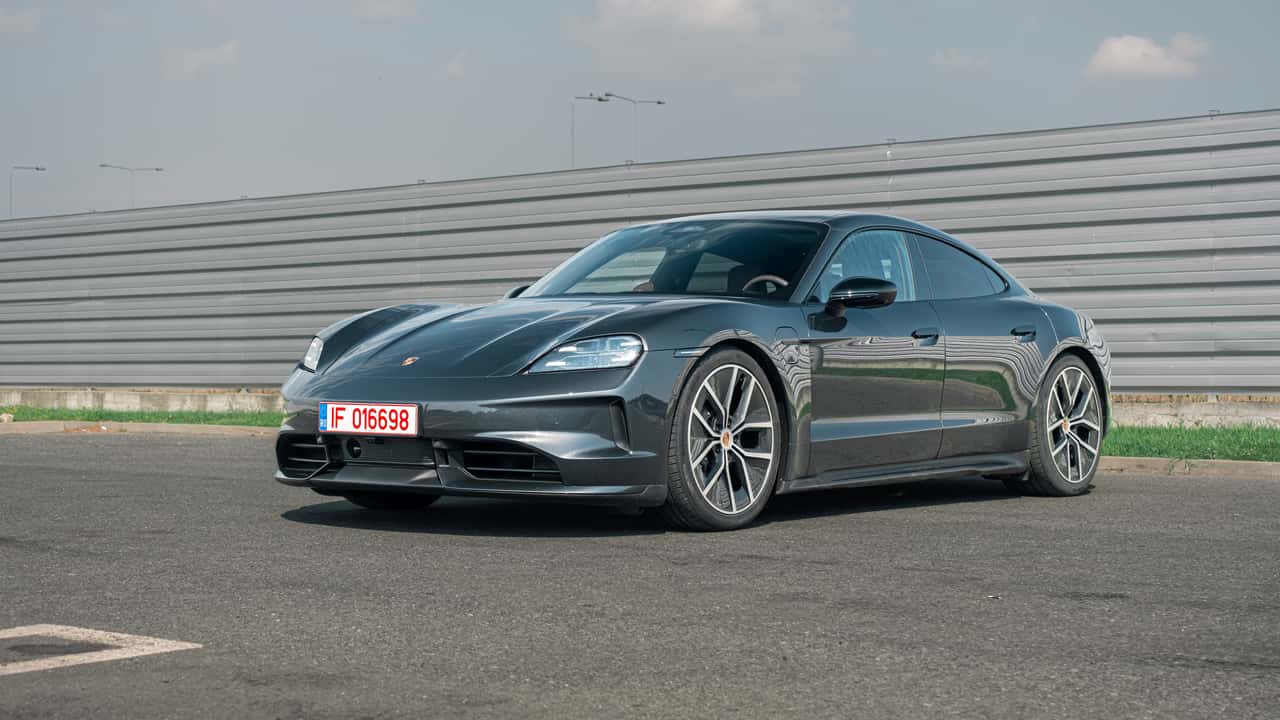
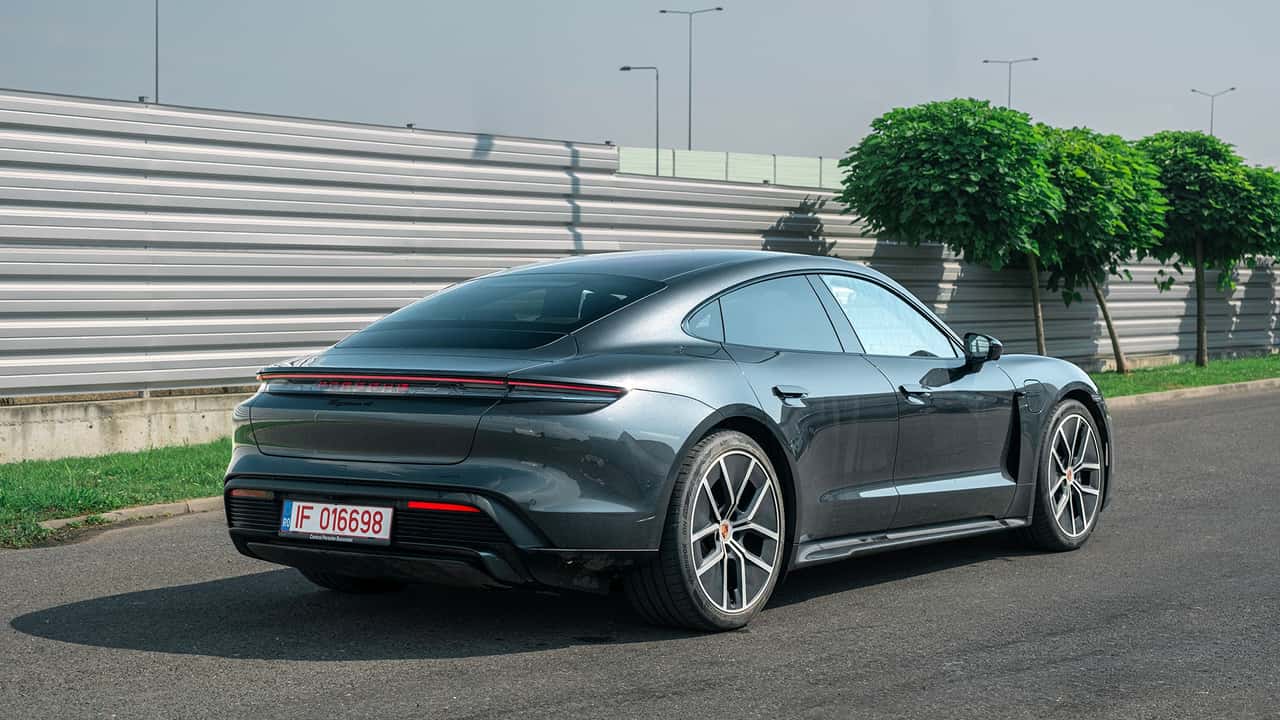


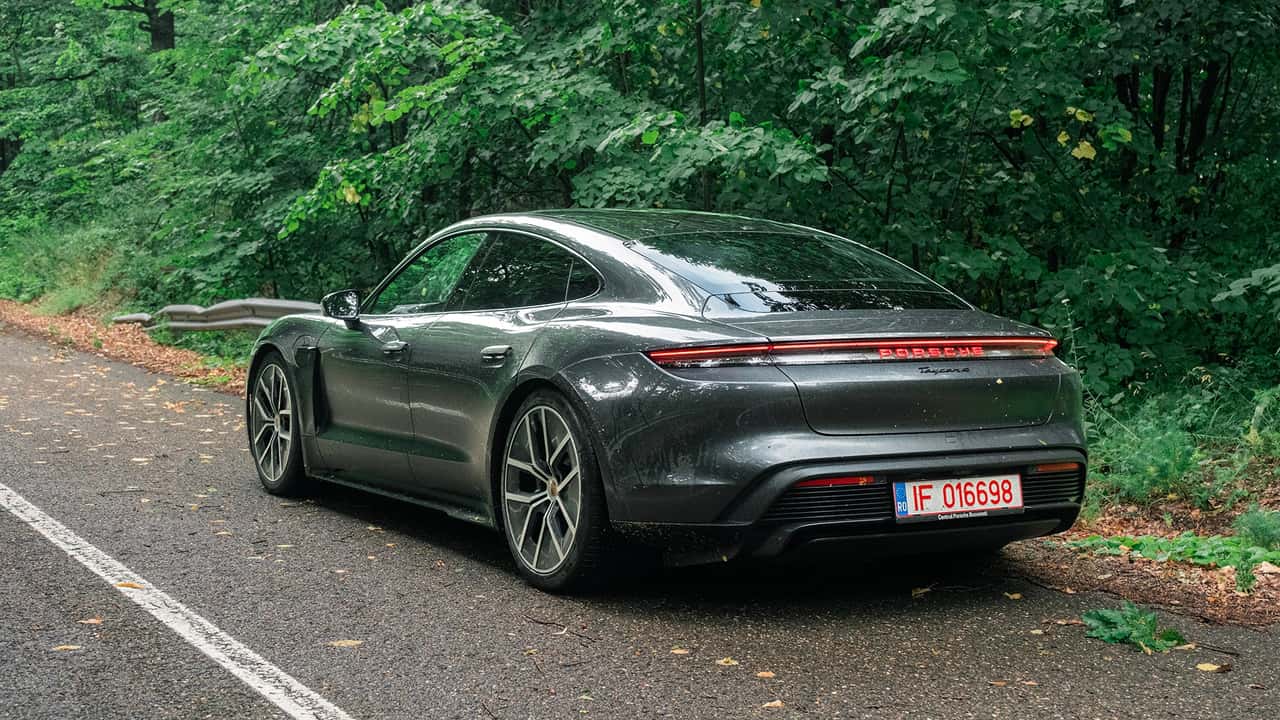
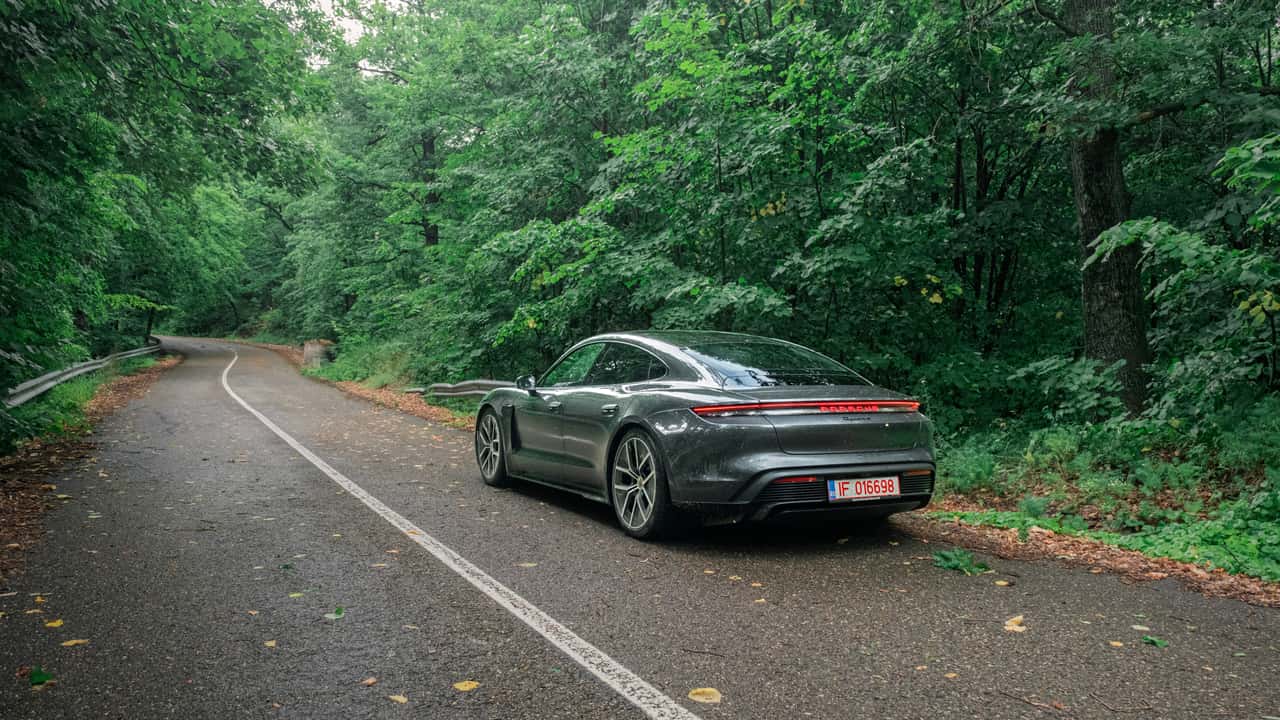
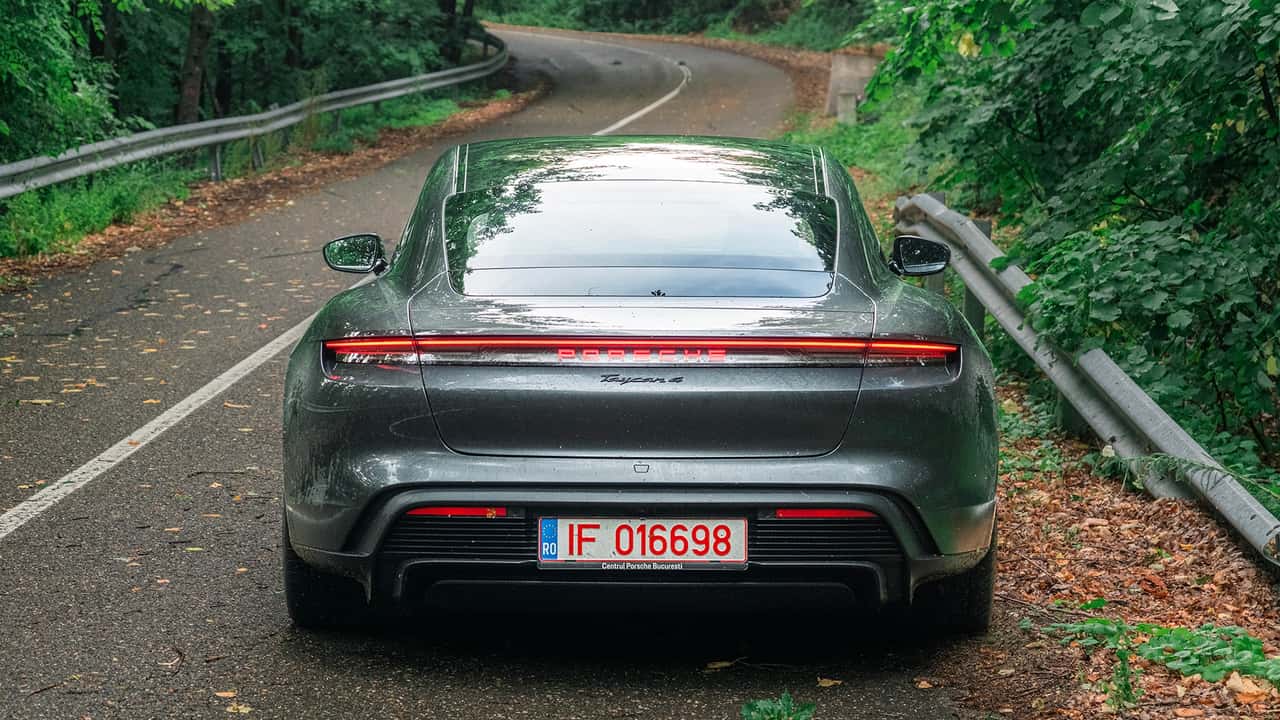
]]> contact@insideevs.com (Andrei Nedelea) https://insideevs.com/reviews/811706/2026-porsche-taycan-4-review/ https://insideevs.com/reviews/811794/mercedes-cla-350-electric-review/ Fri, 16 Oct 2026 13:00:00 +0000 I Drove Mercedes’ New EV With A Silicon Anode Battery. The Future Is Here The CLA Electric’s flaws are overpowered by monster efficiency and charging speeds thanks to new silicon-containing cells.
I couldn't help but roll my eyes when Mercedes-Benz first unveiled the all-electric CLA last year. What on Earth were those 142 illuminated stars doing on the grille? The automaker has admitted the industry had gone too far with giant screens and fewer buttons, so why did the new CLA still come with a humongous, pillar-to-pillar “Superscreen?"
From the photos alone, I wasn't convinced that the CLA could be the electric hit Mercedes needs right now. The German automaker has been losing ground to increasingly competitive Chinese rivals, and its first wave of EQ-branded EVs with their computer-mouse-like designs didn't exactly take off. The CLA, then, is meant to be a fresh start, the first in a new generation of software-defined, higher-tech EVs.
But when Mercedes handed me the keys to a CLA 350 Electric for a week, the car proved me dead wrong. The CLA is lovely to drive and the all-wheel-drive 350 delivers serious performance. Its range comfortably blew past the EPA rating, and charging stops were astonishingly quick, thanks to the new silicon-containing battery.
This compact luxury sedan has plenty of flaws, too. The software doesn't feel class leading, and I question some of its interior design choices. But the fundamentals are so strong that most of those drawbacks felt trivial to me. It’s an excellent EV, but not necessarily a great Mercedes-Benz. And I’m perfectly fine with that. Let’s dive right in.
New-Generation Battery Cells
At the heart of the CLA are Mercedes-Benz's new-generation battery cells that use a silicon-oxide and graphite blend in the anode, the electrode that stores lithium ions during charging. I found the CLA to be a strong performer in both range and charging performance, and Mercedes attributes that to the new batteries.
Traditionally, graphite has been the go-to anode material in batteries, but automakers are increasingly incorporating silicon to boost energy density and charging speed. They're also trying to reduce their reliance on graphite; China dominates processing of the material, and it's dirty and expensive to mine. Mercedes said the new cells improve energy density by 20% while also reducing cobalt content.
The rear-wheel-drive CLA 250's EPA-estimated 374 miles of range should be more than enough for most drivers. The all-wheel drive 350 is rated for 312 miles, but its real-world range is much higher. I didn't do a full-blown range test, but I did see an impressive 4.2 miles per kilowatt-hour across mostly highway driving in Sport mode in fall weather. With 85 kilowatt-hours of usable battery capacity, that works out to roughly 357 miles on a full charge, about 45 miles beyond its 312-mile EPA estimate.
Plenty of electric sedans offer more range than the CLA, including the Lucid Air, Audi A6 e-tron, and new BMW i3. But those are all a bit bigger and not exactly apples-to-apples rivals.
Charging performance is similarly impressive, even if it's nothing like the fastest-charging EVs in the U.S. I put it through a 16-80% and a 16-90% charging test at a 400-kilowatt Mercedes-Benz High Power Charging station in Livingston, New Jersey. The press car had Plug & Charge enabled, so the session started almost immediately after I connected the cable to its factory-fitted Tesla-style NACS charging port.
Within seconds, the CLA was pulling a peak of 280 kW. It added 100 miles of indicated range in just five minutes. After 14 minutes, it had gained 200 miles, and it reached 80% state of charge in exactly 20 minutes, adding 254 miles of indicated range in that time. The really remarkable part came next. The CLA reached 90% in just 26 minutes, adding nearly 300 miles of indicated range over the session.
With that kind of performance, the car may be ready to leave a charging stop before you've even finished grabbing a coffee or snack. Spend too long inside, and you may be paying for charging that you don't need.
How It Feels To Drive
Most EVs use a single-speed reduction gear, but the CLA is among a small group of electric cars—alongside the Porsche Taycan and Audi e-tron GT—to feature a two-speed transmission. Mercedes says the setup delivers the best of both worlds. First gear provides punchy acceleration from a standstill while also being suited to lower-speed driving. Second gear takes over at higher speeds, helping sustain power delivery and improve efficiency during highway cruising.
In practice, I barely noticed the gear changes. According to our previous tests by my colleagues Andrei Nedelea and Editor-in-Chief Mack Hogan, the transmission shifts into second gear at around 60-65 miles per hour. My testing routes had speed limits of 60 mph or lower, so I suspect I spent much of my time in first gear. Either way, you never have to think about the gearbox. The CLA is buttery-smooth to drive, and that's what matters.
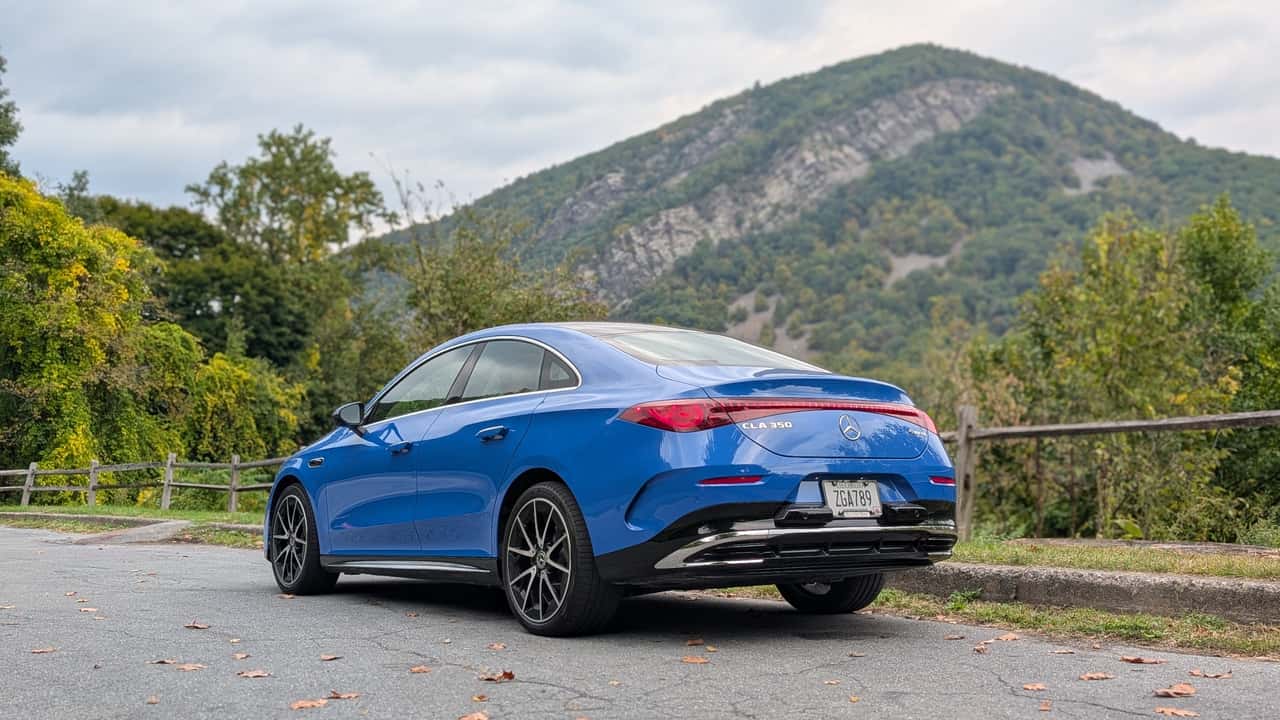 Photo by: Suvrat Kothari
The CLA 350's 349 horsepower and 380 pound-feet of torque get unleashed instantly and aggressively. The throttle response is sharp, and a firm squeeze of the pedal releases a forceful surge of acceleration.
It loves the twisty back roads, too. It doesn't feel quite as light on its feet as its compact dimensions might suggest, and its heft is definitely noticeable in corners. But the chassis is responsive, with enough agility to make a winding road feel entertaining. The steering is light but direct, and the car settled into corners with reassuring stability rather than feeling unsettled by quick direction changes.
That said, the CLA is tuned more for comfort than spirited driving. Its suspension does a decent job of keeping the body controlled, but I'd have liked a little more compliance over broken pavement. The uneven, cratered roads of the tri-state area aren't exactly a German luxury sedan's natural habitat, and the CLA can feel a little busy over successive bumps. It isn't quite the plush, cosseting experience I'd expect from a Mercedes, but it strikes a solid balance between body control and everyday comfort.
Its four regenerative braking settings also offer something for every type of driver: Coasting, Normal, Intelligent, and Strong. Intelligent adjusts the regen strength based on traffic whereas Strong is the most aggressive and allows true one-pedal driving. It makes your head toss forward, but once you learn to modulate the throttle that becomes a non-issue.
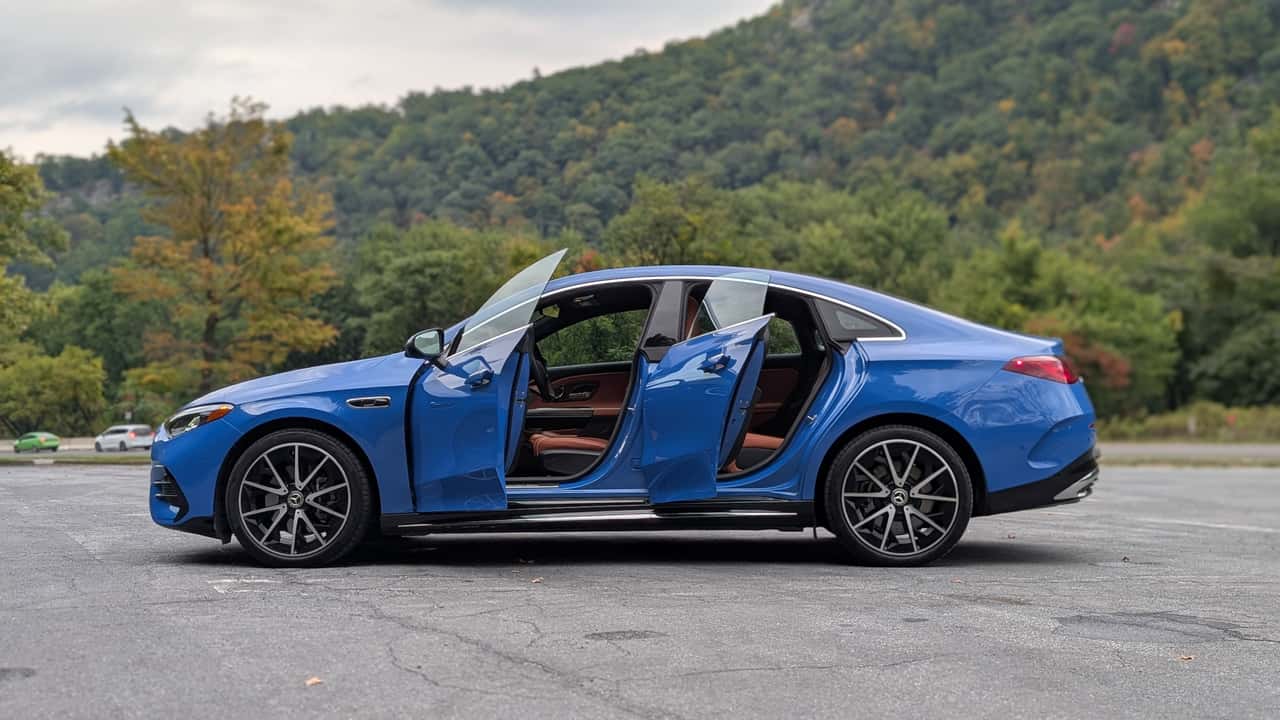 Photo by: Suvrat Kothari
The MB.Drive Assist Pro advanced driver assistance system wasn't enabled on my CLA 350 Electric tester. This is Mercedes' answer to Tesla's Full Self-Driving (Supervised), offering point-to-point hands-on assisted driving that we tested in California last year. At the time, Mercedes said that it would be available later this year. My tester came with the standard MB.Drive Assist, which includes lane centering, adaptive cruise control, and automatic lane changes.
The automatic lane-change function gave me a few scares during my test. The system initiated maneuvers when other vehicles were uncomfortably close, including attempts to move into lanes where cars were just a few feet ahead. On several occasions, I had to abort the maneuvers. I disabled system-initiated lane changes and switched to activating them manually with the turn signal.
Interior And Technology
Slip inside the CLA and you're smacked in the face by the MBUX Superscreen, an evolution of the Hyperscreen setup found in the EQE and EQS. It combines two 14-inch displays, one for the central infotainment system and another for the front passenger, with a separate 10.25-inch digital instrument cluster. The screens are crisp and responsive for the most part, although I did notice occasional frame drops.
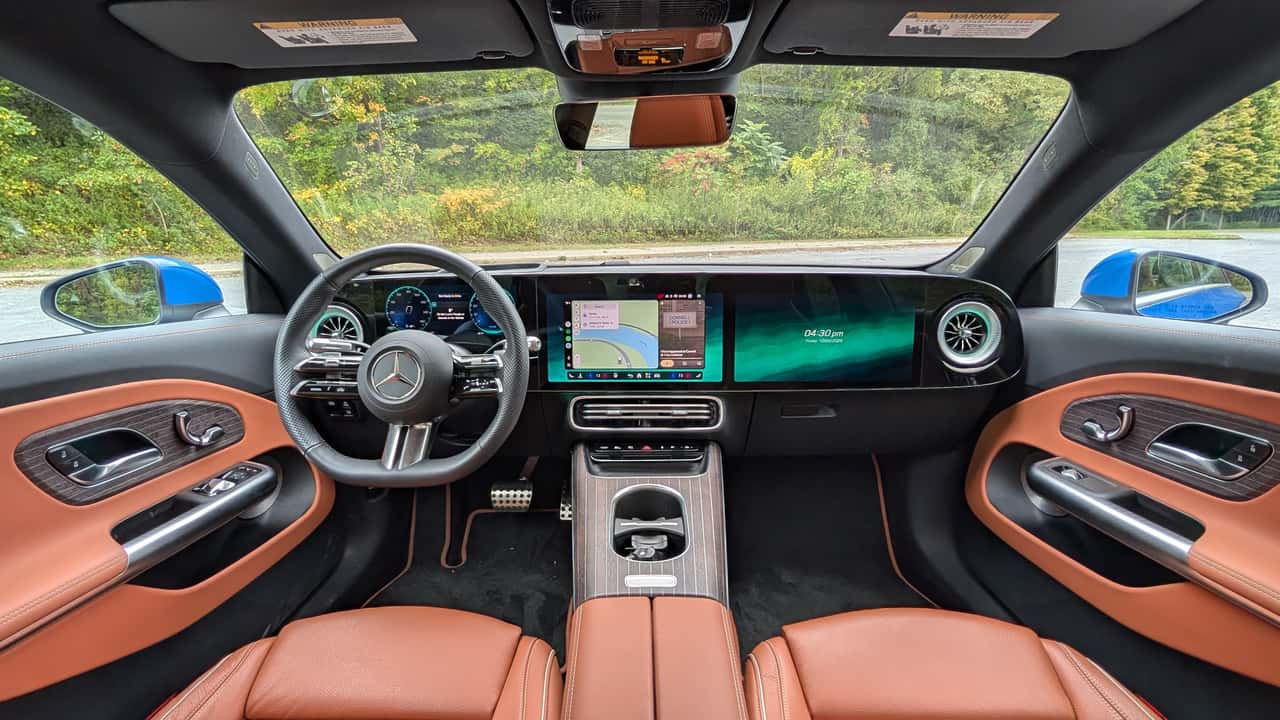 Photo by: Suvrat Kothari
The central screen is packed with genuinely useful features. The native navigation supports EV-specific route planning, automatically incorporating charging stops into longer journeys. The interface itself feels like using an iPhone, with a familiar app-based layout and plenty of functionality beyond the usual navigation and media controls. You get the Vivaldi web browser, streaming apps, a calendar, Microsoft Teams, and games such as Angry Birds and Beach Buggy, among others.
The passenger display was another story; I wasn't sold. My friends, however, loved it. They argued that it gives the front passenger something to do on long journeys, helps keep them engaged, and makes the drive feel less monotonous. Fair enough. Mercedes also said its latest voice assistant is its most capable yet, integrating ChatGPT and Microsoft Bing to handle conversational commands and answer general questions.
The more frustrating omissions are the little things that should be second nature in a car at this price. There's no dedicated media toggle or track-skipping switch on the steering wheel. Want to skip a song? You'll have to navigate the touchscreen, taking your eyes off the road, or use voice commands.
The window switches are another ergonomic misstep. Mercedes gives you just two physical switches on the driver's door, along with a separate button to toggle between the front and rear windows. Needlessly cumbersome. It's these smaller compromises which left me the most frustrating. When you add them all up, the CLA feels less like great Mercedes-Benz, even though it gets the fundamentals of being an EV remarkably right.
There's another catch with the Superscreen. It comes as part of the nearly $6,000 “Pinnacle” package—my tester was loaded with roughly $16,000 in options—which also bundles features such as a powered trunk, a head-up display, and adaptive headlamps. Without it, the passenger display is replaced by a glossy black panel decorated with dozens of Mercedes stars, looking like a very expensive chopping board.
Things I think are worth it include the $750 Sky Blue Metallic exterior paint and the $1,750 Beech Brown leather interior. The blue is a particularly attractive shade that suits the CLA's sleek proportions, and I'd consider it money well spent. The brown leather also lends the cabin a warmer, more upmarket ambience than spartan dark interior.
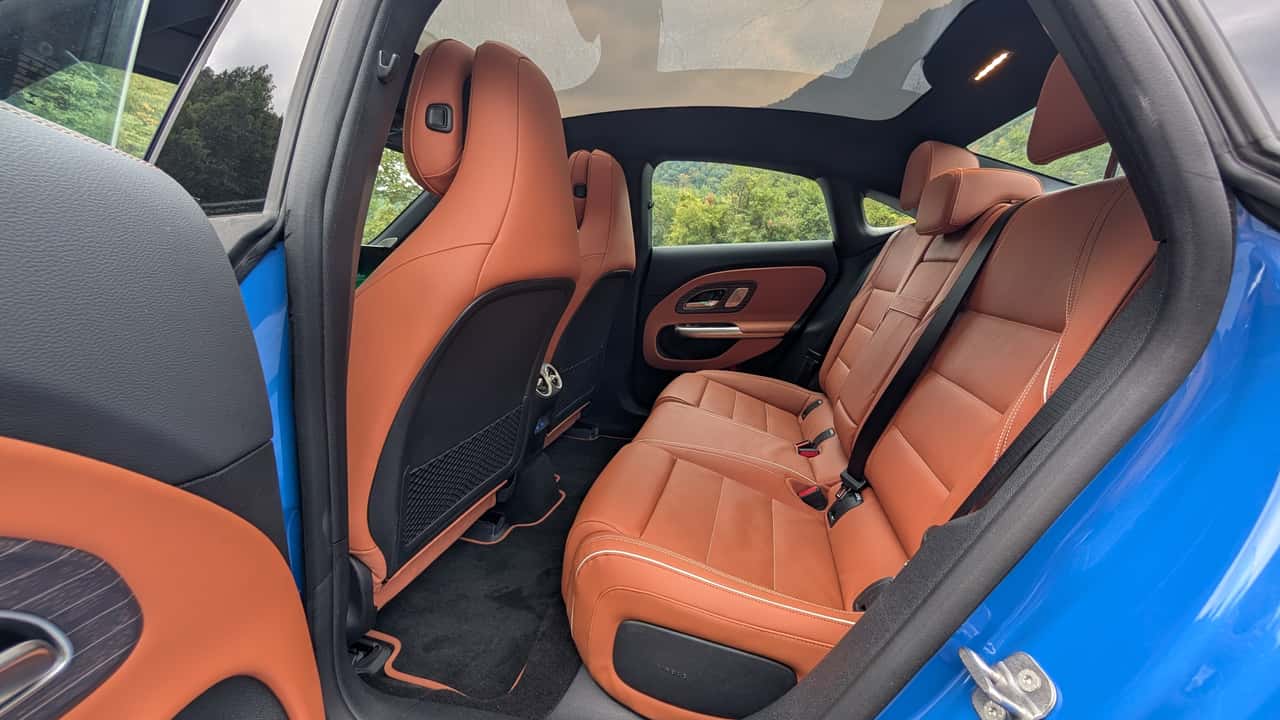 Photo by: Suvrat Kothari
What you can’t do much about is interior space. The CLA has never been the most spacious Mercedes, and this latest generation doesn't fundamentally change that, despite riding on the all-new, software-defined Mercedes Modular Architecture (MMA), which also supports a hybrid powertrain. Taller passengers will find the rear bench cramped. And while the cabin is full of high-quality materials, some of the hard plastic trim around the rear air vents felt out of place.
The 10.3-cubic-foot trunk is also relatively modest, with enough room for a large suitcase and a few smaller bags, but not much more. Fortunately, the EV-first platform has enabled a sizable frunk, which can easily accommodate a carry-on suitcase and a few other small items.
Mercedes-Benz CLA 350 Electric: Verdict
By the end of my week with the CLA, most of its shortcomings had stopped bothering me. I got used to the awkward window-switch arrangement, and I stopped caring about those rather horrendous stars on the grille. In fact, they grew on me. They also attracted plenty of attention in Manhattan, especially at night, when the illuminated details made the CLA hard to miss. Plus, it's not even the gaudiest Mercedes fascia on sale. Just look at the new GLS, and you’ll gain some appreciation for the sedan.
Its compact footprint made navigating the city and squeezing into street parking spots an absolute breeze. Of course, the cramped rear seat means the CLA Electric is more of a 2+2 than a proper five-seater. It’s more suited to couples with two kids or a group of four average-sized adults. And the ride quality is another area where the CLA falls short of the comfort and refinement you'd normally associate with that three-pointed star.
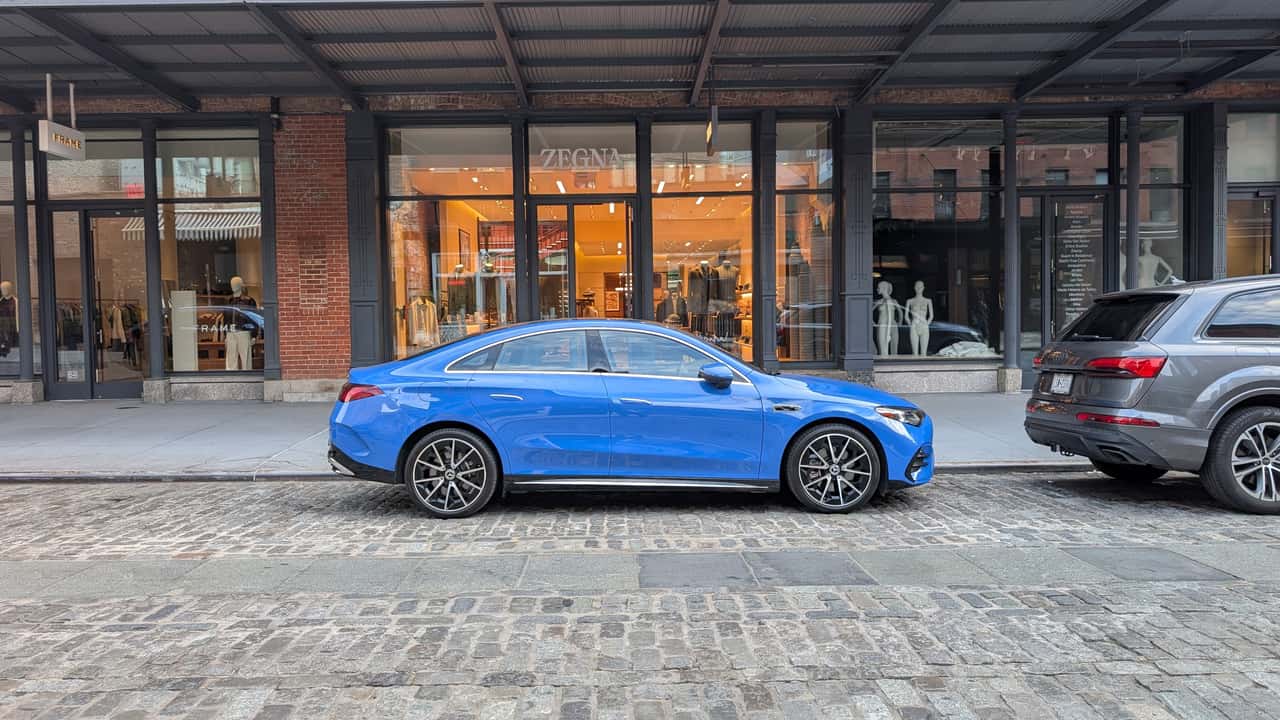 Photo by: Suvrat Kothari
What really won me over, though, was how much better the CLA's performance, range, charging capabilities, and software experience were than I'd expected. It gets the fundamentals of being an EV remarkably right, making long drives less stressful and everyday city driving refreshingly easy. That’s far more important to me than a few questionable design choices inside. It also doesn’t have any direct rivals, sitting in a league of its own as a luxury compact sedan.
The car's $51,850 starting price—with destination fees and without options—makes it only about $2,500 more expensive than a Model 3 Premium all-wheel drive. For that money, the Mercedes is a substantially superior EV. It will give you a sense of occasion that the Model 3 will never match. The all-electric Lexus ES also has a similar starting price as the CLA and is roomier inside, with a business-class-like rear seat. But its range, charging speeds, and overall software experience can't hold a candle to the CLA.
More than anything, the CLA gives me reason to be optimistic about Mercedes-Benz's electric future. The automaker's earlier EQ models never quite delivered on their promise, but this feels like a genuine step forward. It's a remarkable comeback, and a sign that Mercedes is finally heading in the right direction.
Contact the author: Suvrat.Kothari@InsideEVs.com
I Tested New York City’s First Lamppost EV Charger. It’s A Game Changer
The 2026 Mercedes CLA EV Is Really Impressive. But It Also Drove Me Nuts
The Mercedes CLA EV Just Smashed Its EPA Range Rating In A Real-World Test
I Tried Mercedes' Answer To Tesla Full Self-Driving. It Handles City Streets—With One Major Caveat
2027 Mercedes-Benz CLA 350 4Matic Electric As-Tested Price$67,155 (Destination included) Base Price$50,750 Battery85 kilowatt-hours usable EV RangeEPA 374 miles (RWD), 312 miles (AWD) Efficiency4.2 miles per kWh observed Charge Time10-80% in 22 minutes Drive TypeRWD/AWD Charge TypeNACS (DC), J1772 (AC) Speed 0-60 MPH4.8 seconds (AWD) TransmissionTwo-speed Output349 horsepower Maximum torque380 pound feet Weight4,553-4,729 pounds curb weight
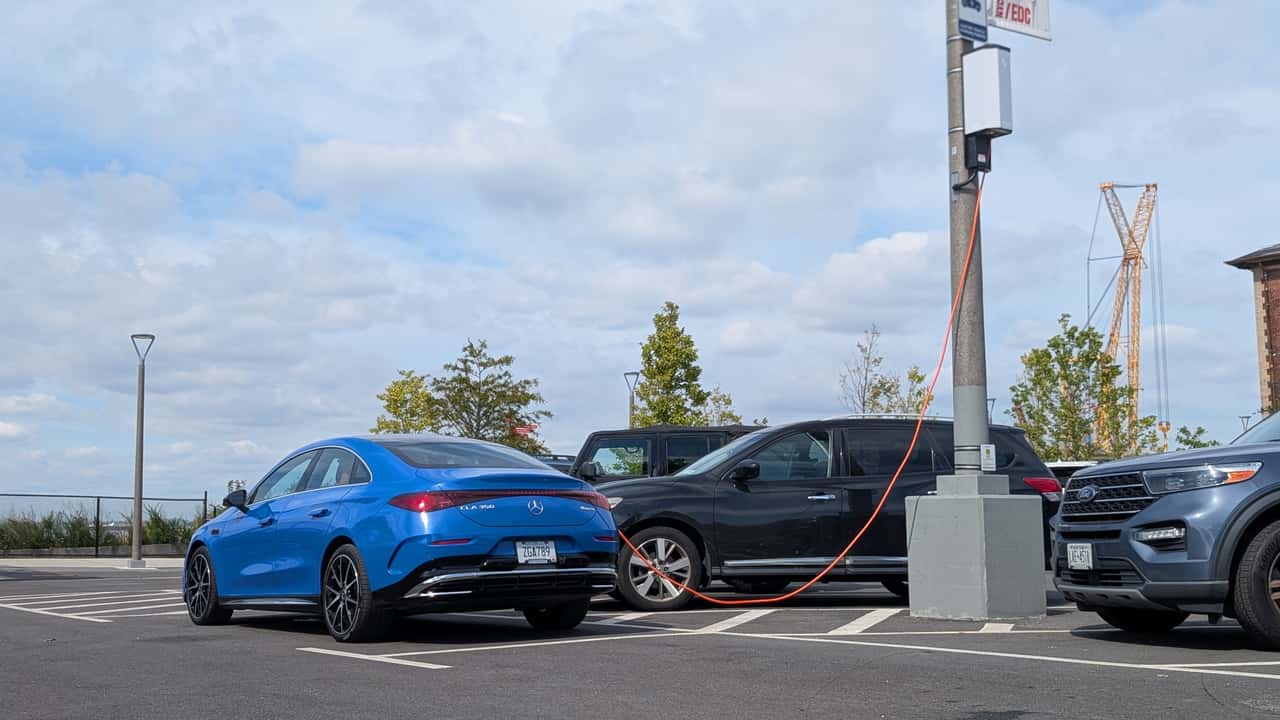
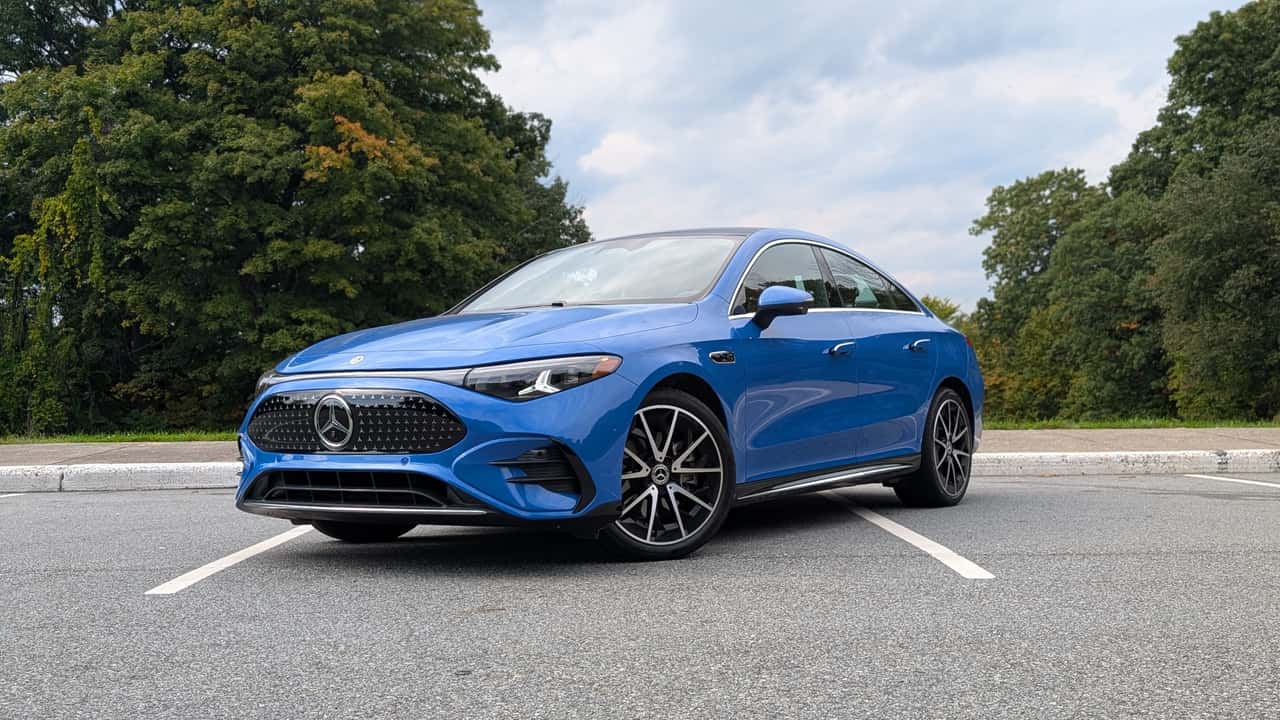
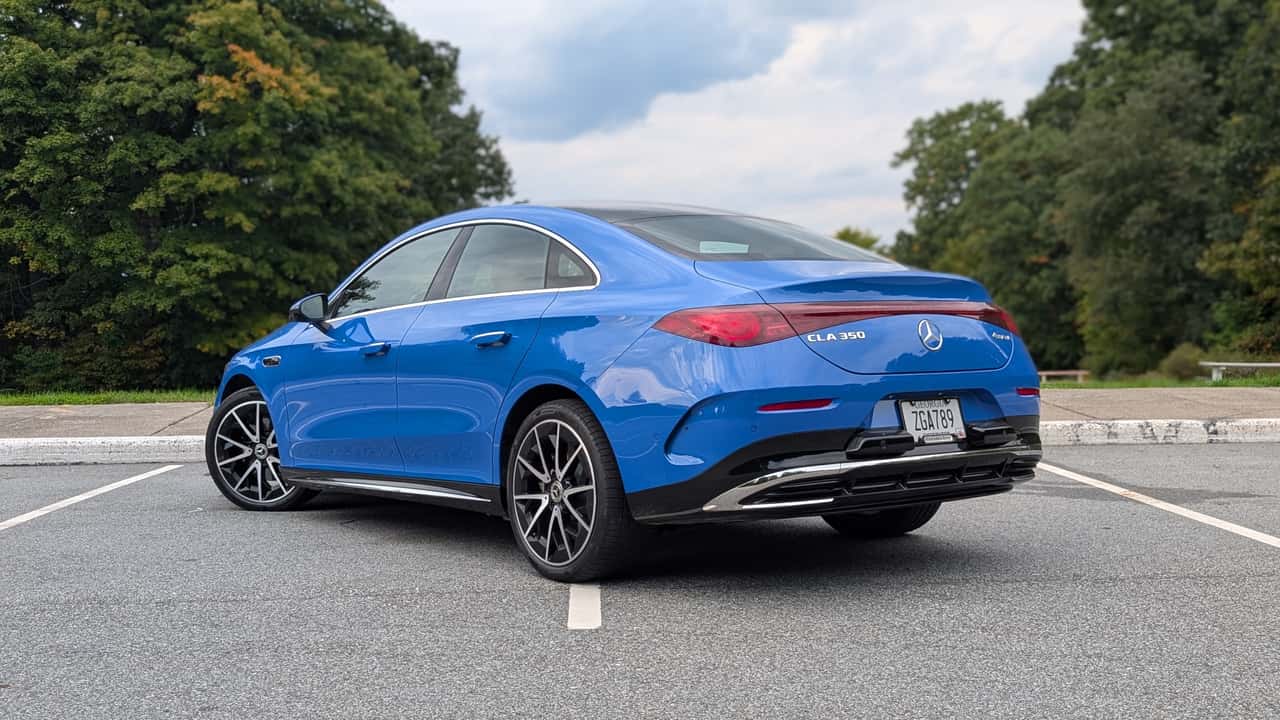
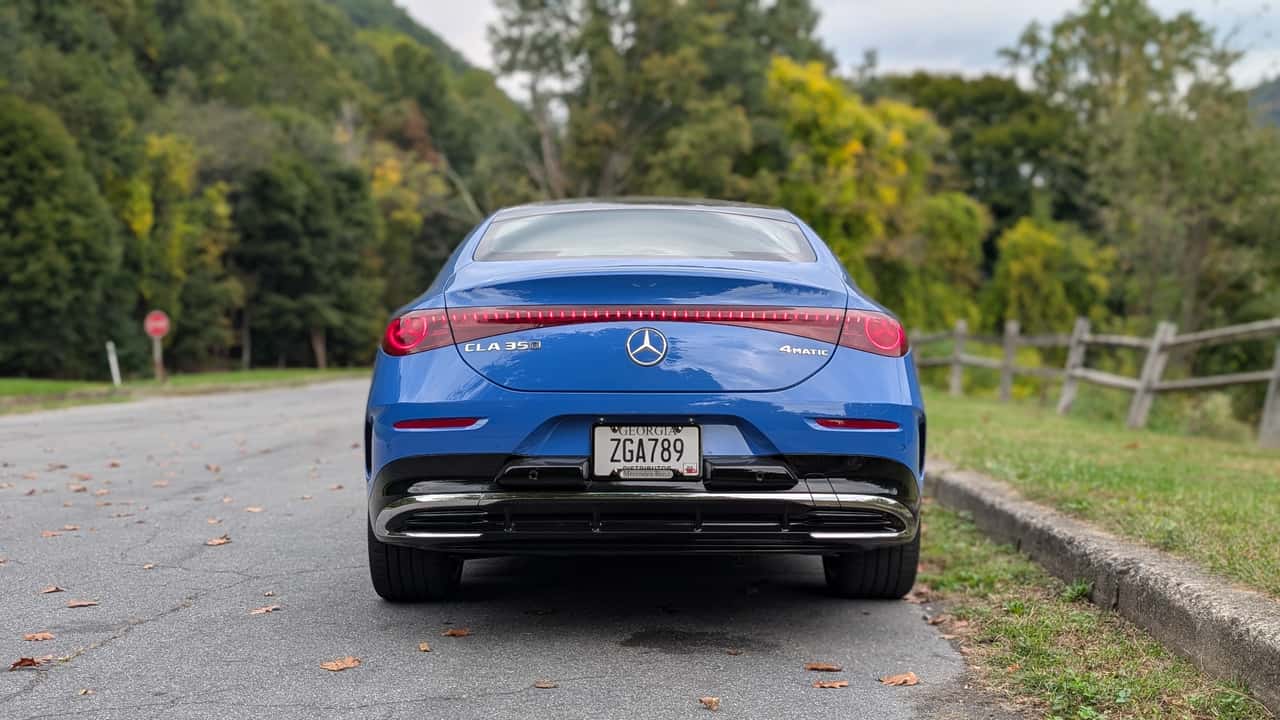
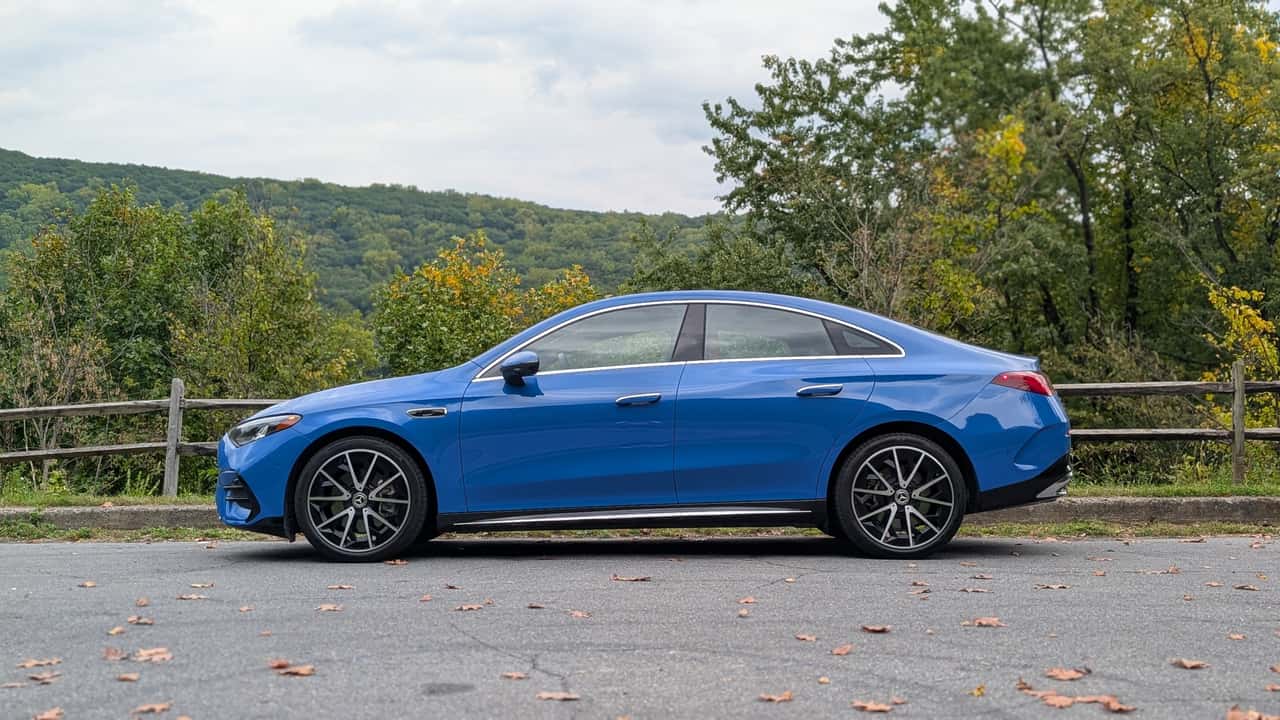
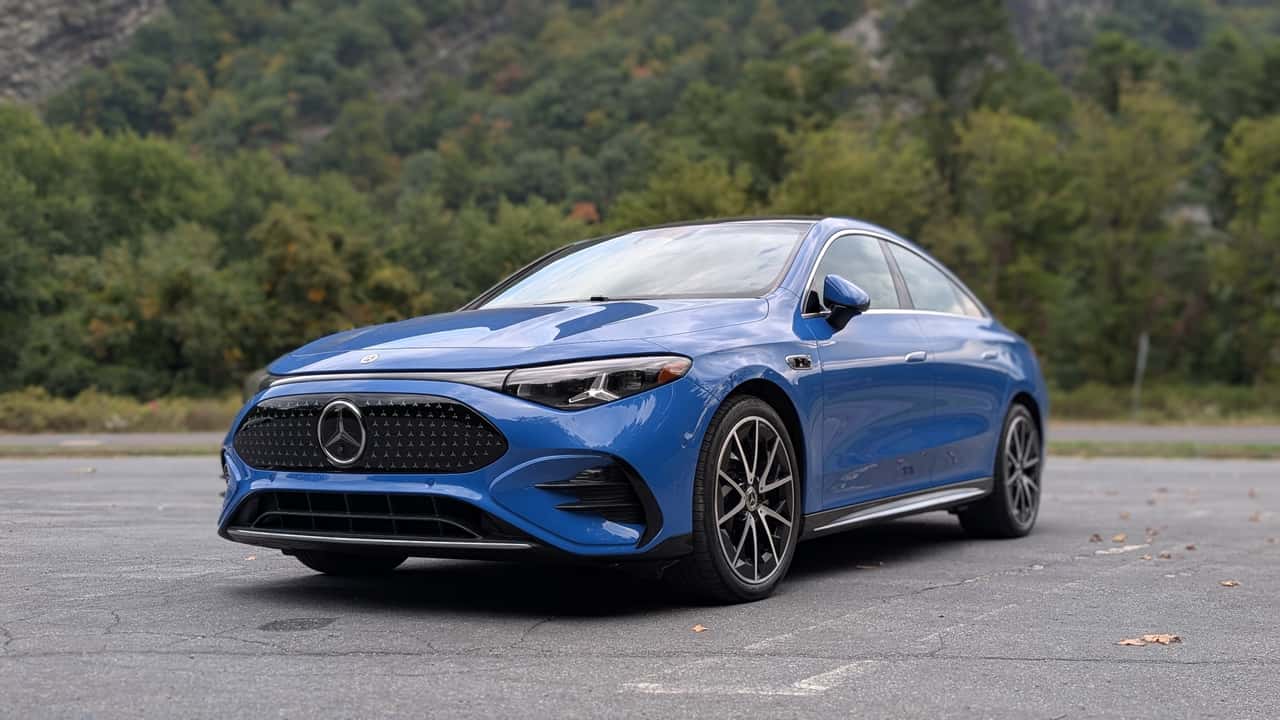
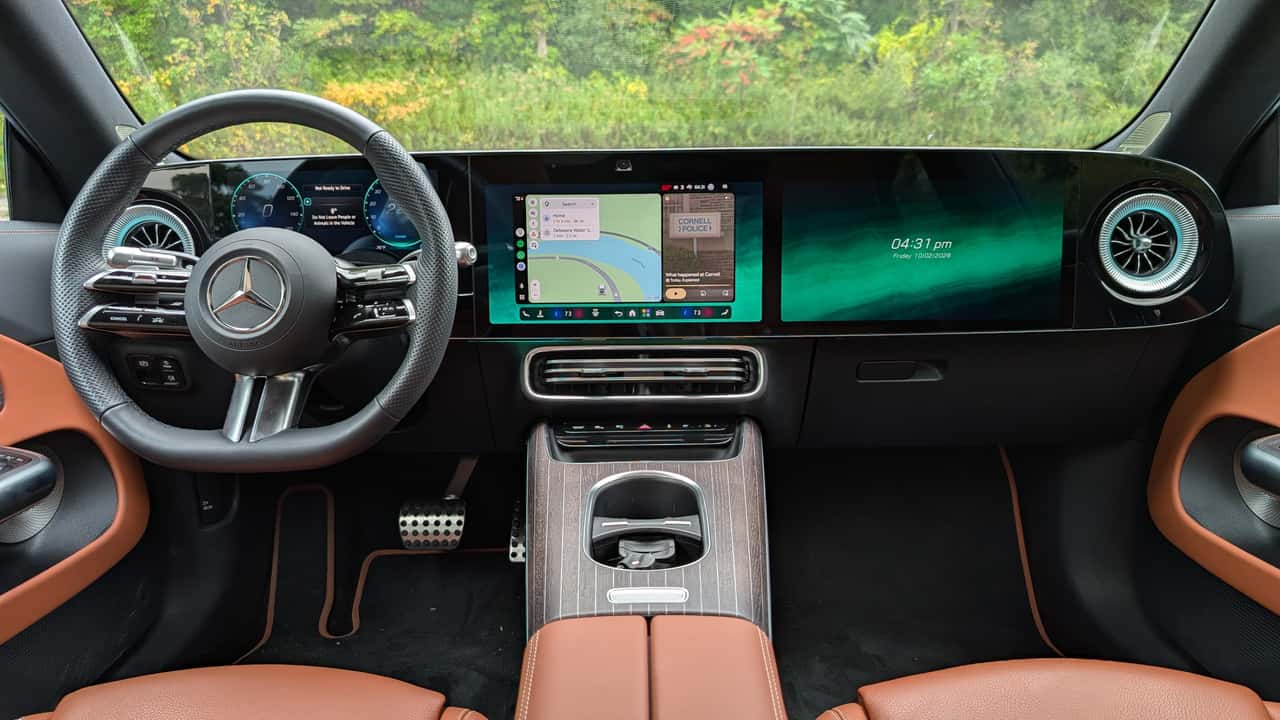
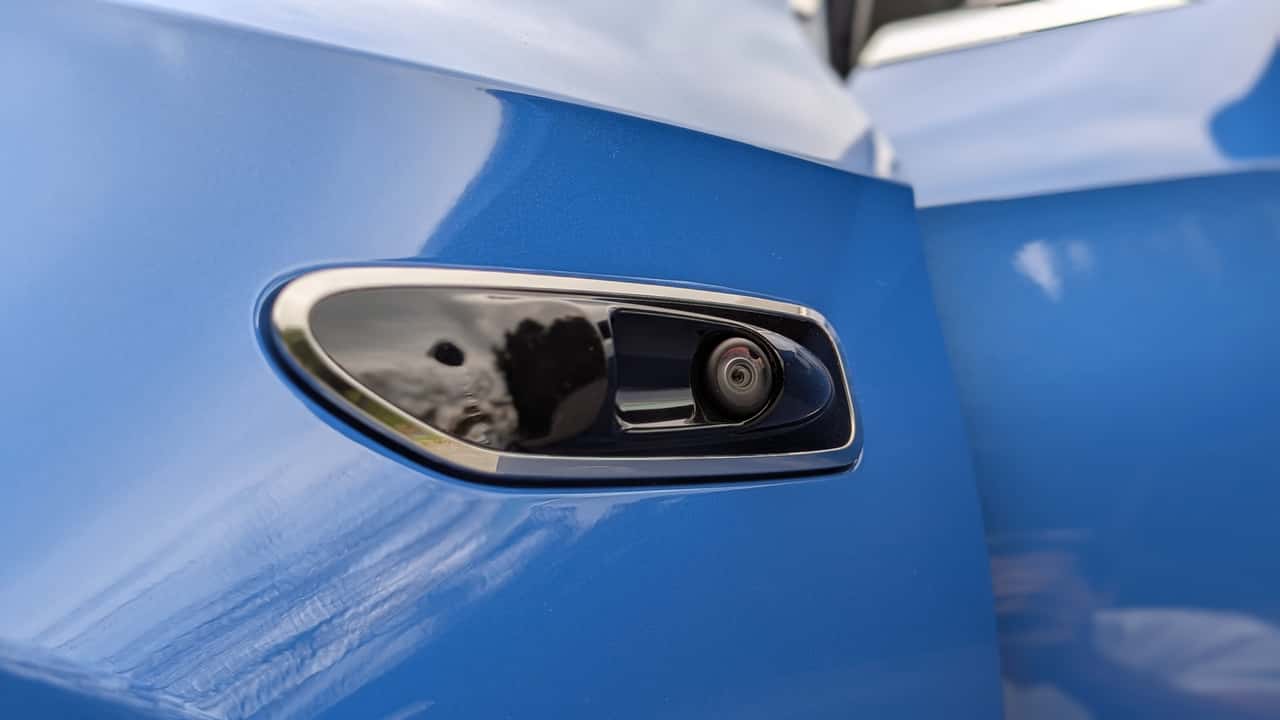
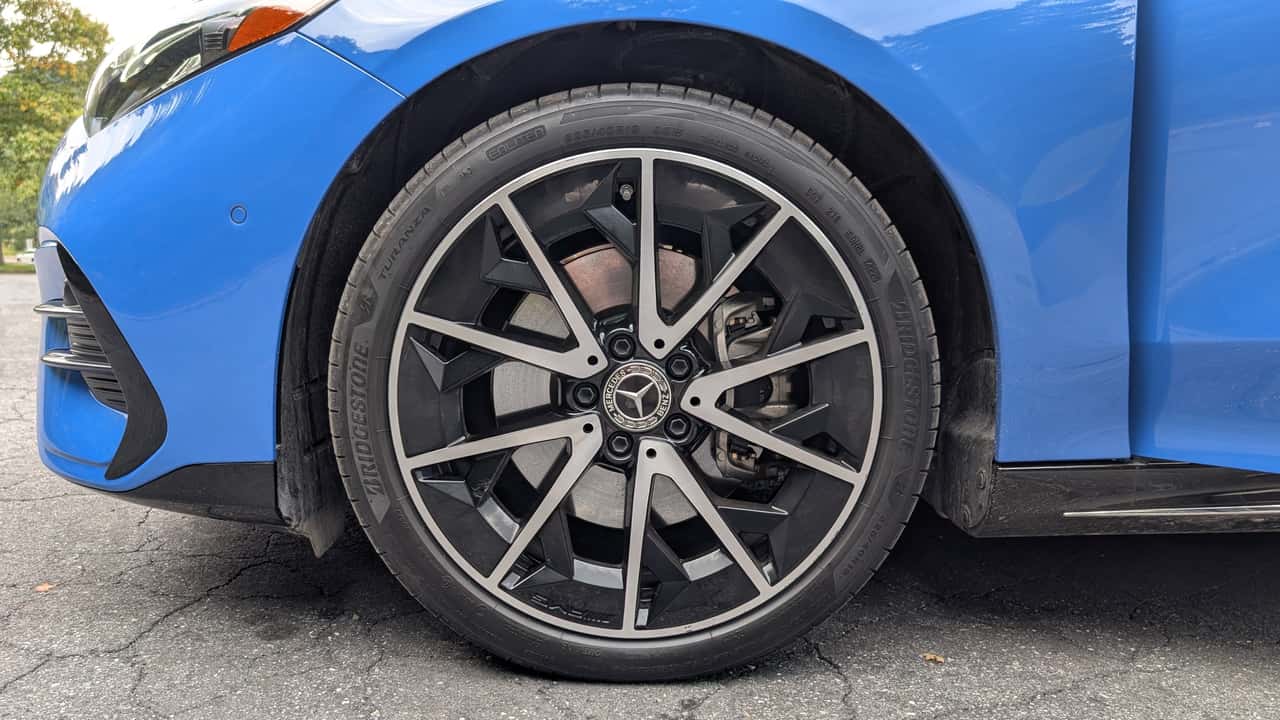
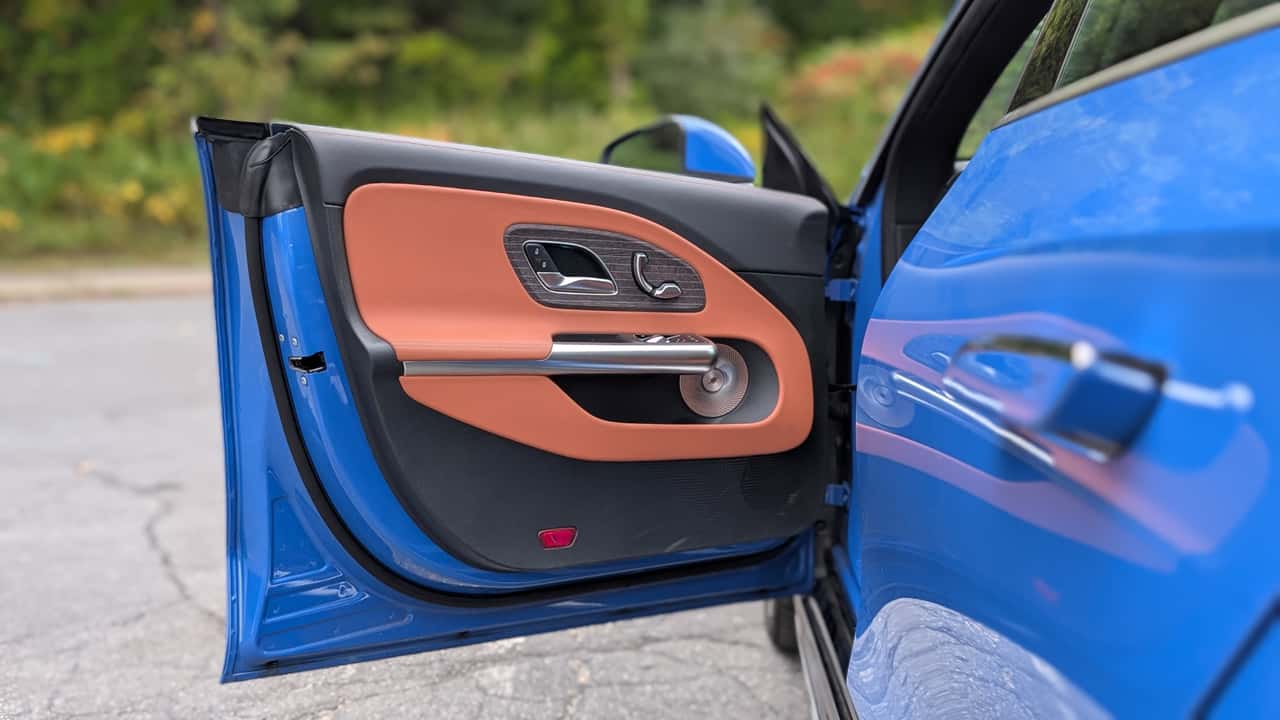
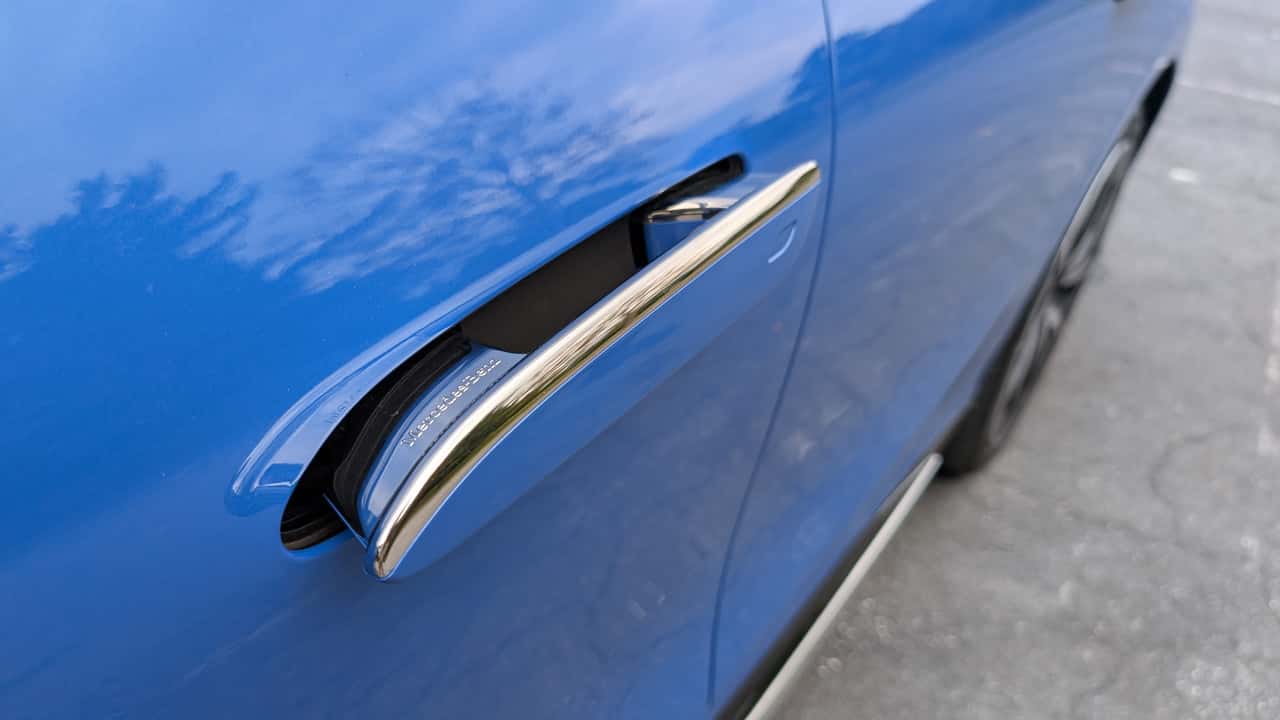
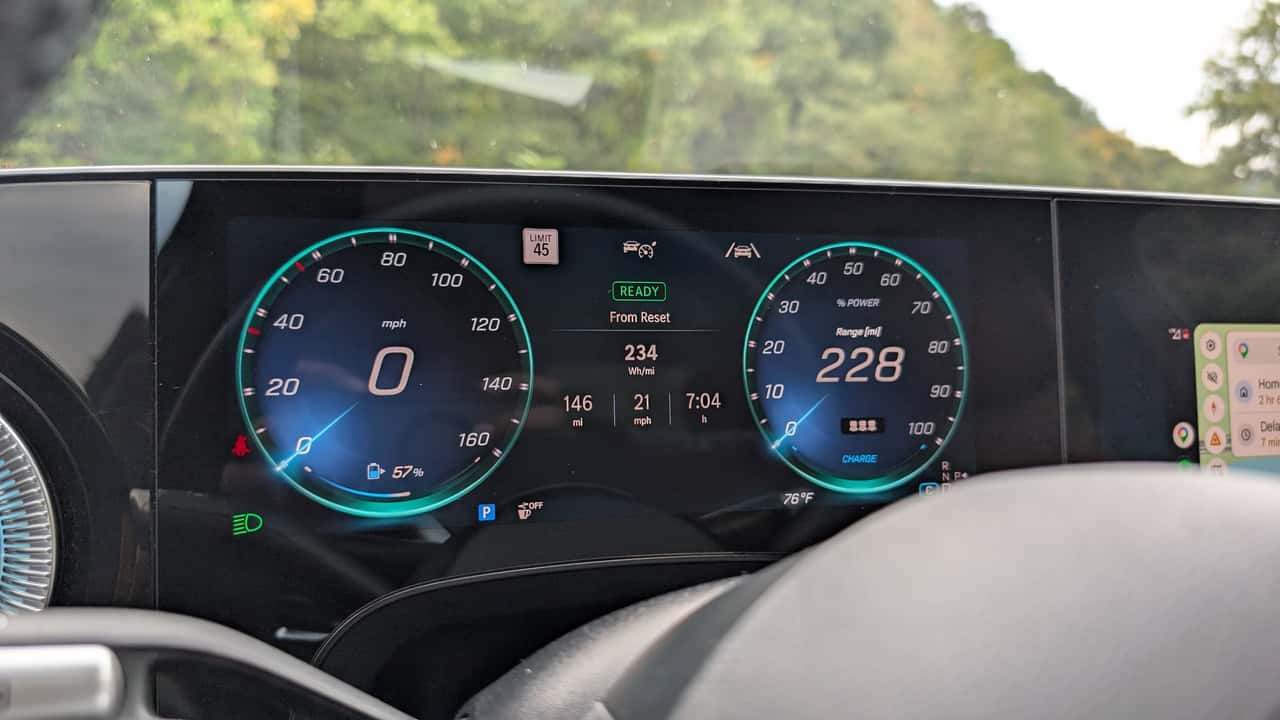
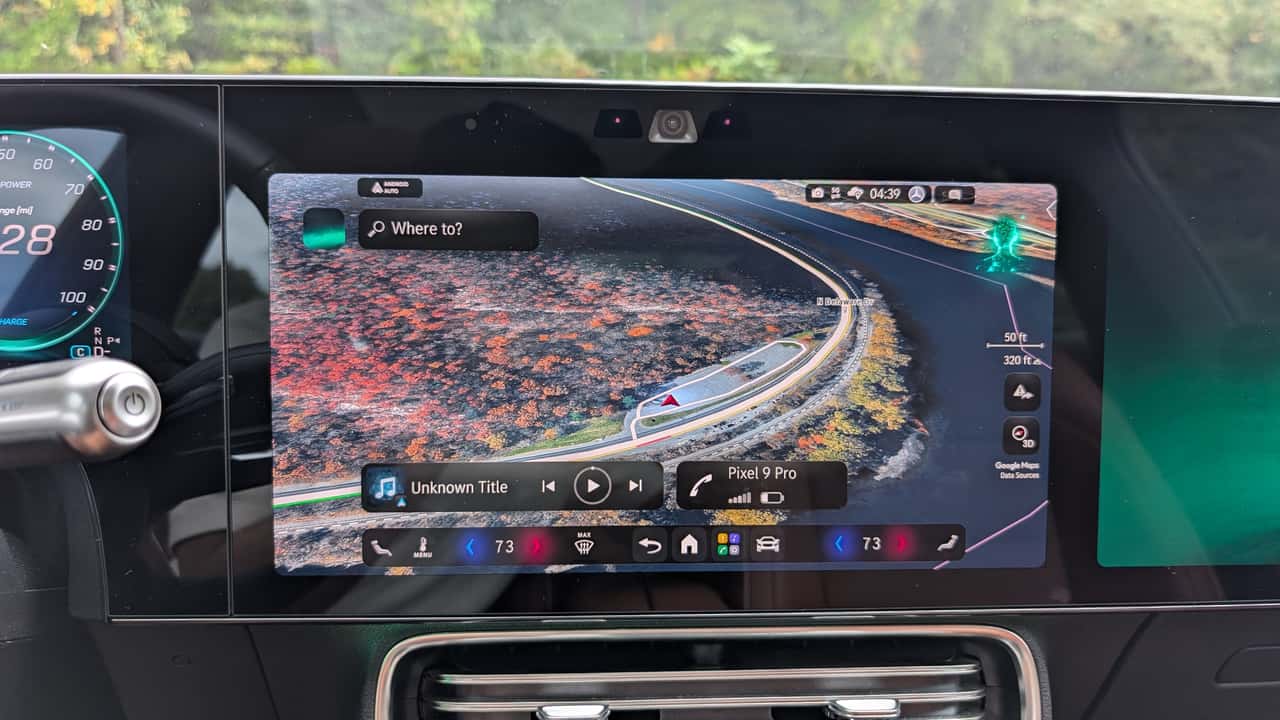
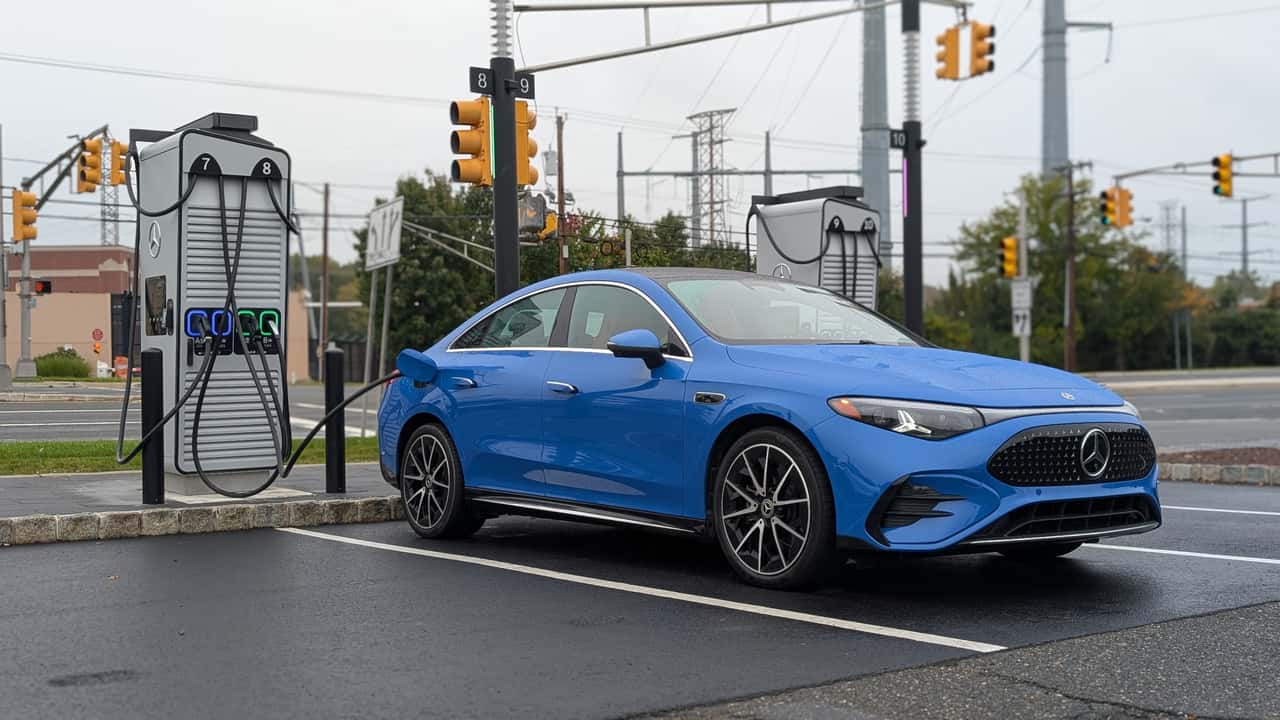
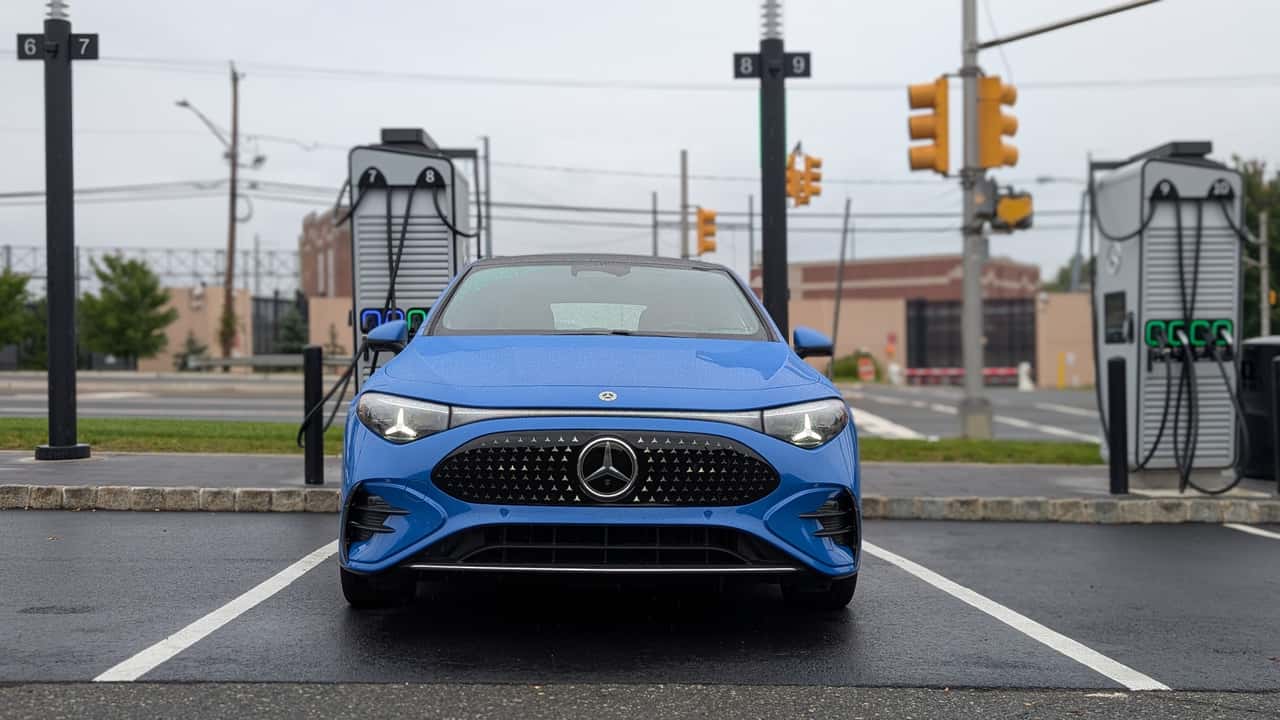
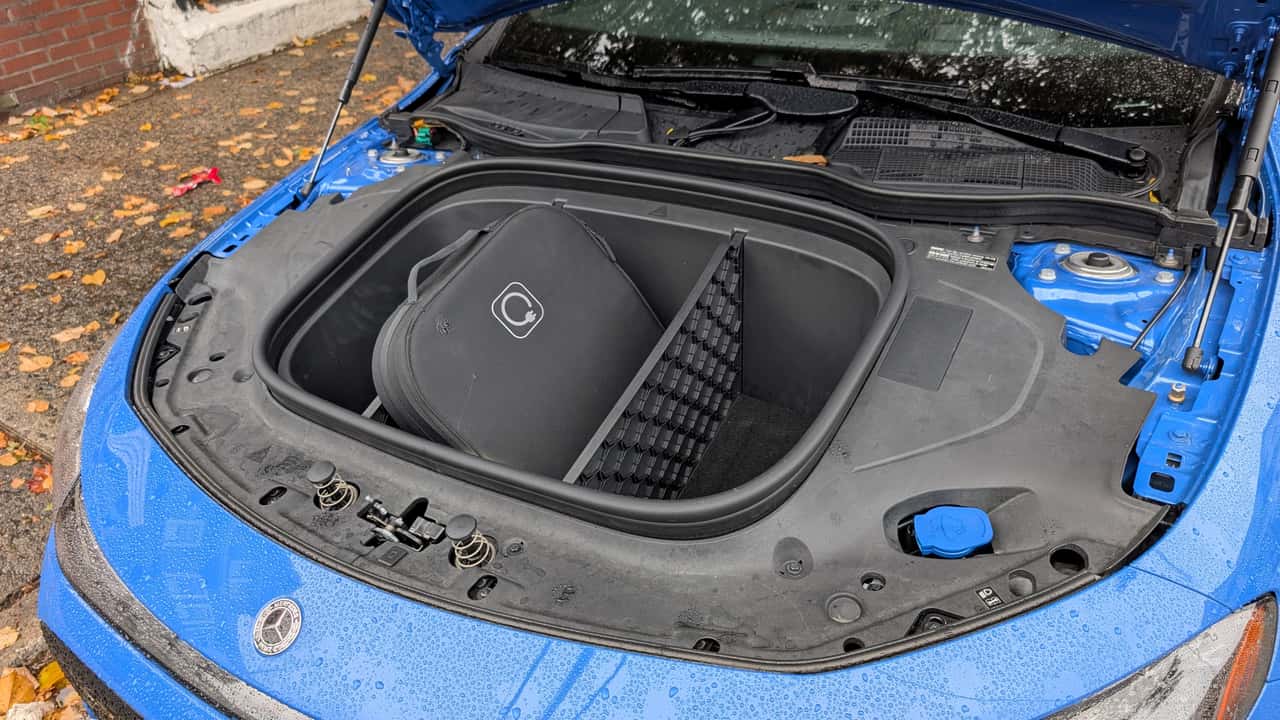
]]> contact@insideevs.com (Suvrat Kothari) https://insideevs.com/reviews/811794/mercedes-cla-350-electric-review/ https://insideevs.com/reviews/811410/engineering-explained-mustang-mach-e/ Sat, 10 Oct 2026 14:00:00 +0000 This YouTuber Got Burned By His Lucid Air And Elon Musk. So He Bought A Mustang Mach-E GT It may not be as sophisticated as the Lucid, but at least the software works.
Jason Fenske from Engineering Explained has had a rough time settling on his electric daily driver. The YouTuber was plenty happy with his early Tesla Model 3 Performance for years. But when Elon Musk's government cuts affected his family, he swore off the brand. Given his affinity for excellent engineering, he landed on a Lucid Air, one of the most sophisticated EVs on sale. But that ended in disaster, too, as Fenske explained on the Plugged-In Podcast.
So now he's in a four-year-old Ford.
Fenske said in his latest video that he bought a 2022 Mustang Mach-E Performance a few months ago. But it certainly wasn't his first choice.
He originally wanted to wait for a Rivian R2, after falling for it on the first drive. His delivery window wasn't until the end of the year, though, and he needed a daily driver. Lucid originally offered a Gravity as a long-term loan to bridge the gap, yet even the free car proved to be more trouble than it was worth. He then tried to land a Genesis GV60 in the highlighter yellow color. None of it worked.
So he got the Mach-E. He chose a Cyber Orange Metallic model with the Performance Pack, which came with 480 hp and 260 miles of EPA range. Equally important, it came with physical controls for core functions like the gear selector, windshield wipers, lights, and volume, all things he had missed in his Tesla and Lucid. Best of all, his gets the magnetic suspension system, which I can confirm is excellent.
It hasn't been a perfect experience, as Fenske calls out the Mach-E's laggy display and counterintuitive door handles as pain points. I can sympathize; part of why I crossed the Mach-E off my own personal list and got a Chevy Blazer EV was because I get so frustrated by both of those things. He also calls out the relatively unimpressive charging curve; 10-80% takes about 40 minutes. Given his real-world testing suggests a highway range of 212 miles on a full battery, it's not an ideal road tripper.
But he doesn't care. Fenske has lived with EVs long enough to know that the instantaneous torque, silent driving experience, and maintenance advantages of EVs far outweigh the costs. So while he still has a gas-powered Mustang in the garage, he's driving the electric Ford for most of his trips. Sounds like a good way to live.
Owning An EV Is Way Better: My 2-Year Chevy Blazer EV Owner Review
'It Has Been A Limiting Factor For Us': Chevy Silverado EV Owner Review After 14,000 Miles Towing
2025 Hyundai Ioniq 5 Six-Month Owner Review: Efficiency, Likes And Dislikes
Ford Mustang Mach-E Owner After 25,000 Miles: No Issues Except For Winter Range Drop
]]> contact@insideevs.com (Mack Hogan) https://insideevs.com/reviews/811410/engineering-explained-mustang-mach-e/ https://insideevs.com/reviews/810861/kia-ev3-review-drive-best-affordable-ev/ Tue, 06 Oct 2026 13:01:00 +0000 I Drove the $30,000 Kia EV3—And It Might Be the Best Value EV Yet I drove Kia's newest and cheapest EV. With up to 321 miles of range, it's a great value.
It’s hard to say whether the Kia EV3 is hitting dealerships at the best possible time—or the worst. Gas prices are still sky-high, electric options are dropping like flies, and affordable EVs—especially good ones—have always been tough to find. All of that bodes well for Kia’s stubby, $30,000 battery-powered crossover to make a real impact.
Then again, federal tax credits are gone and Americans seem increasingly smitten with hybrids. Kia may be dropping exactly the EV America has been asking for at a time when the market for it has never been more uncertain.
We’ll have to wait and see whether Americans actually buy the thing. But after driving the EV3 for a day recently, I can say this much: They probably should. Kia’s newest and cheapest EV is charming, capable, and appealing in ways that have historically eluded entry-level electric cars.
[Full Disclosure: Kia covered my travel, lodging, and meals in Victoria, British Columbia, so I could attend the launch of the EV3.]
Kia EV3: The Basics
The EV3 is a small crossover that slots in below the EV6 in Kia’s electric lineup. Starting at $29,890 (plus a $1,495 destination charge), it’s one of the cheapest electric cars on sale in a U.S. market that’s historically dominated by pricey models. Until future offerings like the Slate truck and Ford Fathom come along, the only cars it will compete with in that sub-$30,000 segment are the $28,995 Chevrolet Bolt and $29,990 Nissan Leaf. Coming in at 169.3 inches long, the EV3 is roughly as long as a Bolt and 15.5 inches shorter than an EV6.
That base price gets you a Light-trim vehicle with the smaller 58.1 kWh battery, front-wheel drive, and 221 miles of EPA-estimated range. Stepping up to the Wind trim unlocks the larger 81.4-kWh pack and adds 100 miles of range, making it the sweet spot in the lineup. That version costs $34,990, putting nicely equipped EV3s in competition with base versions of larger EV crossovers, like the Toyota bZ and C-HR and the Chevy Equinox EV. All-wheel drive is an option on the Wind and Land trims, costing $3,700 and $3,200, respectively, and comes standard on the GT-Line and GT models.
Kia notes that of the close to 80 EV options on the U.S. market today, just five cost less than $35,000. Executives believe the EV3 can open the door to broader EV ownership, especially as overall U.S. EV sales rebound over the next several years.
I can’t quite say yet whether the $30,000 version delivers on that promise; the EV3s Kia had on hand at last week’s drive event cost closer to $40,000 and up. (The Land FWD I sampled carried an MSRP of $38,690, while the AWD GT-Line I drove retailed for $44,235). But after a couple hours behind the wheel of each, I came away convinced that Kia got the fundamentals right. The EV3 is simply a very good little electric car.
What’s Good: SUV Styling, Comfy Ride, Punchy Base Powertrain
This may be a budget EV, but it doesn’t look like one. Whereas the Bolt—and to some degree the Leaf—looks like an awkward economy car, the stylish, squared-off EV3 gives off the vibe of a shrunken down EV9. I think that’ll make it more appealing to SUV-loving Americans. Kia thinks so too.
“Those other two don’t feel SUV. They don’t look SUV,” Christine Bagnard, Kia America’s director of sales and field operations, told me. “They’re kind of ‘been there, done that.’”
2027 Mercedes GLC 400 Electric Review: The Best Mercedes EV Ever, And It’s Not Close
I Leased A BMW iX For Three Years. Here’s Why I Ended Up Buying It Out
The Kia also punches above its weight on the road. I drove it on smooth open highways and two-lane roads with some deep divots. The EV3 handled it all impressively well for a small car. It wasn’t luxury-vehicle plush, but the ride was composed and comfortable, and I didn’t register the bouncy, harsh feeling you can get in a basic, compact car. I can’t say as much for the Chevy Bolt.
When equipped with the optional dual-motor powertrain, the 261 horsepower, all-wheel-drive EV3 is quick off the line and a champ at last-minute highway merges. I’m also pleased to report that it’s no slouch even if you skip the second motor. The FWD model, rated at 201 horses and 209 pound-feet of torque, was nearly as eager. It never felt sluggish. Up to 321 miles of range for the larger battery (or up to 280 miles for AWD models) is healthy for the segment. Visibility was good too, and the little car felt nice and maneuverable in parking lots and the like.
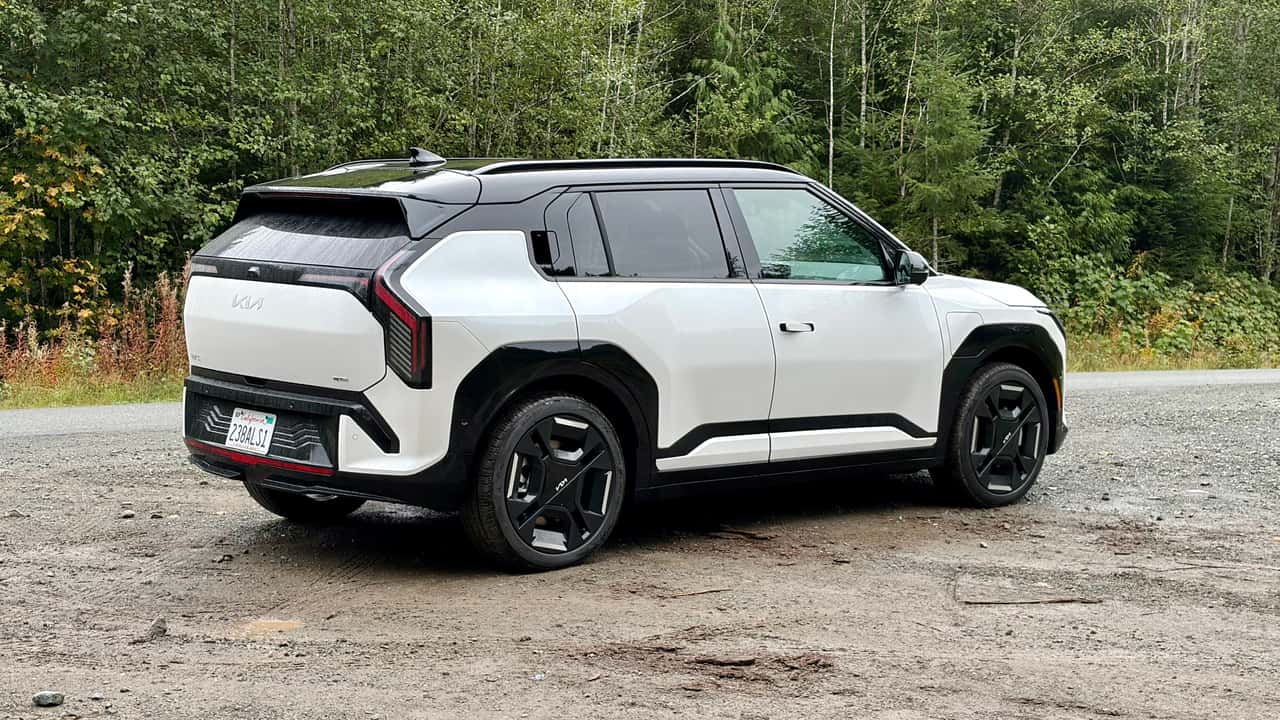
2027 Kia EV3
Photo by: Tim Levin/InsideEVs
Stopping is improved too; Kia is introducing a revamped version of its regenerative braking system that addresses one of the biggest complaints owners have about its current EVs. The i-Pedal one-pedal driving system is now far more adjustable, with three levels of braking intensity. Before there was just one i-Pedal setting, plus three levels of regen that wouldn’t bring the car to a stop. Now, holding the left paddle with any of those regen settings selected will switch on i-Pedal. Thankfully, the car now remembers the last setting you selected when you boot it up, unlike previous Kia EVs.
Finally, the EV3 is just a nice place to spend time. The faux-leather seats in both my test cars—standard in everything above the Light trim—were soft and supportive. The back seat was small, obviously, but also not terribly cramped for my 6’2” frame. Kia claims that the car has more total interior space than the Toyota bZ thanks to its stretched-out wheelbase and short overhangs. And it does beat the competition on cargo space, which definitely has something to do with its boxy shape. It boasts 26.1 cubic feet of storage behind the rear seats, on par with larger options like the Chevy Equinox EV considerably more than what you'd find in the Leaf (20 cu. ft.) or Bolt (16.9 cu. ft.).
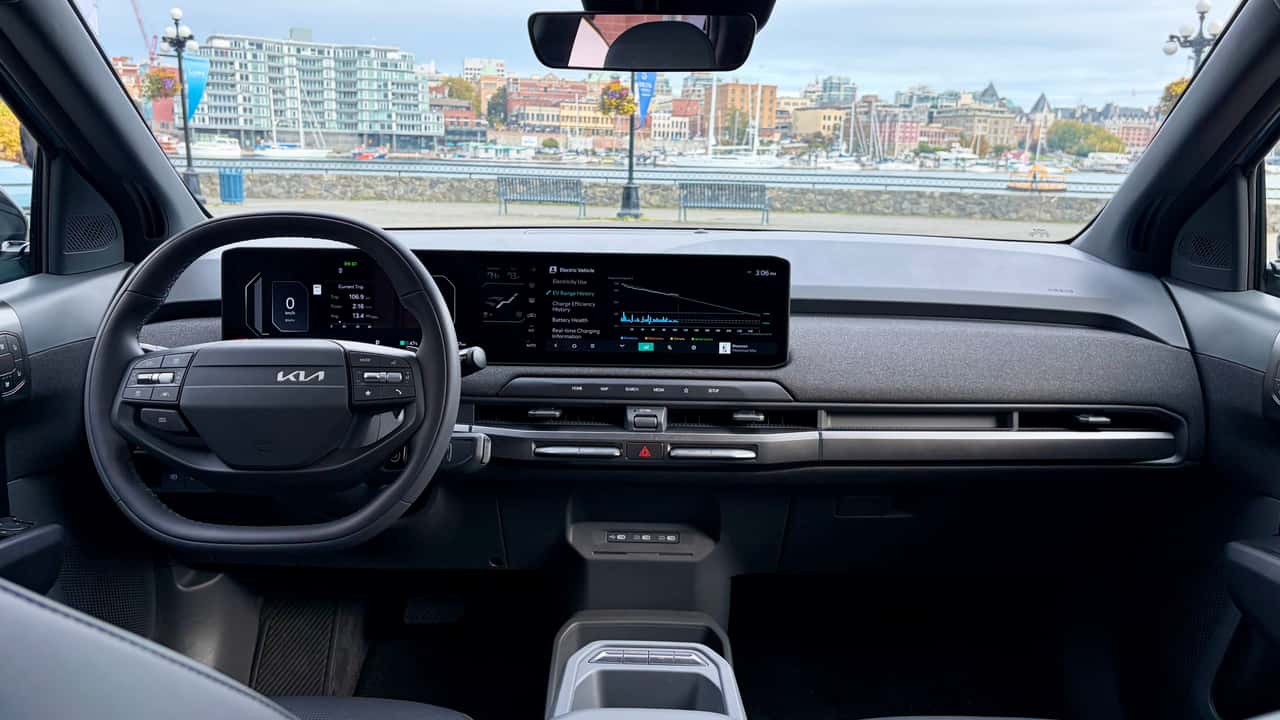
2027 Kia EV3
Photo by: Tim Levin/InsideEVs
While there was of course some hard plastic around, the whole cabin felt well-built and sophisticated. Importantly, while the EV3 can easily push $50,000, it seems like you don’t need to go crazy with options to get a nice-feeling car. Even the $35,000 Wind trim comes well-equipped, with a power driver’s seat, wireless phone charger, and heated front seats. The step-up EV3 Land I drove added on features like a power sunroof, ventilated front seats, and a power tailgate, which are nice to have but not essential.
What’s Not So Good: Low Base Range, Slower Charging Than Kia Is Known For
The EV3 is a stellar $35,000 EV, but the $30,000 model is a less compelling value. I say that mostly because of the range on offer; 221 miles pales in comparison to what you get in the Leaf or Bolt, which offer 303 and 262 miles, respectively. The company expects the majority of buyers to upgrade to the larger battery anyway, Young Kim, Kia North America’s senior product planning manager, told me. The entry option will be for a “small subset” of customers, like those buying the EV3 as a second car or a short-distance commuter, he said.
All versions of the EV3 also use a modified, 400-volt version of the Hyundai Motor Group’s 800-volt E-GMP platform to cut down on costs, which makes sense. That decision means that while charging times aren’t necessarily bad, though, they do fall short of the lightning-fast speeds we’ve come to expect from the brand’s other EVs.
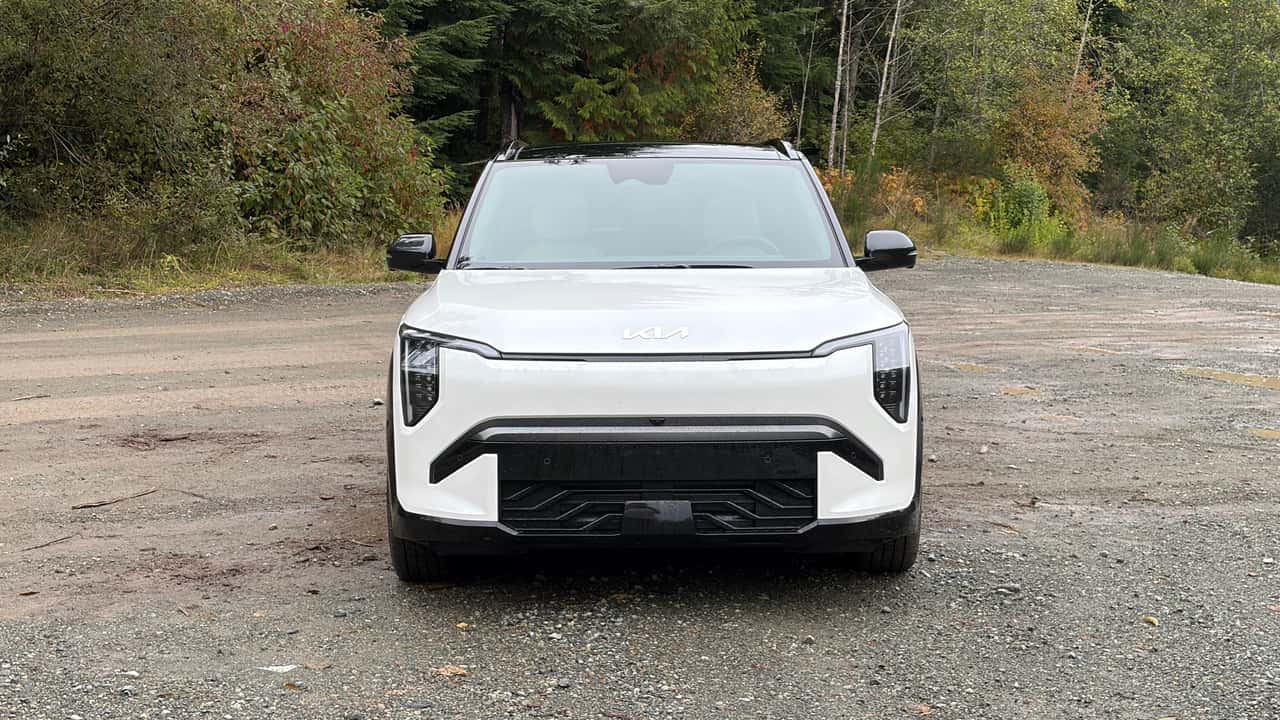
2027 Kia EV3
Photo by: Tim Levin/InsideEVs
According to Kia, 10-80% happens in 29 minutes for cars with the small battery and 31 minutes for models with the larger one. (Peak charging power, Kia says, lands at 100 kW for the smaller battery and 127 for the long-range pack.) This splits the difference between the Bolt (25 minutes) and Leaf (35 minutes), but is more sluggish than the EV6’s 18-minute sprint. Given that one of the EV3’s biggest competitors may end up being lightly used EV6s and Hyundai Ioniq 5s, that could work against the little EV.
While the Kia’s digital interface is generally attractive and pretty intuitive, the section of the touchscreen that houses some of the climate controls is awkward to use. It’s situated between the main display and the gauge cluster and is partially obscured by the steering wheel, making it tougher than necessary to adjust, for example, where the air is blowing on the fly. Kia partially makes up for it by including physical toggles for the fan speed and temperature.
Early Verdict
For years, Americans have been clamoring for more affordable electric options. In that way, the EV3 marks a big step in the right direction. It’s a well-rounded product that looks great and is, in EV-market terms at least, relatively inexpensive.
The big question mark is just how many buyers are willing to put their money where their mouths are these days. Judging by the EV sales numbers overall, it’s a lot fewer than before. Still, Kia has maintained that it’s in the EV game for the long haul and positions the EV3 as a key entry point into the segment for more budget-conscious buyers. Bagnard, Kia’s sales director, thinks the EV3 will do “very well,” she told reporters last week.
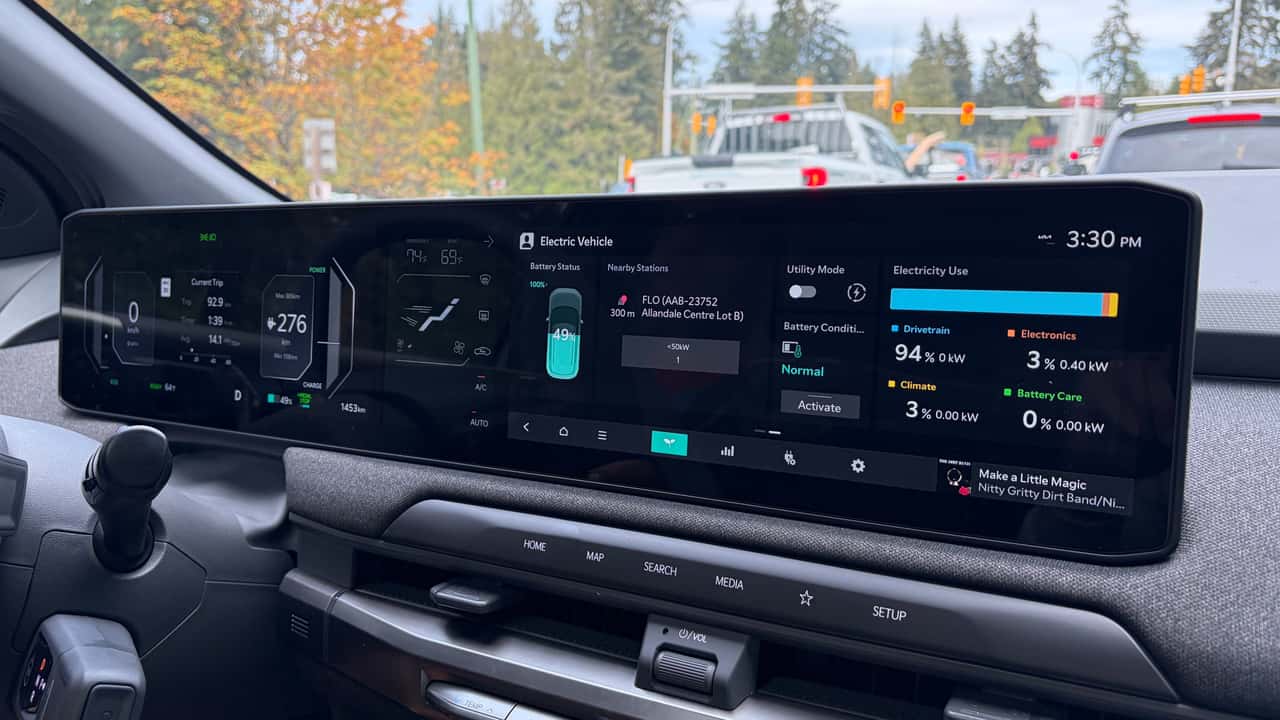
2027 Kia EV3
Photo by: Tim Levin/InsideEVs
Indeed, while the Bolt and Leaf haven’t sold particularly well this year, the EV3 has a few key edges. It delivers more range than those cars and, unlike either of them, it offers an all-wheel-drive option and the sort of boxy styling Americans clearly love.
In an era with fewer EV launches than anybody expected, Kia's newest option as a solid, much-needed option in the segment. In a difficult time for EVs, the EV3 could very well be the car that gets a lot more Americans to take the plunge.
Contact the author: Tim.Levin@InsideEVs.com
2027 Kia Telluride Hybrid Review: Outclassed By The EV9?
I Drove An Original Tesla Model S To See If It's Still Worth Buying In 2026
I Think The Hyundai Ioniq 9 Is The Best Three-Row EV Value. But That Might Not Be Enough
I Used To Hate Giant EVs Like The Cadillac Escalade IQL. Then I Drove One
2027 Kia EV3 Base Price$29,890 (plus $1,495 destination) Battery58.1 kWh / 81.4 kWh Charge Time10-80% in 29 min / 31 min EV Range221 mi (FWD small pack) / 321 mi (FWD large pack) / 280 mi (AWD large pack) Output201 hp (FWD) / 261 hp (AWD) / 288 (GT AWD) Maximum torque209 lb-ft (FWD) / 284 lb-ft (AWD) / 385 lb-ft (GT AWD)
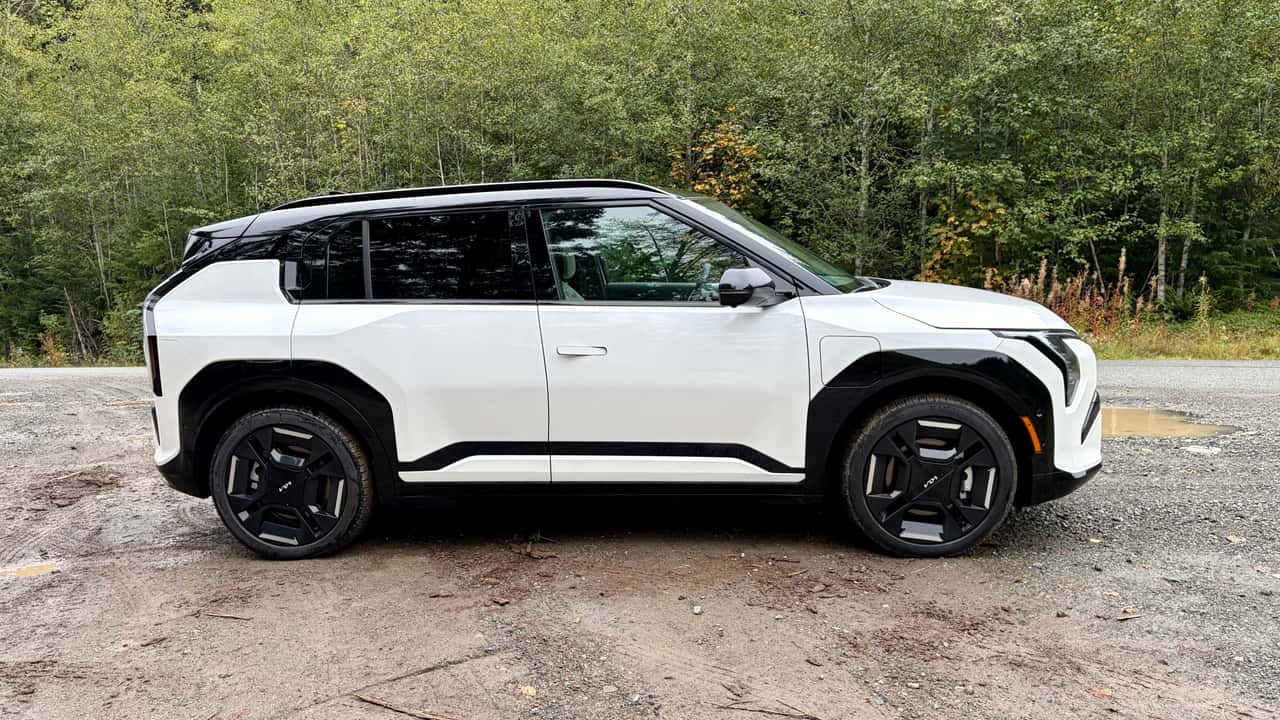
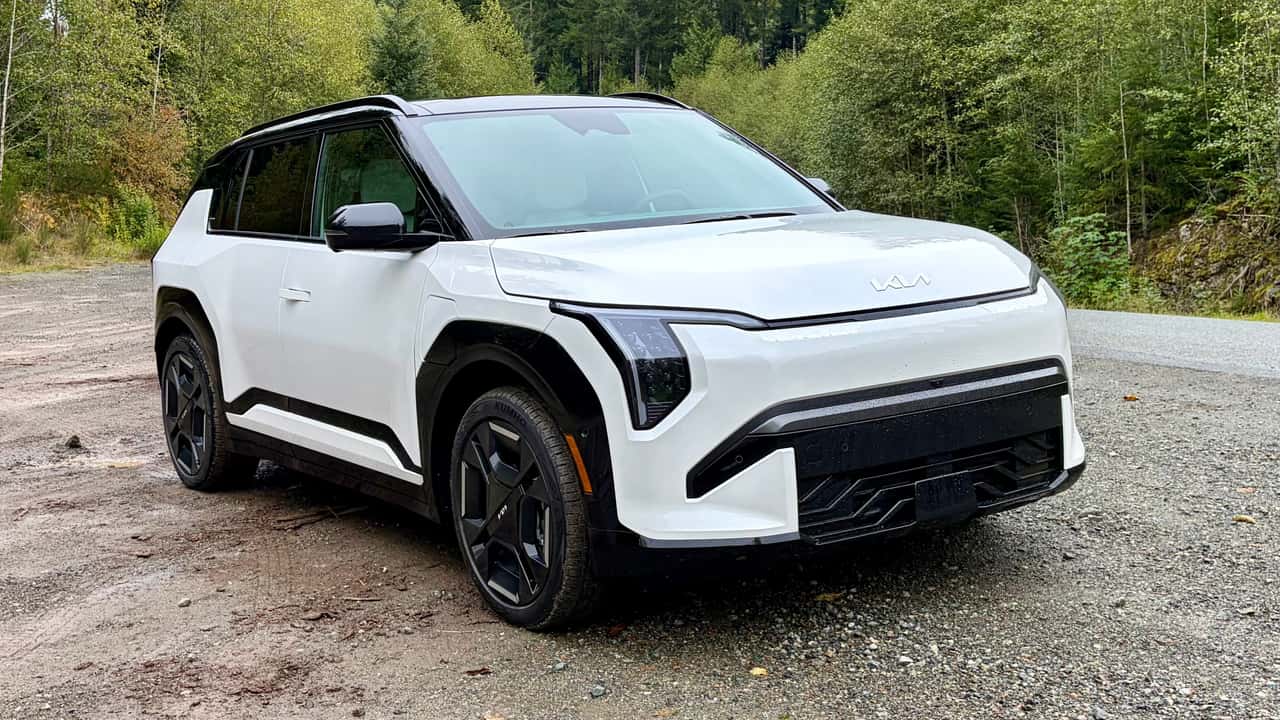
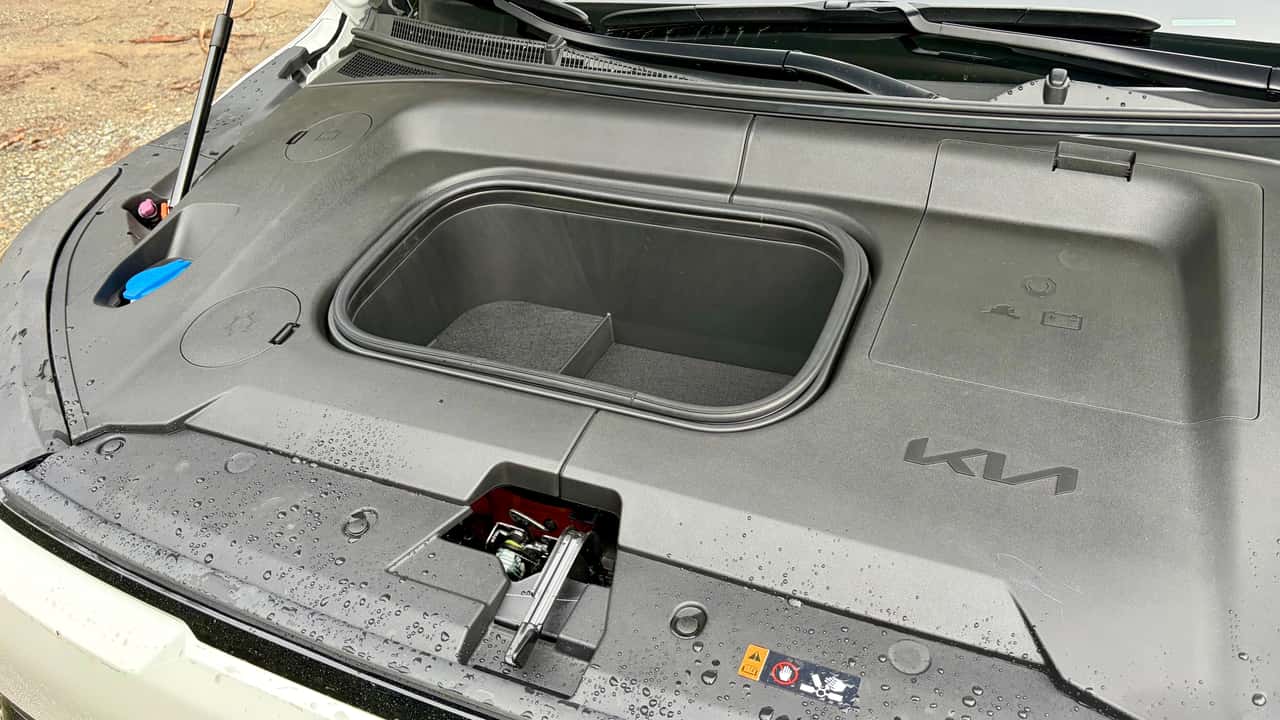
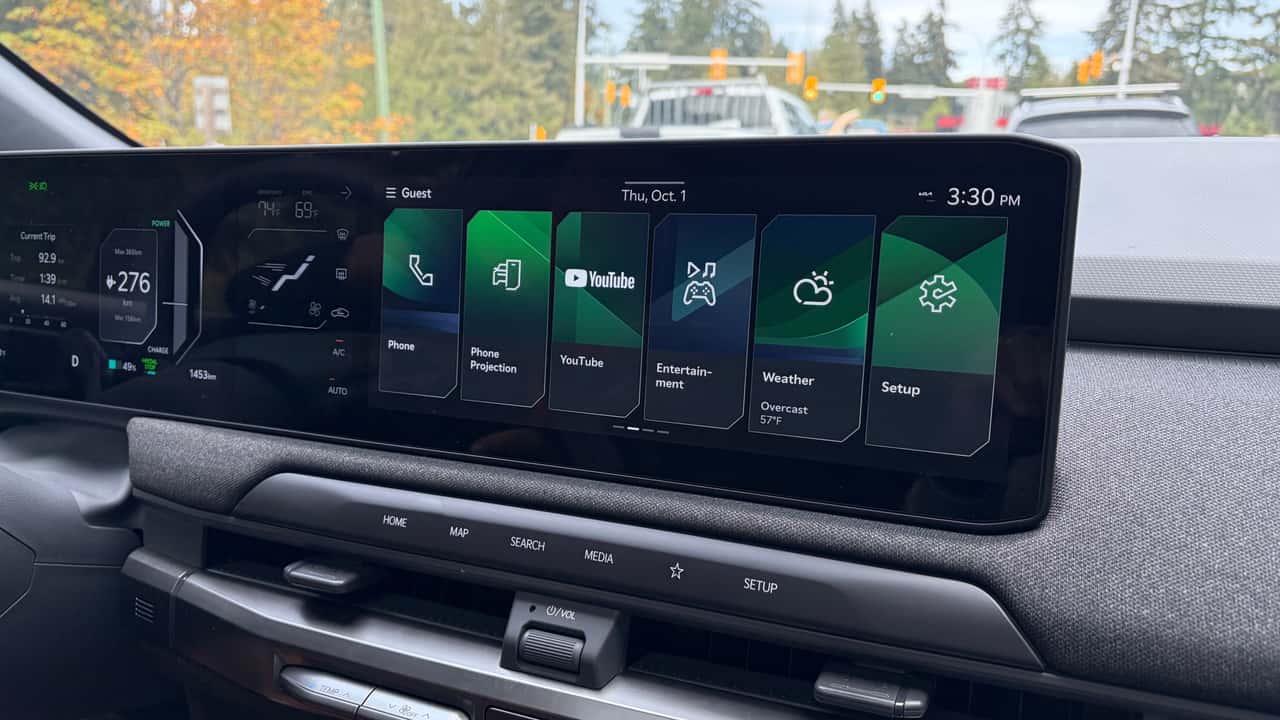
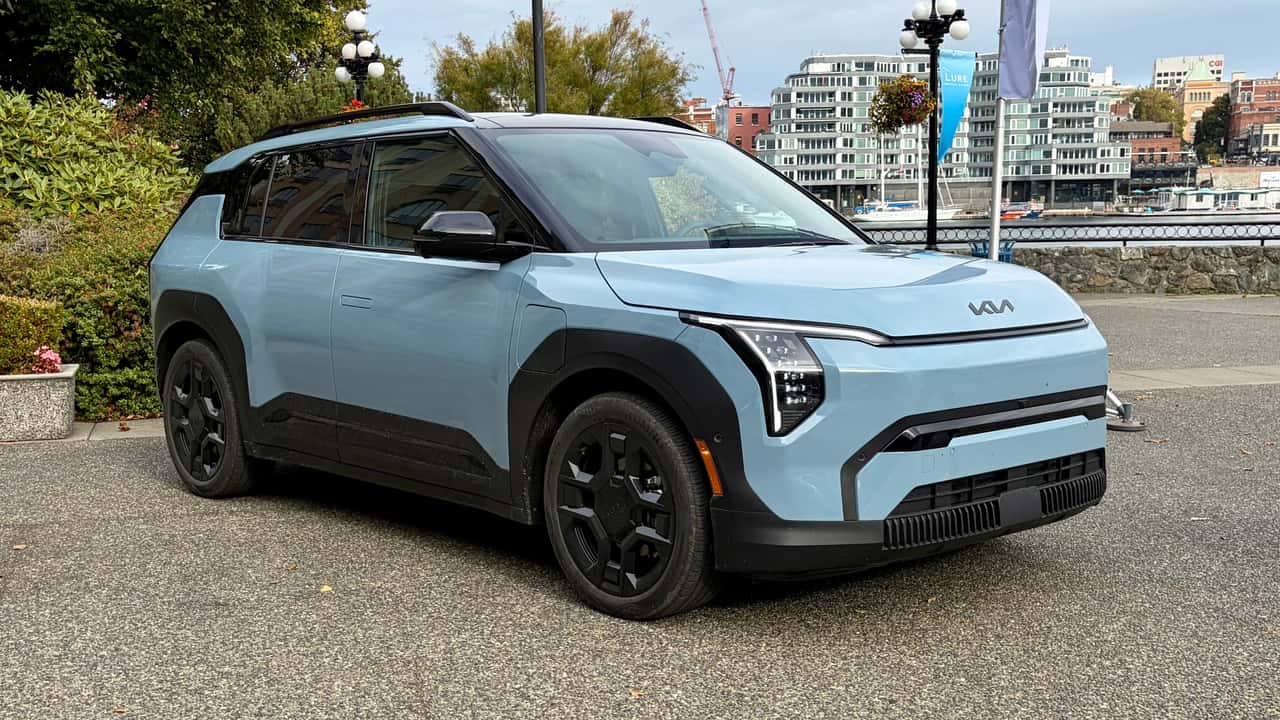
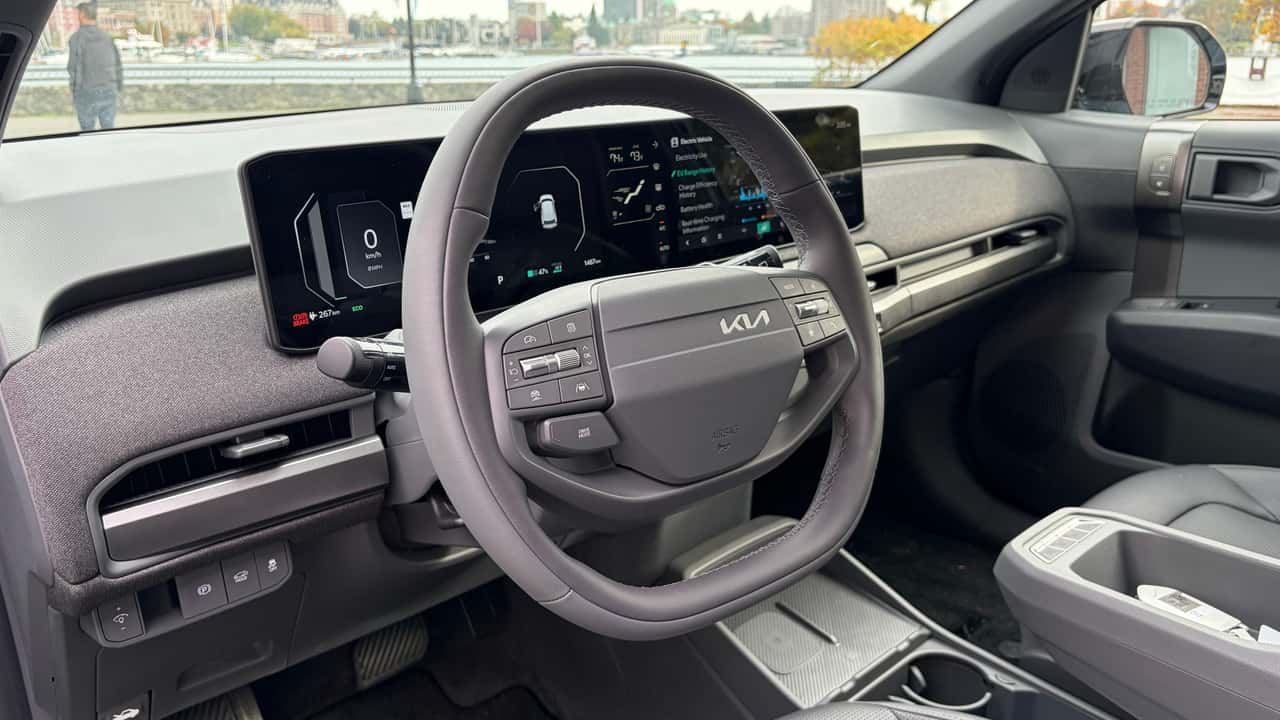
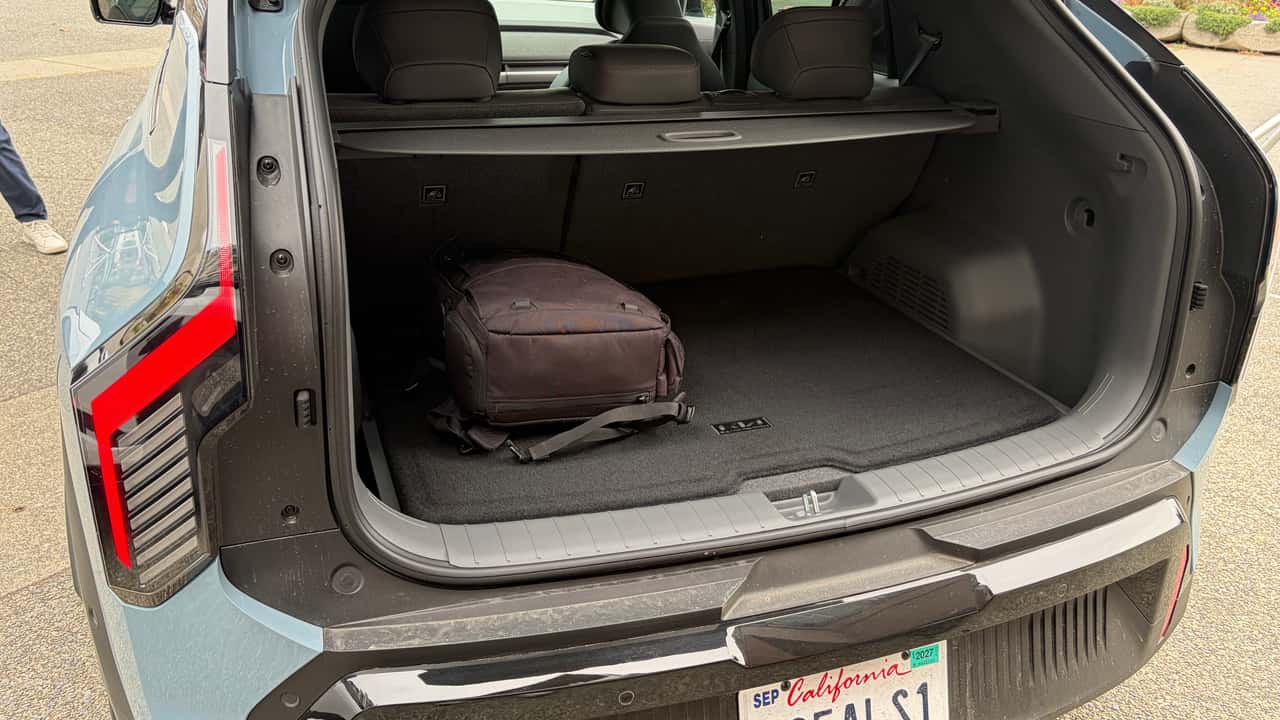
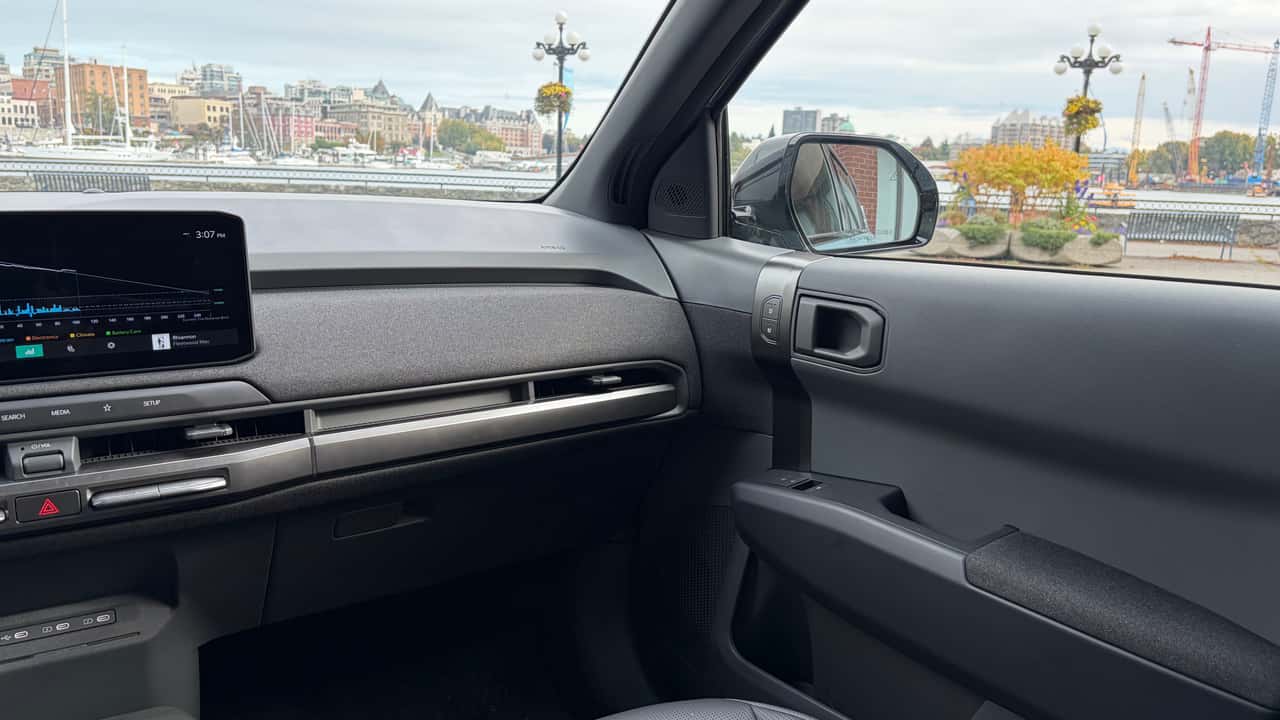
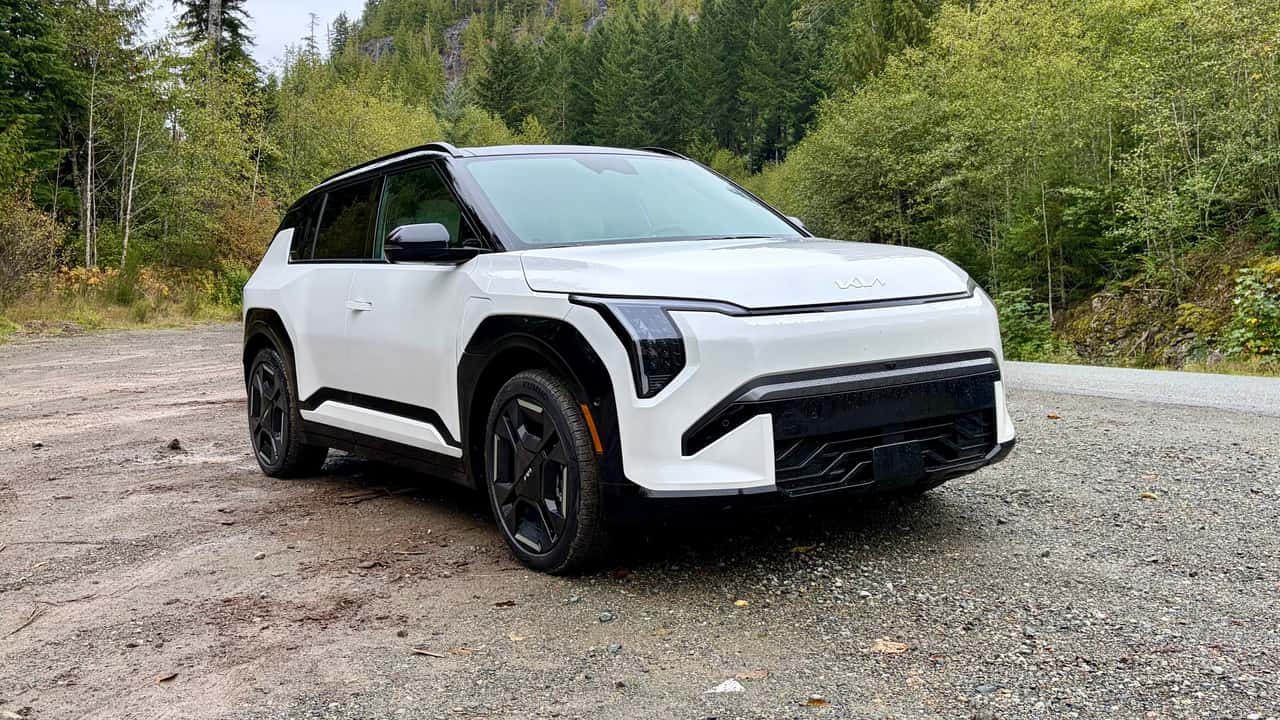
]]> contact@insideevs.com (Tim Levin) https://insideevs.com/reviews/810861/kia-ev3-review-drive-best-affordable-ev/ https://insideevs.com/reviews/809842/vw-id-polo-road-trip/ Thu, 01 Oct 2026 17:18:44 +0000 VW’s Electric Polo Is Expensive. But After Driving It, It's Not Hard To See Why Volkswagen’s new small EV feels remarkably grown-up on a European road trip. It might be VW's best EV ever, but it doesn't come cheap.
A nearly €40,000 Volkswagen Polo needs a pretty good explanation. That’s roughly how much you would have to pay to get yourself an ID. Polo like the one I drove for a day during the Eurocharge by Schaeffler EV grand tour, a cross-Europe electric car road trip. And sure, the ID. Polo is pricey, but while driving it, I found myself searching for excuses to justify it.
This little hatchback feels so effortless that judging it by its size alone seems a bit unfair. It really made me question whether going larger meant you were buying a better car or simply more car.
Eurocharge tour took us from Romania across Europe to the sources of the Danube and back, with mountain roads and long motorway stretches along the way. The electric Polo racked up 4,468 kilometers, or about 2,776 miles, and on the day I drove it, we covered 507 km (315 miles) from Enzklösterle, Germany, to Hohe Salve, Austria.
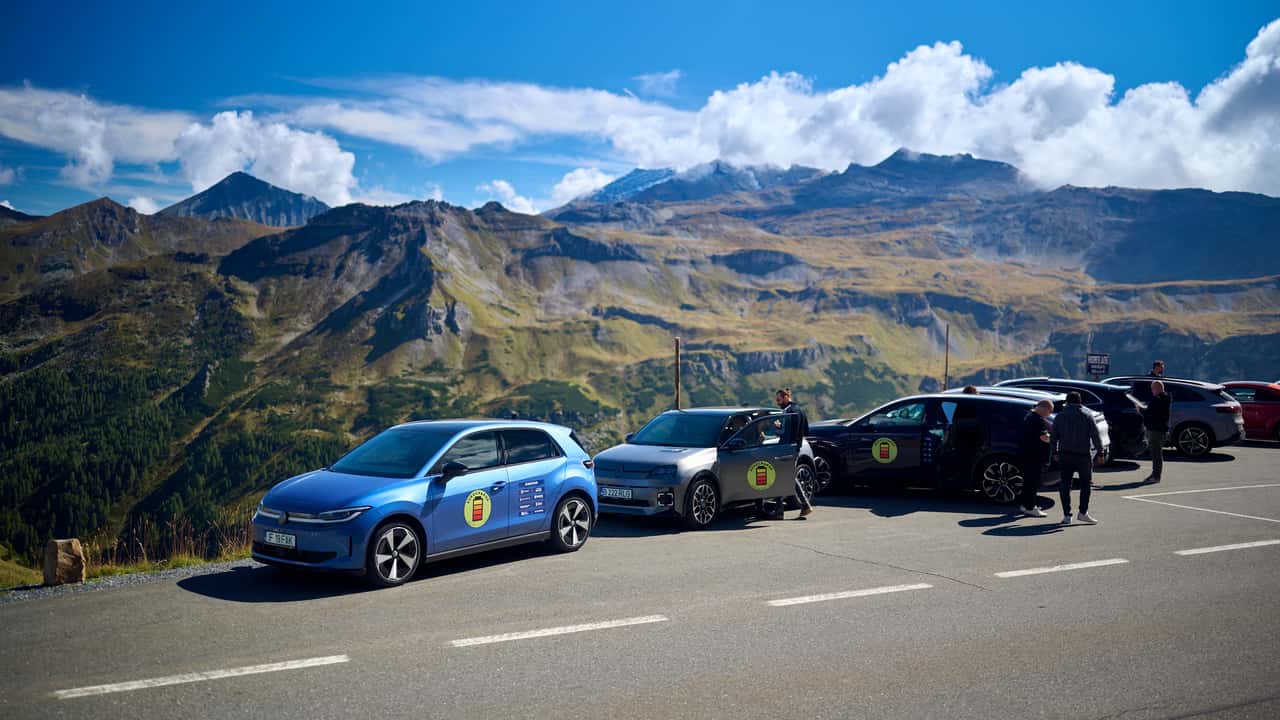 Photo by: Autocritica
What made my ID. Polo drive particularly interesting (and revealing) was having the Renault 5 E-Tech along for the trip. We could compare not only how they drove subjectively over many types of roads, but we could also measure their efficiency along the same routes.
The R5 is undeniably efficient, and on one day, it almost managed to achieve its WLTP range in real-world driving conditions. It also makes a stronger first impression, rocking its retro design with the confidence.
The ID. Polo is more restrained, with familiar proportions and enough sharp detailing to look modern without requiring an explanation of what you’re looking at. You know what you’re looking at, and it is certainly a more premium presence in the electric supermini segment.
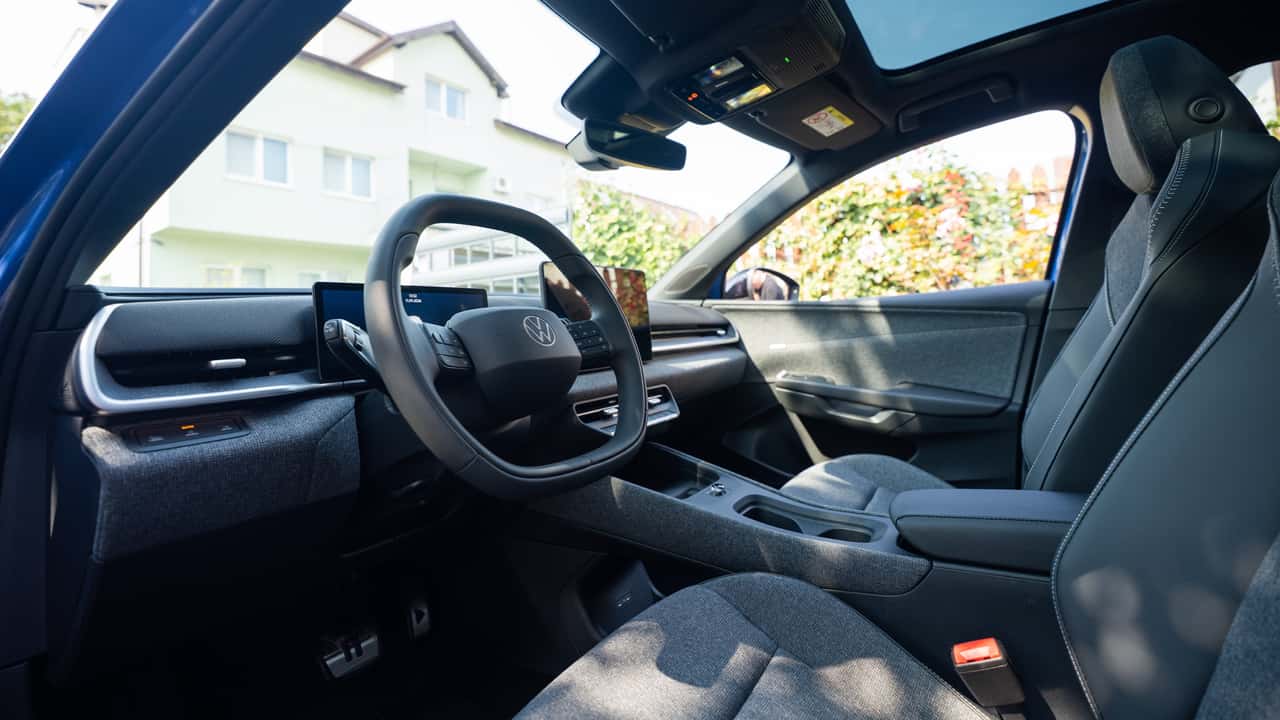
VW ID. Polo Interior
Photo by: Ciprian Mihai/Autocritica
Inside, the ID. Polo has more than you’d expect to find in a vehicle this size. Our Style tester had pretty much all the options boxes ticked, so it came with electric front seats with memory. The driver’s seat feels like a little armchair, and the steering wheel’s generous reach adjustment helped me get properly comfortable.
There are pleasant materials where your hands naturally land, too. Sure, you can find hard plastic and plenty of it. But you can also find it in cars that cost considerably more and carry premium badges.
More encouragingly, though, VW has rediscovered buttons. The ID. Polo gets real steering wheel controls, physical climate buttons, and four individual switches for four windows. That may sound weird to praise, but after the earlier ID. cars, it feels like VW has finally listened to the feedback and is making its cars nice to be in again.
The retro instrument display, meanwhile, is a lovely little nod to old Volkswagens. The needle in the power gauge moves slightly erratically, like the rev counter in an older car would, adding to the charm. You can also choose a retro theme for the central screen, which turns your media player icon into a cassette player, and you can actually see the tape going from one side to the other as your track progresses.
The battery charge meter also looks analog in this mode, and when you plug the car in, a very retro-looking green light comes on to let you know it’s charging. These little details made me happy in this car, and I kept the two screens retro throughout my day with it.
As impressive as it may be when it’s static, the bigger surprise comes once you get going. At 130 km/h (81 mph), the Polo feels entirely at ease. The ride has a composure that makes long motorway stretches feel like a normal part of its job. It’s really good, and not just for a small car.
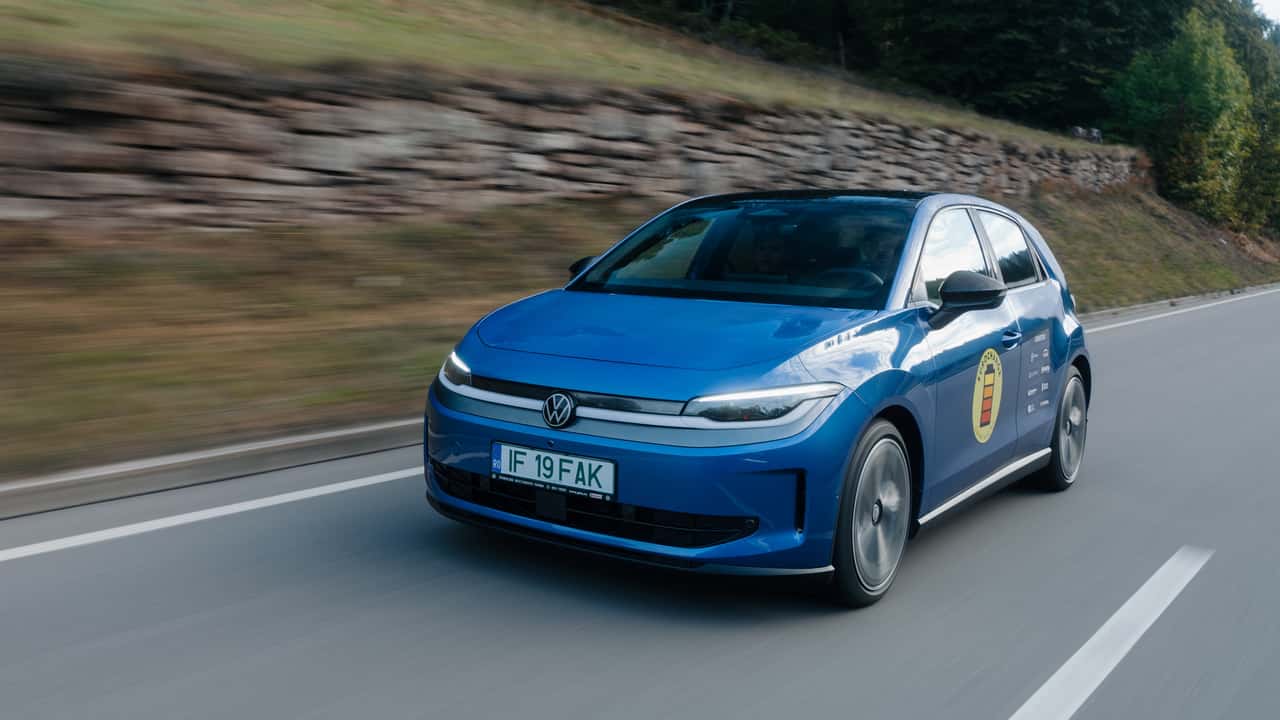 Photo by: Autocritica
It feels more comfortable and grown-up than its Renault rival, even with a more basic rear suspension setup. The VW’s slightly longer wheelbase helps too.
Its suspension absorbs bumps well and does its job quietly, with no major noticeable thumps even over larger road imperfections. The Polo’s refinement helps sell the impression that you’ve accidentally been given something from the class above. It also quiets down wind noise better than the Renault.
This is definitely the best-feeling VW ID model I’ve ever driven, although I’ve yet to try the ID.7, and that should feel even better. What makes this even more impressive is that it rides on the cheaper front-wheel-drive version of the MEB platform, and it somehow feels better than the ID.3.
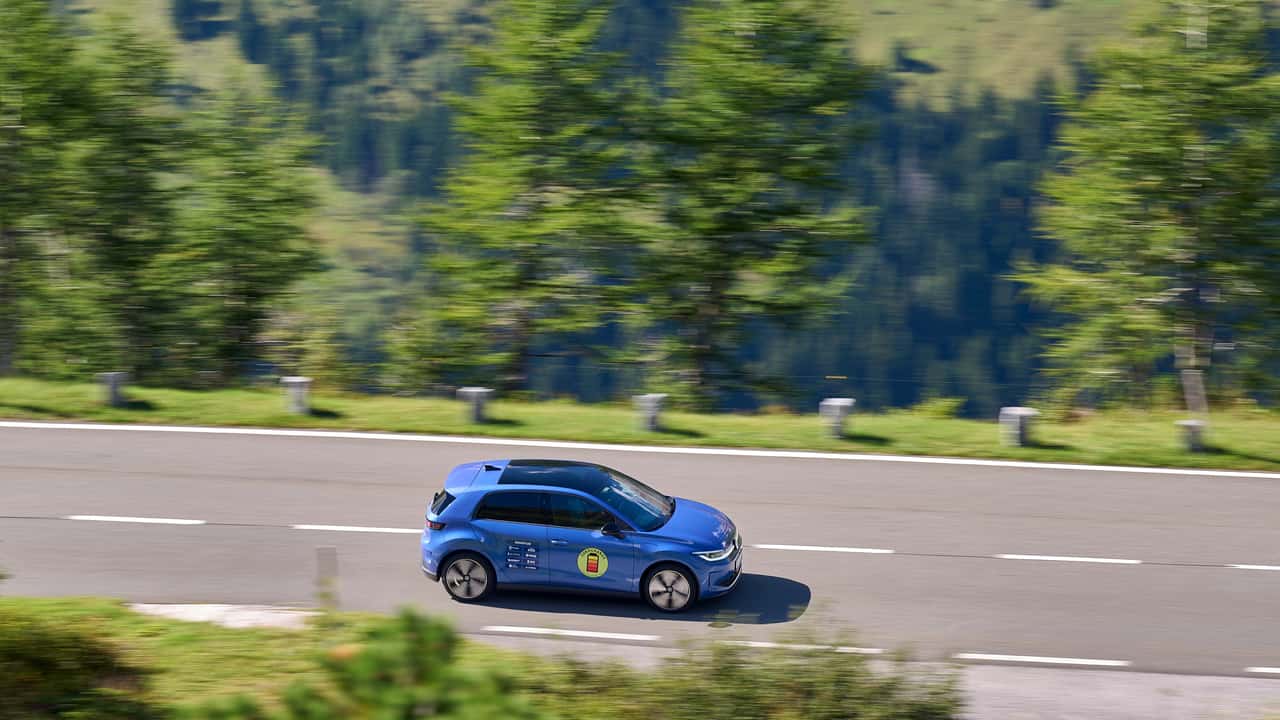 Photo by: Autocritica
However, the steering gave me less confidence. Driving down Austria’s stunning Hochtannbergpass, I had a moment when the front tires started to run wide through a corner, with no feedback through the wheel to tell me they were losing their grip. The Renault is unquestionably the more fun car to drive on a twisty road, with more mechanical grip and more feel.
Maybe the GTI version of the ID. Polo will address this and prove a real rival to the Alpine A290, the hot hatch version of the R5.
What was also interesting to observe was how these two vehicles used their electricity. Both have the same 52 kilowatt-hours of usable battery capacity, but the ID. Polo proved more efficient on all but one day when it tied the R5.
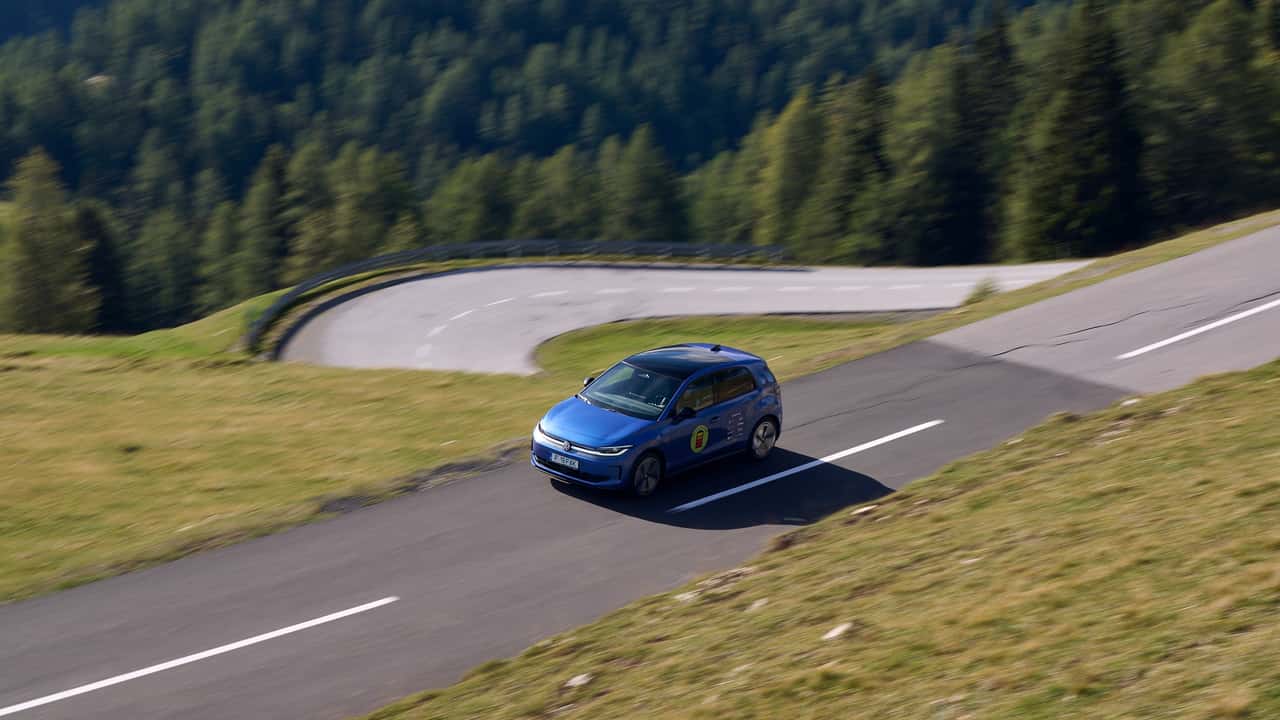 Photo by: Autocritica
It was more efficient while also having considerably more muscle than the Renault 5. Its motor produces 208 bhp and 290 Nm (214 lb-ft) of torque, compared with the Renault’s 148 bhp and 245 Nm (181 lb-ft). That gives the Volkswagen an extra 60 bhp and 45 Nm (33 lb-ft).
It can hit 100 km/h (62 mph) in a claimed 7.1 seconds, nine-tenths quicker than the R5. Its average efficiency at the end of the tour was 15.2 kWh/100 km, compared with 16.6 kWh/100 km for the Renault. That’s around 4.1 miles/kWh versus 3.7 miles/kWh, or an 8% advantage to the VW.
These figures came from rotating crews on a real trip driving the speed limit along the same route on the same day. Not quite a laboratory verdict, but still useful to give you an idea of which car uses its electrons more efficiently.
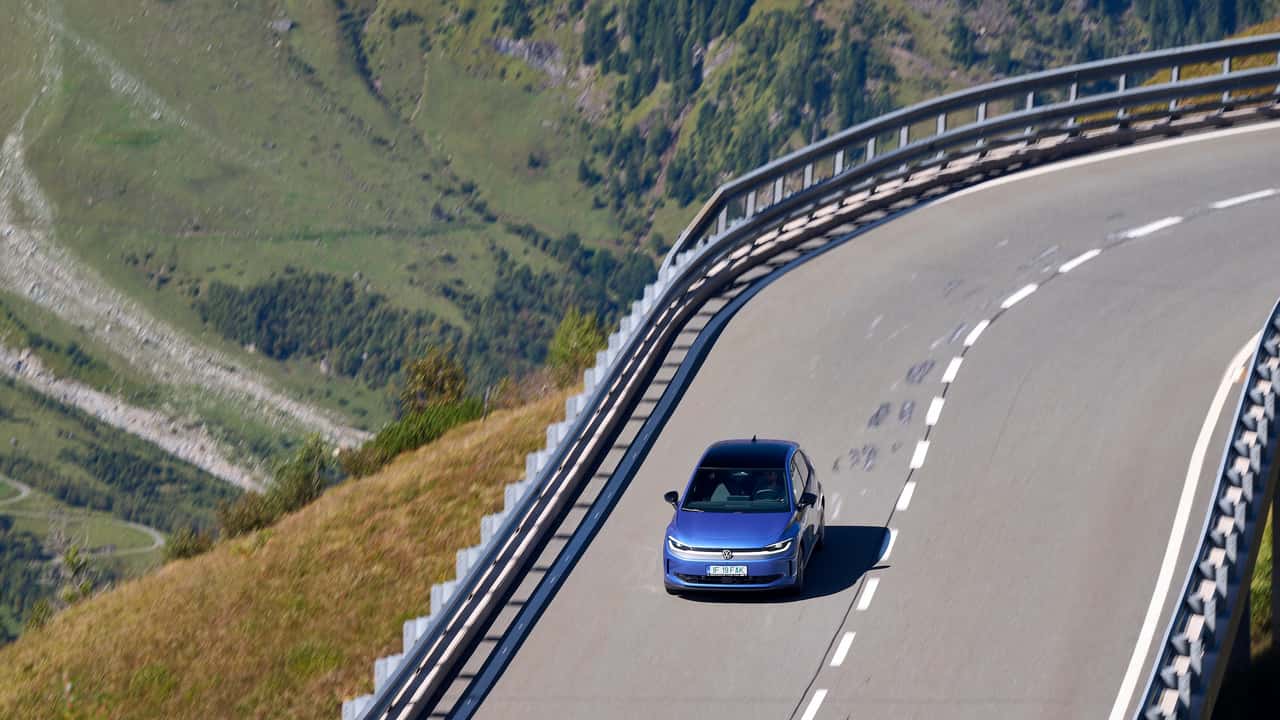 Photo by: Autocritica
On the day I drove the Polo, we covered 507 kilometers (315 miles) with just one 17-minute charging stop, which took the battery from 30% to 81%. We’d started the day almost fully charged to 99% and reached the hotel with 10% remaining. That’s a full day of traveling with a charging break barely long enough to get a coffee and drink it, and it made the Polo’s small battery feel like less of a limitation than you might expect.
The Polo’s quoted 105-kW DC peak is modest, although Volkswagen’s approximately 24-minute 10% to 80% claim is respectable, and its charging curve is decent.
It’s Official: Volkswagen ID. Tiguan Replaces ID.4
Same Battery Size, Different Range: VW ID. Polo Takes On Renault 5
Volkswagen Just Unveiled The Most Efficient EV Ever Tested
Sold Out: Volkswagen’s Cheap ID. Polo EV Now Has Months-Long Wait Times
But no matter how good I think the ID. Polo is, its success will depend on whether enough people will actually buy it. Our Romanian-market Polo costs €39,500 all-in, against €34,200 for the Renault 5 Roland-Garros. That’s a €5,300 gap. The Volkswagen’s efficiency advantage won’t make that difference disappear in a hurry, although these are the prices of the particular high-spec press test fleet cars we tested, not their best-value versions.
You really have to want what the Polo does better. I’d still choose the Renault for its looks and enthusiast appeal, plus I’d also keep the change. But the Volkswagen’s comfort, equipment, and motorway manners make a compelling case for someone who wants a small electric car that can handle the big journeys, too.
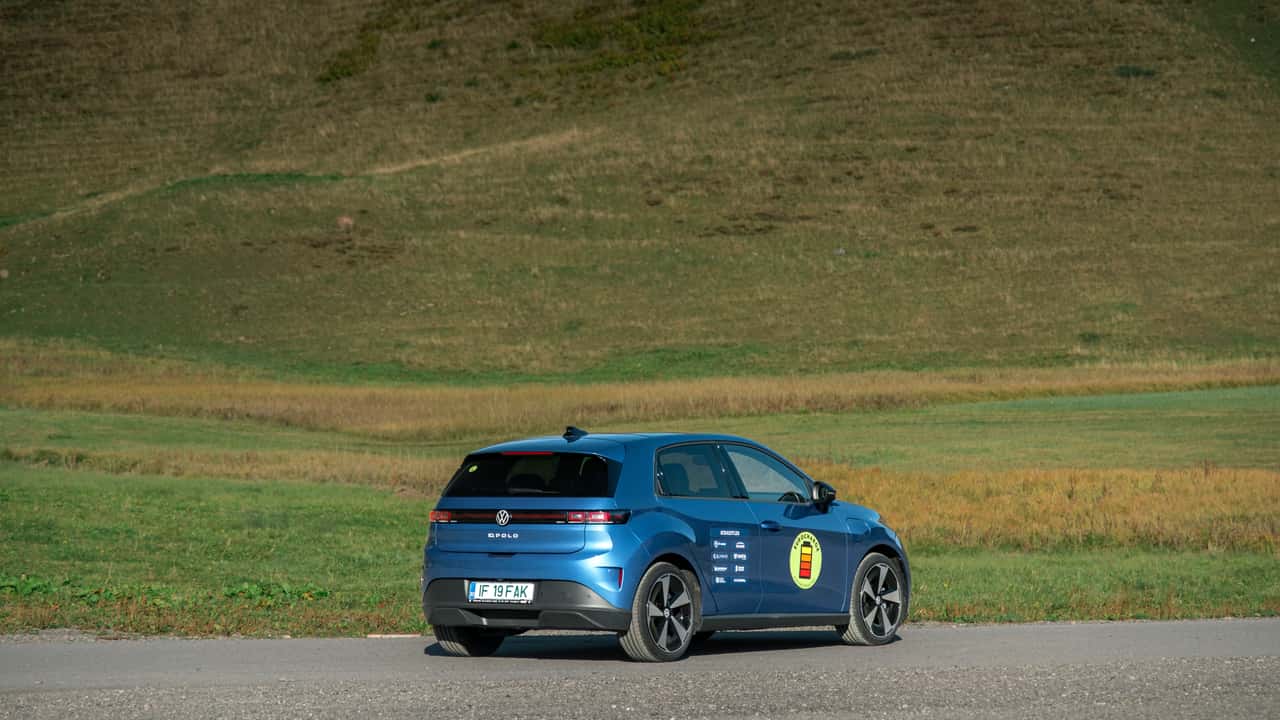
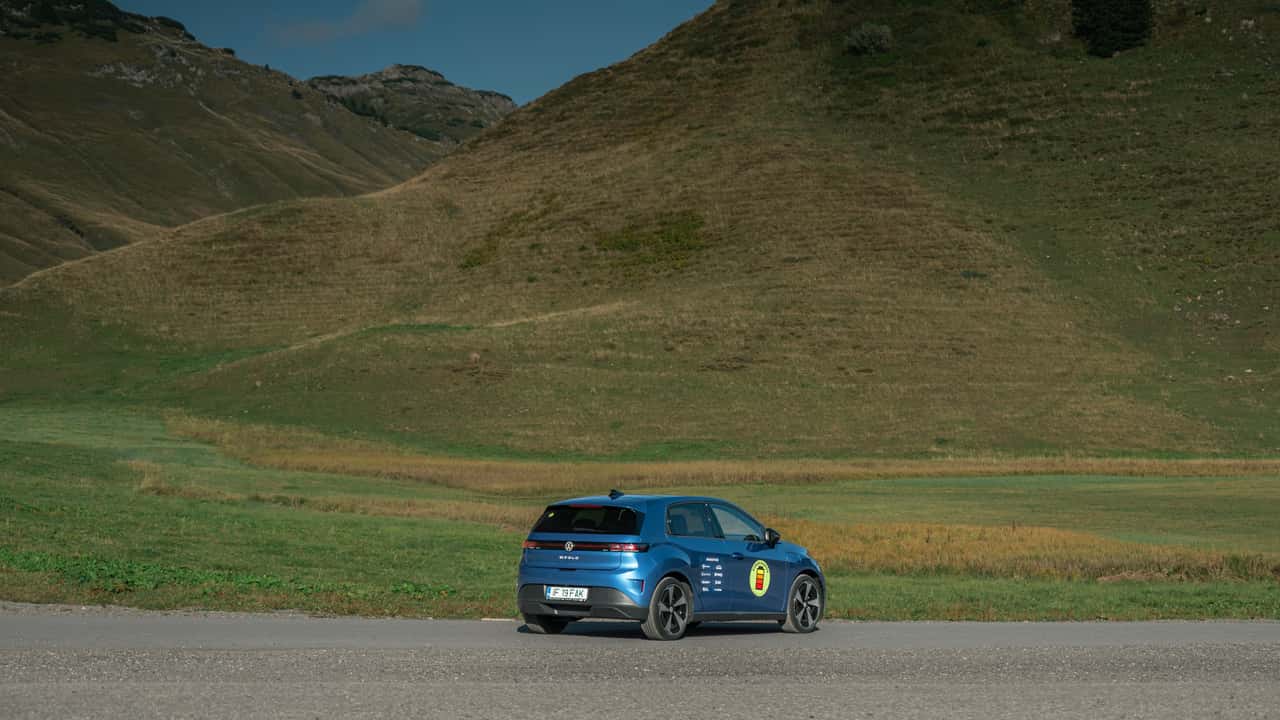
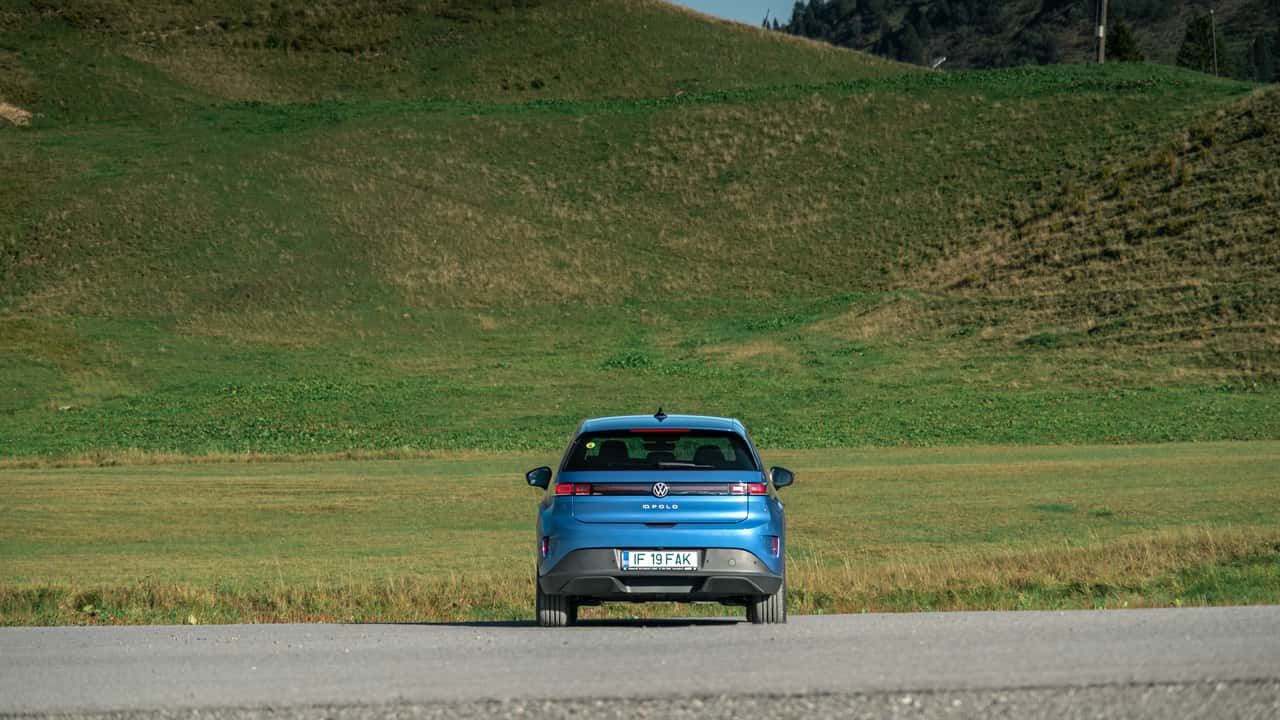
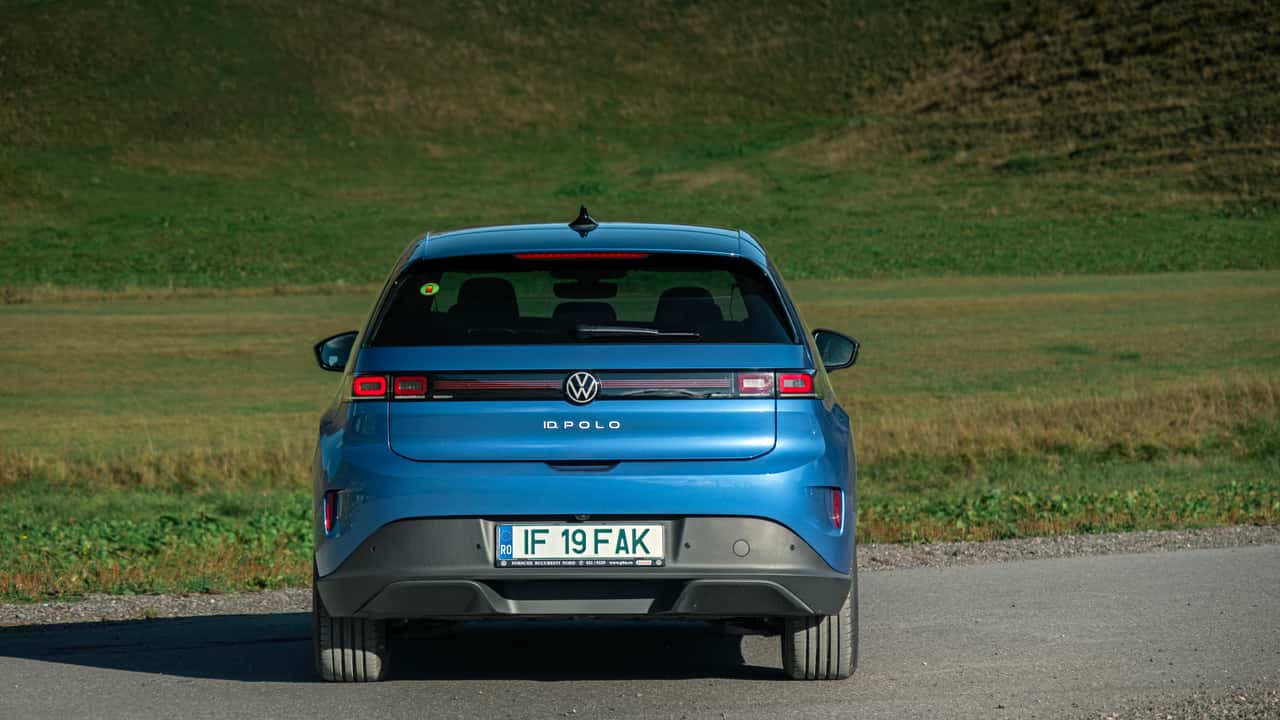
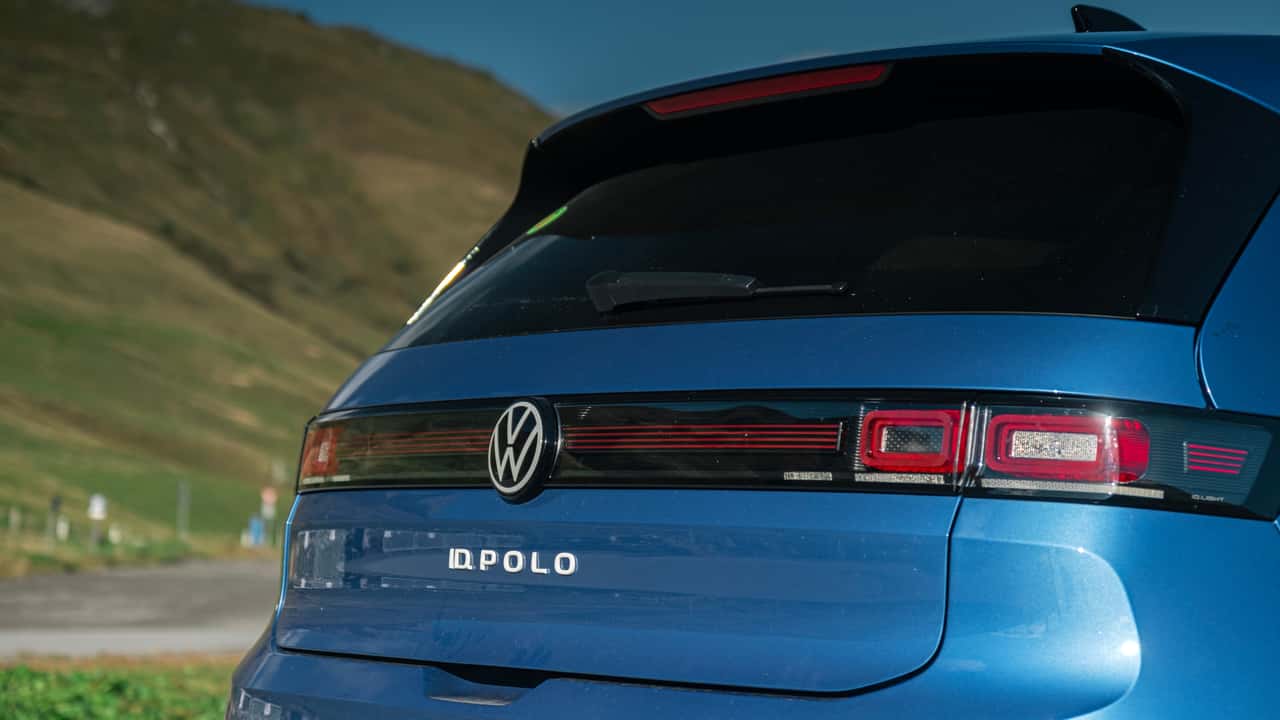
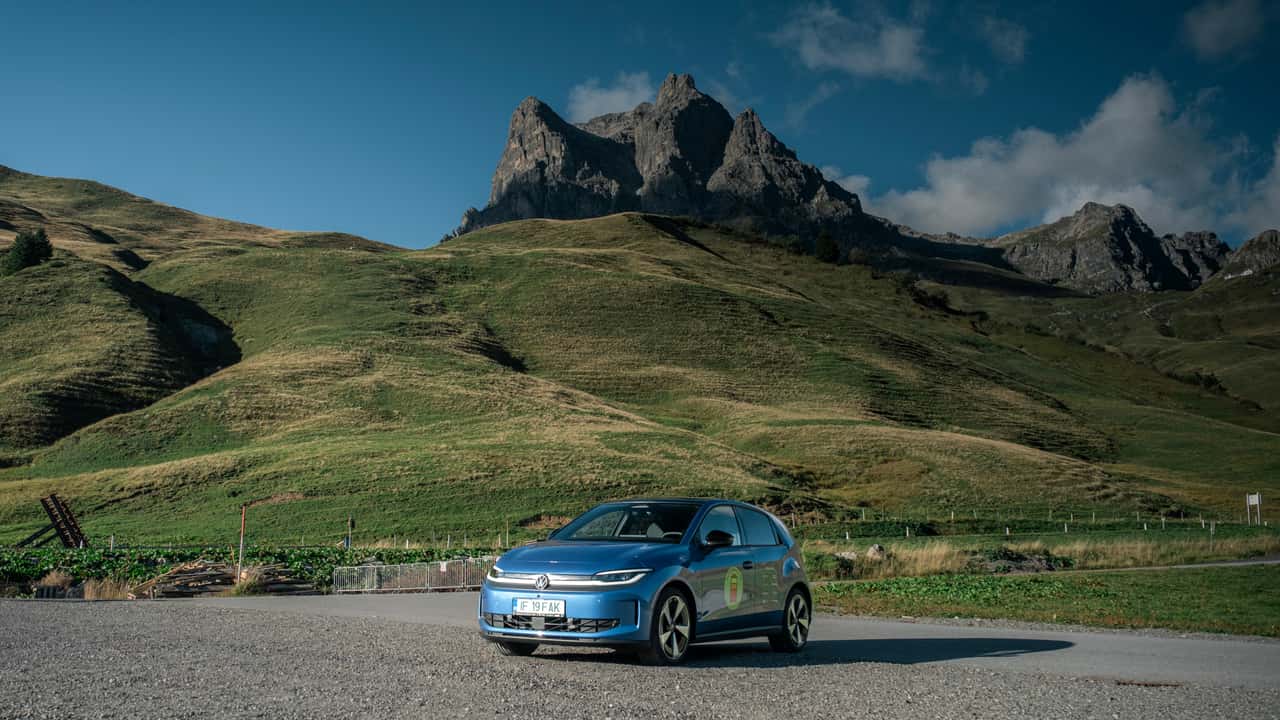
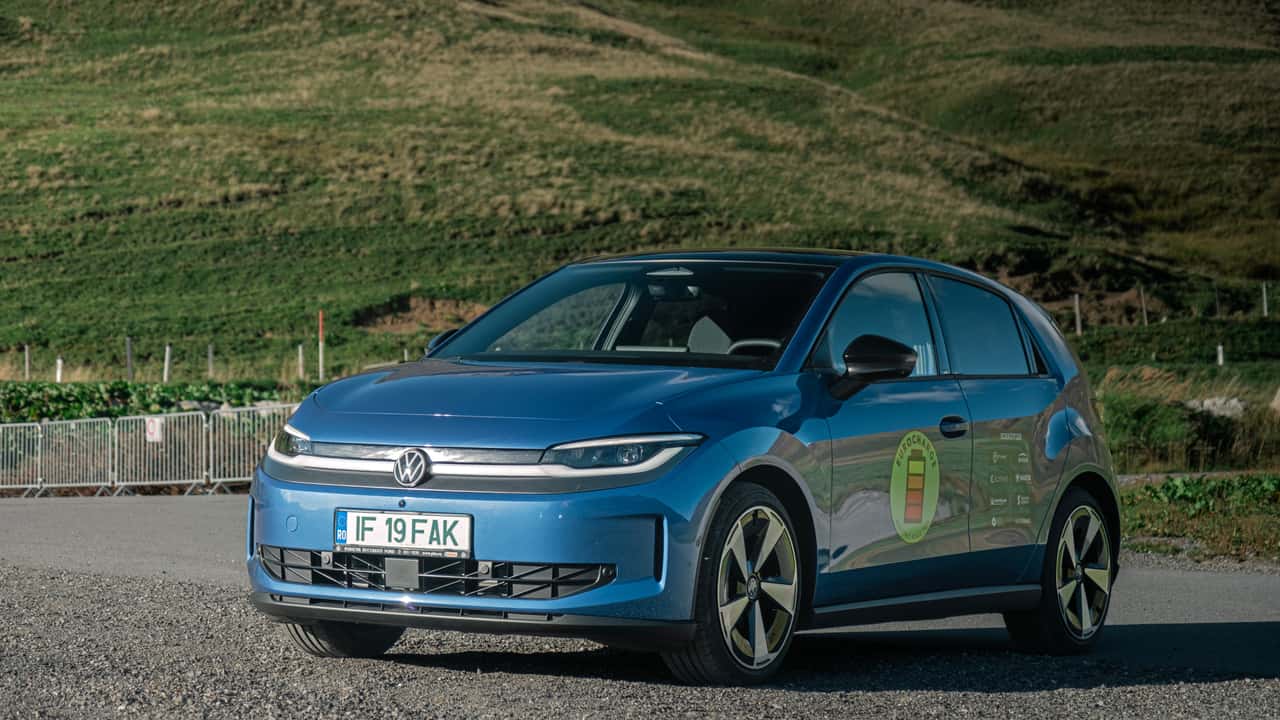
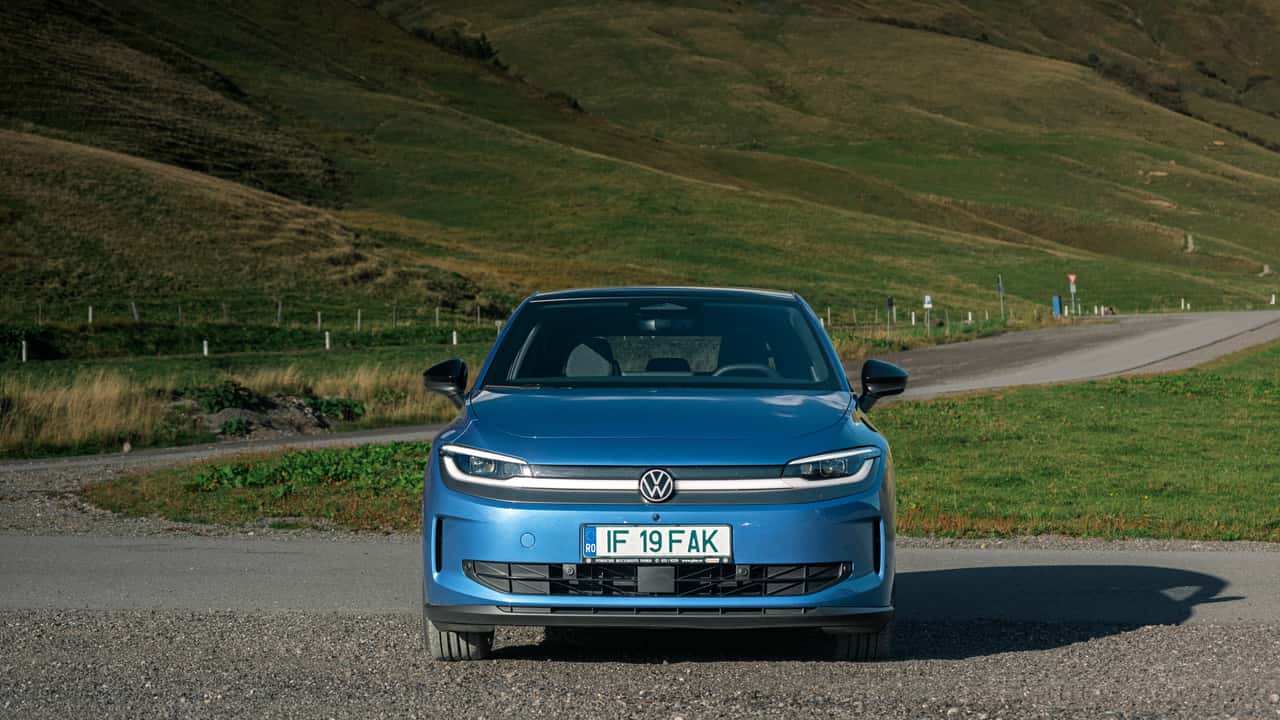
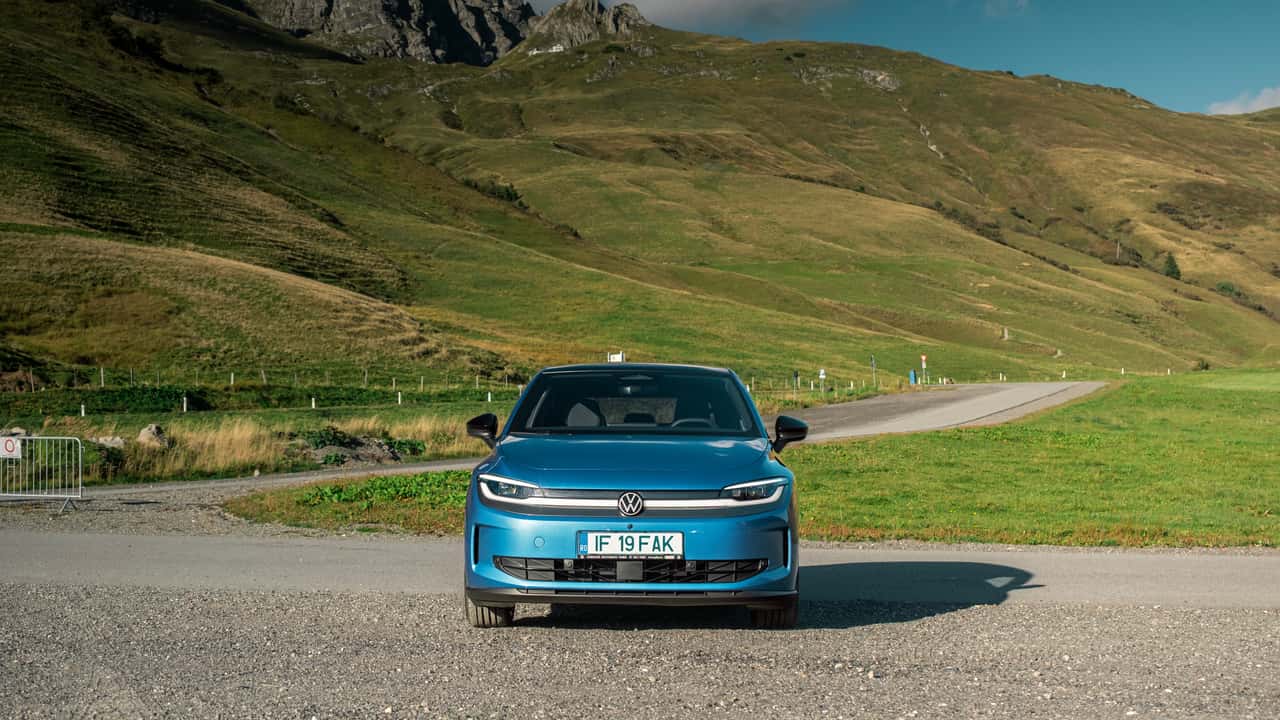
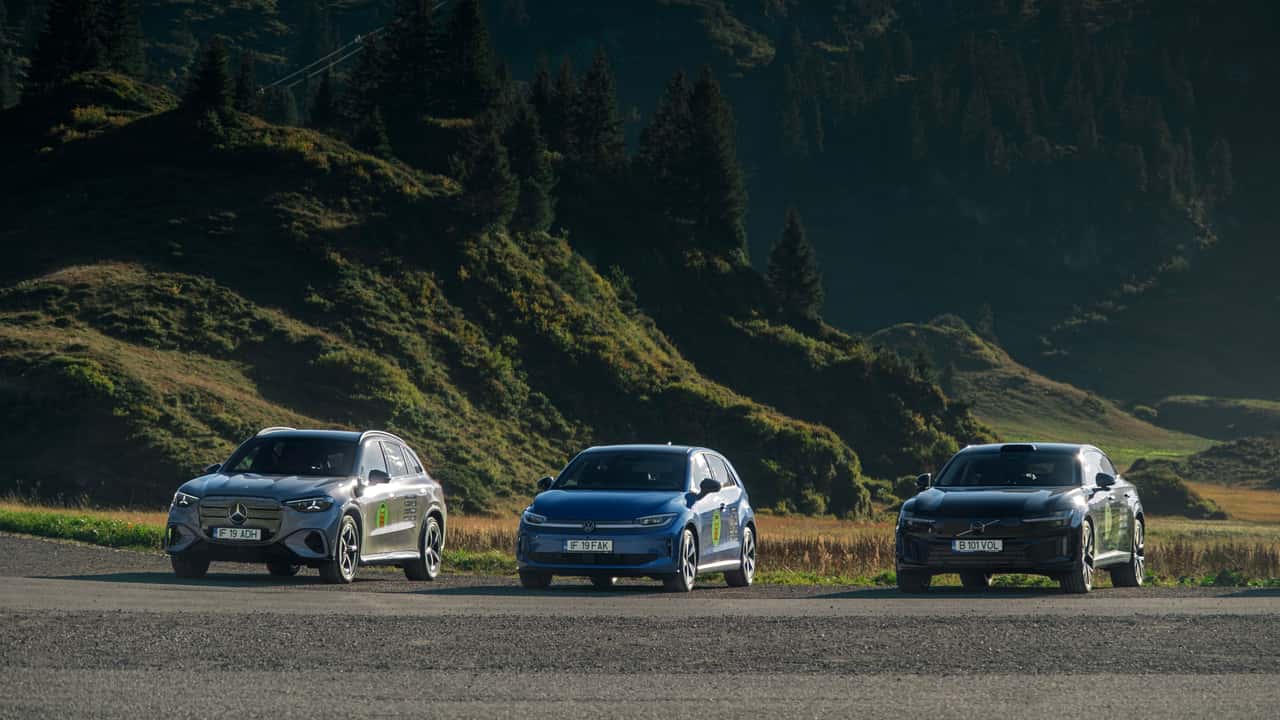
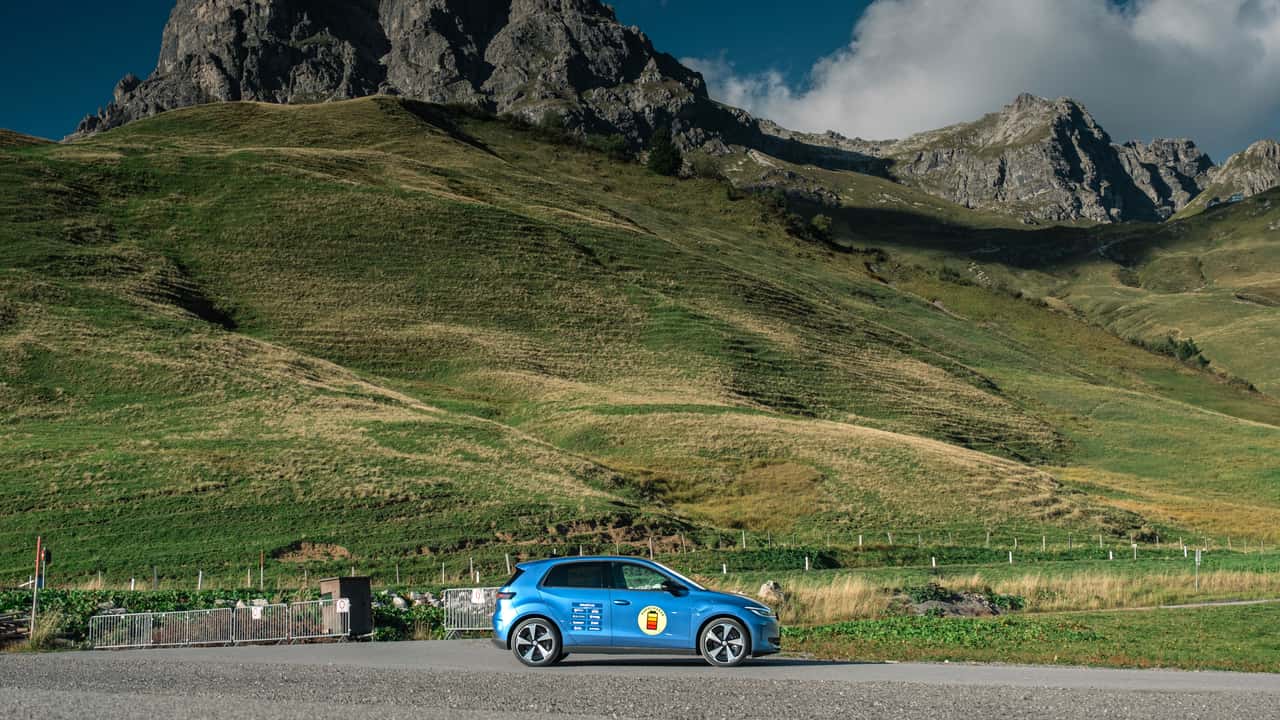
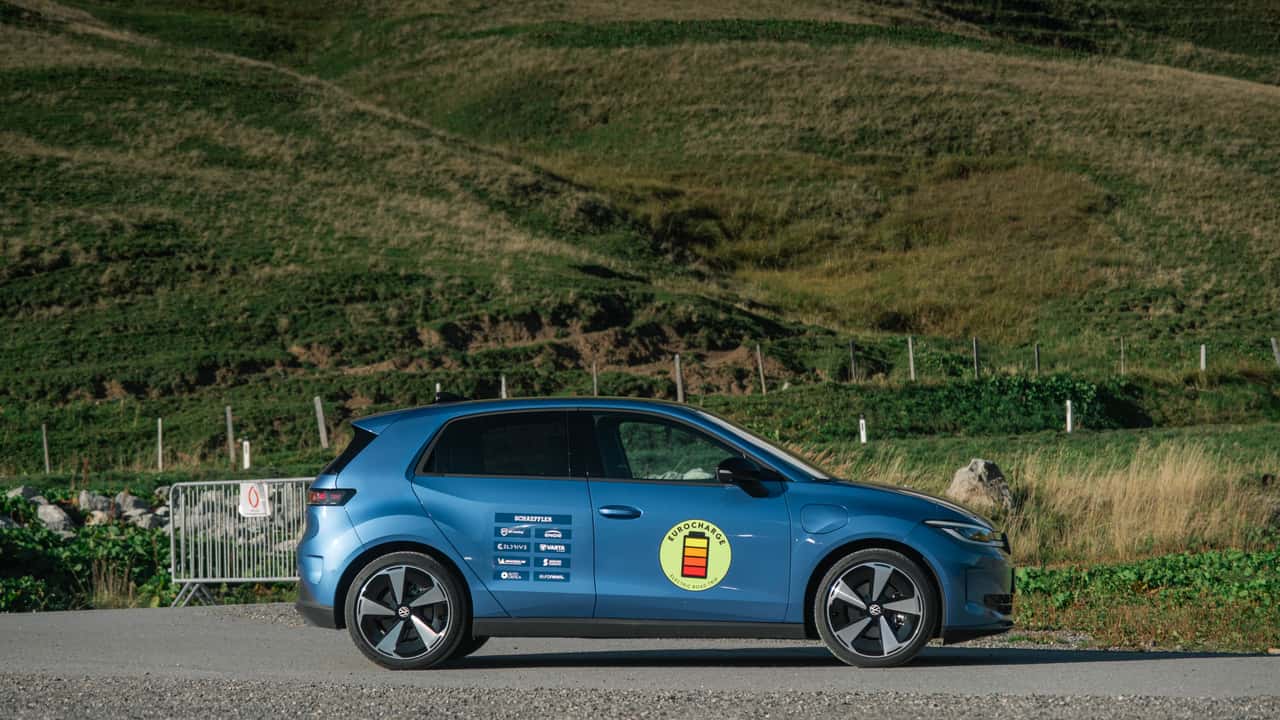
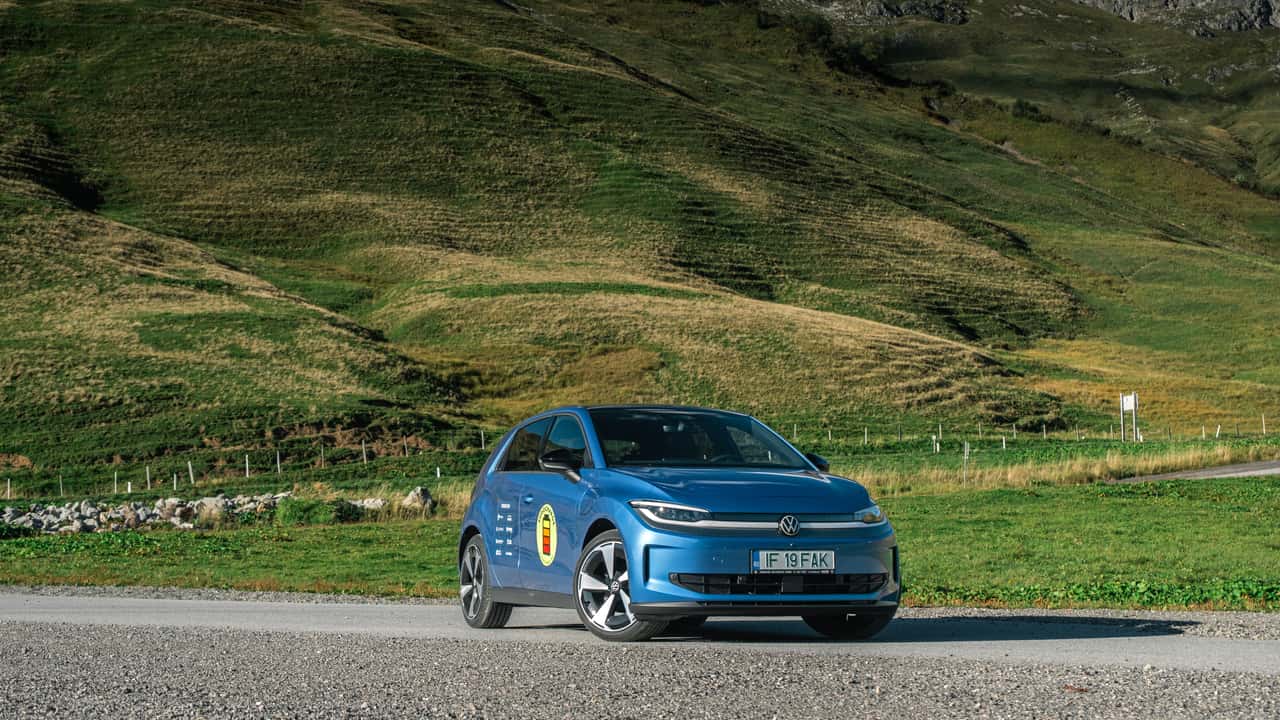
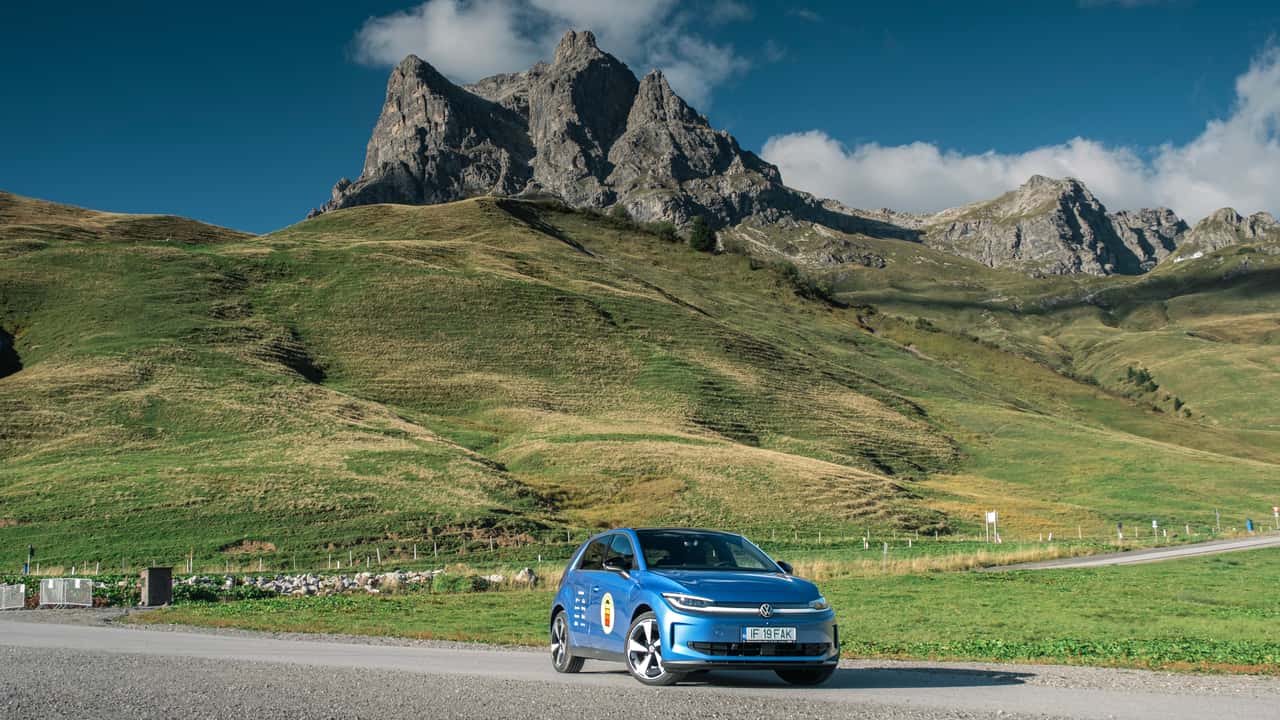
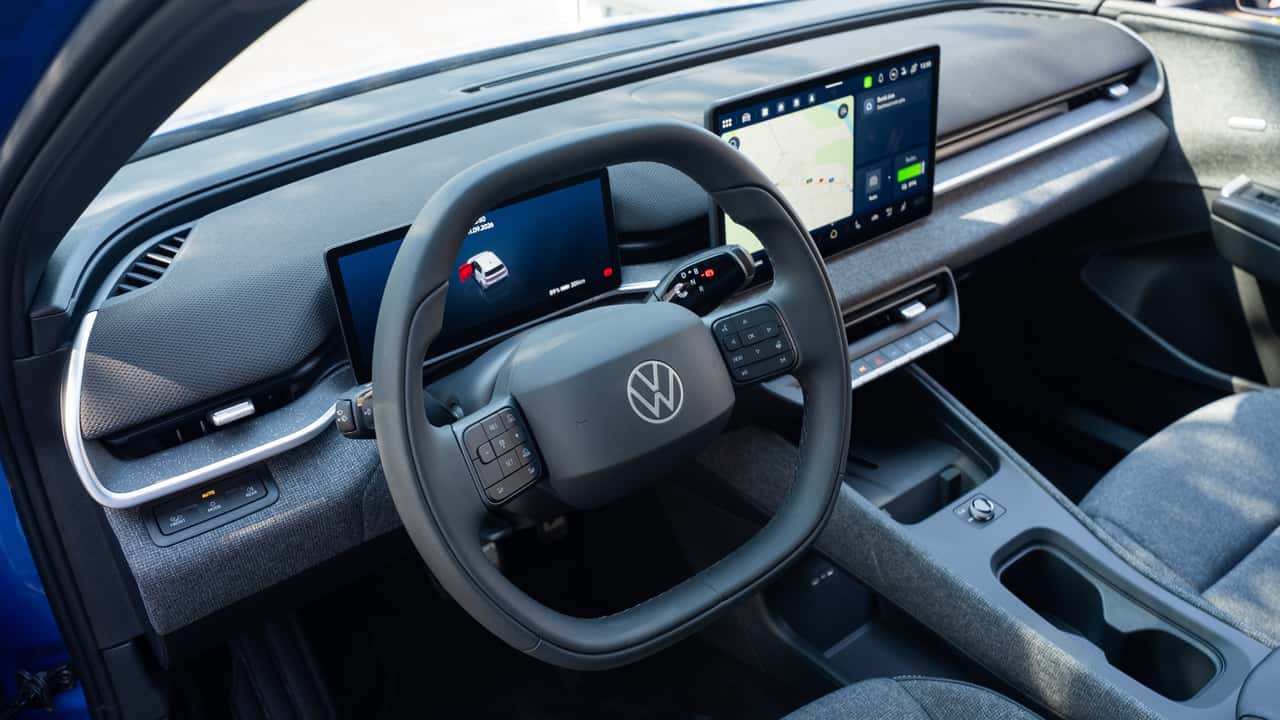
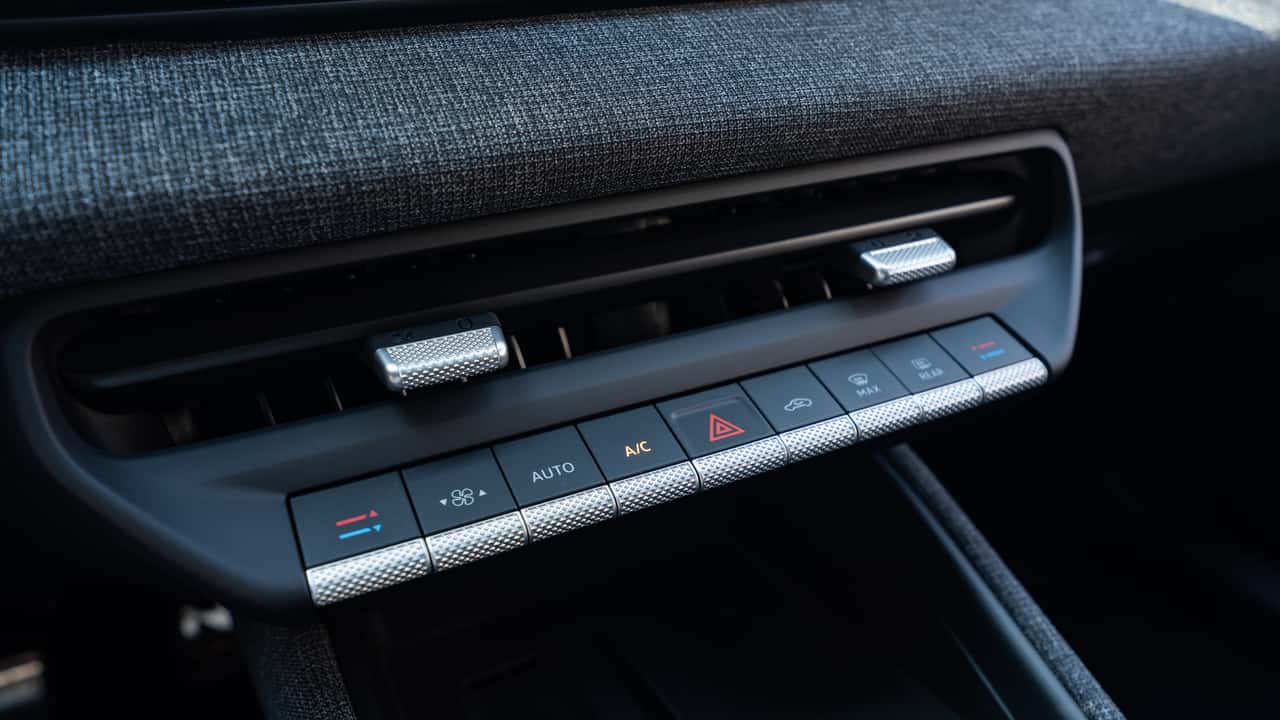
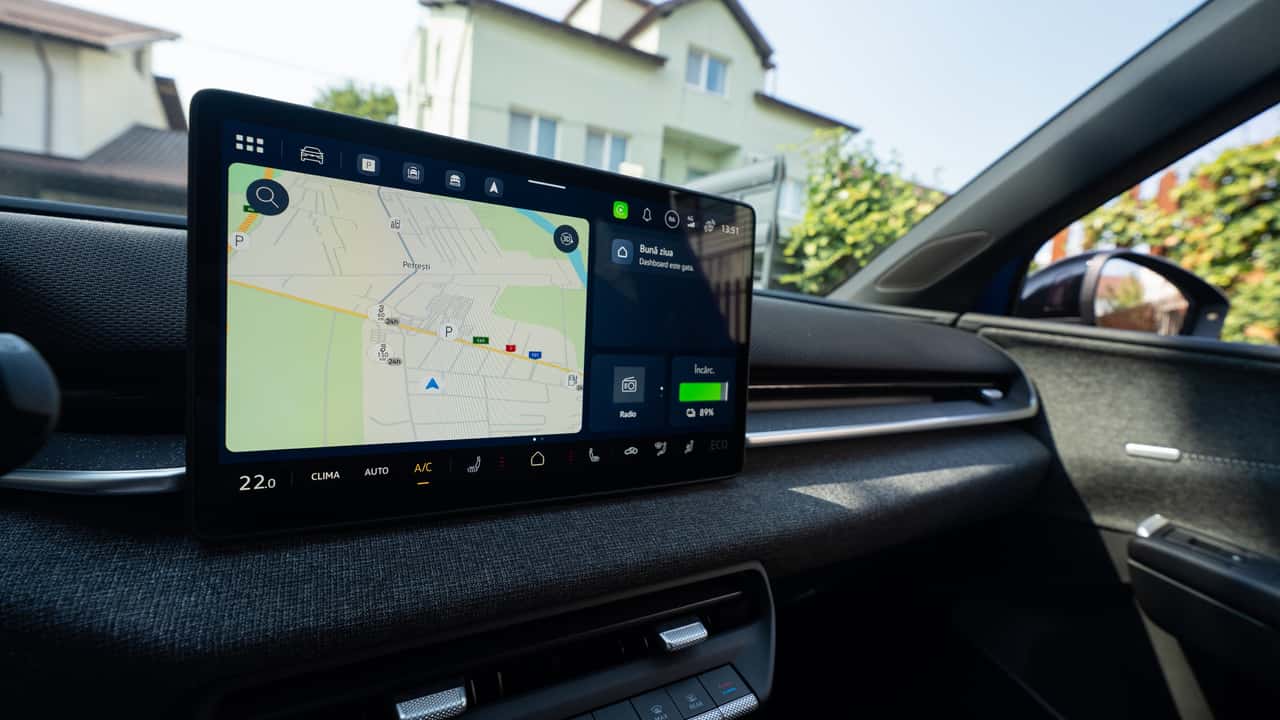
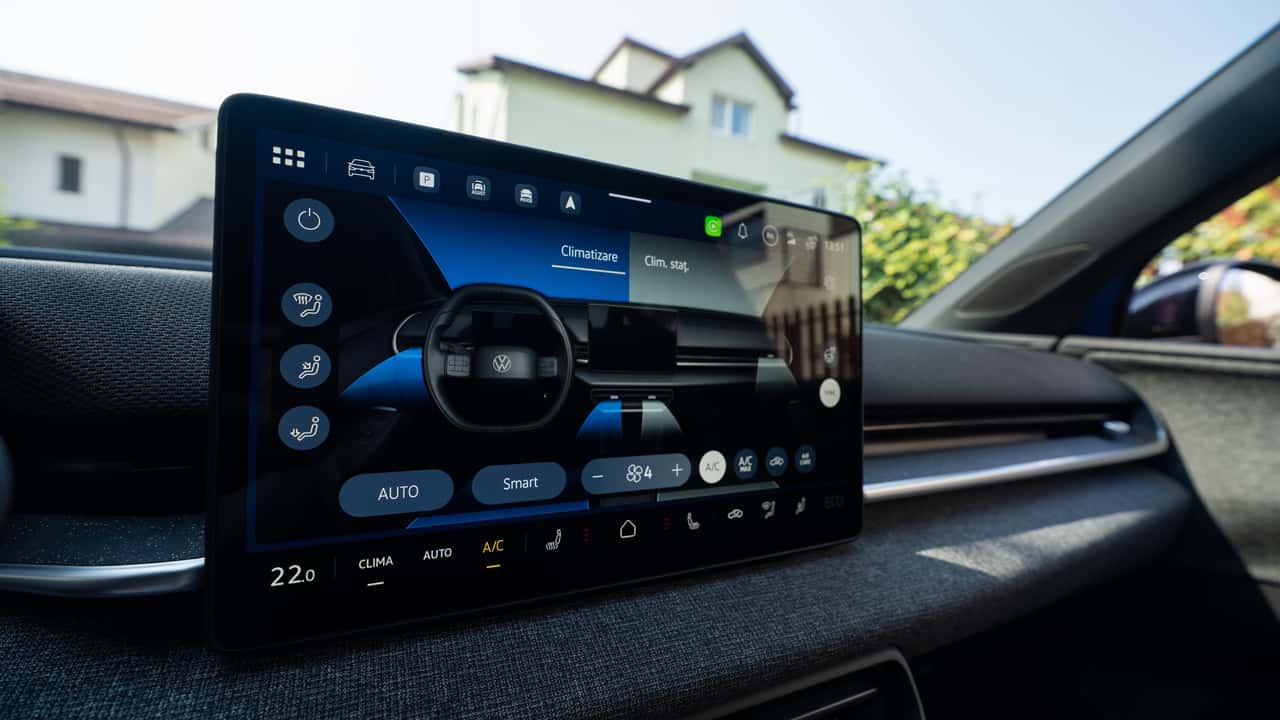
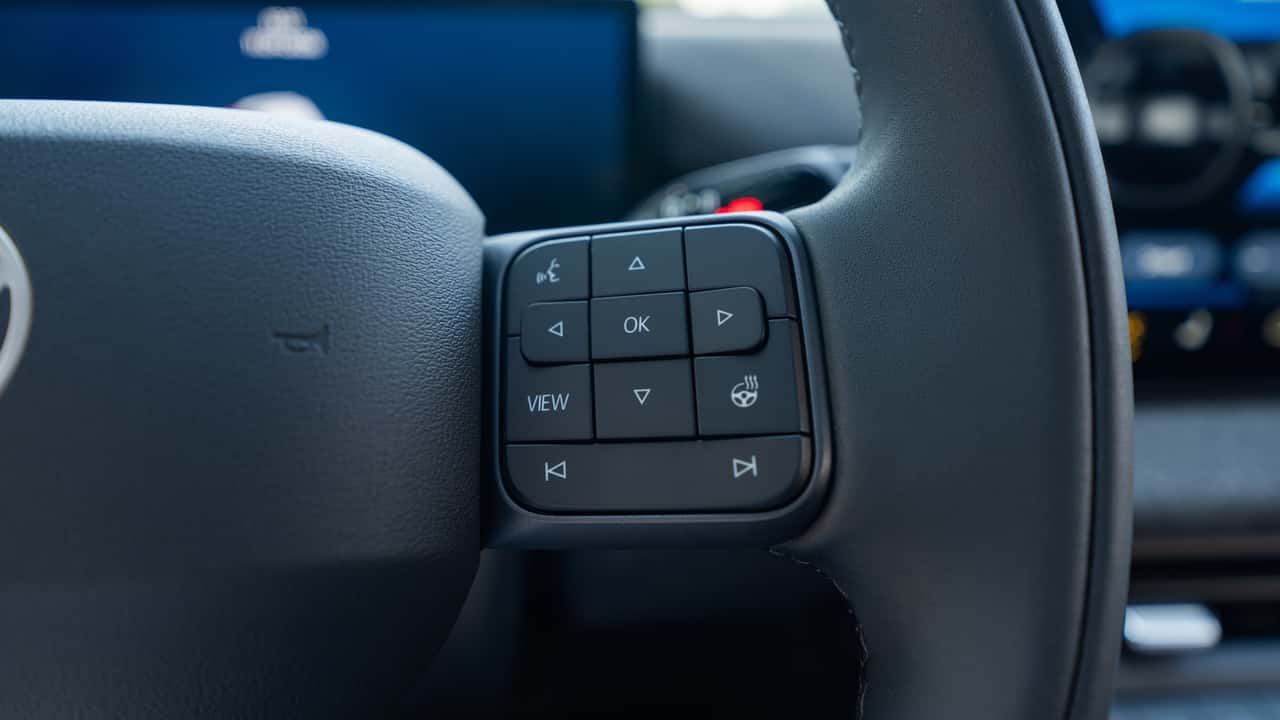
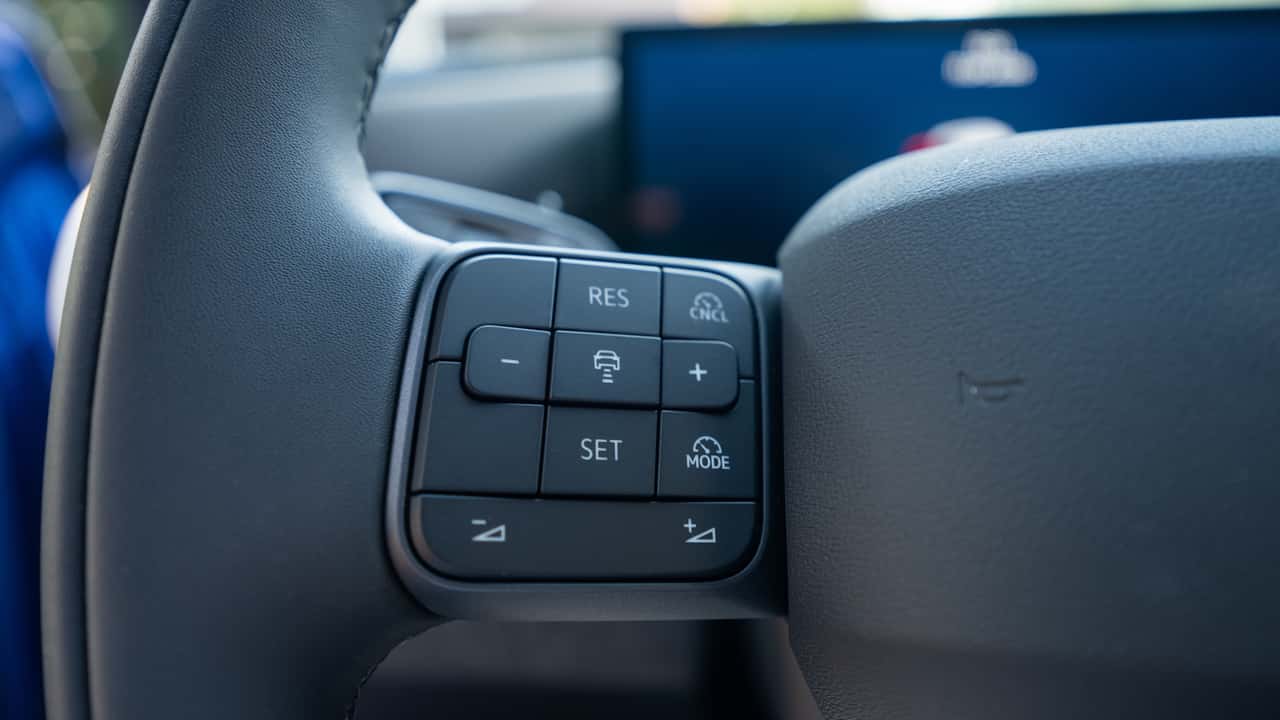
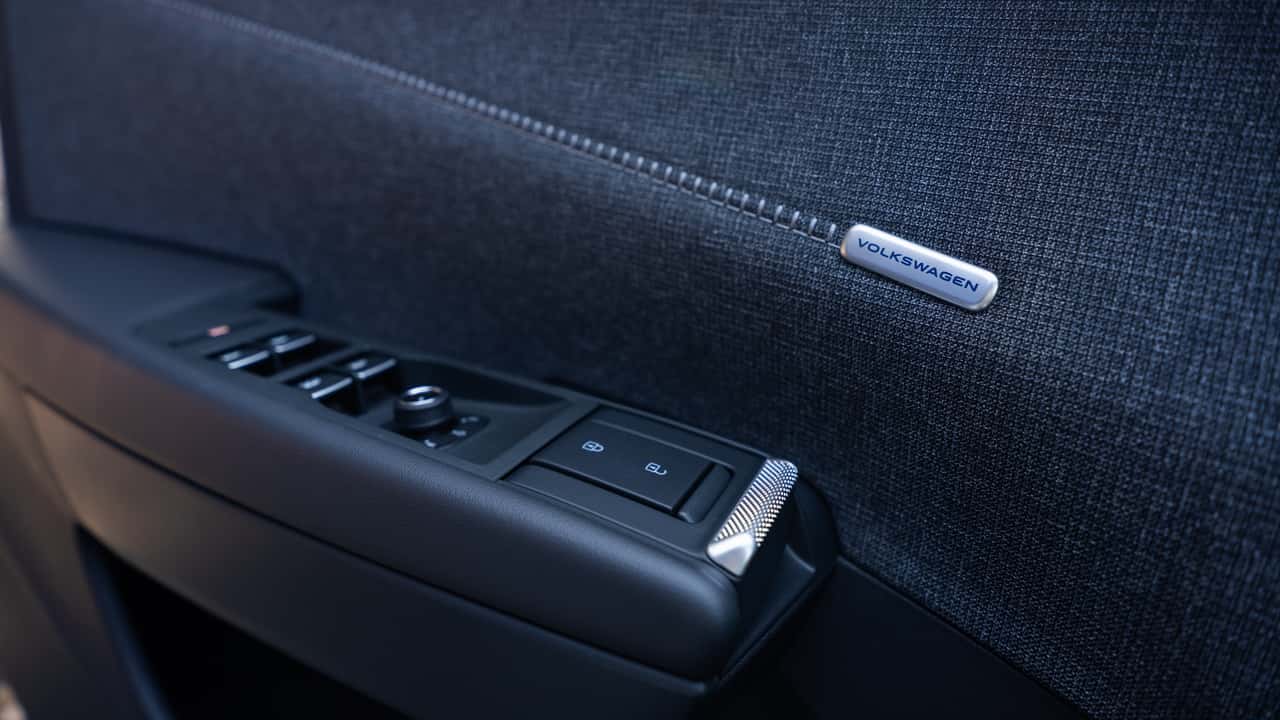
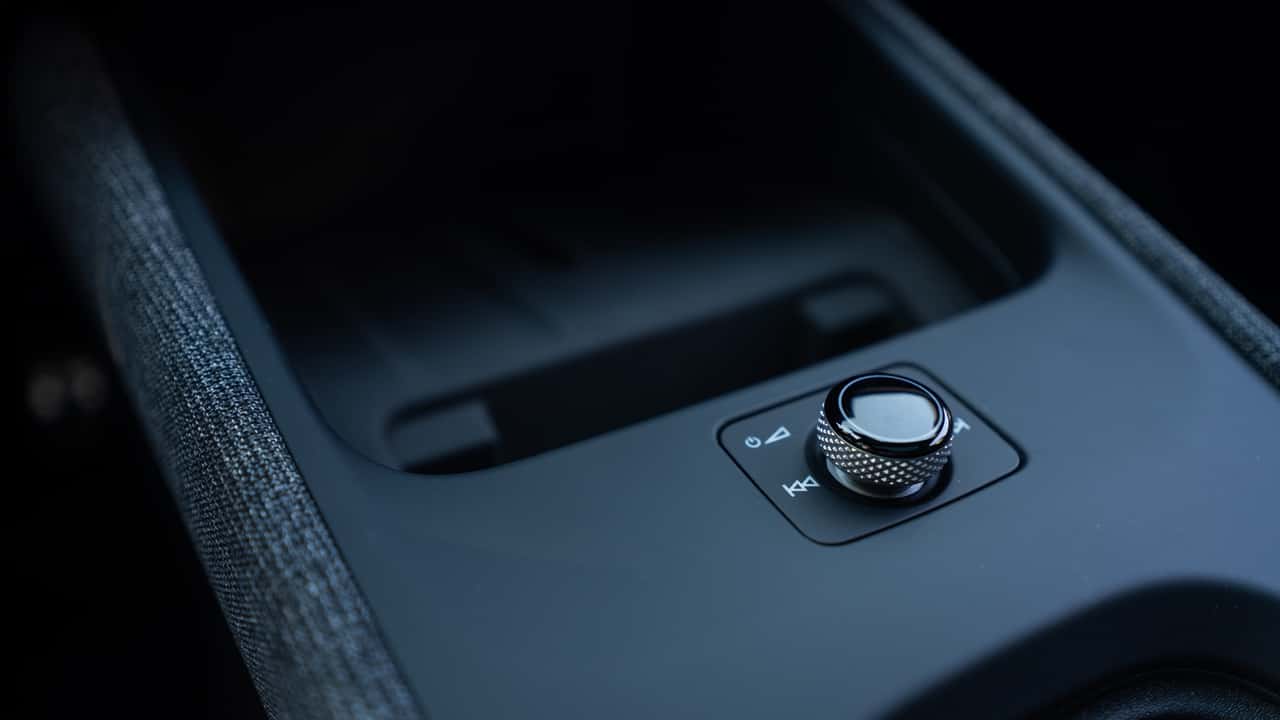
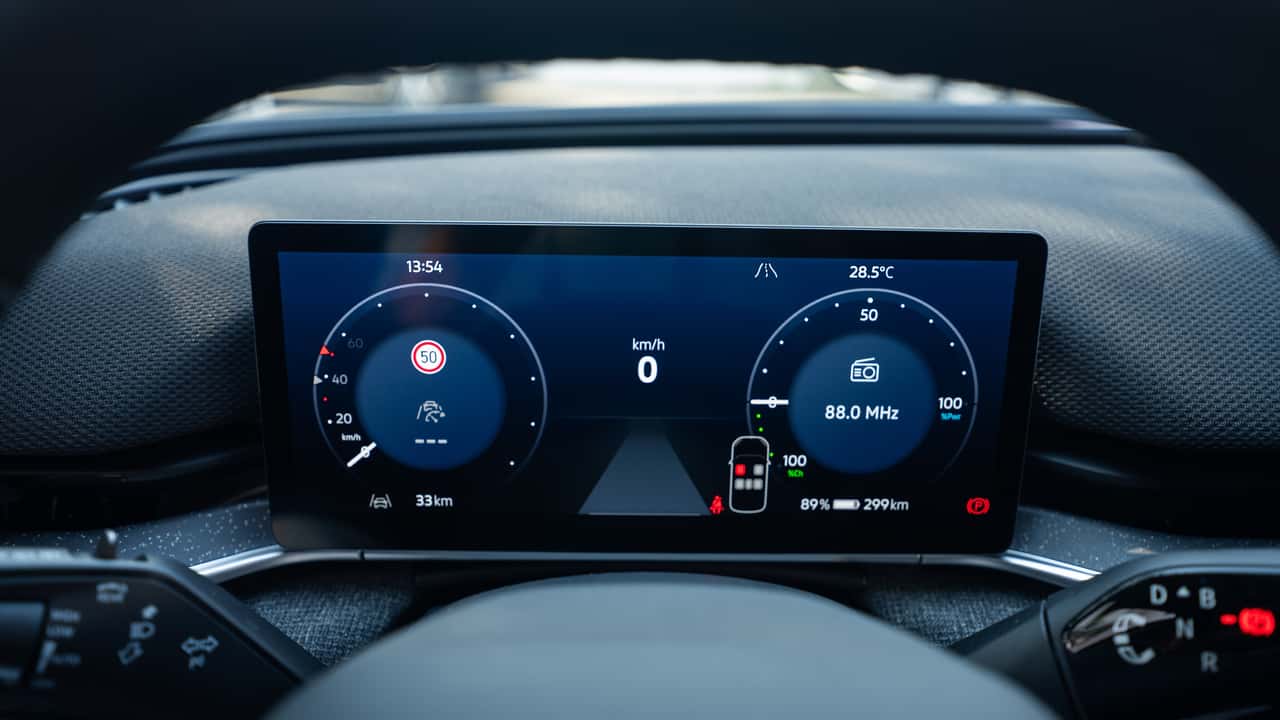
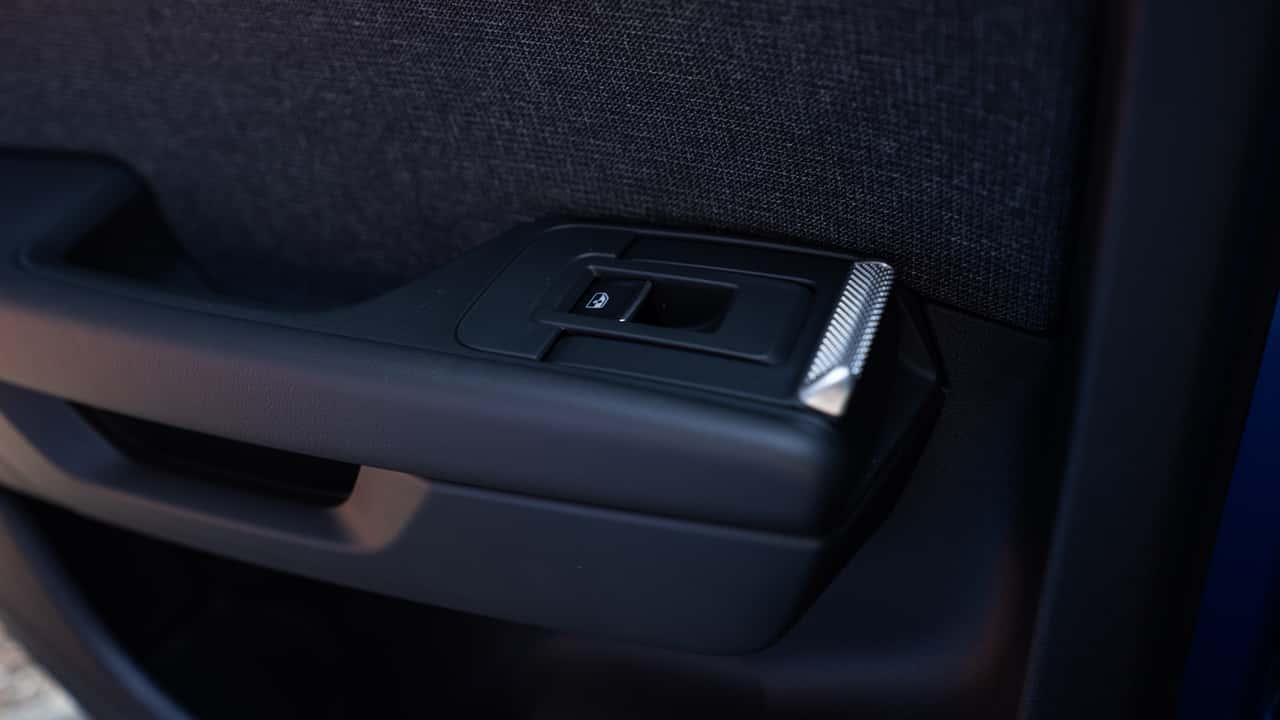
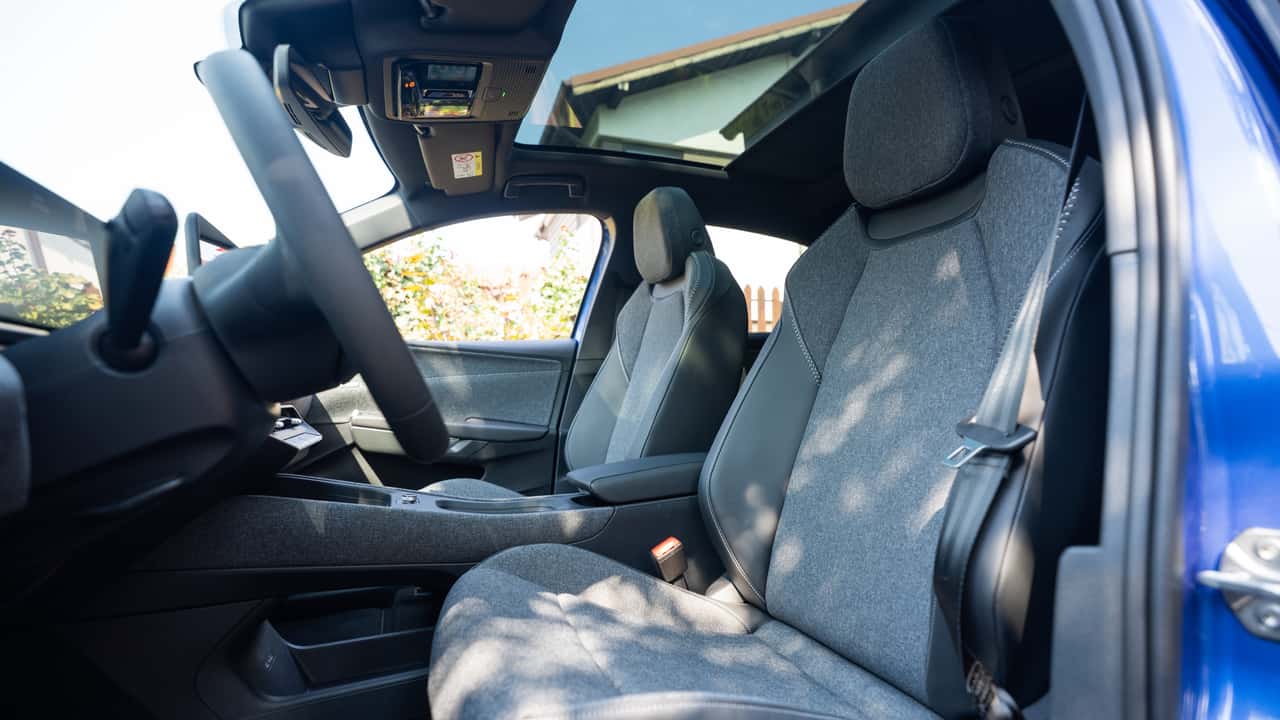
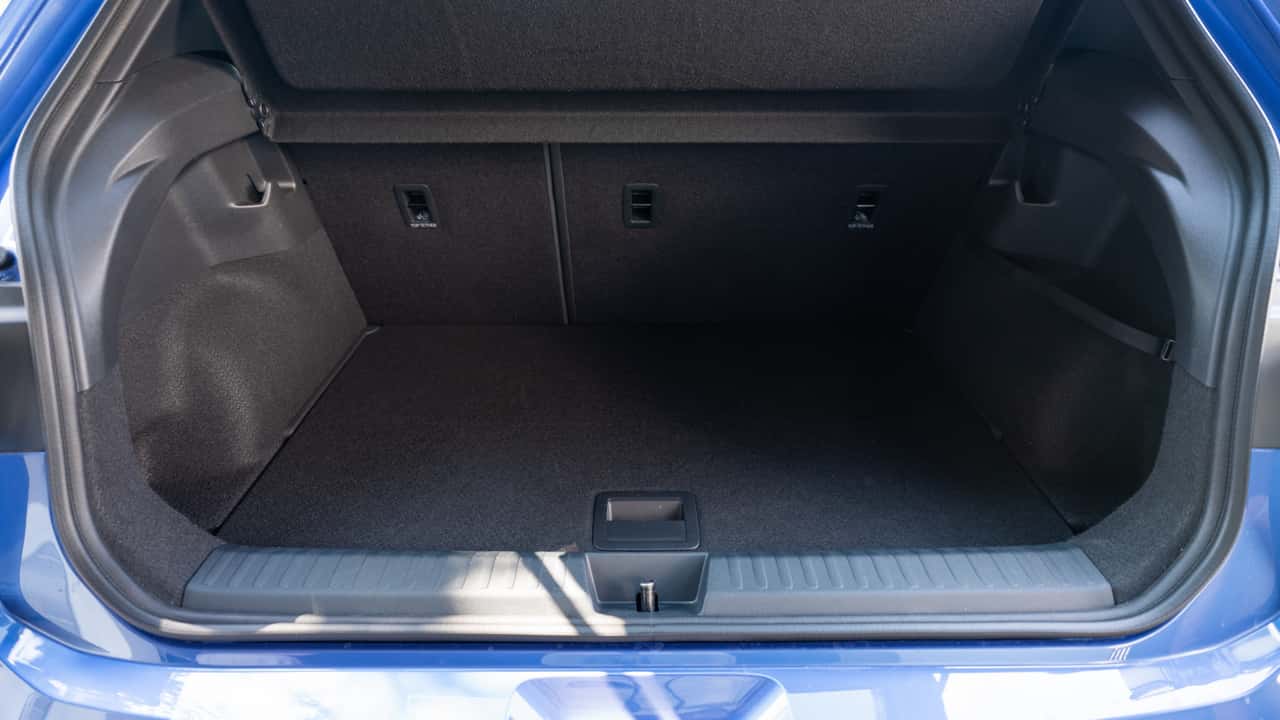
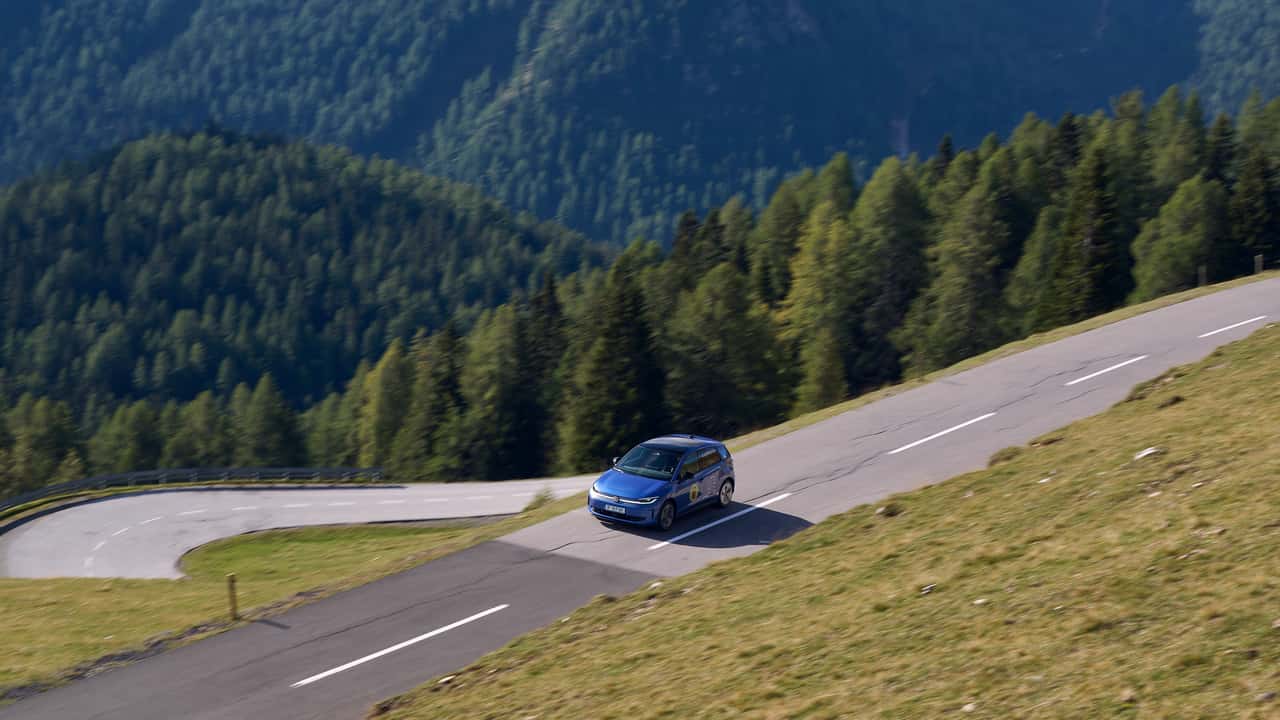
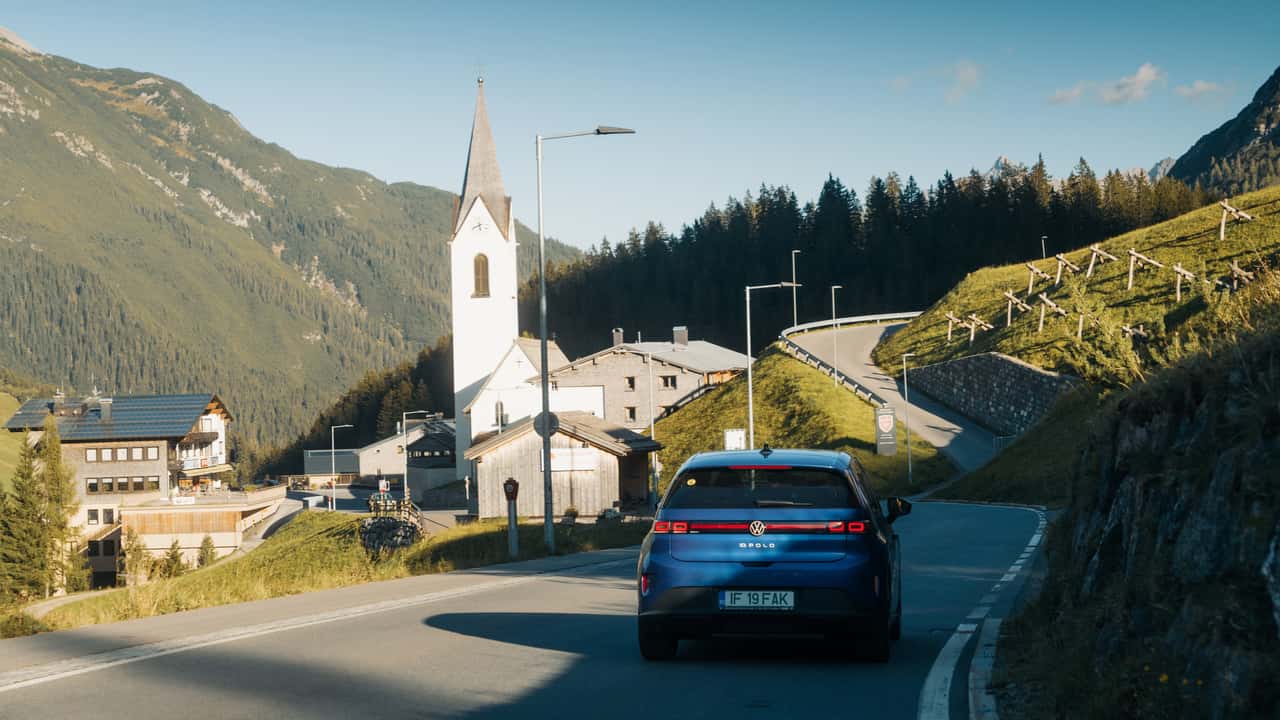
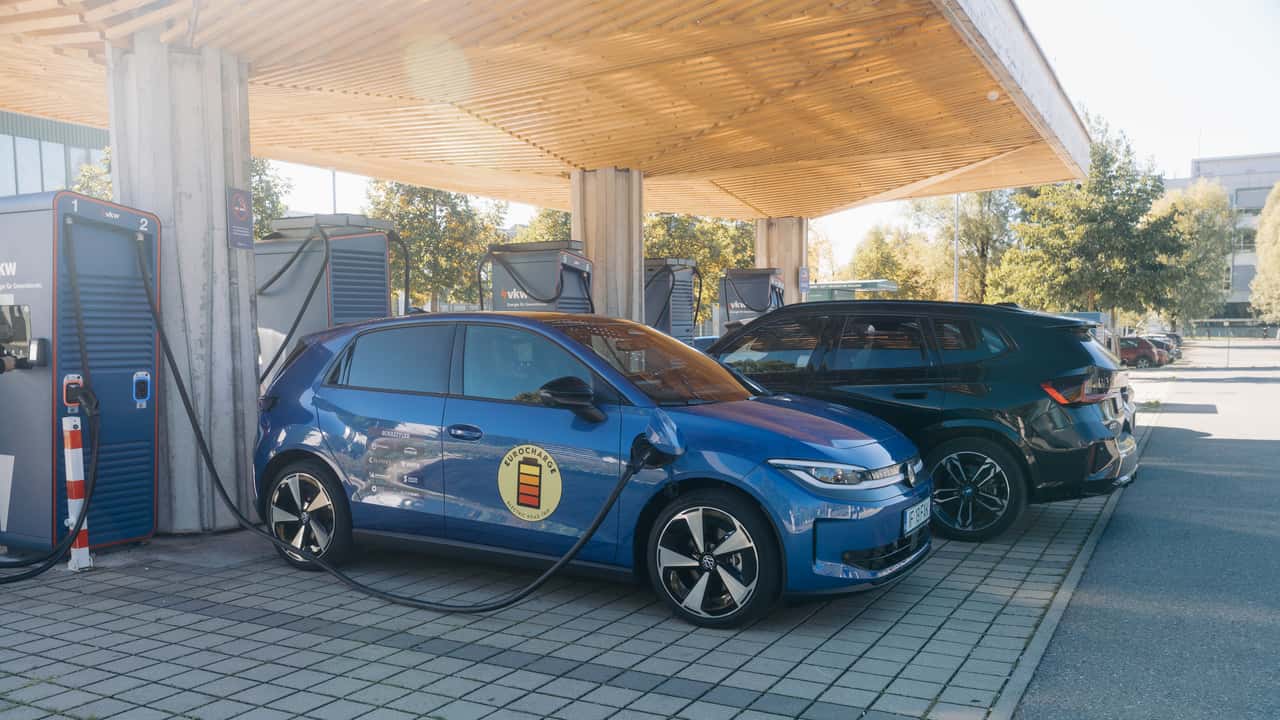
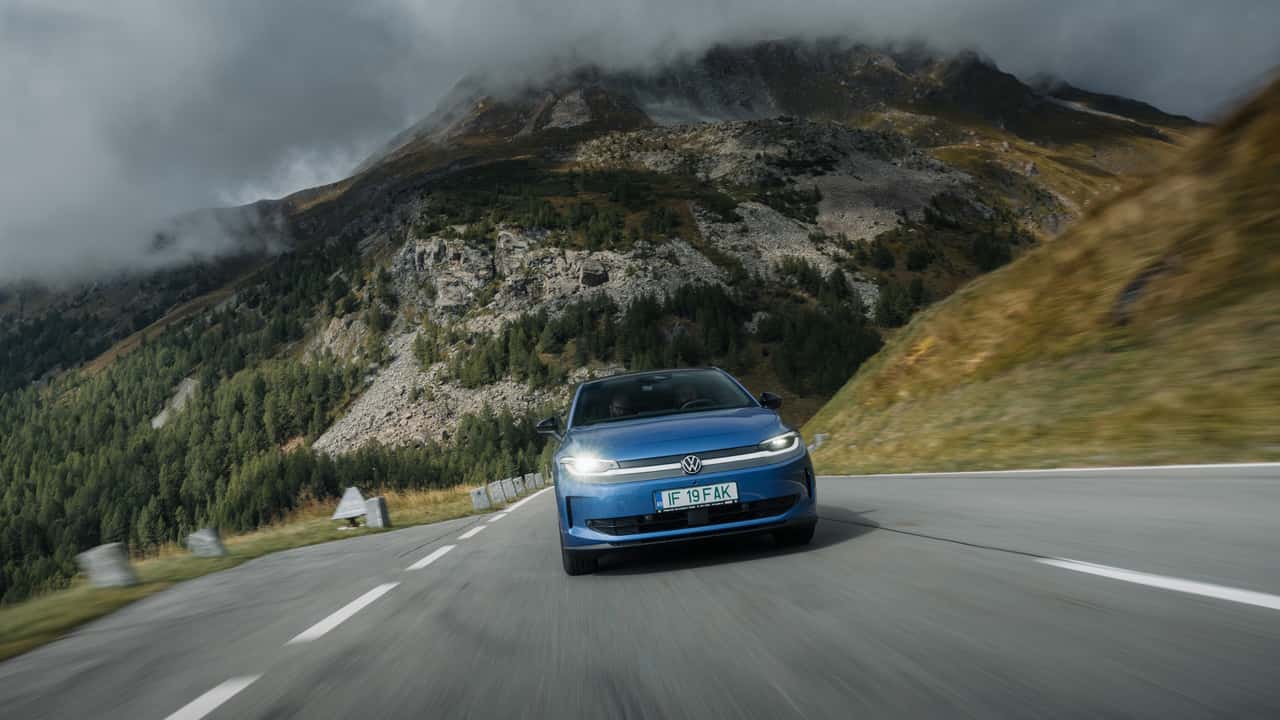
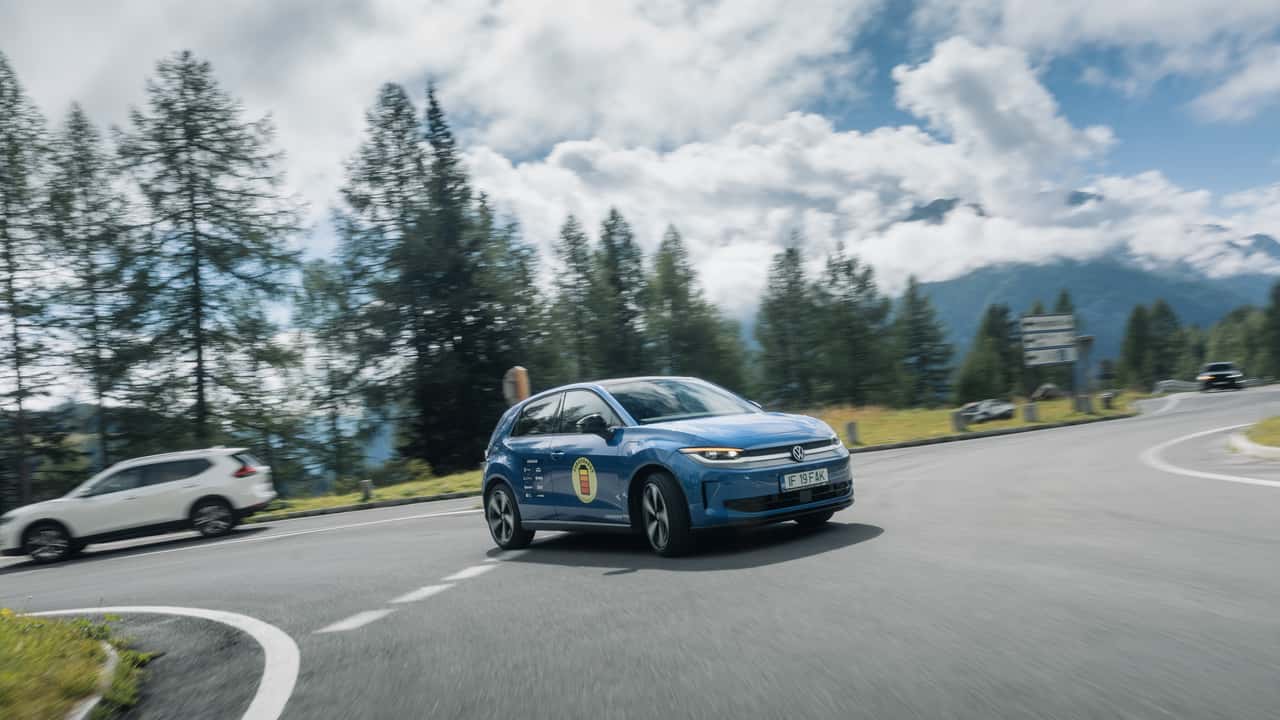
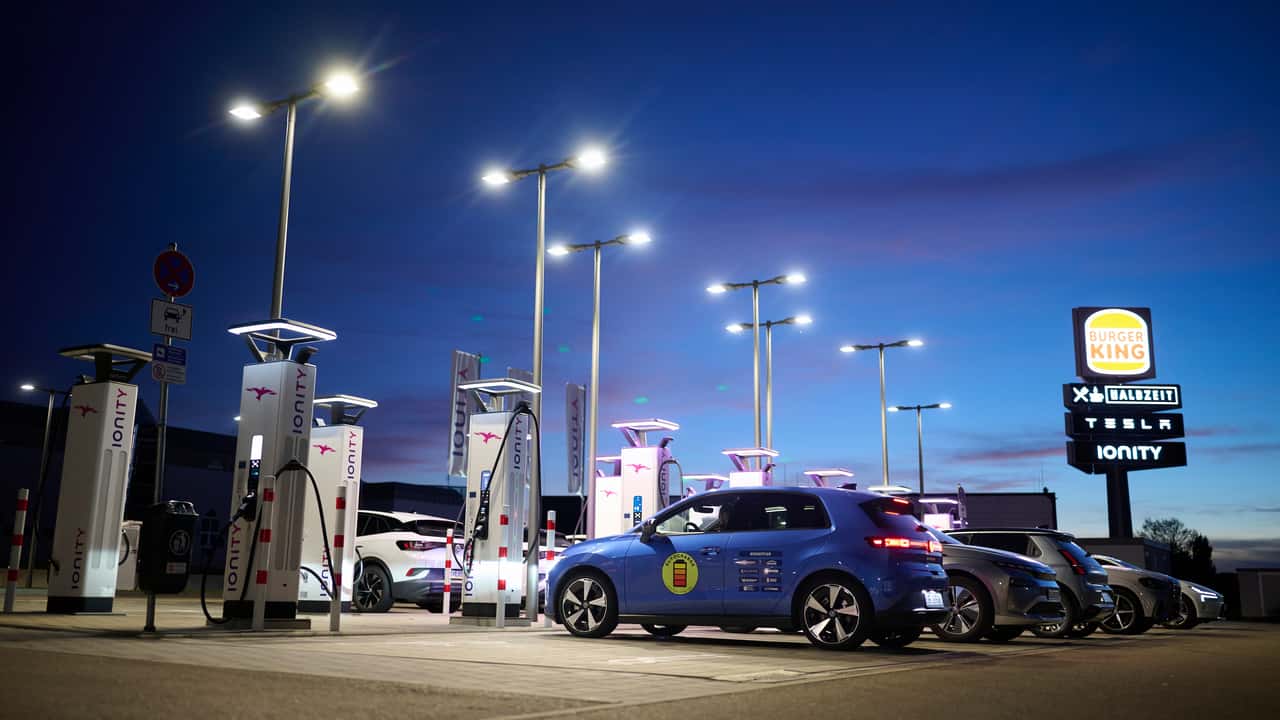
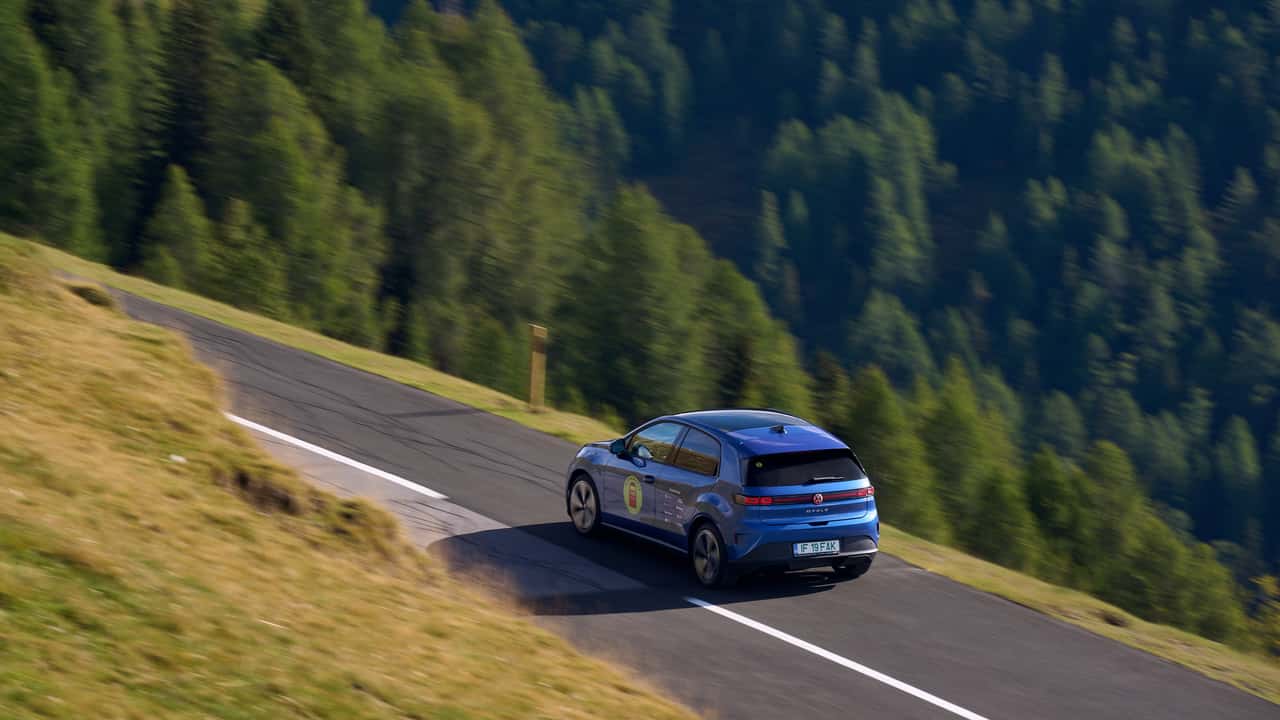
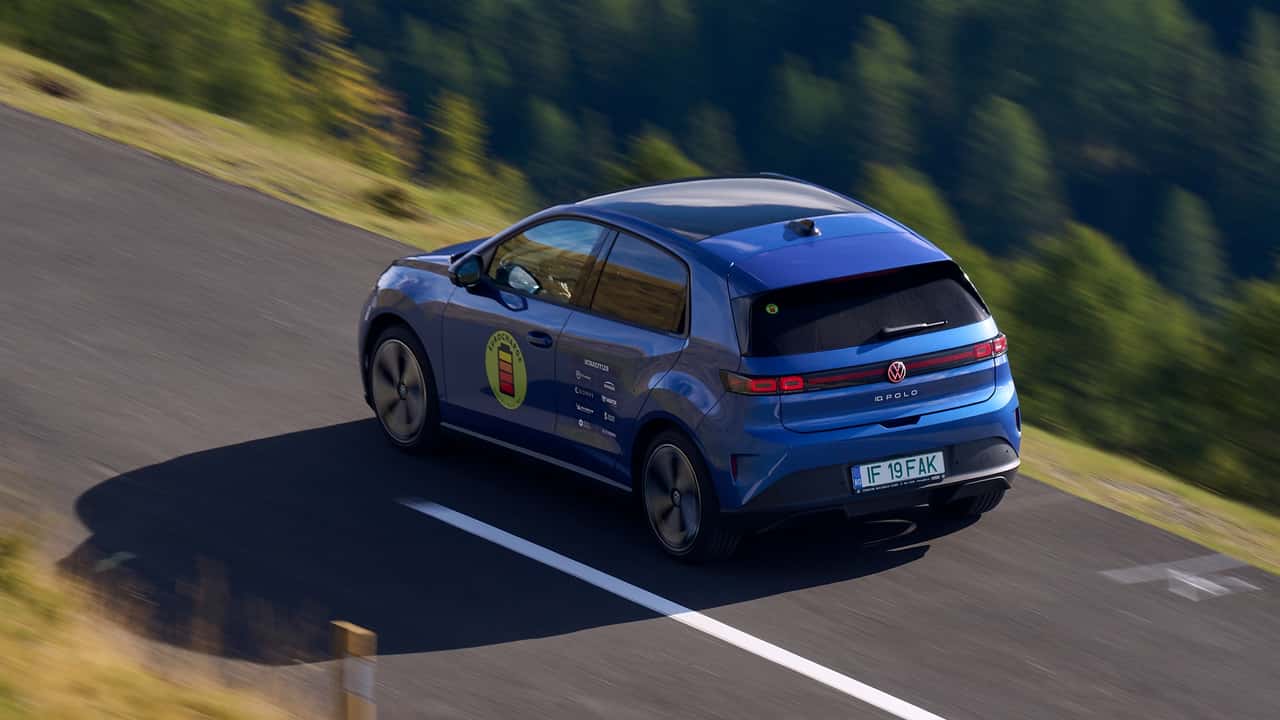
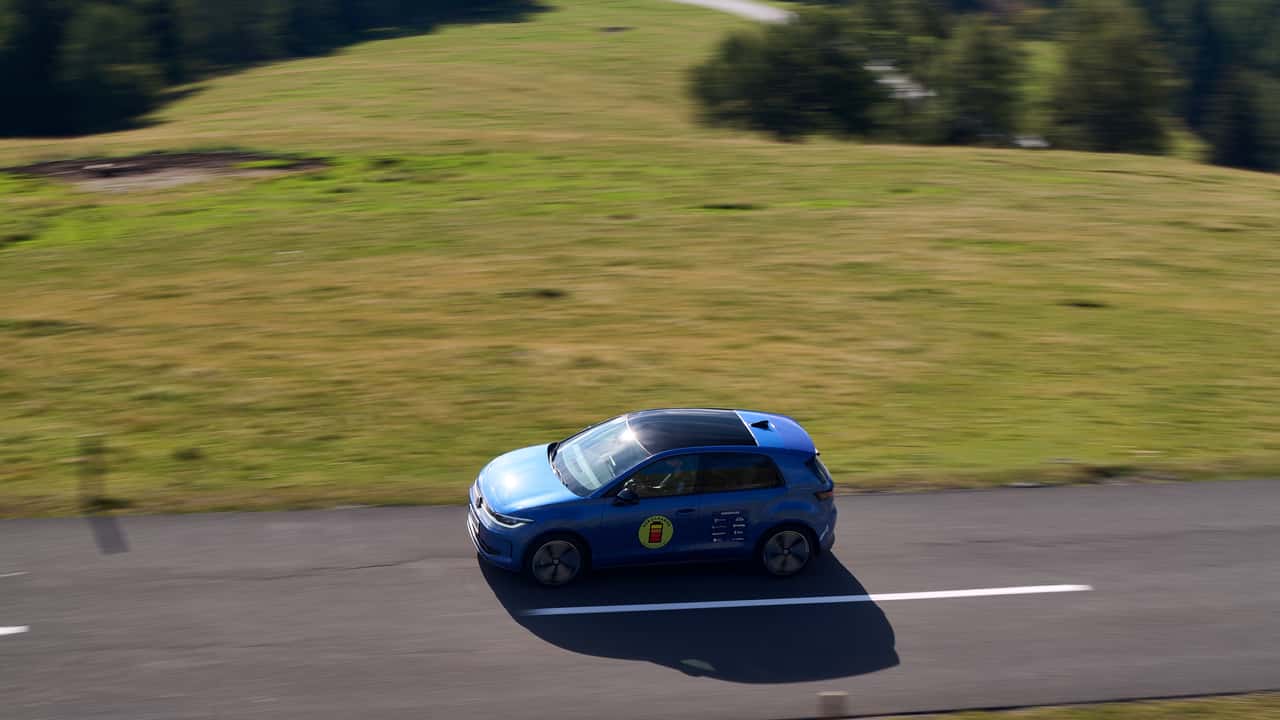
]]> contact@insideevs.com (Andrei Nedelea) https://insideevs.com/reviews/809842/vw-id-polo-road-trip/