
2026 Lexus ES 350e Review: Why This Is Toyota’s Best EV Yet
The plug-in ES is refined, comfortable, and takes the stress out of long roadtrips.
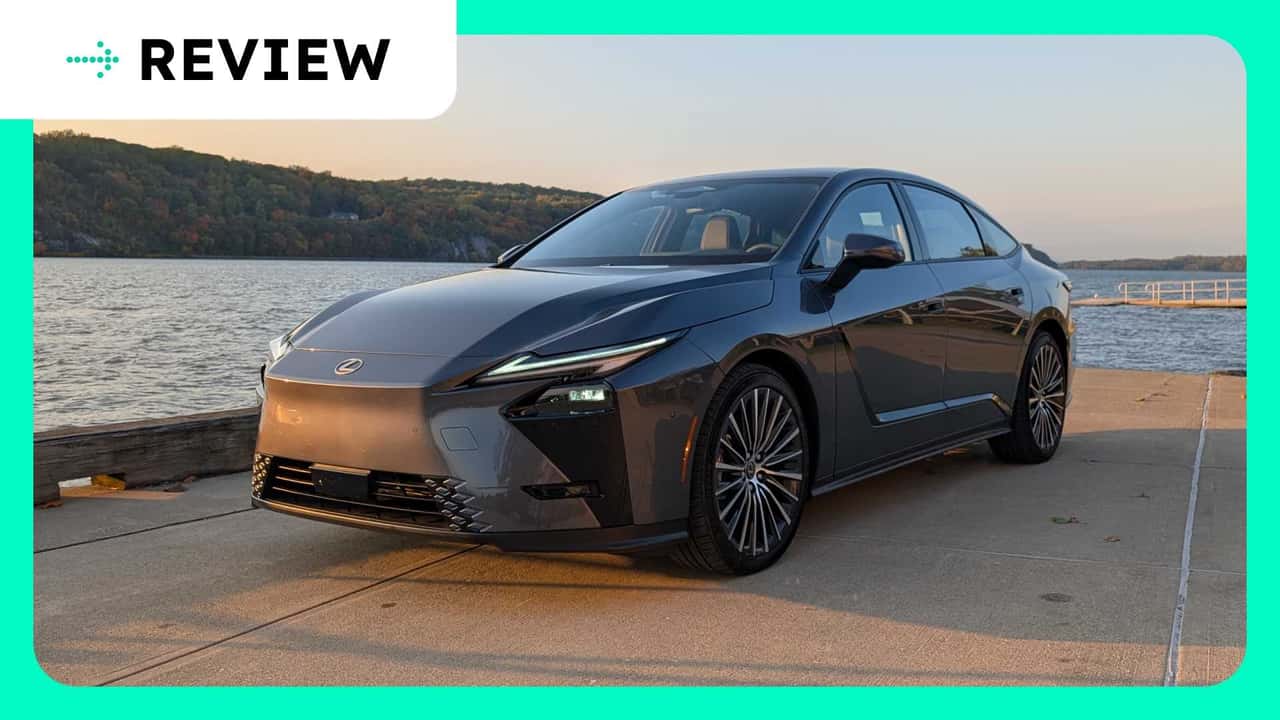

With the flagship Lexus LS no longer available in the U.S., the midsize ES is stepping into a bigger role in the brand’s lineup. The sedan is larger and more luxurious than ever, with every version now electrified. You can choose between a hybrid and—for the first time in the ES’s 37-year history—a fully electric variant.
The eighth-generation ES is also the most advanced EV yet from Toyota umbrella, featuring the next-generation Arene software platform. While the system is still a generation or two behind what Tesla and Rivian offer, it leaves behind the buggy and limited software experience on current Toyota and Lexus EVs.
Two trims are available on the ES: the front-wheel-drive 350e and the all-wheel-drive 500e. No single feature or driving attribute really blew my mind, but it’s good enough in many different aspects. I was impressed by the 350e Luxury’s comfortable ride, cavernous interior, and upscale cabin. The business-class rear seat was particularly welcoming.
It may not be the most exciting car on the market, but it gets a lot of the basics right.
[Full Disclosure: Lexus loaned me the ES for a week in New York for this test. It arrived fully charged. I returned it likewise.]
2026 Lexus ES 350e Specifications
2026 Lexus ES 350e: Has The Software Improved?
The ES is only the second model after the RAV4 to feature Toyota’s next-generation software. It’s not a fully software-defined vehicle, but moves a step in that direction. Its infotainment and advanced driver assistance system (ADAS) can receive over-the-air updates, but the vehicle’s body and driving dynamics can’t, at least not yet.
A more capable version of Arene with a fully centralized architecture is planned for the future. Toyota is aiming to bring the platform to 50 models spanning 10 million vehicles globally by 2030.
So what does it feel like in its current form? It’s… fine.
The 12.3-inch digital gauge cluster and the 14.0-inch central infotainment now work more cohesively and share a common user interface. The central display is sharper and more responsive than the older system still found in the RZ, with smartphone-like widgets. Driving information on the gauge cluster is also cleanly laid out with neat graphics and easy to read text.

More importantly, the system is more capable than before. The native navigation now automatically adds charging stops to longer journeys so you don’t have to figure out the logistics yourself. Android Auto offers similar functionality through Google Maps as well, which is a game-changer for long EV road trips. I’ve covered that in more detail in a separate story.
Another nice touch is the built-in dashcam that continuously records footage in a loop, automatically saves clips when it detects an incident, and lets you download footage via USB, eliminating the need to install an aftermarket dashcam.
Physical controls, thankfully, haven’t vanished. Climate functions are accessible through a bar at the bottom of the display, while manual controls below the screen handle temperature and volume. Even the air vents remain manual. Incredible! There are smaller conveniences, too, like the ability to adjust the co-driver’s seat through the touchscreen without having to awkwardly reach across the cabin.
But this isn’t a full blown modern software experience like you'd find on a BMW iX3, for example. You can’t stream videos while the car is charging. The voice assistant can’t handle conversational commands just yet. Changing drive modes requires four taps on the screen when using phone mirroring and three when navigating through the native system, which was frustrating. (Drive modes should have a dedicated physical button and not remain buried in the menu.) So the software works, but it's not particularly impressive.
2026 Lexus ES 350e Range, Efficiency, And Charging
While the entry-level ES 350e Premium with 19-inch wheels is rated for 307 miles of EPA range, my press tester was a Luxury trim with 21 inchers and 292 miles of EPA range. I found that adequate, with the ES 350e averaging about 3.8 miles per kilowatt-hour in highway driving in Sport mode. The standard battery has a gross capacity of 74.7 kWh.
The range is well below other premium electric sedans. The similarly priced Mercedes-Benz CLA will deliver over 370 miles on a single charge. The cheaper Tesla Model 3 is rated for 363 miles. Neither are as large or roomy as the ES, and not quite fit for an the apples-to-apples comparison. The BMW i5 and Audi A6 E-Tron have a more comparable EPA range but cost roughly $20,000 more. So the ES is uniquely positioned and ends up being a remarkable value (more on that below).
There’s nothing to brag about on the charging front, either. At a V4 Tesla Supercharger, the NACS-equipped ES 350e went from 10-80% in exactly 28 minutes, adding 188 miles of indicated range in that time. It’s also great that all model year 2026 Lexus EVs get a complimentary CCS adapter for backward compatibility at charging stations that don’t yet have NACS cables.
While charging was mostly seamless, I did encounter one hiccup. The ES features a powered charging-port door that retracts downward, with a button at the top right to open it. Even with the car unlocked, the door would sometimes refuse to open or require multiple attempts, with several seconds of waiting in between. Switching the car off completely largely resolved the issue. A Lexus spokesperson told InsideEVs that the press vehicle was a prototype and that production models might not experience the same problem.
2026 Lexus ES Design And Interior
At 202.3 inches long, it’s 6.5 inches longer than its predecessor, making it longer than both the Mercedes-Benz EQE and BMW i5. Its wheelbase has also grown by 3.0 inches to 116.1 inches. The floor-mounted battery pack makes the ES look jacked up as well. At 61.4 inches tall, the ES is 0.4 inches taller than the Volvo EX30 and just an inch shorter than the Hyundai Kona, both of which are advertised as small SUVs. It’s not ugly by any measure but the proportions may take some getting used to, especially if you like old-school sedan designs.
The payoff is a cavernous cabin, particularly in the back. The rear seats are the ES’s party trick, and the long rear windows offer an excellent view of the exterior. On the Luxury trims, a $3,635 Executive Package takes the experience to another level with power-reclining rear seats, a passenger side footrest, massage, heating and ventilation, a center armrest with climate and seat controls, a powered rear sunshade, and a hands-free powered trunk.
With the touch of a button, the front passenger seat slides forward and folds out of the way, letting you recline in the back, extend the footrest, and stretch out properly. It’s about as close as you’ll get to a budget Mercedes-Benz S-Class experience without spending a fortune.
The 17-speaker Mark Levinson audio feels premium, although its clarity and refinement doesn’t match some other premium audio systems I’ve heard in this price range. The bamboo trim on the doors is another nice touch in daylight, but feels excessive at night. The trim doubles as an ambient lighting strip, with LEDs illuminating a huge chunk of the door panel.
To put it mildly, it’s like a blingy light show you never asked for. The lighting, however, flashes red to warn of approaching vehicles and cyclists, so it’s a useful safety feature. Other automakers do the same but in a far less gaudy manner.
2026 Lexus ES 350e Performance, Ride, And Handling
With 221 horsepower and 198 pound-feet of torque, the front-wheel-drive ES 350e isn’t exactly quick off the line. Remember it weighs 4,690 pounds, so off-the-line performance isn’t a strength with its current state of tune. Instead, acceleration is smooth and linear. Lexus claims a 0-60 miles per hour time of 7.4 seconds. The more powerful, 338 hp ES 500e AWD cuts that to 5.1 seconds.
Still the FWD delivers ample grunt for overtakes and highway merges. If you need a quick burst of speed, there’s always enough torque available on tap—at least at legal highway speeds—thanks to the beauty of electric motors and instant torque.
The ride felt bouncy, but comfortable for most part. The ES absorbs both sharp potholes and larger road imperfections well. On the highway, it settles into what feels like an effortless glide. It feels planted enough through corners, but the weight becomes impossible to ignore, even on everyday ramps and exits.
The ES is at its best when driven in a relaxed manner. Better yet, let someone else take the wheel. Recline in the back, extend the footrest, and enjoy the scenery through the large windows.
2026 Lexus ES 350e Verdict
The ES is also available as a hybrid, and there are some valid reasons to choose one. If you lack access to home charging or regularly travel somewhere with limited infrastructure, the hybrid may be the more practical choice. But Lexus has reserved some of the ES's most compelling features, like the excellent rear-seat Executive Package, exclusively for the EV.
That makes the EV far more compelling if charging is a non-issue for you. Otherwise, getting the hybrid over the EV is like paying for first class and choosing to sit in economy. The entry-level EV trim undercuts the hybrid by about $1,100, but the range-topping EV trim costs nearly $3,000 more.
Gallery: 2026 Lexus ES 350e


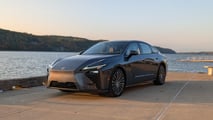
That said, it’s still a remarkable value at its price. Starting at $48,895, including destination, the ES 350e costs only around $4,000 more than a Tesla Model 3 which is smaller, gets a spartan interior, and nowhere as luxurious. The ES also undercuts the BMW i5 and Audi A6 e-tron by roughly $20,000. With improved software, a well-appointed cabin, and an overall priority to comfort over thrills, the ES is easy to recommend for buyers in this price range.
More importantly, though, it’s an encouraging sign of what to expect from future Lexus and Toyota EVs. The automaker is slowly coming around on that front, proving the future is increasingly electric and better than ever.
Contact the author: suvrat.kothari@insideevs.com
Related Stories
RECOMMENDED FOR YOU
I Let Android Auto Plan My EV Roadtrip. Here’s How It Worked
Kia Plans To Take On Affordable Chinese EVs In Canada With Its Sub-$40K EV3
The 2027 Lexus NX Plug-In Hybrid Gets A Bigger Battery And Fast Charging
‘Propulsion-Agnostic’: GM Wants To Bring Tesla-Style Software Features To Its Gas SUVs, Too
Over 60% Of Toyotas Sold In Q3 Were Electrified
Want The Best Range Rover? Get The Electric One: First Drive
The 2027 Lexus TZ Will Cost $65,000 But Have Way Less Power Than Expected