
Audi Recalls 9,048 Q4 E-Trons Because The Battery Could Catch On Fire
It's the same thing that just happened to the Volkswagen ID.4.
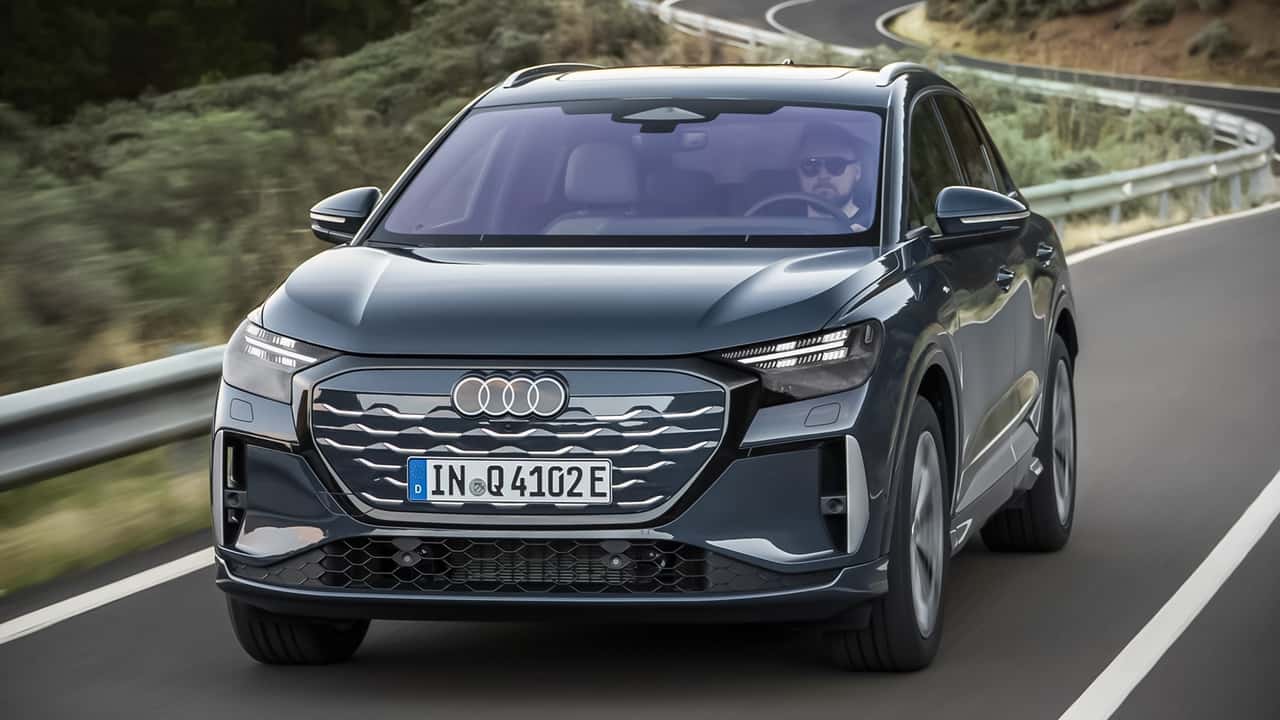

Volkswagen Group's EV batteries are going through a rough patch at the moment. Just a couple of weeks ago, VW issued a recall for ID.4 battery packs that could potentially catch fire. Now, the same is happening for the Audi Q4 e-tron, with 9,048 cars being recalled. And just like with VW and the ID.4, Audi is recommending that owners keep their batteries under 80%.
This shouldn't come as too much of a surprise, as the Q4 e-tron and ID.4 are mechanical siblings, and likely share the same battery supplier. It seems like VW's problem is what triggered Audi to investigate the Q4 e-tron, leading it to this recall.
According to the recall notice, the Audi Produce Safety Committee was informed of thermal runaway events in some of VW's high-voltage batteries, the same type used in the Q4. After that, Audi "observed that in certain high-voltage batteries, certain charging profiles combined with a state of charge over 80% may result in thermal propagation within the high-voltage battery."

Most of the batteries that are said to potentially have this issue were sold in North America, although there haven't been any recorded cases of battery fires. While there isn't a fix just yet, Audi ran diagnostics on Q4 e-tron batteries, and any vehicle that needs further assessment will need to be brought in to a dealer for extra testing. Charging be limited to 80% state-of-charge, with a temporary charge limiter put in place. Once the battery is fixed, or it's determined that the battery is OK, the limiter will be removed.
According to the recall, the supplier who provided the batteries is SK Battery Manufacturing in Hungary, part of SK On. There's currently no known reason for why these batteries are facing this issue, in either the VW or Audi. Hopefully, the VW Group can come up with a remedy quickly, as it can be scary for customers to hear of potential battery fires. Admittedly, if you keep the battery under 80%, it shouldn't be an issue, and there are going to be software limiters that prevent overcharging it. However, that also means that customers now lose 20% of the battery capacity they paid for, which can have frustrating effects on peoples' daily lives. We'll see what VW's eventual fix for these cars is, whenever it comes out.
Check these related stories
RECOMMENDED FOR YOU
Spotify’s First Native In-Car App Is Hitting Audi EVs First
The BMW iX3 Destroyed The Rivian R2 In A Highway Range Test
Here's What's Good (And Bad) About Owning An Audi E-Tron GT
Chinese Auto Giant Chery Wants To Crack The U.S. Market. It Thinks Detroit Could Help
The Best Electric Sedans To Buy In 2026: Top Picks For Range, Performance & Style
This $400,000 RV Delivers EV Camping Without The Range Anxiety
Chery Joins China’s EV Charging Race With A Bold Promise