
VW’s Hottest Electric GTI Will Have Fake Gears
The ID. Polo GTI Clubsport is set to feature Hyundai N-style simulated gearshifts, after VW said it wasn’t interested.
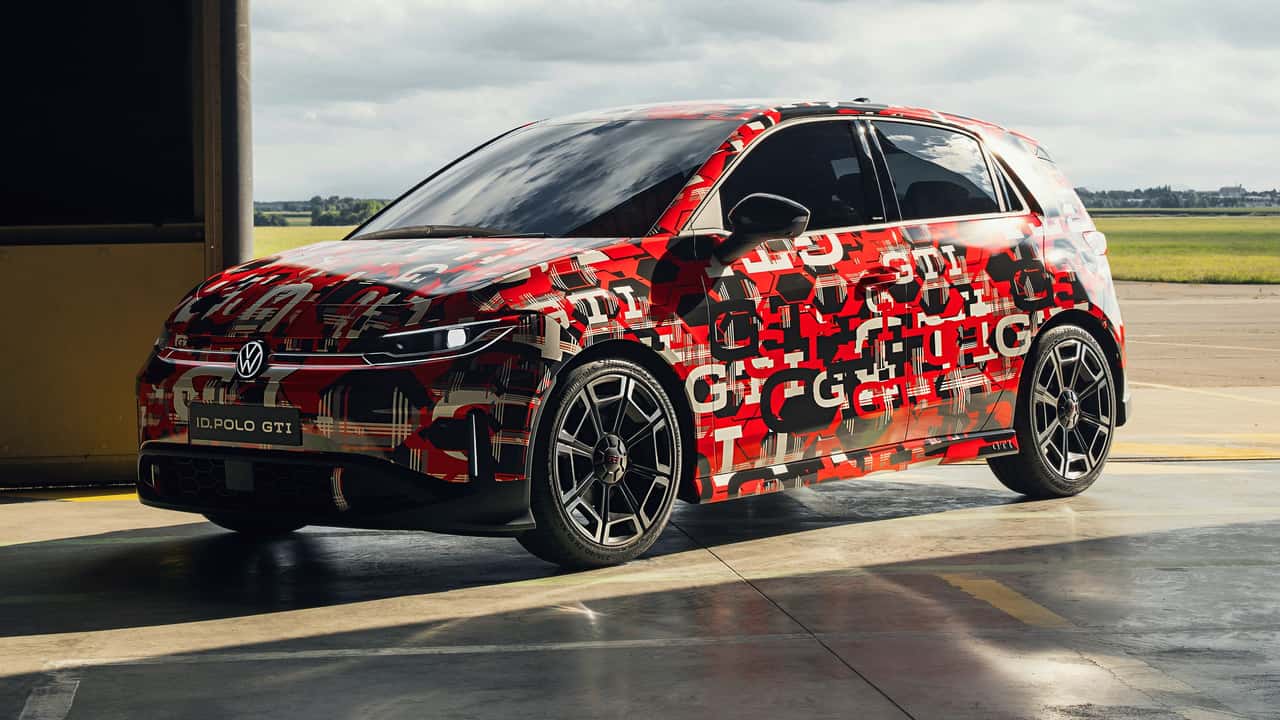

- The ID. Polo GTI will get simulated engine sound, but pretend shifts may be saved for the hotter Clubsport.
- The Clubsport could separate itself with more power, extra torque, and a lower, stiffer chassis.
- VW could use fake gears, sound, and retro displays to make the ID. Polo GTI feel more like a classic GTI.
Volkswagen will give its upcoming GTI-badged ID. Polo hot hatch has a simulated engine acceleration sound but no pretend gears. However, while fake shifting won’t be available on the standard GTI model, it could feature on a hotter Clubsport variant.
The news that the GTI wasn’t getting simulated shifts came in September 2023, in a report by Autocar, which cited information it had obtained from the team developing the model. The same article quoted VW’s R&D boss Kai Grünitz as saying the GTI was getting two or three special gadgets to “put a smile on your face,” but didn’t say what they were.
Now Autocar is reporting that the electric GTI is getting fake shifting, after all, but only in the track-focused Clubsport. VW’s vehicle dynamics boss, Florian Umbach, said “We are working on something,” adding that it’s “a similar kind of paddle shift power delivery that the [electric] Hyundai N cars have.”
Gallery: Volkswagen ID. Polo GTI






The Clubsport will also get more power. Umbach explains that "There is certainly more peak power that we can find from the motor and battery hardware that we have, and more torque that the front axle could handle also. There is clear potential.” This extra oomph will likely be paired with lower, stiffer suspension and other chassis enhancements, as well as a more aggressive exterior.
The ID. Polo GTI is set to be unveiled later this year and go on sale in 2027. The ID. Polo, on which it’s based, has already been fully uncovered with up to 208 horsepower, and it can sprint to 62 mph (100 km/h) in 7.1 seconds. The GTI gets a modest bump to 223 hp (exactly the same as the mechanically related Cupra Raval Vz), dropping the acceleration time to 6.5 seconds.
But that’s not enough to match other electric hot hatches, like the Peugeot E-208 GTi, which is far more powerful with 277 hp and a 5.7-second sprint. Its Stellantis sister vehicle, the Opel/Vauxhall Corsa GSE, has the same output but is two tenths quicker.

It, therefore, wouldn’t be surprising to see the Clubsport come close to matching the power of the Stellantis hot hatches. It should have no trouble outrunning Renault's Alpine A290, which might look like a rally car for the road, but it only has 218 hp with a 6.4-second sprint time.
But the Clubsport won’t just be about going fast, because with its simulated engine and gears, it will also try to deliver a more traditional combustion GTI experience. We don’t know if it will have selectable sounds, which could also be paired with different gauge clusters to match the style of different GTI generations.
The ID. Polo already has a retro theme for the driver’s display, which mimics the look of the gauge cluster in the first-generation Golf. VW is clearly thinking of doing more with the displays, adding customizability, and expanding on this would really make sense in a GTI. It could not only give you the visual and auditory experience of a specific GTI, but also pair it with matching power delivery to really sell the illusion.
Mercedes is doing this with its upcoming four-door EV, which has a simulated V-8 engine with a manual gearbox mode. I've experienced it, and it's surprisingly believable, even sending feedback through the seat to match the pops and overrun crackle that it can simulate. BMW will also be giving its electric M cars combustion sounds and gears to go with its quad-motor power.
Hyundai was the first automaker to give its cars faux combustion and imaginary cogs to swap. It makes a lot more sense after you've tried it, but it intentionally feels like a simulation, not an actual engine. This is mostly because the engine sound is so artificial, but these new EVs with fake engines seem to be moving toward more accurately simulating what a gas engine feels and sounds like.
This is true for both Mercedes and BMW, as well as the new Genesis GV60 Magma. The latter may be mechanically related to the Hyundai Ioniq 5 N, but its simulated engine sounds a lot more like a real six-cylinder than a video game from the early 2000s, like it does in the Hyundai.
RECOMMENDED FOR YOU
VW Will Automatically Limit Some ID.4 Batteries To 80% Charge This Week Unless Owners Opt Out
‘Propulsion-Agnostic’: GM Wants To Bring Tesla-Style Software Features To Its Gas SUVs, Too
The Next VW ID. Buzz Could Get More Tech And A Lower Price Tag
Want The Best Range Rover? Get The Electric One: First Drive
Volkswagen’s U.S. EV Sales Tumble 90%
I Drove The Electric And Gas-Powered BMW X5. I Know Which One I'd Pick.
Volkswagen’s Family Of Cheap EVs Already Looks Like A Hit