Home
Volkswagen
News
Volkswagen Just Unveiled The Most Efficient EV Ever Tested
The “near-production” Mission Efficiency EV has the same underpinnings as the ID. Polo, but turns the efficiency dial to 11.
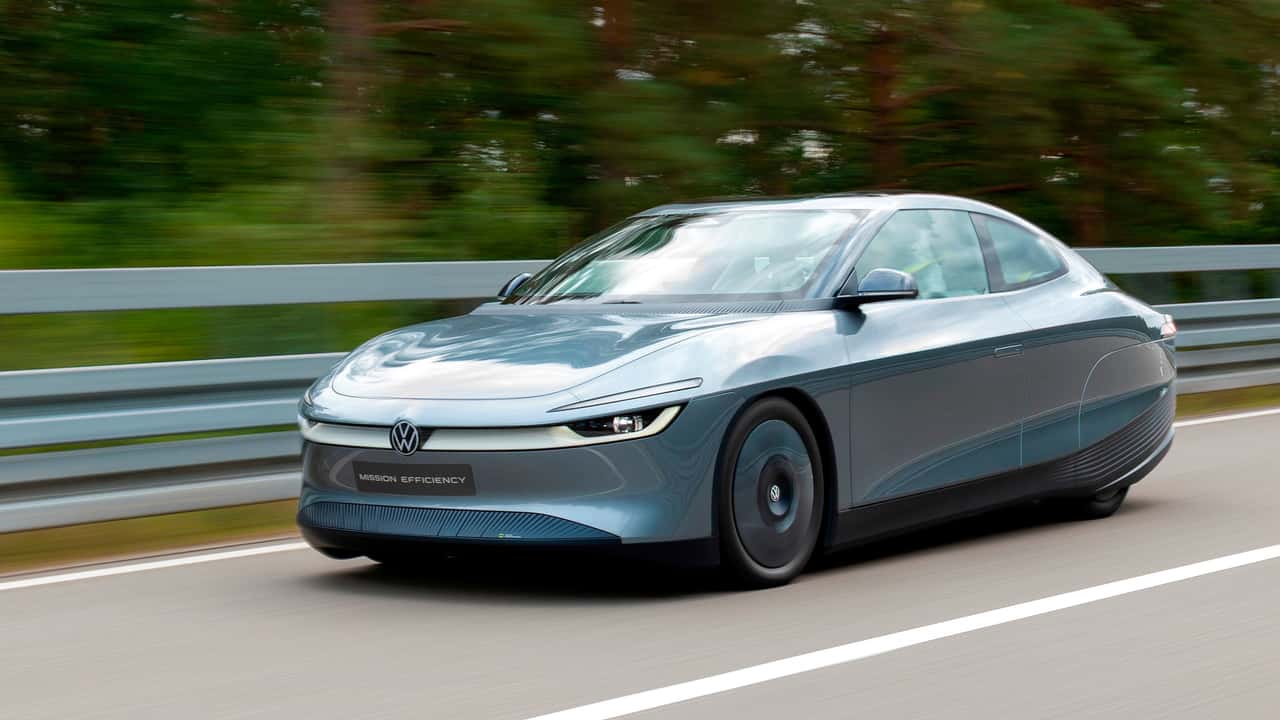
Photo by: Volkswagen
Iulian Dnistran 
By: Iulian Dnistran
Sep 14, at 7:43am ET
Add InsideEVs as a preferred source in Google
- (https://twitter.com/intent/tweet?url=https%3A%2F%2Finsideevs.com%2Fnews%2F808168%2Fvolkswagen-mission-efficiency-concept-range-charging-test%2F&text=Volkswagen%20Just%20Unveiled%20The%20Most%20Efficient%20EV%20Ever%20Tested&via=InsideEVs)
- copy
Share
Comment
- Volkswagen claims it has built the most aerodynamic road-legal car ever.
- The Mission Efficiency concept is billed as a near-production electric car, and it just set three records.
- Based on the same hardware as the ID. Polo small EV, the new concept looks like a modern reinterpretation of the iconic XL1.
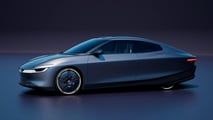
Volkswagen knows a thing or two about making efficient cars, and its latest creation proves the German automaker still has a knack for building slippery cars. This is the Mission Efficiency, a two-door electric reinterpretation of the iconic XL1 of the early 2010s that just set three new records.
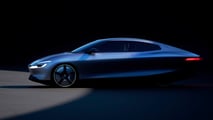
Under the skin, the slippery EV uses the same MEB+ underpinnings as the wildly popular ID. Polo urban hatchback, but turns the efficiency knob to its highest level. With a drag coefficient of 0.158, Volkswagen claims the Mission Efficiency is the most aerodynamic road-legal car ever built. By comparison, the ill-fated Lightyear had a Cd under 0.19, while the original XL1 had a drag coefficient of 0.186.
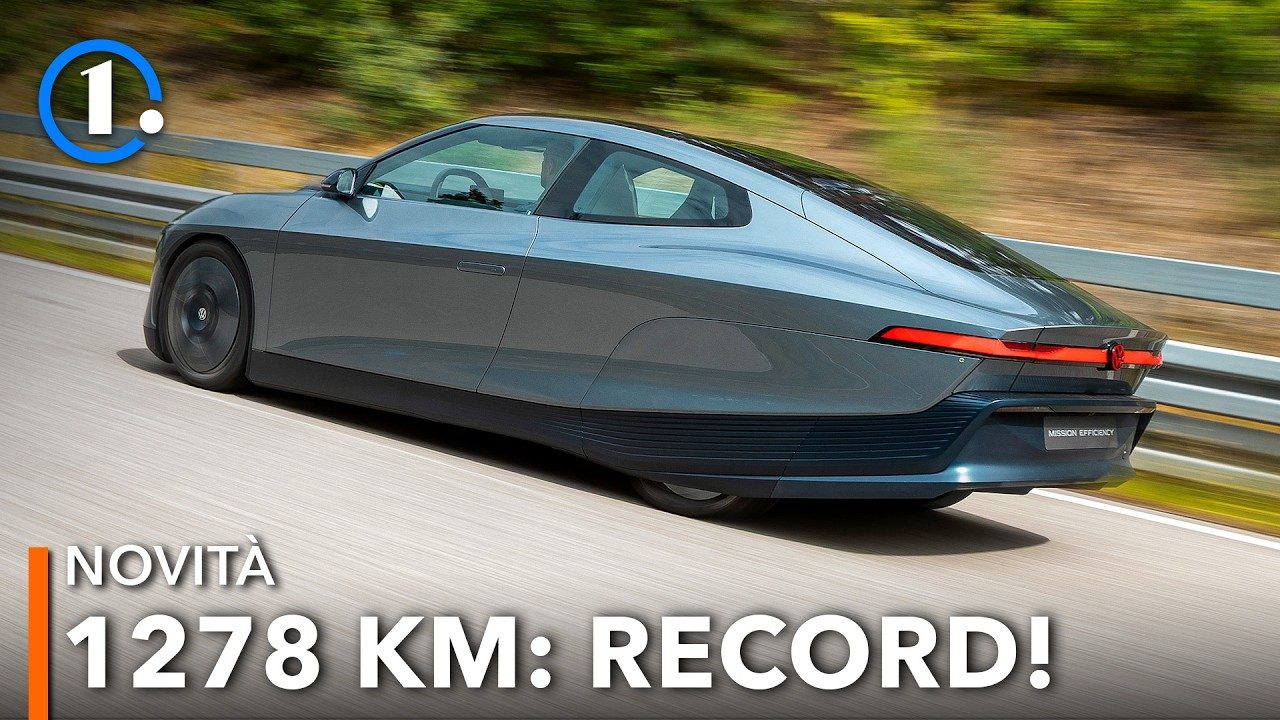
To make that happen, Volkswagen designed a frontal area that totals just 22.4 square feet (2.08 square meters) and gave it three active cooling flaps that can open individually or together in five configurations. The four-seat concept achieves its record-setting drag coefficient with all three flaps closed.
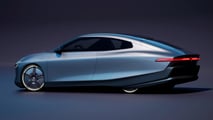
Specially designed wheel deflectors also make an appearance, preventing air from creating turbulence, especially around the rear wheels, which are almost completely covered. A set of bespoke Continental tires based on the EcoContact 7 provides low rolling resistance, thanks in part to the aerodynamically optimized sidewalls.
The underside is also completely covered to keep it as aerodynamic as possible, and the rear axle has been narrowed by 6.7 inches (170 millimeters) compared to the ID. Polo. All to improve airflow under the car and accommodate a narrower rear end that improves the drag coefficient.

Photo by: Volkswagen
The result of all this work is impressive. Volkswagen drove the two-door EV on real roads from its development center in Wolfsburg, Germany, to Vienna, Austria, via Poznan, Poland, and Olomouc, Czechia. The car was recharged just once during the 794 miles (1,278.36 kilometers) trip, and it still had 102 miles (164 km) of range left, putting the total theoretical range at over 870 miles (1,400 km).
During the trip, the Mission Efficiency concept reached a top speed of 86 miles per hour (138 kilometers per hour), averaging 42 mph (67.7 kph). Meanwhile, the energy consumption, including charging losses, was 7.51 kWh/100 km (12 kWh/100 miles or 7.51 miles/kWh). Without charging losses, the figure is even lower: 6.89 kWh/100 km (11 kWh/100 miles or 9 miles/kWh). But it gets even better, as the engineering team wanted to squeeze everything out of the new concept.
An “ideal drive” at a constant 42 mph (68 kph) on flat ground and with all the auxiliary systems switched off, including AC, resulted in a record average consumption of 6.48 kWh/100 km (9.58 kWh/100 miles or 9.58 miles/kWh).
Photo by: Volkswagen
The slippery electric concept is powered by the same components as the production ID. Polo EV: a 54.9-kWh nickel-manganese-cobalt (NMC) battery pack sends power to a front-mounted APP290 permanent-magnet synchronous motor that makes 133 horsepower and 195 pound-feet (264 Newton-meters) of torque.
The keen-eyed among you might have noticed that the battery capacity isn’t identical to the ID. Polo’s, and you’d be right. That’s because engineers boosted the usable energy by 2.9 kWh through software to boost the record car’s long-range abilities. On the ID. Polo, the capacity is capped at 52 kWh to favor longevity.
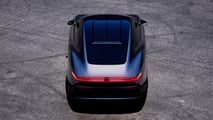
Charging performance is the same, though, with a maximum 105 kW DC input and 11 kW AC. Additionally, the Mission Efficiency gets a 370-watt solar array integrated into the glass roof and rear hatch, which energizes the car’s electrical systems.
Photo by: Volkswagen
Despite the futuristic exterior design, the concept looks pretty tame inside, with enough space for four people and an airy cabin that doesn’t even come with a dedicated infotainment screen. Instead, Volkswagen used the same system as on the e-Up!, where a smartphone or tablet can be mounted on the dash, wirelessly connect to the car’s brain, and act as the gateway to the occupants’ entertainment.
Lightweight seats and a removable Bluetooth speaker are also part of the package, all in the name of saving weight and improving efficiency. The same goes for the self-supporting aluminum structure and high-strength carbon fiber-reinforced polymer and aramid composite components.
Volkswagen said the Mission Efficiency was designed to fit a family of four, with a 2+2 configuration and 17 cubic feet (481 liters) of cargo capacity accessed via a large tailgate. All told, the car is quite small, measuring 188 inches (4,775 mm) long, 69 inches (1,744 mm) wide, and 55 inches (1,392 mm) tall.
What do you think?
View
Comments
It’s also just a concept car, albeit a working one, though that may have just been for bragging rights. The German automaker had the Mission Efficiency certified by the Record Institute as a “near-production, everyday-use four-seat electric vehicle.”
It’s anybody’s guess if the slippery EV will ever land in showrooms, but one thing is clear: Volkswagen has done it before with the XL1.
Gallery: Volkswagen Mission Efficiency Concept (2026)
59
Source: Volkswagen
More Stuff Like This
The A2 E-Tron Is Audi's Cheapest EV Yet. But It Doesn't Skimp On Range
Something Doesn’t Add Up About The Rivian R2’s EPA Efficiency Rating
The Volvo EX60's Excellent Range Somehow Got Even Better
Owning An EV Is Way Better: My 2-Year Chevy Blazer EV Owner Review

Stay informed with our newsletter every weekday
back
Subscribe For more info, read our Privacy Policy & Terms of Use.
We want your opinion!
What would you like to see on Insideevs.com?
Take our 3 minute survey.
- The InsideEVs team
Share this Story
- (https://twitter.com/intent/tweet?url=https%3A%2F%2Finsideevs.com%2Fnews%2F808168%2Fvolkswagen-mission-efficiency-concept-range-charging-test%2F&text=Volkswagen%20Just%20Unveiled%20The%20Most%20Efficient%20EV%20Ever%20Tested&via=InsideEVs)
- copy
GO TO COMMENTS
(
)
Got a tip for us? Email: tips@insideevs.com
View all comments ( )
Trending
Diesel Prices Are Surging. This Electric Trucking Company Is Seeing More Interest
Tesla Opens Self-Driving Cybercab Orders To 'Select Customers' At $29,990
Solid-State Cells Can Make The U.S. Competitive In Batteries Again: CEO
I Took A Rivian R2 On A Camping Trip To The Middle Of The Desert
Latest Stories
- Diesel Prices Are Surging. This Electric Trucking Company Is Seeing More Interest Nov 14 - News -
- Tesla Opens Self-Driving Cybercab Orders To 'Select Customers' At $29,990 Nov 13 - News -
- Do EVs Wear Tires Faster? Here's What The Studies Show Nov 13 - Features -
- The VW ID. Buzz Is Getting A New Job As A Robotaxi Nov 13 - News -
- Audi A4 EV Delayed Amid VW Group Financial Troubles: Report Nov 13 - News -
- Tesla Just Killed Its Cheapest All-Wheel-Drive Model Y Nov 13 - News -
- A Record Number Of Uber Miles Are Happening In EVs Nov 13 - News -
RECOMMENDED FOR YOU
The VW ID. Buzz Is Getting A New Job As A Robotaxi
Diesel Prices Are Surging. This Electric Trucking Company Is Seeing More Interest
The Best EV Lease And Finance Deals In November 2026
Tesla Opens Self-Driving Cybercab Orders To 'Select Customers' At $29,990
Gas Prices Got You Down? This 261-MPG Volkswagen Solves That—For $140,000
Do EVs Wear Tires Faster? Here's What The Studies Show
VW And Skoda EV Owners Have Waited Years For Battery Preconditioning. It's Finally Coming