Home
News
Same Battery Size, Different Range: VW ID. Polo Takes On Renault 5
On a highway-heavy European road trip, the electric Polo used less energy per mile and needed less time to charge.
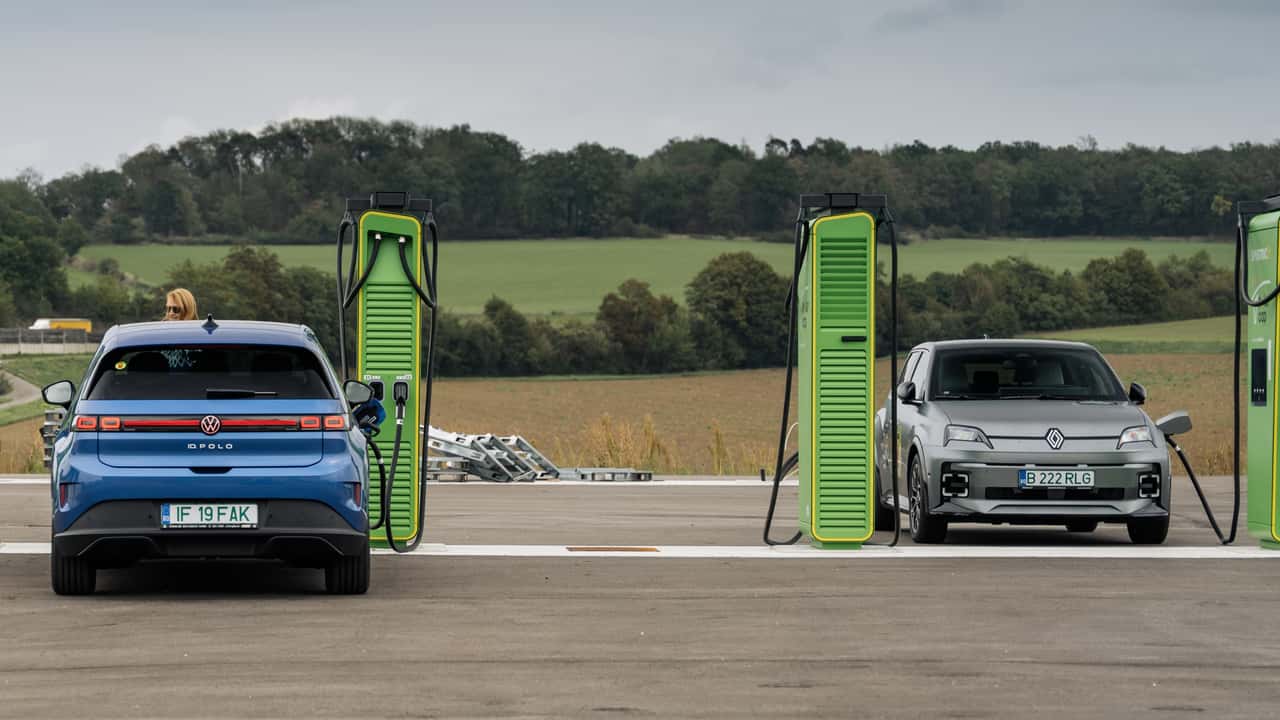
Photo by: Autocritica
Andrei Nedelea 
By: Andrei Nedelea
Sep 18, at 9:40am ET
Add InsideEVs as a preferred source in Google
- (https://twitter.com/intent/tweet?url=https%3A%2F%2Finsideevs.com%2Fnews%2F808776%2Fid-polo-vs-r5-roadtrip%2F&text=Same%20Battery%20Size%2C%20Different%20Range%3A%20VW%20ID.%20Polo%20Takes%20On%20Renault%205&via=InsideEVs)
- copy
Share
Comment
- The ID. Polo used 5.5% less energy per kilometer than the Renault 5 on a highway-heavy European road trip.
- With equal 52-kWh usable batteries, calculated range was 188 miles for the Polo versus 178 for the Renault.
- The Polo spent 25 fewer minutes charging, although different charging windows prevent a direct speed comparison.
Give two very similar electric hatchbacks the same amount of electricity, and you would expect them to perform about the same on a road trip. The Volkswagen ID. Polo and Renault 5 E-Tech proved predictably similar in many ways during the Eurocharge by Schaeffler EV road trip, but one proved to be the better road-trip machine.
Both have 52 kilowatt-hours of usable battery capacity. On the third day of Eurocharge, the Polo stretched that energy further. But the bigger surprise came at the charging stops, and that deserves a closer look.

Photo by: Autocritica
The day started with the cars leaving Tata, Hungary, for Turracher Höhe, Austria, on a route with around 80% highway driving and 20% mountain passes. Temperatures ranged from 6 to 20 degrees Celsius (43–68 degrees Fahrenheit) under overcast skies, with occasional rain mostly in the latter part of the day on Austrian mountain switchbacks.
The Renault 5 is a pretty efficient EV, but the VW ID. Polo showed that it could stretch its electrons even further. The R5 averaged 18.2 kWh/100 km (3.41 miles/kWh), while the Polo achieved 17.2 kWh/100 km (3.61 miles/kWh). That means it is around 5.5% more efficient and the better of the two for long drives.
Photo by: Autocritica
Applied to their usable battery capacities, those figures produce calculated ranges of 302 km (188 miles) for the Polo and 286 km (178 miles) for the Renault. These are estimates based on observed consumption, rather than distances established by running either from full to flat.
Now that may not be a huge difference, and the Polo stood out for its extra range and quicker charging. Both cars started full, stopped three times, and finished with substantial reserves: 44% for the Polo and 36% for the Renault.

Stay informed with our newsletter every weekday
back
Subscribe For more info, read our Privacy Policy & Terms of Use.
However, the Volkswagen logged 77 minutes of charging, compared with the Renault’s 102 minutes. That 25-minute difference, which excludes overnight charging at the hotel, is pretty significant. And 17 of those 25 minutes came from just one charging stop.
The Polo charged from 28% to 100% in 43 minutes, while the Renault needed 60 minutes to go from 23% to 100%. Different starting percentages and charging conditions mean this wasn’t a controlled charging-speed comparison, but the key point still remains: the Polo used less energy and recorded shorter charging sessions, although both crews chose to fill their batteries at lunch and arrived with plenty remaining.
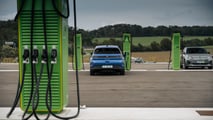
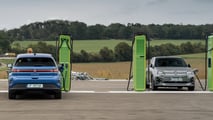
Gallery: VW ID. Polo and Renault 5 E-Tech in Eurocharge
16

Source: Autocritica
What do you think?
View
Comments
The two EVs have similar peak DC fast-charging power figures: 105 kW for the ID. Polo and 100 kW for the Renault 5 E-Tech. However, their official charging times suggest the Volkswagen has the better charging curve. It officially needs around 24 minutes to go from 10% to 80%, while Renault quotes 30 minutes from 15% to 80%.
My Renault 5 review found plenty to like beyond the numbers, and it’s still one of my favorite EVs ever. But what this comparison shows is that equal battery capacity doesn’t mean equal range or the same charging time. Whether those extra minutes matter depends partly on how quickly you eat, but the Polo comes closer to a gas-car-like road trip experience.
Europe's EV Market Is Doing Great. I Think These 4 European EVs Would Do Well In America
One Of The Coolest Retro EVs Gets A New Feature That Makes It Even Cooler
New Volkswagen ID.3 GTI: The First RWD GTI Is Here With More Power Than Ever
VW Wants Its First Electric GTI To Feel Old-School
We want your opinion!
What would you like to see on Insideevs.com?
Take our 3 minute survey.
- The InsideEVs team
Share this Story
- (https://twitter.com/intent/tweet?url=https%3A%2F%2Finsideevs.com%2Fnews%2F808776%2Fid-polo-vs-r5-roadtrip%2F&text=Same%20Battery%20Size%2C%20Different%20Range%3A%20VW%20ID.%20Polo%20Takes%20On%20Renault%205&via=InsideEVs)
- copy
GO TO COMMENTS
(
)
Got a tip for us? Email: tips@insideevs.com
View all comments ( )
Trending
I Tried Mercedes' Answer To Tesla FSD. Here's How It Went
Driven: BMW's Electric M3 Is The Real Deal
Tesla Opens Self-Driving Cybercab Orders To 'Select Customers' At $29,990
Tesla Model 3 Maintenance Guide: What Needs Servicing And What Doesn't
Latest Stories
- Chevy, GMC, and Cadillac EV Owners Can Now Plug And Charge At Electrify America Nov 17 - Charging -
- Every EV Motor Type Explained: Not All EV Motors Needs Rare Earth Magnets Nov 17 - EV 101 -
- DJI Made A Commuter E-Bike. I Tested It, And It's Really, Really Good Nov 17 - E-Bike Reviews -
- Every Kind Of Hybrid Explained: Parallel, Series, EREV, PHEV, MHEV Nov 17 - EV 101 -
- BYD Is Winning Over Japan With A Very Japanese Kind Of EV Nov 17 - News -
- Bentley’s First EV Is Already Sold Out, And Production Hasn’t Even Started Nov 17 - Sales -
- The Electric Baby Land Rover Defender And Range Rover GT Will Begin Production Next Year Nov 16 - News -
RECOMMENDED FOR YOU
Renault’s Latest EV Was Designed For The Army’s Toughest Missions
Chevy, GMC, and Cadillac EV Owners Can Now Plug And Charge At Electrify America
BYD Is Winning Over Japan With A Very Japanese Kind Of EV
Every EV Motor Type Explained: Not All EV Motors Needs Rare Earth Magnets
The Electric Baby Land Rover Defender And Range Rover GT Will Begin Production Next Year
DJI Made A Commuter E-Bike. I Tested It, And It's Really, Really Good
Mercedes Is Bringing Hands-Free Driving To Certain U.S. Highways In 2027