
Rivian Has Invested Millions In 3D Printing. Its Biggest Plans Are Still Ahead
The maker of the R2 is installing a row of 3D printers at its factory in Normal so that employees can print parts on demand.


- Rivian is using additive manufacturing techniques to speed up development and production.
- The startup has invested over $5 million in 3D printers so far.
- After using 3D printers at its facility in Detroit, Rivian is scaling up the process, adding a bay of machines at its factory in Normal, Illinois.
Additive manufacturing is helping automakers come up with design mock-ups faster and cheaper than ever before, and Rivian is going all in on the technology. The California startup has spent over $5 million on 3D printers, using the machines to build tangible prototypes of various parts significantly faster than going down the traditional route, which involves at least one external supplier and big, expensive stamping equipment.
But Rivian is just getting started. In an interview with CNBC, Jared Beck, the startup’s head of additive manufacturing, said that the company doesn’t have a choice but to scale up and begin using it across all factions. “We’re going to be democratizing 3D printing for the entire company,” Beck said.
So far, the R2’s maker has used 3D printers on a relatively small scale at its facility in Detroit, Michigan. The R2’s steering wheel was first printed using additive manufacturing before becoming a metal part. The technology has also been used to make electric motors for fluid testing, screw guides for tooling, stamping press inserts, and some production parts, like trim pieces, for early builds.
For the next step, Rivian is installing new 3D printers that can build flexible silicone parts. At its factory in Normal, Illinois, where its entire lineup is being assembled, the startup is adding a bay of machines, enabling employees to print parts on demand. “3D prints should be readily available for every engineer so that they can make a part and get it in their hands as soon as possible,” said Beck for CNBC.
Gallery: 2027 Rivian R2: First Drive


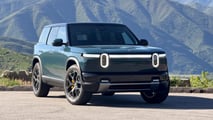




Besides the $5 million spent on 3D printers, Rivian is also paying roughly $1.7 million for the raw materials used in the machines every year. That’s quite a big sum for something that may look like big toys, but in the end, it makes a lot of financial sense for the EV manufacturer. According to Beck, the cost savings have been “well in the millions” compared to traditional prototyping techniques, but more importantly, 3D printing speeds things up considerably.
By building small batches of parts on-site, the car company can lower its supplier tooling costs, cut logistics expenses, and reduce production times from weeks to days, and sometimes hours.
Rivian isn’t the only car manufacturer that has leaned into additive manufacturing. Tesla, Ford, General Motors, and many others have been using the technology to make stuff faster and cheaper, thanks in large part to the 3D printing industry’s massive advancements.
A decade ago, getting a 3D printer came with an eye-watering bill, but now, anyone can buy a machine for as little as a couple hundred dollars. The printers have also gotten smaller, faster, and more precise, enabling hobbyists and big companies to create bespoke parts in a matter of hours.
Related Stories

RECOMMENDED FOR YOU
Rivian’s ‘Boring’ Commercial Van Is Turning Into A Secret Weapon
Polestar 2 Production Is Officially Over. A Successor Is Coming In 2027
Rivian's Charging Network Grew 39% In A Year
VW’s EV Factory Is Now Taking Cars Apart. There’s Money In It
AI-Powered Coffee Runs And Service Visits Are Coming To Rivians In 2027
Waymo's Public Fast-Charging Problem Is Infuriating EV Drivers
One Year Without EV Tax Credits: 4 Key Takeaways