
The Zeekr 7GT Made Me Question Every Other Luxury EV
The Zeekr 7GT feels lavish, rides beautifully, and goes like hell. But it also feels unfinished.

I’ve gotten used to making excuses for expensive cars. That plastic? Weight saving, probably. The missing equipment? Driver focus. The price? Well, that badge has a lot of heritage, and it needs feeding.
But then something like the Zeekr 7GT comes along and makes me reconsider what you should be getting when you buy a luxury car. It’s not just about screen size or how much organ-rearranging power it has. It’s more about a consistently good interior experience, a feeling of quality and solidity, a good ride, and toys.
The 7GT is a relatively compact electric wagon that behaves like a limousine muscle car. After a few days with the top-spec Privilege AWD, I started wondering why so many established luxury carmakers ask you to settle for less and demand more money.

But just as I was about to give the 7GT a 10/10 verdict, I started noticing some rough edges. I don’t mean the materials—those are fantastic—but the software and driver assistance feel about 80% done.
That aside, here is a Chinese-built, Swedish-designed electric wagon with powered and heated rear seats, a lavish cabin where you can’t tell where the Nappa leather ends and the fake stuff begins, with adaptive air suspension and 637 horsepower, all for far less money than any German competitor.
Zeekr 7GT
Someone Forgot This Isn’t A Limousine
The 7GT measures 189.6 inches (4,817 millimeters), putting it around BMW 3 Series Touring territory. The forthcoming i3 Touring will be an obvious comparison, but we need the final specs list to compare them accurately.
Until that arrives, look at the larger Volkswagen ID.7 Tourer, Audi A6 Avant e-tron, and BMW i5 Touring. Between them, they have most of the features you can get on the 7GT, but specced to the same level as my €65,000 tester, they become six-figure cars.
None offer powered doors that open on their own, which sound like a gimmick but work well enough not to be annoying. Climb into the driver’s seat, and to close the door, just press the brake, as you would in a Rolls-Royce. Another use case is dropping off your child at school: They can quickly exit the vehicle so you don’t hold up traffic.
The powered doors cost an extra €2,200 even on the top Privilege model, which starts at €59,690, but frankly I’d take them. My Privilege tester also included front-seat ventilation and massage, heated rear seats, a heated steering wheel and a large augmented-reality head-up display.
Zeekr feels more generous in pampering occupants than its German rivals. I came to the same conclusion after driving the 7X crossover at its launch in Portugal, when it made me say it would completely change the face of the luxury car industry. Its powered doors worked more consistently than those I’d tried on a BMW 7 Series (and the ones in the 7GT are even better), and its cabin and reclining rear seats were good enough to challenge established hierarchy.
The 7GT brings the same approach to people who prefer their cars closer to the ground, although it isn’t quite as plush.
Oddly, both the older 001 and the 7X have a rear touchscreen for climate and media controls, along with electrically adjustable backrests. The 7GT has no rear screen, so you'll need friends in the front seats to turn on the rear seat heater for you.
A Lovely Place To Get Lost
Its 114.2-inch (2,900-mm) wheelbase creates generous rear legroom. At six feet tall, I could stretch out, tuck my feet beneath the front seat, and recline the backrest. The pleasant materials continue into the rear, too. German manufacturers seem to think passengers behind the B-pillar can make do with lesser materials, but not Zeekr.
Headroom is less generous, and the battery beneath the floor raises your knees slightly. The middle seat is usable, despite a small floor hump, but it wouldn’t be my first choice for crossing a continent.
The interior feels properly expensive. Nappa and synthetic leather sit neatly stitched together, and laser-cut patterns in the door trim leather double as speaker grilles. Even the head-up display’s dashboard surround is upholstered in leather, though you’ll probably never touch it—excess of the kind the Germans just don’t do anymore.
The Privilege trim’s 23-speaker stereo includes driver-headrest speakers for navigation instructions and calls. There are two cooled wireless charging pads, a cavernous center console storage area, and a 60-watt USB-C outlet.
The front seats have physical adjustment switches and extending thigh supports. They made it easier to get comfortable than in the larger 001, where I wanted more steering-column reach and thigh support. The 7GT also has proper steering-wheel buttons instead of that car’s touchpads, and they work much better.
It has a 15-inch OLED touchscreen, a 13-inch driver display, and an augmented reality head-up display, plus Apple CarPlay and Android Auto. Plenty of ways to receive information, then.
But that doesn’t mean it’s all good news. Adjusting the mirrors and powered steering column still requires a trip through the touchscreen, though, as does most everything else.
Even the window switches require some learning: how long you press determines whether you’re adjusting the opening or lowering the glass all the way.
The navigation became choppy when I routed to a charger using its built-in app, which tells the car to precondition the battery. I also noticed the same thing while using Waze through Apple CarPlay. I’m pretty sure it’s not the hardware, since it has a very powerful chip running the show, so it’s likely a software issue that an over-the-air update should fix.
Charging Beast
Zeekr offers two batteries for the 7GT. The standard car gets a 75-kilowatt-hour lithium-iron-phosphate (LFP) pack, which delivers 322 miles (519 km) of WLTP range. The larger 100 kWh pack switches to nickel-manganese-cobalt (NMC) chemistry and bumps the range to 407 miles (655 km) in rear-wheel drive trim or 347 miles (558 km) in dual-motor trim.
LFP-equipped 7GTs are rated for up to 480 kilowatts of peak charging power, requiring as little as 11 minutes to go from 10% to 80%. With the NMC pack, maximum charging power drops to around 420 kW, so charging from 10% to 80% takes 13 to 16 minutes.
I drove my NMC-equipped 7GT tester to the only Megawatt charger in my area, which can supply up to 600 kW per cable, more than enough to max out the car. I arrived at the charger with 10%. The 7GT charged to 80% in around 14 minutes, taking just over 36 minutes to reach 99%. It hit its claimed 420-kW peak, with a session average over 158 kW; the fastest I’ve ever seen an EV replenish range.
Power Corrupts
The dual-motor 7GT combines a 310-kW rear motor and a 165-kW front motor, producing a combined 475 kW (around 637 bhp). Add 524 pound-feet (710 Nm) of torque and a claimed 3.3-second sprint to 62 mph (100 km/h), and the wagon’s school-run credentials begin to look suspicious at best.
This thing will scare your passengers with its brutal and relentless power delivery. The motors make light work of the 7GT’s 5,300 lbs (2,405 kg) mass. You need a bit of space to unleash this thing too, since it feels a bit wayward when you launch it, especially if you pair the most aggressive power delivery with the softer suspension setting.
Launching will see you correcting the car’s trajectory quite a lot to get it to keep pointing in the right direction. The front goes light, and you can’t really tell what the front tires are doing or where they’re going. It’s a bit disconcerting, especially since the rear feels less than settled. It feels less like conducting an orchestra and more like you’re holding on to the stand. The car easily overwhelmed its 255-section Michelin Pilot Sport EV tires.
What’s odd about how the 7GT feels to launch is that it has sophisticated front suspension, something you won’t really find in its class. Whereas BMW and most others use strut-based front suspension, Zeekr chose a double-wishbone setup for the 7GT, of the kind you will see in racing cars. It should keep the tire’s contact patch more consistent as the suspension works, but it wasn’t that confidence-inspiring here.
Keep It Comfy
The air-sprung Privilege rides beautifully, especially for a car on 20-inch wheels. Comfort mode gives it a gentle, floating quality, while Sport lowers and firms the suspension without making it uncomfortable.
Unfortunately, air suspension is reserved for the Privilege and can’t be added to the rear-drive cars. That complicates the sensible purchase. The Long Range costs less and goes farther on paper, but the lower power and lack of air suspension will make it feel less special than my tester.
Designed For Style, Not Practicality
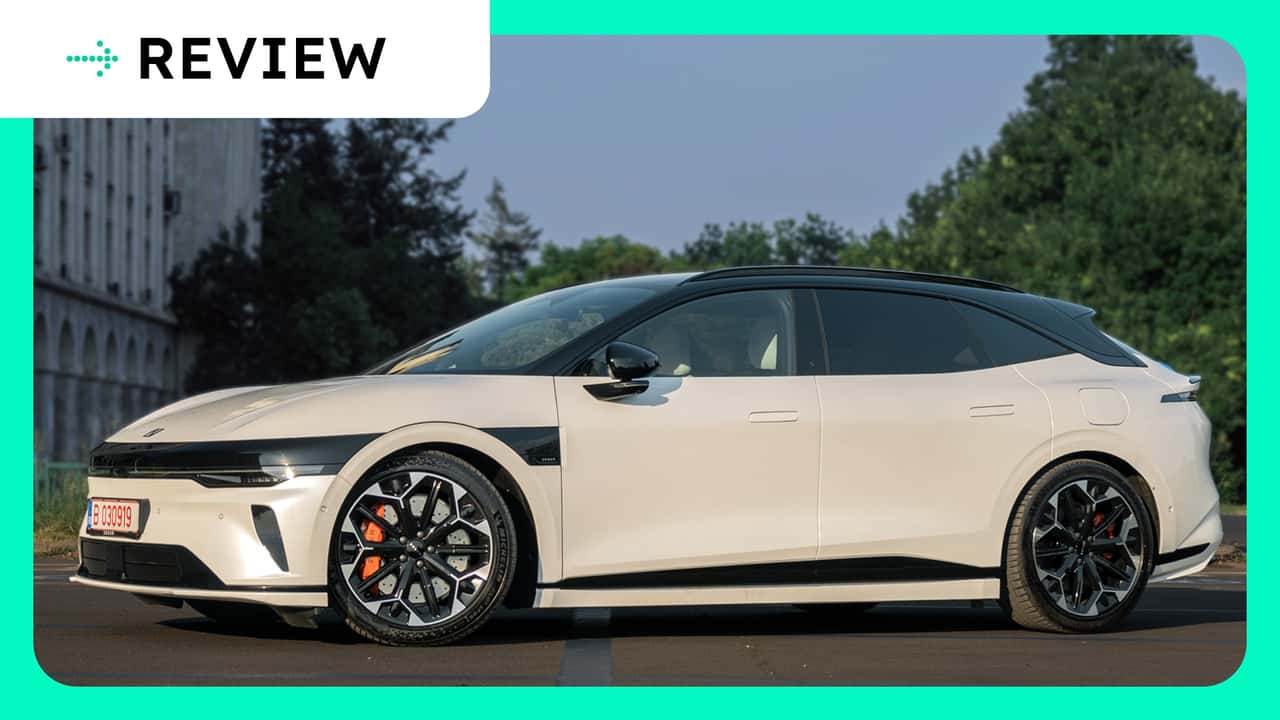
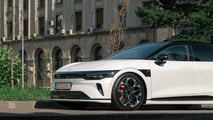
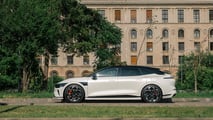
The low nose, black front mask, and muscular rear shoulders work well together, and this car turns heads. There’s a tapering, contrasting roof, a split roof spoiler, and another lip at the rear. The Privilege’s unique wheels and orange calipers finish the job.
The trunk is less spectacular: 16.1 cubic feet (456 liters) against 20.1 cu-ft (570 liters) for the larger i5 Touring. A 60/40 folding backrest, ski hatch, and underfloor storage help, but this wagon has other priorities beyond swallowing boxes of flat-pack furniture.
Rear-drive versions also have a 2.3 cu-ft (65-liter) frunk, which shrinks to 1.1 cu-ft (32) liters on the dual-motor.
The Assistance Needs Assistance
The car says it has one-pedal driving, but it’s not really true. You can choose between normal and strong brake recuperation settings. I selected the latter and was waiting for the familiar regen tug as I lifted off. However, it wasn’t slowing down nearly as quickly as I expected.
There’s nothing wrong with letting an EV coast, especially since it feels more like a traditional combustion car. But the point of offering different settings is to accommodate different preferences. The gap between standard and strong felt too small, and neither gave me the control over speed I wanted through the accelerator alone.

The adaptive cruise control sometimes found reasons to slow down that completely escaped me. It behaved reasonably on an empty stretch of highway, but another car passing could prompt it to reduce speed without an obvious need.
Lane centering added its own interruptions. Assistance would sometimes drop out, then resume with a tug at the wheel that felt too abrupt. These systems always require supervision, but their interventions should be more predictable and gentle. Here, I found myself watching for what the car might do next rather than enjoying the workload reduction they should be bringing.
A Lot Of Car. A Little Work To Do
The 7GT makes you wonder how much of a traditional luxury car’s price goes toward the car, and how much pays for the privilege of getting a badge that your neighbors recognize. The cabin is exceptional, the Privilege rides beautifully, and the rear passengers aren’t forgotten.
Then there’s the acceleration, which can abruptly end any conversation. The expensive bits are already here, though, and much of the experience is excellent. This is, all in all, a pretty special car.
Gallery: 2026 Zeekr 7GT Privilege

More Reviews
RECOMMENDED FOR YOU
‘We Are Long-Term Committed In Europe’: Why Tariffs Won’t Scare Zeekr Off
EV Buyers Could Foot The Bill For Saving Europe’s Carmakers
How Cheap Chinese EVs Are Sneaking Around Europe's Tariffs
Toyota Quietly Gave The 2027 Toyota RAV4 PHEV A Big Upgrade
Waymo Plans To Have 20,000 Cars By The End Of 2027
It’s Official: The Cybertruck Is One Of The Greatest Flops In Automotive History
I Drove The 2026 Porsche Taycan 4. It Proves EVs Don't Need 1,000 Horsepower To Be A Blast