Wed, 11 Nov 2026 19:20:19 +0000 InsideEVs InsideEVs | Electric Vehicle News, Reviews, and Reports https://insideevs.com/ https://insideevs.com/news/815183/tesla-extends-cybertruck-production-summer-2027/ Wed, 11 Nov 2026 19:18:59 +0000 Tesla Extends Cybertruck Production Run To Work Through Order Backlog Elon Musk called it "not the smartest move from a profit-maximizing standpoint." Tesla will extend Cybertruck production for a couple of extra months, CEO Elon Musk said. Musk previously announced that the Cybertruck would be discontinued in the middle of next year. He said he extended the production run to fulfill more orders.
Tesla will now make the Cybertruck for a little while longer to fulfill more orders, Elon Musk said on Wednesday.
"In order to work through more of the Cybertruck order backlog, production will be extended through the end of summer 2027," he said in an X post, adding in a reply, "This is not the smartest move from a profit-maximizing standpoint btw, but there must be some room in this world for sentimentality or what’s the point?"
In a late-night tweet last week, Musk announced the forthcoming demise of the stainless-steel pickup in the middle of next year to make more room for production of steering wheel-free Cybercabs at Tesla's Texas factory. He later clarified that the truck would be made for eight more months, pointing to an expiration date of July 2027 for what is surely the strangest and most polarizing pickup ever made.
Now production is poised to last through most of September, giving the Cybertruck a roughly 10-month runway. Musk had previously said Tesla would have to return some deposits as it wouldn't be able to deliver all the trucks customers had ordered before production came to a close.

Elon Musk said Tesla is extending Cybertruck production so it can fulfill more orders.
Photo by: InsideEVs
It's still an untimely end for a model that attracted more controversy than cold, hard sales. Musk once targeted an annual output of 250,000 trucks, which would make it a top seller in the pickup market. Tesla ended up selling some 70,000 of them, per industry estimates, since sales kicked off at the end of 2023.
In part, extending the truck's production run may be a way to placate Tesla's die-hard fans, some of whom expressed outrage at the decision to cancel it so suddenly and unceremoniously. Say what you will about the truck itself, but it has amassed a loyal following like few other vehicles have. Over 5,000 people have signed a petition to keep the Cybertruck in production. Unplugged Performance, which makes Tesla accessories, said it's trying to get investors on board to take over Cybertruck production from Tesla.
Now those Tesla devotees have a little more time to buy a Cybertruck. It'll cost them dearly, though. Since announcing the truck's cancelation, Tesla made the top-trim, tri-motor Cyberbeast the only one available—and hiked its price to $110,000.
Contact the author: Tim.Levin@InsideEVs.com
It’s Official: The Cybertruck Is One Of The Greatest Flops In Automotive History
The Tesla Cybertruck Finally Gets A Feature That Was Promised Three Years Ago
Tesla Is Selling Discounted Used Cybertrucks Now
SpaceX Bought Nearly 20% Of Tesla Cybertrucks Sold In Q4
]]> contact@insideevs.com (Tim Levin) https://insideevs.com/news/815183/tesla-extends-cybertruck-production-summer-2027/ https://insideevs.com/news/815180/rivian-chips-memory-rj-scaringe-interview/ Wed, 11 Nov 2026 18:44:28 +0000 The AI Boom Is Making Ordinary Car Parts Harder To Get, Rivian Says Rivian CEO RJ Scaringe said the EV maker now spends an "enormous amount of time" on memory. The AI boom is creating bottlenecks for basic components automakers rely on for increasingly tech-filled cars. Rivian is now spending an "enormous amount of time" planning around memory chips, CEO RJ Scaringe said this week. Printed circuit boards are also impacted, Rivian's hardware chief said.
Rivian is hoping to cash in on the AI boom through its work on a new in-car assistant, highly automated driving features, and a new robotics project. The data center frenzy is also complicating things for the EV startup by making previously commonplace components pricier and harder to source.
Rivian CEO RJ Scaringe and hardware chief Vidya Rajagopalan explained the situation during an interview with the venture capital firm Kleiner Perkins.
"Hardware is hard in ways that I think people don’t fully always appreciate until you’re in it," Scaringe said, adding that it takes thousands of suppliers—and suppliers to suppliers—to build a car.
Today, Rivian is having a more challenging time sourcing commodity components like memory chips, Scaringe said, as insatiable demand from AI players sends prices skyrocketing.
"Three years ago, we were not spending a lot of time thinking about memory. It was a commodity," he said. "And now an enormous amount of time goes into planning for memory, optimizing it at the board level, how we’re using it, and then really thinking strategically about how we source it."
A shortage of memory chips, particularly DRAM, or dynamic random access memory, is rippling throughout the tech world. DRAM manufacturers are directing capacity toward higher-margin sales to AI firms, creating bottlenecks for other industries like automotive. Apple blamed the data center-driven run up in memory costs when it hiked prices for its laptops and other devices earlier this year.
And auto players have been sounding the alarm too. In a filing earlier this year, China's Li Auto called out "significant supply tightness and price volatility in memory components, such as DRAM and NAND flash, which are essential for our smart cockpit and autonomous driving systems." Both GM and Ford noted higher memory costs on recent earnings calls, and both announced long-term supply deals with Micron this summer.
On Rivian's latest earnings call, Scaringe said Rivian is looking for ways to offset the rising costs of memory chips and other commodity components so it can hit the R2's advertised base price of $45,000.
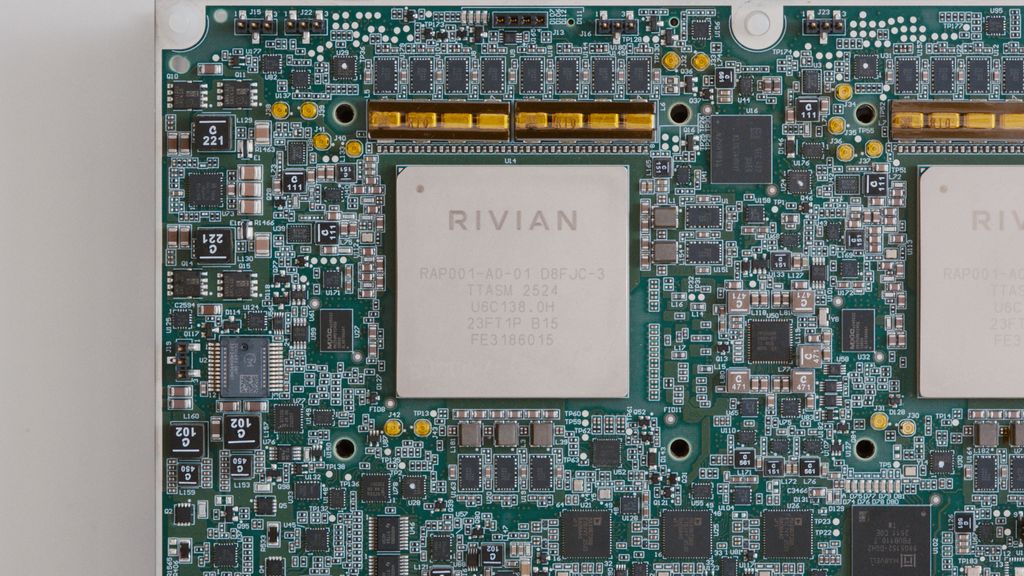 Rivian's Autonomy Compute Module 3, powered by the Rivian Autonomy Processor. Photo by: Rivian
It isn't just memory that's causing headaches for Rivian. "We deal with this all the time, supply chain shortages, it's a bane of our existence," Rajagopalan said. "With the data center boom, a lot of the e-glass for [printed circuit boards] is really hard to find. And so you could have a component shortage in one space that totally throws you off." Multilayer ceramic capacitors (MLCCs), a basic circuit-board component, are another thing Rivian didn't pay much mind to before.
"MLCC capacitors, you never thought about them. You’re thinking about them now, right?" she said.
The tough environment comes as Rivian is ramping up its own AI and tech efforts with an in-house processor that's set to hit consumer R2s next year. Rivian says the RAP1 chip, along with a new lidar sensor, will help R2s achieve higher and higher levels of automated driving in the coming years.
Contact the author: Tim.Levin@InsideEVs.com
This BMW i3 Drove 3,658 Miles. It Needed Less Than 3 Hours Of Charging
Tesla Is Squeezing More Money Out Of The Cybertruck Before It Dies
Rivian's New Robots Will Initially Handle 20% Of Factory Tasks. The Goal Is 80%, CEO Says
The AI Boom Is Creating A New Supply Chain Headache For Automakers
]]> contact@insideevs.com (Tim Levin) https://insideevs.com/news/815180/rivian-chips-memory-rj-scaringe-interview/ https://insideevs.com/news/815161/bmw-i3-norway-to-spain/ Wed, 11 Nov 2026 17:15:07 +0000 This BMW i3 Drove 3,658 Miles. It Needed Less Than 3 Hours Of Charging The electric sedan drove from the top of Norway to southern Spain with just 2 hours and 46 minutes of charging. BMW’s i3 crossed eight countries and 3,658 miles with just 2 hours and 46 minutes of charging. It combined roughly 5 miles/kWh efficiency with an average charging power of 275 kW. Europe’s extensive fast-charging network already makes long EV road trips straightforward.
Quiet, smooth, and punchy, electric cars make fantastic road trippers. The daunting part is how much time charging adds to a journey—especially a long one. But in the latest EVs, that's becoming less and less of a concern, as BMW demonstrated with a nearly 4,000-mile road trip in the new i3 sedan across Europe. It spent surprisingly little time plugged in.
BMW used an i3 50 xDrive to cover the 3,658 miles (5,886.7 kilometers) from Norway’s North Cape to Tarifa, Spain, charging for precisely 2 hours, 45 minutes and 54 seconds. BMW says that beats the previous Paneuropeana record, set in 2017, by over seven hours.
The challenge is to cross Europe north to south spending as little time charging as possible. Drivers must pass through set checkpoints, but they can choose their route and where to charge. BMW used public chargers, averaging 275 kW during charging stops.
So, how'd BMW pull it off? Chalk it up to a combination of high-powered charging, long range, and strong efficiency, all enabled by the automaker's new 800-volt Neue Klasse EV tech.
On the road, the i3 used just 12.5 kWh/100 km (around 5 miles per kWh), meaning each charging stop provided a lot of mileage. With that consumption, the i3’s 108.7 kilowatt-hour battery would deliver 540 miles (869 km) of real-world driving range before hitting 0%. That's quite a bit more than the i3 50 xDrive's 468-mile EPA rating with 20-inch summer tires. The record-breaking i3 had 19-inch aero wheels and low-rolling-resistance tires, which certainly helped.
Remarkably, the 75-hour trip wasn't some slog at low speeds either. BMW reports an average speed of 79.7 km/h, or 49.5 mph.
The i3 sedan features BMW’s sixth-generation electric drive technology, including an 800-volt architecture and cylindrical battery cells arranged in a cell-to-pack design. It also supports bidirectional charging, with a peak DC charging rate of 400 kW. BMW quotes a 10–80% time of 21 minutes and says it can add up to 263 miles (423 km) of WLTP range in 10 minutes.
BMW has already demonstrated the Neue Klasse platform’s long-range ability by driving an iX3 from Hungary to Germany. The 626-mile (1,007 km) journey took a production iX3 from Debrecen to Munich without recharging, arriving with 2% battery remaining. That required preparation, mostly country-road driving and switching off systems, including air conditioning. Impressive, certainly, but not how I’d choose to spend every road trip.
My iX3 drive across Romania and over the Transfăgărășan involved considerably less restraint. I wanted to enjoy the car on a great road, which meant Sport mode and enthusiastic mountain driving. I liked the climb enough to do it twice, and its big battery and impressive efficiency helped stave off range anxiety.
After roughly 250 miles (400 km) on the second day, including the mountain driving and the return to Bucharest, I got home with 16% remaining without charging that day. I proved that with one of the latest long-range EVs, you can skip an inconvenient charger, take a detour, or enjoy a mountain road without making the battery the main character of your holiday.
Long-distance EV road trips across Europe are already much easier than many people realize. Taking part in Eurocharge 2025, I drove more than 3,000 miles across the continent in several different EVs, and finding a working fast charger was rarely a concern. We even covered 700 miles in a single day, with charging fitting around shopping and food stops.
You don’t need record-breaking range or a team of BMW engineers to make these journeys straightforward. The infrastructure already makes them pretty easy, and high-tech cars like the new i3 mean you can spend even less of your trip plugged in.
A BMW i3 EV Went 753 Miles On A Single Charge. Its Energy Consumption Was Astonishing
The BMW M3 EV Is Almost Done Hiding
I Like Electric Sedans. But Riding In The Back Of One Sucks
The New BMW i3 Is A Bigger Deal Than The iX3. Here's Why.
]]> contact@insideevs.com (Andrei Nedelea) https://insideevs.com/news/815161/bmw-i3-norway-to-spain/ https://insideevs.com/news/815084/tesla-cybertruck-squeezing-pennies-death/ Wed, 11 Nov 2026 16:09:30 +0000 Tesla Is Squeezing More Money Out Of The Cybertruck Before It Dies Want one of the last Cybertrucks? You're stuck with just one trim. And it just got another price hike. Tesla just hiked the Cybertruck's price for the second time in a week. It also discontinued every Cybertruck trim except its highest-priced Cyberbeast nameplate. If you want one of the last Cybertrucks, it'll now run you at least $109,990.
The Tesla Cybertruck has roughly eight months left to live. And while the automaker hasn't called the stainless steel doorstop a failure (despite it becoming the shortest-lived model in Tesla's lineup), Tesla appears to be doing everything in its power to squeeze every last penny out of it before production shuts down for good.
Just days after announcing it will discontinue the Cybertruck, Tesla has reduced its available trims to just a single version: the top-tier Cyberbeast, which costs an eye-watering $109,990. It seems to be betting that fans are willing to pay top dollar to get one of the strangest trucks ever made while it's still on sale.
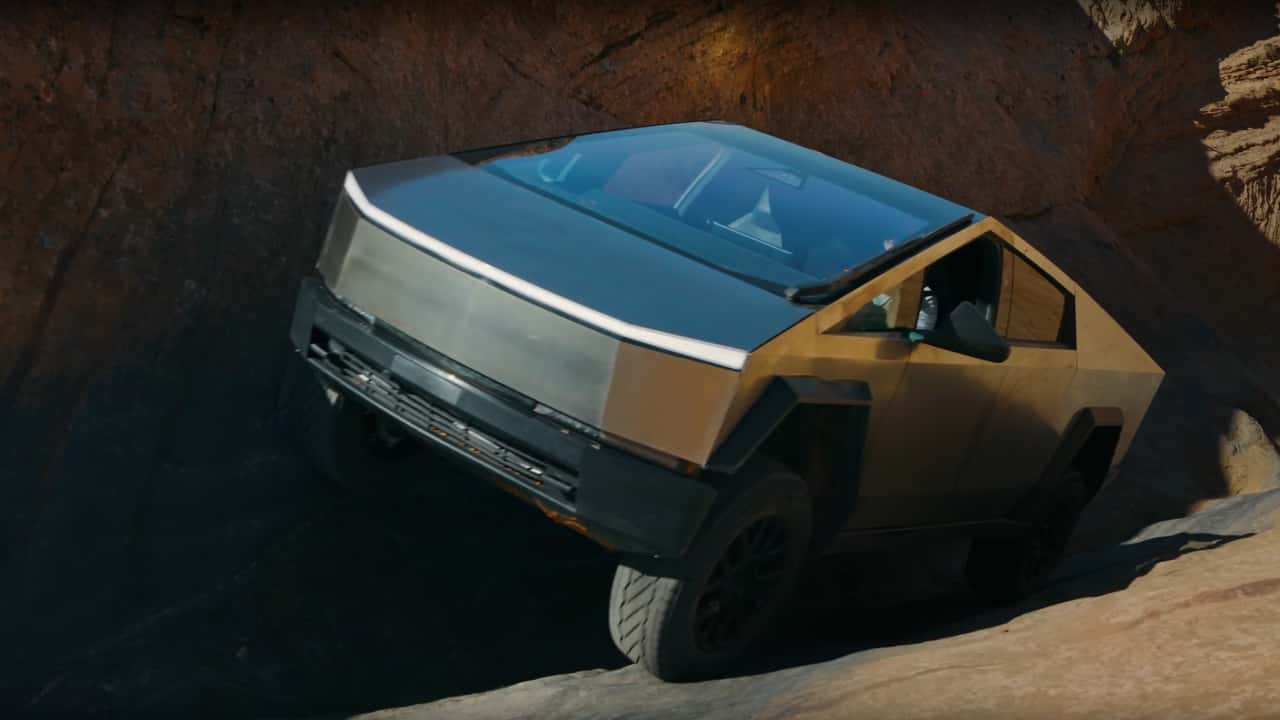
Affordability has always been elusive for the shiny trapezoid, though. And that may have factored into its downfall.
The Cybertruck was originally poised to start at $40,000 when it was announced back in 2019. It was also supposed to have up to 500 miles of range and a towing capacity of 14,000 pounds. None of those came to fruition. Instead, Tesla introduced a $59,990 entry-level version earlier this year, only to raise the price by $5,000 just 10 days later before killing off the trim level by September.
That left the Dual Motor AWD truck at $74,990, the Premium AWD at $84,990, and the Cyberbeast at $99,990. When Musk announced that Tesla would discontinue the Cybertruck last week, the company almost immediately hiked the price of all trims by as much as 10%. The Dual Motor AWD hit $82,490 (but could no longer be ordered), the Premium AWD hit $92,490, and the Cyberbeast hit $102,490.
That's now changed once again. The Dual Motor AWD and Premium AWD are unavailable. And just like it came into the world, the Cybertruck marches towards the exit with only its high-performance, tri-motor Cyberbeast variant available to order (plus yet another price hike of $7,500). It has 320 miles of EPA-rated range, a claimed 2.6-second 0-60 time, and adjustable-heigh suspension. The Tesla blog Not A Tesla App first spotted the change.
CEO Elon Musk claims that the demise of the Cybertruck isn't because it's unprofitable. In fact, he says that the order rate currently exceeds Tesla's remaining supply and that the automaker "will have to return deposits for a lot of people" in 8 months when production winds down. Indeed, Tesla's website shows that Cyberbeast trucks ordered today have a delivery window of March to June in 2027. So perhaps trimming the lineup is also a way to slow incoming orders and streamline production as manufacturing comes to a close.
But the truck fell far short of the production volumes Tesla and Musk targeted years ago.The automaker's Texas Gigafactory is outfitted to build 125,000 Cybertrucks per year, Tesla says. And Musk said production could reach 250,000 Cybertrucks annually, with ambitions to expand that to as many as 500,000 trucks. In its best year in 2024, Tesla sold 37,965 units, beating all other electric pickups, per industry data cited byReuters. Tesla sold an estimated 20,237 trucks in 2025. It appears that there simply weren't enough buyers willing to shell out for what the Cybertruck was offering—plus it became the mobile version of a MAGA hat to some, which didn't help.
This isn't the first time that Tesla jacked up the price of a model as it was headed out the door. When it retired the Model S and Model X earlier this year, Tesla slapped a $35,000 premium on the "Signature Edition" of each car and sold every one of the final 350 cars it produced until the very last one rolled off the line.
The Model S was an icon, the EV that kicked off the modern EV revolution. Those final units will no doubt become collector's items. Will the last Cybertrucks in a short production run shake off their baggage and reach legend status someday? Time will tell.
It’s Official: The Cybertruck Is One Of The Greatest Flops In Automotive History
Tesla Is Killing The Cybertruck To Make Room For More Robotaxis
Tesla Promised To Bring The Cybertruck To Australia And New Zealand. But It's Never Coming
The Tesla Model 3 And Model Y Can Now Power Your Home In A Blackout
]]> contact@insideevs.com (Rob Stumpf) https://insideevs.com/news/815084/tesla-cybertruck-squeezing-pennies-death/ https://insideevs.com/news/815147/rivian-robots-80-percent-factory-tasks-ceo/ Wed, 11 Nov 2026 12:49:26 +0000 Rivian's New Robots Will Initially Handle 20% Of Factory Tasks. The Goal Is 80%, CEO Says The automaker’s Mind Robotics spinoff is working on replacing boring, repetitive jobs with some sort of industrial robots. Rivian wants robots to take over most of the workload in its car factories. The goal is to have 80% of the plant work done by robots, but that will come in the future. CEO RJ Scaringe said that robots will initially handle the posts where humans currently feed other robots.
Rivian, the California-based startup that makes the R1S, R1T, and R2 EVs, wants to flood its car factories with robots. In an interview with Kleiner Perkins, RJ Scaringe, the company’s founder and CEO, said that as much as 80% of the assembly line tasks will be automated, and it’s all thanks to the Mind Robotics spinoff established last year.
We don’t know when the robot revolution will hit Rivian’s factory floors, but Scaringe said that things will start off at a smaller scale.
“In the beginning, we’re going to be able to do 20% of the tasks on the plant, but over time, we want to grow that to 80%,” said Scaringe. “And that’s what makes software so exciting and why designing the hardware with headroom is so important.”
To be clear, the vast majority of car plants in the world, including Rivian’s, have some degree of automation. We’ve all seen those huge robot arms that pick up various parts and install them in fixed positions. These robots are manually programmed to do the same task over and over again, and they can only do their job if the parts they need are exactly in the same spot every time.
However, what Rivian—and others like it—aims to do in the future is replace humans who do highly repetitive tasks that have some degree of variability. At first, posts where humans simply pick up a part from a bin and place it on a fixture will be handled by AI-enabled robots that are able to detect small variations in where parts are placed inside the bin.
“These are the immediate opportunities we see,” said Scaringe. “And these tend to be the ones that often are the least interesting jobs. But there’s a huge body of work that exists there. Depending on the section of the plant, up to 50% of the labor is in pick-and-place [posts].”

Rivian R2 Assembly
Photo by: Rivian
To make it all happen, Rivian has worked closely with Mind Robotics, a startup that the EV maker spun off last year to develop autonomous driving and “physical AI.” Now, RJ Scaringe revealed that both companies have poached talent from the consumer electronics industry to work on Rivian’s future software and hardware plans.
“We have a lot of folks, both within Rivian and Mind, that we’ve recruited from consumer electronics. Like, if you’re working on a tactile-sensing phone, how is that helpful on a robot? Well, a robot needs to have tactile sensing. So, there are these deep capabilities that have been built into the consumer electronics space that we’ve leveraged within Rivian, and we’re leveraging with Mind,” said Scaringe.
In practice, engineers filmed how various tasks are completed on the factory floor and then fed those videos into software that can decode what’s happening in each frame. Then, the software can issue commands to the robot.
“In the case of manufacturing, what we’ve done within Mind, we’ve taken videos of a whole broad spectrum of tasks. So, thousands of tasks being done, characterized what’s in those tasks, what’s the degree of difficulty from a dexterity point of view and a reasoning point of view,” said Rivian’s CEO. With the proper hardware in place, the software can then be improved over time. "The model gets smarter over time,” added Scaringe.
That’s similar to what the company aims to do with its Gen2 R1S and R1T electric models. The two EVs are equipped with all of the necessary hardware to enable point-to-point hands-free driving, while the software that ties it all together is scheduled to become available on a small scale through an over-the-air software update in late 2026, followed by a wider rollout in 2027.
Rivian's Robot Startup Hires Veteran EV Exec Doug Field
This EV Charging Robot Actually Makes A Ton Of Sense For Charging Robotaxis
Hyundai's Atlas Robot From Boston Dynamics: What Is It, Exactly?
AI-Powered Coffee Runs And Service Visits Are Coming To Rivians In 2027
]]> contact@insideevs.com (Iulian Dnistran) https://insideevs.com/news/815147/rivian-robots-80-percent-factory-tasks-ceo/ https://insideevs.com/news/815123/ammann-eabg-electric-asphalt-paver-volvo-penta/ Wed, 11 Nov 2026 09:41:18 +0000 This New Electric Paver Can Lay Down 1,200 Tonnes Of Asphalt A Day Switzerland’s Ammann tapped Volvo Penta to electrify one of its best-known asphalt pavers. One of the largest electric asphalt pavers in the world is made by Switzerland’s Ammann. The company’s new eABG 4820 is powered by Volvo Penta’s electric powertrain. A huge battery pack enables the paver to lay up to 500 tonnes of asphalt per hour.
The construction world is getting quieter by the day, thanks to the gradual electrification of big rigs traditionally powered by diesel engines. After trucks, diggers, and cranes, asphalt pavers are now going electric.
Switzerland’s Ammann, which is known for its asphalt and concrete plant equipment, has transformed one of its mainstream diesel asphalt pavers to run on electric power. Thanks to a Volvo Penta powertrain, the eABG 4820 is now one of the largest electric pavers on the market, capable of laying up to 500 tonnes per hour and a maximum output of 1,200 tonnes per day with a charging stop.
Without intermediate charging, the machine can put down between 350 and 450 tonnes of asphalt.
Before getting into the details, the biggest advantage of an electric paver over a diesel rig is the significantly lower noise output. A 99-kilowatt electric motor is powered by a massive 270–kilowatt-hour battery pack arranged in three separate units. Volvo Penta supplies the batteries, motors, power electronics, and control technology, while Ammann used its expertise in hydraulic-powered machinery to put it all together.
“It comes down to energy management and architecture,” said Philipp Bramer, head of the e-paver development team at Ammann. “The electric driveline doesn’t just power the machine. It communicates seamlessly with the hydraulics. Simultaneously, the intelligent control system makes sure that the system supplies exactly the right amount of energy to the machine.”
The nickel-cobalt-aluminum oxide (NCA) traction batteries can be charged from a CCS2 connector at up to 150 kW in roughly one and a half hours, while AC charging at up to 22 kW can replenish the battery in 12 hours. Amman says that the battery provides enough juice for an entire work shift, but that an external power supply is responsible for its proprietary ABG e+ screed heat system.
The electric paver can handle widths of up to 21.3 feet (6.5 meters), making it a good choice for most paving scenarios, especially in emission- and noise-sensitive job sites. We’ve all seen and heard a diesel asphalt paver in operation—I vividly remember when the street I grew up on got its first layer of asphalt decades ago, and while I was fascinated by all the machinery, I still remember that the site was extremely loud.
This, coupled with the fact that an electric paver emits up to 70% less carbon dioxide into the atmosphere, should make diesel construction equipment a thing of the past—at least in crowded, already polluted urban areas.
What’s more, because an electric powertrain has significantly fewer moving parts compared to a diesel lump, a lot of maintenance tasks simply disappear, along with their associated costs. At the same time, though, construction companies need to install charging equipment at their depots and find ways of topping up their rigs on the jobsite.
'The Chinese Will Eat Our Lunch': Europe's EV Trucking Industry Is Scared As Hell
This Is Volvo Trucks’ First Electric-Only Model: FM Low Entry
Scania's New EV Truck Has 447 Miles Of Range
Diesel Generators Cost Thousands To Run Long-Term. Liebherr’s Battery Wants To Fix That
]]> contact@insideevs.com (Iulian Dnistran) https://insideevs.com/news/815123/ammann-eabg-electric-asphalt-paver-volvo-penta/ https://insideevs.com/news/815061/automakers-suppliers-chip-shortage-ai/ Tue, 10 Nov 2026 22:45:20 +0000 The AI Boom Is Creating A New Supply Chain Headache For Automakers The AI boom is diverting resources away from basic automotive chips. Could it turn into semiconductor shortage 2.0? Automakers could soon find themselves battling a new chip shortage. You might not be surprised to learn that AI is to blame, but not in the way you might think. Manufacturing capacity, engineering talent, and investments are flowing into building profitable AI-related projects instead of basic industrial components.
The auto industry may be headed for another chip crunch. Last time, it was the pandemic that snarled supply chains and threw the chip market out of whack. This time, the AI boom is squeezing the supply of the basic semiconductors that modern cars rely on.
The CEO of Dutch semiconductor manufacturer Nexperia, Stefan Tilger, told Reuters that competitors had shifted supply for commodity semiconductors toward chips used in AI data center. And since a great deal of that production was once dedicated to mature chips (like those used in cars and other industrial equipment), a bottleneck is quickly brewing in the automotive supply chain. The auto industry is "suffering quite heavily," he said.
 Photo by: InsideEVs
STMicroelectronics, a Swiss semiconductor manufacturer, is seeing the same problem, according to comments reported by the outlet. CEO Jean-Marc Chery warns that chip foundries and assembly plants are increasingly "disengaging" from traditional mainstream automotive and industrial applications. Tilger says that another emerging area eating into the supply chain is the new breed of robotics beginning to hit the market.
Both company leaders are stressing that the upcoming shortage isn't because big GPU companies like Nvidia are eating up every last chip known to man. The squeeze is happening even further upstream in the supply chain.
And the auto industry is already feeling the impact. German automotive supplier Aumovio, which makes sensors, cameras, and other in-vehicle electronics for customers like BYD, BMW, and Ford, warned on a recent earnings call that its chip costs are rising and will "explode" next year.
"What is the reason for that situation? The reason are the data centers for mainly artificial intelligence," said interim finance head Claus Bauer. "We can tell you that there's no price sensitivity whatsoever in that area. All of our suppliers in that regard could sell twice their capacity to this very lucrative, non-price-sensitive area."
Automakers are no strangers to semiconductor shortages. During the pandemic, chip shortages forced car companies to idle production lines and even ship cars without certain computer-reliant features, like automatic start/stop. It's not clear yet that things will get as bad as last time. But if they do, the AI-driven race to make everything smarter could lead to less-smart cars, if only temporarily.
AI-Powered Coffee Runs And Service Visits Are Coming To Rivians In 2027
GM's Future Cars Will Be Very Different. Here's Everything We Learned
Ford’s New AI Assistant Can Read Your Car’s Manual And Diagnostics
Waze Is Supercharging Destination Search With Gemini AI
]]> contact@insideevs.com (Rob Stumpf) https://insideevs.com/news/815061/automakers-suppliers-chip-shortage-ai/ https://insideevs.com/news/815069/mercedes-eqs-range-test-edmunds/ Tue, 10 Nov 2026 20:48:30 +0000 This Mercedes Went 539 Miles On A Charge. Is Range Anxiety Finally Dead? Edmunds says the Mercedes EQS 450+ is the longest-range sedan it has ever tested, beating out the Lucid Air. The 2027 Mercedes-Benz EQS 450+ covered 539 miles in one charge, according to Edmunds. This is significantly further than its 467-mile EPA range rating. Edmunds also found that it's the third-fastest charging EV it has ever tested, beaten only by the Hyundai Ioniq 6 and Mercedes-Benz CLA 250+.
A 2027 Mercedes-Benz EQS sedan just traveled well over 500 miles in a real-world range test by Edmunds. It's an amazing result that shows range anxiety may finally be fading into the rearview—especially if you've got deep enough pockets.
When put through its paces, the Mercedes EQS 450+ covered 539 miles, surpassing its 467-mile EPA rating by a substantial 72 miles. That also makes it the longest-range sedan Edmunds has ever tested, beating out the Lucid Air Dream Edition by 34 miles. Keep in mind that Edmunds tests range on a route with a 60/40 split between city and highway driving, whereas the EPA aims for a 55/45 breakdown. In Edmunds' testing, only the Cadillac Escalade IQ has bested the EQS 450+’s range, covering a stunning 558 miles.
For 2027, Mercedes-Benz updated the EQS with some tweaks that helped boost its efficiency and range. The battery is now 122 kilowatt-hours, up from 118 kWh in the older model. The rear motor now has a two-speed transmission, and the whole platform has been upgraded to an 800-volt design. These upgrades already boosted the EQS’s stated range on paper. Overdelivering in the real world confirms that the range anxiety argument against EVs is only getting harder to make.
The EQS can't just drive farther than its predecessor. The updated 800-volt platform allows it to charge far more quickly.
Because of its long range, stellar efficiency, and strong DC fast-charging rate, Edmunds says it’s the third-fastest charging EV it has ever tested based on its miles-per-hour charging metric. The EQS 450+ was able to add 100 miles of range in just 7 minutes is only bested by the Hyundai Ioniq 6 and the new Mercedes-Benz CLA 250+. The CLA 250+ also has some of the same tricks that the EQS 450+ uses to increase efficiency and lower charging times, like a two-speed transmission and an 800-volt platform.
To be sure, Edmunds’ test example stickered at nearly $122,000, which isn’t attainable for most EV buyers. Still, the growing availability of ultra-long-range EVs shows that range anxiety is becoming a thing of the past. A new generation of luxury EVs is proving that out; the BMW iX3, i3, and iX5 all have range ratings well north of 400 miles, while the Volvo EX60 and Porsche Cayenne Electric land around there too. For its part, Edmunds has now tested six EVs that sail past 500 miles.
What may be even more encouraging is that there plenty of 300-mile cars on offer too, and many of those won't break the bank like a six-figure Mercedes. Edmunds says more than 90 models have exceeded 300 miles in its testing.
Ten years ago, 300 miles seemed like a stretch goal for the mainstream; only the Model S had such a rating. Now, it’s not hard to find cars like the Chevy Equinox EV or Kia EV3 that can easily hit that number, for prices that aren’t too far off from the average gas-powered crossover.
EVs still have obstacles to overcome in the eyes of the general public, like high purchase prices, scattered charging infrastructure, and a lack of options. But increasingly, range isn't one of them.
The Mercedes CLA Is One Of America's Quickest Charging EVs: Test
How Far Can Your EV Go After It Says It’s Empty?
Do Those Funky Tesla Wheel Covers Actually Boost Range?
Mercedes Wants To Rethink EV Batteries With This Clever New Technology
]]> contact@insideevs.com (Kevin Williams) https://insideevs.com/news/815069/mercedes-eqs-range-test-edmunds/ https://insideevs.com/news/815062/lucid-cosmos-tesla-model-y-production-on-track/ Tue, 10 Nov 2026 19:33:24 +0000 Lucid's $50,000 Tesla Model Y Rival Is Getting Closer To Production. Here's The Latest The Lucid Cosmos could make or break the company. Production is slated to begin in 2027. The midsize electric crossover will be made in Saudi Arabia starting next year. A robotaxi is also planned on the midsize platform, to be rolled out in partnership with Uber and Nuro. Production of the Cosmos is "on track" and it's a "must-win project," CEO Silvio Napoli said.
Lucid is on track to start producing the Cosmos crossover in the second half of 2027, the California EV startup said in its third quarter earnings call on Monday. The electric crossover will rival the Tesla Model Y and Rivian R2 when it goes on sale and is a "must-win" project for the company, according to new CEO Silvio Napoli.
This week, Lucid provided a few updates on the status of its most important model to date. Here's what we learned.
Lucid Cosmos Factory Is Moving Toward 'Production Readiness'
Lucid is a small player in the EV market, but it has big ambitions. Its third quarter sales plunged to only 3,806 vehicles. However, its January-to-September sales are up 33% thanks to more Gravity SUVs reaching customers. It is now trying to prove it can transition from a niche luxury EV maker into a profitable high-volume carmaker.
The upcoming midsize platform and the EVs that it will underpin is central to that strategy. And progress on the AMP-2 manufacturing plant where production will kick off is coming along, Napoli said.
“AMP-2 is moving towards inauguration and production readiness, and Midsize is now on track,” Napoli said. The company’s second manufacturing plant—and first international one—is located in King Abdullah Economic City, Jeddah, Saudi Arabia. The plant already assembles the Lucid Air sedan, which is also produced at its AMP-1 plant in Casa Grande, Arizona.
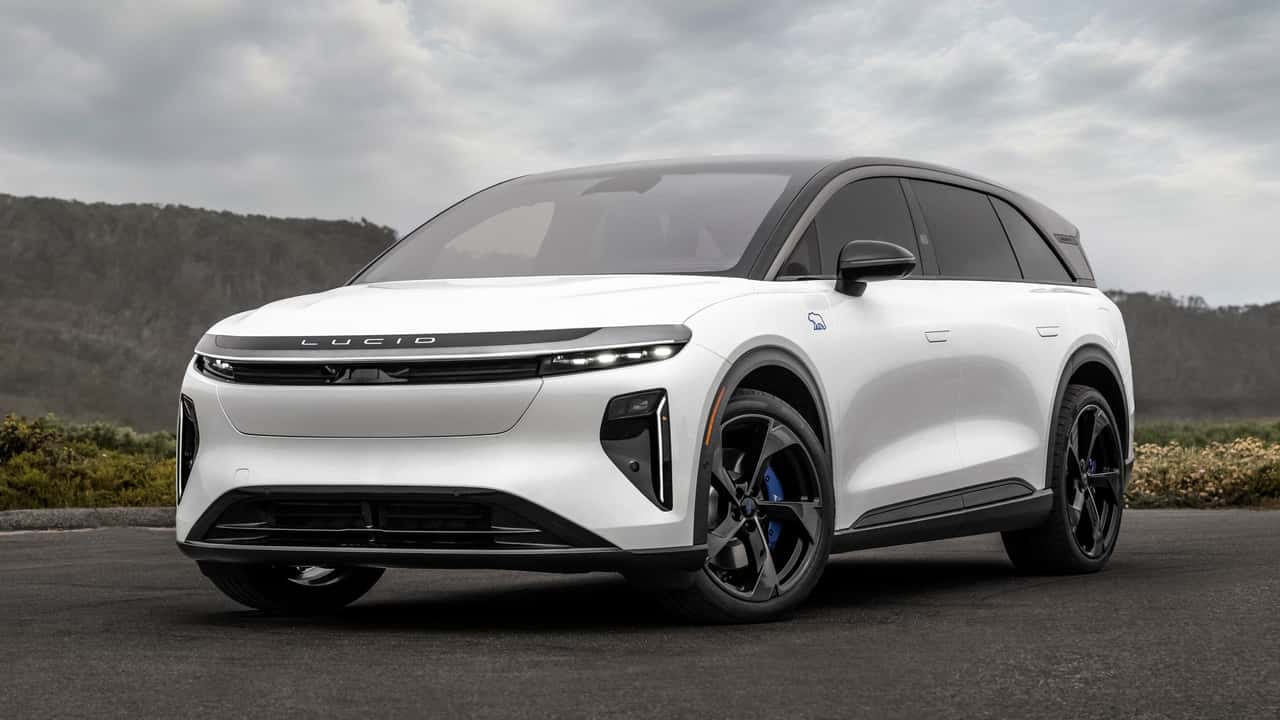
Lucid Gravity GT-S
Photo by: Lucid Motors
“Stamping line installation is complete, and commissioning is underway,” Napoli said. “Body shop installation is accelerating. Drive unit installation is progressing and paint is now in finalization with equipment continuing to arrive on site."
The Cosmos was originally scheduled to launch by the end of this year, but Napoli pushed it to 2027 amid a broader turnaround plan. The company said it won’t rush the new EV to the market to avoid the same quality issues faced by the Gravity and Air.
Final-stage Prototyping
Lucid also indicated that the Cosmos itself is getting closer to its final production form.
"The final stage of prototyping is underway including homologation and crash testing. Pilot production in Coolidge is entering its final build phase, including know-how transfer to AMP-2," Napoli said on Monday. Apparent Cosmos prototypes have been spotted near Lucid facilities.
More Lucid Cosmos Details Are Coming
Lucid said this week that it plans to announce reveal and production-start timelines in the first quarter of next year.
We already know a lot about the Cosmos. It will start at around $50,000. Napoli told CNN in August that it will have more than 400 miles of range. At its Investor Day in March, the company said it will get both nickel-manganese-cobalt (NMC) and lithium-iron-phosphate (LFP) batteries.
I also saw a prototype behind closed doors and it looks like a baby Gravity. Inside, a massive touchscreen spans the width of the dashboard. It will get a centralized architecture that’s more powerful and costs less to build, along with an 800-volt platform. It will be powered by one of the most energy dense and compact drive units in the industry, called Atlas.
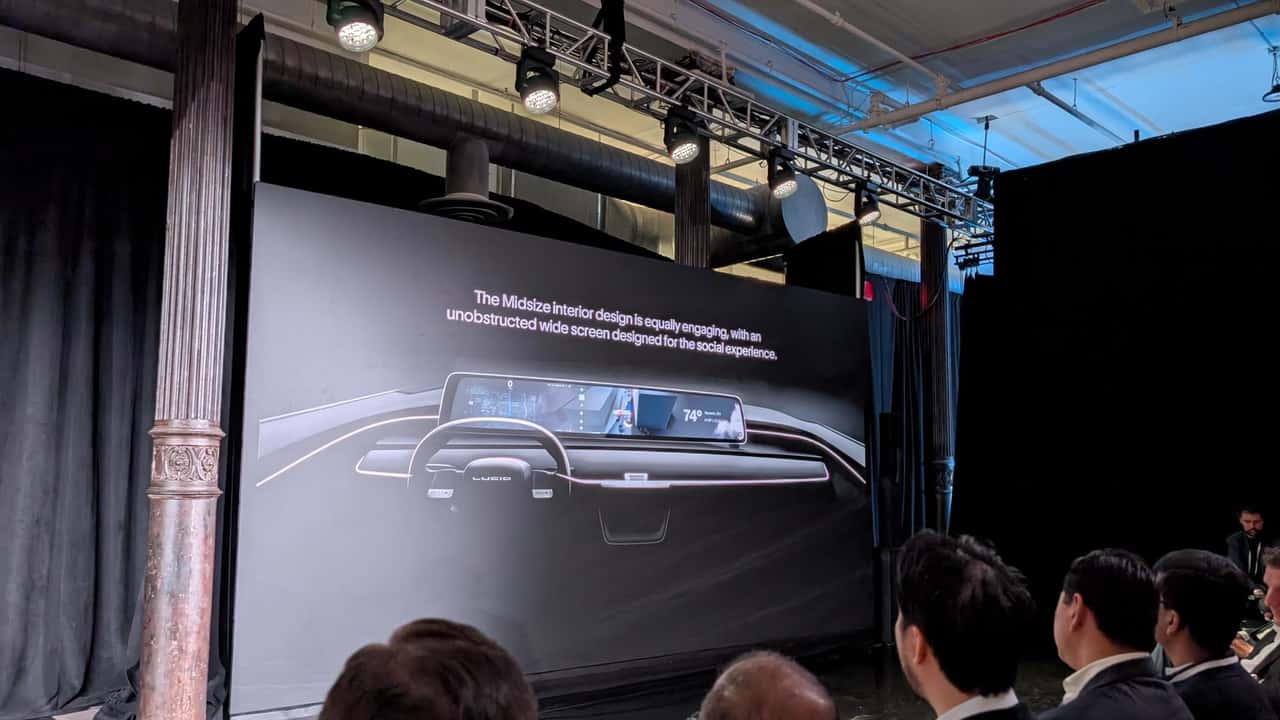
Lucid Cosmos interior.
Photo by: Suvrat Kothari
The startup is also planning to roll out tens of thousands of robotaxis through its partnership with Uber and Nuro in the U.S. and Bolt in Europe. Those will include both the Gravity (U.S.) and a midsize EV (For U.S. and Europe). The company is also on track to roll out the first Gravity SUVs in the Bay Area in the first quarter of 2027. (The original timeline was end of 2026.)
To help pull this all off, the company announced that it had received an additional $1.75 billion loan from Saudi Arabia’s Public Investment Fund, which is also its majority owner.
Lucid's CEO Said The EV Startup 'Underinvested In Service.' Here's How It's Fixing That
Lucid Production Plunges As The EV Maker Tries To Clear Inventory
2027 Lucid Gravity GT-S: Meet America’s Most Powerful Three-Row SUV
The Lucid Cosmos Will Have More Range Than Any Tesla
]]> contact@insideevs.com (Suvrat Kothari) https://insideevs.com/news/815062/lucid-cosmos-tesla-model-y-production-on-track/ https://insideevs.com/news/814999/mercedes-benz-high-powered-charging-us-three-years-100-stations/ Tue, 10 Nov 2026 16:00:00 +0000 Mercedes’ EV Charging Network Hit 100 Locations After 3 Years In The U.S. The company’s 400-kW chargers have recorded over a million sessions since 2023, with an emphasis on getting it right the first time. Mercedes-Benz’s EV charging network is celebrating its third anniversary in the U.S. The Mercedes-Benz High-Power Charging network now has 100 locations in North America and nearly 1,000 ports. The company boasts a near-perfect uptime rate and an impressive first-time success rate.
Mercedes-Benz may have sold its EV charging network in Europe, but the automaker’s American network is still alive and well, and it’s now celebrating its third anniversary.
Since debuting in November 2023, the Mercedes-Benz High-Powered Charging (MB HPC) network has gone from just a handful of locations in a few states to nearly 1,000 individual ports at 100 sites across 28 U.S. states and Canada's British Columbia.
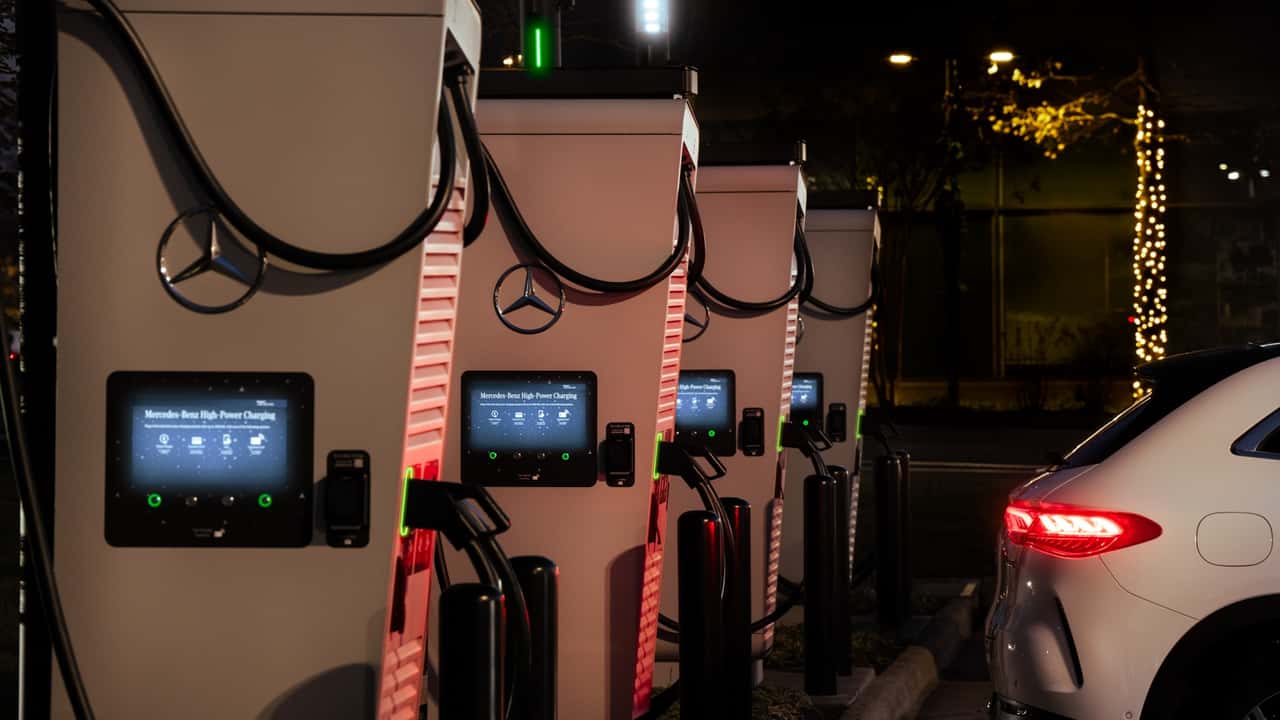
Mercedes-Benz High-Power Charging station in Ashburn, VA
Photo by: Mercedes-Benz
All of the carmaker’s fast chargers can deliver up to 400 kilowatts of power, with over 245,000 customers topping up their EVs at a Mercedes-Benz stall in the past three years. According to the company, the vast majority of stalls have both CCS and NACS connectors, while only 7% of locations have just CCS connectors.
That’s a big thing nowadays, when most of the new EVs on the market have a Tesla-style NACS charging port. The smaller inlet started making a splash among traditional automakers after Ford broke industry barriers and convinced Tesla to open up its Supercharger network to other makes. That said, NACS-equipped vehicles can still charge at CCS stations with an adapter, and vice versa.
Near-perfect uptime has been a headlining feature of Mercedes-Benz’s charging network stateside since its launch, but while those figures have remained relatively unchanged in the past three years, another metric has emerged as a differentiator, at least in the German automaker’s eyes.

Mercedes-Benz Charging Hub at the headquarters of Mercedes-Benz USA in Sandy Springs, Georgia
The first-time success rate, which measures charging sessions that start on the first try, has become the company’s “guiding star.” Back in 2023, it stood at roughly 84%, meaning that about one and a half sessions out of ten didn’t work on the first attempt. Now, three years later, the first-time success rate has climbed to over 90%.
Mercedes’ EV charging network in the U.S. uses 400-kilowatt dispensers exclusively, mostly from Alpitronic, and the stations are usually located at or around premium shopping locations. According to DCFC Tracker, the largest MB HPC site has 20 stalls and is located in Orlando, Florida. The company’s smallest operations, in Conyers, Georgia, and Red Bluff, California, have four stalls each.
All locations have credit card readers, but EV drivers can also use various charging apps to pay for sessions, as well as an RFID card issued by Mercedes-Benz dealers. Plug & Charge is also supported. Pricing varies between $0.35/kilowatt-hour and $0.60/kWh, depending on location, and a $25 pre-authorization fee is temporarily held to verify available funds. After the session ends, drivers will be charged the actual amount based on the energy used, and the rest will be released.
Last month, Mercedes-Benz High-Power Charging North America appointed Madeline Ebert as its new CEO.
Updated to reflect that the charging network has delivered over one million sessions since 2023, and that the percentage of CCS-only stalls is 7%.
Tesla Is Now Powering One Of Its Biggest Charging Rivals
Mercedes Wants To Rethink EV Batteries With This Clever New Technology
Mercedes-Benz Is Giving Up On Its EV Charging Network In Europe
Rivian's Charging Network Grew 39% In A Year
]]> contact@insideevs.com (Iulian Dnistran) https://insideevs.com/news/814999/mercedes-benz-high-powered-charging-us-three-years-100-stations/ https://insideevs.com/news/814919/lucid-service-cut-staffing-buildings/ Tue, 10 Nov 2026 14:00:00 +0000 Lucid's CEO Said The EV Startup 'Underinvested In Service.' Here's How It's Fixing That Lucid says it cut service wait times by 20% in Q3 as it builds out more repair locations and hires staff. Lucid says that it has reduced service wait times globally by 20% building more service centers and hiring more staff. It aims to keep growing its mobile repair capacity too. The push is part of a turnaround plan from Lucid's new CEO, Silvio Napoli.
Getting a vehicle repaired is almost never pleasant, but Lucid is aiming to make things easier. Today, the direct-to-consumer luxury EV brand announced it is continuing to expand its network of brick-and-mortar service centers and is adding more mobile technicians to improve its after-sales support network. It says that the work it's already done decreased wait times by 20% in Q3 of this year, compared to the quarter before.
"We are building a broader, more accessible service network that supports our guests wherever they are in the ownership journey,” Billy Hayes, Lucid's new chief customer officer, said. “We are expanding our network, adding service personnel, and increasing Mobile Service capacity to reduce wait times and provide more convenient, responsive support."
The push comes as Lucid is gearing up to launch the first EVs on its midsize platform, more affordable cars that will be its first with true mainstream potential. The company says production will start in the second half of 2027. And a potential Model Y moment by way of the Earth and Cosmos—or so Lucid hopes—will necessitate a more robust service operation.
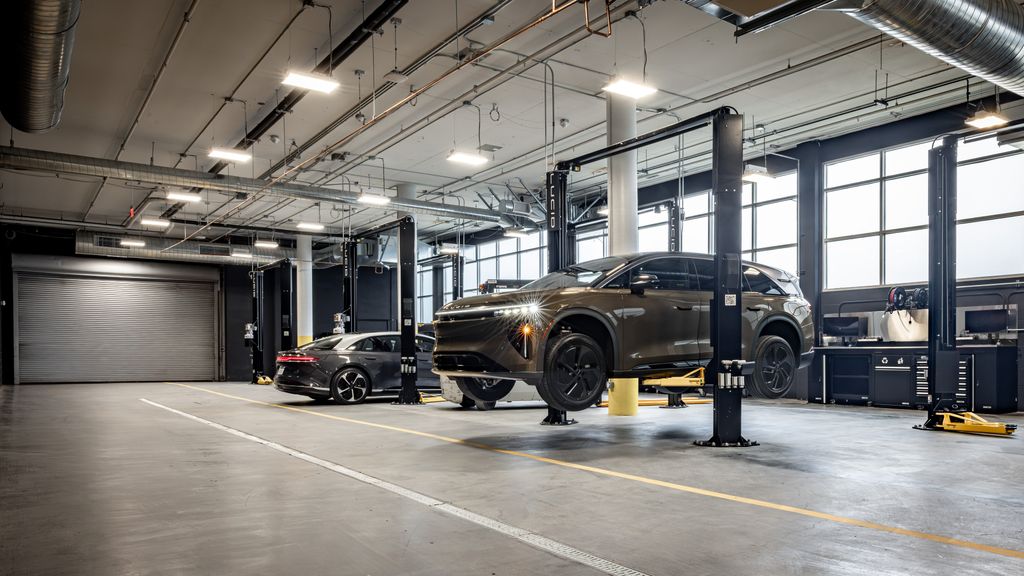 Lucid's Mission Viejo location combines a showroom and a service center. Photo by: Lucid Motors
The effort to beef up service is part of a wide-ranging turnaround plan from new Lucid CEO Silvio Napoli, who took the reins of the EV startup this summer with a mission to cut costs and reduce losses. He's shaken up the carmaker's executive ranks, made deep cuts to staff, and slashed production at its Arizona factory to better balance supply with demand. (Lucid has struggled to grow sales of the Air and Gravity, which is a big part of the problem.)
He's focused the company on key areas such as robotaxi partnerships, the upcoming midsize vehicles, and improving the customer experience to help turn the tide. During his first earnings call as CEO in August, Napoli acknowledged that Lucid had "underinvested in service."
Currently, Lucid operates around 40 service centers across the U.S. to service its vehicles. Those who aren’t located near an in-person center have to make do with mobile servicing.
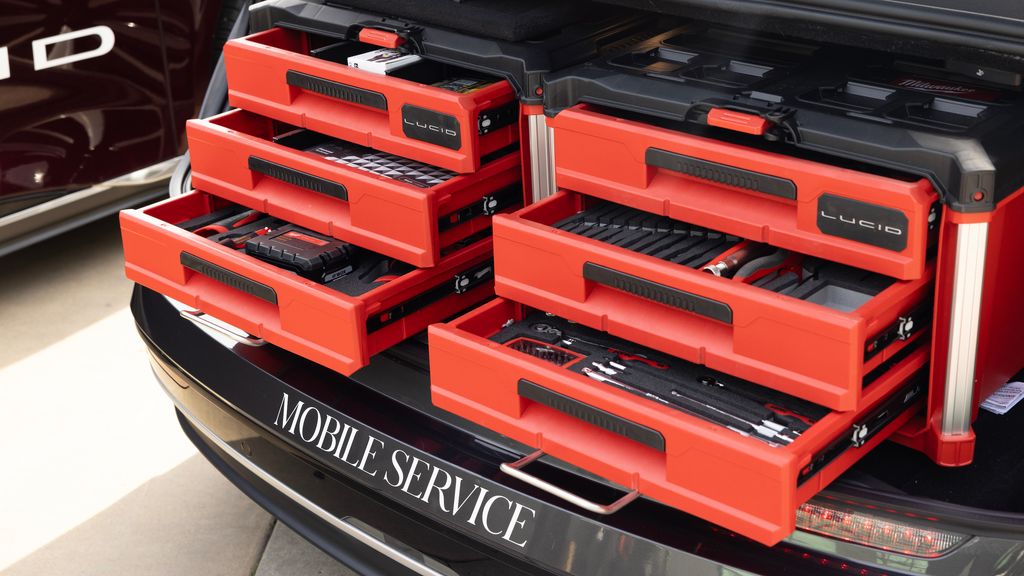 Lucid has big plans to expand mobile service capacity in the coming months. Photo by: Lucid Motors
To improve customer service, Lucid has gone on a hiring and building spree. The company is building more service centers in North America, Europe, and the Middle East. And it's opening more locations that house a studio (a showroom where people can check out Lucids) alongside a service center. The first One just opened in Mission Viejo, California. Two more are set to open before the end of the year in LA and Dallas, and another is planned in Chicago for early 2027.
Lucid’s strategy goes beyond just building new locations, too. The company says it increased its technical and support staffing by over 40% globally since in Q3, as compared to Q2. It wants to increase that to 50% by the end of this year, and 60% by early 2027.
Mobile service is also growing. Lucid’s mobile service capacity is up 15% since Q2, while the company is targeting a 40% increase by the end of the year. Lucid says 20 new Gravity support vehicles are helping transport technicians to cars in need.
With assistance from Tim Levin
Driving The Cheapest Lucid Air For 40,000 Miles Came With A Few Surprises
Lucid Production Plunges As The EV Maker Tries To Clear Inventory
The Range Rover Sport Electric Is Here To Take On The Lucid Gravity
Lucid And Bolt Want To Put 25,000+ Robotaxis On European Roads
]]> contact@insideevs.com (Kevin Williams) https://insideevs.com/news/814919/lucid-service-cut-staffing-buildings/ https://insideevs.com/news/814974/polestar-formula-2030-concept-reveal/ Tue, 10 Nov 2026 09:52:18 +0000 Polestar’s Next EVs Will Borrow From This Gorgeous New Concept The Formula 2030 previews design details headed for the next Polestar 2 and 7 and brings customizable physical controls. The Formula 2030 previews design details for the next Polestar 2 and Polestar 7. Its cabin features customizable physical controls and a driving position that changes with drive modes. Polestar needs its upcoming models to boost sluggish global growth as it winds down U.S. sales.
Polestar has unveiled a concept that makes you wish it would quietly slip into production tomorrow. The Formula 2030 is low, wide, and muscular, with four doors and enough suggested practicality to help you justify the rather large wheels.
Unfortunately, Polestar has no plans to produce the Formula 2030, but some of what you’re looking at is headed for cars you can actually buy. So this is the first Polestar penned under the brand’s new design boss, Philipp Römers, who took the role in August.
The study measures 184.3 inches (4,680 millimeters) in length and stands just 53.1 inches (1,350 mm) tall, making it lower than the Polestar 5. For reference, that’s about as low as Audi’s last TT sports car, but the concept’s aggressively bulging rear haunches and low stance make it look a lot meaner and sportier.
It features plenty of cool, subtle details you may not notice at first. The headlights, for instance, sit within a front aerodynamic wing, while a single upright windshield wiper screams motorsport. Polestar has ditched the familiar full-width rear lightbar for separate “Single Blade” lights. The 22-inch wheels, splitter, and diffuser sport variations of the same "Nitrogen" exterior color.
Inside, four individual seats have inflatable cushions and bolsters that adjust around their occupants. Rear-hinged rear doors swing open for pillarless access, while exposed structural components and flax-based composite seat backs really highlight the use of this sustainable material.
The coolest thing about the interior, though, is the fact that the cockpit also physically changes depending on the driving mode. Switch to Performance, and the 12.2-inch center screen lowers into the console while the steering wheel and its attached 20-inch driver display move closer. Choosing Autonomous mode moves the seat and wheel apart.
It features eight physical controls beneath the center screen. You can customize their functions and choose different hardware, including rocker switches or rotary controllers. After years of watching buttons disappear and get replaced by touchscreens, we’re happy to see real controls making a comeback.
Polestar doesn’t say how quick this concept is or how far it can go on one charge—this is purely a design showcase. However, a lot of what you’re seeing here will likely make its way into the upcoming Polestar 2 and its crossover cousin, the Polestar 7. The new 2 is scheduled for 2027 to replace a car that recently ended production after roughly 200,000 sales.
The Polestar 7 will follow a year later, with production planned at Volvo’s Košice plant in Slovakia, using Volvo technology, including cell-to-body battery construction and next-generation electric motors. Shared hardware should help contain costs, while Polestar promises its own driving character with more emphasis on sportiness and driving fun.
The New Polestar 4 SUV Is An Electric Wagon In Disguise
Polestar Still Has No Idea Why The U.S. Kicked It Out
Polestar Pauses Work On Its Electric Sports Car. But It’s Almost Done
I Loved Driving The Polestar 3. But This Missing Feature Ruined It For Me.
Those launches come as Polestar recorded little global growth. It reported 44,790 annual sales through September 2026, up just 0.6% over the same period of 2025. Its record third quarter brought 14,371 sales, but deliveries outside America fell 8%. American inventory sales helped keep the worldwide total positive.
But American sales won’t prop up the brand’s global total soon. Polestar cannot sell model year 2027 and newer vehicles in the United States under the Connected Vehicle Rule, although it can continue selling existing earlier-model inventory and supporting owners.
Europe is therefore now the priority, making the next 2 and European-built 7 especially important. The concept gives those cars an appealing visual direction, but their pricing, capabilities, and execution will determine whether that translates into stronger sales.
]]> contact@insideevs.com (Andrei Nedelea) https://insideevs.com/news/814974/polestar-formula-2030-concept-reveal/ https://insideevs.com/news/814963/plugshare-app-update-redesign-dark-mode-iphone-duo/ Tue, 10 Nov 2026 08:53:13 +0000 PlugShare Gets A Major Redesign, Adds Dark Mode And iPhone Duo Support The app that’s used by EV drivers across the world to find chargers has gone through a near-total rebuild. The PlugShare app has gone through a major redesign. A dark mode is now available for the first time, and the app looks sleeker. The update adds support for the Apple iPhone Duo.
PlugShare, the smartphone app that brings together the largest community of EV drivers in the world, has been redesigned to include new features and compatibility with new devices. Version 8.0, which is now live on the Apple App Store, introduces dark mode, a redesigned user experience, and a performance boost.
It’s the first time in the app’s 15-year history that dark mode has been available, and it’s all down to the PlugShare community, which has been feverishly requesting the feature for years.
 Photo by: Plugshare
“PlugShare has always been shaped by the drivers who use it, and we remain community-driven 15 years after our first app launch,” said Corey Davis, PlugShare Senior Director, Software. “The update is a near-total rebuild of the PlugShare app. We’ve redesigned nearly every screen using Apple’s latest design language, making it feel faster, fresher, and more useful for PlugShare users.”
The latest iOS app version adds support for the new iPhone Duo and improves a few user experience items. Switching between different tabs is now instant. Furthermore, users can open and zoom into location photos directly from the image thumbnails, and trips display the exact distance from the starting point and from the previous stop.
The Apple Watch app also got some love. Users can find nearby chargers directly on their wrist, and the smartwatch automatically applies the same filters set on the smartphone app, so drivers will only see chargers that are compatible with their cars.
Tapping on a location will show its Plug Score, the charging network, the connector types, and a small preview map. The list of chargers refreshes every time the user’s wrist is raised and the app is open.
Apple’s iPad also gets a rebuilt app that adapts its layout to the tablet’s screen size.
It’s not hard to spot that the latest PlugShare app is all about Apple devices right now, but Android users will get a refreshed experience, too. The company said it’s working on shipping dark mode and a Material 3-based design in early 2027.
PlugShare claims it’s the world’s largest community of EV drivers who contribute real-time check-ins, reviews, and photos. The service debuted in 2009 and has gradually introduced solutions for charging operators and car manufacturers, in addition to the charging map available for EV drivers for free. In 2021, Recargo, the company behind PlugShare, was acquired by EVgo for $25 million.
Anyone can create an account and use the app to find chargers from all operators. Some charging networks support payment through PlugShare and manage their locations directly, but in other cases, EV drivers are the ones who keep the locations up to date.
EV Charging Just Got Easier On One Of The Fastest-Growing Networks In The U.S.
GM Just Fixed One Of The Biggest Headaches Of EV Charging
Ionna’s Fast Chargers Don’t Have An App. Here's Why
I've Seen The Future. It's A Xiaomi Store Where You Buy Smartphones And EVs
]]> contact@insideevs.com (Iulian Dnistran) https://insideevs.com/news/814963/plugshare-app-update-redesign-dark-mode-iphone-duo/ https://insideevs.com/news/814945/honda-new-hybrid-car-factory-ohio-failed-ev-push/ Tue, 10 Nov 2026 07:54:38 +0000 Honda Is Betting $3 Billion On Hybrids As It Pulls Back From EVs The automaker had ambitious plans for EVs in the U.S. Now, it’s spending big on a new factory and a new hybrid lineup. Honda is spending $3 billion on a big hybrid push in the U.S. The company is building a new car factory in Ohio, which will be able to accommodate gas, hybrid, and electric cars. Elsewhere, the automaker is retooling factories to get them ready for the upcoming hybrid boom.
Honda is building a new car factory in the United States, which will primarily manufacture hybrid and traditional gas vehicles. The new facility, which is estimated to cost $3 billion, will be Honda’s fourth auto plant in Ohio and the company’s ninth car-related production facility in the U.S.
The move is part of the Japanese automaker’s push to introduce no fewer than 15 new hybrid models globally, with the majority of them being destined for the American market, too. It’s also Honda’s first big step away from its ill-fated electric-car push, which ended up with a completely new vehicle platform and three EVs being retired before even one production-ready unit had rolled off the assembly line.

Honda's New Manufacturing Plant Location In Ohio
Photo by: Honda
As a reminder, the Acura RSX, Honda 0 Series Saloon, and Honda 0 Series SUV were supposed to go into production at a new EV hub in Ohio, but the entire plan was scrapped due to major financial losses. After canceling the 0 Series project, the company posted its first loss in nearly 70 years, with $9 billion going down the drain.
After the whole EV debacle, Honda decided to go back to the drawing board and chose ultra-efficient hybrids as its next big thing in the U.S. The car manufacturer is already knee-deep in the development of multiple hybrid models, with the first cars expected to debut in 2028.
To support the new strategy, Honda’s new plant, which is located right next to three of its other facilities in Ohio, is scheduled to become operational in 2029. According to the company, the new location will add over 2,000 jobs and will be able to manufacture 240,000 vehicles annually, raising the automaker’s total annual U.S. production capacity to 1.3 million cars. What’s more, the new Ohio plant will increase Honda’s hybrid powertrain system capacity by 250% in the state.
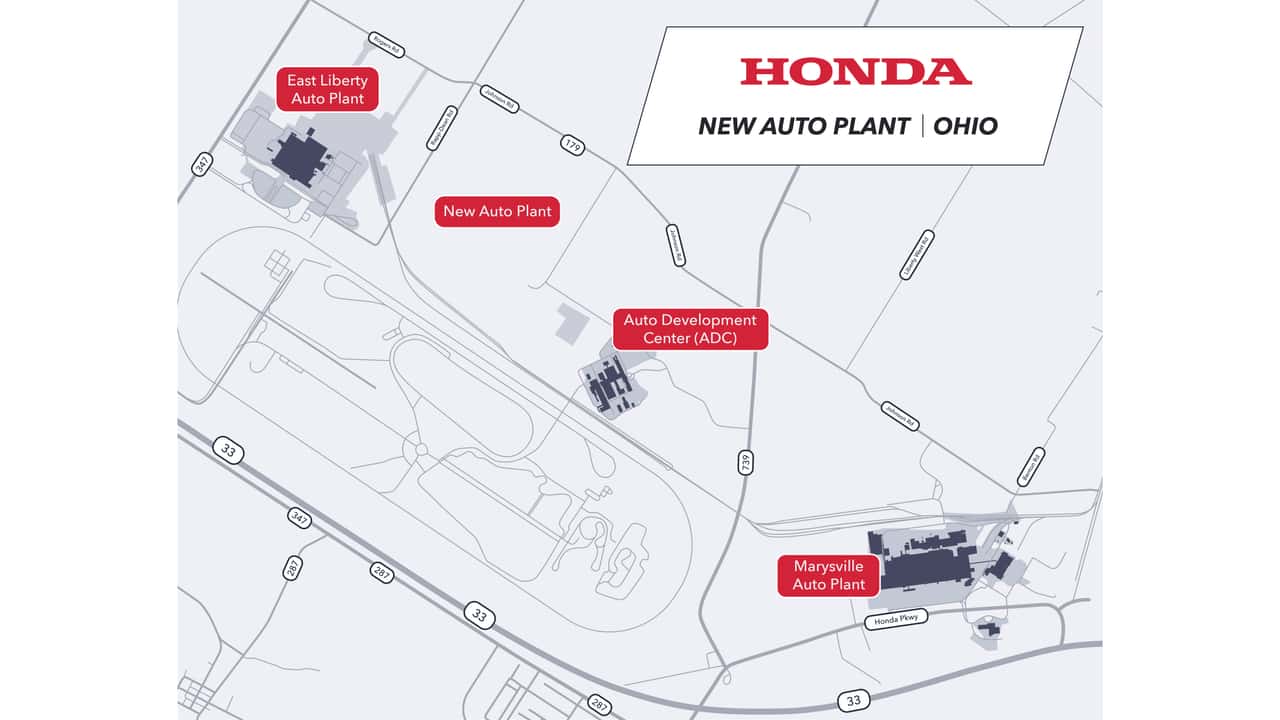
Honda's new Ohio auto plant location in relation to current Honda facilities
Photo by: Honda
All this being said, the latest Ohio factory is being built with flexibility in mind. Despite being aimed at hybrids at first, the company said that it will be able to add EVs into the mix in the future, if needed.
Elsewhere, Honda is investing in retooling factories to support its big hybrid push. The Alabama Auto/Engine Plant, the Anna Engine Plant in Ohio, the Transmission Plant in Ohio, and the Transmission Plant in Georgia are undergoing upgrades right now, adding equipment and new lines.
Earlier this year, when the car manufacturer announced its hybrid plans, two new vehicles were brought on stage: a Honda-badged sedan and an Acura-badged crossover. Neither has been confirmed, but we do know that electric all-wheel drive will be offered as part of the next-generation hybrid powertrain, and that crossovers will make up most of the lineup.
According to the Japanese automaker, the new system is designed to deliver 10% more efficiency than the current generation that debuted in 2023.
Honda’s New Hybrids Are Getting Electric All-Wheel Drive
Honda And Nissan Team Up To Make The Brains Of Future Cars
Honda Just Axed Its Last EV In The U.S.
Honda Lost $9 Billion On EVs. Now, It’s Betting On Hybrid SUVs And Sedans
]]> contact@insideevs.com (Iulian Dnistran) https://insideevs.com/news/814945/honda-new-hybrid-car-factory-ohio-failed-ev-push/ https://insideevs.com/news/814898/byd-raided-jlr-netherlands-legal/ Mon, 09 Nov 2026 21:37:03 +0000 Land Rover Is Going After BYD Over This Alleged Defender Lookalike: Report Jaguar Land Rover is challenging BYD over its Defender-like SUV. The dispute has already prompted raids on BYD's Dutch offices. BYD's offices in the Netherlands were reportedly raided as part of a legal dispute with Jaguar Land Rover. Bailiffs collected digital records over allegations that BYD may have reversed-engineered the Land Rover Defender to build the BYD Ti7. Court proceedings begin later this week, just as the Ti7 hits the showroom floor in Europe.
Court-appointed bailiffs reportedly raided two BYD offices on behalf of Jaguar Land Rover. The issue? JLR reportedly has a problem with the Chinese automaker's Ti7, alleging that it infringes on the UK-based firm's intellectual property.
The Times reports that two BYD offices in the Netherlands were raided back in August over the alleged copycat model. During the raid, bailiffs seized digital records related to the development of the Ti7. According to the report, a Dutch court will decide later this week whether JLR's claims against BYD can proceed. The Ti7 should reach European customers soon.
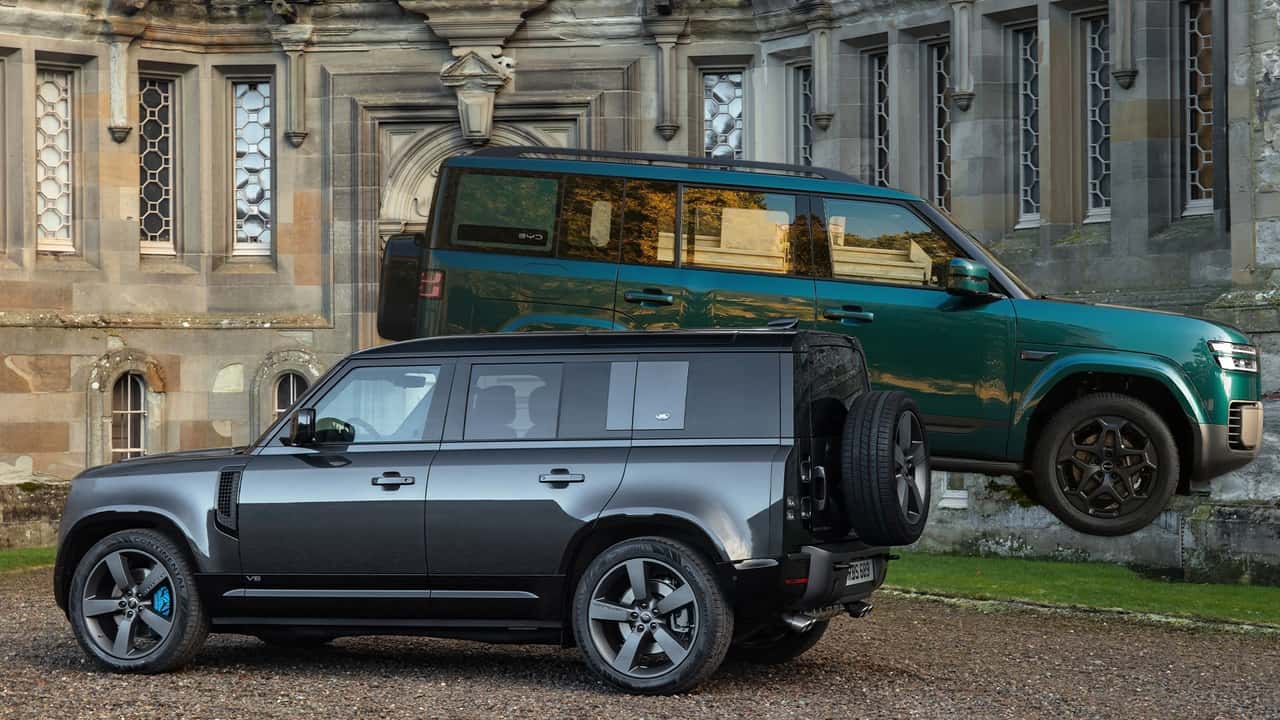 Photo by: BYD
Both BYD and JLR declined to comment when reached by InsideEVs sister site Motor1.
Visually, the similarities between the the BYD Ti7 and Land Rover Defender aren't hard to understand. But there might be more to it than just BYD having a similar boxy styling. According to The Times, JLR suspects that engineers at BYD may have dismantled and reverse engineered a Defender as part of the R&D process.
That alone isn't really an uncommon practice. Heck, any automaker worth its salt benchmarks models from competitors. But if BYD used any of that proprietary and protected tech in the production version of the Ti7, it could be a bigger problem.
BYD originally launched the Ti7 in China in September 2025 starting at under $27,000. It released a battery-electric back in April for $29,900 and plans to begin delivering the Ti7 in Europe as early as January.
European versions of the Ti7 start at around $64,500 versus the comparable 7-seater version of the Land Rover Defender 110 running nearly $92,000. Naturally, you can see why JRL might be a bit miffed about BYD coming to market in Europe with the Ti7.
This also isn't unexplored territory for JLR. It's been down the litigious path before to defend its IP against other automakers—namely British automaker Ineos and Chinese brand Jiangling. While it lost the case against Ineos, it did win the 2019 legal battle against Jiangling, finding that its Landwind X7 was too similar to the Range Rover Evoque.
BYD's Ultra-Luxury Electric Sedan Can Do Tank Turns And Go Over 600 Miles
China's World-Beating Supercar Just Hit 312 MPH
BYD’s 300-MPH Electric Hypercar Crashed During Testing. The Driver Survived
Ford CEO Says Its New EV Tech Is 30% More Efficient Than BYD's
]]> contact@insideevs.com (Rob Stumpf) https://insideevs.com/news/814898/byd-raided-jlr-netherlands-legal/ https://insideevs.com/news/814874/bmw-confirms-lfp-batteries-evs/ Mon, 09 Nov 2026 19:14:00 +0000 BMW Is Embracing Cheaper LFP Batteries For Its Newest EVs BMW's newest EVs boast impressive range. Now cheaper batteries could help bring their prices down, even if it means fewer miles. BMW will add cheaper LFP batteries to selected EVs, potentially lowering prices. Its compact Neue Klasse EV, due in 2028, looks like a likely candidate, though unconfirmed. BMW is expanding battery sourcing in Europe and the U.S., but local production doesn’t guarantee lower costs.
Between the 435-mile iX3 and 468-mile i3, BMW’s newest EVs make a strong case for spending a bit more to get incredible range. Now the company is looking at accommodating buyers who don’t need that much range and would rather keep some extra money in their pockets.
Speaking during BMW’s third-quarter earnings call, CEO Milan Nedeljkovic confirmed that the company will expand its use of lithium iron phosphate (LFP) batteries for Neue Klasse EVs, potentially opening the door to more affordable electric BMWs. BMW considers the cylindrical nickel-manganese-cobalt cells that are in most Neue Klasse cars as superior for the range they deliver, he said, but he acknowledged that LFP offers a different balance of cost and range.
“We will add the LFP technology in our vehicles, but we will be very specific in which vehicle and for which purpose,” Nedeljkovic said without naming the next models getting it or specifying a launch date outside China. Nor did he promise that lower battery costs would translate directly into lower sticker prices.
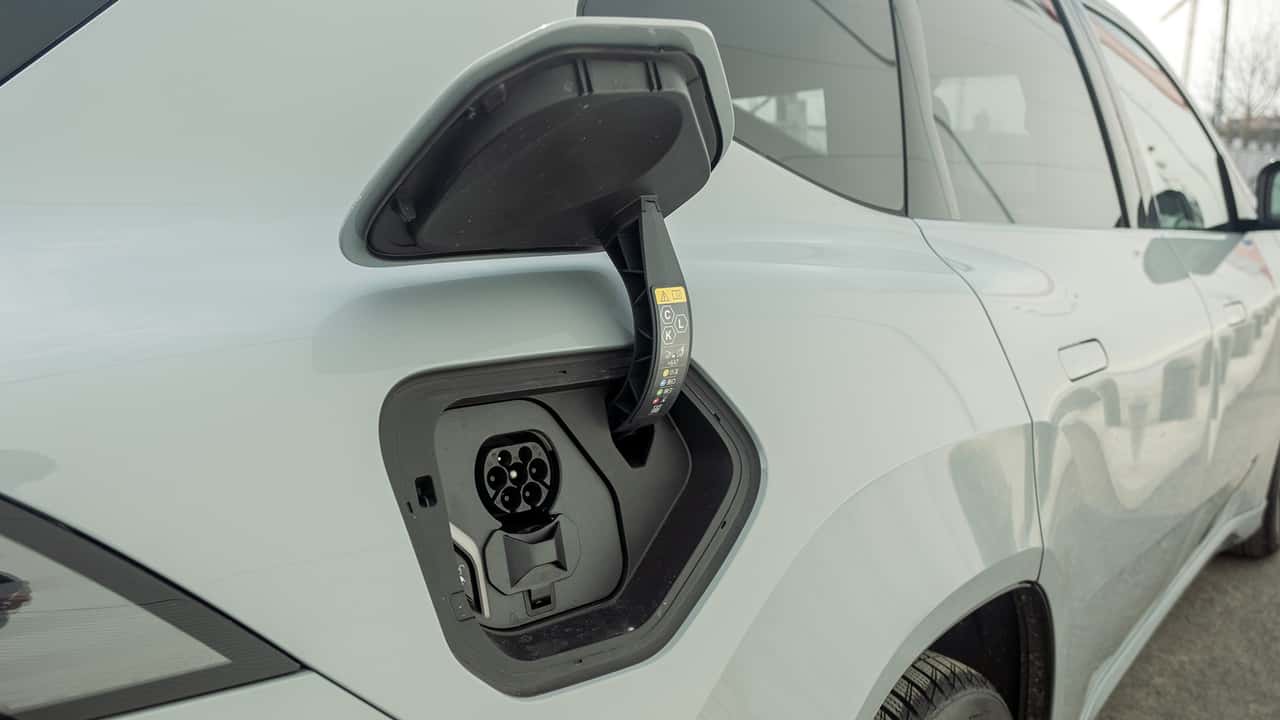 Photo by: Andrei Nedelea
China already offers a preview of the strategy. The entry-level, long-wheelbase iX3 30L uses a 77-kilowatt-hour LFP battery, while the more expensive 40L and 50L have NMC packs. The 30L has a claimed CLTC range of 630 kilometers (391 miles), although the Chinese test cycle is more optimistic than WLTP and EPA.
LFP's cost advantage starts with what goes into it. The cathode it uses is relatively inexpensive iron and phosphate instead of the nickel and cobalt found in NMC cells. It’s also known to generally offer high longevity, thermal stability, and less degradation from frequent fast charging to 100%. The catch is lower energy density, which makes NMC more attractive, especially for longer-range applications.
BMW could introduce LFP versions of existing models, following the Chinese iX3’s example. Its forthcoming smaller Neue Klasse EV also looks like a strong candidate for LFP. BMW has confirmed a compact Euro-focused electric model is coming in 2028, bringing its new technology into a more affordable segment.
Choosing cheaper batteries would make particular sense for an application targeting more budget-conscious buyers.
Mercedes already demonstrates how this can work within one lineup. The electric CLA—likely a direct rival to BMW’s upcoming cheaper Neue Klasse EV—has a larger 85-kWh battery option with NMC chemistry, plus an entry-level variant that gets a 58-kWh LFP pack. Buyers can choose between a lower entry price and the extra range offered by the bigger battery, without switching to an entirely different car.
Meanwhile, BMW is expanding where its battery cells come from. It announced a deal with Samsung SDI to supply Gen6 cells from Europe and LG Energy Solution from the U.S., starting toward the end of the decade. Samsung joins CATL and EVE Energy in BMW’s European cell supply network, although none of these agreements identify the cells they will supply as LFP.
BMW’s cheaper chemistry could help contain costs, but the badge will still fetch a premium, so it will likely still be more expensive than similar offerings from mainstream brands.
BMW Is Giving New EV Buyers $500 In Free Charging
BMW's Tesla FSD Rival Hits City Streets In 2027
China Has An Iron Grip On EV Batteries. Here's America’s Plan To Break It
Mercedes Wants To Rethink EV Batteries With This Clever New Technology
]]> contact@insideevs.com (Andrei Nedelea) https://insideevs.com/news/814874/bmw-confirms-lfp-batteries-evs/ https://insideevs.com/news/814711/ford-first-fathoms-pre-production/ Mon, 09 Nov 2026 18:44:59 +0000 Ford's Radical New EV Manufacturing Process Is Already Building Trucks Ford has built its first Fathom electric pickups on its Louisville production line. Now it needs to prove the process can scale. Ford has already started testing production of the Fathom. Vehicles are rolling off the line for validation testing, with about 90% of the testing already complete. Actual customer deliveries aren't slated until late next year.
During its recent quarterly earnings call, one Ford executive revealed that it has already begun rolling Fathoms off the line at its recently revamped factory in Louisville well ahead of the affordable electric pickup's late-2027 delivery schedule.
"It's progressing very well," said Ford COO, Kumar Galhotra, during the company's recent quarterly earnings call. "90% of the validation testing has been completed. We've built our first production line vehicles at Louisville assembly plant."
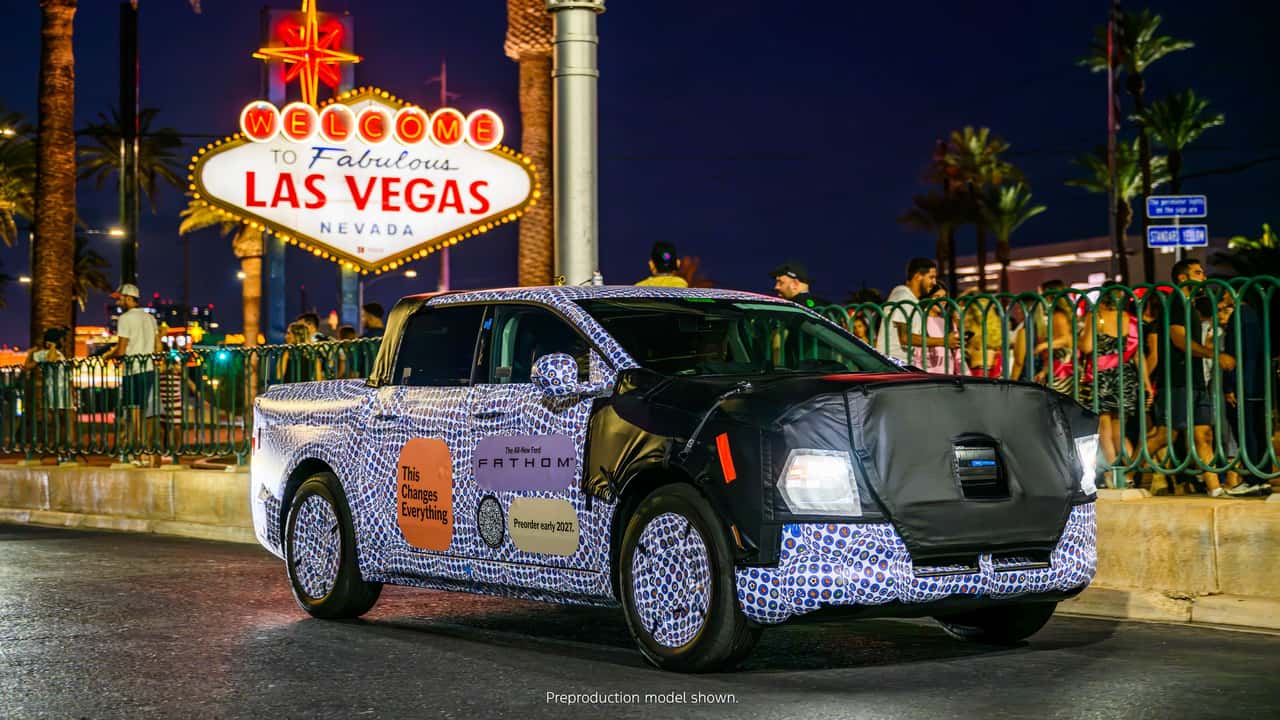 Photo by: Ford
Importantly, Galhotra didn't say these are production vehicles. Rather, these are the first Fathoms built on their real production line. Essentially, these validation vehicles are the beginning of Ford proving out its production process for both the Fathom and its Universal Electric Vehicle Platform. It's an important milestone for Ford, which has bet its electric future on the UEV platform and a radically different method of manufacturing cars than it's used before.
Ford will build the Fathom using a so-called "assembly tree" rather than the assembly line Henry Ford pioneered a century ago. The front, middle, and rear sections of the pickup will be put together simultaneously, then joined together toward the end of the process. Ford says this should allow it to build vehicles quicker and more efficiently, in part by making the ergonomics better for its workers. It resembles the "unboxed" process Tesla has introduced for the Cybercab.
Ford has been building cars for more than a century, but a new EV on a new platform using new manufacturing techniques needs to be fleshed out—especially if Ford wants to quickly hit the production volumes it's reportedly targeting: 100,000 sales in the first year. As Tesla CEO Elon Musk said in the midst of the company's period of production hell: "It's relatively easy to make a prototype, but extremely difficult to mass manufacture a vehicle reliably at scale."
The testing isn't just limited to the Louisville plant where more than $2 billion was invested to manufacture the Fathom. Ford's Shelbyville Technical Center has also been cranking out large castings used to underpin its affordable electric pickup.
These large castings are made in a similar way to Tesla's Gigacasting process with the goal being to cut down on the production complexity (and cost) of the Fathom. In total, it takes 146 different parts into just 2 large castings. Galhotra says that Ford has already made 5,000 of these unicastings and has effectively substantiated its ability to build this new tech at a high rate.
The next challenge, according to the COO, is the rest of the supply chain:
"We need to make sure that the supply base can run at rate with high quality parts," said Galhotra "And that's very normal at this stage of the launch, and that's what we're going to be working on for the next few months."
The Blue Oval doesn't plan on delivering any of these pickups for about a year, which means that it still has time to ramp things up and make sure the so-called "assembly tree" is running smoothly. The Fathom could prove out to be Ford's EV redemption arc if the automaker gets it right. Affordable? Check. Versatile? Check. Scalable? That's to be seen.
Ford CEO Says Its New EV Tech Is 30% More Efficient Than BYD's
Ford Fathom Pricing Will Stretch Into the 'High $30,000 Range'
The Ford Fathom's Home Backup System Will Be Way Cheaper Than The F-150 Lightning's
Ford Opens Fathom EV Pickup Invite List Ahead of Launch
]]> contact@insideevs.com (Rob Stumpf) https://insideevs.com/news/814711/ford-first-fathoms-pre-production/ https://insideevs.com/news/814857/zf-new-high-rpm-motor/ Mon, 09 Nov 2026 14:22:11 +0000 This New EV Motor Spins At 30,000 RPM. Here's Why That Matters ZF's new drive uses half the magnet material of a comparable system, with nearly 25% less weight and bulk. ZF’s new motor spins at 30,000 rpm to deliver the same power in a smaller package. The company claims nearly 25% less drive-unit weight and bulk, with half the magnet material. Production is targeted for 2030, but ZF hasn’t named any cars that will use it.
An electric motor spinning at 30,000 rpm sounds like something you might find in a high-power EV supercar. ZF has something less extravagant in mind: making the hardware that powers everyday EVs smaller, lighter, and less hungry for expensive materials.
ZF’s new High Revolution Drive combines the motor, power electronics, and transmission all in the same housing. Unlike Mercedes-Benz, though, it doesn't also put the brakes inside the same housing.
Compared with one of ZF’s comparable Select drive units, which spins up to 18,000 rpm, the company claims nearly 25% less weight and volume, half the magnet mass, and a similar efficiency of almost 93%.
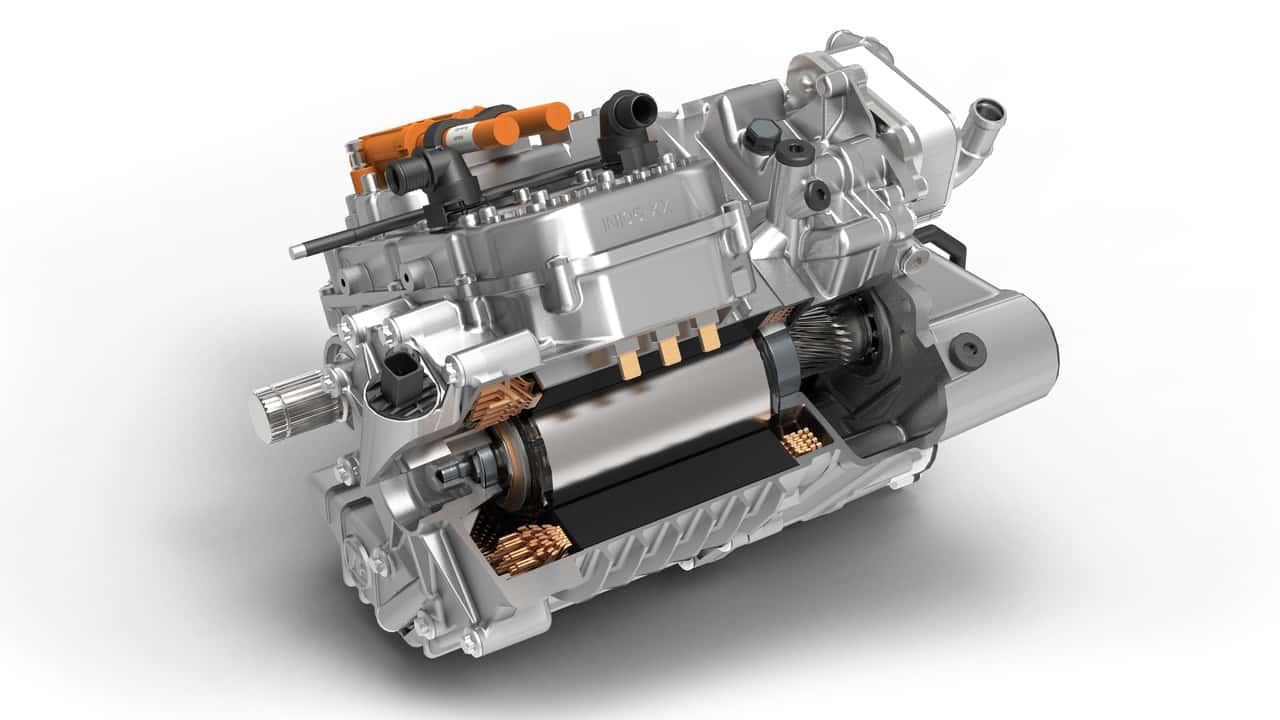
ZF High Revolution Drive
Photo by: ZF
This helps because less mass improves EV range, and fewer magnets reduce costs and supply-chain dependence.
According to ZF, spinning the motor faster lets it deliver the same power from a smaller, lighter package. Gears then reduce that speed and increase the turning force sent to the wheels, using a reduction ratio of about 18:1. The version ZF showed produces up to 268 horsepower, with the gearing delivering peak torque of 2,581 pound-feet (3,500 Nm) to the wheels.
The torque measurement comes after the gearing has multiplied the motor’s output. The “two-stage transmission” doesn’t actually mean a two-speed gearbox. It describes successive gear reductions, not two separate driving ratios.
The company says the production High Revolution Drive should deliver 200 to 268 hp and work with both 400- and 800-volt platforms. Reusing its modular Select architecture should simplify installation, shorten development and control costs, and retain manufacturing flexibility. Talks with automakers are underway, with production targeted by 2030.
ZF isn’t alone in trying to squeeze more useful output from a smaller package. One prototype of Yasa’s ultra-compact axial-flux motor produced over 1,000 hp and weighed just 28 pounds. That’s its short-term peak figure, with continuous output estimated at 469–536 bhp.
Yasa’s figure describes only the motor, while ZF’s weight reduction refers to the whole integrated drive unit. Gearing and power electronics still need somewhere to live, and they also add weight.
Why Tesla's Large Drive Unit Is The V8 Engine Of EVs
Rivian’s New Enduro Drive Unit Boosts EPA Range
GM Delays Toledo EV Drive Unit Production To Q4 2024
The BMW iX3 M60 Gets 603 Horsepower And Yellow Lights
ZF has also introduced repair kits intended to let workshops fix individual drive unit components, such as gearbox bearings, instead of replacing entire assemblies. That addresses a different problem from shrinking and making hardware lighter, but one buyers may care about considerably more once the warranty expires.
However, ZF hasn’t said whether these two developments are connected, or whether the kits it revealed should be taken as a repairability promise for this new drive. There’s also no mention of which production EV would get this new drive unit. We also don’t know whether those engineering gains will remain unchanged from today’s announcement to something you can actually buy.
Still, this kind of EV development deserves attention even without a four-figure horsepower claim. A family car doesn’t need to break acceleration records, but making its drive unit lighter and less expensive (and possibly easier to repair, too) is exactly what it needs. Whether any savings reach buyers is another question, but giving cars the same power with smaller and less hardware is a good place to start.
]]> contact@insideevs.com (Andrei Nedelea) https://insideevs.com/news/814857/zf-new-high-rpm-motor/ https://insideevs.com/news/814780/ford-mustang-mach-e-battery-degradation-range-study/ Mon, 09 Nov 2026 14:00:00 +0000 Ford Tested 36,000 Mustang Mach-E Batteries. Here’s How They Held Up After 100,000 Miles Battery degradation is one of the top concerns among potential EV buyers. New data from Ford shows you probably shouldn't worry much. Ford collected battery health data from around 36,000 Mustang Mach-E electric SUVs and shared the results. Battery degradation is one of the top concerns from car buyers, but Ford's data shows that there isn't much to worry about. Even Mach-Es with 100,000 or 200,000 miles on the odometer retained most of their original range.
It's one of the top questions I get about EVs: "How long will the battery last?" Understandably, people want to know that their car will go the distance before dropping tens of thousands of dollars on a new car with new-to-them technology.
A growing body of research shows that modern electric cars hold up just fine over years of normal use. And a huge study of Ford Mustang Mach-E SUVs further proves the point.
The Detroit automaker collected battery-health data from 36,000 Mach-E SUVs from the 2021 model year that were sold in the U.S. and Canada. The results, released Monday, should help quiet fears that EVs degrade like smartphones, which struggle to hold a charge after a few years of daily use.
On average, the cars had traveled 55,000 miles over 5.2 years and retained 92% of their usable battery capacity. That means a top-trim 2021 Mustang Mach-E with 305 miles of EPA range would in theory be rated for around 280 miles today. All the cars in the study have nickel-cobalt-manganese (NCM) battery packs, since Ford didn't introduce a lithium-iron-phosphate (LFP) battery for the Mach-E starting until the 2023 model year.
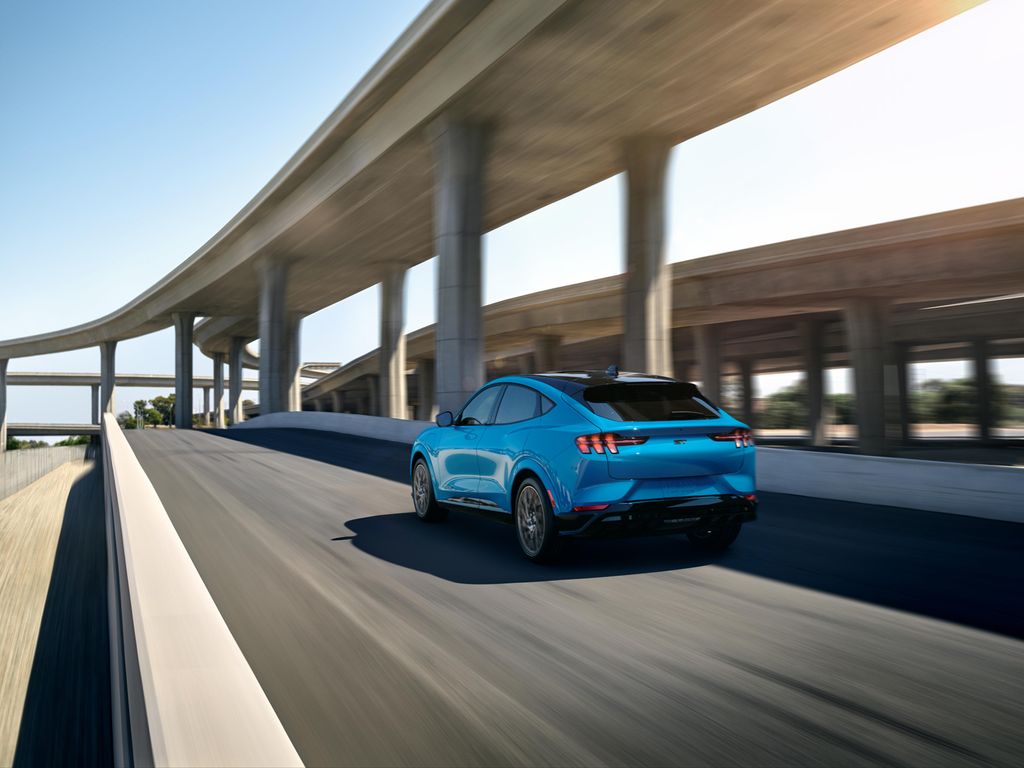 The 2021 Mustang Mach-Es Ford studied retained 92% of their battery health on average after five years on the road. Photo by: Ford
Ford physically tests cells in the lab and tries to predict battery degradation using computer models before a model launches, Kevin Vander Laan, the automaker's technical leader of high-voltage battery cells and systems, told me in an interview. But the real test comes after a car spends years on the road.
"Our report card slowly trickles in over time," he said. "So here we are with a five-year report card, and it looks great."
Interestingly enough, putting on twice as many miles as average in the same time period barely impacted overall battery health. Ford says the over 2,000 SUVs with more than 100,000 miles on the odometer retained more than 91% of their battery capacity.
Nearly 10,000 EVs Were Tested For Battery Degradation. These 2 Models Won Out.
What Ultra-High-Mileage EVs Teach Us About Battery Degradation
Those few drivers who put some 40,000 miles on their Mach-Es each year still had strong battery health after five years. Ford says the 30-plus cars in its dataset that had covered more than 200,000 miles showed 88% battery health.
Of course, these are just averages. So your results may vary depending on lots of factors. EVs that spend their lives in the hot American Southwest tend to age more rapidly than those driven in more temperate climates. Likewise, EV batteries that are frequently fast-charged to 100% and drained to near-empty typically wear out faster than those that are kept in the happy zone of 20% to 80%.
Still, Ford says the distribution of results is encouraging for its battery engineers: It says 95% of the 36,000 cars fell between 87% and 97%.
The results are in line with what other research has uncovered about how EVs age. Some early EVs (notably the first-gen Nissan Leaf) had less sophisticated battery thermal management and saw steep degradation as a result. But modern EVs tend to age far more gracefully.
According to Recurrent, a firm that tracks range retention in used EVs that opt in, the average EV retains 97% of its original observed range after three years and 95% after five years.
In September, battery-health startup Aviloo released the results of 500,000 EV battery tests. After 150,000 kilometers (around 93,000 miles), most models studied showed between 90% and 94% health. The Hyundai Ioniq 5, BMW i4, and Mercedes EQA stood out with readings near the top end of that range. The Mustang Mach-E did just about as well as Ford's own data show: 92.5% battery health. The Tesla Model 3 and Model Y came in at 88.9% and 90.3%, respectively.
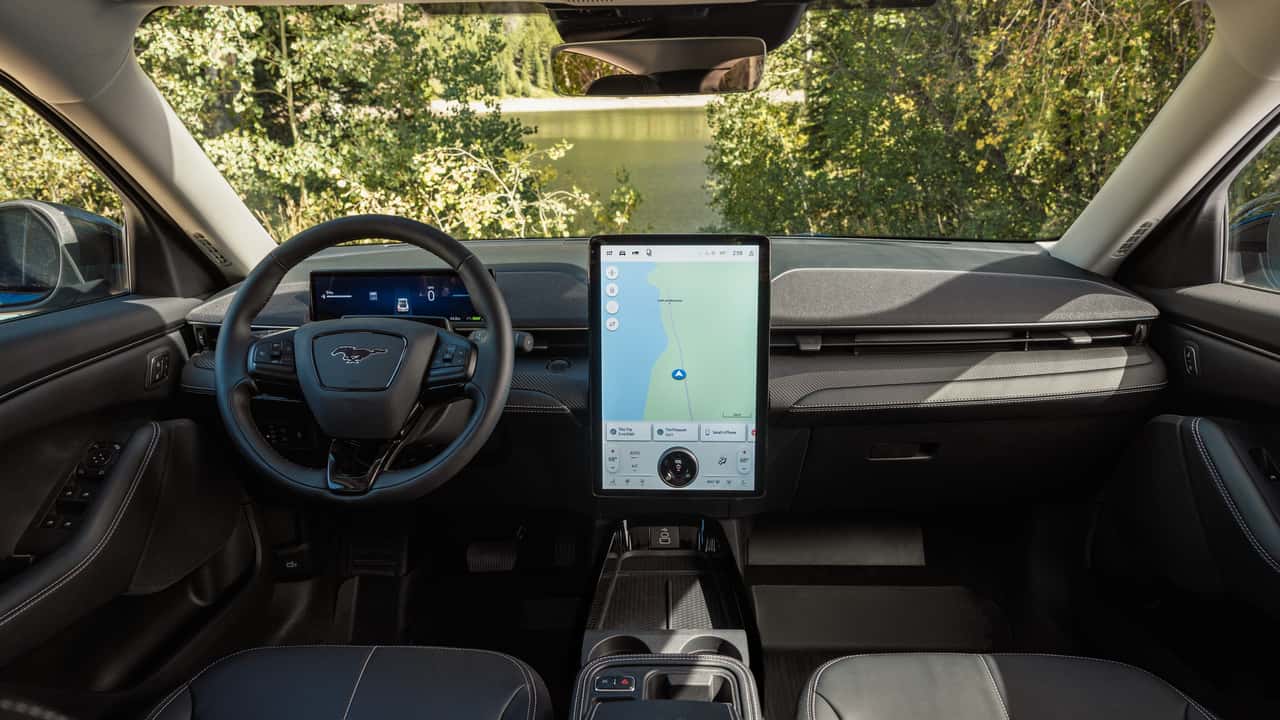
The 2027 Ford Mustang Mach-E Trail
Photo by: Ford
Ford makes some familiar recommendations to drivers looking to make sure their EVs last as long as possible. The company says to manage temperature extremes by parking in the shade on scorching days and preconditioning the cabin while the vehicle is plugged in. It also recommends relying on Level 2 charging for daily driving, and using Level 3 DC fast chargers sparingly.
Vander Laan says the learnings from this crop of EVs and how they perform contribute to the development process for Ford's next-generation electric cars, like the sub-$30,000 Fathom pickup coming next year.
"It's really continuous learning," he said. "We have a design that we deeply understand, the data is flowing in, we're learning learning from that, and feeding that to the engineering teams in the company here."
Contact the author: Tim.Levin@InsideEVs.com
]]> contact@insideevs.com (Tim Levin) https://insideevs.com/news/814780/ford-mustang-mach-e-battery-degradation-range-study/ https://insideevs.com/news/814850/hyundai-kona-electric-airbag-recall/ Mon, 09 Nov 2026 13:44:01 +0000 Hyundai Is Recalling Nearly 30,000 Kona EVs Because Their Airbags May Not Deploy All of the affected vehicles are part of the previous-generation Kona Electric, which went out of production in 2023. Nearly 30,000 Hyundai Kona EVs in the U.S. are being recalled for a potential airbag fault. The affected vehicles were built in South Korea between 2018 and 2023. A software update fixes the problem, but a visit to the dealer is needed.
Hyundai is recalling nearly 30,000 first-generation Kona Electric crossovers in the United States because their airbags and seatbelt pretensioners may not work as intended in the event of an accident.
All affected vehicles, 29,058 in total, were built in South Korea between August 28, 2018, and July 26, 2023, representing model years 2019 through 2023. The problem also affects nearly 9,000 Hyundai Veloster N gas-powered hatchbacks sold here between 2019 and 2022.
2023 Hyundai Kona Electric
The Airbag Control Unit (ACU) is the culprit here. According to the recall report published by the National Highway Traffic Safety Administration (NHTSA), data that needs to be written to the ACU’s memory may become corrupted during certain driving conditions, causing the airbag malfunction light (MIL) to pop up on the instrument cluster and the airbag system to deactivate.
Without a working system, the airbags will not deploy during a crash, which increases the risk of injury to the driver and passengers.
Hyundai said that the ACU data may become corrupted if a system reboot or a power interruption occurs while the control unit is writing data to its internal memory. The company’s North America office opened a new investigation back in 2024, after the number of airbag warning light warranty claims went up.
The automaker worked with ZF, the supplier that made the airbag control units, to replicate the problem on other vehicles, but couldn’t. However, a fault was induced during bench testing, and a solution was found.
To fix the problem, owners of affected vehicles need to book an appointment with a Hyundai service center, where technicians will update the ACU software for free. In other words, it’s not a hardware fix, but a software fix. According to Hyundai, the new software rolls back to the last known valid data if the transfer is interrupted for one of the reasons described above.
The maker of the Kona EV said that it’s aware of 331 individual incidents related to the ACU issue that affects the electric crossover and gas-powered hot hatch. The car manufacturer is not aware of any crashes, fires, or injuries associated with the ACU data corruption problem in the U.S.
Hyundai Says Hydrogen Cars Aren’t Dead. Finding Customers Is Another Story
Is The Hyundai Ioniq 6 A Good Used Buy? An Owner's Thoughts After 30 Months
Hyundai Recalls Ioniq 9 EV Because Rear Seats Could Trap Children
This Study Covered 500,000 EV Batteries. Some Models Aged Much Better Than Others
]]> contact@insideevs.com (Iulian Dnistran) https://insideevs.com/news/814850/hyundai-kona-electric-airbag-recall/