
Hyundai Is Recalling Nearly 30,000 Kona EVs Because Their Airbags May Not Deploy
All of the affected vehicles are part of the previous-generation Kona Electric, which went out of production in 2023.
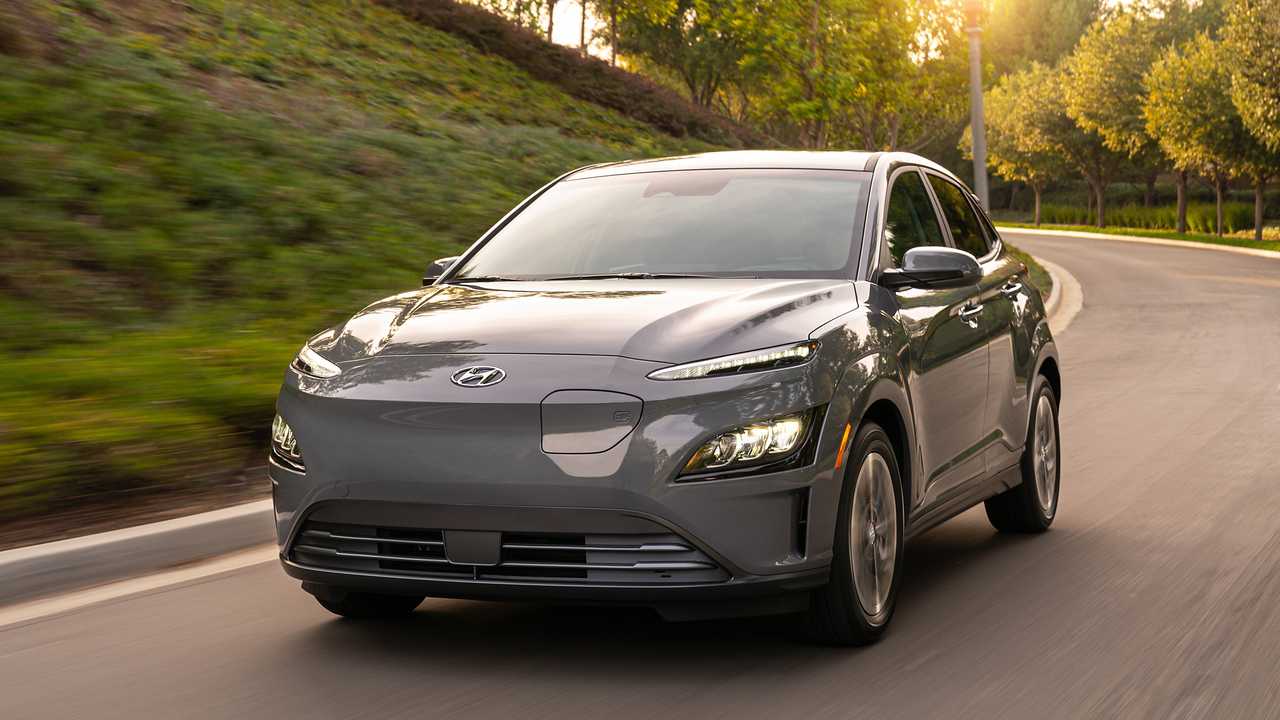

- Nearly 30,000 Hyundai Kona EVs in the U.S. are being recalled for a potential airbag fault.
- The affected vehicles were built in South Korea between 2018 and 2023.
- A software update fixes the problem, but a visit to the dealer is needed.
Hyundai is recalling nearly 30,000 first-generation Kona Electric crossovers in the United States because their airbags and seatbelt pretensioners may not work as intended in the event of an accident.
All affected vehicles, 29,058 in total, were built in South Korea between August 28, 2018, and July 26, 2023, representing model years 2019 through 2023. The problem also affects nearly 9,000 Hyundai Veloster N gas-powered hatchbacks sold here between 2019 and 2022.

2023 Hyundai Kona Electric
The Airbag Control Unit (ACU) is the culprit here. According to the recall report published by the National Highway Traffic Safety Administration (NHTSA), data that needs to be written to the ACU’s memory may become corrupted during certain driving conditions, causing the airbag malfunction light (MIL) to pop up on the instrument cluster and the airbag system to deactivate.
Without a working system, the airbags will not deploy during a crash, which increases the risk of injury to the driver and passengers.
Hyundai said that the ACU data may become corrupted if a system reboot or a power interruption occurs while the control unit is writing data to its internal memory. The company’s North America office opened a new investigation back in 2024, after the number of airbag warning light warranty claims went up.
The automaker worked with ZF, the supplier that made the airbag control units, to replicate the problem on other vehicles, but couldn’t. However, a fault was induced during bench testing, and a solution was found.
To fix the problem, owners of affected vehicles need to book an appointment with a Hyundai service center, where technicians will update the ACU software for free. In other words, it’s not a hardware fix, but a software fix. According to Hyundai, the new software rolls back to the last known valid data if the transfer is interrupted for one of the reasons described above.
The maker of the Kona EV said that it’s aware of 331 individual incidents related to the ACU issue that affects the electric crossover and gas-powered hot hatch. The car manufacturer is not aware of any crashes, fires, or injuries associated with the ACU data corruption problem in the U.S.
Related Stories

RECOMMENDED FOR YOU
Nearly 1 In 3 Hyundais Sold In October Was A Hybrid As High Gas Prices Push Buyers To Pivot
Cadillac Is Bringing GM’s Super Cruise Hands-Free Driving System To Europe
Hyundai Says Hydrogen Cars Aren’t Dead. Finding Customers Is Another Story
BYD's Ultra-Luxury Electric Sedan Can Do Tank Turns And Go Over 600 Miles
Is The Hyundai Ioniq 6 A Good Used Buy? An Owner's Thoughts After 30 Months
The Zeekr 7GT Made Me Question Every Other Luxury EV
Waymo Plans To Have 20,000 Cars By The End Of 2027