Home
Tesla
Cybercab
News
Tesla's Cybercab Is Built In A Radical New Way. Here's How It Works
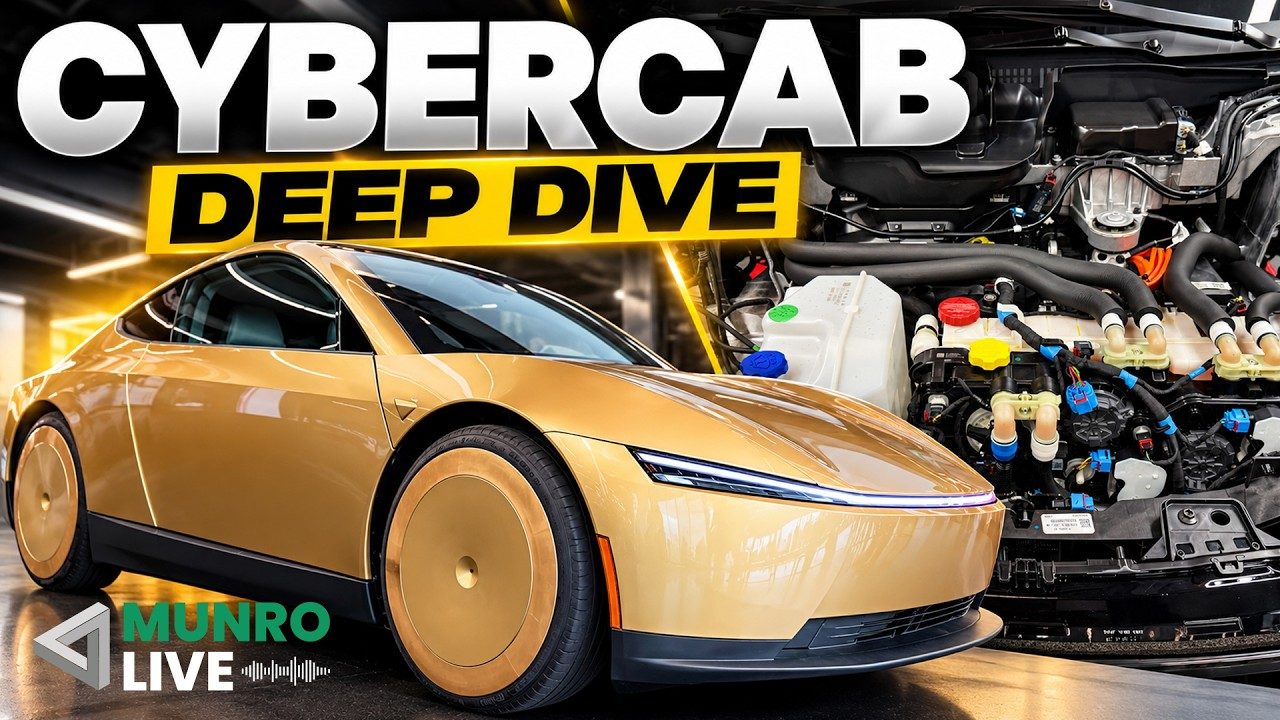
The Cybercab skips the paint shop and reaches final assembly mostly built. Tesla says it needs roughly half the factory space.

Photo by: Munro Live (YouTube)
Andrei Nedelea 
By: Andrei Nedelea
Oct 30, at 11:57am ET
Add InsideEVs as a preferred source in Google
- (https://twitter.com/intent/tweet?url=https%3A%2F%2Finsideevs.com%2Fnews%2F813774%2Ftesla-cybercab-factory-munro-live%2F&text=Tesla%27s%20Cybercab%20Is%20Built%20In%20A%20Radical%20New%20Way.%20Here%27s%20How%20It%20Works&via=InsideEVs)
- copy
Share
Comment
- Tesla builds and tests major Cybercab sections separately, then joins them with much of the wiring and interior already installed.
- Molded exterior panels eliminate the traditional paint shop, helping Tesla reduce factory space and production steps.
- Final assembly takes about 25 stations, while replaceable battery modules and easier component access simplify repairs.
For years, Tesla talked about throwing the typical car-making playbook out the window with its radical "unboxed" process for new cars. Now it's putting that idea to work at the Texas factory where it cranks out the Cybercab—and releasing new details about how it all works.
In a new video from the engineering firm Munro & Associates, Tesla engineering chief Lars Moravy and Cybercab lead Eric Earley tour the cab's production line and dive deep into its design and assembly process. Here's what we learned.
Traditional car production generally starts by putting together a body, painting it, then installing its mechanical parts, wiring, and interior as the partially-built vehicle transverses a long sequence of assembly stations. Tesla’s “unboxed” process instead uses separate lines to build and equip the front, rear, sides, and floor before joining them at the end. The idea is that instead of reaching inside a car to install things, workers and robots tackle smaller, more accessible assemblies, working faster and more efficiently. Tesla says the line is about 78% automated.
Ford is working on a similar process for its Universal Electric Vehicle platform, which kicks off with the $30,000 Fathom pickup. The company calls it an "assembly tree," rather than the typical assembly line.

Tesla Cybercab Unboxed Production Line
Photo by: Tesla
Tesla says the front module contains roughly half the car’s parts and content. Its drive unit, suspension, and thermal hardware sit on a positioning pallet. The front structure, already carrying the dashboard, is lowered over them. Meanwhile, workers can assemble the side sections flat, install overhead components at a comfortable height, and attach seats and carpet to the battery pack, whose top cover doubles as the cabin floor.
Those pre-assembled sections converge on the automated framing line, arriving with wiring, hoses, and other components already installed. Robots position and join them before the car enters a final assembly line of about 25 stations. Moravy says that for the Model Y, it's about 5-10 times that number. The wheels go on at the second-to-last station; the car first stands on its wheels as it rolls off the line near the end. Much of the work normally associated with final assembly happens elsewhere.

Stay informed with our newsletter every weekday
back
Subscribe For more info, read our Privacy Policy & Terms of Use.
In the video, Moravy says the idea began about six years ago, when Tesla was stuck trying to automate existing designs and concluded the problem was the car. Breaking it into smaller sections gave robots better access and allowed stations to sit closer together.
Testing also happens in stages. They check individual components before building larger assemblies, then test them again. Tesla says the front module arrives with its computers connected and systems already checked. That reduces the chance of discovering a faulty component after it's been installed deep inside the vehicle.
Tesla Cybercab Unboxed Production Line
Photo by: Tesla
A conventional paint shop would interrupt the process by requiring Tesla to assemble the body earlier. Instead, the cab's plastic exterior panels are infused with color during molding. (Slate, too, decided to skip the expensive painting process by making its truck's exterior out of gray plastic.) The front and rear structural modules also skip electrocoating, although the steel side structures remain coated.
Tesla explored films and other alternatives before choosing this process. The engineers say scratches remain repairable much like conventional paint.
What do you think?
View
Comments
Moravy says the factory doesn’t run every day because Tesla can produce Cybercabs faster than it's deploying them. But that may say less about the factory's efficiency and more about the pace of Tesla's public Cybercab rollout.
If all goes Tesla's way, though, the factory will be working overtime. At full clip, Tesla says the Cybercab line can churn out 125,000 vehicles per year, and on the company's last earnings call Elon Musk set a lofty goal of 5 million annual vehicle deliveries by 2030—more than double what it does today.
Tesla Designed The Cybercab To Use LFP Batteries In The Future
Tesla Cybercab Inherited One Of The Most Annoying Things About Owning A Tesla
You Can't Charge The Tesla Cybercab At Home (Yet)
Tesla Cybercab's Backup Steering Wheel Is A Giant On-Screen Joystick
We want your opinion!
What would you like to see on Insideevs.com?
Take our 3 minute survey.
- The InsideEVs team
Share this Story
- (https://twitter.com/intent/tweet?url=https%3A%2F%2Finsideevs.com%2Fnews%2F813774%2Ftesla-cybercab-factory-munro-live%2F&text=Tesla%27s%20Cybercab%20Is%20Built%20In%20A%20Radical%20New%20Way.%20Here%27s%20How%20It%20Works&via=InsideEVs)
- copy
GO TO COMMENTS
(
)
Got a tip for us? Email: tips@insideevs.com
View all comments ( )
Trending
A Tesla Model Y Without A Steering Wheel Is Coming: Musk
Every EV Motor Type Explained: They Aren't All The Same
I Tried Mercedes' Answer To Tesla FSD. Here's How It Went
Tesla Model 3 Maintenance Guide: What Needs Servicing And What Doesn't
Latest Stories
- Rivian’s Also Spinoff Pauses Deliveries Of Its $3,500 E-Bike After Months Of Delays Nov 19 - E-Mobility -
- The EV Charging Company That’s Quietly Conquering America Is Building A New U.S. Factory Nov 19 - Manufacturing / Production -
- A Tesla Model Y Without A Steering Wheel Is Coming: Musk Nov 18 - News -
- The BMW i3 Has The Nurburgring Skills To Match Its Impressive Range Nov 18 - News -
- Kia Made Its First EV 40 Years Ago. It Shows How Far Electric Cars Have Come Nov 18 - News -
- Ford Just Started Fathom LFP Battery Production In Michigan. It's A Big Deal Nov 18 - Battery Tech -
- This GM EV1 Lives After A Painstaking Restoration Nov 18 - News -
RECOMMENDED FOR YOU
Tesla Opens Self-Driving Cybercab Orders To 'Select Customers' At $29,990
Rivian’s Also Spinoff Pauses Deliveries Of Its $3,500 E-Bike After Months Of Delays
The Tesla Model Y's Structural Battery Was Nearly Impossible To Repair. The Cybercab Fixes That
The EV Charging Company That’s Quietly Conquering America Is Building A New U.S. Factory
Tesla Designed The Cybercab To Use LFP Batteries In The Future
A Tesla Model Y Without A Steering Wheel Is Coming: Musk
'End Of The Year': Tesla Says Cybercab Customer Deliveries Will Begin Soon