Home
Tesla
Cybercab
News
Tesla Designed The Cybercab To Use LFP Batteries In The Future
Tesla purposely built the Cybercab's battery pack with future LFP chemistry in mind.
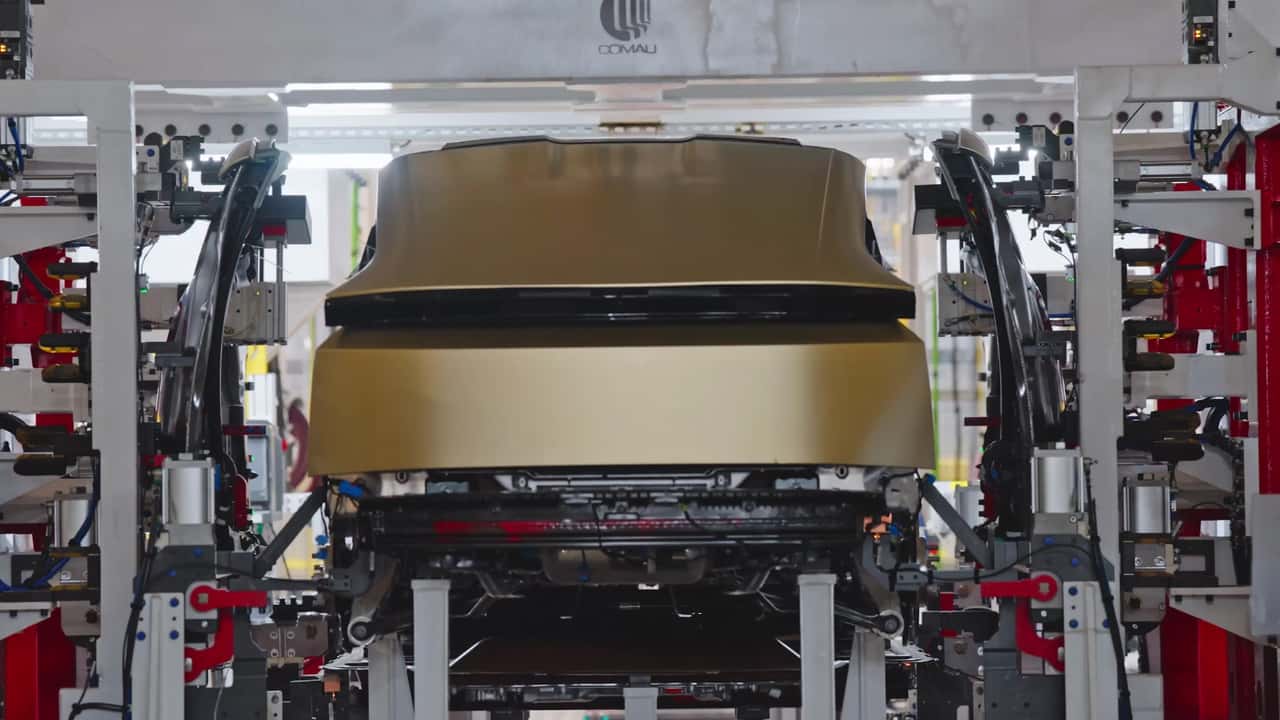
Photo by: Tesla
Nico DeMattia 
By: Nico DeMattia
Oct 26, at 8:13pm ET
Add InsideEVs as a preferred source in Google
- (https://twitter.com/intent/tweet?url=https%3A%2F%2Finsideevs.com%2Fnews%2F813324%2Ftesla-cybercab-lfp-battery-chemistry%2F&text=Tesla%20Designed%20The%20Cybercab%20To%20Use%20LFP%20Batteries%20In%20The%20Future&via=InsideEVs)
- copy
Share
Comment
Lithium-iron phosphate (LFP) batteries are quickly gaining steam around the globe, becoming the world's most popular battery chemistry last year. These cheaper, workhorse cells could even make their way into Tesla's Cybercab. The automaker designed the robotaxi from the start to accommodate LFP, Robert Sumpf, the director of mechanical design engineering for Tesla's battery modules and packs told the YouTube channel Munro Live*.*
During a deep dive into the Cybercab's manufacturing and design, Sumpf pointed out that there's a bunch of empty space within the vehicle's battery pack, both next to the modules and underneath them.
“So, we protected this pack to go to an even lower energy dense chemistry as we scale and need to bring LFP into the platform," said Sumpf.

Photo by: Tesla
(Another reason for the extra space, according to Tesla VP of vehicle engineering Lars Moravy, is that "we didn't need as many batteries as we thought we did.")
At present, the Cybercab uses a nickel-manganese-cobalt chemistry in its in-house-designed 4680 cells. Switching to LFP wouldn't be a first for the brand—Tesla briefly sold LFP-based Model 3s in the U.S.—and it might make sense for the Cybercab, despite LFP's inherent tradeoffs.
LFP batteries can't hold as much energy as high-nickel formulations, which would reduce range if the Cybercab were to keep the same number of cells. However, with that extra space it left in there, Tesla could cram in more cells, potentially making up for the range loss. The Cybercab isn't supposed to be a long-distance road-tripper anyhow.
LFP batteries may also hold up better than high-nickel cells to the daily abuse of robotaxi duty. LFP batteries tend to be more thermally stable and more durable over many charging and discharging cycles. So in a taxi that's going to be shuttling people around a lot, racking up miles and charging stops, LFP batteries could fare better. In the video, Tesla engineers said that the Cybercab is designed to last 500,000 miles, and that meant keeping durability and repairability in mind. Improved battery packaging, they said, helps reduce replacement costs by making it easier to physically remove the modules. (In the Model Y, the pack is structural and the cells are all glued together.)
Photo by: Tesla
What do you think?
View
Comments
What may be most important for Tesla, though, is cost. LFP batteries are cheaper, which will bring Cybercab's cost down. And if Tesla really wants to build a massive fleet of these things to revolutionize ride hailing, then it's going to need to save as much manufacturing cost as possible.
Sure, LFP batteries aren't as exciting as solid-state, but they're tough and they last a long time. For a car that's intended to be an unglamorous workhorse, it may be the more sensible chemistry.
Check Out More Cybercab News
'End Of The Year': Tesla Says Cybercab Customer Deliveries Will Begin Soon
Tesla Cybercab Inherited One Of The Most Annoying Things About Owning A Tesla
We want your opinion!
What would you like to see on Insideevs.com?
Take our 3 minute survey.
- The InsideEVs team
Share this Story
- (https://twitter.com/intent/tweet?url=https%3A%2F%2Finsideevs.com%2Fnews%2F813324%2Ftesla-cybercab-lfp-battery-chemistry%2F&text=Tesla%20Designed%20The%20Cybercab%20To%20Use%20LFP%20Batteries%20In%20The%20Future&via=InsideEVs)
- copy
GO TO COMMENTS
(
)
Got a tip for us? Email: tips@insideevs.com
View all comments ( )
Trending
Diesel Prices Are Surging. This Electric Trucking Company Is Seeing More Interest
Tesla Opens Self-Driving Cybercab Orders To 'Select Customers' At $29,990
Solid-State Cells Can Make The U.S. Competitive In Batteries Again: CEO
I Took A Rivian R2 On A Camping Trip To The Middle Of The Desert
Latest Stories
- Diesel Prices Are Surging. This Electric Trucking Company Is Seeing More Interest Nov 14 - News -
- Tesla Opens Self-Driving Cybercab Orders To 'Select Customers' At $29,990 Nov 13 - News -
- Do EVs Wear Tires Faster? Here's What The Studies Show Nov 13 - Features -
- The VW ID. Buzz Is Getting A New Job As A Robotaxi Nov 13 - News -
- Audi A4 EV Delayed Amid VW Group Financial Troubles: Report Nov 13 - News -
- Tesla Just Killed Its Cheapest All-Wheel-Drive Model Y Nov 13 - News -
- A Record Number Of Uber Miles Are Happening In EVs Nov 13 - News -
RECOMMENDED FOR YOU
Tesla Opens Self-Driving Cybercab Orders To 'Select Customers' At $29,990
Diesel Prices Are Surging. This Electric Trucking Company Is Seeing More Interest
Tesla's Cybercab Is Built In A Radical New Way. Here's How It Works
Do EVs Wear Tires Faster? Here's What The Studies Show
The Tesla Model Y's Structural Battery Was Nearly Impossible To Repair. The Cybercab Fixes That
The VW ID. Buzz Is Getting A New Job As A Robotaxi
'End Of The Year': Tesla Says Cybercab Customer Deliveries Will Begin Soon