
Mercedes Wants To Rethink EV Batteries With This Clever New Technology
Instead of charging the battery as a whole unit, micro-converters can charge or discharge each cell individually.
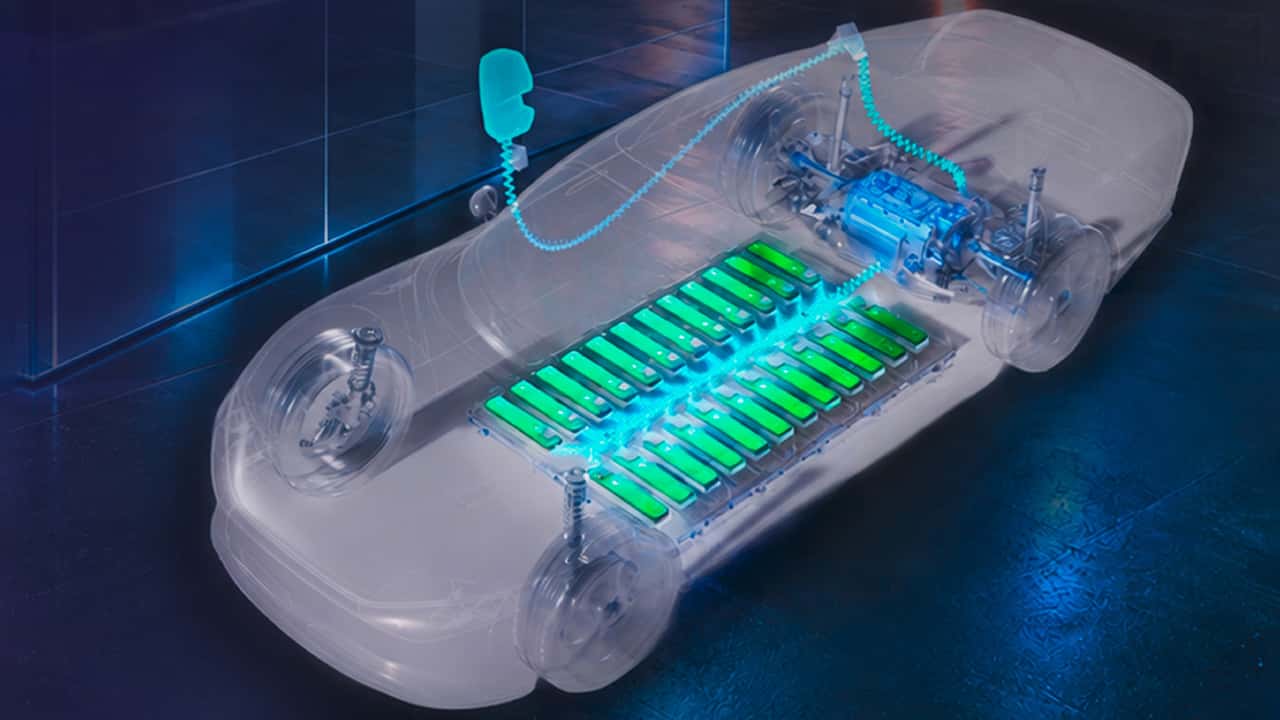

- Mercedes-Benz is working on a new technology that could change how future EV batteries work.
- The Power Converter can control individual cells or cell groups, potentially prolonging the battery pack’s life.
- It also enables the use of different cell chemistries and voltages inside the same pack.
Mercedes-Benz wants to flip the script on how electric car high-voltage batteries work. Its new Power Converter, which is still in the development stage, can control the charge and discharge of individual cells inside the battery, which is a big change from how the vast majority of EV batteries work today.
For decades, traction batteries have had thousands of individual cells, which are arranged into cell groups or modules. The car’s brain can monitor the voltage of each cell or module, but when it comes to charging or discharging, everything gets the same treatment. Does the electric motor require 100 kilowatts? The whole pack delivers 100 kW. Charging at 150 kW? All the cells get treated equally.

Mercedes-Benz Power Converter
With Mercedes’ new technology, however, each cell inside the pack can not only be monitored, but also controlled by a programmable micro-converter. In theory, the approach has a lot of advantages, including prolonging a car’s battery life, using different cell chemistries inside the same pack, and removing bulky power electronics that handle AC and DC conversion.
Let’s look at the longevity aspect first. When an EV battery fails, it’s usually because one or more cells inside the pack can no longer sustain the same voltage as their neighbors. The car throws a scary error message on the screen, and the dealer or service center will recommend replacing the entire battery, which costs a lot of money if the warranty has run out.
With Mercedes-Benz’s new approach, if a cell can no longer sustain the required voltage, it can be simply disabled by its micro-converter. Sure, the battery capacity goes down a smidge, but the car will still work as before.
No more bulky components
By using multiple converters in parallel, the system can regulate the energy flow of individual cells or cell groups, removing the need for a single big converter. What’s more, if cells of varying chemistries or ages are bundled in the same pack, the micro-converters can make sure that they all get charged properly, albeit at different power levels. The same goes for the high-voltage output, which will no longer be tied to the number of cells connected in series, but to the converters and their software-based control.
The technology also enables a more modular approach to battery use. For instance, if a large-capacity battery isn’t used at full potential most of the time—say the owner drives only 50 miles daily—the car’s brain can put part of the pack in standby mode, keeping the cells at the right level for preservation. Then, when a long-distance road trip is being planned, the computer can unlock the full capacity.
Bidirectional charging is baked into the Power Converter. This means that AC and DC conversion, as well as bidirectional charging, are handled directly by the micro-converters, enabling finer control over how the battery is used.
Mercedes-Benz said that the new technology has the potential to boost the driving range and efficiency of future plug-in models, though there is one big asterisk that the company conveniently left out. With thousands of micro-converters sealed inside a battery pack, it inevitably means that there are thousands of components that can fail. If done right, though, it can bring a new level of modularity and fine-tuning to EV batteries.
More Battery Tech

RECOMMENDED FOR YOU
Mercedes-Benz Is Giving Up On Its EV Charging Network In Europe
Renault’s Latest EV Was Designed For The Army’s Toughest Missions
AMG’s New Electric SUV Has 1,153 HP. The Charging Specs Are Even Wilder
Used EVs Are Selling Like Hotcakes. The Fastest Movers May Surprise You
I Drove Mercedes’ New EV With A Silicon Anode Battery. The Future Is Here
Defying Online Backlash, The Ferrari Luce EV Is Already Sold Out Through 2027
I Tested New York City’s First Lamppost EV Charger. It’s A Game Changer