Home
News
GM's Future Cars Will Be Very Different. Here's Everything We Learned
Here's everything you need to know about General Motors' big tech event this week, from LMR batteries to a new AI assistant.
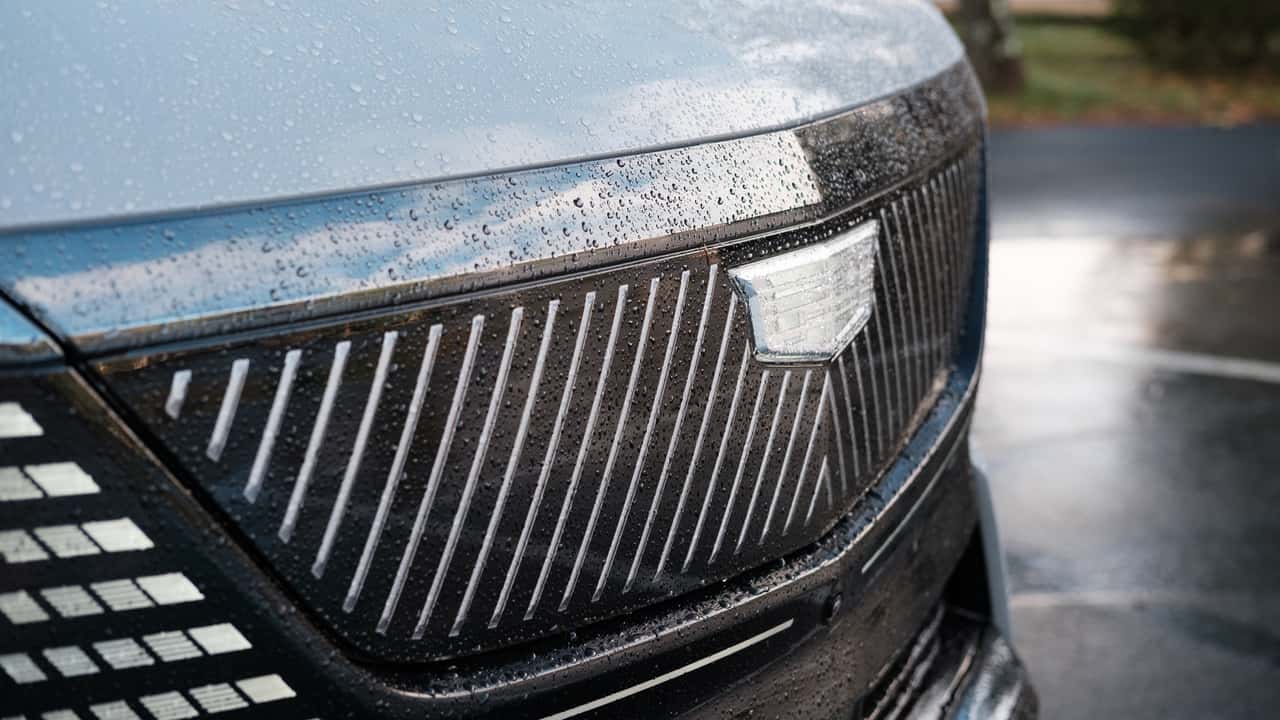
Photo by: Patrick George
Tim Levin 
By: Tim Levin
Oct 24, at 8:00am ET
Add InsideEVs as a preferred source in Google
- (https://twitter.com/intent/tweet?url=https%3A%2F%2Finsideevs.com%2Fnews%2F813137%2Fgeneral-motors-ev-ai-battery-strategy%2F&text=GM%27s%20Future%20Cars%20Will%20Be%20Very%20Different.%20Here%27s%20Everything%20We%20Learned&via=InsideEVs)
- copy
Share
Comment
This week, I was in New York for General Motors’ annual tech event, GM Forward. The automaker's top executives laid out a broad vision for its future tech that includes a new brain for its cars, an AI assistant, and a new EV platform built around supposedly game-changing batteries.
Much of what GM shared wasn’t entirely new. But taken together, the day also provided the clearest picture yet of what GM’s future vehicles will look like—both for its electric and gas-powered products—and how they’ll compete with increasingly tech-heavy offerings from Tesla and the Chinese.
Here’s what stood out:
A 4th-Generation EV Platform

A rendering of GM's fourth-generation EV platform.
Photo by: General Motors
- It’s built around prismatic, structurally integrated lithium-manganese-rich (LMR) batteries that GM says deliver energy density similar to high-nickel cells and costs similar to lithium iron phosphate. “With that being unlocked, that changes everything,” Zach Walker, GM’s director of global EV architecture, told me at Wednesday’s event. In an EV, he said, “the cost is the cell.”
- The overarching idea sounds a lot like what Ford is doing with its Universal Electric Vehicle platform and the Fathom. The goal is to make EVs that are lighter, more efficient, and better-packaged than its Ultium cars. Ultimately, that means an EV that needs less battery capacity and is less expensive to produce (and hopefully buy, too).
- Here are the big improvements GM is touting: a 15% reduction in vehicle mass, 20% greater efficiency, 20% less battery capacity for equivalent range, and 25% better aerodynamic performance, plus motors and power electronics that require 40% fewer parts.
- The nitty-gritty details are still TBD, like when this platform will come to market and exactly which cars will use it. GM said it’s “built for broad appeal in the market’s largest segments,” which a spokesperson said means crossovers. Think whatever comes next after this generation of Cadillac Lyriq, Chevy Equinox EV, and so on.
Critical Materials subscribers got this story early
Our Friday newsletter breaks down the week's biggest mobility news.
Sign up today!
A Centralized Compute Architecture
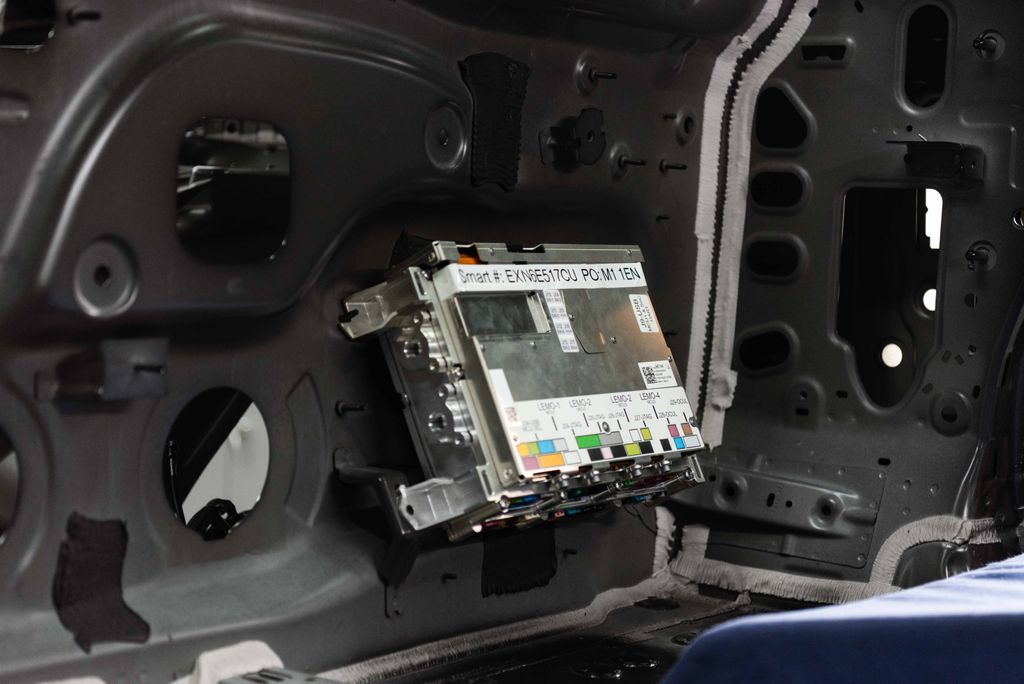
The centerpiece of GM's new, more advanced electrical architecture is the Central Compute Unit, or CCU, which handles propulsion, safety systems, and chassis controls.
Photo by: General Motors
- Those fourth-gen EVs will utilize a new, more centralized electrical architecture that GM says will lead to better digital features, faster connectivity, and better over-the-air updates.
- The centerpiece is a Central Compute Unit that bundles together perception, propulsion, safety systems, and chassis controls. So, a lot of the things that today are handled by discrete control units spread across the car, each running their own software.
- The benefits: an electrical system with 30% less wiring, 40 times more processing power, and 50% faster cellular connectivity
- It debuts in the 2028 Cadillac Escalade IQ and will spread to other GM vehicles, starting with three-row SUVs and pickup trucks.
- On stage, GM Chief Product Officer and former Tesla exec Sterling Anderson said the company has several preproduction vehicles running this hardware driving around its proving grounds. Anderson said future in-car tech like autonomous driving (debuting on highways in the Escalade IQ next year) and in-car AI (more on that below) “needed this kind of computational power.”
OnStar AI
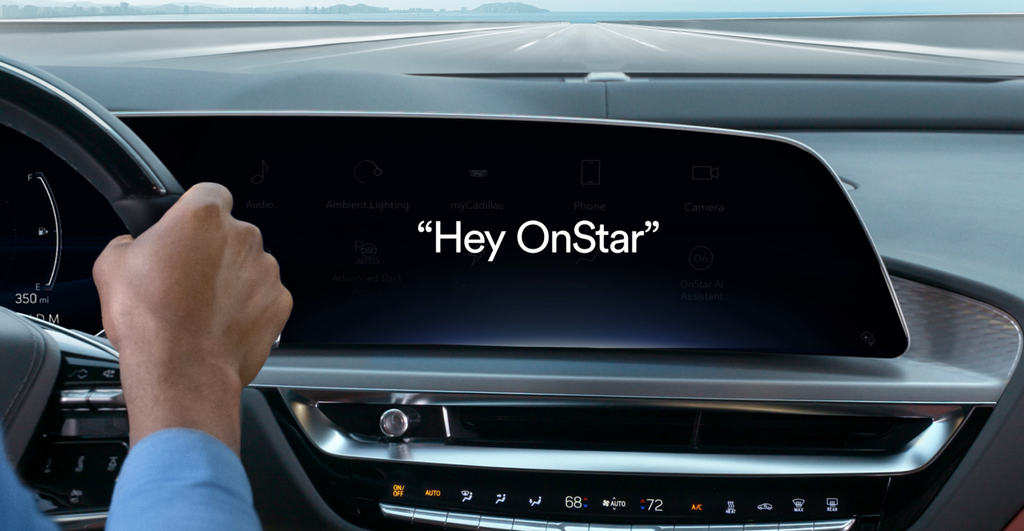
GM has talked about an in-house AI assistant before. Now OnStar AI is launching in the coming months.
Photo by: General Motors
- At last year’s GM Forward, the company announced plans for an in-house AI assistant. Now it has a name and a firmer launch timeline: OnStar AI will come to the 2027 Cadillac Lyriq via an over-the-air update in the coming months, before rolling out to more of the lineup.
- It’s GM’s answer to increasingly ambitious in-car AI assistants, like Grok in Teslas and the new Rivian Assistant, plus similar offerings in BMW and Mercedes vehicles.
- Newer GM vehicles got built-in Google Gemini earlier this year, which drivers can already use to ask general knowledge questions and control their car in a more natural way. Anderson said OnStar AI will be better.
“It's been developed internally at GM to be able to manage this exchange that you have with your vehicle in ways that a general-purpose LLM would never do,” he said. - GM says OnStar AI will let drivers control their cars in a more conversational way and ask questions about their vehicles, but it’s also making some bigger claims about how it might be integrated into a driver’s life. Anderson gave the example of the car not just telling you you’re going to be late to pick up your kid from soccer practice, but proactively routing your spouse to the field and suggesting you pick up groceries instead.
- A new OnStar app will replace the apps from GM’s various brands next year and also deliver a camera-based surveillance system for cars like Tesla’s Sentry mode.
My Takeaways
General Motors has said it’s playing the long game on EVs, but it hasn’t shared much about what’s coming after this generation of Cadillacs and Chevys. Now we have a slightly better sense of what those EVs will look and feel like: more efficient, lighter, more software-defined, and, crucially, cheaper to build. All qualities that these cars will need to be cost- and feature-competitive with Tesla, Rivian, and the best stuff coming out of Chinese automakers, plus its crosstown rival.
Using new AI tools and “concurrent development,” GM says it’s aiming to design new vehicles in two years, about half the typical 4-5-year timeline.
The AI vision is ambitious too. There’s a big difference between a chatbot that can answer questions about your car or find vegan restaurants nearby and one you’ll actually trust to plan your family’s afternoon. I’ll be very interested to see how these capabilities perform over time, and how much people seem to want them.
Of course, legacy car companies have been talking for years about making vehicles that are more like smartphones. And yet, the pure-play EV startups still have the edge when it comes to software experiences and the breadth and depth of OTA updates.
What do you think?
View
Comments
GM has laid out a roadmap for closing that gap, while also leveling up its core EV tech. When these next-generation cars arrive, we’ll start to get a better sense of how much better and smarter they really are.
Contact the author: Tim.Levin@InsideEVs.com
We Think You'll Enjoy...
BMW iX5 First Drive, GM's Big Tech Plans, And Tesla Cybercab Deliveries Are Coming Soon
Why Did The Electric Range Rover Take So Long? A Lot Of Reasons
2026 Lexus ES 350e Review: Why This Is Toyota’s Best EV Yet
The 2027 Ford Mustang Mach-E Has More Range As Standard
We want your opinion!
What would you like to see on Insideevs.com?
Take our 3 minute survey.
- The InsideEVs team
Share this Story
- (https://twitter.com/intent/tweet?url=https%3A%2F%2Finsideevs.com%2Fnews%2F813137%2Fgeneral-motors-ev-ai-battery-strategy%2F&text=GM%27s%20Future%20Cars%20Will%20Be%20Very%20Different.%20Here%27s%20Everything%20We%20Learned&via=InsideEVs)
- copy
GO TO COMMENTS
(
)
Got a tip for us? Email: tips@insideevs.com
View all comments ( )
Trending
I Took A Rivian R2 On A Camping Trip To The Middle Of The Desert
Solid-State Cells Can Make The U.S. Competitive In Batteries Again: CEO
BYD's Futuristic EV Charger Can Run On Sunshine And Batteries
Google’s Gemini AI Assistant Now Works On Apple CarPlay
Latest Stories
- Slate Is Selling A $30 'Screenless GPS' For Its Low-Tech Truck Nov 12 - News -
- America's 3 Most Popular SUVs Are About To Be Hybrid Or Electric Nov 12 - News -
- The 2026 Chevy Silverado EV Trail Boss Makes No Sense. I Loved It Anyway Nov 12 - Car Reviews -
- Scout's New Factory Is Already Making Trucks. But You Won't Be Able To Buy One For A While Nov 12 - News -
- BYD's Futuristic EV Charger Can Run On Sunshine And Batteries Nov 12 - Charging -
- I Took A Rivian R2 On A Camping Trip To The Middle Of The Desert Nov 12 - Car Reviews -
- Solid-State Cells Can Make The U.S. Competitive In Batteries Again: CEO Nov 12 - Battery Tech -
RECOMMENDED FOR YOU
Cadillac Is Bringing GM’s Super Cruise Hands-Free Driving System To Europe
America's 3 Most Popular SUVs Are About To Be Hybrid Or Electric
GM's OnStar AI Assistant Debuts In The 2027 Cadillac Lyriq
The 2026 Chevy Silverado EV Trail Boss Makes No Sense. I Loved It Anyway
GM Is Closing Its Detroit EV Battery Plant
Scout's New Factory Is Already Making Trucks. But You Won't Be Able To Buy One For A While
Slate Is Selling A $30 'Screenless GPS' For Its Low-Tech Truck