Home
Tesla
Features
‘Propulsion-Agnostic’: GM Wants To Bring Tesla-Style Software Features To Its Gas SUVs, Too
Its next-generation EVs will offer security camera functionality and autonomous driving. But its gas SUVs won’t get left behind.
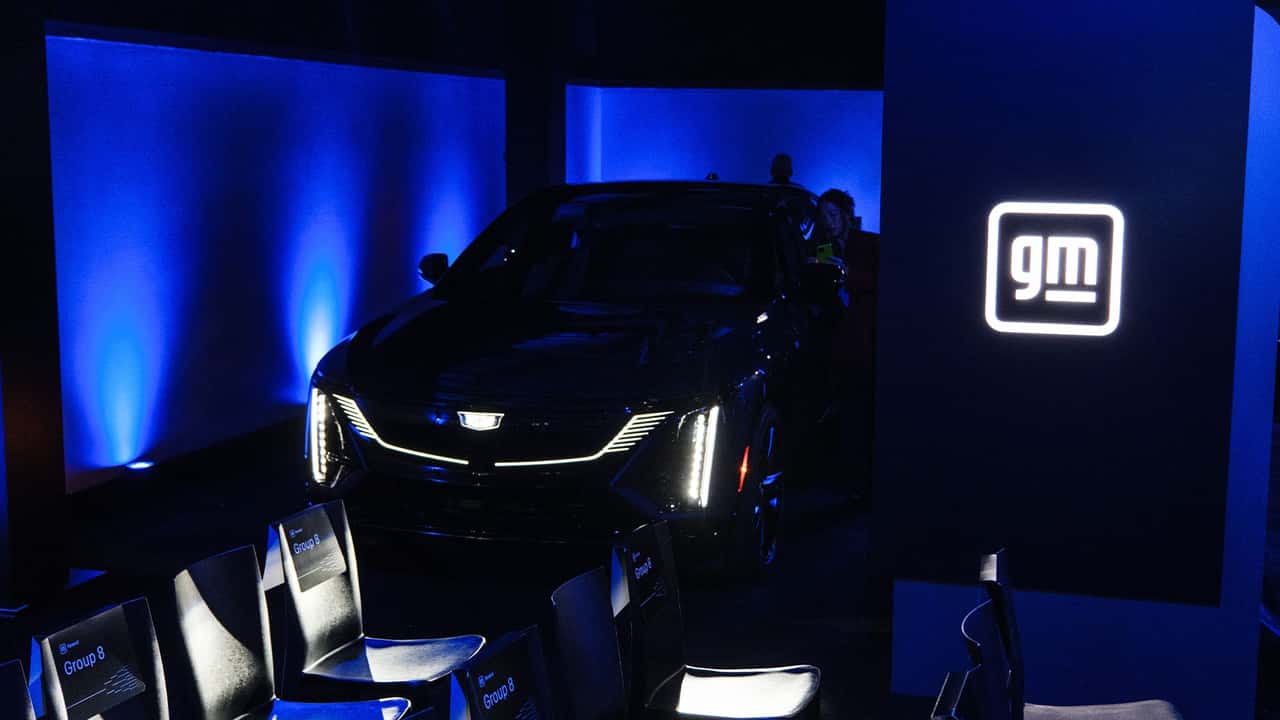
Photo by: General Motors
Mack Hogan 
By: Mack Hogan
Oct 22, at 4:35pm ET
Add InsideEVs as a preferred source in Google
- (https://twitter.com/intent/tweet?url=https%3A%2F%2Finsideevs.com%2Ffeatures%2F812982%2Fgm-software-platform-powertrain-agnostic%2F&text=%E2%80%98Propulsion-Agnostic%E2%80%99%3A%20GM%20Wants%20To%20Bring%20Tesla-Style%20Software%20Features%20To%20Its%20Gas%20SUVs%2C%20Too&via=InsideEVs)
- copy
Share
Comment
Modern software-defined EVs offer a lot of advantages. They are simpler to build, faster to design, and easier to update with helpful software features. They enable things like Sentry Mode in Teslas and Pet Mode in Rivians. They get meaningful over-the-air updates and offer cutting-edge driver assistance features. These benefits, popularized in common consciousness by all-electric brands in the U.S. and China, are increasingly coming to a new audience: gas vehicle buyers.
General Motors marks the latest example. It announced on Wednesday that its next-generation electrical and compute architecture is moving to the most important functions to a single, centralized “Central Compute Unit.” It manages autonomous driving, in-car AI functions, and powertrain management. The key thing is that this new platform will support both gas and electric powertrains.

Rivian's Pet Mode lets you leave the climate system running with your pet inside while you run errands. It's an example of a software feature that integrates a few important systems in the car.
Photo by: Rivian
The idea of a centralized computer architecture may sound jargony, but here is a simple version. Traditional vehicles are built with dozens of separate Electronic Control Units (ECUs), which are computers. They each perform specific tasks—operating the antilock braking system, or controlling your seat motor—and they do not talk to one another in modern digital languages. They are not even built by the same company, usually, and so most communication must happen on antiquated, low-throughput wiring looms that crisscross almost every gasoline car and many legacy EVs. This is part of why most software functions on traditional cars are slow and clunky.
More SDV Stories
Why Everyone Is Struggling To Create 'Software Defined Vehicles'
'Ten Times Bigger To Me:' Why Ford's CEO Thinks Software Is A Bigger Challenge Than EVs or China
Moving all of that computing into a centralized unit massively reduces complexity. Tesla maximized this approach when it designed the Model 3. The result had over 70 fewer pounds of wiring in it than a typical car. Instead of dozens of computers, it had two. Despite that, it would eventually offer way more software features than any competitor: Dog Mode for keeping your pup cool, Camp mode for sleeping with the heat running, Sentry Mode for continuous security camera footage, and the world’s most sophisticated consumer driver assistance system (even if it is not self-driving).
GM's existing EVs are significantly heavier, more complicated to manufacture, and less integrated than vehicles from automakers like Tesla, Rivian, BYD, and Lucid. But the company is quickly moving towards a more streamlined software platform that supports gas and electric products.
Photo by: Mack Hogan/InsideEVs
GM doesn’t want to just copy that playbook for EVs. Like a growing cadre of automakers, it wants to bring the approach to the whole lineup. The company says its centralized computing system will debut on the 2028 Cadillac Escalade IQ, but will quickly spread to its gas-powered full-size SUVs, its three-row crossovers, and its fourth-generation EVs.
“This propulsion-agnostic architecture delivers 40x more computing power with 30% less
wiring length and mass, plus up to 50% faster cellular connectivity than our previous
systems, for smoother streaming, quicker downloads and more responsive connected
Services,” GM says.
Photo by: Mack Hogan/InsideEVs
This should cure the core problem with my GM EV, which rides on a blended, not-quite-centralized architecture. Its app is far less responsive than Tesla or Rivian’s, and its standard advanced driver assistance systems are middling. But as GM moves feature development onto its centralized platform, it should be able to add new functionality and updates on a much more regular cadence.
Moving the gas and electric products onto the same platform also solves the core challenge legacy automakers are facing: Volume. Trying to match cutting-edge software from Tesla and Chinese brands is expensive. The more vehicles you can spread that development cost over, the better off you are likely to be.
The Cadillac Escalade IQ will get GM's new software architecture in 2028, along with a true eyes-off autonomous highway assistant, the company says.
Photo by: Mack Hogan/InsideEVs
GM certainly has the volume to justify it. And with plenty of tech talent recruited from Silicon Valley over the past decade, and hundreds of thousands of EVs on the road, the company is well-positioned to make and market excellent next-generation software-defined EVs.
What do you think?
View
Comments
That doesn’t mean it will be easy. Competitors are all racing to beat GM to the punch, with companies like BMW already fielding combined gas and electric SDV platforms. Ford, too, will launch a true SDV platform before GM, albeit on a purely electric platform. And the vast majority of Chinese EVs are already riding on true SDV architectures, which are often shared with plug-in-hybrid and other gas-burning models.
The General, then, is not necessarily breaking new ground. But it’s offering yet more proof that software-defined vehicles are the future, whether they have gas engines or not.
Related Stories
GM Is Adding Its Own Version Of Tesla's Sentry Mode To Cars
GM's Next-Generation EV Platform Has 30% Less Wiring And 20% Less Battery
GM's OnStar AI Assistant Debuts In The 2027 Cadillac Lyriq
GM Is Closing Its Detroit EV Battery Plant
We want your opinion!
What would you like to see on Insideevs.com?
Take our 3 minute survey.
- The InsideEVs team
Share this Story
- (https://twitter.com/intent/tweet?url=https%3A%2F%2Finsideevs.com%2Ffeatures%2F812982%2Fgm-software-platform-powertrain-agnostic%2F&text=%E2%80%98Propulsion-Agnostic%E2%80%99%3A%20GM%20Wants%20To%20Bring%20Tesla-Style%20Software%20Features%20To%20Its%20Gas%20SUVs%2C%20Too&via=InsideEVs)
- copy
GO TO COMMENTS
(
)
Got a tip for us? Email: tips@insideevs.com
View all comments ( )
Trending
I Drove The Electric And Gas-Powered BMW X5. I Know Which One I'd Pick.
The 2027 Ford Mustang Mach-E Has More Range As Standard
GM's Next-Generation EV Platform Has 30% Less Wiring And 20% Less Battery
Can The BMW iX3 Take Down The Tesla Model Y L And Rivian R2?
latest articles
- ‘Propulsion-Agnostic’: GM Wants To Bring Tesla-Style Software Features To Its Gas SUVs, Too Oct 22 - Features -
- Want The Best Range Rover? Get The Electric One: First Drive Oct 22 - First Drives -
- I Drove The Electric And Gas-Powered BMW X5. I Know Which One I'd Pick. Oct 22 - First Drives -
- The Ferrari Luce Officially Starts At $560,800 Oct 22 - News -
- The 2027 Ford Mustang Mach-E Has More Range As Standard Oct 22 - Official -
- BMW’s Electric M3 Had To First Win Over One Of Its Own Oct 22 - News -
- Seattle Is Installing Hundreds Of Curbside EV Chargers Oct 22 - Charging -
RECOMMENDED FOR YOU
Tesla Says 75% Of New Car Buyers Subscribe To FSD In North America
Want The Best Range Rover? Get The Electric One: First Drive
'End Of The Year': Tesla Says Cybercab Customer Deliveries Will Begin Soon
I Drove The Electric And Gas-Powered BMW X5. I Know Which One I'd Pick.
The Best Affordable Electric Cars In 2026: Cheap, Reliable Options For Everyone
The Ferrari Luce Officially Starts At $560,800
The Boring Company Uses Tesla Model 3 Sleds To Shuttle Shipping Containers Through Its Tunnels