
This New Electric Paver Can Lay Down 1,200 Tonnes Of Asphalt A Day
Switzerland’s Ammann tapped Volvo Penta to electrify one of its best-known asphalt pavers.
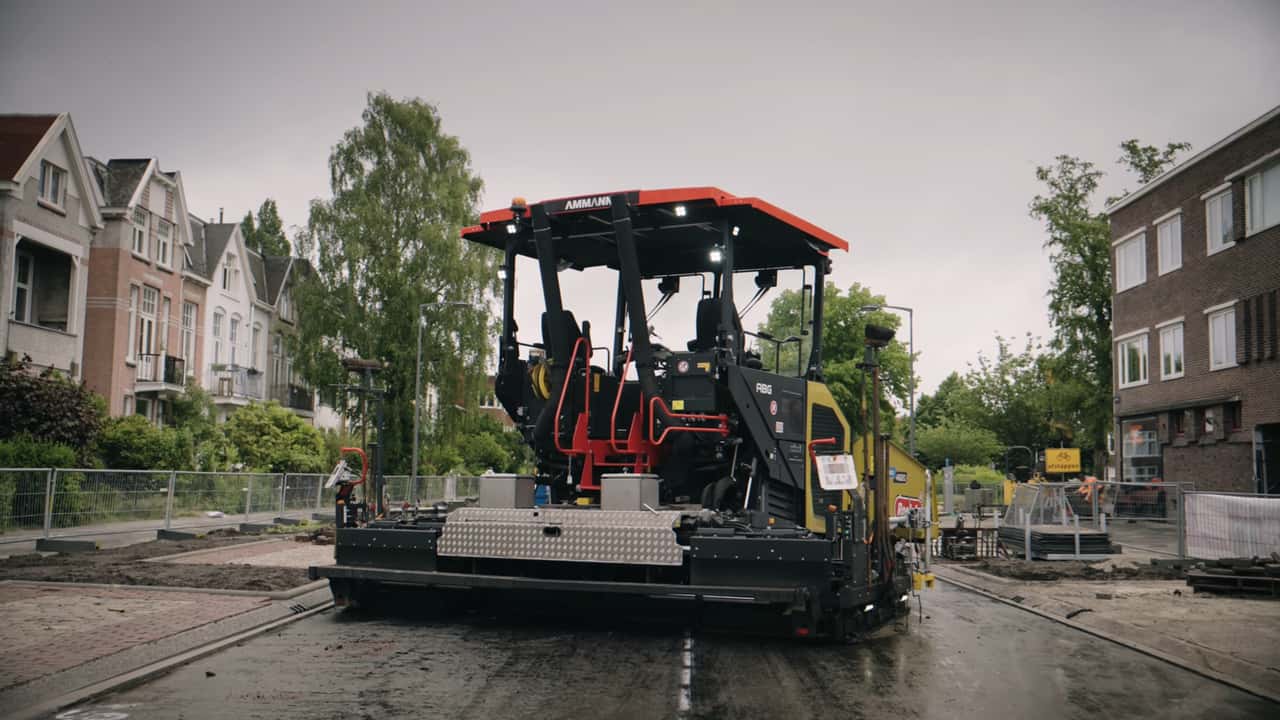

- One of the largest electric asphalt pavers in the world is made by Switzerland’s Ammann.
- The company’s new eABG 4820 is powered by Volvo Penta’s electric powertrain.
- A huge battery pack enables the paver to lay up to 500 tonnes of asphalt per hour.
The construction world is getting quieter by the day, thanks to the gradual electrification of big rigs traditionally powered by diesel engines. After trucks, diggers, and cranes, asphalt pavers are now going electric.
Switzerland’s Ammann, which is known for its asphalt and concrete plant equipment, has transformed one of its mainstream diesel asphalt pavers to run on electric power. Thanks to a Volvo Penta powertrain, the eABG 4820 is now one of the largest electric pavers on the market, capable of laying up to 500 tonnes per hour and a maximum output of 1,200 tonnes per day with a charging stop.

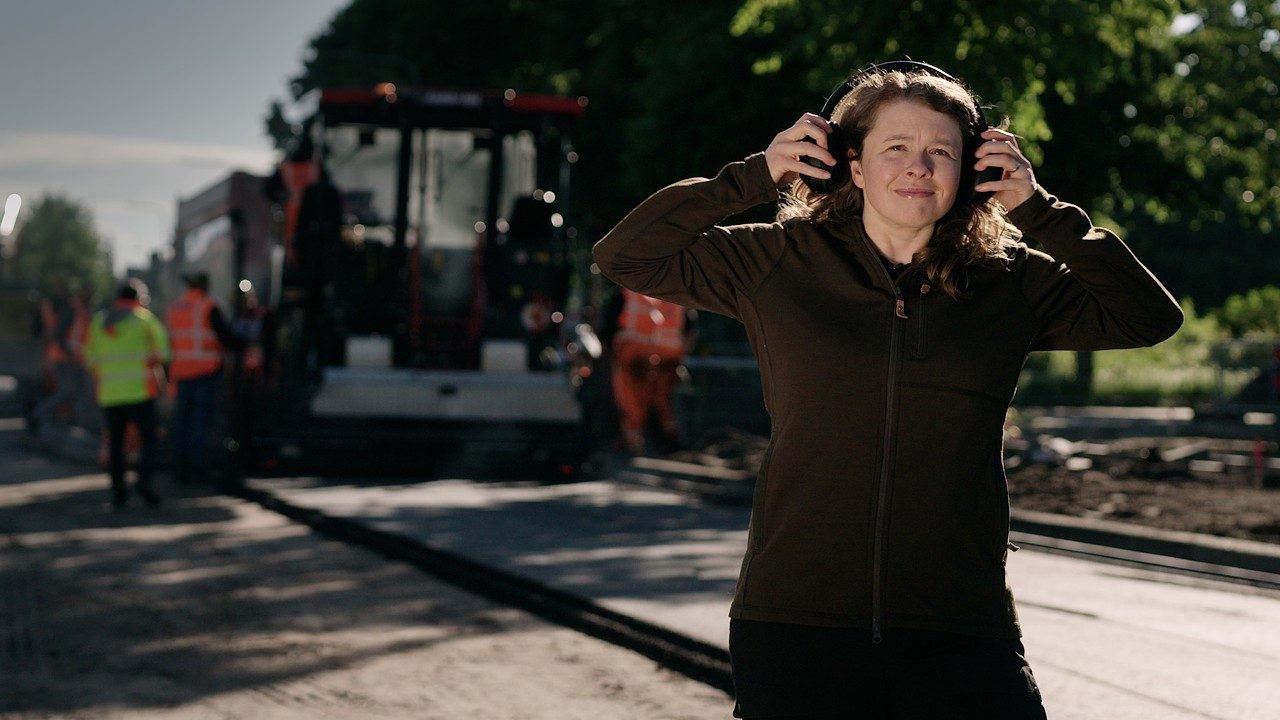
Without intermediate charging, the machine can put down between 350 and 450 tonnes of asphalt.
Before getting into the details, the biggest advantage of an electric paver over a diesel rig is the significantly lower noise output. A 99-kilowatt electric motor is powered by a massive 270–kilowatt-hour battery pack arranged in three separate units. Volvo Penta supplies the batteries, motors, power electronics, and control technology, while Ammann used its expertise in hydraulic-powered machinery to put it all together.
“It comes down to energy management and architecture,” said Philipp Bramer, head of the e-paver development team at Ammann. “The electric driveline doesn’t just power the machine. It communicates seamlessly with the hydraulics. Simultaneously, the intelligent control system makes sure that the system supplies exactly the right amount of energy to the machine.”
Gallery: Ammann eABG 4820

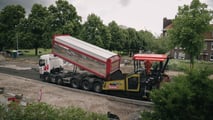


The nickel-cobalt-aluminum oxide (NCA) traction batteries can be charged from a CCS2 connector at up to 150 kW in roughly one and a half hours, while AC charging at up to 22 kW can replenish the battery in 12 hours. Amman says that the battery provides enough juice for an entire work shift, but that an external power supply is responsible for its proprietary ABG e+ screed heat system.
The electric paver can handle widths of up to 21.3 feet (6.5 meters), making it a good choice for most paving scenarios, especially in emission- and noise-sensitive job sites. We’ve all seen and heard a diesel asphalt paver in operation—I vividly remember when the street I grew up on got its first layer of asphalt decades ago, and while I was fascinated by all the machinery, I still remember that the site was extremely loud.
This, coupled with the fact that an electric paver emits up to 70% less carbon dioxide into the atmosphere, should make diesel construction equipment a thing of the past—at least in crowded, already polluted urban areas.
What’s more, because an electric powertrain has significantly fewer moving parts compared to a diesel lump, a lot of maintenance tasks simply disappear, along with their associated costs. At the same time, though, construction companies need to install charging equipment at their depots and find ways of topping up their rigs on the jobsite.
More Electric Construction Machinery

RECOMMENDED FOR YOU
The Best EV Lease And Finance Deals In November 2026
The AI Boom Is Creating A New Supply Chain Headache For Automakers
Volvo Is Getting Crushed In The U.S.
This Mercedes Went 539 Miles On A Charge. Is Range Anxiety Finally Dead?
2027 Volvo EX60 Blows Past EPA Rating In Real-World Range Test
Lucid's $50,000 Tesla Model Y Rival Is Getting Closer To Production. Here's The Latest
Volvo Taps Nvidia To Bring ‘Eyes-Off And Mind-Off’ Driving To Its Cars