
China Has An Iron Grip On EV Batteries. Here's America’s Plan To Break It
The U.S. wants a domestic battery supply chain by 2030, but tens of billions of dollars in battery projects have already been canceled.
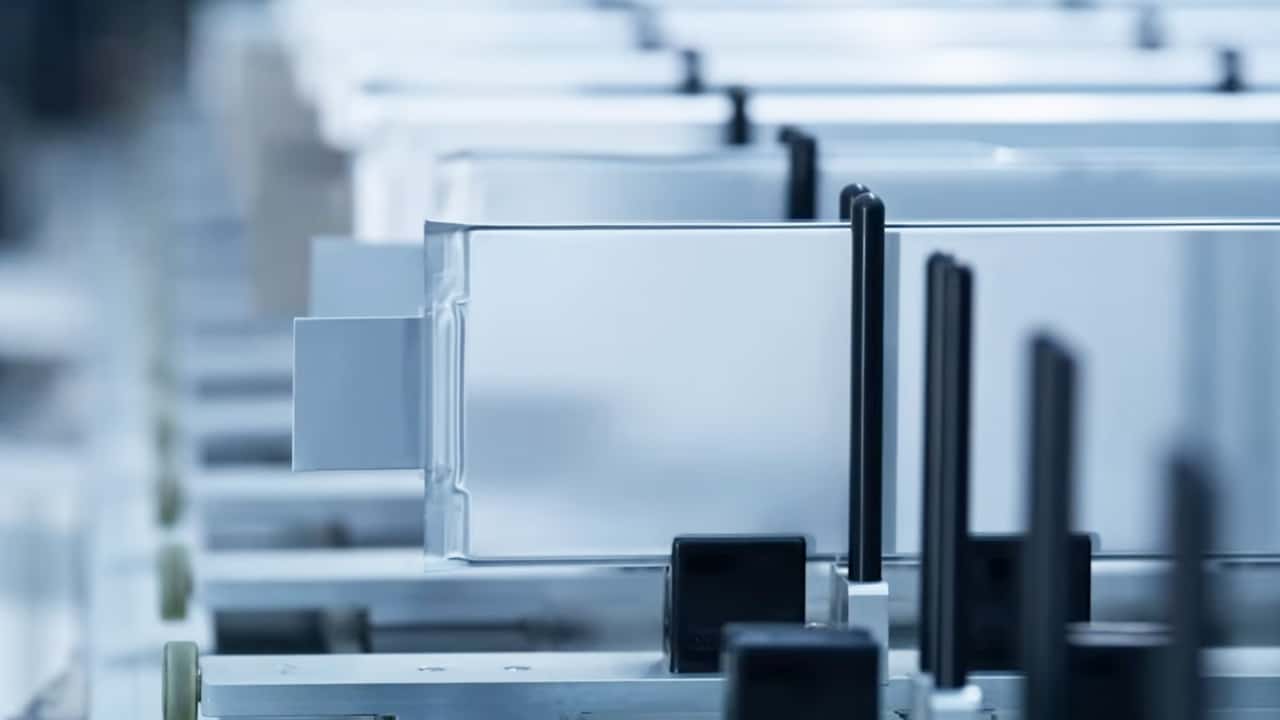

- The Trump administration is doubling down on building a domestic battery supply chain by 2030.
- This not only includes cell and pack production, but also extraction, refining, and making battery subcomponents in the U.S.
- Billions of dollars worth of battery projects were canceled last year.
The U.S. Department of Energy last week released a new three-step plan to localize the supply chain of batteries and reduce America’s reliance on China. The plan may not even mention electric vehicles, but the EV market could be among its biggest beneficiaries if successfully executed.
Citing data from research firm BloombergNEF, the DOE said demand for batteries would increase four fold between 2025 and 2035, from 179 gigawatt-hours to 707 GWh. The demand is expected to skyrocket across sectors including transportation, the power grid, AI data centers, consumer electronics, and drones.
While the report acknowledged that America’s battery cell and pack manufacturing had improved over the past few years, the core supply chain was still heavily reliant on imports. That means things like raw material mining and the production of a battery’s subcomponents such as anodes, cathodes, electrolytes, and separators were still largely happening overseas, mostly in China.
To fix this, DOE said a new three-step plan was necessary, and the following are its objectives:
- Mine-to-market: Establish a continuous domestic value chain by 2030.
- Discovery-to-deployment: Achieve technology and manufacturing leadership by 2035.
- Enable affordable, safe, and reliable storage applications for the American public.
In part one of this plan, the focus would be to invest in the battery supply chain. “DOE is prioritizing investments to shift from a discontinuous, import-reliant supply chain to an integrated domestic production system through the upstream (mining), midstream (refining and engineered materials), and downstream (cells, packs, and end products),” the DOE said. It added that it would focus on targeted investments in companies that specialize in extraction, recycling, refining, and equipment manufacturing.
Part two outlines developing and commercializing next-generation batteries that are right for their specific applications. “These batteries should be more affordable, longer lasting, higher performing, and less reliant on critical minerals in select market segments,” the DOE said. So think solid-state cells or more advanced versions of current lithium-ion technology. And the final part of the plan is to get them past the “valley of death,” meaning converting discoveries made in the lab into actual products people can buy.
To be clear, the Biden administration had shared similar objectives back in 2021 in far more detail with a focus on clean energy, social justice, and equitable jobs. The Trump administration’s blueprint is much thinner and instead leans on national security, the grid, humanoid robots, and the enormous power demands of AI data centers. It doesn't explicitly mention EVs, but instead says next-gen batteries would also help in the transportation sector.
It's also worth remembering that America's battery industry was surging long before that. After Trump swept to power in 2024, battery manufacturing in the U.S. took a severe hit. According to clean energy think tank E2, the U.S. canceled, closed or downsized battery projects worth $42 billion between 2022 and 2026, costing the nation over 85,000 jobs. Across the broader clean energy sector, the sum increases to $137 billion, costing over 240,000 jobs, according to the same report.
The new blueprint is still a step in the right direction, even if it is more of a continued effort. It also reflects how much the battery landscape has changed since the start of the decade. EV sales have been up and down, while demand for stationary energy storage has surged, driven by utility upgrades and AI data centers. The revised strategy accounts for that shift, and automakers could still benefit over the long term for their EV plans.
Contact the author: suvrat.kothari@insideevs.com
Related Stories
RECOMMENDED FOR YOU

Mercedes Wants To Rethink EV Batteries With This Clever New Technology
Uber Wants Thousands Of Robotaxis By 2027. Waymo Is Already There
The Tesla Model Y's Structural Battery Was Nearly Impossible To Repair. The Cybercab Fixes That
EVs Made Up Nearly A Third Of UK Sales As Europe's Electric Boom Continues
The Roadster Will Have Tesla’s Most Advanced Battery Pack Yet
I Like Electric Sedans. But Riding In The Back Of One Sucks
Tesla Supplier Reports Record Earnings From EV And Energy Storage Batteries