
I Like Electric Sedans. But Riding In The Back Of One Sucks
There’s more to rear passenger comfort than the distance to the front seat. What’s under your feet matters, too.
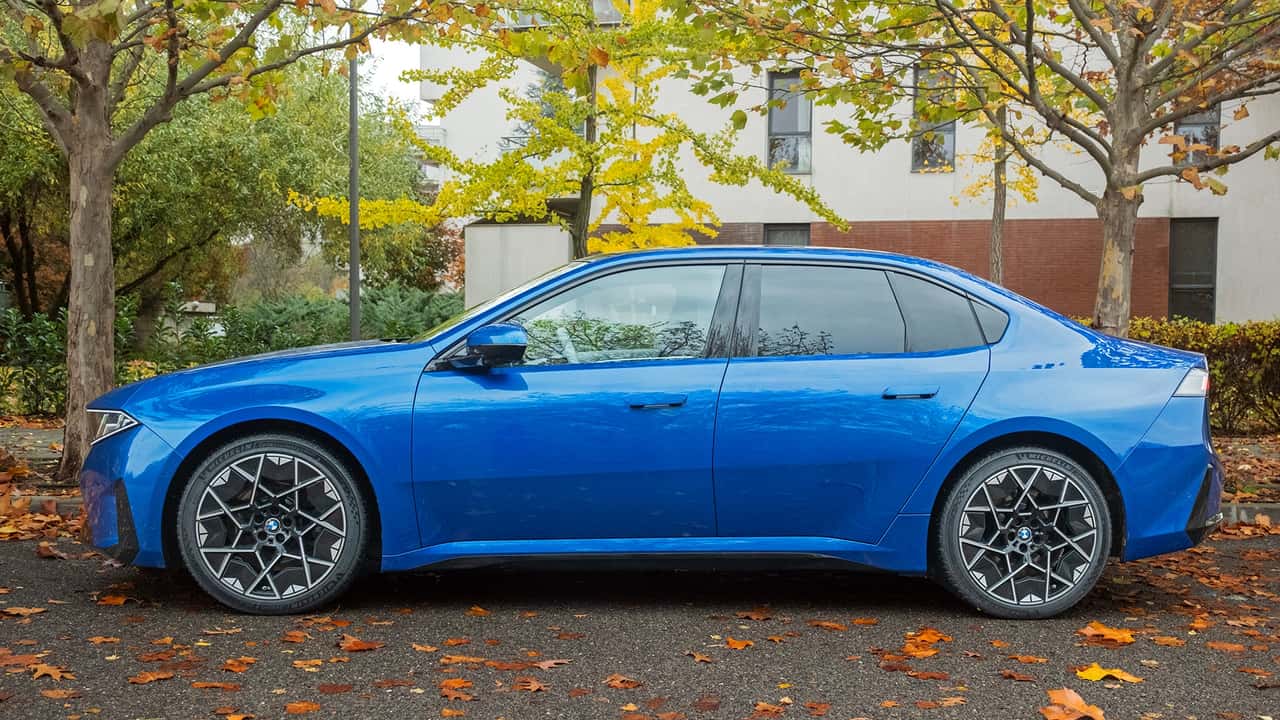

I’m firmly on team electric sedan. Give me something low, sleek, and reasonably eager to change direction over any SUV that needs clever suspension to disguise its towering height. But one thing always seems to undermine my enthusiasm for whatever electric sedan I'm driving: climbing into the back and discovering that my knees are shoved into my chest.
You can have a generous distance to the rear of the front seat back, plenty of shoulder room, and space above your head and still feel awkwardly folded and not really comfy in these cars. Your feet still sit too high, lifting your thighs off the cushion, and your knees feel unsupported as they dangle mid-air.
The culprit is under the carpet, and the so-called skateboard layout is to blame. A floor-mounted battery has become the industry's go-to design for good reason. It keeps the heaviest component low, helping stability and handling, and tucks a bulky battery away without swallowing the trunk or passenger compartment.

But the battery still needs somewhere to go. Its cells, enclosure, protection, and cooling hardware add substantial thickness under your shoes, raising the surface where passengers rest their feet. It seems like an efficient use of space until you take a long passenger ride in the back of an electric sedan.
In a taller crossover or SUV, designers have more room to raise the seats, and it’s not as big a problem. However, in a low sedan or hatchback, that adjustment would mean you’d end up sitting too high, getting a bit too intimately acquainted with the headliner. Or, they'd have to raise the roof, negating many of the design and aerodynamic benefits of a sedan shape.
Something has to give, and it’s often thigh support. Porsche explicitly identified this packaging conflict when explaining why the Taycan needed recessed rear footwells. Michael Mauer, Porsche’s design chief of the Taycan’s development, acknowledged back in 2019 the challenge of keeping passengers comfortable beneath a low roof when a large battery sits under the cabin.

His team had to find a compromise between those competing demands in a production electric sports sedan. “We solved this with so-called ‘foot garages’,” he explained, referring to recesses in the battery that give rear passengers somewhere lower to put their feet.
Mauer concluded that this engineering solution was “the greatest challenge,” but it is arguably very important because it preserves the Taycan’s low-slung stance and still gives you decent foot room. The Taycan’s sister vehicle, the Audi E-Tron GT, is identical in this regard.
The floor battery is also the reason why all electric sedans are slightly taller than their combustion counterparts. That extra height comes from the battery added to the overall body height, and it’s why cars like the Polestar 2 look the way they do. It still has the traditional three-box sedan form factor, but its body is taller.
Most manufacturers don’t seem to mind making slightly tall sedans, which is why the new BMW i3 and Mercedes-Benz C-Class Electric look the way they do. But there are exceptions. The first EV sedan I saw and sat in that wasn't too tall or compromised in the back was the Lucid Air Pure.
The Pure and Touring variants both have this superior rear room obtained by removing the battery modules from the rear passenger footwell area. Climbing aboard one, it feels like a regular combustion sedan, and you also notice the floor is higher in Air variants with larger batteries, like the Grand Touring, which have less rear foot space and push your knees higher.
Jaguar is doing the same with its new Type-01, which has a row of battery modules moved from the rear passenger area to the front of the car. Engineers could move the modules there because of the car’s ridiculously long hood and dash-to-axle ratio, which let them add as much battery capacity as they wanted without compromising rear comfort.
The Polestar 5 is another car with a similar setup, which is why it doesn’t look any taller than a combustion car with the same body style. Another Geely brand, Volvo, says its SPA3 platform can leave cells out beneath passengers’ feet, opening the door to a properly low electric wagon. That sounds like an excellent use for this technology, although it hasn’t committed to building one yet.
The tradeoff for leaving more shoe space is lower overall battery pack capacity. A thin pack can help, too; I’m not demanding identical cutouts in every electric car, but I do want low EV back seats to become more comfortable so that more people pick them over higher-riding vehicles.
For anyone regularly carrying adults, an awkward seating position could be a deal breaker. Before buying, sit in your own driving position and check whether the cushion actually supports your thighs. I want an electric sedan, but I don’t want one that tortures my rear passengers.
RECOMMENDED FOR YOU
Rivian’s ‘Boring’ Commercial Van Is Turning Into A Secret Weapon
This Startup Is Turning Used E-Bike Batteries Into Affordable Energy Storage
One Year Without EV Tax Credits: 4 Key Takeaways
Mercedes Wants To Rethink EV Batteries With This Clever New Technology
This $400,000 RV Delivers EV Camping Without The Range Anxiety
Renault’s Latest EV Was Designed For The Army’s Toughest Missions
Why Did The Electric Range Rover Take So Long? A Lot Of Reasons