
Honda’s New Hybrids Are Getting Electric All-Wheel Drive
No fewer than 15 next-generation hybrids are in the works, and most of them are heading to North America.
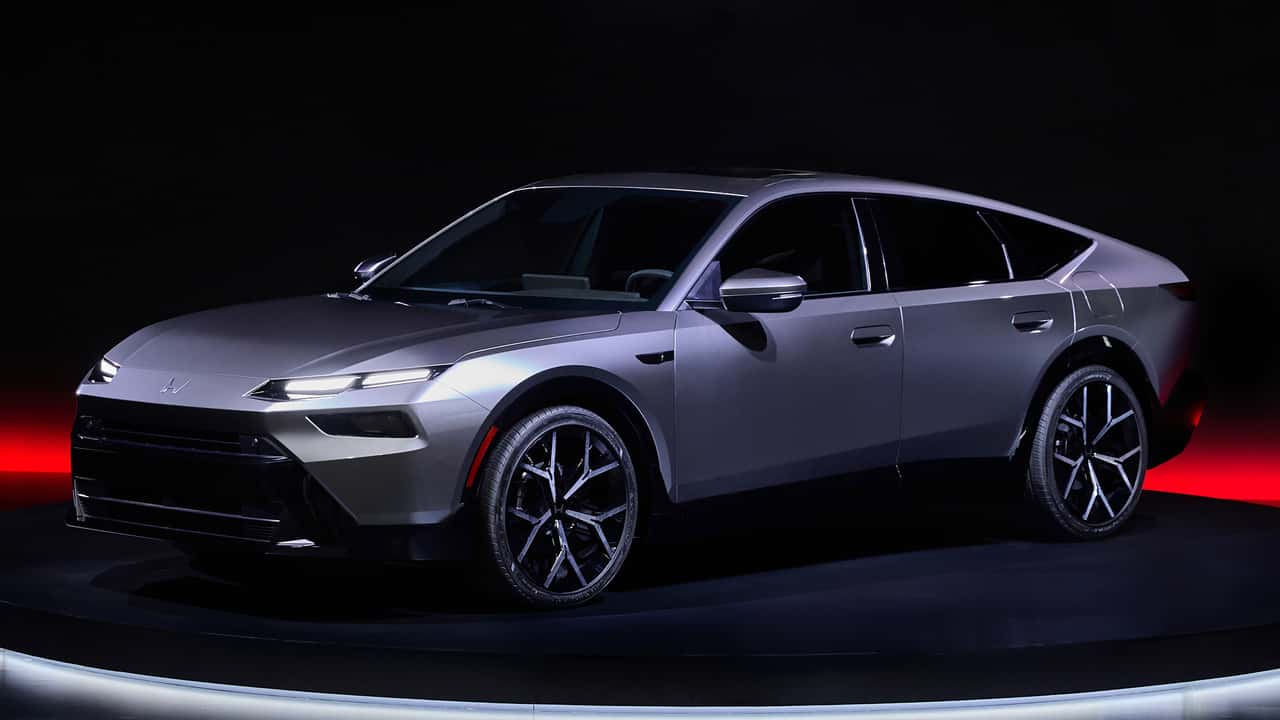

- Honda’s latest-generation hybrid system has a name.
- Simply called “Honda Hybrid,” the new setup will make its way into 15 models by the end of March 2030.
- Most of them are coming to the U.S., and some of them are getting electric all-wheel drive.
After losing billions of dollars from its discontinued 0 Series electric car platform, Honda is betting big on hybrids. The automaker’s next-generation hybrid system, dubbed simply “Honda Hybrid,” is taking shape quickly, with the first cars powered by it scheduled to hit the road next year. No fewer than 15 new models will launch globally by the end of the fiscal year ending March 31, 2030.
Honda said most of its next-gen hybrids are coming to North America, based on a newly developed architecture that ups the ante when it comes to body rigidity and weight reduction. What’s more, a newly developed electric all-wheel drive (e-AWD) system is in the cards, which is likely to borrow a thing or two from the gutted 0 Series program.

Honda Next-Generation Hybrid platform
Details are slim for now, but traditionally, an e-AWD system uses a rear electric motor that’s not physically connected to the engine and gearbox at the front of the car. Volvo’s plug-in hybrids are built like this, and it enables them to drive on electric power alone without having to deal with transmission losses.
In the case of a traditional hybrid, however, the high-voltage battery has a significantly lower capacity than on a plug-in hybrid, so it’s unlikely that we’ll see Honda’s new models drive more than a few hundred feet on electric power alone.
That said, the Japanese automaker has made it clear that fuel efficiency and the joy of driving are the two most important characteristics of its new hybrid system. Last year, when Honda unveiled its next-gen hybrid system, it said that on full-size SUVs sold in the U.S., a newly developed V-6 engine would be paired with new electric motors and an upgraded lithium-ion battery, resulting in 30% better fuel efficiency compared to current non-hybrid full-size SUVs.
Besides full-size SUVs, Honda is planning smaller, mid-size hybrids, which could include updates to the CR-V and Civic best-sellers.
The Honda Hybrid system is based on the current e:HEV setup, which combines a gas engine, an electric motor, and a generator. The generator funnels electricity back to the high-voltage battery during deceleration, while the electric motor can power the front wheels either on its own or together with the gas engine. The combustion lump can also power the wheels on its own, with no assistance from the e-motor.
Betting big on hybrids is probably the right choice for Honda right now. It lost $9 billion after canning the 0 Series project, so it needs to recoup some of those losses, and tapping into the rapidly expanding hybrid market is likely going to pay dividends.
More Honda Stories

RECOMMENDED FOR YOU
Honda Will Test Wireless EV Chargers On The Highway In 2027
Smart’s New City EV Is Already Off To A Great Start
All The EVs That Got Canceled Or Delayed In 2025 And 2026
Hyundai Says Hydrogen Cars Aren’t Dead. Finding Customers Is Another Story
VW’s EV Factory Is Now Taking Cars Apart. There’s Money In It
The Rivian R1T Is An Awkward Fit For Britain. This Reviewer Loved It Anyway
Tesla's Cybercab Is Built In A Radical New Way. Here's How It Works