
Mercedes’ EV Charging Network Hit 100 Locations After 3 Years In The U.S.
The company’s 400-kW chargers have recorded over 550,000 sessions since 2023, with an emphasis on getting it right the first time.
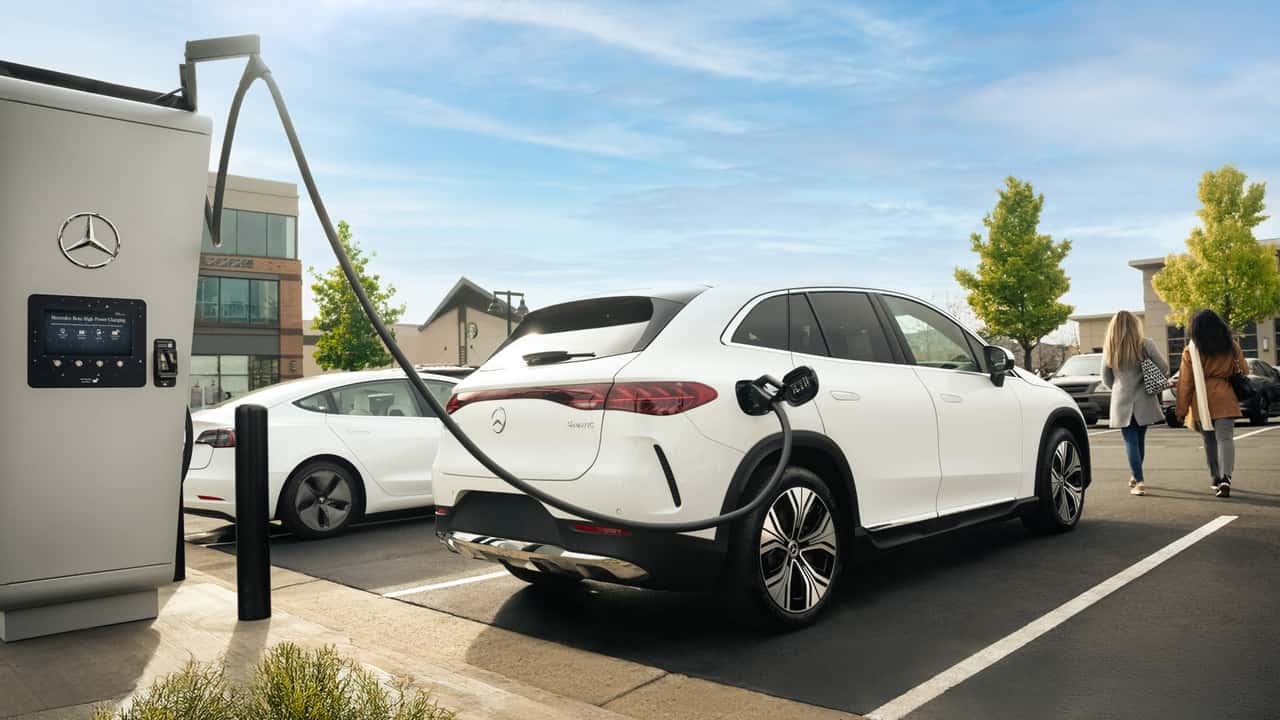

- Mercedes-Benz’s EV charging network is celebrating its third anniversary in the U.S.
- The Mercedes-Benz High-Power Charging network now has 100 locations in North America and nearly 1,000 ports.
- The company boasts a near-perfect uptime rate and an impressive first-time success rate.
Mercedes-Benz may have sold its EV charging network in Europe, but the automaker’s American network is still alive and well, and it’s now celebrating its third anniversary.
Since debuting in November 2023, the Mercedes-Benz High-Powered Charging (MB HPC) network has gone from just a handful of locations in a few states to nearly 1,000 individual ports at 100 sites across 28 U.S. states and Canada's British Columbia.

Mercedes-Benz High-Power Charging station in Ashburn, VA
All of the carmaker’s fast chargers can deliver up to 400 kilowatts of power, with over 245,000 customers topping up their EVs at a Mercedes-Benz stall in the past three years. According to the company, the vast majority of stalls have both CCS and NACS connectors, while only 3% of locations have just CCS connectors.
That’s a big thing nowadays, when most of the new EVs on the market have a Tesla-style NACS charging port. The smaller inlet started making a splash among traditional automakers after Ford broke industry barriers and convinced Tesla to open up its Supercharger network to other makes. That said, NACS-equipped vehicles can still charge at CCS stations with an adapter, and vice versa.
Near-perfect uptime has been a headlining feature of Mercedes-Benz’s charging network stateside since its launch, but while those figures have remained relatively unchanged in the past three years, another metric has emerged as a differentiator, at least in the German automaker’s eyes.
Mercedes-Benz Charging Hub at the headquarters of Mercedes-Benz USA in Sandy Springs, Georgia
The first-time success rate, which measures charging sessions that start on the first try, has become the company’s “guiding star.” Back in 2023, it stood at roughly 84%, meaning that about one and a half sessions out of ten didn’t work on the first attempt. Now, three years later, the first-time success rate has climbed to over 90%.
Mercedes’ EV charging network in the U.S. uses 400-kilowatt dispensers, either from ChargePoint or Alpitronic, and the stations are usually located at or around premium shopping locations. According to DCFC Tracker, the largest MB HPC site has 20 stalls and is located in Orlando, Florida. The company’s smallest operations, in Conyers, Georgia, and Red Bluff, California, have four stalls each.
All locations have credit card readers, but EV drivers can also use various charging apps to pay for sessions, as well as an RFID card issued by Mercedes-Benz dealers. Plug & Charge is also supported. Pricing varies between $0.35/kilowatt-hour and $0.60/kWh, depending on location, and a $25 pre-authorization fee is temporarily held to verify available funds. After the session ends, drivers will be charged the actual amount based on the energy used, and the rest will be released.
Last month, Mercedes-Benz High-Power Charging North America appointed Madeline Ebert as its new CEO.
Gallery: Mercedes-Benz Charging Network


More Stuff Like This

RECOMMENDED FOR YOU
Mercedes' Answer To Tesla FSD Requires Hands On The Wheel. Does That Make It Better Or Worse?
Lucid's CEO Said The EV Startup 'Underinvested In Service.' Here's How It's Fixing That
Mercedes Wants To Rethink EV Batteries With This Clever New Technology
Polestar’s Next EVs Will Borrow From This Gorgeous New Concept
Mercedes-Benz Is Giving Up On Its EV Charging Network In Europe
PlugShare Gets A Major Redesign, Adds Dark Mode And iPhone Duo Support
AMG’s New Electric SUV Has 1,153 HP. The Charging Specs Are Even Wilder