
The Next VW ID. Buzz Could Get More Tech And A Lower Price Tag
VW’s boss admits the electric bus costs too much to build. A new platform could help change that.
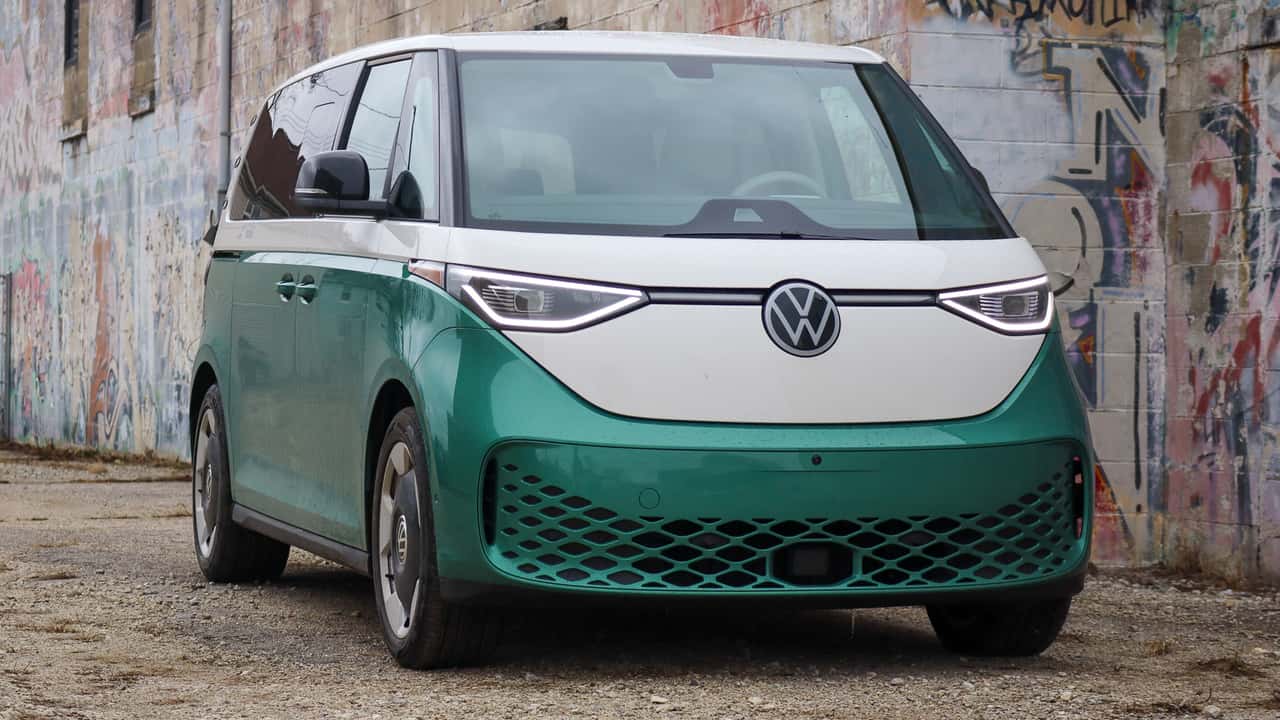

- The next VW ID. Buzz will use SSP, bringing better EV tech and potentially a lower price.
- Faster charging and Rivian-developed electronics could address some of the current van’s shortcomings.
- VW hasn’t confirmed pricing or launch timing; updates to the current Buzz will come first.
The Volkswagen ID. Buzz is an appealing idea with less-than-appealing price. It has the looks and the space, but buying one requires considerable enthusiasm for both. The next generation could make that decision easier.
Speaking to Auto Express at the Paris Motor Show, VW CEO Thomas Schäfer confirmed the ID. Buzz is getting a successor based on the SSP architecture rather than the MEB platform that underpins today’s model. He acknowledged the current model “is on the wrong cost base,” limiting sales despite a lot of enthusiasm around it.
SSP supports 800-volt electrical systems and also promises improved range, charging, and software over MEB. Sharing it out across the VW Group could cut development and manufacturing costs. Schäfer also hinted at cheaper LFP batteries, but didn’t set any price targets for the new model.

2025 Volkswagen ID. Buzz
The upgrade should be particularly noticeable at charging stops. VW has outlined a target for SSP of roughly 12 minutes to charge from 5% to 80%, although that’s a wider ambition for the entire platform, not a confirmed figure for the next Buzz.
Just as significant is the electronics overhaul being developed with Rivian: powerful central computers will run the vehicle’s functions, supporting more advanced driver assistance and infotainment features that can improve through over-the-air updates. Sharing that hardware and software across millions of vehicles should also help VW spread development costs, giving it a better chance to offer more technology without charging buyers more.
We praised the ID. Buzz for its comfort, handling, adult-friendly seating, and achieving its official 26-minute charging time. However, the $66,040 tester’s cheap-looking trim, awkward cupholders, and missing features were harder to forgive. Its 234-mile EPA range also falls short of bigger-battery Kia EV9 variants. The Buzz’s personality does much of the heavy lifting.

VW is already addressing some shortcomings with the current model. The ID. Buzz will return to the U.S. for the 2028 model year with true one-pedal driving, updated software, and two new trims, including a camping-focused variant. But that's after two years away: Poor sales and a bad trade environment caused the company to axe it for 2026, and then delay its planned 2027 return.
In Europe, an April update introduced vehicle-to-load capability, physical buttons, revised infotainment, and an additional all-wheel-drive option. That package wasn’t announced as available immediately in the U.S.
Its successor will get an interior that's more in line with the new ID. Polo and ID. Tiguan, ditching most touch-sensitive controls and replacing them with physical switches. Design chief Andreas Mindt wants to avoid the repetitive retro styling trap of successive Beetles. Schäfer sees heritage as an advantage over newer brands, without reviving every old name; Mindt’s priorities remain stability, likeability and distinctive character.
The current generation will likely be updated again before it’s replaced. And there’s no launch date for its replacement. Auto Express expects it after VW’s first SUV built on the SSP platform, due before 2030 and tentatively dubbed the ID. Touareg.
RECOMMENDED FOR YOU
Volkswagen’s U.S. EV Sales Tumble 90%
Used EVs Are Selling Like Hotcakes. The Fastest Movers May Surprise You
They Wanted The Fiesta ST To Beat These EV Hot Hatches. It Came Last
Defying Online Backlash, The Ferrari Luce EV Is Already Sold Out Through 2027
VW’s EV Factory Is Now Taking Cars Apart. There’s Money In It
Nearly 1 In 3 Hyundais Sold In October Was A Hybrid As High Gas Prices Push Buyers To Pivot
Volkswagen Can't Afford Its Upcoming Electric Golf Right Now