
VW’s EV Factory Is Now Taking Cars Apart. There’s Money In It
It plans to dismantle 4,100 vehicles a year at Zwickau, turning reusable components into a factory-backed used-parts business.
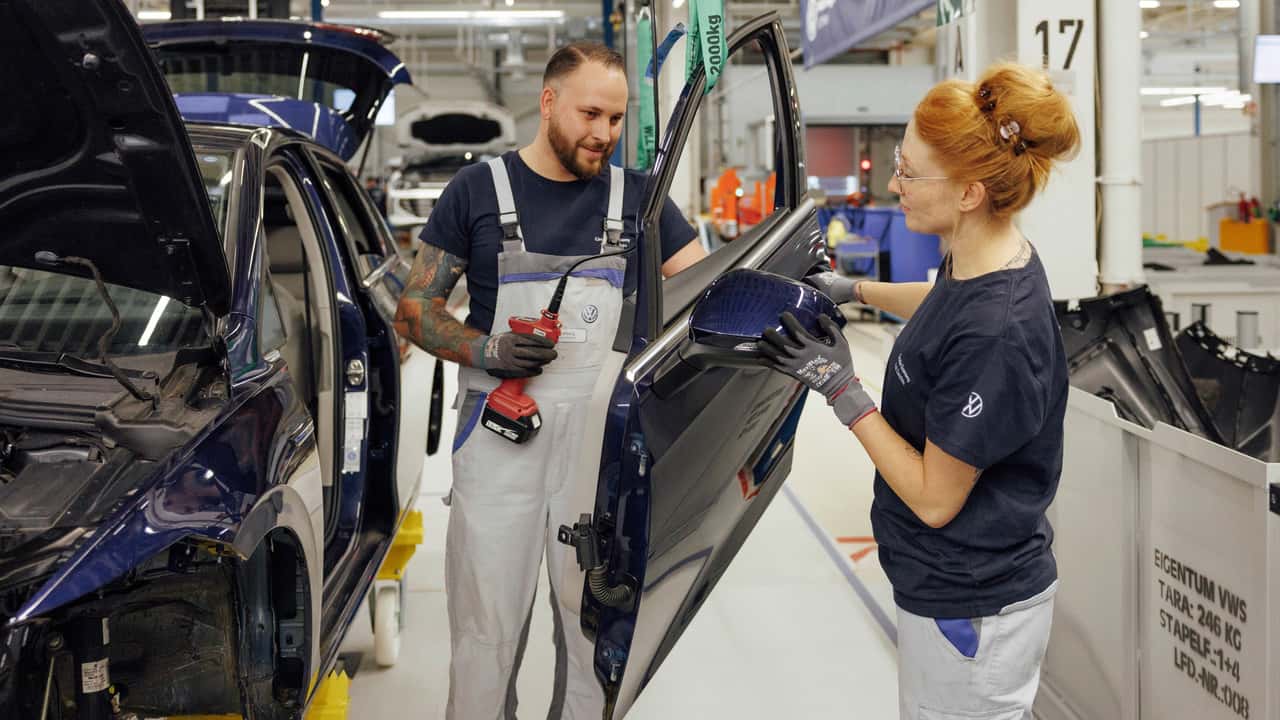

- VW plans to dismantle 4,100 vehicles annually at Zwickau from 2027, recovering reusable parts and raw materials.
- Selling recovered original parts could lower repair bills and keep older cars from becoming economic write-offs.
- The recycling business could eventually support 1,000 jobs, but Zwickau’s future beyond 2031 remains uncertain.
Volkswagen has spent years converting its Zwickau factory to build electric cars, and now only electric cars roll off its production lines. But now it has received a new assignment: taking cars apart. The German plant has opened an industrial dismantling line, adding a new revenue stream.
Zwickau became VW’s electric manufacturing hub through a €1.2 billion conversion that began in 2018. ID.3 production started in November 2019, the last combustion car followed in June 2020, and the transformation was completed in January 2022 with the ID.5. Retooled production lines, extra automation, and extensive employee training now enable the factory to build six MEB-based EVs for Volkswagen, Audi, and Cupra.
The new eight-stage dismantling line will initially handle preproduction vehicles, but will eventually also handle cars at the end of their life. From 2027, it will process 4,100 vehicles annually across two shifts, employing 100 workers who were retrained for the new role. Construction and approvals took nine months, finishing three months early; VW says it could reuse manufacturing equipment to cut costs.
Gallery: VW Zwickau Dismantling Line


The automaker says it has been selling usable original parts recovered at Zwickau since July, with doors, bumpers, motors and transmission components reportedly in especially high demand. They’re available through its dealer and service networks, independent workshops and parts retailers.
The idea is to make repairs affordable enough to keep older cars on the road instead of writing them off. The dismantling line initially handles pre-production vehicles, although VW doesn’t identify which cars supplied the parts already sold. It also hasn’t disclosed prices, sales volumes, warranty terms, or how it inspects components before resale.
Material recovery is another money-making opportunity. Separating plastics before recycling helps preserve their usefulness for new components. VW says plastic recovered from one vehicle could contribute recycled material to three new cars (not all of it, though).

VW is also looking to expand its recycling business and plans to invest up to €90 million, with the Saxony government pledging €10.7 million, and it could eventually support 1,000 jobs. Zwickau has no vehicle production planned beyond 2031, though, so this new recycling line still leaves its long-term future uncertain.
That uncertainty comes as Volkswagen’s rising EV sales are putting pressure on its profit margins, because its electric models still earn less than combustion cars. The squeeze has also prompted it to pause development of the upcoming electric Golf until it can accommodate the investment. For now, dismantling remains a business whose profitability at scale needs proving, and it’s unclear if this can generate enough work (and profit) to really matter for the Zwickau plant.
VW hasn't said the operation will be limited to EVs, though, and the photos it published seem to suggest otherwise. At least one of the cars pictured (the dark blue one) appears to be a Golf, although the captions don’t identify the models. Zwickau may build only electric cars, but its new used parts business looks set to cater to a broader crowd to maximize revenue potential.
RECOMMENDED FOR YOU
Volkswagen Can't Afford Its Upcoming Electric Golf Right Now
Rivian's Charging Network Grew 39% In A Year
Volkswagen's EVs Are Selling Like Crazy. That's Actually Hurting Its Profits
AI-Powered Coffee Runs And Service Visits Are Coming To Rivians In 2027
VW's First Car Made With Xpeng Isn't Popular. Here's Why It Matters
One Year Without EV Tax Credits: 4 Key Takeaways
VW Will Automatically Limit Some ID.4 Batteries To 80% Charge This Week Unless Owners Opt Out