
Mercedes Boss Says The Auto Industry Went 'Too Far' With Removing Buttons
The company's CEO said it is reintroducing "the most sensible buttons."
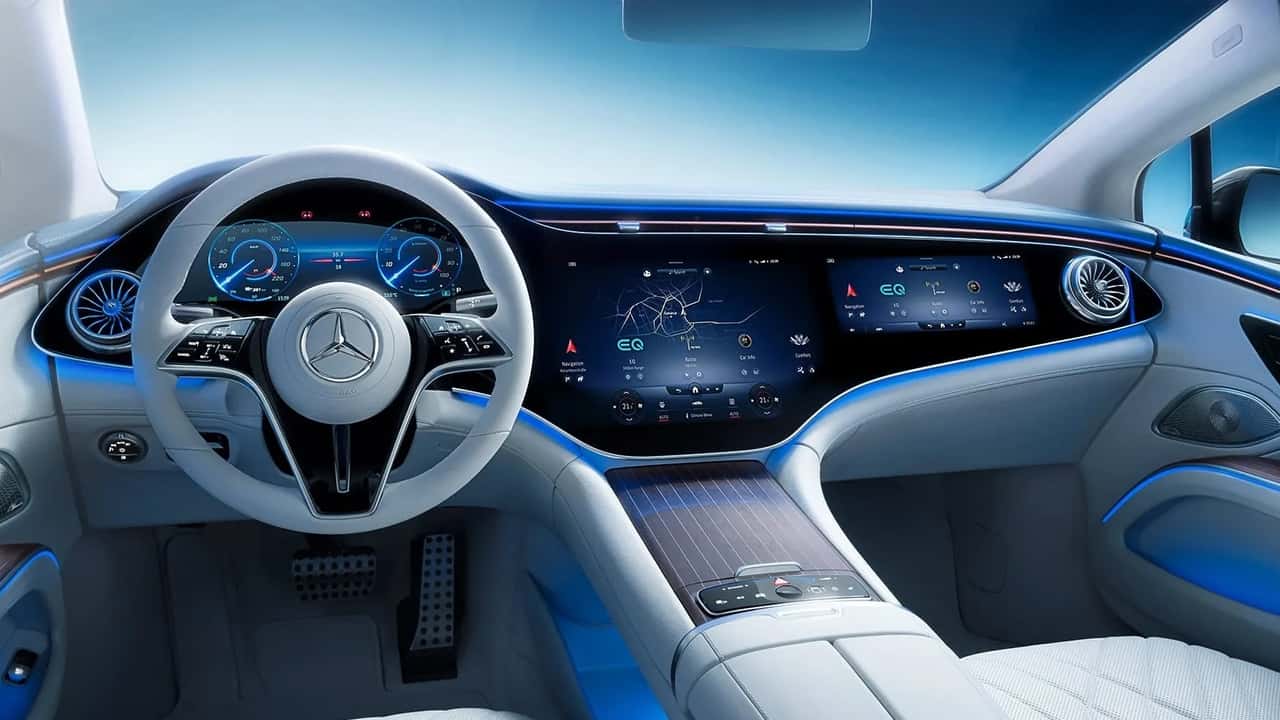

- Mercedes-Benz admitted that it went a little too far with removing buttons from its interiors.
- The automaker's CEO says that it will bring back "sensible" buttons to its future cars.
- Those giant 55" screens, though? They're not going anywhere.
There have been two related design trends in recent years that irked customers more than maybe anything else: giant tablet-sized displays in the center of the dash and the removal of physical buttons.
The Germans were no stranger to this trend. Brands began racing to see who could fit the largest screen in a dashboard while also integrating usable controls into it. Mercedes-Benz may have won that race from a pure screen-size perspective, but its CEO also acknowledges that it may have gone a bit "too far." Not with screen size, but in removing physical buttons and replacing them with on-screen controls.

"The industry as a whole might have gone a little bit too far" towards digital controls, Mercedes-Benz CEO Ola Kallenius said in an interview with AutoCar.
He said Mercedes was already working on introducing more buttons. The new CLA has a physical volume knob on the steering wheel, instead of a touch-sensitive slider. (But it doesn't have the ability to skip a track from the steering wheel, something you can read more about in Mack Hogan's review.)
"Sometimes you get a bit ahead of yourself and do technology for the sake of technology and maybe forget a little bit about the customer," Kallenius said. "So from now on, you will see us reintroduce the most sensible buttons."
That's a sentiment shared by quite a few automakers. Volkswagen, Hyundai, and Porsche are all backing away from screens and inching toward more manual controls. Scout Motors is building a whole brand around a retro vibe and, yes, a generous assortment of satisfying buttons and switches.
The 2028 Mercedes-Benz GLA comes with a wall of screens.
Safety advocates are getting behind the trend too, with testing programs like Europe's New Car Assessment Program (NCAP) penalizing automakers for ditching certain physical controls. Now the Germans are pledging to bring back at least some knobs, levers, and dials.
This doesn't mean that everything is going back to looking like the tactile interior found in a W123-era land-yacht. Based on what Kallenius said above, not all buttons are making a comeback (just the "sensible" ones). He also noted that Mercedes is still working to improve its voice control systems, which is a route that many automakers like Tesla and Rivian are focusing on today.

Sure, there's a futuristic look to Tesla's minimal interface—or Mercedes-Benz's 55-inch hyperscreen—that makes sitting in the driver's seat feel like boarding a spaceship. But every time you fiddle around with menus trying to find a setting that used to be a physical switch to toggle, you start to wonder whether or not the look is worth the feel. Increasingly, it looks like car companies are wondering the same thing.
More EV Tech News
RECOMMENDED FOR YOU
AMG’s New Electric SUV Has 1,153 HP. The Charging Specs Are Even Wilder
Chinese Auto Giant Chery Wants To Crack The U.S. Market. It Thinks Detroit Could Help
I Drove Mercedes’ New EV With A Silicon Anode Battery. The Future Is Here
This $400,000 RV Delivers EV Camping Without The Range Anxiety
I Tested New York City’s First Lamppost EV Charger. It’s A Game Changer
Slate’s Bare-Bones Electric Truck Surprised This Early Reviewer
The Longest-Range EVs You Can Buy In 2026