
I Saw Ferrari’s First EV In The Flesh. Here’s My Honest Take
The Ferrari Luce is here. The company's first EV costs 550,000 euros ($640,000) and looks like no Ferrari before it.
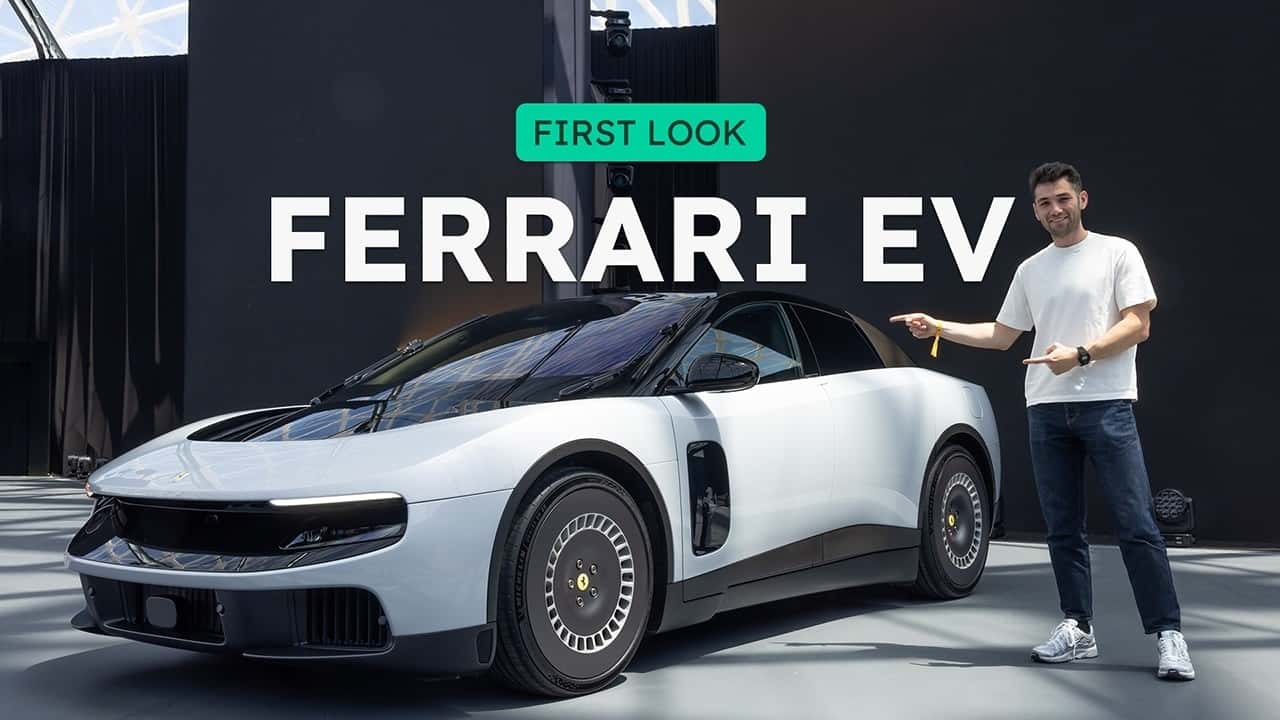

People of the internet, fire up your keyboards. Ferrari just launched its first-ever electric car, and it’s not what anybody expected.
For a while now, Ferrari has been trickling out details about its plunge into the EV world. Last year, we got a glimpse into the battery and powertrain technology under the hood. In February, the sports-car maker showcased the building blocks of a switch-heavy cabin designed by iPhone-design legend Jony Ive. But until now, nobody knew how exactly all of that would come together, or even what general form factor the vehicle would take. Pretty much all we knew for sure is it would have four doors, ruling out the notion of a classic Ferrari supercar.

Ferrari Luce
On Sunday, when I walked into the event space where Ferrari was showing off the Luce to the media for the first time, I thought I’d see a curvaceous crossover like the Purosangue. Or at least something in that vein. Boy, was I wrong. The Luce is a liftback sedan unlike any Ferrari before it and, as far as I can tell, unlike anything else on the road today. And Ferrari is well aware that it’s going to be divisive.
“The reaction we’re going to have among our customer base is going to be very much mixed,” Emanuele Carando, the automaker’s global head of product marketing, told me. “People will love it, and people will hate it.”
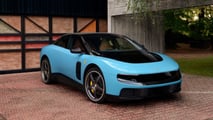
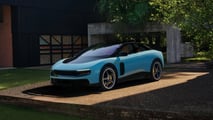
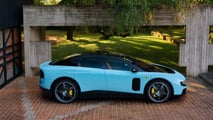
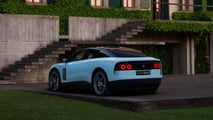
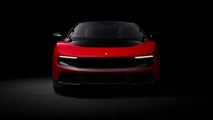
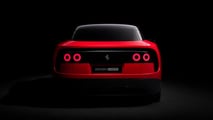
Launching an electric car is a massive gamble for a company so deeply intertwined with screaming gas engines. On top of that, the Luce arrives at a time when other ultra-luxury carmakers have pulled back their previously ambitious EV plans.
It may not be for everybody. But between the Luce’s distinctive design, its powertrain packed with party tricks and over 1,000 horsepower, and its refreshingly analog cockpit, one thing is clear: Ferrari doesn’t just want to make an EV—it wants to make a splash.
[Full disclosure: Ferrari covered my travel, lodging, and meals in Rome, Italy, so I could see the reveal of the Luce]
The Ferrari Luce’s Design
To my eye, the Luce’s crisp lines and straightforward design give it the tech-product vibe you get from a Tesla or a Rivian. Up front, there’s a giant vent in the nose that smooths the air going over the car. Ditto for the windshield wipers, which lie vertically instead of cross-wise to improve the car’s aerodynamics. A turbine-style wheel option that’s largely a flat disc completes the bold look.
The Luce is only the second model out of Maranello to feature four doors, and like the Purosangue before it, this car has coach doors. Pull the rear door handle for a moment, and it’ll swing out electronically. This is also Ferrari’s first vehicle with five seats, something it attributes to the unique packaging advantages of an EV. According to the sports-car maker, only with EV technology could it make a five-seater that meets the performance requirements of a Ferrari. Ferrari says that, plus its largest cargo area ever (21 cubic feet) makes the Luce its most every-day-drivable vehicle yet.
Ferrari Luce
I think the real triumph here is the interior, which reads as a total rejection of the screen-ificiation of cars. Sure, there is a touchscreen front and center, with a slick user interface. But the Luce also packs in a wide array of satisfying switches and clicky toggles for the drive modes, windshield wipers, climate controls, and more.
It comes across clean, modern, and, yes, distinctly Apple-like. Especially when you consider the sheer amount of anodized aluminum—available in silver, gray, and gold finishes—and the soft curves framing the gauge cluster and central screen. Another clever blend of the physical and digital: A clock embedded into the top right of the touchscreen features real hands on a digital dial. With the click of a button, it can turn into a compass or a stop watch for tracking lap times.
It's easy to see why the Luce might upset the Ferrari hardliners; it doesn't look anything like other Ferraris and, arguably, lacks some of the drama of those models. But I think it looks great, and the photos don't do it justice. The Luce is unashamed, interesting, and different.
Ferrari Luce Battery & Powertrain
The Luce’s 122-kilowatt-hour battery (with about 112 kWh of usable capacity) uses SK On pouch cells and provides enough energy for an estimated range, on Europe’s WLTP cycle, of 530 kilometers (329 miles). Knock that down a bit to account for the less generous EPA testing procedure, and you’re likely left with a range rating in America of somewhere between 250 and 300 miles. Peak charging power comes in at 350 kilowatts.
None of those numbers are spectacular in themselves—particularly in a world where 400 miles of EPA range and 400-kilowatt charging are quickly becoming table stakes for luxury offerings from the likes of BMW and Porsche. Mercedes-Benz’s own new super sedan, the Mercedes-AMG GT, boasts over 1,000 horsepower, unheard-of (in the U.S.) 600 kW charging, and 700 kilometers (435 miles) of WLTP range.
Ferrari Luce
It’s possible things will change. Ferrari says the Luce’s battery modules, which combine to form a structural part of the chassis, are designed to be replaced. Not only for repairability, but so that Luce buyers can benefit from future advances in Ferrari battery tech.
In any case, Ferrari says the real focus wasn’t on making the longest-range or quickest-charging EV out there. What 550,000 euros will buy you when the sedan goes on sale later this year is a true Ferrari that’s thrilling to drive in new ways thanks to EV technology. That’s the pitch from the automaker’s top brass, anyway.
“A Ferrari has never been defined by what powers it,” John Elkann, Ferrari’s executive chairman, said during a reveal event on Sunday. While a novel breed of Ferrari might not persuade the purists, Ferrari thinks it has the potential to attract brand new buyers to the brand.
Ferrari Luce
Four independent permanent-magnet motors—one at each wheel—put out a combined 1,035 horsepower and 730 pound-feet of torque and can propel the Luce to 62 mph in 2.5 seconds. Plus, the EV has rear-wheel steering and an active suspension system derived from the F80 supercar. Ferrari says the real magic is in how all of this comes together; the car constantly modulates the torque, regenerative braking, and suspension at each wheel in a way that wouldn’t be possible in a combustion car.
On top of that, the driver can control some of this stuff manually. The left paddle behind the steering wheel dials up the regenerative braking, which is fairly common. But the right paddle lets the driver click through increasing levels of power, kind of like shifting up in gears in a manual car. The automaker says that instant torque at any speed makes EVs jerky and tough to manage. But this way, the driver can unlock more punch in a more gradual, natural way, and have some extra fun while doing it.
Ferrari Luce
I’m eager to try that out and see how it feels. But let’s be honest, what I think about a new Ferrari doesn’t matter much. Unless I win the Powerball or go back in time and become the real Satoshi Nakamoto, I’m not buying one. Mainly, I’m curious to see if a driving experience reinvented by EV motors can win over the hardcore performance enthusiasts.
Lamborghini pulled the plug on its first electric car earlier this year, citing low demand. But clearly Ferrari still sees potential there. It’s still an open question whether supercar companies can navigate an electric future and take their fans along for the ride. The Luce could show the world whether that’s possible. It may just need to brave a few nasty internet comments along the way.
Contact the author: Tim.Levin@InsideEVs.com
More EV News
RECOMMENDED FOR YOU
The Ferrari Luce EV Proves The Haters Wrong
Tesla’s ‘Flying Roadster’ May Debut This Month Alongside A Street Legal Version
Ferrari Is Auctioning Off The First Example Of its First Electric Car. How Much Do You Think It'll Fetch?
Here's How Zoox's Robotaxi Safety Testing Will Work
This Chinese Electric SUV Just Recreated Mercedes’ Most Controversial Ad
Used Tesla Model S Prices Have Fallen Dramatically. But Their Batteries Are Holding Up Great
The Porsche Taycan’s Days May Be Numbered: Report