Home
Ferrari
News
Ferrari Wanted To Make An EV. Then They Decided It Won't Be A Supercar
Ferrari says it wants any new technology to be a game-changer in its segment. But in the supercar world, EV tech isn’t there yet.
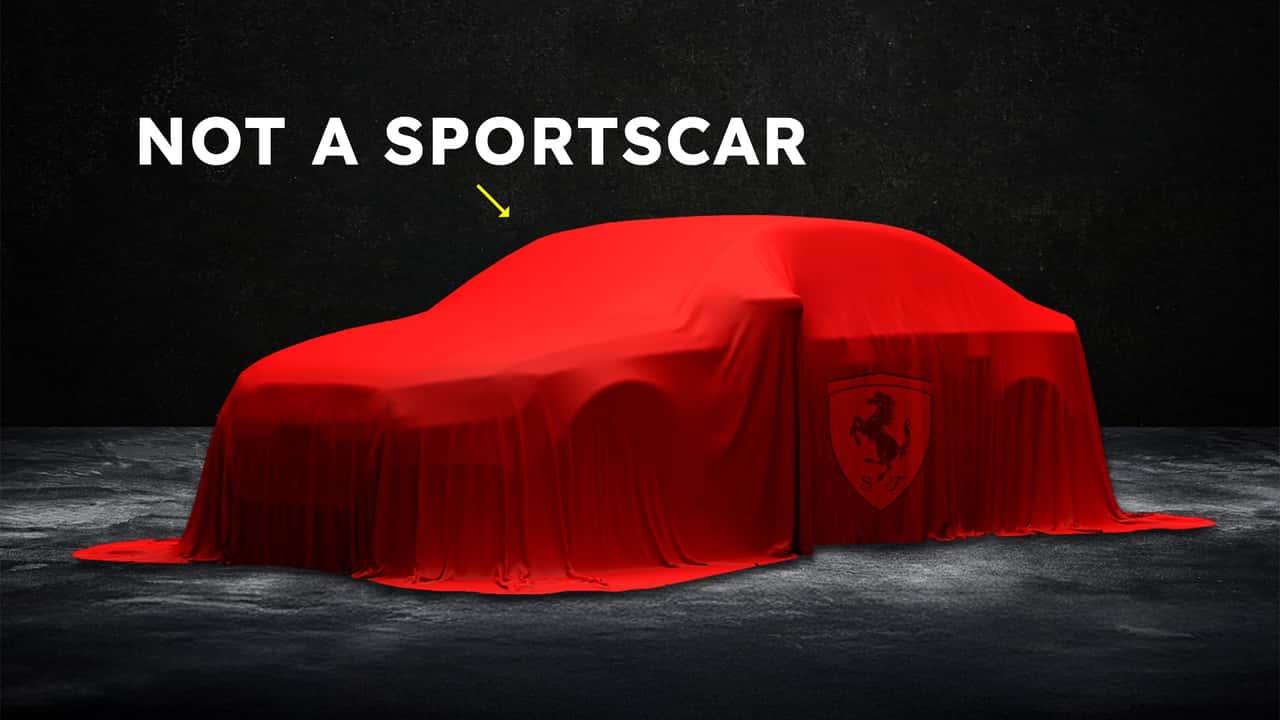
Photo by: Ralph Hermens
Mack Hogan 
By: Mack Hogan
Oct 12, 2025 at 1:00pm ET
Add InsideEVs as a preferred source in Google
- (https://twitter.com/intent/tweet?url=https%3A%2F%2Finsideevs.com%2Fnews%2F775482%2Fferrari-elettrica-ev-supercar-concept%2F&text=Ferrari%20Wanted%20To%20Make%20An%20EV.%20Then%20They%20Decided%20It%20Won%27t%20Be%20A%20Supercar&via=InsideEVs)
- copy
Share
Comment
While Ferrari is cagey about what exact form its first electric car will take, executives made one thing clear: It will not replace supercars like the 296 or 12Cilindri.
“This car is not something that replaces another car or product. It is an addition,” Ferrari Chief Product Development Officer Gianmaria Fulgenzi told InsideEVs this week at a tech preview event for its upcoming EV, tentatively dubbed the Elettrica.

Stay informed with our newsletter every weekday
back
Subscribe For more info, read our Privacy Policy & Terms of Use.
In comments to reporters during an event at the company’s new sustainable factory, Ferrari CEO Benedetto Vigna also emphasized that the company must master “all technologies.” But Vigna and Fulgenzi also noted that, if Ferrari is going to bring a new technology to a segment, it has to be setting a new benchmark in its class. And, according to Fulgenzi, EV technology is not quite ready to redefine the supercar market.
“We saw that with the best components and technical possibilities in 2026 or 2028 for the market, in terms of dimensions, to be the best car with an electric powertrain, we see that an electric vehicle for a two-seater sports car wasn’t a game-changer in terms of architecture and base physics,” he said.
He’s not alone in this opinion. Our colleagues at Motor1 recently wrote that “nobody wants an electric supercar,” based partly on comments from Mate Rimac. His company, Rimac, vaulted onto the scene with a 1,914-horsepower hypercar. But it struggled to attract customers.

Ferrari Top Red
Photo by: Ralph Hermens
Part of that is the new brand, but the other part is the “base physics” Fulgenzi referred to.
While electric cars have one main physics advantage—effortless, instant torque with basically unlimited power—they have an arguably bigger disadvantage. They are heavy. Lightweighting technology is crucial in the supercar space, because it allows you to make a car that handles better, feels more lively and responds more aggressively. It’s also much harder to make a heavy car as communicative as a light sports car, as the heavy weight of electric performance cars necessitates more power steering assistance and heavier-duty suspension components.
It’s not impossible to make a great-driving EV. But the most engaging EV I’ve driven—a Taycan Turbo—does not hold a candle to a gas Mazda Miata or hybrid Ferrari 296. The upcoming electric Porsche 718 Boxster and Cayman may change that, but for now, there’s a reason why Porsche’s first EV was a sedan, and why other supercar manufacturers like Lamborghini and McLaren are not diving into the electric supercar market. Ferrari is reading from the same tea leaves.
The company’s choices are “driven by our customers,” Fulgenzi said. “Our customers so far love for a special kind of car, a two-seater, especially with an internal combustion engine. With a V-12, for example, in the front.”
That’s why the company is committed to pure internal combustion, hybrid and electric products for the “foreseeable future,” its CEO says. For now, it’s applying pure electric technology to the segment where it makes the most sense: larger grand touring cars.
Gallery: Ferrari Elettrica Tech Workshop
39
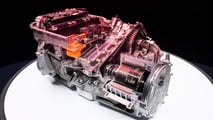
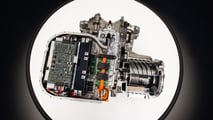
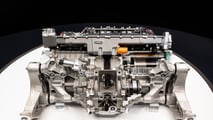
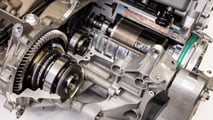
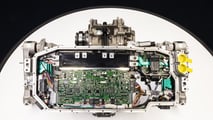
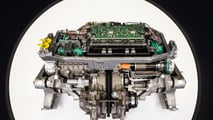
Source: Ferrari
The company’s choices are “driven by our customers,” Fulgenzi said. “Our customers so far love for a special kind of car, a two-seater, especially with an internal combustion engine. With a V-12, for example, in the front.”
That’s why the company is committed to pure internal combustion, hybrid and electric products for the “foreseeable future,” its CEO says. For now, it’s applying pure electric technology to the segment where it makes the most sense: larger grand touring cars.
“You can have a big car with the same agility of a car that’s smaller, so you can enjoy four seats instead with the same agility and enjoyment of a two-seater,” Fulgenzi told me.
But with today’s technology, the benefits of this kind of setup diminish as the car gets smaller. While the Elettrica’s main goal will be to disguise and work around its 5,000-plus-pound weight, the sports cars are focused on eliminating weight entirely.
“You have to do this with [dimensions] that are, let me say, big enough,” Fulgenzi said. “Otherwise the possibility to improve the performance or the driving thrills are strict. Very, very poor, let me say.”
Ferrari, however, is no stranger to electrification. Its F80 is a limited-production hybrid supercar, the latest of many since the LaFerrari launched in 2013.
Photo by: Ferrari
The executive stopped short of blaming any specific limiting factor of EV design. But based on the Elettrica’s 122-kilowatt-hour battery and 300-mile range, the company is clearly as concerned as mainstream manufacturers with delivering enough range. If that’s a requirement, then it’s clear where the problem lies.
“[Fulgenzi] was clear. This is not a supercar. Because the battery chemistry is not there to make a supercar,” Vigna, the CEO, told reporters.
When will it get there? Neither executive was clear. Fulgenzi admitted that it was possible without a solid-state battery. And a slide on a presentation seemed to imply that the company’s new V-8 two-door grand tourer, the Amalfi, could be succeeded by an electric car. But nobody wants to say when.
What do you think?
View
Comments
“We will see,” Fulgenzi said.
Contact the author: mack.hogan@insideevs.com
More Ferrari News
Ferrari’s First Electric Car Is Coming—And It Will Be A Loud, Quad-Motor Demon
Guess Which Supecar Maker Is Building An Electrified SUV (And Sedan): Report
Ultra-Luxury Brands Were Early Promoters Of EVs. Here's Why That's Changing
Xiaomi's Groundbreaking SU7 Was Spotted At Ferrari HQ. Could It Be A New Benchmark?
We want your opinion!
What would you like to see on Insideevs.com?
Take our 3 minute survey.
- The InsideEVs team
Share this Story
- (https://twitter.com/intent/tweet?url=https%3A%2F%2Finsideevs.com%2Fnews%2F775482%2Fferrari-elettrica-ev-supercar-concept%2F&text=Ferrari%20Wanted%20To%20Make%20An%20EV.%20Then%20They%20Decided%20It%20Won%27t%20Be%20A%20Supercar&via=InsideEVs)
- copy
GO TO COMMENTS
(
)
Got a tip for us? Email: tips@insideevs.com
View all comments ( )
Trending
Kia EV3 Lease Deals Are Here, And It’s Cheaper Than The Chevy Bolt And Nissan Leaf
I Let Android Auto Plan My EV Roadtrip. Here’s How It Worked
This Chevy Bolt Has 470,000 Miles. Here’s How Much A New Battery Was
Here's What It's Like To Take Delivery Of A Rivian R2
latest articles
- How Much Range Do EVs Lose When Parked? (And How to Stop It) Oct 20 - EV 101 -
- This Chinese EV Is Now Made In Europe. More Are Coming Oct 20 - News -
- GM Is Closing Its Detroit EV Battery Plant Oct 20 - Industry -
- The 2027 Lexus NX Plug-In Hybrid Gets A Bigger Battery And Fast Charging Oct 20 - Official -
- Kia EV3 Lease Deals Are Here, And It’s Cheaper Than The Chevy Bolt And Nissan Leaf Oct 20 - Pricing -
- Here's What It's Like To Take Delivery Of A Rivian R2 Oct 19 - News -
- Used EVs Hit A Record Share Of Overall Used Car Sales In September Oct 19 - Sales -
RECOMMENDED FOR YOU
Lucid Overhauled The Air's Infotainment. You Might Need $950 Hardware To Get It
Here's What It's Like To Take Delivery Of A Rivian R2
Mercedes Taps Wayve For Tesla FSD-Like System Within 2 Years
Used EVs Hit A Record Share Of Overall Used Car Sales In September
Critics Slammed Ferrari's Luce EV. Someone Just Paid $40 Million For The First One
Your EV's Range Is Usually Set In Stone. Not This One
The Ferrari Luce EV Proves The Haters Wrong