
These Performance EVs Were Driven Until They Died. Here’s How Far They Went
The Tesla Model S Plaid, Lotus Emeya R and Audi RS E-Tron GT Performance have some optimistic range estimates.


- Carwow drove three performance EVs in the real world until they ran out of battery.
- The Tesla Model S Plaid, Audi RS E-Tron GT Performance and Lotus Emeya R were put to the test.
- The EV with the most range was a little surprising.
What does an electric car worth over $100,000 bring you? It could be extremely fast, it could be extremely luxurious, or it could be both. When it comes to driving range, though, you could be in for a surprise.
Let’s take three of the fastest EVs on the market today: the Lotus Emeya R, the Audi RS E-Tron GT Performance, and the original electric tire shredder, the Tesla Model S Plaid. All three were fully charged and then driven in real-world conditions by our friends at Carwow to see how far they would drive while in Sport mode. The Lucid Air Sapphire was not part of the test.
To be blunt, none of the performance EVs managed to reach their advertised range figures, be it on the EPA cycle or the more lenient WLTP procedure. The Tesla Model S Plaid has an EPA-estimated range of 348 miles, while the Audi RS E-Tron GT Performance is rated at 278 miles. Their WLTP ratings are more generous, at 373 miles and 364 miles respectively.
More Stuff Like This
The Lotus Emeya R, meanwhile, doesn’t have an EPA rating. It does, however, have a WLTP range rating of 301 miles, which would translate to a theoretical EPA rating of 210 miles, seeing how the difference between the two rating systems is usually around 30%.
Performance-wise, all three are massively impressive. They have over 900 horsepower, nearly 100-kilowatt-hour batteries, and can go from zero to 60 miles per hour in under three seconds. But this is about the driving range.
With a full battery and an ambient temperature of 50 degrees Fahrenheit (10 degrees Celsius), the three EVs set off on the United Kingdom’s highways. The first to run out of battery was the Lotus Emeya, which managed a disappointing 193.5 miles and an energy efficiency of just 2.2 miles/kilowatt-hour.

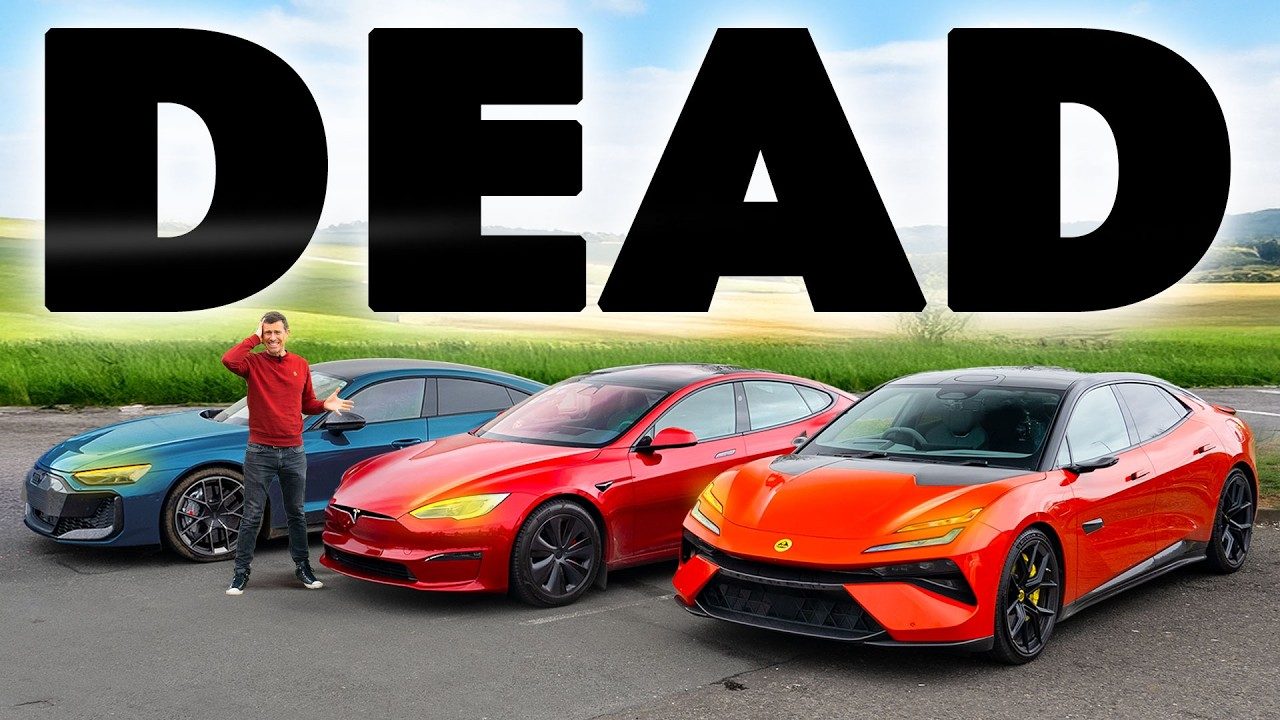
Next was the Audi, which traveled 258 miles and averaged 2.6 miles/kWh, while the aging Tesla Model S Plaid couldn’t move under its own power after 295 miles, averaging 3.2 miles/kWh. That’s impressive, considering the Model S is the oldest and least expensive out of the group.
It’s worth remembering that the test was rather unusual because the cars were driven in their Sport setting, and not the most efficient driving mode. Maybe the results would have been different if the default mode had been used, maybe not. In an internal combustion car, one expects to get worse fuel economy in Sport mode than in the normal mode.

RECOMMENDED FOR YOU

I Drove An Original Tesla Model S To See If It's Still Worth Buying In 2026
Study: DC Fast Charging Satisfaction Is Up, And Ionna Takes The Top Spot
Someone Is Already Trying To Flip One Of The Last Tesla Model S's Built. The Price Is... Ambitious
Here's A Mechanic's Take On The Subaru Trailseeker
Tesla Roadster Is Supposedly (Once Again) Coming 'Very Soon'
Mitsubishi Taps iPhone Manufacturer For its Next EV
Tesla Recalls 20,000 Cars Over Uber-Bright Headlights