Home
Tesla
News
Tesla Megapacks Help Alaska’s Kenai Peninsula Reduce Its Reliance On Fossil Fuels
The Megapack battery energy storage system will have to withstand temperatures as low as -30°F (-34.4°C).

01:15
Mark Kane 
By: Mark Kane
Mar 9, 2022 at 2:58pm ET
Add InsideEVs as a preferred source in Google
- (https://twitter.com/intent/tweet?url=https%3A%2F%2Finsideevs.com%2Fnews%2F572411%2Ftesla-megapacks-alaska-kenai-peninsula%2F&text=Tesla%20Megapacks%20Help%20Alaska%E2%80%99s%20Kenai%20Peninsula%20Reduce%20Its%20Reliance%20On%20Fossil%20Fuels&via=InsideEVs)
- copy
Share
Comment
Homer Electric Association (HEA) recently launched a large battery energy storage system (BESS) at its Soldotna Generation and Substation Facility in Soldotna, Alaska, using a battery system provided by Tesla.
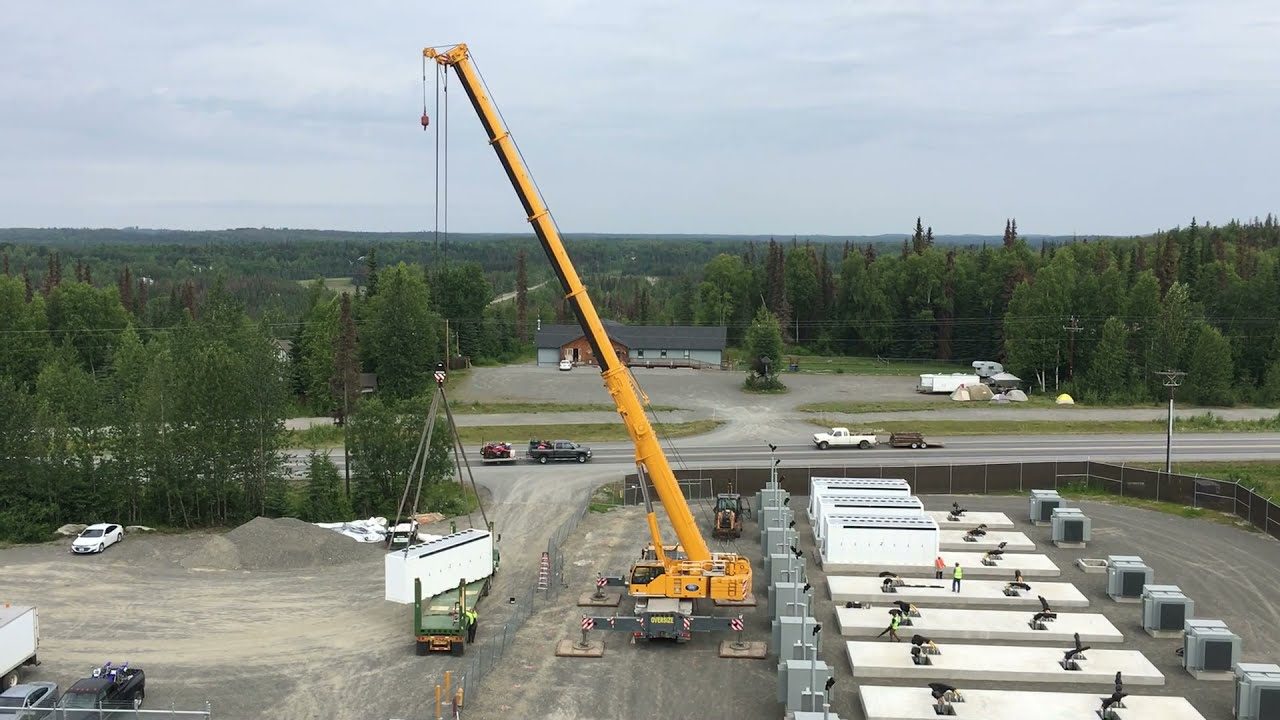
It consists of 37 Tesla Megapack containers (52,000 pounds / 23,587 kg each), and according to HEA, it has a power output of up to 46.5 MW.
The battery capacity is estimated at 93 MWh, which means that once fully charged, it theoretically would be able to work at full power for two hours (or proportionally longer at lower power). Of course, we know that at a low state of charge, the power output usually happens to be limited.
In 2021, Tesla launched its first Supercharging station in Alaska (also in Soldotna).
This new BESS is expected to significantly strengthen Alaska’s Kenai Peninsula grid and reduce the community’s reliance on fossil fuels to power the turbines.
According to Tesla, the area has historically relied on gas turbines to distribute power to the community up to four months out of the year.
The temperatures might be as low as -30°F (-34.4°C), but the Tesla Megapacks were designed to provide grid stability "even in freezing temperatures."
"The new battery energy storage system will be used to balance system demands with its greater ability to deliver or receive energy (up to 46.5 MW per hour). This also allows base loaded thermal units to be run more efficiently while allowing for increased integration of utility scale non-dispatchable (energy generation that can’t be scheduled) renewable energy sources (i.e., wind & solar)."
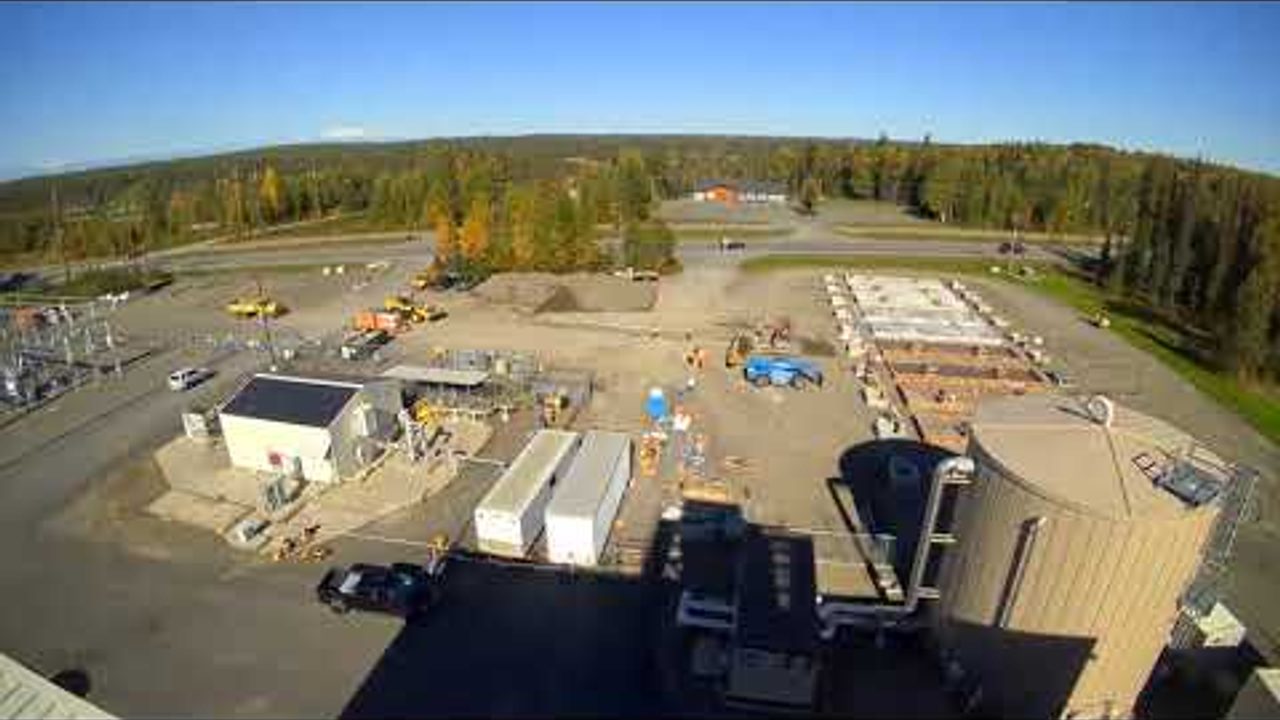
HEA shared interesting videos last year about the project, showing preparations and installation of the Megapacks. According to the company, its crews spent the better part of 2021 preparing for delivery of the batteries:
What do you think?
View
Comments
In 2021, Tesla has deployed (fully completed projects) almost 4 GWh of energy storage systems (Powerwall, Powerpack and Megapacks), which is 32% more than in 2020.
The company plans to build a new 40 GWh Megapack factory in California, and switch its energy storage systems to iron-based batteries, aka Lithium Iron Phosphate (LFP).
See also
 Electrify America Installed ESS At 140 Stations: 30 MW Output
Tesla Installed 250,000 Powerwalls Globally
We want your opinion!
What would you like to see on Insideevs.com?
Take our 3 minute survey.
- The InsideEVs team
Share this Story
- (https://twitter.com/intent/tweet?url=https%3A%2F%2Finsideevs.com%2Fnews%2F572411%2Ftesla-megapacks-alaska-kenai-peninsula%2F&text=Tesla%20Megapacks%20Help%20Alaska%E2%80%99s%20Kenai%20Peninsula%20Reduce%20Its%20Reliance%20On%20Fossil%20Fuels&via=InsideEVs)
- copy
GO TO COMMENTS
(
)
Got a tip for us? Email: tips@insideevs.com
View all comments ( )
Trending
The Best Affordable Electric Cars In 2026: Cheap, Reliable Options For Everyone
Can The BMW iX3 Take Down The Tesla Model Y L And Rivian R2?
Kia EV3 Lease Deals Are Here, And It’s Cheaper Than The Chevy Bolt And Nissan Leaf
Here's What It's Like To Take Delivery Of A Rivian R2
latest articles
- Google Maps Is Getting Gemini AI In CarPlay Oct 21 - Software -
- The Best Affordable Electric Cars In 2026: Cheap, Reliable Options For Everyone Oct 21 - Buying Advice -
- Electrify America’s Largest EV Charging Station Is Missing One Big Thing Oct 21 - Charging -
- Can The BMW iX3 Take Down The Tesla Model Y L And Rivian R2? Oct 20 - News -
- Waymo Plans To Have 20,000 Cars By The End Of 2027 Oct 20 - News -
- The Boring Company Uses Tesla Model 3 Sleds To Shuttle Shipping Containers Through Its Tunnels Oct 20 - News -
- How Much Range Do EVs Lose When Parked? (And How to Stop It) Oct 20 - EV 101 -
RECOMMENDED FOR YOU
The Best Affordable Electric Cars In 2026: Cheap, Reliable Options For Everyone
Google Maps Is Getting Gemini AI In CarPlay
The Boring Company Uses Tesla Model 3 Sleds To Shuttle Shipping Containers Through Its Tunnels
Electrify America’s Largest EV Charging Station Is Missing One Big Thing
Used EVs Hit A Record Share Of Overall Used Car Sales In September
Can The BMW iX3 Take Down The Tesla Model Y L And Rivian R2?
The Roadster Will Have Tesla’s Most Advanced Battery Pack Yet