Home
Jeep
Cherokee
Reviews
I Drove Jeep’s First Proper Hybrid. It Feels More Like A Toyota, And That's Not A Coincidence
Jeep has been missing out on the hybrid boom. The new Cherokee fixes that with help from a key rival.
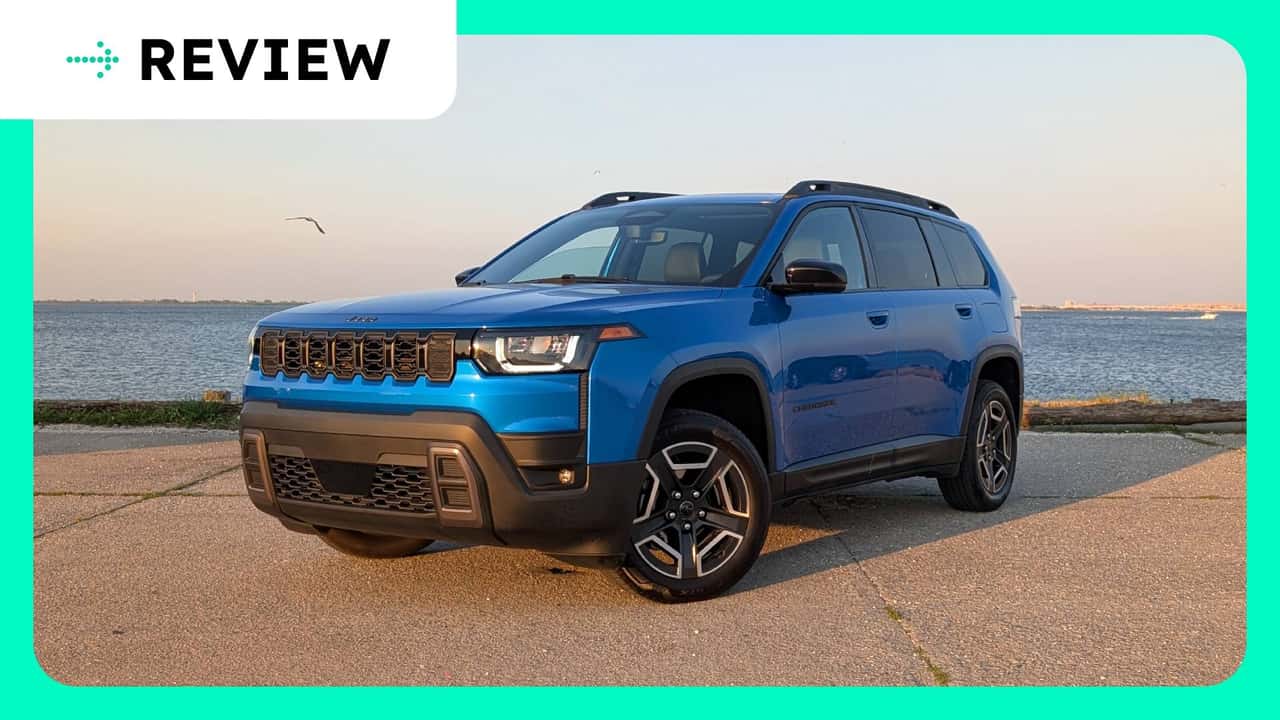
Photo by: Suvrat Kothari
Suvrat Kothari 
By: Suvrat Kothari
Jul 21, at 11:30am ET
Add InsideEVs as a preferred source in Google
- (https://twitter.com/intent/tweet?url=https%3A%2F%2Finsideevs.com%2Freviews%2F802028%2F2026-jeep-cherokee-hybrid-review-toyota-suv%2F&text=I%20Drove%20Jeep%E2%80%99s%20First%20Proper%20Hybrid.%20It%20Feels%20More%20Like%20A%20Toyota%2C%20And%20That%27s%20Not%20A%20Coincidence%20&via=InsideEVs)
- copy
Share
Comment
Imagine showing up to a marathon but waiting until others were halfway to the finish before you even start running. That's basically been Stellantis' approach to electrification. While rivals spent years growing the sales of their hybrids and EVs, the automaker has struggled to find its footing with battery-powered cars. It was aggressive and successful with its plug-in hybrid, only to discontinue all of them earlier this year. Meanwhile, its first wave of long-range fully electric models has stumbled.
But the automaker has finally found an answer to one crucial piece of the electrification puzzle: a conventional hybrid. With the new 2026 Jeep Cherokee, Stellantis is finally embracing a technology that's been proving itself in the U.S. for more than a quarter century.
Gallery: 2026 Jeep Cherokee Hybrid

30

Source: Suvrat Kothari
The Cherokee itself was discontinued in 2023 after dwindling sales and Jeep's decision to make room for a more modern replacement. Now it's back as a hybrid-only SUV that's larger and more sophisticated than its predecessor. It's a fine example of how even a small amount of battery-power can vastly improve a gas car today.
After a week behind the wheel, it's clear the Cherokee doesn't drive like the Jeeps of old. Instead, it feels remarkably close to a Toyota hybrid, and I mean that as a genuine compliment. The hybrid powertrain unlocks a level of efficiency the Cherokee nameplate has never seen in its half-century history. Design, interior, and technology have all taken meaningful steps forward for this new generation, though a handful of quirks remain that Jeep could iron out.
[Full disclosure: Jeep loaned me the 2026 Cherokee for a week in New York City and paid for fuel and tolls.]
2026 Jeep Cherokee Specifications
As-Tested Price $43,590 including destination
Base Price $36,995
Engine 1.6-liter turbocharged 4-cylinder
Transmission CVT
Motor 2 electric motors
Battery 1.03 kilowatt-hours lithium-ion
Efficiency 36 miles per gallon as tested
Output 210 horsepower
Maximum torque 230 pound-feet of torque
Drive Type Standard all-wheel drive
Angle of repose 19.6 degrees
Departure angle 29.4 degrees
Ground clearance 8.0 inches
Towing 3,500 pounds
2026 Jeep Cherokee Design And Dimensions
The Cherokee is new from the ground up, now riding on Stellantis' STLA Large platform. At 188.1 inches long, 74.7 inches wide, and 67.5 inches tall, with a 113-inch wheelbase, it's about five inches longer and roughly an inch wider and taller than before. The wheelbase alone has grown by more than six inches, giving it a substantial road presence and roomy interior.
The boxy design looks clean and confident, carrying itself with far more authority than the old model ever did. It borrows styling cues from the Wagoneer S and the upcoming Recon, both of which are handsome SUVs in their own right.
Black body cladding, skid plates at both ends, and the signature seven-slot grille mean you won’t mistake this for anything other than a Jeep. The standard U-shaped daytime running lights add a modern touch, while the squared-off surfacing gives it a tough look. I also loved the tiny Willys logo stamped onto the wheel center caps—a subtle detail that enthusiasts will appreciate.
Photo by: Suvrat Kothari
2026 Jeep Cherokee Powertrain
The new Cherokee downsizes on displacement and makes up for it with battery power. There’s no big V6 or 2.0-liter options available anymore. Adapted from Peugeot and Citroen models in Europe, the Cherokee now gets a 1.6-liter turbocharged 4-cylinder engine that’s paired with two electric motors and a small 1.03 kilowatt-hour lithium-ion battery. Power goes to all four wheels via a continuously variable transmission (CVT).
The hybrid system comes from Blue Nexus, a joint venture between Toyota suppliers Denso and Aisin. That name might not ring a bell, but Blue Nexus already powers a lot of what we see on the roads today. In addition to Toyota models, it also supplies the hybrid systems for Mazdas and Subarus as well as electric motors on some Suzuki and Isuzu models sold overseas. In other words, this is an extremely reliable and proven hybrid system already powering millions of vehicles globally. Now we'll see if that holds true for Jeep too.
Stellantis is assembling the EP6, 1.6 liter turbocharged 4-cylinder hybrid power unit at its Dundee Engine Plant in Michigan.
Photo by: Stellantis
The setup itself works much like Toyota's familiar Hybrid Synergy Drive. One electric motor starts the engine and also acts as a generator, charging the battery using engine power. The second e-motor can drive the wheels on its own, assist the engine under acceleration, and recover energy during braking to recharge the battery.
Unlike Toyota's all-wheel-drive hybrids, which use a third electric motor to power the rear axle, the Cherokee relies on a mechanical connection. It can disconnect the rear axle during everyday driving, effectively operating as a front-wheel-drive vehicle when extra traction isn't needed to improve efficiency.
2026 Jeep Cherokee Driving Experience, Efficiency
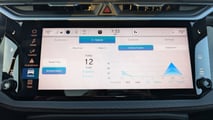
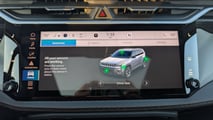
The hybrid powertrain returned an impressive 36 miles per gallon during my testing, most of which was on the highway. The infotainment screen even breaks down how many miles were covered on electric-only power versus with the engine running. In stop-and-go traffic, the electric motors handled about half the driving, sometimes even more.
The system especially shines while puttering along in slow-moving traffic. The brakes constantly recuperate energy, and the electric motors redeploy it, shouldering the burden with the combustion engine. While 210 combined horsepower and 230 pound-feet of torque is nothing to brag about, there’s ample grunt available for highway cruising and overtaking.
Photo by: Suvrat Kothari
While the powertrain feels sophisticated overall, the 1.6-liter engine gets loud and coarse when pushed hard. Sharp throttle inputs are met with a sluggish response and plenty of strained engine noise, exacerbated by the CVT's familiar rubber-band effect. Drive it with a lighter right foot, however, and the powertrain becomes much smoother and more refined.
It’s no match to the RAV4's setup, which uses a 2.5-liter naturally aspirated engine rather than a 1.6-liter turbo. The Toyota is far more polished and also delivers better fuel economy. During my recent testing, it easily topped 45 mpg.
2026 Jeep Cherokee Off-Road Features
The Cherokee is primarily built for the pavement, but it still has some light-duty off-roading chops. I wasn’t able to test its off-road capabilities, but on paper, there's plenty of promise for light trails.
Its best-in-class approach and departure angles of 19.6 and 29.4 degrees, along with a breakover angle of 18.8 degrees, should help it get on and off steep grades easily. Its 8.0 inches of ground clearance is 0.1 inches lower than the RAV4 and 0.3 inches lower than the Hyundai Tucson Hybrid.
Photo by: Suvrat Kothari
The Select-Terrain traction management system is standard across trims, and so are four driving modes: Auto, Sport, Snow, and Sand/Mud. You also get a low gear mode and Selec-Speed control, which basically allow off-roading at a steady and controlled speed—think of it as cruise control for off-roading.
Jeep has confirmed a more capable Trailhawk variant. That trim will go head-to-head with the Toyota RAV4 Woodland and the Subaru Forester Wilderness.
2026 Jeep Cherokee Ride And Handling
The Cherokee’s ride quality leans firmly toward comfort. At low speeds, it soaks up broken pavement with real suppleness, with the soft damping doing exactly what it’s supposed to.
But that same softness introduces a wobbliness more befitting a body-on-frame SUV than a modern unibody crossover. Get on the throttle and the rear squats noticeably. Tap the brakes, and the nose dives just as eagerly. Through direction changes, the Cherokee bobs and weaves with a side-to-side heave that feels kind of old school.
Photo by: Suvrat Kothari
The steering is numb and stays that way through corners, offering little feedback that would let you place the front end with any confidence, even on gentle bends. Both the Tucson and RAV4 feel noticeably more buttoned-down by comparison, with less float and less roll.
2026 Jeep Cherokee Interior And Technology
The cabin is a big step forward over the old Cherokee. The octagonal steering wheel felt great in my palms, although its unconventional shape will likely draw divided opinions. The dashboard mixes soft-touch materials with some hard, cheap-feeling plastics. I particularly liked the metallic finish and tactile feel of the rotary gear knob, start-stop button, and drive mode selector.
Photo by: Suvrat Kothari
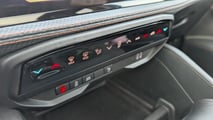
Jeep has retained dedicated climate controls beneath the screen, but they're horrendous touch-sensitive haptic buttons that don't always register inputs. It's not a dealbreaker; owners will eventually learn exactly where to press, but regular plastic buttons would have been perfectly fine here.
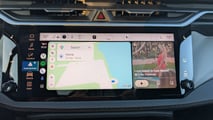
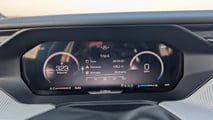
The 10.25-inch digital instrument cluster and 12.3-inch central touchscreen are both crisp and easy to read. Wireless Android Auto connected flawlessly every time, and the infotainment itself was quick and responsive. That said, it's still a generation or two behind the slick software experiences you'll find in Teslas and the latest BMWs and Volvos.
Photo by: Suvrat Kothari
Another annoyance I couldn't ignore was a high-pitched whine that grew louder as I increased the air conditioning fan speed. I suspect it was coming from the AC compressor, which doesn't seem particularly well isolated from the cabin. Turns out I'm not alone in noticing it—Wrangler and Grand Cherokee owners have reported similar complaints on online forums.
Because the air conditioning is actually pretty strong on the Cherokee, I left the fan speed in a lower setting, at which point the noise was a non-issue.
2026 Jeep Cherokee: Worth Considering?
The Cherokee is not in easy company here. It’s going against the world’s best-selling car, the Toyota RAV4. It’s also competing against the hybrid versions of the Hyundai Tucson, Subaru Forester, Mazda CX-50, and the upcoming Nissan Rogue e:Power.
I think it’s the best-looking SUV in this company with its retro-modern charm, but when it comes to sheer value, things get complicated. At a starting price of $36,995 with destination for the base model, it costs about $2,000 more than the RAV4 LE all-wheel drive and roughly $3,000 more than the Tucson Hybrid AWD. Both the Forester and CX-50 have similar starting prices as the Cherokee.
Photo by: Suvrat Kothari
Even the base version is well equipped with things like daytime running lights, phone mirroring, adaptive cruise control, a large central touchscreen, and a digital gauge cluster. But comparable trims of rival SUVs are pretty feature-packed, too. The Cherokee is also a spacious, comfortable, and an efficient daily driver that can also handle mild trails. But again, so can most of its competitors.
What do you think?
View
Comments
Even though Jeep moved at glacial pace on hybrids, the timing of the Cherokee's launch is coincidentally ripe. Hybrid sales were already on a tear in the U.S. over the past few years and now high gas prices from the war in Iran have supercharged them. So even though the Cherokee is not really going to shake up this segment, it indeed is another compelling addition. For the first time in a very long time, Jeep has built a Cherokee that's actually worth considering.
Contact the author: suvrat.kothari@insideevs.com
Related Stories
The 2026 Jeep Recon’s EPA Rating Confirms It’s An Energy Guzzler
Jeep’s Parent Company Is Considering Building Chinese EVs In North America
Jeep And Ram's Owner Partners With Another Chinese Brand To Build EVs In Europe
The Jeep Wagoneer S Is Not Getting A 2026 Model. Here’s Why
Click here to see all articles with lists of the best EVs
We want your opinion!
What would you like to see on Insideevs.com?
Take our 3 minute survey.
- The InsideEVs team
Share this Story
- (https://twitter.com/intent/tweet?url=https%3A%2F%2Finsideevs.com%2Freviews%2F802028%2F2026-jeep-cherokee-hybrid-review-toyota-suv%2F&text=I%20Drove%20Jeep%E2%80%99s%20First%20Proper%20Hybrid.%20It%20Feels%20More%20Like%20A%20Toyota%2C%20And%20That%27s%20Not%20A%20Coincidence%20&via=InsideEVs)
- copy
GO TO COMMENTS
(
)
Got a tip for us? Email: tips@insideevs.com
View all comments ( )
Trending
GM's Next-Generation EV Platform Has 30% Less Wiring And 20% Less Battery
Can The BMW iX3 Take Down The Tesla Model Y L And Rivian R2?
GM's OnStar AI Assistant Debuts In The Cadillac Lyriq
Electrify America’s Largest EV Charging Station Is Missing One Big Thing
latest articles
- Tesla Says 75% Of New Car Buyers Subscribe To FSD In North America Oct 21 - News -
- 'End Of The Year': Tesla Says Cybercab Customer Deliveries Will Begin Soon Oct 21 - News -
- The Midterms Won't Mean Much For EV Policy, Analysts Say Oct 21 - News -
- General Motors Isn't 'Walking Away' From EVs, Top Exec Says Oct 21 - News -
- GM Is Adding Its Own Version Of Tesla's Sentry Mode To Cars Oct 21 - News -
- Rivian Was The Second Best-Selling EV Brand In Q3 2026, But Still Far Behind Tesla Oct 21 - News -
- Chinese Cars Cost Way Less To Build Than European Ones. Here’s Why Oct 21 - China -
RECOMMENDED FOR YOU
The Jeep Recon EV Went Just 160 Miles In A Highway Range Test
Tesla Says 75% Of New Car Buyers Subscribe To FSD In North America
The Best EV Lease And Finance Deals In September 2026
'End Of The Year': Tesla Says Cybercab Customer Deliveries Will Begin Soon
I Drove Mercedes’ New EV With A Silicon Anode Battery. The Future Is Here
The Midterms Won't Mean Much For EV Policy, Analysts Say
This YouTuber Got Burned By His Lucid Air And Elon Musk. So He Bought A Mustang Mach-E GT