
Everyone Seems To Hate Ferrari’s First EV. I Don’t
Don’t look at the Luce as a typical Ferrari, because it isn't one.
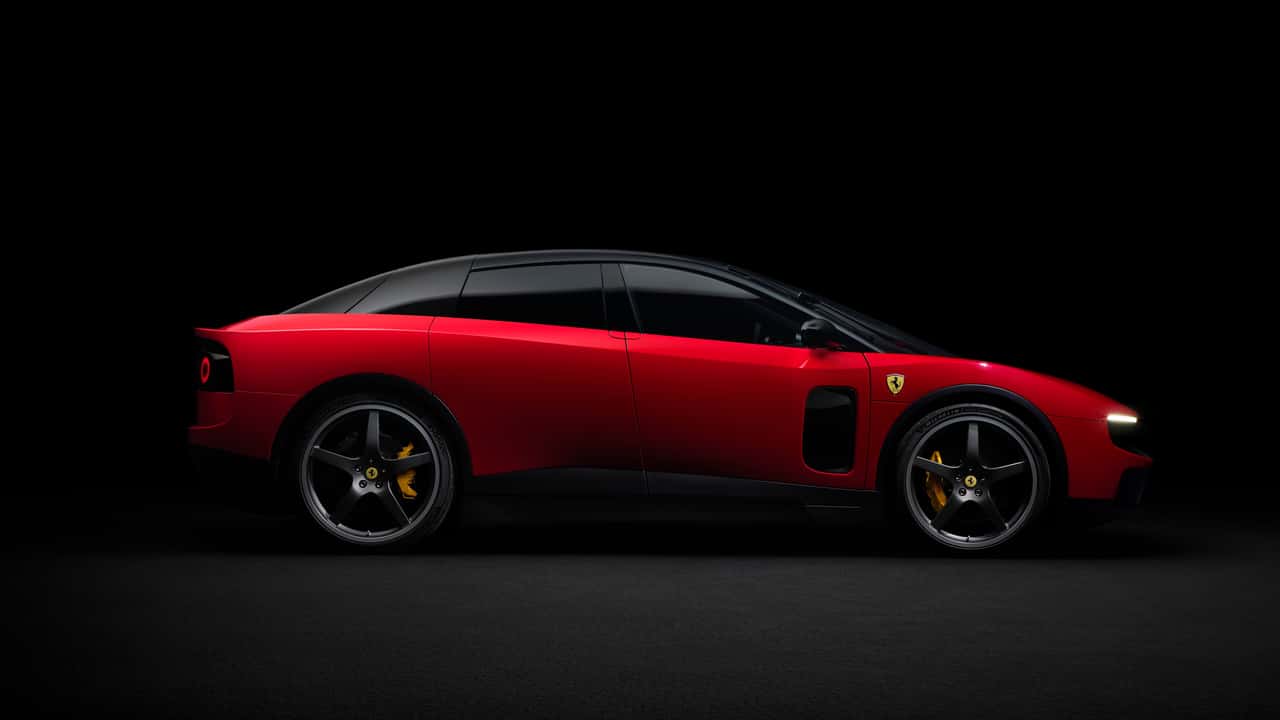

Rarely does a new car trigger such instant, coordinated rejection as the Ferrari Luce, the Prancing Horse’s first electric vehicle. The backlash has focused less on the fact that it’s electric than on the fact that it doesn’t look like the low-slung Ferrari many people expected.
We knew the Luce would be a departure from anything Ferrari has produced in the last two or three decades when its interior was revealed. The Jony Ive iPhone feel permeated throughout, and while it got some negative reactions, many people seemed to dig it.
Nobody thought that the exterior would have the same restrained Apple-like look, though. I bet people were expecting something resembling an electric Purosangue, which Ferrari could have obviously made but didn’t, and chose this much more subdued design instead.
As many have said, if you remove the Ferrari badges, you probably wouldn’t know what it is. There is a lot of clever aerodynamic work hidden in the rather plain sheetmetal, and there are plenty of cool design details that mark the car out as something special, but the basic design is relatively anonymous.
The top-down view is where the Luce starts to make more sense. From that angle, it looks less like a conventional Ferrari and more like a designed object, an exercise in product design. It's an expensive-looking Apple-like gadget on wheels, which is probably the point.
The carmaker did not accidentally create something this restrained. There was a clear purpose behind bringing in Jony Ive and Marc Newson’s LoveFrom. Ive is best known for his Apple work, which helped define the modern idea of premium technology. It’s all about clean surfaces, minimal or absent ornamentation, and a sense that the product should feel complete and self-evident without being flashy or overtly expressive. Newson, too, has a career focused on a variety of consumer products, not primarily cars.

Ferrari's design has also been more divisive since the brand moved away from relying on Pininfarina and began doing more of its design work in-house. That doesn’t mean the cars have been bad-looking, but it does mean modern Ferraris are less obviously romantic than the cars many people still use as the mental template for the brand.
But while there are plenty of people who say cars like the new F80, 849 Testarossa, or the SC40 are ugly, there are just as many saying they love the way they look. The reaction to the Luce feels different because the criticism has been so one-sided—almost nobody is defending it, and that feels strange.
It is also why I’m hesitant to call it a simple design failure. Ferrari is just too conscious of the power of its brand to let its first EV look this different by accident. There must be market research and positive feedback from prospective buyers backing the decision to make the Luce the way it is.
I’m pretty sure Ferrari expected the Luce to stir negative reactions, since it’s such a big departure, but I don’t think it was expecting everybody to hate it. Mind you, very few of the people pouring their hearts out in comments saying how bad the Luce is are the target buyers for this car.
While I’m fine with the minimalist, monolithic look of the Luce, I don’t think that's why the internet hates it. I think its proportions are more to blame, because it should have had a larger front section with a longer hood, regardless of whether there was a big engine under there or not.
What Ferrari should have made was a low-slung sedan or fastback, not something with the proportions of a Nissan Leaf. Mercedes-AMG may have given the new electric 4-Door a controversial face and a weird rear end, but overall, it looks like a proper performance car, not a weird halfway house between sedans and crossovers.

Jaguar also understood that the classic proportions of a luxury car still matter, which is why it gave the Type 00 Concept such a long nose. That’s another controversial EV design from a manufacturer steeped in tradition and heritage, but after the initial mostly negative reception, people are starting to warm to it. I think its traditional luxury-car proportions play a big part in why people are now starting to become drawn to it.
Ferrari is in a very different position to Jaguar, though. The production Type 01 will be Jaguar’s only model when it arrives later this year. Meanwhile, Ferrari isn't treating the Luce as a replacement for anything. The electric Ferrari is conceived for affluent individuals who already have a few other cars and for whom an understated yet brutally powerful Ferrari-badged EV makes a lot of sense.
The Luce buyer is not replacing a 296, an 812, or even a Purosangue with this. They probably already own several Ferraris and want the one thing Maranello has never really offered before: a quiet, usable, tech-forward five-seater family car that still carries the all-important badge.
We’ll have to wait and see how many Ferrari actually sells, because comment-section outrage is not the same thing as buyer rejection. Still, the market reaction was real. Reuters reported Ferrari’s Milan-listed shares fell 8.4% after the Luce reveal, while its New York-listed shares dropped 5.1%.
This adds to the pressure built after investors reacted badly to Ferrari’s 2030 plan last October, sending shares tumbling 31%.
When Ferrari unveiled its long-term plan, which included EVs, investors were underwhelmed by the conservative growth targets and the slower-than-expected EV rollout. This served as a reminder that luxury automakers can’t simply copy the mass-market EV playbook. They have to balance electrification with scarcity, brand identity, heritage, and pricing.
The company needs an EV to help meet emissions requirements while still offering V-12 sports cars. But it needs its EV to sell for it to make a difference, and the Luce just seems a bit expensive for what it is, even by Ferrari standards.
The Luce may not be the Ferrari EV that enthusiasts wanted, but that might be exactly why it exists. An electric supercar would have been easier to understand, easier to draw, and probably easier to applaud online, but it also would have been directly compared to Ferrari’s combustion cars and other electric supercars and hypercars. If Ferrari doesn't think the technology is ready for that, then it makes sense to go another direction.
The company sidestepped that fight by striving to build something else entirely. That doesn’t mean the design is beyond criticism. It’s too anonymous, too clinical, and too detached from the visual drama that Ferrari is known for. But I don’t think we should be judging it like a (failed) supercar, since that may be missing the point.
RECOMMENDED FOR YOU
Ferrari Is Auctioning Off The First Example Of its First Electric Car. How Much Do You Think It'll Fetch?
EV Drivers Are Happier With Their Cars Than Gas Car Owners: Study
I’ve Seen More Improvement In Two Years Of Reviewing EVs Than I Did In A Decade Testing Gas Cars
A BMW iX3 Charged For Just 15 Minutes. Here's How Far It Drove On The Highway
Skipping The Ferrari Luce Could Cost Collectors The Cars They Really Want
The Tesla Model Y Has Changed A Surprising Amount In 6 Years
Ferrari Could Have Faked A V12. The Luce EV Does Something Stranger