
I Thought This 11-Year-Old Tesla Model S Would Feel Ancient. It Didn’t
After 160,000 miles, this 2015 P85D still has its original battery, more than 186 miles of real-world range, and insane performance.
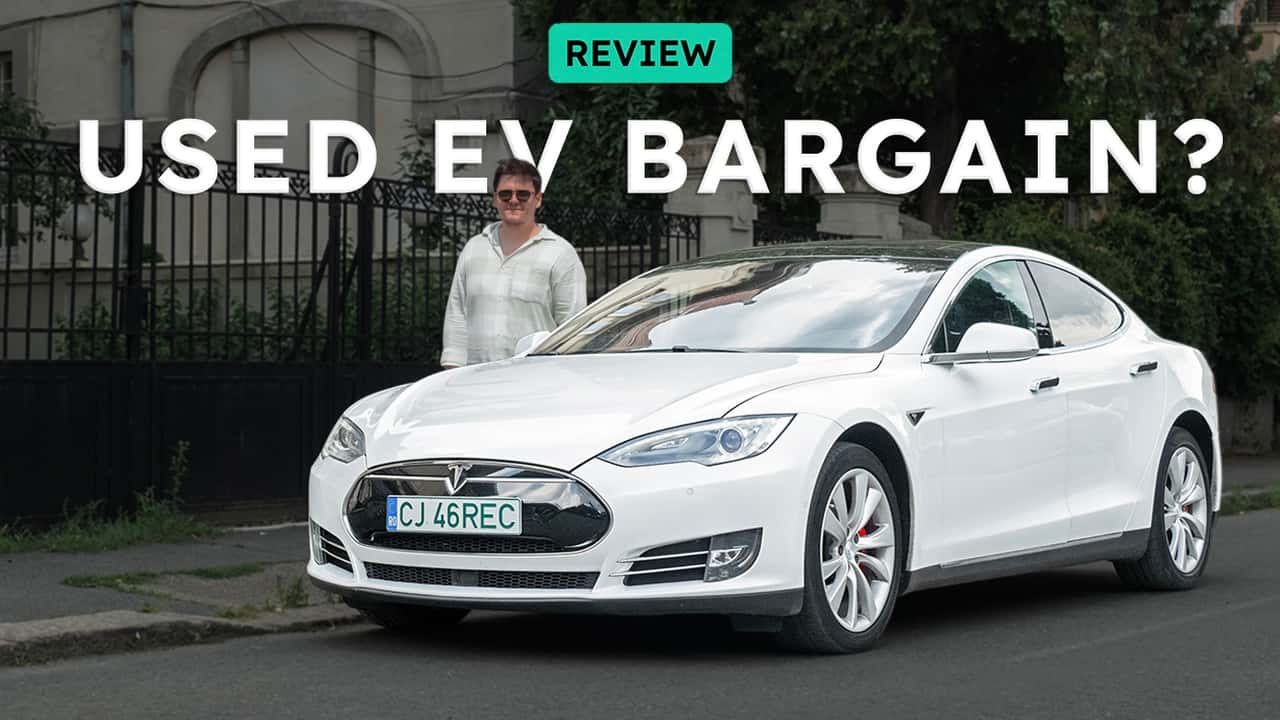

The most surprising realization after spending some time with a 2015 Tesla Model S P85D is that it doesn’t feel like an old EV. It feels like an old luxury car, in a good way. That wasn’t something I was expecting to say about it in 2026, 11 years after it first rolled off the line.
This example is the top-of-the-range Performance model, with a dual-motor powertrain that produces a combined output of 691 horsepower and 687 lb-ft (931 Nm) of torque. That is a lot of motivation, and it makes surprisingly light work of the car’s 4,936 lbs (2,239 kg) mass, ripping from a standstill to 60 mph in 3.2 seconds.
That’s the official claim, at least. But it’s independently been measured to be even quicker than that. To experience all the acceleration the P85D has to offer, you have to put it in Insane+ mode. A message will pop up indicating that the vehicle has begun bringing its battery to the temperature its cells require to deliver all their available volts.

So the performance feels thoroughly modern, but the rest of the car doesn’t look compromised by modern standards, either. Its design has its roots nearly two decades ago, when Tesla began developing the Model S in 2007. It showed the first design concept two years later, and the final production version, which began production in 2012, stayed remarkably true to the look of the 2009 study.
Today, the Model S doesn’t look bad at all. Its shape has always had a whiff of Maserati or Jaguar, and as the Model S has matured, it is now starting to look like an older luxury car. It has the posh coupe-like sedan look that—back when it debuted—was nowhere near as common among mainstream cars as it is today.
These days it’s hard to name an actual three-box sedan that isn’t trying to look like a fastback.
The front fascia is what betrays its age and it actually looks very different from the last Model S. There’s just something quaint about how it presents its stick-out faux grille, which, of course, had to have lots of chrome to really shout about the fact that it is, indeed, a luxury car. The facelift it got after April 2016 made it look a lot sharper and more modern by dropping the “grille,” but today those newer cars just don’t have the same old-world charm as an early Model S driving by.
It’s less obviously the old model when you see it from the back, even though the 2016 facelift also changed the rear fascia. There’s a chrome streak between the taillights bearing a proudly embossed “Tesla” script, which looks great, but also traps dirt and is hard to keep clean.
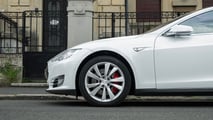
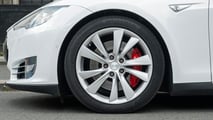
This car’s owner removed the original 21-inch Turbine wheels and fitted it with a more sensible set of period-correct 19-inch Slipstream wheels. The smaller wheels make the already large red Performance brake calipers look even bigger.
Period reviews of the Model S’s interior were generally positive, although many argued whether it truly felt like a luxury car. More than a decade on, the cabin appears to have aged gracefully. Mostly.
The Model S's Mercedes-sourced switchgear makes certain touchpoints feel like those of German cars from the era. But its cheaper seating and soft-touch materials are more Cadillac than Audi. Overall, it felt pretty solid; there were hardly any noises making their way into the cabin while on the move.
The rest of the cabin has aged more gracefully than the original infotainment. The rear hatch was the main exception, as its soft-close mechanism sometimes struggled, and it seemed to move around and make noise over bumps.
Otherwise, it still felt pretty luxurious. As a Performance model, it had Alcantara on the dashboard, headliner and pillars, which helps give the cabin a slightly sportier feel.
There was visible wear on the left driver’s seat bolster, though, as well as on a piece of trim that protruded into the door opening. It snagged on me as I climbed aboard. But the steering wheel still had its original leather, with minimal wear.
The back seat is roomy enough for two six-footers to travel in relative comfort. The floor is pretty high in the rear, though, which pushes your legs away from the cushion. I wouldn’t love to sit back there for a long journey. And the lack of pockets on any of the doors or behind the front seats is simply unacceptable, even for 2015.
With standard adaptive air suspension and the smaller wheels that my tester had, ride comfort was excellent. The air suspension has a leak, and the owner told me the front starts to sag after it's been parked for over two days. This needs to be addressed, as it forces the compressor to run excessively, making it prone to fail.
It doesn’t fall apart when you show it a corner, either, although the steering feels somewhat vague and detached, and it doesn't encourage you to corner spiritedly. You can reduce the assistance to make turning the wheel harder, but this has no effect on the amount of feedback the tires send to your fingers, which in this case is virtually none.
Cruising around town in this old Model S feels really good, and it’s still a pretty luxurious and unique experience even in 2026. What hasn’t aged well is the 17-inch portrait-style display, arguably one of its most recognizable features and one that changed all car interiors forever.
The graphics look rough and pixelated by today’s standards, and the screen response and smoothness feel generations behind. There is occasional stuttering and lag, but while it’s mildly frustrating to use, it’s an adequate way to interact with the car and still does the job today.

Tesla has kept the car reasonably current through over-the-air updates, adding newer features and maintaining app, navigation and charging functionality. However, this car’s original MCU1 hardware can cause the infotainment system to lag at times. This was addressed in later cars, which feature the Intel-powered MCU2.
MCU1 cars are limited to just audio streaming services like Spotify. Video streaming also requires the later MCU2. Tesla still offers an MCU2 upgrade for its pre-2018 cars for $2,700, so that’s always an option for this car in the future.
But what matters most if you’re looking at one of these as a cheap used luxury EV buy is how well the battery has held up. The example I tried didn’t have the built-in overnight battery health test, which can produce a very accurate estimate of how healthy the pack is on other Tesla models.
Gallery: 2015 Tesla Model S P85D
You can get an estimate through an app like Tessie, though. The service reported that the car I drove still had around 86% of its original capacity. That’s a pretty good number for such an old car, but we’ve seen even higher mileage decade-old examples with similar battery health ratings; your experience may vary.
This car has likely seen a lot of DC fast charging throughout its life, as it has the coveted free lifetime Supercharging option. This is transferable to new owners, and the current owner has saved thousands of dollars supercharging for free. He regularly takes it on a 280-mile trip across the country, and the miles do add up every year; in two years of ownership, it has served him really well, never leaving him stranded.
With that health rating, the battery can still deliver around 200 miles of real-world range. That may be mediocre by today’s standards, but considering how cheap you can get an early Model S like this, I wouldn’t count one out. If you find one with the SC01 free Supercharging option, it becomes an unbeatable deal.
More Reviews
I approached the Model S expecting it to feel like an archeological expedition into the early days of serious electric cars. What I found was a slightly creaky, aging luxury sedan that still packed a punch and could travel meaningful miles before it had to stop and charge. The fact that it could do so for free made it feel like a real-world infinite-money glitch.
If you’re in the market for a cheap used EV, it’s hard to argue with. It’s the most historically significant car of its era, the blueprint that would define all modern EVs. A decade later, not only is it a reliable, affordable used EV option, but its charm still hasn’t faded.
Click here to see all articles with lists of the best EVsRECOMMENDED FOR YOU
Someone Is Already Trying To Flip One Of The Last Tesla Model S's Built. The Price Is... Ambitious
Porsche's 6,000-Pound Electric Cayenne Beats Supercars To 60 MPH
Tesla Reaches Its Biggest Manufacturing Milestone Yet With 10 Million EVs
In A First, U.S. Clears Zoox's Steering Wheel-Free Robotaxis For Paid Rides
Now You Can Take More Video Calls From Your Tesla
Even China’s Truck Makers Are Building EVs In Europe Now
Rivian R2 Range Tested Until It Died: Here's How Far It Went At 70 MPH