
This Chinese EV Is Now Made In Europe. More Are Coming
Stellantis is building Leapmotor’s B10 electric crossover in Spain, with a second model ready to join it next year.
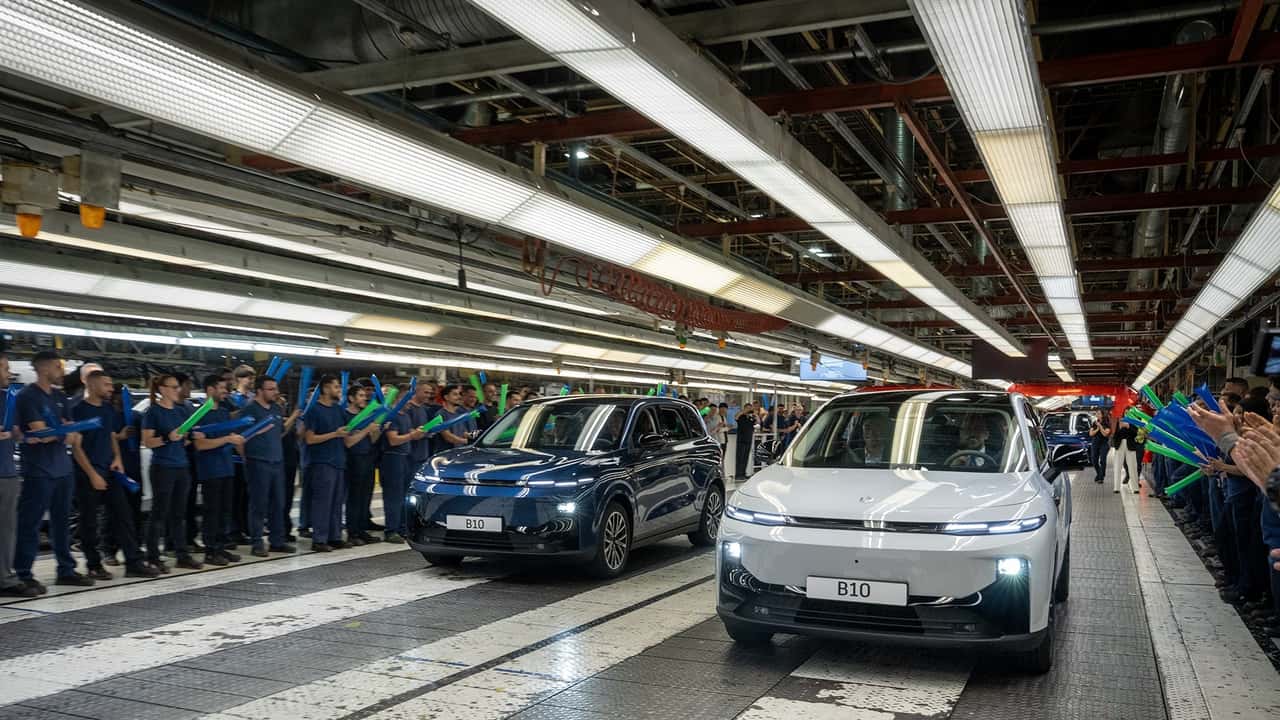

- Leapmotor has started building the B10 in Spain, with the B05 expected to follow in early 2027.
- Leapmotor previously assembled the T03 in Poland using Chinese kits, but production ended in March 2025.
- Chinese brands are expanding European production through local partners, existing factories and new plants.
Chinese automakers don’t necessarily need to build factories to start making cars in Europe. Sometimes, a European manufacturer already has the space and is happy to help. That’s what’s happening in Spain, where Stellantis has started building the Leapmotor B10 electric crossover and is preparing to add another model.
The companies officially started B10 production at Stellantis’ Zaragoza plant on October 16. This fulfills Leapmotor’s Spanish production plans announced earlier this year, giving the Chinese brand a manufacturing base in a major overseas market and, by extension, the entire European Union. Stellantis says it chose the facility for its available capacity, manufacturing expertise and quality.
Next to start production in Zaragoza is the B05 electric hatchback. Leapmotor confirmed its production allocation yesterday but without specifying a start date. Spanish news agency EFE reports the launch in the first quarter of 2027.

Leapmotor B05
This isn’t Leapmotor’s first attempt at European production. The tiny T03, which surprised us with its value and driving manners, was previously assembled at Stellantis’ Tychy factory in Poland. That operation started in 2024, using semi-knocked-down kits shipped from China.
Stellantis controls 51% of its joint venture with Leapmotor, giving it rights to manufacture and sell its vehicles outside China. The Polish T03 experiment was short-lived, though, and Stellantis ended T03 assembly on March 30, 2025, without explaining why.
Leapmotor is far from the only Chinese automaker looking to establish a manufacturing presence in Europe. BYD is building its own massive factory in Hungary, while Xpeng turned to contract manufacturer Magna in Austria. GAC followed Xpeng’s lead, bringing new work to a facility that previously assembled the Fisker Ocean.

Existing factories can also offer a route back into production after their previous occupants leave. Chery partnered with Ebro to use Nissan’s former Barcelona plant. Audi’s shuttered Brussels factory illustrates why those possibilities shouldn’t be mistaken for completed deals, though. Nio reportedly wanted to take it over, although its CEO denied the plans, and in September a property company was announced as the buyer.
For European automakers, Chinese expansion now presents an awkward choice: compete with these brands, build their cars, or do both. Stellantis has chosen the third option. At Zaragoza, a Chinese competitor’s growth is also keeping the factory lights on.
RECOMMENDED FOR YOU
Gas Vs. Electric: Which BMW Goes Further Without Stopping For Fuel?
Mercedes-Benz Is Giving Up On Its EV Charging Network In Europe
Ford's Privacy Promise Includes A 'Quasi-80s Mode' To Dumb-Down Connected Cars
They Wanted The Fiesta ST To Beat These EV Hot Hatches. It Came Last
BMW's Tesla FSD Rival Hits City Streets In 2027
BYD’s 300-MPH Electric Hypercar Crashed During Testing. The Driver Survived
Volvo Is Getting Crushed In The U.S.