
Dacia’s Tiny EV Keeps Its Name, But Not Much Else
The next Dacia Spring will still be small and affordable, but production is moving from China to Europe, making it a very different EV.
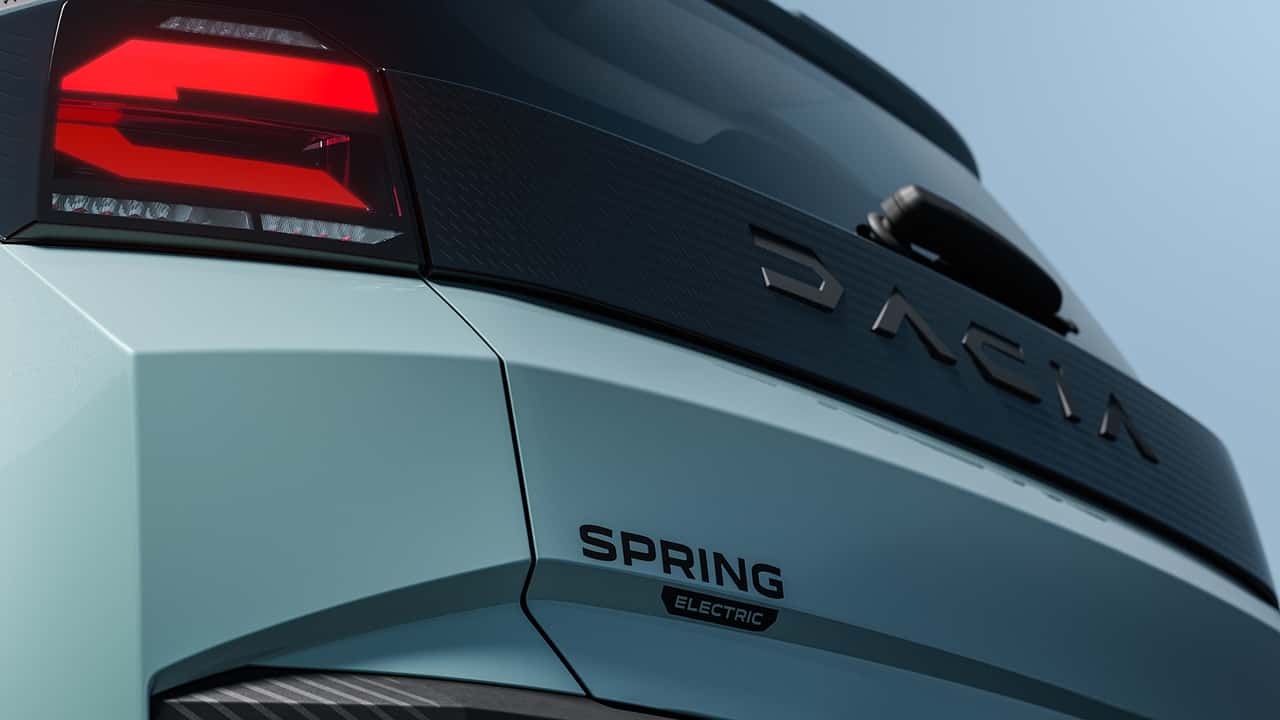

- Dacia teases its upcoming cheap EV and confirms it will be called the Spring.
- The new Dacia Spring will be built in Europe and share its underpinnings with the Renault Twingo E-Tech.
- Dacia is expected to pull the wraps off the new Spring in the second half of 2026.
We are months away from the unveiling of an all-new electric Dacia city car, which promises to be one of Europe’s cheapest EVs. Dacia has just revealed additional teaser images of the upcoming model, confirmed it will be built in Europe, and announced that it will keep the Spring nameplate, which is used on its current China-made EV.
The new Dacia Spring will be built on a version of the same platform used for the revived Renault Twingo E-Tech, which itself features simplified Renault 5 underpinnings. Like the Twingo, it will likely be built at Renault’s Slovenia plant, feature a smaller battery and a lower-powered motor, and ditch the more complex (and expensive) independent rear suspension from the larger 5.
Gallery: Dacia Spring Teaser





The Twingo is already affordable by European EV standards, with a starting price in France of €19,490 ($22,350). The new Spring is expected to cost around €2,000 ($2,300) less than the Twingo, drawing from Dacia's decades-long experience building budget-friendly cars that undercut rivals.
Specs will likely be very similar to the Twingo’s, which gets a small 27.5-kilowatt-hour LFP battery pack, giving it a WLTP range of 163 miles (263 km). There is no larger NMC battery available, like there is in the Renault 5, and there’s just one power level, an 82-horsepower front motor giving the Twingo a leisurely sprint time to 62 mph (100 km/h) of 12.1 seconds and a top speed of 81 mph (130 km/h).

As standard, the Twingo gets a 6.6-kW AC charger, which can optionally be upgraded to 11 kW, bringing the flat-to-full charging time down to two and a half hours. All variants have a modest 50 kW peak DC fast-charging power, which is good for a 10% to 80% charging time of around 30 minutes; pretty good given its price.
The new Dacia Spring will likely fall under the European Union’s new E-Car category, similar to Japan’s kei car regulations. It limits vehicle size and allows manufacturers to skip some features that are mandatory on larger cars, making these cars cheaper to produce.
Dacia also plans to launch a larger EV, an electric equivalent of the highly successful Sandero hatchback, which was Europe’s best-selling car in 2024 and 2025, with over 289,000 units sold last year. The current China-built Spring doesn’t sell anywhere near that well annually, but Dacia points out it has racked up over 210,000 deliveries since the model debuted in 2021.
RECOMMENDED FOR YOU
Europe Is About To Get An Even Cheaper City EV—And It's Not From China
This 100-Year-Old EV Came With More Range Than The First Nissan Leaf
Europe’s Cheapest EV Gets A Big Power Boost And An LFP Battery
Xiaomi's First EV Just Hit A Massive Milestone
Great News! Dacia Sandero Is Going Electric In 2027
LG Energy Solution's Newest Battery Megafactory Just Kicked Off Production
Europe's Cheap EVs Compared: Leapmotor T03 Vs. Dacia Spring