Home
News
Manufacturing / Production
LG Energy Solution's Newest Battery Megafactory Just Kicked Off Production
This Lansing, Michigan plant will employ up to 1,700 people and produce up to 35 GWh worth of batteries per year.
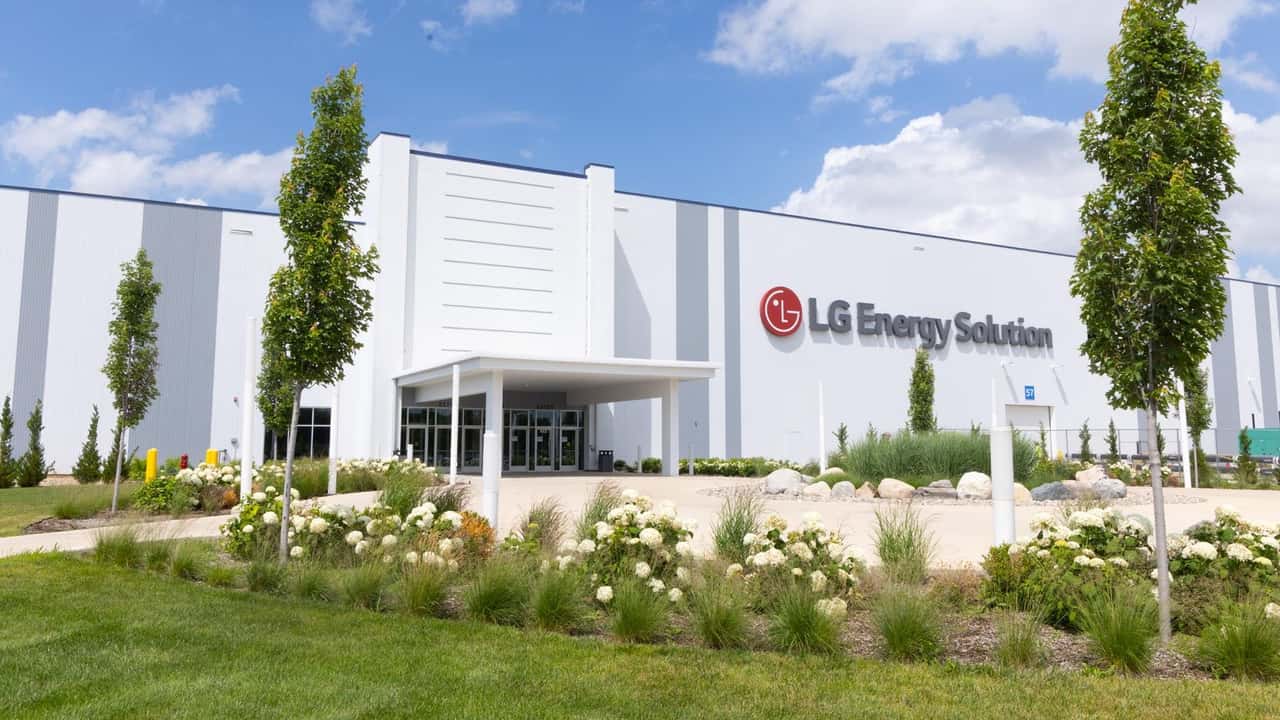
Photo by: LGES
Kevin Williams 
By: Kevin Williams
Aug 18, at 2:20pm ET
Add InsideEVs as a preferred source in Google
- (https://twitter.com/intent/tweet?url=https%3A%2F%2Finsideevs.com%2Fnews%2F805368%2Flg-lansing-michigan-toyota-highlander%2F&text=LG%20Energy%20Solution%27s%20Newest%20Battery%20Megafactory%20Just%20Kicked%20Off%20Production&via=InsideEVs)
- copy
Share
Comment
- This plant will produce battery cells for both cars and energy storage systems.
- The Toyota Highlander will use NMC cells from this plant. The energy storage systems will use LFP cells.
- This facility will employ up to 1,700 people and produce up to 35 GWh worth of cells per year.
LG Energy Solution announced today that it has officially started production of EV batteries in its new facility in Lansing, Michigan. This 226-acre plant will be instrumental in providing EV battery cells and modules to key products from some well-known car brands.
The 226-acre facility has had more than $2 billion of investment, and currently employs 900 people. At maximum capacity, this facility will employ 1,700 people and produce up to 35 GWh of production per year.
LGES says that this factory will serve a pivotal role in Michigan’s manufacturing capabilities, producing cells and large-scale battery storage solutions for different brands.
One of the most notable clients for this factory is Toyota. LG will produce nickel-manganese-cobalt (NMC) lithium battery modules for the upcoming all-electric three-row Toyota Highlander. These cells will travel to the Georgetown, Kentucky plant, which shows a big investment in America’s EV supply chain. A major part of the Highlander’s supply chain will stay here in the country.
But the facility doesn't just produce NMC cells and packs. LG will also build lower-cost lithium-iron-phosphate (LFP) cells for energy storage systems, with Tesla as a key customer.

Photo by: Toyota
What do you think?
View
Comments
This is great news for EV production and for manufacturing jobs. LGES plans to have 50 GWh of battery production capacity all over North America. This includes not just the Lansing plant but also LG’s other plants in Holland, Michigan, Nextar Energy plant in Windsor, Ontario and an upcoming facility in Arizona among its North American footprint. The figure also includes joint-venture plants, like the Ultium cell plant in Tennessee, and LG's partnership with Honda in Ohio.

Stay informed with our newsletter every weekday
back
Subscribe For more info, read our Privacy Policy & Terms of Use.
Luckily, it seems like the Lansing plant is fairly future-proofed. Whereas slower-than-expected sales of the Ultium platform cars and the cancellation of Honda’s EV platform have no doubt been a damper on LG’s joint venture plants, the ability to focus on energy storage solutions has been a saving grace. Also, Toyota has been remarkably committed as of late to full electrification. The new Highlander EV is one of the seven fully electric models planned to be launched by 2027. If they’re American-made, then I wouldn’t be surprised if LG Energy Solution’s plant ends up making more than just batteries for the new Highlander.
Related Articles
GM And LG Restart EV Battery Production In Ohio After Seven-Month Shutdown
GM Exits Planned $3.5B Battery Factory, Leaving Samsung SDI In Full Control
Hyundai’s $5 Billion EV Battery Plant In Georgia Powers Up
Honda’s $11B EV Factory In Canada Is Dead: Report
We want your opinion!
What would you like to see on Insideevs.com?
Take our 3 minute survey.
- The InsideEVs team
Share this Story
- (https://twitter.com/intent/tweet?url=https%3A%2F%2Finsideevs.com%2Fnews%2F805368%2Flg-lansing-michigan-toyota-highlander%2F&text=LG%20Energy%20Solution%27s%20Newest%20Battery%20Megafactory%20Just%20Kicked%20Off%20Production&via=InsideEVs)
- copy
GO TO COMMENTS
(
)
Got a tip for us? Email: tips@insideevs.com
View all comments ( )
Trending
Kia EV3 Lease Deals Are Here, And It’s Cheaper Than The Chevy Bolt And Nissan Leaf
I Let Android Auto Plan My EV Roadtrip. Here’s How It Worked
This Chevy Bolt Has 470,000 Miles. Here’s How Much A New Battery Was
Here's What It's Like To Take Delivery Of A Rivian R2
latest articles
- This Chinese EV Is Now Made In Europe. More Are Coming Oct 20 - News -
- GM Is Closing Its Detroit EV Battery Plant Oct 20 - Industry -
- The 2027 Lexus NX Plug-In Hybrid Gets A Bigger Battery And Fast Charging Oct 20 - Official -
- Kia EV3 Lease Deals Are Here, And It’s Cheaper Than The Chevy Bolt And Nissan Leaf Oct 20 - Pricing -
- Here's What It's Like To Take Delivery Of A Rivian R2 Oct 19 - News -
- Used EVs Hit A Record Share Of Overall Used Car Sales In September Oct 19 - Sales -
- Nio's Little Electric Car Has A Cool Party Trick: Upgradeable Range Oct 19 - News -
RECOMMENDED FOR YOU
Rivian Is Taking Its Battery Recycling Game To The Next Level
This Chinese EV Is Now Made In Europe. More Are Coming
Tesla Supplier Reports Record Earnings From EV And Energy Storage Batteries
GM Is Closing Its Detroit EV Battery Plant
General Motors Just Took A Big Step Towards Its Next-Gen EV Battery
The 2027 Lexus NX Plug-In Hybrid Gets A Bigger Battery And Fast Charging
Inside The Texas Factory Racing To Break China’s Grip On EV Magnets