
Ford's Privacy Promise Includes A 'Quasi-80s Mode' To Dumb-Down Connected Cars
In an era of connected smart cars, Ford wants owners to decide if they should be dumb again.
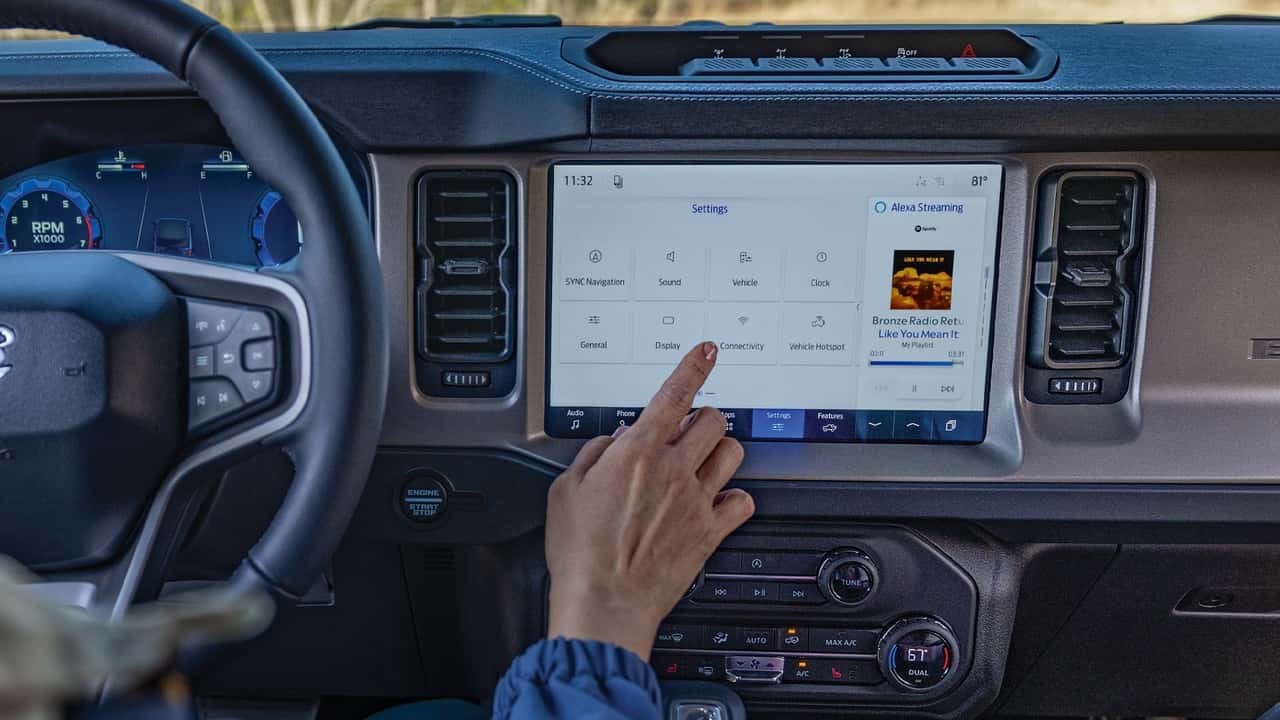

- Ford launched a new website so drivers know how the automaker uses driver and vehicle data.
- It pledges to offer a "quasi-’80s mode" experience if the driver wants to cut-off connected services.
- Cutting off connectivity comes with a trade-off, though. But at least it's a choice.
Modern cars are enormously talented at producing gobs of information about drivers. How hard they smash the brakes, where they frequently navigate to, or even what in-car features they use the most. It makes it incredible difficult to draw a line between what portion of an automaker is a car company or a tech company.
Ford would like you to know that it won't be that difficult to tell your car to zip its mouth about driver data—if it's wearing a Blue Oval on the grille, that is.

The automaker launched its new Privacy Promise website this week that explains to owners exactly what connected vehicle information Ford collects. Depending on the model, Ford explains that it could be location data, driving characteristics, diagnostic information, and other connected data through the vehicle and Ford's smartphone app.
Ford also shares what it does with that data and (most importantly) how you, the driver, can turn data sharing off.
"Our ultimate goal is that, for someone who does not want to share any connected data with Ford at all, they can opt out and essentially create a quasi-’80s mode car," said Ford's Chief Privacy Officer, Kristin Jones, in a statement to Automotive News. "The goal is to allow people to have that old-school experience."
There is, of course, a trade-off.
A car cannot simultaneously refuse to tell Ford where it is and also ask Ford to give it information relevant to the world around it (like live traffic data). That means if you choose to turn off connected navigation, internet connectivity, and location features in the Ford app, you'll lose some functionality within the car. And doing that would certainly make the car have a more '80s experience, after all.
The trade-off for Ford is that it uses that data to help tailor its vehicles to include features that owners want. No data means that Ford will need to find another way to customize in-car features to fit a less-connected digital experience.
Ford CEO Jim Farley also recently mentioned that the company will lean on digital subscriptions to help boost revenue with vehicles like the uber-cheap Ford Fathom. The caveat there is "digital," which means that vehicles that ditch connectivity could also be a lost cause on digital subscription revenue. And that's the ultimate compromise that owners will need to decide.

Ford's new Privacy Promise site comes at the heels of General Motors recently reaching a $220 million settlement over sharing driver data. GM was accused of selling driver data to brokers—something Ford made clear that it isn't in the business of doing—from 2016 until 2024 though its Smart Driver program.
The good news is, Ford is at least being transparent about owner choice. That's the entire point according to Jones: "The trust really comes from transparency. It’s our job to be as radically transparent as we can be."
More Ford News
RECOMMENDED FOR YOU
Ford Fathom: Everything We Know About The Sub-$30,000 Affordable EV Truck
Gas Vs. Electric: Which BMW Goes Further Without Stopping For Fuel?
Ford CEO Says Its New EV Tech Is 30% More Efficient Than BYD's
BMW's Tesla FSD Rival Hits City Streets In 2027
Ford Fathom Pricing Will Stretch Into the 'High $30,000 Range'
Volvo Is Getting Crushed In The U.S.
The Ford Fathom's Home Backup System Will Be Way Cheaper Than The F-150 Lightning's