
Why America Built Fewer EV Fast-Charging Stations In Q2
The U.S. added fewer public fast-charging stations last quarter, but growth is still robust.
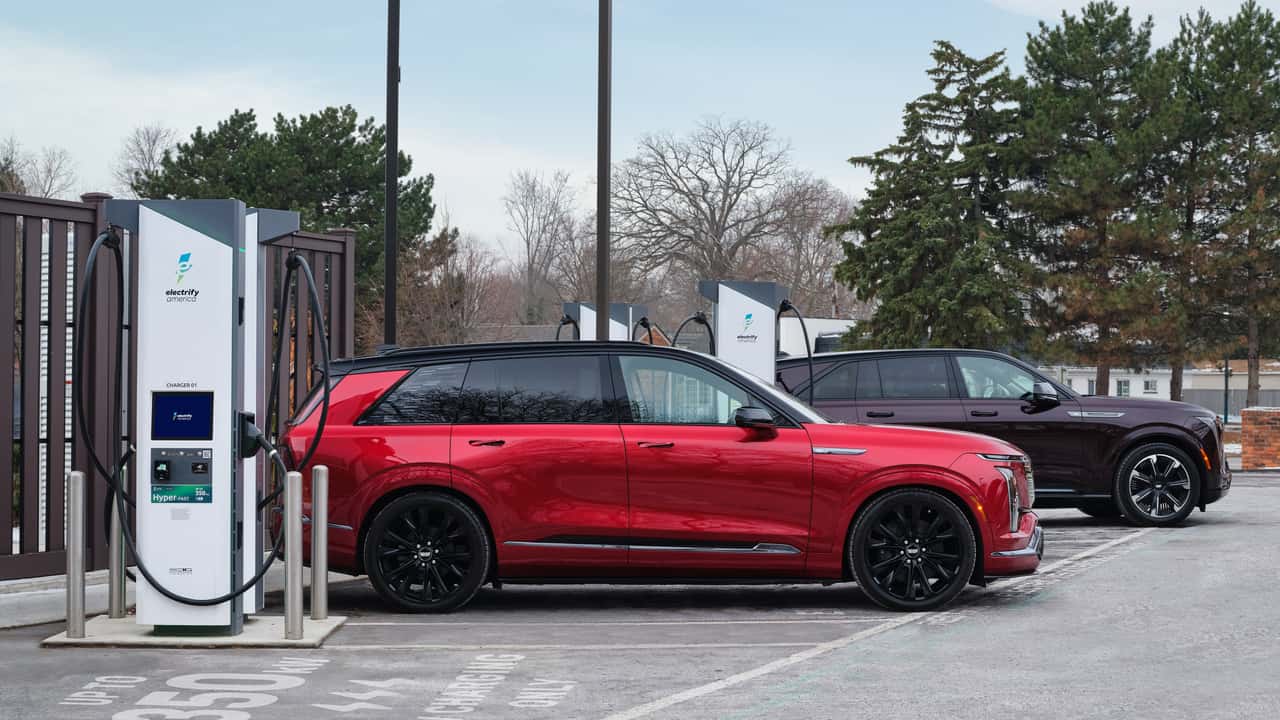

- The U.S. added thousands of new public fast-charging ports in the second quarter, but the rate of growth slowed.
- The all-time market share of Tesla Superchargers fell below 50% for the very first time.
- Utilization rates remained steady, as drivers continue to absorb newly added capacity.
The buildout of America's public fast-charging stations slowed in the second quarter as charging networks shifted their focus toward profitability and improving reliability for EV drivers, charging data platform Paren said on Tuesday.
Charging companies added 4,382 new ports across 806 new stations in Q2, down from the 4,865 ports and 891 stations added during the same period last year. That's a 10% year-over-year decline. The numbers also fall well short of the fourth quarter's record, when operators added 5,966 new ports and 937 new stations.

Loren McDonald, chief analyst at charging data analytics firm Chargeonomics, attributed the slowdown to operators prioritizing profits and the overall quality of the charging experience over sheer expansion.
“A two-quarter year-over-year decline is not definitive proof of a slowdown,” McDonald said in the Paren report. “Combined with recent CPO layoffs and pullbacks, it reinforces the industry's new mantra: operations, customer experience, and profitability,” he added.
It's no secret that charging companies are now adding fewer stations with more high-powered ports apiece, putting more emphasis on the broader experience around charging itself. Many new stations now come with amenities like restrooms, cafes, and WiFi, and some networks, like Ionna, even offer air-conditioned lounges at select locations where drivers can wait comfortably while their EV tops up.
Quarter-over-quarter growth, though, remained strong. Just 3,521 new ports went in during the first quarter. That means Q2 installs rose 24% quarter-over-quarter.
Tesla continued to lead the buildout of public fast-charging infrastructure, but its all-time market share dropped below 50% for the first time as rival networks picked up the pace. The company accounted for just 27% of new deployments in Q2, with 1,185 new ports. Walmart and ChargePoint followed with 368 and 333 new ports, respectively, while Red E and Electrify America rounded out the top five with 315 and 202.
The average utilization rates, which measure how much of the time chargers are actually in use, held steady at 15.8%. That suggests the new capacity coming online is being absorbed by drivers at roughly the same rate stations are being built. In other words, supply is keeping pace with demand.
Growth in the second quarter was also heavily regional, with 40% of new ports landing in just five states. California led by a wide margin with 120 new stations, followed by Texas, Florida, Illinois, and New York. That distribution tracks closely with America's uneven EV adoption, which skews toward coastal metros first, followed by the industrial Midwest, the Southeast, and Texas.
That gap could widen if the trend holds, with new stations continuing to cluster in high-demand areas while so-called charging deserts fall further behind. North Dakota, for instance, added zero new public fast-charging ports in Q2. Montana, Wyoming, and South Dakota each added just one new station.
Even as EV sales in the U.S. have swung sharply in response to shifting policy, the charging industry has largely shrugged off the broader cooldown and kept building at a strong clip, betting that demand will rebound in the years ahead.
If second-quarter sales numbers are any indication, that bet is starting to look like a smart one. Second-quarter EV sales grew at their fastest pace since the federal tax credit expired, with rising gas prices tied to the war in Iran giving battery-powered models a fresh boost.
Contact the author: suvrat.kothari@insideevs.com
Related Stories
RECOMMENDED FOR YOU
Seattle Is Installing Hundreds Of Curbside EV Chargers
Rivian Buys Synthetic Data Startup To Boost Its Autonomy Ambitions
Electrify America’s Largest EV Charging Station Is Missing One Big Thing
VW's First Car Made With Xpeng Isn't Popular. Here's Why It Matters
I Let Android Auto Plan My EV Roadtrip. Here’s How It Worked
GM's Future Cars Will Be Very Different. Here's Everything We Learned
America Now Has More Than 80,000 Public Fast Charging Ports