
The U.S. Army’s New Unmanned Ground Vehicle Is An Extended-Range EV
The platform used by American Rheinmetall for the new UGVs can export up to 350 kW of power.
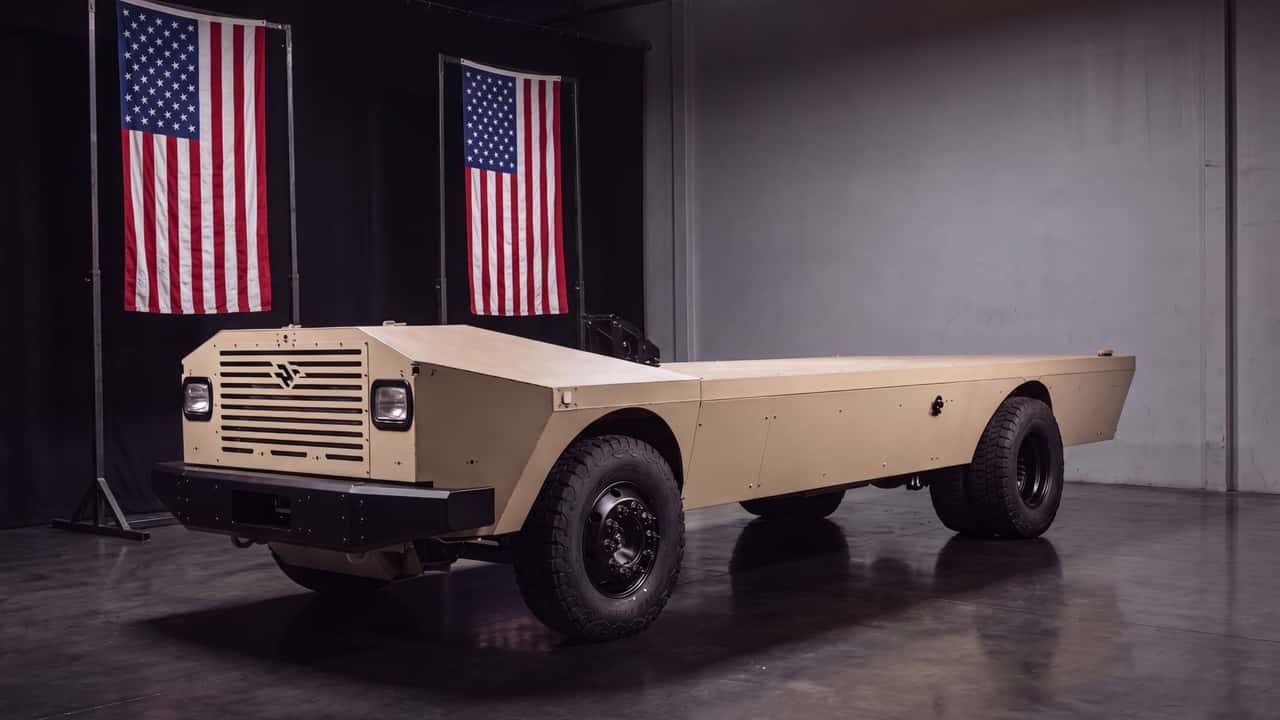

- American Rheinmetall was awarded an 18-month U.S. Army contract to develop and deliver an autonomous hybrid ground vehicle.
- The defense contractor will use Harbinger’s extended-range plug-in hybrid platform, which was designed in the U.S.
- The platform uses a small gas engine in conjunction with a large high-voltage battery and an electric motor.
The U.S. Army wants a new wave of vehicles that can haul stuff in dangerous areas—silently and without anyone getting hurt. To make it happen, the Army just awarded an 18-month contract to American Rheinmetall to develop and deliver the next generation of uncrewed ground vehicles (UGV), which will use a plug-in hybrid powertrain developed by California’s Harbinger.
Harbinger is known for its hybrid chassis, which can be used for a variety of commercial vehicles, and has recently been adapted for military purposes. The setup pairs a high-torque electric motor with a compact gas engine that can recharge the batteries when there’s no charger available, or can supply external power. Despite its maker billing it as a plug-in hybrid setup, it’s actually an extended-range EV because there’s no physical connection between the gas engine and the wheels.
Gallery: Harbinger Praesidia

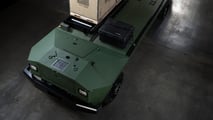
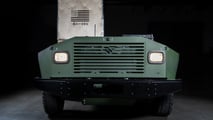
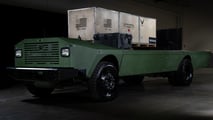
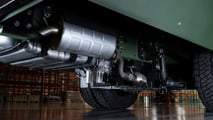
Speaking of power, Harbinger’s Praesidia vehicles, which will act as the base for American Rheinmetall’s new UGVs, can export up to 350 kilowatts to external systems, with 48 kW of continuous power from the gas engine and a 15 kW onboard inverter for split-phase AC output. The high-voltage battery pack handles the remaining output.
Range-wise, the military-grade plug-in hybrid chassis can deliver over 500 miles with a full tank of gas and a full battery, with an electric-only range of approximately 105 miles, according to Harbinger. The California startup offers three wheelbases for its military platform—158 inches, 178 inches, and 208 inches—but American Rheinmetall didn’t say what lengths will be used for the U.S. Army’s finished UGVs.
That said, each wheelbase has a gross vehicle weight rating between 16,000 pounds and 26,000 pounds, with a maximum payload of 18,000 pounds.
Harbinger’s Praesidia architecture features drive-by-wire technology, enabling third-party companies to install equipment without worrying about how to drive the vehicle. That’s great news for American Rheinmetall, which is the prime contractor for the U.S. Army’s new project.
Besides making good use of Harbinger’s plug-in hybrid chassis, the defense contractor has enlisted the help of two other companies—Forterra will supply autonomous driving software that will enable the vehicle to navigate and operate with minimal human input, while Primordial Labs will integrate its Anura human-machine interface, which converts natural-language voice commands into inputs for the vehicle.

The contract was awarded under the Army’s Project Sustainment program, which was set up to address the growing risk of logistics convoys being attacked or disturbed by remotely operated drones and long-range precision strikes. The lower the number of soldiers that need to ride in a vehicle that’s carrying volatile fuel and weapons, the better.
The UGV contract runs through the National Advanced Mobility Consortium (NAMC), a partnership between the government and the defense industry that enables the Army to fund the development of experimental vehicle technology faster than it would through the traditional acquisition process.
More Stories Like This
RECOMMENDED FOR YOU
FedEx Just Ordered 2,000 Electric Trucks That Will Save $40 Million Every Year On Fuel
This $400,000 RV Delivers EV Camping Without The Range Anxiety
Chinese Auto Giant Chery Wants To Crack The U.S. Market. It Thinks Detroit Could Help
Slate’s Bare-Bones Electric Truck Surprised This Early Reviewer
GM's Future Cars Will Be Very Different. Here's Everything We Learned
Rivian Buys Synthetic Data Startup To Boost Its Autonomy Ambitions
Tesla Promised To Bring The Cybertruck To Australia And New Zealand. But It's Never Coming