
These Hyundai N EVs Share Hardware. Software Makes Them Feel Different
The Ioniq 5 N and 6 N share their powertrain hardware, but software and chassis tuning give them distinct personalities on track.
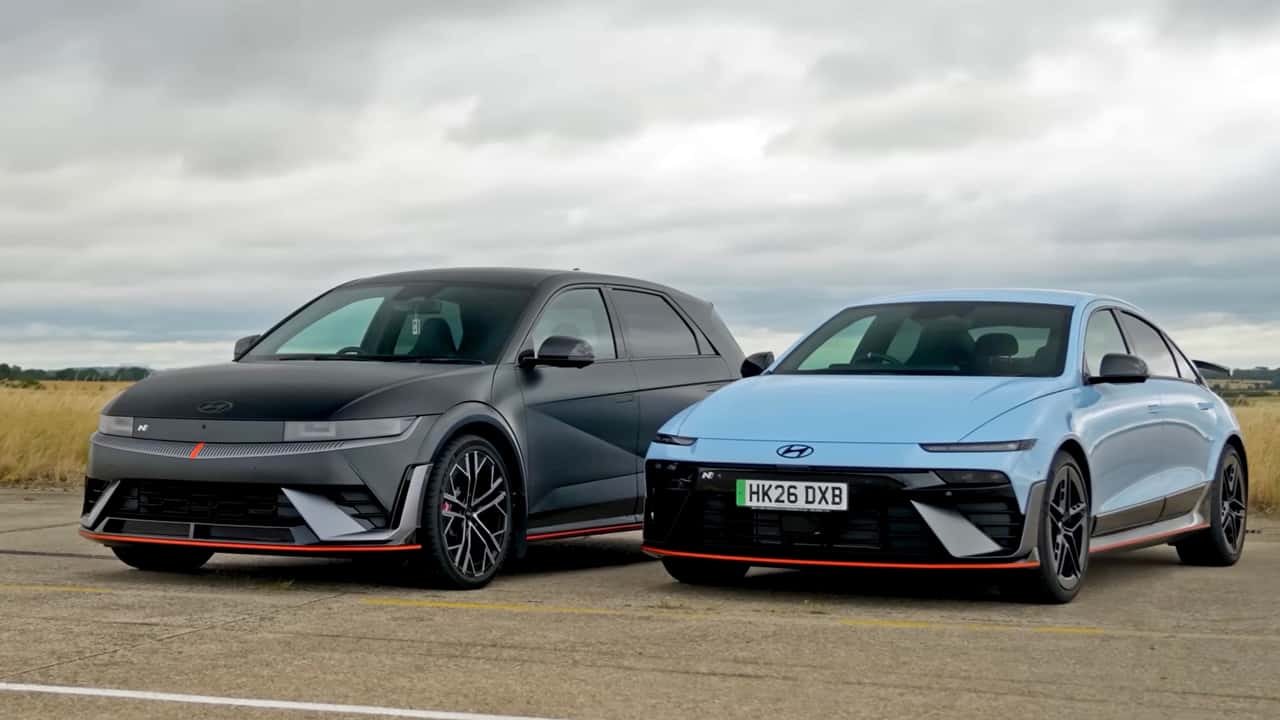

- The Ioniq 5 N and 6 N share key hardware but deliver very different driving experiences.
- The Ioniq 6 N is slightly quicker, though extracting that performance takes much more effort.
- Hyundai is using software to give each N EV its own distinct character.
The Hyundai Ioniq 5 N was a game-changing electric vehicle that has influenced the entire industry with its handling, performance, and a pretend-gasoline powertrain. It’s such a sweet thing to drive with its blend of power, control, and the noises it makes to try to trick you into forgetting that it’s electric.
Hyundai took what it learned from the Ioniq 5 N and applied it to the Ioniq 6 N, which borrows its battery and motors but mounts them in a lower-slung, lighter sedan body. You would think this should make it an even more rewarding driver’s car, but this video by Driven+ raises some interesting points.

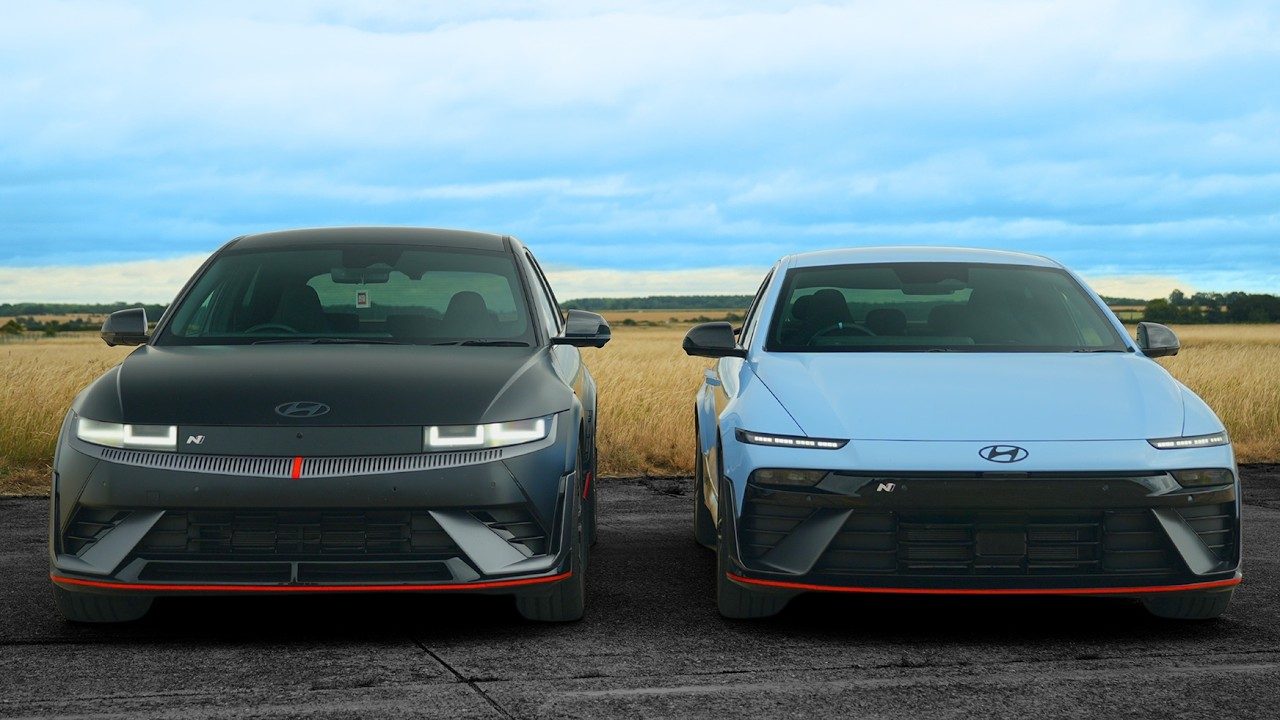
Both cars have the same dual-motor powertrain that provides 641 horsepower and 567 pound-feet (770 Nm) of torque. But because the sedan is marginally lighter, it shaves two tenths off the 0-62 mph (100 km/h) acceleration time, bringing it to 3.4 seconds. Its lower center of gravity should improve its cornering capability, but things are apparently a little more complicated and nuanced than that.
Sam Maher-Loughnan, the professional racing driver who pushed both cars to and beyond their limits on track in this Driven+ video, posted a quicker time in the Ioniq 6 N. However, achieving its advantage of less than three-tenths of a second required considerably more effort.
Sam explains that it was not hard to get the Ioniq 5 N to achieve its 49.81-second lap time. However, getting the Ioniq 6 N down to 49.52 seconds proved difficult because of what he described as “knife-edge” handling. Getting the sedan to actually exploit its weight and chassis advantage over the Ioniq 5 N seems to take a lot of courage.
Some of that difference will come from the Ioniq 6 N’s lower body, shorter wheelbase, suspension setup and different tires. But its behavior also seems deliberate, and it comes from retuned software that uses torque distribution and stability control to affect how readily it rotates and responds as the driver comes off the brakes and gets back on the power.

In other words, the 6 N’s apparent nervousness that Sam describes may be intentional. Hyundai appears to have tuned it to feel sharper and more demanding than the more forgiving 5 N. That gives the sedan a higher performance ceiling, but makes the driver work harder to reach it. Driving enthusiasts might appreciate this character and find it rewarding to extract all the performance it can offer around a track.
This shows that Hyundai isn’t afraid to tweak the N formula so that it feels different based on the car’s body style. Each car has its own distinctive role, and the Ioniq 6 N is the one with the raucous handling that rewards a brave driver willing to push the limits of handling, while the Ioniq 5 N serves up its performance without making you work for it as hard. Different software tuning plays a large part in giving them their distinct characters.
RECOMMENDED FOR YOU

Waymo Plans To Have 20,000 Cars By The End Of 2027
‘Propulsion-Agnostic’: GM Wants To Bring Tesla-Style Software Features To Its Gas SUVs, Too
The Longest-Range EVs You Can Buy In 2026
Want The Best Range Rover? Get The Electric One: First Drive
The Best EV Lease And Finance Deals In September 2026
I Drove The Electric And Gas-Powered BMW X5. I Know Which One I'd Pick.
Hyundai’s Next Two EVs Could Be A Little More Normal