
Absurdly Fast EV Chargers Are Coming To America, But Cars Aren't Ready
Forget 400 kilowatts. The next wave of electric vehicle chargers are getting ready for much faster speeds.

A few years ago, 300-plus-kilowatt stalls represented the cutting edge in EV charging. But a new trend is emerging: Charging companies in the U.S. are now rolling out hardware that can deliver 500 kW, 600 kW, or even up to a full megawatt to prepare for an onslaught of electric big rigs and next-generation electric cars.
Last month, ChargePoint revealed a 600-kW unit that it labeled as “the world’s fastest standalone EV charger.” (The all-in-one solution doesn’t need a separate cabinet.) Also in April, Swiss firm ABB revealed plans to roll out its 1.2 megawatt chargers. Last week, Kempower unveiled its new charger with a Megawatt Charging System connector that can dispense 1.2 mW, plus a CCS plug that can do 560 kW.

Ionity-branded Alpitronic HYC1000 chargers
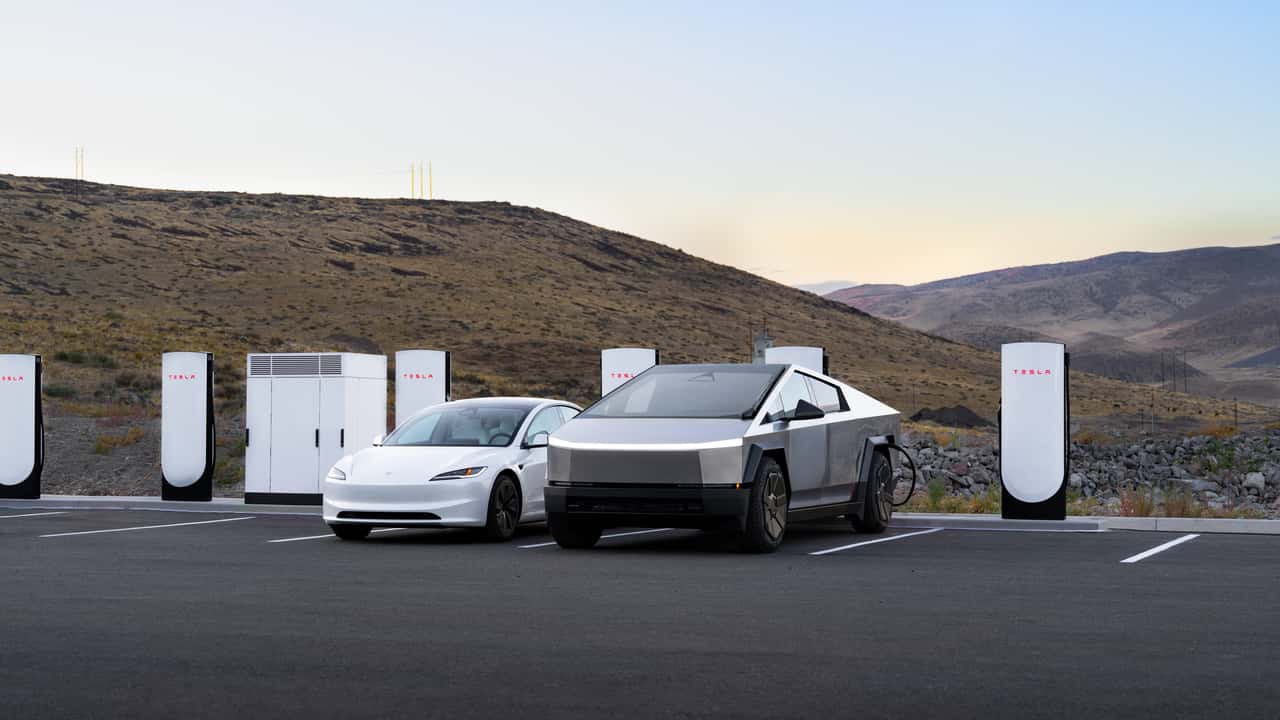
Not too long ago, Italian charging company Alpitronic unveiled its new chargers which can deliver up to 1,000 kW to semi trucks and up to 600 kW to passenger EVs. Those will start rolling out in the U.S. early next year, a company spokesperson told InsideEVs. Tesla Superchargers were historically capped at 250 or 325 kW. Now America’s biggest charging player is gradually rolling out its 500 kW V4 stations.
Charging has long been a hurdle in the broader adoption of EVs. And despite the slowdown in EV sales, the industry is now gearing up to deploy technology that could make EV charging as quick and convenient as refueling a gas car.
These cutting-edge, higher-powered stations also have another benefit: They allow more EVs to charge simultaneously at really high speeds without cutting power when traffic is high. They can deliver megawatt charging speeds to a single port, or spread that load intelligently across multiple chargers.
“The idea is to be able to distribute load across the individual chargers based on EVs’ power draw capacity and current need,” Loren McDonald, the CEO and chief analyst at Chargeonomics, told me.
Alpitronic HYC1000 Distributed Megawatt Charging
Think of it this way: If the previous-generation Chevy Bolt and a Lucid Gravity pull into the same charging location, there's no conflict. The Bolt gets the 55 kW it can actually accept; the Gravity can still charge at 400 kW without wasting any power. Charging networks have been doing this "dynamic load balancing" for years. But the ability to deliver megawatt speeds to a single port, while maintaining high power across every stall during peak traffic, is where the broader industry is now headed.
There’s a problem, though. As the likes of BYD and Geely democratize megawatt charging in other parts of the world, there’s no passenger EV in the U.S. currently that can accept over 500 kW of power. The Tesla Cybertruck has been observed pulling 500 kW at V4 Superchargers, even if its official specs still list a max of 325 kW. Other than that, the fastest-charging EVs in the U.S. on sale or coming soon, like the Lucid Gravity, Porsche Cayenne Electric, and BMW iX3, all have a 400 kW ceiling.
Walmart-branded ABB E-mobility A400 DC fast chargers
Still, charging companies in the U.S. are pressing ahead, future-proofing their networks with the expectation that EV demand will rebound and that more capable, high-tech EVs will eventually reach American shores.
“Some of the high-power Chinese cars may find their way to the U.S. in the next five years, so these higher-power capable chargers future-proof them,” McDonald said. “We might also see some 500 kW capable BEVs in the next few years in the U.S.”
Ionna, a charging network backed by several automakers, deploys 400 kW stations. Seth Cutler, the company’s CEO, told InsideEVs that’s plenty for today’s cars, but that it’s always thinking about where things will go next.
“We are evaluating higher power,” he said in an interview on the Plugged-In Podcast this week. “I think it's just a question of timing—when does it make sense to go make those changes—and at which sites in which parts of the country.”
Kempower Mega Satellite Flex chargers.
China and Europe are pulling ahead with bleeding-edge tech like BYD's 1.5-megawatt "Flash" charging stations. But charging networks in North America aren’t sitting idle, either. The infrastructure is getting there. Now it's on the automakers to catch up and to bring those blistering speeds to life.
“It takes two to tango, so to speak, right? So we can put in whatever high-power charger we want. The vehicles have to be there to accept it,” Cutler said.
Additional reporting by Tim Levin
Related Stories
RECOMMENDED FOR YOU
'A Weird Religious Stance:' GM Exec Says Ditching Radar For Self-Driving 'Ignores Physics'
How Cheap Chinese EVs Are Sneaking Around Europe's Tariffs
The Tesla Model Y's Structural Battery Was Nearly Impossible To Repair. The Cybercab Fixes That
GM Didn't Want Hybrids. Now It's Putting Them In Its Biggest SUVs: Report
This Cheap Tesla Model S With 135,000 Miles Has A Surprising Amount Of Range Left
ChargePoint’s New Charger Can Hit A Whopping 750 kW. That's Not Even Its Best Trick.
Tesla Designed The Cybercab To Use LFP Batteries In The Future