
Why The Slate Truck Will Use LFP Batteries After All
Slate's $24,950 pickup truck will be powered by an LFP battery made by Gotion in Illinois. A top executive explains the move.
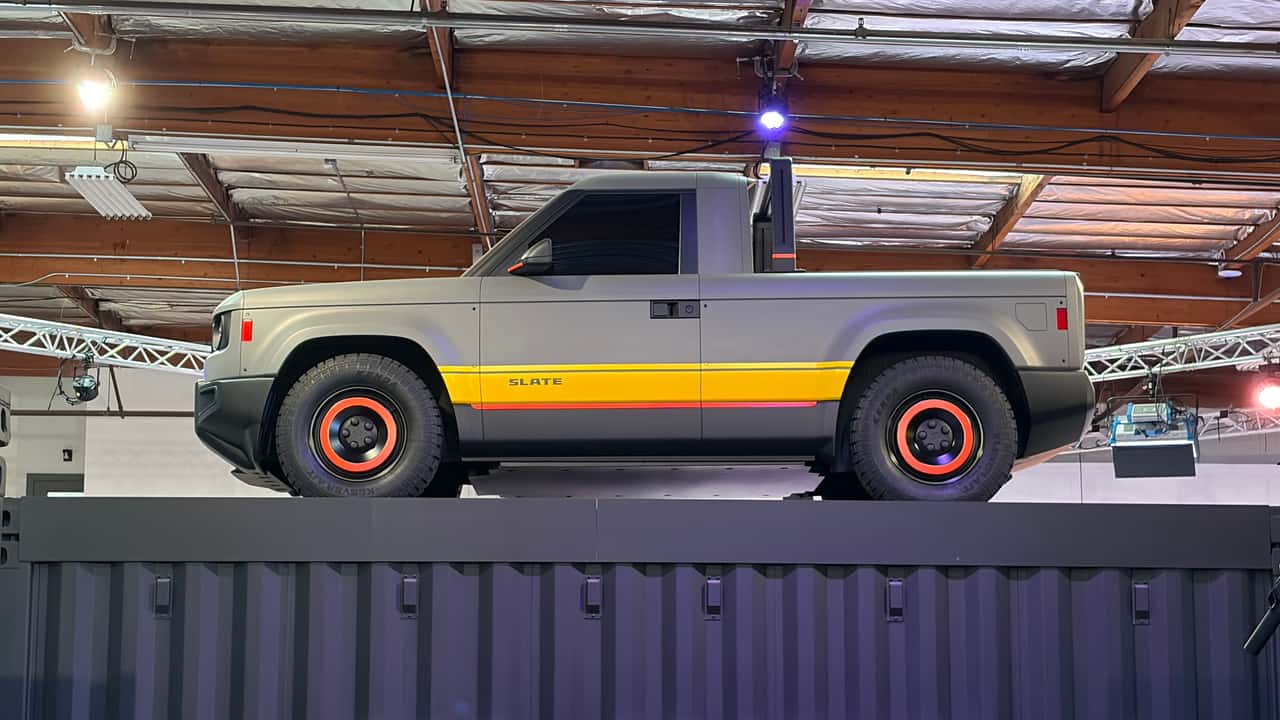

Slate will ship its minimalist, ultra-customizable pickup later this year with a different battery pack than the one it announced when it first revealed the EV last April. The Jeff Bezos-backed auto startup has swapped out its planned nickel manganese cobalt (NMC) battery for a lower-cost lithium iron phosphate (LFP) pack from a new supplier, the company announced Wednesday.
The new batteries will be supplied by Gotion, Chris Barman, Slate’s president of vehicles, told InsideEVs. Gotion will make them at its factory in Illinois, not too far from Slate’s own plant housed in a former printing facility in Indiana.

LFP batteries are more durable and cheaper than the high-nickel cells that power Teslas and most other U.S.-market EVs. The chemistry trades away energy density, however, delivering less driving range than a similarly sized NMC battery pack. Growing in popularity and capability, LFP always seemed like a natural choice for affordability-obsessed Slate. At its just-announced base price of $24,950, Slate’s two-door pickup will be both America’s cheapest new EV and its most affordable truck when sales kick off by the end of this year.
Early on, Slate didn’t choose LFP in part because of the $7,500 federal EV tax credit’s domestic sourcing criteria for batteries, Barman told InsideEVs previously. Qualifying EVs needed to meet increasingly strict requirements around where their battery components and minerals came from, whether that was North America or a trading partner. Any connection to so-called “foreign entities of concern,” like China, was a no-go.

The LFP supply chain is heavily concentrated in China, and U.S.-based manufacturing is in its infancy. So Slate went with NMC batteries from South Korea’s SK On. Last year, Congress’ One Big Beautiful Bill Act tossed out the incentive, taking with it any chance of Slate hitting its initially promised price tag of under $20,000. The shakeup also gave Slate the flexibility to explore other battery options, Barman told me. On top of that, LFP became more available between Slate’s early days and now, she said.
“When we first started on the journey, and this is going quite a few steps back into 2022, there weren't a lot of LFP options,” she said. “We had been talking to Gotion all along the way. Part of the reason that we didn't select them is because they wouldn't have met the foreign entity of concern requirement, and at that time they didn't quite have the capacity that we needed.”
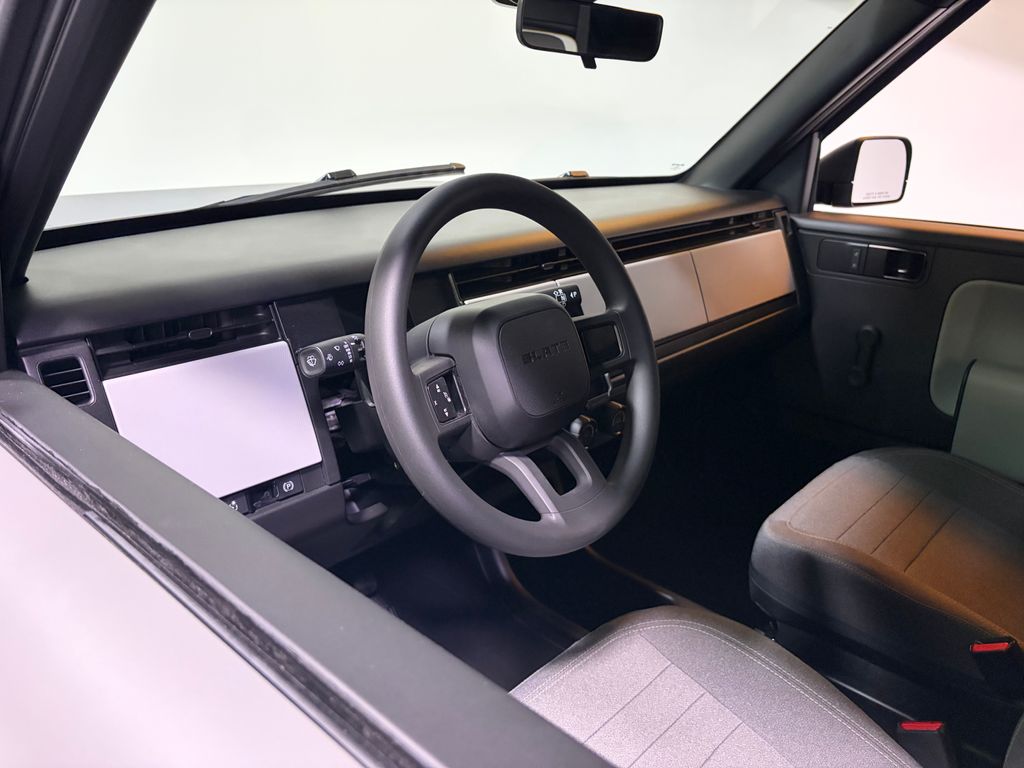
The new 65-kilowatt-hour LFP pack, she said, is cheaper than what Slate had been planning to use. Plus, having the battery pack produced 90 miles away from where the vehicles are manufactured helps Slate save on logistics costs. Using prismatic (AKA box-shaped) cells also allowed the company to shift to a module-free design wherein the cells stack up directly into the pack, Barman said. The design, which many other automakers are pursuing in their latest EVs, lets Slate fit more energy into the vehicle’s small footprint. As a result, the Slate’s range jumped from an estimated 150 miles last year to 205 miles in production form.
“We were excited to be able to provide more range and really maintain the price point that we were looking to hit,” Barman said.
In a low-range vehicle, LFP makes sense for another reason: The batteries can be charged to 100% and run down close to zero regularly, unlike other cells, which are happiest when you leave a buffer on either end. But the switch comes with some trade-offs, Slate engineers told me. The LFP pack has a slightly lower voltage, so power output has dropped from 201 horsepower to 181. (Acceleration remains unchanged at 8 seconds to 60 mph.)
Previously, Slate planned to offer a larger battery option with an estimated 240 miles of range. That would have landed it closer to cheap-EV rivals like the Chevy Bolt, which has 262. But the new LFP pack fully utilizes the space in the truck’s underbody, so offering a higher-range vehicle would require a switch to a higher-density chemistry, Barman said. Slate executives also felt that 205 miles was enough.
“Being in that sweet spot, it felt like a good place to just have a single battery and read the room from there,” said Eric Keipper, the startup’s head engineer.
Will America agree? We’ll find out soon enough. Slate opened up preorders today, and it plans to start churning out trucks in the fourth quarter of this year.
Contact the author: Tim.Levin@InsideEVs.com
RECOMMENDED FOR YOU
Slate Opened Its First Showroom Where You Can Test Drive Its $24,950 Electric Pickup Truck
BMW iX5 First Drive, GM's Big Tech Plans, And Tesla Cybercab Deliveries Are Coming Soon
The Roadster Will Have Tesla’s Most Advanced Battery Pack Yet
Tesla Promised To Bring The Cybertruck To Australia And New Zealand. But It's Never Coming
Tesla Supplier Reports Record Earnings From EV And Energy Storage Batteries
Why Did The Electric Range Rover Take So Long? A Lot Of Reasons
China Wants Mass-Produced Solid-State Batteries By 2030. CATL Knows That's Hard