Home
News
Battery Tech
Battery Startup Raises $300 Million Promising 20% More EV Range
Sila says its silicon anodes could deliver 20% more range as it scales U.S. production for Mercedes, Panasonic and other automakers.
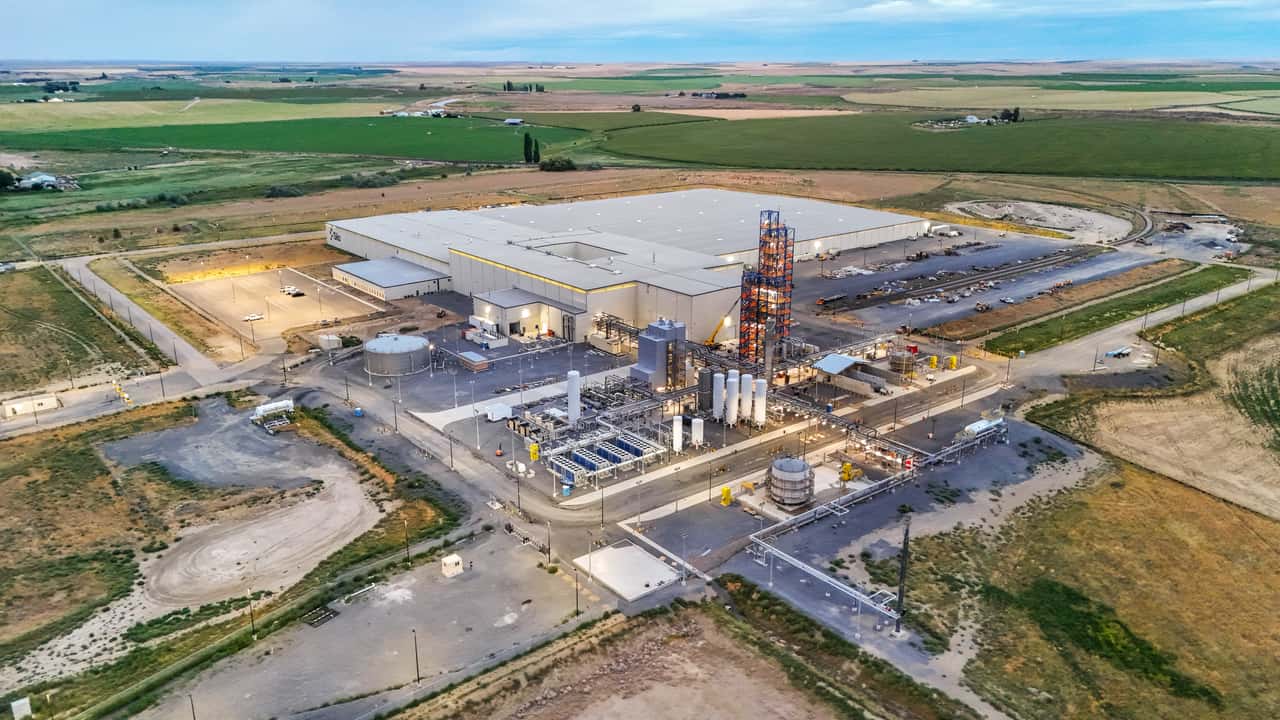
Photo by: Sila
Andrei Nedelea 
By: Andrei Nedelea
Jul 22, at 4:53am ET
Add InsideEVs as a preferred source in Google
- (https://twitter.com/intent/tweet?url=https%3A%2F%2Finsideevs.com%2Fnews%2F802397%2Fsila-silicon-anode-lithium-ion%2F&text=Battery%20Startup%20Raises%20%24300%20Million%20Promising%2020%25%20More%20EV%20Range&via=InsideEVs)
- copy
Share
Comment
- Sila says its silicon-carbon anodes could give EVs 20% more range without larger battery packs.
- The startup raised $300 million to expand U.S. production at its Moses Lake factory.
- Sila plans to supply Mercedes and Panasonic as it targets an annual output of up to 250 GWh.
Electric vehicles could gain 20% more range without needing a bigger battery pack, according to U.S.-based battery materials startup Sila. The company says that instead of replacing the widespread lithium-ion battery altogether, it wants to improve one of its most important components: the anode.
Sila says its Titan Silicon silicon-carbon anode material, which it spent the last 15 years developing, could deliver the stated range gains over a normal graphite anode of the kind most lithium-ion batteries already use. It touts increases of between 20% and 40% in the battery’s energy density, and it also says this solution enables faster charging, but without saying how much faster.
The startup says it has now secured $300 million in private funding to ramp up production at its factory in Moses Lake, Washington (pictured), as well as support a planned second phase of the site’s expansion.
 EV Batteries With Higher Silicon Content Are Coming: GM Exec
Silicon Anode EV Batteries Are The Real Deal, But It's Complicated
Amprius Unveils High-Energy Silicon Anode Cell for eVTOL And EV Applications
Mercedes EQG To Feature Revolutionary Range-Boosting Battery Technology
Its 160-acre Moses Lake factory began operating in fall 2025. The company is now ramping production from an initial capacity of 2 gigawatt-hours and says the facility was designed to achieve an annual production capacity of 250 GWh within five years. That would make it the world’s largest anode production facility.
Sila already has contracts to supply its anode material to Mercedes-Benz and Panasonic Energy, along with other companies that were not named. Mercedes previously announced plans to use Titan Silicon in a future electric G-Class, while Panasonic intends to incorporate the material into next-generation EV battery cells.
While silicon can store more lithium than graphite, it also swells and contracts as a cell charges and discharges. That physical expansion can damage the anode, accelerating battery degradation, which is why most production batteries currently use only relatively small quantities of silicon blended with graphite.

Stay informed with our newsletter every weekday
back
Subscribe For more info, read our Privacy Policy & Terms of Use.
What do you think?
View
Comments
But silicon-rich anodes are making their way into production cars. The Mercedes-AMG GT 4-Door EV has silicon in its battery anodes, which is part of the reason it has a claimed 10% to 80% charging time of 11 minutes and a peak charging power rating of 600 kW.
It’s unclear if its cells are supplied by Sila, but the car seems to demonstrate why automakers are increasingly interested in this anode material. General Motors also expects automakers to gradually increase the silicon content of their batteries. It says the technology could allow manufacturers to shrink battery packs, lower vehicle weight, and eventually reduce costs without waiting for an entirely new type of battery to reach production.
We want your opinion!
What would you like to see on Insideevs.com?
Take our 3 minute survey.
- The InsideEVs team
Share this Story
- (https://twitter.com/intent/tweet?url=https%3A%2F%2Finsideevs.com%2Fnews%2F802397%2Fsila-silicon-anode-lithium-ion%2F&text=Battery%20Startup%20Raises%20%24300%20Million%20Promising%2020%25%20More%20EV%20Range&via=InsideEVs)
- copy
GO TO COMMENTS
(
)
Got a tip for us? Email: tips@insideevs.com
View all comments ( )
Trending
The Mercedes-Benz EQS Sedan, EQS SUV, And EQE SUV Soldier On For 2027
The BMW iX5 Was Driven Until It Died. It Had A Surprising Amount Of Hidden Range Left
What We Both Thought After Driving The Rivian R2
Aptera Finally Built Its First Car For Customer Delivery
Latest Stories
- Tesla's EVs Could Get One Big Upgrade Next Year Nov 23 - News -
- Hyundai Ioniq 5 Maintenance Guide: What Needs Servicing And What Doesn’t Nov 23 - News -
- 2027 Mercedes GLA Electric First Drive: A Big Upgrade Nov 23 - Car Reviews -
- China’s SC01 EV Sports Car Will Get Its Own Factory In Europe Nov 23 - Europe -
- The BMW iX5 Was Driven Until It Died. It Had A Surprising Amount Of Hidden Range Left Nov 23 - Range / Efficiency -
- The Mercedes-Benz EQS Sedan, EQS SUV, And EQE SUV Soldier On For 2027 Nov 23 - Pricing -
- The U.S. Let Volvo Keep Selling Cars. Polestar Got A No. What About Mercedes? Nov 22 - News -
RECOMMENDED FOR YOU
Ford Just Started Fathom LFP Battery Production In Michigan. It's A Big Deal
Tesla's EVs Could Get One Big Upgrade Next Year
Solid-State Cells Can Make The U.S. Competitive In Batteries Again: CEO
Hyundai Ioniq 5 Maintenance Guide: What Needs Servicing And What Doesn’t
Ford Tested 36,000 Mustang Mach-E Batteries. Here’s How They Held Up After 100,000 Miles
2027 Mercedes GLA Electric First Drive: A Big Upgrade
China Has An Iron Grip On EV Batteries. Here's America’s Plan To Break It