
Forget Solid-State. This EV Battery Breakthrough Is Ready To Upend The Market Now
General Motors is betting on silicon anodes as the next leap in EV battery technology.
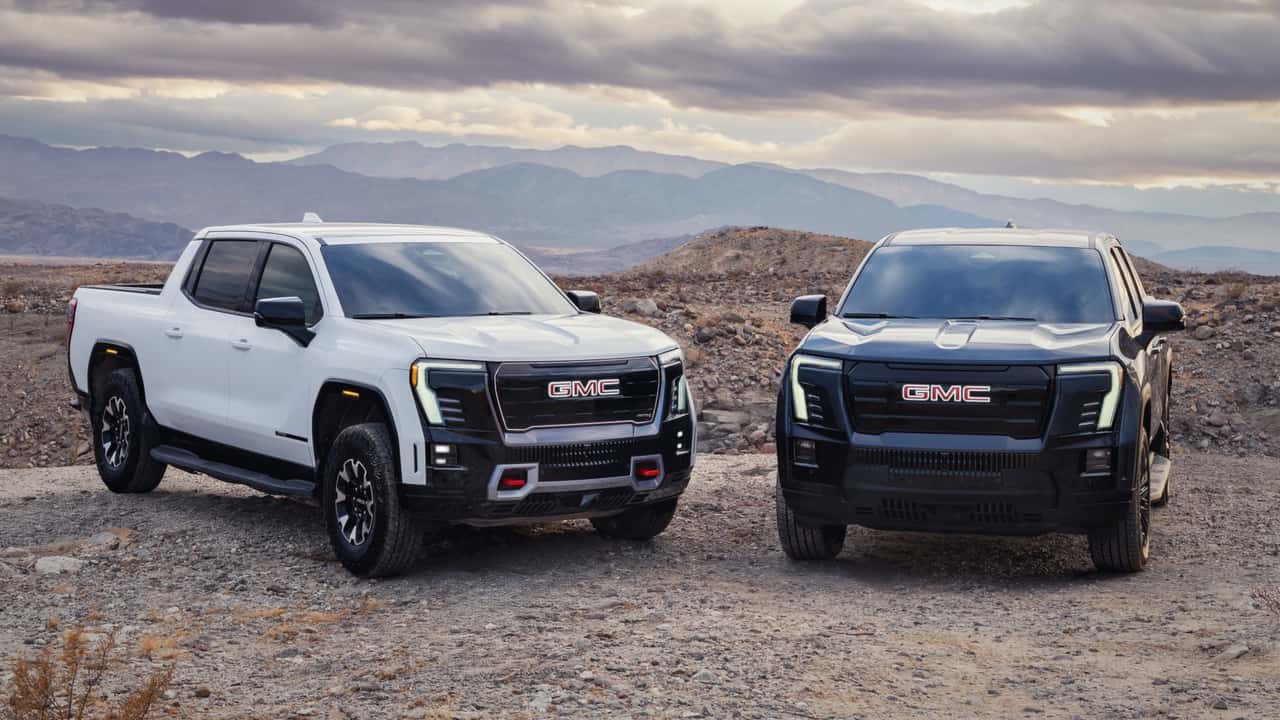

Solid-state batteries for electric vehicles have been grabbing headlines over the past few years, but most automakers don’t expect them to be ready for commercialization before the end of the decade. Battery companies expect several other chemistries to arrive first, including an advanced version of current lithium-ion batteries with silicon in the anodes.
“We believe silicon is the next anode technology,” Kurt Kelty, the vice president of battery and sustainability at General Motors, told me in an interview at last week’s GM Empower conference in San Francisco.

Amprius Technologies: silicon anode Li-Ion battery cells
The goal remains the same: to make EVs drive farther, charge faster, and be safer. The anode can help automakers achieve that. It is a critical battery component, storing ions during charging and releasing them during discharging.
Today, anodes are almost universally made from graphite, a material tied to expensive, environmentally fraught mining, with more than 90% of its processing concentrated in China. Battery makers have stuck with it anyway, because graphite keeps batteries stable and energy-dense. But by reducing the amount of graphite in the anode and increasing the amount of silicon, you can massively improve batteries, even if you still need some graphite to manage the swelling that would occur in a pure silicon anode.
A pivot away from pure graphite anodes is now already underway across multiple sectors. Silicon anode batteries are already powering high-end smartphones, and the technology is now being adapted for automotive-grade applications.
Group14 silicon anode battery
“We're definitely deep on silicon,” Kelty said. “What you're going to see in the short- to mid- term is silicon anodes being deployed in greater percentages,” he added.
GM didn’t specify how far along it was in developing silicon anodes, or how much range or charging improvements are expected in these future batteries. But several battery startups have made the benefits of silicon anodes plenty clear.
California startup Amprius Technologies claims an EV with 310 miles of range on a traditional pack could deliver 574 miles with its silicon anode battery. Sila, another American startup, says its high-silicon anodes can boost range by 20% with no increase in pack size.
Sila's silicon anode U.S. battery plant in Moses Lake, Washington.
What makes silicon anodes particularly compelling right now is their development timeline compared to solid-state batteries. Some high-end silicone anode batteries are already in production.
The McMurtry Spéirling hypercar, which made headlines for its ground-effect aerodynamics and record-breaking run at the Goodwood Festival of Speed, is powered by Taiwanese company Molicel’s batteries, which use Group14’s silicon anodes. The result: enough discharge power to launch the Spéirling to 60 miles per hour in just 1.55 seconds and through the quarter mile in eight seconds.
Mercedes-Benz has also installed silicon-containing anodes in the new AMG GT, which enables its extreme charging performance. The automaker claims it can juice up from 10% to 80% in just 11 minutes at its peak charging rate of 600 kilowatts.
GM's Ultium EV battery pack.
The challenge is to make these batteries at scale, drive costs down, and install them into more affordable models, not just high-performance cars. It looks like efforts are already underway to make that happen.
Sila’s U.S. factory in Moses Lake, Washington, is already operational with the initial capacity to make battery materials for up to 50,000 EVs per year. It also has locked supply agreements with Mercedes-Benz and Panasonic, Tesla’s primary battery supplier. If demand grows, it could expand the facility to make anode materials for 2.5 million EVs.
U.S. battery company Group14 has also started producing silicon-anode battery materials at its factory in South Korea. It secured full ownership of the joint venture plant with SK Inc. last year, and will now produce up to 10 gigawatt-hours of battery materials, enough to power over 100,000 EVs.
General Motors' prismatic LMR battery cell.
Even though silicon anodes are the near- to mid-term solution for improving EV battery performance, Kelty said GM will continue to work with multiple chemistries, matching the right battery with the right application.
The automaker is developing the lower-cost lithium-manganese-rich battery for large SUVs and pickups due out in 2028. It already uses high-nickel batteries for most of its line-up and lithium-iron-phosphate on the Chevy Bolt. Plus, it recently announced that it’s also developing sodium-ion batteries for grid-scale energy storage systems.
On top of all that, Kelty said GM is also keeping a close eye on solid-state batteries, which researchers say is the “holy grail” of battery technology that could potentially eliminate range anxiety and make charging as fast as refueling gas.
“We've got a bunch of solid-state prototypes in our labs,” he said, adding that testing of solid-state batteries was underway at the automaker’s labs. “We need to know what the latest and greatest [technology] is.”
All said, it’s plenty clear that the battery race has no finish line in sight. There’s a long road ahead comprising multiple battery chemistries, similar to how combustion engines evolved over a century. Thanks to these constant improvements, the range and charging times we see in a few years could be dramatically different from what’s common now.
Contact the author: suvrat.kothari@insideevs.com
Related Stories
RECOMMENDED FOR YOU
GM And LG Restart EV Battery Production In Ohio After Seven-Month Shutdown
Who Needs Leather? Bentley's First EV Will Offer Merino Wool Seats
EVgo And GM's Gas Station-Like Flagship Charging Network Is Growing Fast
Is Telo Trucks The Real Deal? I Interviewed The Founders To Find Out
GM Exits Planned $3.5B Battery Factory, Leaving Samsung SDI In Full Control
The Results Are In: Scrapping Your Gas Car For An EV Is Better For The Climate
The McLaren P1 Is Getting A Huge Battery Upgrade With 3X The Original Capacity