
This Ex-Rental Tesla's Battery Was Heavily Degraded. Then The Decline Slowed
After losing 20% of its capacity in its first two years, this abused Tesla’s battery degradation appears to have almost plateaued.


- This ex-rental Tesla had already lost 20% of its battery capacity by 122,000 miles.
- Its battery health then dropped from 80% to 76% in a year, then only slipped to 75% over the next 14 months.
- The test suggests that early EV battery degradation can slow dramatically rather than continue in a straight line.
Buying a rental car can be a gamble, regardless of what powers it, because people aren’t gentle with their rentals and cars can see a lot of abuse. This 2022 Tesla Model 3 Long Range Dual Motor owner picked up the car when it was two years old, but its rough life as a Hertz rental left it with just 80% of its original battery capacity when they bought it in 2024, with the odometer reading 122,000 miles.
The owner, Fast Forward EV, then measured the degradation of its NMC battery pack once a year. After the first year, the remaining capacity had gone down another 4% to 76%. Now, when the test was performed again in May—14 months after the previous one—the battery had only lost an additional 1%, showing a state of health of 75%, with just shy of 156,000 miles.

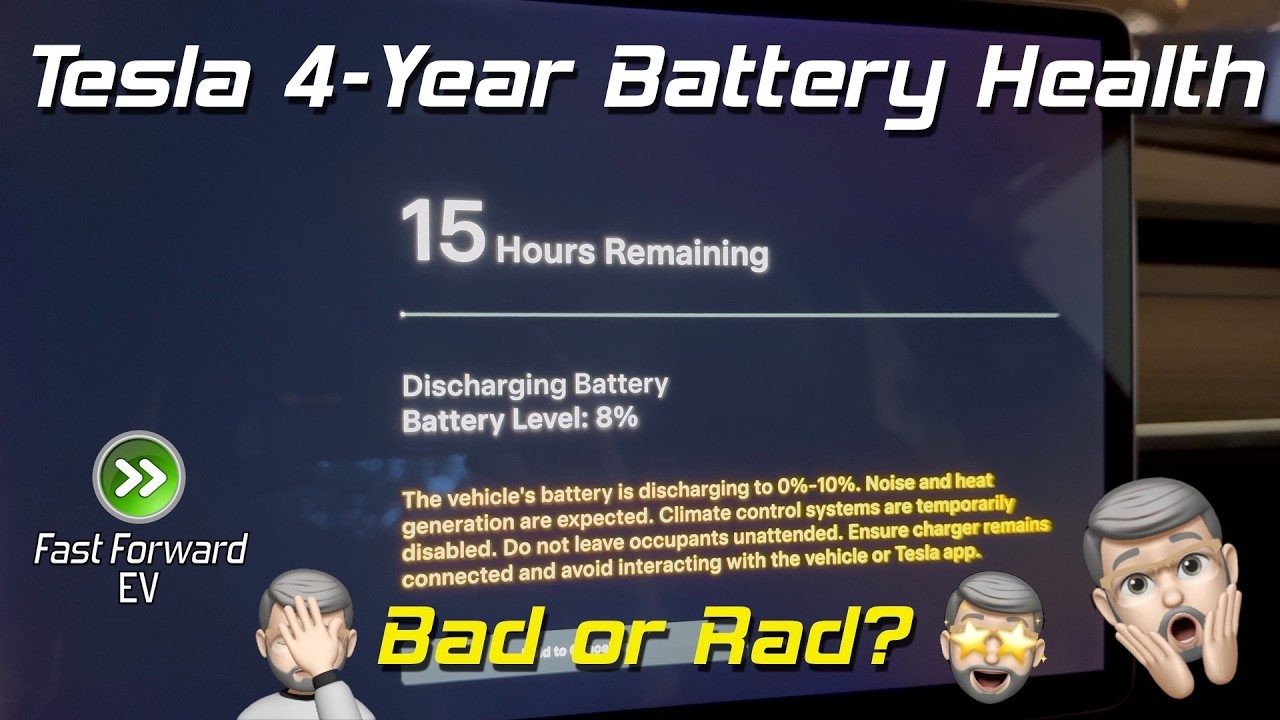
These results came courtesy of the built-in Tesla battery health check, which is pretty accurate. It requires the vehicle to be plugged in, discharges the battery to near empty, then fully charges it to 100%, measuring how many kilowatt-hours it can still take, as well as checking for cell imbalance and other potential problems with the pack.
While we don’t have a whole lot of information to go on, it’s pretty clear that this Model 3 wasn't well cared for during its two years as a rental car. Losing 20% of its battery capacity in just two years is significant and well above what would be considered typical, even for a vehicle that sees frequent fast charging.
It’s likely that this heavy degradation can be attributed to both frequent fast charging to 100% and running the car down to near empty. The car probably also sat outside for extended periods without being plugged in, enduring temperature extremes as it expended energy to try to keep its pack at an optimal temperature. This also takes a toll on the battery over time.

EV battery experts say that the heaviest battery degradation happens early on, which is likely another factor at play in this particular instance. It’s also interesting to see that after the current owner bought the car, it lost 4% in the first year and just 1% over the next 14 months, suggesting that the rate of degradation had slowed, even though they don’t say how the car was used and whether the use pattern differed from one year to the next.
That’s what makes high-mileage EVs so useful to study, especially ones with heavily degraded batteries. A scary state-of-health number rarely tells the whole story on its own, because degradation is not a linear countdown to failure. It’s always interesting to see data from multiple subsequent tests to understand how the degradation rate changes and whether the pack has settled into a slower, more predictable aging curve.
In this case, the answer seems to be the latter, which makes this battered rental Tesla less of a warning sign and more of a rolling reminder that early degradation and long-term battery failure are not the same thing. If the current owner looks after the car, charges it at home, keeps it between 20% and 80%, and maintains the battery, they could get many more years of use out of it, even if it won’t come anywhere near its original range numbers.
RECOMMENDED FOR YOU

They Bought A 78,000-Mile Tesla With An Unknown Past. Then They Tested The Battery
'Most Companies Are Struggling': Executive Shares An Uncomfortable Truth About Solid-State EV Batteries
The 17 Cheapest Electric Cars In 2026 (Updated)
This New All-In-One Range Extender Is Ready To Go Into Any Electric Truck
Tesla Recalls 20,000 Cars Over Uber-Bright Headlights
Chinese Regulators Recall Millions Of EVs Because Their Mechanical Door Handles Are Too Hard To Find
One Owner Just Did What Tesla Couldn't: Upgrade An Older Car To HW4