
A Driverless Xiaomi Electric SUV Just Lapped The Ring. We Have Questions
A 10-minute Nurburgring lap time isn't impressive. The fact that there is nobody in the driver’s seat is what makes this unique.
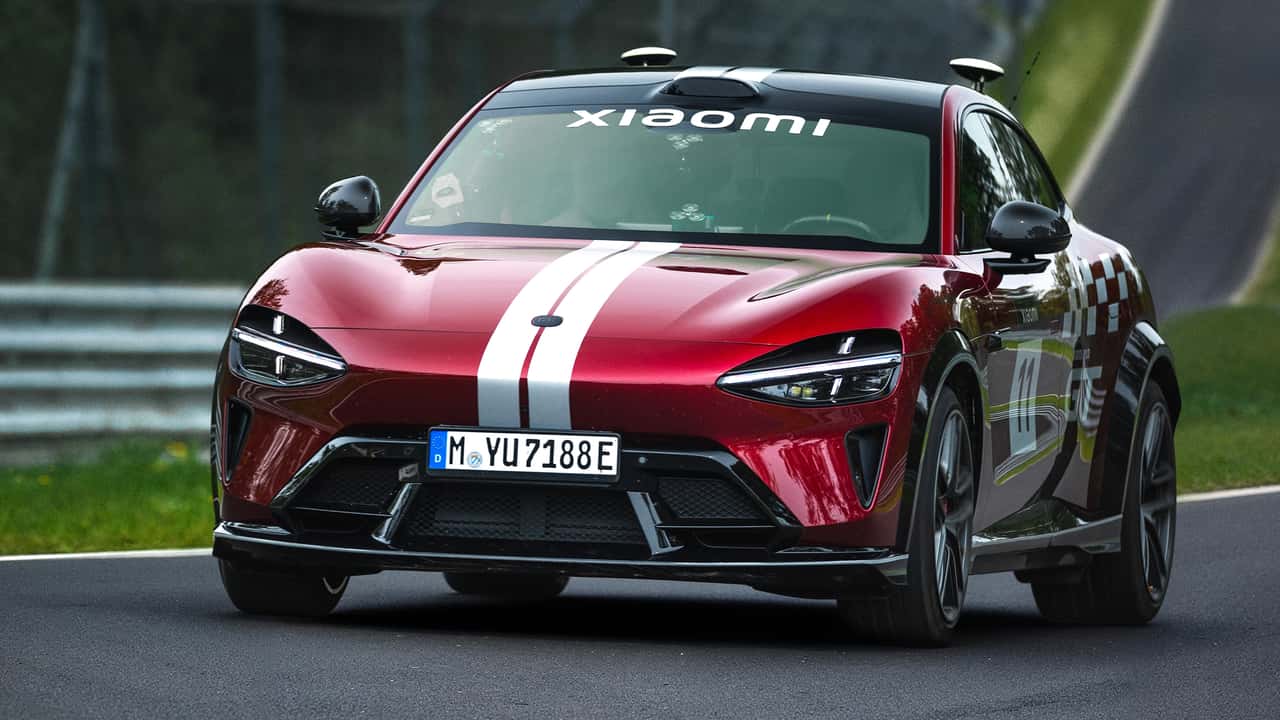

- Xiaomi’s YU7 GT completed a driverless Nurburgring lap over three minutes slower than the human run.
- The 10-minute lap shows autonomy can survive the Nordschleife, but not yet attack it like a pro driver.
- Xiaomi’s run is impressive, but the closed-track setup leaves unanswered questions about how autonomous it really was.
Driverless laps of racetracks are nothing new. But a lap of the Nurburgring Nordschleife with nobody behind the wheel might signal the beginning of a whole new era for track driving.
Xiaomi said on Monday that its YU7 GT electric crossover had completed a fully autonomous lap of the nearly 13-mile (21-kilometer) German circuit in 10:29.483. That may not be quick by Nurburgring standards, or even by YU7 GT standards, but it is still a huge accomplishment, albeit slightly strange seeing nobody piloting the EV.
Autonomous vehicles are mainly proliferating in the ride-hailing, delivery, and trucking industries. But this new run might indicate that driverless technology could have use cases far beyond public roads.


The Chinese company is no stranger to the legendary racetrack. Its SU7 Ultra electric fastback once held the EV lap record before it was beaten by another Chinese car, BYD’s YangWang U9 Xtreme. But while these cars can post lap times under the 7-minute mark, the driverless YU7 GT took much longer.
With nearly 1,000 horsepower from its electric drive units, allowing 62 miles per hour (100 km/h) in under 3.0 seconds, the YU7 GT has the hardware to put most other SUVs to shame around a track. With a human driver, it clocked a 7:34.931 lap, making it the fastest SUV around the Ring, outpacing the two previous record holders, the Audi RS Q8 Performance and the Porsche Cayenne Turbo GT, by two and four seconds, respectively.
It also looks like the YU7 had the track all to itself—it encountered no other cars that we could see in the onboard video. So while this is still impressive for a first attempt, it would have been even more so if we had seen it autonomously pass other cars or let faster ones go past, adapting to what was around it. But again, this was only the first time such a record has ever been attempted. We might see driverless laps evolve to handle more complex scenarios in the future.

During its driverless laps, it was clear that it braked much earlier than professional human racers. It also avoided the curbs and generally behaved cautiously around the corners. That’s why it was nearly three minutes slower—which is a lot in the racing world—even on an ultra-long track like the Nordschleife. However, Xiaomi admitted that this was just the start of something bigger, hinting at more such stints in the future with potentially faster lap times.
“This is not the end, but a new beginning to reach even greater heights,” the company said in a post on the social media platform Weibo. What we don’t know is how Xiaomi prepared this lap, what went into it, and how much track-specific training it received. It’s frankly unclear just how autonomous this lap really was, and whether a teleoperator was driving the car remotely. And not knowing these nuances somehow makes the so-called driverless lap less impressive.
RECOMMENDED FOR YOU

Tesla And Turo Have A New Way To Get People Hooked On FSD
The EV Tax Credit Could Come Back. Here's What Stands In The Way
Audi Recalls 9,048 Q4 E-Trons Because The Battery Could Catch On Fire
The BMW iX3 Destroyed The Rivian R2 In A Highway Range Test
Chery Joins China’s EV Charging Race With A Bold Promise
This $400,000 RV Delivers EV Camping Without The Range Anxiety
Chinese Auto Giant Chery Wants To Crack The U.S. Market. It Thinks Detroit Could Help