
Tesla FSD Finally Reached Europe. Now Speed Limits May Slow Its Expansion
Sweden has a problem with FSD breaking the speed limit on demand.

- Sweden may oppose EU-wide approval of Tesla FSD unless Speed Offset is removed.
- Regulators worry that FSD can exceed speed limits when operating in automated mode.
- European FSD already differs from the U.S. version in speed controls and naming.
After Tesla’s Full Self-Driving was granted access to European roads for the first time in the Netherlands, it seemed like it was only a matter of time before it would expand across the whole continent. However, some states still have reservations, including the Swedish Transport Administration (TRV), which recently recommended that the EU vote against the wider rollout of FSD in its current form.
The regulator has taken issue with the ‘Speed Offset’ function that allows Tesla cars on FSD to exceed the speed limit, according to Reuters. That may seem unimportant, since you can set the cruise control to go over the limit in other cars, but it seems regulators view this function differently and consider it more of a danger when it’s part of an automated driving system like FSD.
The TRV sent a letter to the EU's Technical Committee on Motor Vehicles (TCMV) where it recommended voting against the rollout of FSD across the European bloc, stating clearly that “allowing automated systems to systematically exceed legal speed limits” is dangerous, pointing to “risks undermining both the legal framework and the expected safety benefits of vehicle automation.”
Related News
The fact that FSD can speed, as well as the system’s still untested behavior in winter conditions with heavy snow and the potentially misleading name, are all concerns raised in Europe just as the TCMV prepares to convene and vote on the matter on June 30. That's when they will decide whether the Dutch transport authority's legalization of FSD can be adopted across the EU.
Even so, Tesla cleared an important hurdle when it was approved for use on Dutch public roads in April. Since then, it has been introduced in neighboring Belgium, as well as in Denmark, Lithuania, and Estonia. It’s also pending approval in Greece, whose transport ministry accused Tesla of citing “data from the other side of the Atlantic” but ultimately conceded that running FSD should result in “a very significant drop in accidents,” according to another Reuters report published last week.
Tesla’s position on the Speed Offset feature is that while the car is doing the driving, the human driver is ultimately in control of the vehicle and can take over at any time. But for Sweden, and potentially other countries as well, that’s not a good enough explanation and does not alleviate safety concerns.

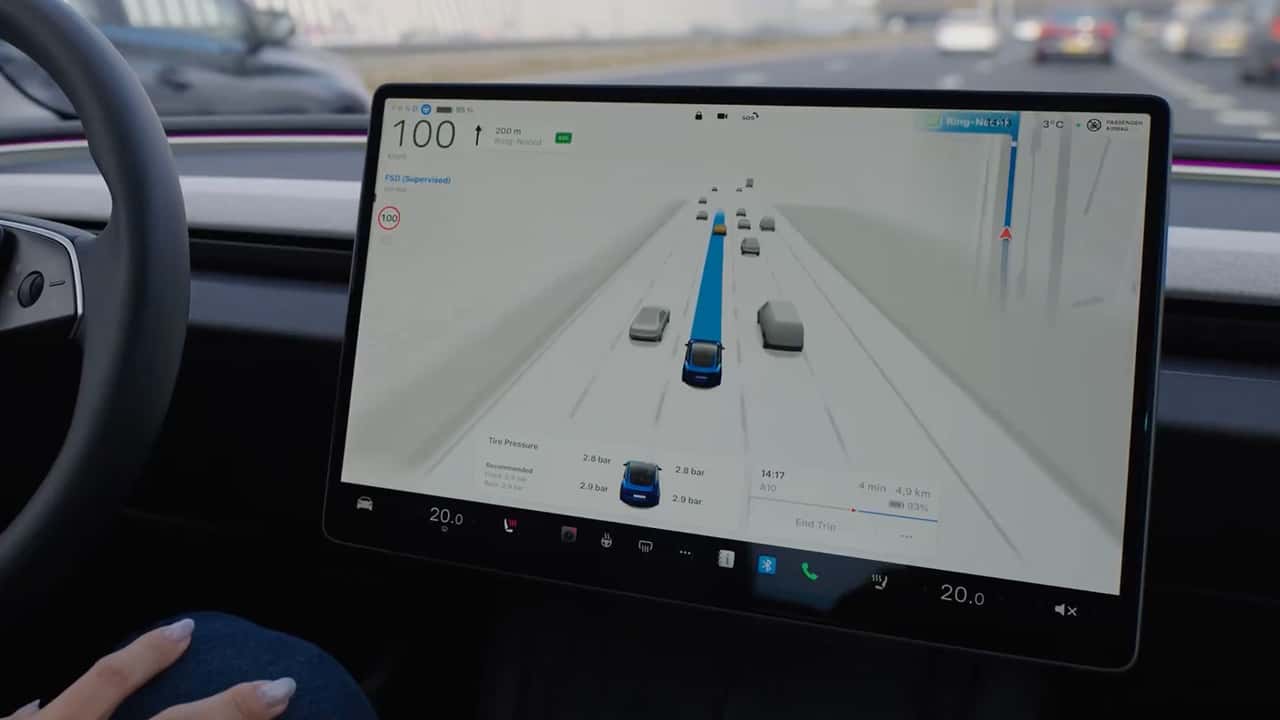
The version of FSD available on European Teslas already differs from what you get in the United States. Instead of speed profiles like 'Sloth' or 'Mad Max,' which effectively set FSD’s temperament in the U.S. version of FSD, in Europe they have been replaced by 'Max Speed' and 'Max Speed Offset' settings.
How the car handles roads with unclear or unknown speed limit is also different in the European FSD. If the car doesn’t know what the limit is, it will display the limit it believes is right for that sector, but with a small question mark on top. It also doesn’t say 'Full Self Driving' on the screen when the system is enabled, as it does in the U.S., but rather 'FSD (Supervised)' presumably to avoid confusion caused by the automated driving system’s potentially misleading name.
RECOMMENDED FOR YOU

Tesla And Turo Have A New Way To Get People Hooked On FSD
Audi Recalls 9,048 Q4 E-Trons Because The Battery Could Catch On Fire
The BMW iX3 Destroyed The Rivian R2 In A Highway Range Test
Chery Joins China’s EV Charging Race With A Bold Promise
Tesla Promised To Bring The Cybertruck To Australia And New Zealand. But It's Never Coming
Chinese Auto Giant Chery Wants To Crack The U.S. Market. It Thinks Detroit Could Help
‘Propulsion-Agnostic’: GM Wants To Bring Tesla-Style Software Features To Its Gas SUVs, Too