
Tesla Battery Partner Jeff Dahn Approaches Incredible New Battery Cell
The new battery cell chemistry would have game-changing density and an extended life span.
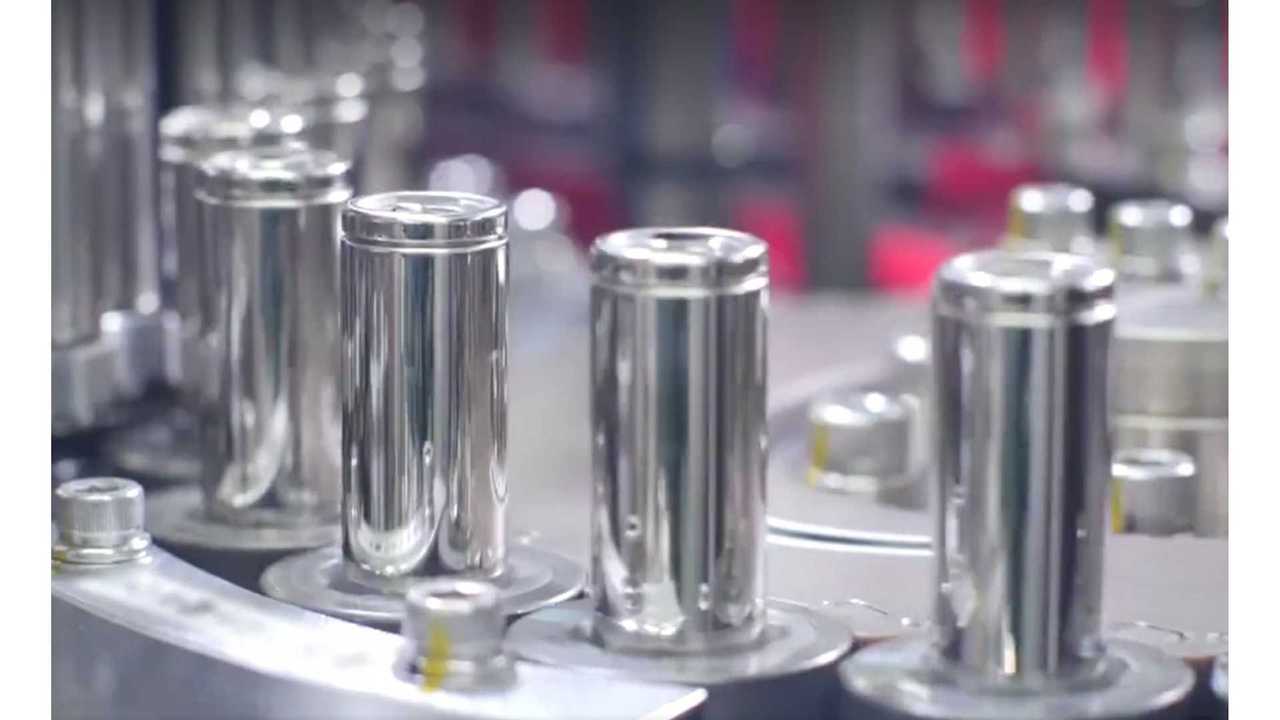

Tesla has a battery research team located in Canada. It works side-by-side with world-renowned battery expert Jeff Dahn. We've known for some time that Dahn was working on what could be a million-mile battery. He's also continuously working on new battery cell chemistries to revolutionize the industry.
With that said, we tend to hear about a "battery breakthrough" nearly every day. When diving into the details, it's usually clear that the potential breakthrough is actually years away, hasn't been tested in electric cars, and has about as many negatives as it does positives.
In this recent case, that doesn't seem to be true. In addition, we're talking about Tesla, the world's leader in the EV space, as well as Dahn, arguably one of the utmost authorities on batteries. We know that Tesla is hosting its Battery Day in the near future, and the company has been hinting at a million-mile battery and/or "secret" battery projects for some time now.
A recent report shared by Teslarati focuses on an upcoming battery cell with "revolutionary" density. The information about the cell comes from a paper put together by Dahn and his team entitled “Diagnosing and correcting anode-free cell failure via electrolyte and morphological analysis.”
The paper explains that anode-free battery cells are lighter than traditional cells and can store more energy per volume. However, this chemistry can also lose capacity quickly and tends to have a shorter life cycle.
Check Out More Tesla Battery News:
Dahn's team has learned how to take advantage of the anode-free battery cells' positives while making sure the typical negatives don't exist. He says the cell chemistry is capable of having an extended lifespan with the introduction of a dual-salt carbonate electrolyte solution, which decreases degradation. The paper reads:
“Recently, we demonstrated long-lifetime anode-free cells using a dual-salt carbonate electrolyte. Here we characterize the degradation of anode-free cells with this lean (2.6 g Ah−1) liquid electrolyte. We observe deterioration of the pristine lithium morphology using scanning electron microscopy and X-ray tomography, and diagnose the cause as electrolyte degradation and depletion using nuclear magnetic resonance spectroscopy and ultrasonic transmission mapping. For the safety characterization tests, we measure the cell temperature during nail penetration.”
Tesla already patented an electrolyte solution in the past, so it makes sense that it could be used for this battery cell breakthrough. Perhaps it's what we've all been waiting to learn about via Tesla's upcoming Battery Day on September 22.
Source: Teslarati
RECOMMENDED FOR YOU

Used EV Values Are Actually Rising. Why That's Good And Bad News.
I Drove Jeep’s First Proper Hybrid. It Feels More Like A Toyota, And That's Not A Coincidence
All The EVs That Got Canceled Or Delayed In 2025 And 2026 (Updated)
The Best Compact Electric SUVs To Buy In 2026
Someone Is Already Trying To Flip One Of The Last Tesla Model S's Built. The Price Is... Ambitious
Polestar Won't Appeal Its U.S. Ban. Now Dealers Are Left Holding The Bag
This Tesla Model 3 Battery Chemistry Ages Better Than The Rest