
America’s First UL-Compliant Plug-In Balcony Solar Microinverter Is Here
It plugs directly into a 120-volt outlet and was designed to comply with the new UL 3700 safety standard for plug-in solar.
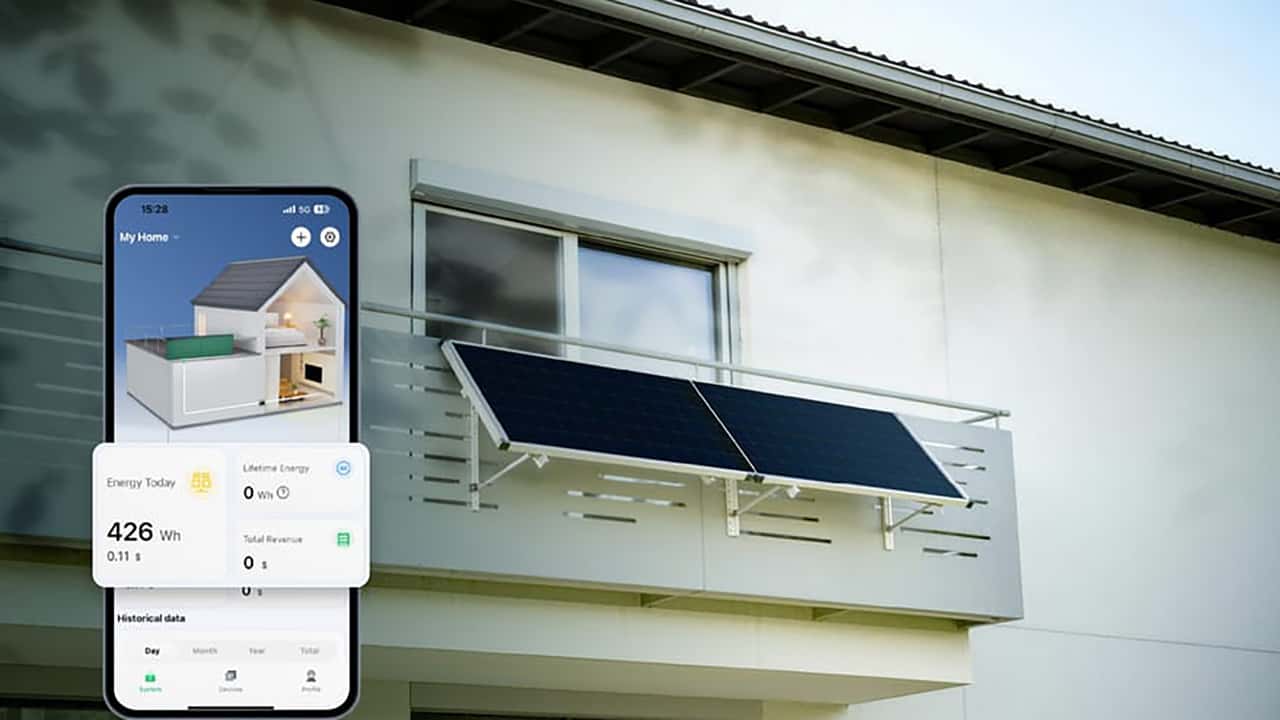

- Hoymiles has introduced the first plug-in solar microinverter in the U.S. designed to meet the new UL 3700 safety standard.
- The HiFlow Pro is designed to take energy from a solar panel and funnel it directly into a 120-volt outlet.
- Eight states currently have legislation enabling plug-in solar panels in the U.S., with more to follow.
Solar panels are great, especially in areas where the sun shines all year round. However, not everybody lives in a house or can afford costly setups, but that’s where plug-in systems come into play. And now, there’s a legal and more affordable way to get some solar power flowing through an apartment or rental home.
The Hoymiles HiFlow Pro is the first solar microinverter in the United States designed to meet UL 3700, North America’s new safety standard for plug-in solar panels, which are sometimes called balcony solar panels.

The microinverter takes power from a mobile solar panel and funnels it directly into a regular household socket, minimizing grid usage and lowering energy bills. This approach, however, raises some safety concerns, but there shouldn’t be any, as long as UL 3700 is enforced. There are built-in safeguards that automatically cut power when there’s a grid outage, to protect line workers. The microinverter also cuts power to the exposed pins on the end of the cable to avoid the risk of electrical shock.
Hoymiles claims the output voltage drops to less than 34V within 1 second after disconnection. Furthermore, the enclosure is NEMA Type 6 and IP67-rated, allowing dwellers to install it outside in temperatures ranging from -40°F (-40°C) to 149°F (65°C).
All this being said, this is not the type of system that will keep the lights on all the time, no matter the weather. One microinverter is rated for 360 watts, with a 95.5% dynamic efficiency and a 99.8% static efficiency.
Gallery: Hoymiles HiFlow Pro UL-Certified Solar Microinverter
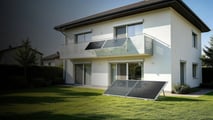
Up to four microinverters can be used in parallel, each plugged into a separate outlet, for a maximum input of 1,200W. The company says the units can be set up in just one minute, thanks to Bluetooth and Wi-Fi connectivity, and that the total annual energy production can go as high as 2,403 kilowatt-hours in ideal conditions, with a two-year return on investment.
Right now, the price for a 180W kit that includes one solar panel retails for $499, while the 360W kit goes for $700.
Eight states—Colorado, Connecticut, Maryland, Maine, New Hampshire, Utah, Vermont, and Virginia—have legislation allowing the use of plug-in solar panels, but over two dozen have introduced legislation.
This type of system is hugely popular in Europe, especially in Germany, and that trend is now moving toward the U.S., enabling more people to enjoy solar power wherever they live. What’s more, as balcony solar doesn’t require a permanent installation, the owner can just pack up the equipment and take it with them when they move.
Correction: a previous version of this story stated that the product was UL-certified. It is not certified by UL Solutions, but designed to meet the UL 3700 standard. We regret the error.
Related Stories

RECOMMENDED FOR YOU
I Experienced The World’s First Electrostatic Speakers In A Production Car. Now I Can't Go Back
GM Walks Away From $3.5B Battery Factory, Leaving Samsung SDI In Full Control
The Cadillac Optiq Is Getting A China-Developed EV Platform (Update)
Tesla Burned Through Its California EV Rebate Funds In Just Five Days
Why BMW Isn't Giving Up On Hydrogen Cars
The Ford Fathom Will Get a $25,000 Hybrid Crossover Sibling: Report
Volvo Gets A Pass To Keep Importing Connected Cars To The U.S.