Home
News
News
Nissan Put Solar Panels On An Ariya EV. Here's How Much Range They Add
It's a reasonable amount, but I wouldn't be planning any solar-powered road trips.
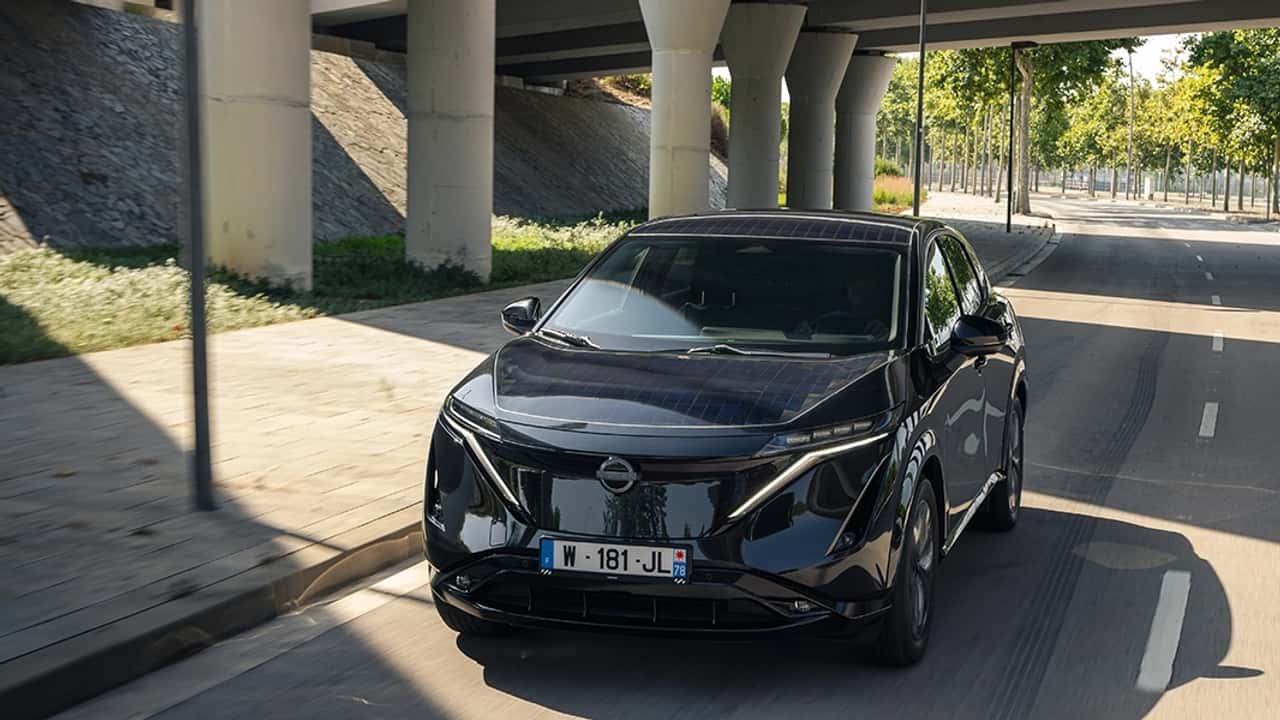
Photo by: Nissan
Andrei Nedelea 
By: Andrei Nedelea
Jan 28, at 11:16am ET
Add InsideEVs as a preferred source in Google
- (https://twitter.com/intent/tweet?url=https%3A%2F%2Finsideevs.com%2Fnews%2F785708%2Fnissan-ariya-solar-roof-charging%2F&text=Nissan%20Put%20Solar%20Panels%20On%20An%20Ariya%20EV.%20Here%27s%20How%20Much%20Range%20They%20Add&via=InsideEVs)
- copy
Share
Comment
- Nissan’s built a one-off Ariya with solar panels that can add up to 14.3 miles per day in ideal sun, but far less in cloudier cities.
- A sunny 50-mile drive generated roughly 0.5 kWh of power—roughly 2 miles of “free” range trickling into the battery.
- Solar EVs still haven't taken off: Lightyear failed, Toyota and Hyundai's gains are small and Aptera’s launch timeline is uncertain.
The Nissan Ariya isn't the world's most exciting EV, with so-so specs and a forgettable design that lead to it failing in the U.S. But Nissan just made it a lot more interesting, slapping solar panels onto a one-off prototype for extra range. The experimental car can add up to 14.3 miles of range per day in heavy sunlight, even if that requires perfect conditions. In the real world, the company says the car can get up to 13.2 miles of range per day while tooling around sunny Dubai, or just 6.3 miles of extra oomph in cloudy London.
Taking the car on a two-hour 50-mile (80 km) trip on a sunny day added 0.5 kilowatt-hours of electricity to the battery pack, Nissan claims, which is just under 2 miles (3 km) of extra range. That’s not a lot, but it is free range harnessed from the sun . Over the course of the year, it can reduce charging frequency by between 35% and 65% according to Nissan, although this heavily depends on how long the daily commute is and whether the car is parked outside.
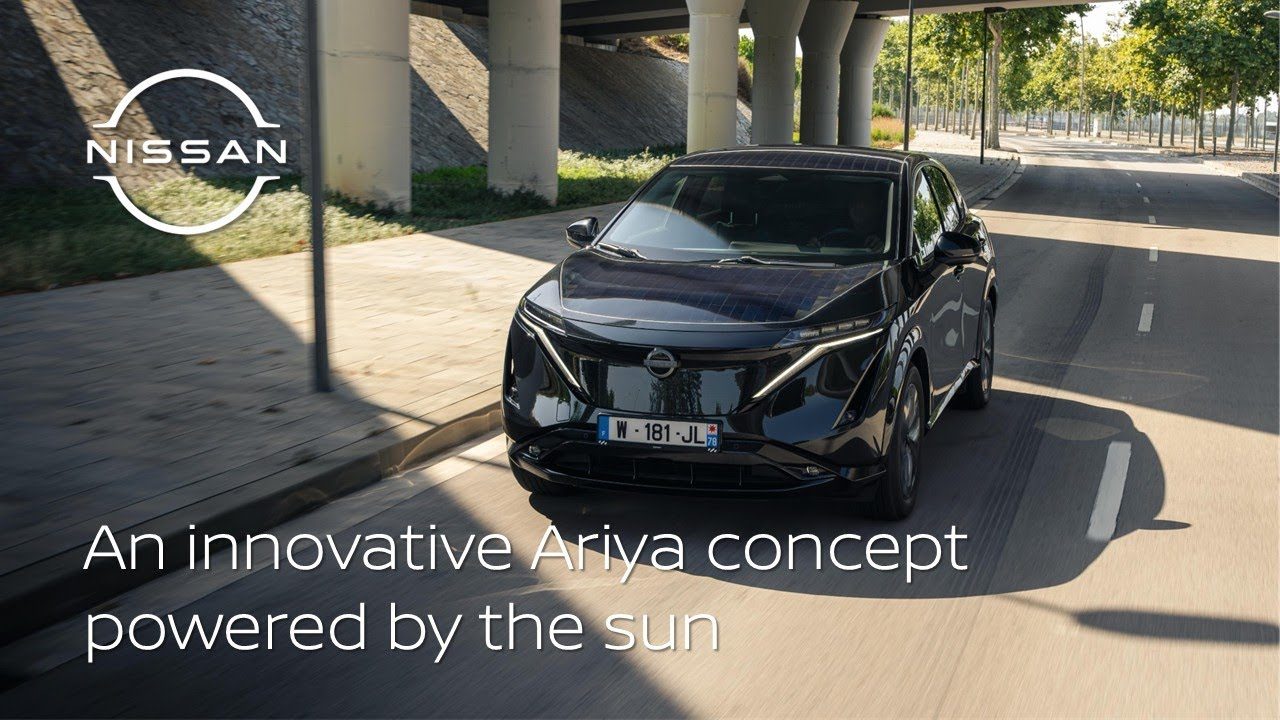
This sun-loving Ariya was created in partnership with Lightyear, the solar car company that wanted to produce its own vehicles but whose manufacturing arm declared bankruptcy after only building a handful of cars. It has around 40.9 square feet (3.8 square meters) of solar panels split between its hood, roof and tailgate, which convert sunlight into DC power that goes straight into the battery.
Nissan doesn’t have any plans to offer a solar array on its production electric cars in the near future, but according to the company’s electric powertrain boss, Shunsuke Shigemoto, “by exploring how vehicles can generate their own renewable energy, we are opening the door to new opportunities for customers – greater freedom, reduced charging dependency, and a cleaner future. This concept is not just a technical milestone; it’s a vision of how Nissan intends to lead the next phase of electric mobility.”
 Here’s The Nissan Ariya Facelift That Won’t Reach The U.S.
The Nissan Ariya Is Dead. It Leaves Behind A Big EV Lesson
Want A Lightyear 0 But Don't Have $277K? Now Is Your Chance To Buy A Prototype
Sono Motors Kills Sion Solar EV, Puts Program Up For Sale
The automaker is going toward offering a solar array that customers can actually buy, at least in Japan. Its Ao-Solar Extender for the Sakura kei EV is an extending roof-mounted sunshade that can add up to about 3,000 km (1,860 miles) a year in ideal conditions—roughly 36 miles (58 km) per week—although we don’t know when it will be made available or how much it will cost.
It makes intuitive sense to put solar panels on electric vehicles to extend range. Most cars spend most of their time outside, bathing in photons. However, there are hardly any EVs currently in production with a factory-installed solar array because the electricity they produce and the subsequent range gains generally aren’t worth the effort and cost.

Stay informed with our newsletter every weekday
back
Subscribe For more info, read our Privacy Policy & Terms of Use.
There are a handful of electric vehicles that offer a much smaller solar array than this Nissan. The Hyundai Ioniq 5 used to have a small optional solar panel in some markets, but it could only add 3 miles (5 km) of range per day in ideal conditions, which owners on forums explain was around double the actual daily gains they observed.
What do you think?
View
Comments
The only other production car that offers something like this is the Toyota bZ4X, whose solar roof added 1,118 miles (1,800 km) per year when exposed to “2.200 hours of sunshine per year in Nagoya, Japan,” Toyota claimed, which works out to 7.2 miles (11.6 km) per day.
The first purpose-built solar EV set to enter production is the Aptera three-wheeler. The company says it’s on track to begin limited production this year, but it has missed deadlines before—several times—and solar EV startups (like Lightyear or Sono Motors) tried to bring their vehicles to market and failed. In general, solar EVs appear to be more promise than reality right now. But as the Nissan concept shows, we're getting closer to solar-powered EVs every day.
We want your opinion!
What would you like to see on Insideevs.com?
Take our 3 minute survey.
- The InsideEVs team
Share this Story
- (https://twitter.com/intent/tweet?url=https%3A%2F%2Finsideevs.com%2Fnews%2F785708%2Fnissan-ariya-solar-roof-charging%2F&text=Nissan%20Put%20Solar%20Panels%20On%20An%20Ariya%20EV.%20Here%27s%20How%20Much%20Range%20They%20Add&via=InsideEVs)
- copy
GO TO COMMENTS
(
)
Got a tip for us? Email: tips@insideevs.com
View all comments ( )
Trending
I Took A Rivian R2 On A Camping Trip To The Middle Of The Desert
Solid-State Cells Can Make The U.S. Competitive In Batteries Again: CEO
BYD's Futuristic EV Charger Can Run On Sunshine And Batteries
Google’s Gemini AI Assistant Now Works On Apple CarPlay
Latest Stories
- Audi A4 EV Delayed Amid VW Group Financial Troubles: Report Nov 13 - News -
- Tesla Just Killed Its Cheapest All-Wheel-Drive Model Y Nov 13 - News -
- A Record Number Of Uber Miles Are Happening In EVs Nov 13 - News -
- Slate Is Selling A $30 'Screenless GPS' For Its Low-Tech Truck Nov 12 - News -
- America's Top 3 SUVs Are About To Be Hybrid Or Electric Nov 12 - News -
- The 2026 Chevy Silverado EV Trail Boss Makes No Sense. I Loved It Anyway Nov 12 - Car Reviews -
- Scout's New Factory Is Already Making Trucks. But You Won't Be Able To Buy One For A While Nov 12 - News -
RECOMMENDED FOR YOU
Audi A4 EV Delayed Amid VW Group Financial Troubles: Report
America's 3 Most Popular SUVs Are About To Be Hybrid Or Electric
Tesla Just Killed Its Cheapest All-Wheel-Drive Model Y
The 2026 Chevy Silverado EV Trail Boss Makes No Sense. I Loved It Anyway
A Record Number Of Uber Miles Are Happening In EVs
Scout's New Factory Is Already Making Trucks. But You Won't Be Able To Buy One For A While
Slate Is Selling A $30 'Screenless GPS' For Its Low-Tech Truck