
The 2026 Toyota C-HR Feels Like A Misstep In A Pivotal Year For EVs
The C-HR is a fun EV wrapped in an outdated experience. It proves that new doesn't mean compelling.
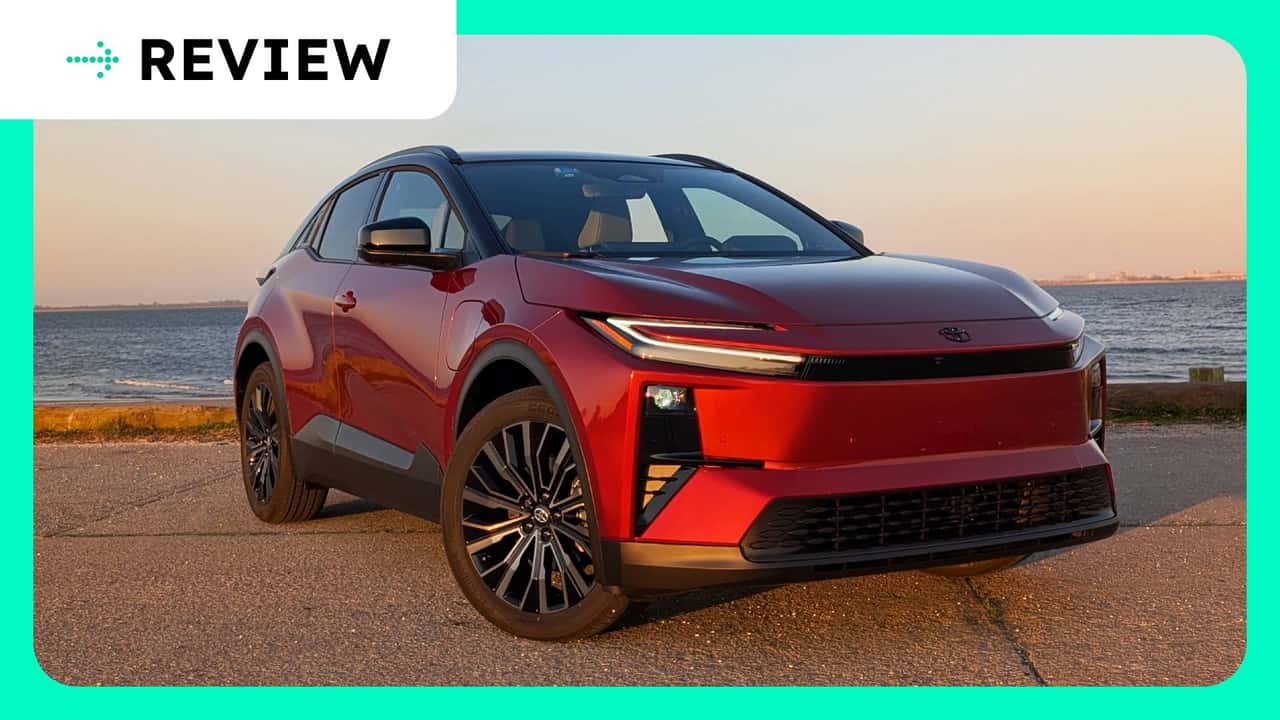

Toyota axed the C-HR from its U.S. lineup in 2022 after sluggish sales, but the car is reborn in a fully electric avatar. The C-HR is now a small electric crossover, joining Toyota’s EV portfolio that spans the refreshed bZ, bZ Woodland, and the three-row Highlander EV, plus their Subaru and Lexus counterparts.
The C-HR is smaller than the bZ, and comes as an all-wheel-drive subcompact electric crossover in a segment that mostly includes front-wheel-drive models like the Nissan Leaf, Chevy Bolt, and the Hyundai Kona Electric. The other AWD option here is the C-HR's badge-engineered twin, the Subaru Uncharted, giving it a niche to itself.
After a week-long test, the C-HR felt plenty of fun from behind the wheel. It has adequate real-world range and competitive fast-charging speeds. But the infotainment feels archaic, and the cabin's ergonomics have plenty of room for improvement.
Gallery: 2026 Toyota C-HR

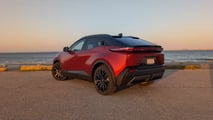
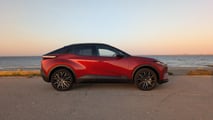
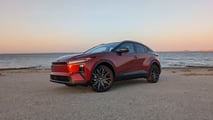
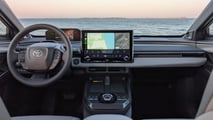
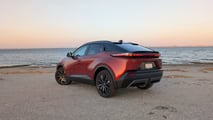

In the age of software-defined vehicles and blistering charging speeds, the C-HR ends up feeling rather subpar. It is still a decent overall EV, but I’m afraid its strengths don’t overcome its shortcomings.
[Full Disclosure: Toyota loaned me a fully charged C-HR press car for a week and paid for the tolls.]
2026 Toyota C-HR Specifications
2026 Toyota C-HR Range And Efficiency
Like the new bZ, the C-HR gets 74.7 kilowatt hours of battery capacity, which is enough to deliver 287 miles of EPA range on the SE trim and 273 miles on the XSE, which I drove.
It’s only available with AWD, but if FWD and more range is what you're after, the identical Subaru Uncharted is worth a look. It edges past 300 miles of range at a slightly lower base price.
In highway testing, I observed 3.7 miles per kWh, which climbed to a respectable 5.0 miles per kWh in the city. Driving conditions were favorable, with temperatures in the 70s and low 80s, basically the sweet spot for lithium-ion batteries. In colder climates, expect that figure to fall.
Even so, I never felt range anxiety creeping in during the week. That's partly a credit to the car, but also a reflection of how much the charging infrastructure in the New York tri-state area has matured over the past couple of years.
Poor charging infrastructure can make even decent EVs seem inadequate, but having high-powered and reliable fast chargers everywhere makes a lower-range EV far more workable.
2026 Toyota C-HR Charging Test
I conducted 15-80% and 15-100% charging tests at an Ionna charging station off the New Jersey Turnpike, and the C-HR fared predictably well. It can pull 150 kilowatts of maximum power, way less than what the 400 kW-capable Ionna stations can provide.
Toyota says it can charge from 10-80% in 30 minutes, and my observations were on par with those claims. Fifteen to 80% took 26 minutes, and the C-HR added 191 miles of range in that time. Getting to a 100% took 48 minutes.
Most Teslas take between 25 and 35 minutes for a 10-80% charge, whereas the similarly priced Hyundai Ioniq 5 can do the same in 20 minutes with its 800-volt architecture and 350 kW of peak charging speed.
The C-HR’s charging performance still felt reasonable in that company. It has a flat charging curve till about 60%, after which it gradually tapers. The charging curve never dropped sharply, hitting a maximum rate of 135 kW at about 20%, slowing down to 120 kW at 50%, and 110 kW at 60%.
At 100%, the car displayed its EPA-rated 273 miles of range. Flipping the AC on full blast knocked that down to 250 miles, which is still workable for road trips.
Of course, none of this will earn the C-HR any bragging rights in 2026, especially in an era when charging speeds of 300+ kW are becoming the norm. But 26 minutes to 80% and about 250 usable miles is practical. That's roughly the time it takes to grab a coffee, use the restroom, and stretch your legs, exactly the kind of break you should be taking on a long drive anyway.
It's also worth remembering where Toyota was just a couple of years ago. The pre-facelift bZ4X was awful to charge, making long trips an exercise in patience. The 2026 bZ is a meaningful step forward, and the C-HR, sharing its platform and powertrain, carries those improvements with it.
2026 Toyota C-HR Performance, Ride, And Handling
With 338 horsepower, standard AWD, and a 0-60 miles per hour time of just 4.9 seconds, the C-HR accelerates hard and with purpose. Turn off traction control, floor the throttle, and the front wheels spin up like a hot hatch.
Other than Eco and a standard driving mode, you don’t get much adjustability. But I never felt the need to have myriad driving modes, either. The standard setting has ample grunt for everyday driving, overtaking, and even highway cruising.
Ride quality at city speeds is on the stiffer side, with small and large potholes filtering into the cabin with lateral jolts. But the ride felt more settled with the buildup of speed. However, this suspension setup wasn’t as refined as I was expecting.
Expansion joints were accompanied by loud and unrefined thuds, something that more precise rebound damping can solve. The bZ, by comparison, feels much more comfortable, and other cars in this price range, like the Ioniq 5 and Leaf, also ride with considerably better composure.
While it lost some points on ride quality, it earned those back in handling. The C-HR is five inches shorter than the bZ, and the smaller footprint makes it surprisingly chuckable in corners. It’s not as unhinged as the GR Corolla or the Ioniq 5 N, but it felt engaging enough for a mainstream EV.
The only thing holding it back is the steering, which lacked the directness and road feel that would suit the rest of the handling package really well.
2026 Toyota C-HR Technology And Software
Despite launching at the same time as the new RAV4, the C-HR gets an older version of Toyota’s infotainment system. Both the latest RAV4 and the new Lexus ES run Toyota’s new Arene software platform, which brings a far more responsive, smartphone-like interface along with native route planning that suggests charging stops along the way.
The C-HR gets none of that. The 14-inch touchscreen itself is large, sharp, and modern-looking, but the experience feels a generation behind. It’s slow to boot, occasionally laggy, and lacking the polish you’d expect in a new EV.
Wireless Android Auto and Apple CarPlay will cover most owners’ day-to-day needs, but beyond phone mirroring, there’s not much here in terms of meaningful functionality. A Toyota spokesperson told me the current model year bZ, C-HR, and bZ Woodland lack the necessary hardware and software architecture to support the Arene platform. They declined to comment on whether future model years would get those upgrades.
Thankfully, the smartphone ecosystem is starting to make up for some of these shortcomings. Apple Maps now supports EV routing, and Google is expected to bring similar functionality to Android Auto soon. And that could help Toyota’s electric offerings become a lot more compelling if it works as well as some of the native systems on Tesla, Rivian, and GM EVs.
The C-HR has another frustrating problem. Like the bZ, the steering wheel partially blocks the gauge cluster, which meant I couldn’t see the speedometer, battery percentage, or range estimate without awkwardly craning my neck. After spending a week bobbing up and down like an ostrich trying to find the right viewing angle, my neck muscles gave up, and I had to pop painkillers.
The only way I could properly see the gauge cluster was by getting into a truck driver's seating position, with the seat raised fully and the steering wheel in its lowest position. It felt like the entire setup was designed by a 6'5" engineer who forgot smaller humans exist.
Even when the display is visible, the information layout itself feels cluttered and oddly unintuitive. Important data like battery percentage and range don’t stand out clearly enough, forcing your eyes to look at the screen longer than you should, which can feel unsafe and distracting.
Verdict
At a starting price of $38,595 with destination, the C-HR lands in a segment that’s finally starting to get interesting. It joins the Tesla Model 3, Hyundai Ioniq 5, Chevrolet Equinox EV, Chevrolet Bolt, Nissan Leaf, and the Toyota bZ in the increasingly crowded sub-$40,000 EV space.
Against that backdrop, the C-HR brings a few legitimate strengths to the table. Its range and charging performance are competitive, and it’s enjoyable to drive. Its small footprint allows it to negotiate tight spaces with surprising ease.
Both the Bolt and Leaf sharply undercut the C-HR by starting in the $30,000 price range and offering a more advanced native Google infotainment and navigation experience, while the C-HR just gets phone mirroring. They don't get AWD like the Toyota, but for its price you're close to larger AWD competitors like the Hyundai Ioniq 5 and Chevy Equinox EV.
The sixth-generation Toyota RAV4, which I also reviewed recently, also felt vastly more modern and roomier than the C-HR despite being powered by gasoline, while costing substantially less. It starts at $33,495 with destination. That’s pretty damning because it’s usually rare for brand-new EVs in 2026 to feel older than combustion cars, yet somehow the C-HR manages exactly that.
Sure, Toyota’s EV offensive this year looks far more serious than before. But the C-HR also feels like a reminder that new doesn’t automatically translate into compelling. The company’s real energy, investment, and engineering focus still seem firmly centered around its hot-selling hybrids, especially in Western markets. For now, EVs still feel like a side quest.
If you have $40,000 to splurge on a new car, you will find more value in options like the Equinox EV, Bolt, Leaf, and Ioniq 5. Even if your budget is only half that, a four-year-old used Model 3 or Kia EV6 will feel more modern and polished than the C-HR. That shouldn’t really be the case in 2026. But right now, it is.
Contact the author: suvrat.kothari@insideevs.com
Related Stories
RECOMMENDED FOR YOU
Toyota's EV Sales Have More Than Doubled This Year
The Best Compact Electric SUVs To Buy In 2026
Toyota Is Paying EV Drivers $3,000 To Switch To A bZ
Polestar Won't Appeal Its U.S. Ban. Now Dealers Are Left Holding The Bag
Toyota And BMW Are Testing Renewable Gas As An Alternative To EVs
America’s First UL-Certified Plug-In Balcony Solar Microinverter Is Here
The 16 Cheapest Electric Cars In 2026