Home
Stellantis
News
Stellantis Plans $70 Billion Comeback With LFP Batteries And A Tesla FSD Challenger
The automaker is giving EVs another shot with cheaper batteries, a new platform, and high-tech chips for AI and autonomy.
Suvrat Kothari 
By: Suvrat Kothari
May 21, at 1:17pm ET
Add InsideEVs as a preferred source in Google
- (https://twitter.com/intent/tweet?url=https%3A%2F%2Finsideevs.com%2Fnews%2F796638%2Fstellantis-70-billion-ev-plan-lfp-batteries%2F&text=Stellantis%20Plans%20%2470%20Billion%20Comeback%20With%20LFP%20Batteries%20And%20A%20Tesla%20FSD%20Challenger&via=InsideEVs)
- copy
Share
Comment
- Stellantis is trying to catch up to rivals with bold electric vehicle and autonomy plans.
- It is planning to roll out dozens of new EVs and extended-range hybrids by 2030.
- A new EV platform will use 800-volt architecture and lithium-iron phosphate (LFP) batteries.
Stellantis, the parent company of 14 carmakers including Jeep, Ram, and Dodge, unveiled a $60 billion turnaround plan Thursday that spans new electric vehicles, better software, and higher levels of autonomy.
The transatlantic automaker aims to launch dozens of new EVs and extended-range hybrids on a brand-new software-defined vehicle (SDV) platform. It's also deepening its partnership with chip giant Qualcomm to improve in-vehicle infotainment and advanced driver-assistance systems (ADAS).

Photo by: Stellantis
Stellantis has struggled to keep up in the high-stakes EV and software race. Its sales and profits have cratered amid intensifying competition, and the company's EV launches in the U.S. have misfired. Both the Jeep Wagoneer S and Dodge Charger Daytona EV flopped, leaving owners frustrated by unfinished software. Earlier this year, Stellantis also pulled the plug on plug-in hybrids in the U.S. as regulations shifted, axing the Jeep Wrangler 4xe, Cherokee 4xe, and Chrysler Pacifica PHEV from its lineup to refocus on its profitable gas trucks and SUVs.
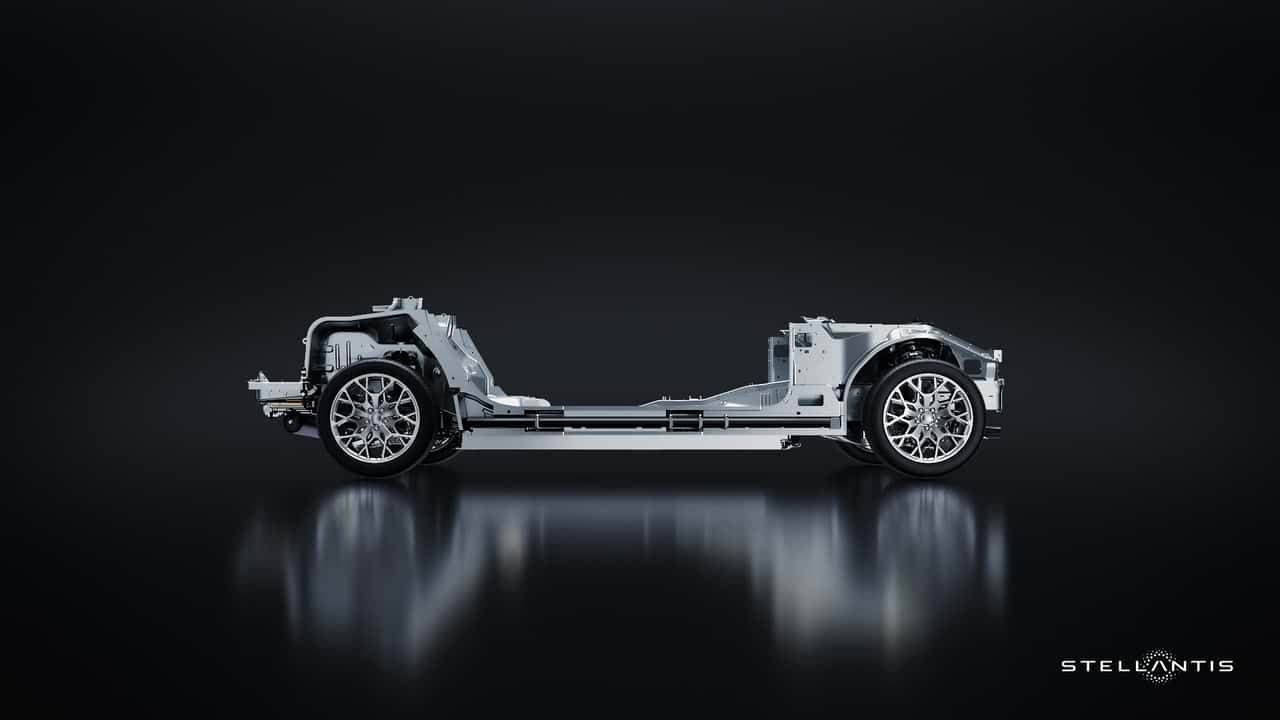
Now the company is restarting from scratch. Over the next five years, it plans to launch 29 new EVs, 15 plug-in hybrids or extended-range models, 24 traditional hybrids, and 39 combustion-powered vehicles riding on the new architecture. At the heart of the plan is STLA One, a new, scalable architecture that will consolidate five existing platforms into a single platform. It will cover three key segments: subcompact (B), compact (C), and large family-oriented vehicles (D).
Photo by: Stellantis
STLA One will support an 800-volt architecture for faster charging and better efficiency, with 70% parts commonality across segments. That kind of scalability is exactly what several automakers are chasing right now. Shared software and electrical architectures can reduce complexity and help offset the enormous capital costs of going electric. With that Stellantis is joining several automakers, including Ford, Volkswagen, and Mercedes-Benz, who all have had to do a proper ground-up rethink of their EV plans.
While the STLA One platform will be developed for multiple powertrains, its EV version will use lithium iron phosphate (LFP) batteries, a chemistry that's now dominant in China and lets battery makers reduce their dependence on expensive minerals like nickel and cobalt. The trade-off has traditionally been lower energy density, but advances in LFP technology in China have narrowed the gap in range and fast-charging speeds.
Photo by: Stellantis
It also adopts a cell-to-body battery-pack design, integrating cells directly into the vehicle's structure rather than stacking them in separate modules. The approach sheds weight, reduces complexity, and frees up space to pack in more cells, which boosts usable energy density.
On the technology side, the automaker will expand its partnership with Qualcomm to integrate the Snapdragon Digital Chassis across its vehicles to improve infotainment and the cockpit. For autonomy, the company will incorporate Qualcomm's Ride Pilot ADAS platform for driver-assistance features and partner with U.K.-based autonomous-vehicle startup Wayve to bring hands-free, supervised door-to-door automated driving, similar to Tesla's Full-Self Driving (FSD) system.
What do you think?
View
Comments
It's a sweeping and ambitious plan. But we’ve seen bold roadmaps from legacy automakers before that often led to delayed or canceled projects costing billions. When these new technologies start rolling out next year, we’ll know whether this is a genuine revival or just another big promise.
Contact the author: suvrat.kothari@insideevs.com
Related Stories
Jeep And Ram's Owner Partners With Another Chinese Brand To Build EVs In Europe
China’s Rolls-Royce Rival May Have Found A Shortcut Into Europe
Crank Windows And No Radio: Why American Cheap EVs May Be Far More Spartan Than Chinese Ones
Jeep, Dodge, And Ram EVs Can Now Charge At Tesla Superchargers
We want your opinion!
What would you like to see on Insideevs.com?
Take our 3 minute survey.
- The InsideEVs team
Share this Story
- (https://twitter.com/intent/tweet?url=https%3A%2F%2Finsideevs.com%2Fnews%2F796638%2Fstellantis-70-billion-ev-plan-lfp-batteries%2F&text=Stellantis%20Plans%20%2470%20Billion%20Comeback%20With%20LFP%20Batteries%20And%20A%20Tesla%20FSD%20Challenger&via=InsideEVs)
- copy
GO TO COMMENTS
(
)
Got a tip for us? Email: tips@insideevs.com
View all comments ( )
Trending
The Mercedes-Benz EQS Sedan, EQS SUV, And EQE SUV Soldier On For 2027
The BMW iX5 Was Driven Until It Died. It Had A Surprising Amount Of Hidden Range Left
What We Both Thought After Driving The Rivian R2
Aptera Finally Built Its First Car For Customer Delivery
Latest Stories
- 2027 Mercedes GLA Electric First Drive: A Big Upgrade Nov 23 - Car Reviews -
- China’s SC01 EV Sports Car Will Get Its Own Factory In Europe Nov 23 - Europe -
- The BMW iX5 Was Driven Until It Died. It Had A Surprising Amount Of Hidden Range Left Nov 23 - Range / Efficiency -
- The Mercedes-Benz EQS Sedan, EQS SUV, And EQE SUV Soldier On For 2027 Nov 23 - Pricing -
- The U.S. Let Volvo Keep Selling Cars. Polestar Got A No. What About Mercedes? Nov 22 - News -
- Tesla FSD V15 Makes Your Drive Look Like Grand Theft Auto Nov 22 - News -
- Waymo Is Recalling Its Robotaxis Because They're Not Great At Dealing With Human Instructions Nov 21 - Autonomous Vehicles -
RECOMMENDED FOR YOU
Hyundai Says Hydrogen Cars Aren’t Dead. Finding Customers Is Another Story
China’s SC01 EV Sports Car Will Get Its Own Factory In Europe
This Chinese EV Is Now Made In Europe. More Are Coming
The BMW iX5 Was Driven Until It Died. It Had A Surprising Amount Of Hidden Range Left
Jeep’s Parent Company Is Considering Building Chinese EVs In North America
The Mercedes-Benz EQS Sedan, EQS SUV, And EQE SUV Soldier On For 2027
Crank Windows And No Radio: Why American Cheap EVs May Be Far More Spartan Than Chinese Ones