
The McLaren P1 Is Getting A Huge Battery Upgrade With 3X The Original Capacity
The car that kicked off the plug-in hybrid craze among hypercar makers is over a decade old. New battery tech is keeping it fresh.
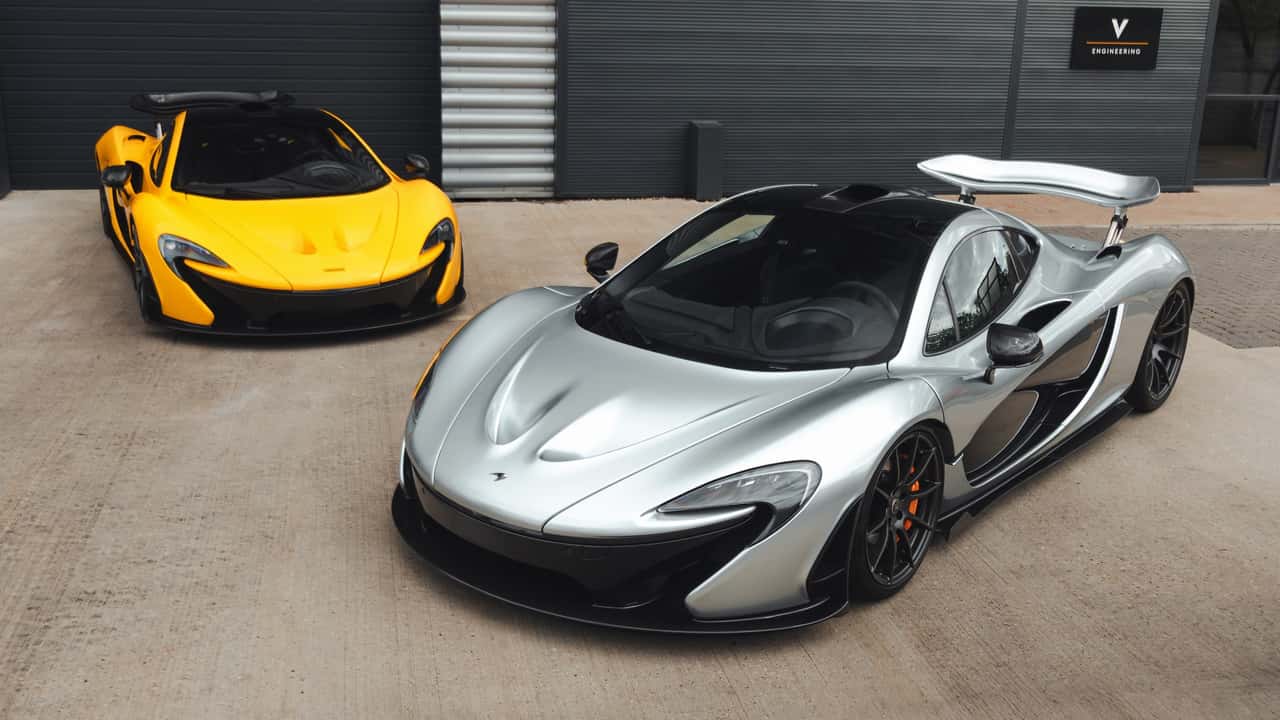

- The McLaren P1 made headlines when it debuted back in 2013.
- It was the world’s first plug-in hybrid hypercar, with a high-voltage battery that could deliver all-electric miles and help with heavy acceleration.
- Some P1 batteries are no longer delivering the expected performance, but an independent company has a solution.
The McLaren P1 went down in history as one of the most impressive hypercars. It debuted in the early 2010s and lived its short life alongside the equally impressive Porsche 918 Spyder and Ferrari LaFerrari.
All three became known as the “Holy Trinity” of the car world, but the P1 always stood out because it was the world’s first plug-in hybrid hypercar. The Porsche 918 Spyder also had a plug, but the production version debuted a couple of months after the P1.

Now, though, all of these cars are getting a bit long in the tooth, and that’s not exactly good news for the high-voltage batteries. In the McLaren P1’s case, the first cells that were used in customer cars date back to 2010, back when the technology was nowhere near as advanced as today’s offerings. As a result, the already-small-capacity battery in the P1 has degraded over time and can no longer deliver the expected performance.
However, there’s a solution. V Engineering, an independent McLaren engineering specialist from Berkshire, United Kingdom, has developed a plug-and-play replacement for the original McLaren P1 high-voltage battery that significantly increases the storage capacity, while also being much lighter.
Dubbed Project Continuum, the drop-in replacement stores a total of 12.4-kilowatt-hours thanks to high-performance 21700 lithium-ion cells, up from the original battery’s 4.72 kWh. What’s more, the new pack weighs nearly 51 pounds (23 kilograms) less than what McLaren used, further improving the car’s performance.
The increased capacity should also result in more all-electric range for the P1, which should come in handy for city driving. However, with its 903-horsepower combined output, the McLaren F1’s spiritual successor feels more at home at high speeds and on the track, where the better high-voltage battery aids during hard acceleration.
V Engineering said its upgraded battery was developed in collaboration with engineers who worked on the original P1 project. The solution is built around a battery module that’s designed to meet FIA Formula E requirements, where electric single-seaters are being pushed to their limits for the entirety of a race.
Customer installations are scheduled to begin next spring, with the company talking with owners all over the world about the battery upgrade.
More Stories Like This

RECOMMENDED FOR YOU
Toyota’s Next Generation Hybrid Batteries Promise Lower Cost, Better Performance
The 2027 Kia EV3 Is Almost Here—With 280 Miles Of Range For The AWD Models
Factorial Taps Hyundai Supplier To Solve Solid-State Batteries’ Biggest Problem
GM Walks Away From $3.5B Battery Factory, Leaving Samsung SDI In Full Control
Inside BMW's Plan To Produce The iX5’s Gigantic Battery Pack In The U.S.
Tesla Burned Through Its California EV Rebate Funds In Just Five Days
Battery Startup Raises $300 Million Promising 20% More EV Range